How to Catch Bass in Farm Ponds
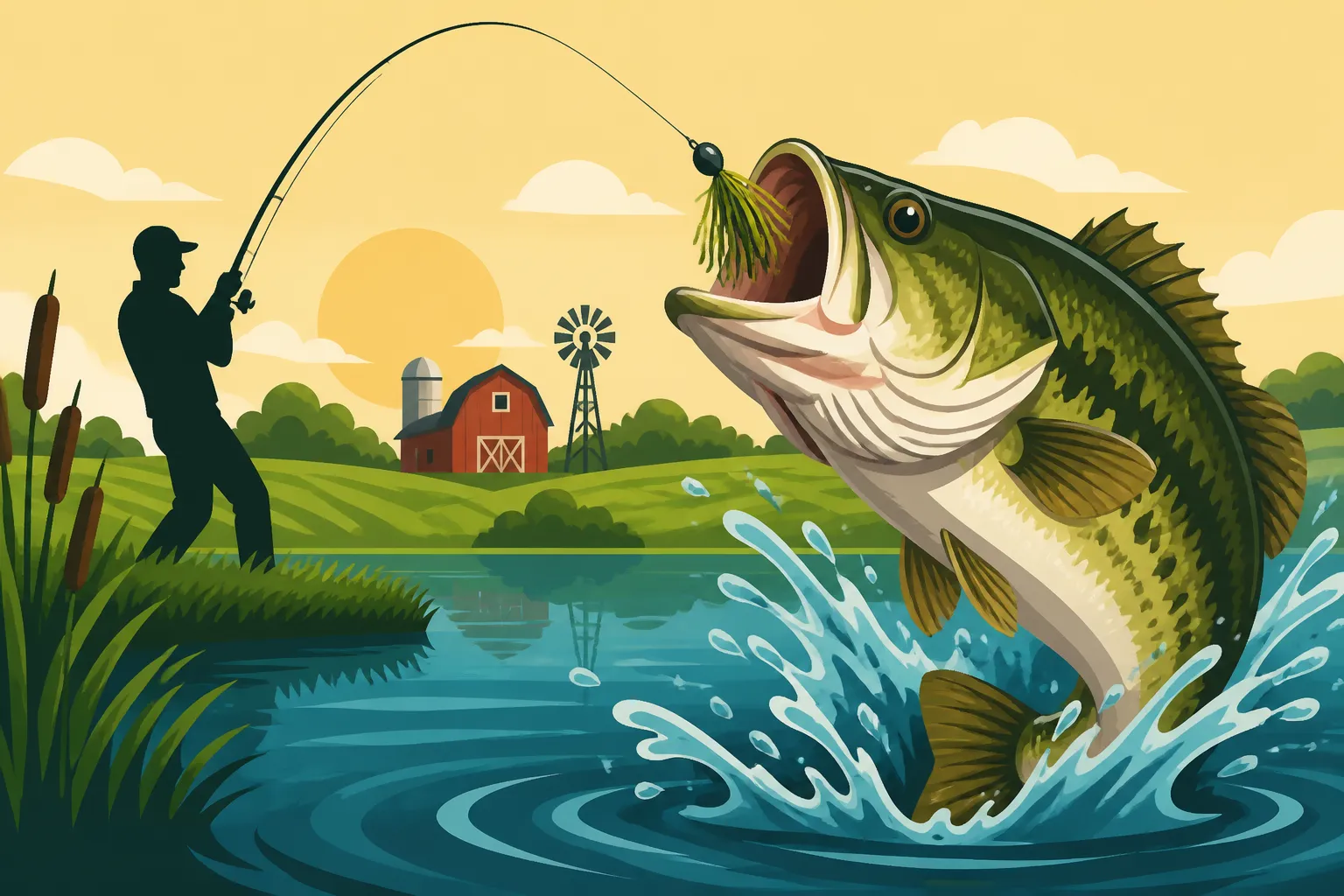
Iowa's farm ponds hold a special kind of magic for anglers, promising that elusive big bass lurking beneath lily pads or tucked into submerged timber. But let's be real, sometimes these smaller waters can feel even more challenging than a big lake, leaving you wondering why those chunky bass aren't biting despite the perfect conditions. This guide is here to unravel the mysteries of farm pond bass fishing, helping you understand their habits, choose the right gear, and implement tactics that will have you reeling in more lunkers from these hidden gems across the Hawkeye State.
Decoding the Farm Pond Bass: Behavior and Habitat
Farm ponds might seem simple, but they are often complex, self-contained ecosystems where bass behavior can be quite distinct from their big-water cousins. Understanding these nuances is the first step to consistent success. The size and depth, the available cover, and the food sources all play a crucial role in how bass live and react in these intimate settings.
Understanding the Ecosystem
Unlike vast reservoirs or sprawling rivers, farm ponds are typically smaller, shallower, and often more fertile. This means the bass in them have a more limited range to roam, and their food sources, cover, and spawning areas are usually more concentrated. This can be a double-edged sword: on one hand, finding the fish might seem easier, but on the other, if they're not in the mood or spooked, they can be incredibly difficult to entice. The water clarity can also vary wildly from pond to pond – some are crystal clear, others perpetually stained with an earthy tint. This directly impacts how bass hunt and how you should present your lures.
For example, a clear pond might require more subtle presentations, lighter lines, and natural bait colors, as bass have a better view of their surroundings and can spot anomalies more easily. Conversely, a murky pond allows bass to ambush prey more effectively and often responds better to noisier baits, vibrating lures, or those with strong visual profiles in darker colors. It's not just about the fish; it's about the entire water body. You'll often find a healthy population of bluegill or other panfish in these ponds, which serve as the primary forage for the bass, so understanding where these baitfish congregate is key to locating the predators.
Identifying Prime Bass Cover
In a farm pond, cover is king. Bass, especially largemouth bass, are ambush predators that thrive on structure and concealment. Without the vast underwater topography of a large lake, they rely heavily on what's available in their immediate environment. This means you need to become a detective, constantly scanning for anything that offers shelter, shade, or an ambush point.
Think about what naturally occurs in and around a farm pond. This could be anything from submerged logs, brush piles, or old tires someone thoughtfully (or carelessly) placed in the water, to emergent vegetation like cattails, lily pads, and submerged pond weeds. Even an old fence line running into the water or a culvert can be a bass magnet. Look for areas where a shallow flat drops off into deeper water, as these contour changes provide natural travel lanes and staging areas. Overhanging trees along the bank create critical shade during sunny days, attracting bass seeking cooler temperatures and cover. Don't forget man-made structures like old docks, spillways, or even remnants of old farm equipment that might have found their way into the pond. These aren't just places for bass to hide; they're feeding stations and resting spots, making them prime targets for your casts. Remember that fishing on private property requires permission from the landowner, so always respect those boundaries. You can learn more about specific rules in our article on License Rules for Fishing on Private Property.
Essential Gear and Tactics for Iowa Farm Pond Bass
You don't need a boatload of fancy equipment to catch bass in Iowa farm ponds, but having the right tools and a smart approach will certainly tip the scales in your favor. Pond fishing often favors a more minimalist setup, allowing you to be mobile and adapt to changing conditions quickly.
Choosing the Right Rod, Reel, and Line
For most farm pond scenarios, a medium to medium-heavy action spinning or baitcasting rod, around 6'6" to 7' long, is ideal. This length provides good casting distance for bank fishing while still offering enough control for accurate pitches into tight cover. If you're looking for a versatile setup, many anglers find great options on Amazon for both spinning and baitcasting combos.
- Spinning Gear: A spinning rod paired with a 2500 or 3000 series reel spooled with 8-12 lb monofilament or fluorocarbon line, or even 15-20 lb braided line with a fluorocarbon leader, is incredibly versatile. It's excellent for lighter baits like weightless soft plastics, small crankbaits, or even a simple bobber and worm. It’s also very forgiving for beginners and great for targeting multiple species. Check out our guide on Best Spinning Reels for Panfish if you're looking for an all-around setup.
- Baitcasting Gear: If you're planning to throw heavier lures, jigs, or fish in dense cover, a baitcasting setup is often preferred. Spool your baitcaster with 12-17 lb fluorocarbon or 30-50 lb braided line. The heavier line allows you to muscle bass out of weeds or brush with less worry of breaking off. Baitcasting gear offers greater casting accuracy and power, which can be a huge advantage when you're trying to hit small pockets in lily pads. For those who want to dive deeper, our article on Best Baitcasting Reels for Bass Fishing has some excellent recommendations.
Ultimately, the goal is balance. You want a setup that feels comfortable to cast all day, can handle the size of bass you expect to encounter, and is durable enough to withstand the snags and fights that are part of pond fishing.
Go-To Lures and Baits
When it comes to farm pond bass, simplicity often trumps complexity. While there are thousands of lures out there, a handful of versatile options will cover almost any situation you encounter.
- Soft Plastics (Worms, Senkos, Tubes): These are absolute staples for farm ponds. Rigged weightless, Texas-rigged, or Carolina-rigged, soft plastics are incredibly versatile. A 5-inch Senko-style bait fished weightless has an irresistible shimmy on the fall and can entice even the most finicky bass. Darker colors like green pumpkin, black, or junebug are usually great choices, mimicking crawfish or worms. Soft plastics are fantastic for probing tight cover and don't typically snag as easily as trebled baits.
- Spinnerbaits: With their flashing blades and vibrating skirts, spinnerbaits are excellent search baits, especially in murkier water or when bass are active. They can be retrieved quickly over submerged vegetation or slowly bumped along cover. White, chartreuse, or a combination of both are popular colors, especially with a silver or gold willow blade combination.
- Crankbaits (Shallow and Medium Divers): Small to medium-sized crankbaits that dive to about 3-8 feet are perfect for pond bass. They imitate baitfish and are great for covering water quickly, especially along drop-offs or points. Lipless crankbaits are also deadly, particularly when ripped through submerged grass. Choose natural baitfish patterns for clear water and brighter colors for stained water.
- Topwater Lures (Frogs, Poppers, Walkers): Nothing beats the excitement of a topwater strike! When bass are shallow and aggressive, particularly during low light conditions (early morning or late evening) or on cloudy days, topwater baits are phenomenal. Weedless frogs are ideal for working over lily pads and thick vegetation, while poppers and walking baits create enticing surface commotion. You can explore more techniques for catching bass in our comprehensive How to Catch Bass in Iowa guide.
- Jigs: Flipping and pitching jigs into heavy cover is a classic tactic for big bass. A black and blue or green pumpkin jig with a crawfish-imitating trailer can be deadly around submerged wood or thick weed lines. Jigs imitate crawfish, a favorite meal for large bass, and allow for precise presentations in dense cover.
It's always a good idea to have a small assortment of these readily available. You can often find fantastic deals on multi-packs of soft plastics or starter sets of hard baits from retailers like Amazon.
Mastering the Seasons: When and Where to Find Bass
The behavior of farm pond bass fluctuates significantly with the seasons, primarily driven by water temperature and their reproductive cycles. Understanding these seasonal shifts will help you predict where the bass will be and what they'll be willing to bite.
Spring: The Spawn and Post-Spawn Feast
Spring is arguably the most exciting time to target farm pond bass. As water temperatures rise into the 50s and 60s, bass move from deeper wintering grounds to shallower areas, often called "staging areas," to prepare for the spawn. This pre-spawn period sees bass feeding heavily to build energy. Look for them around points, submerged humps, or the edges of weed lines near potential spawning flats. Crankbaits, spinnerbaits, and even slow-rolled jigs can be very effective now.
Once the water hits the mid-60s, the spawn begins. Bass will move into very shallow, protected pockets, often nesting around hard bottom, logs, or thick vegetation. During this time, they become extremely territorial. Sight fishing for bedding bass with soft plastics (like a Texas-rigged lizard or Senko) or jigs can be very productive, but it's important to practice catch-and-release to protect the spawning population. Our article on Pre-Spawn Bass Patterns in Iowa delves deeper into these critical early season behaviors. After the spawn, bass are often exhausted but quickly become hungry again. They'll linger near spawning areas or move to slightly deeper cover nearby, aggressively feeding on anything that comes their way. This post-spawn period offers some fantastic action with a variety of lures, from topwaters to worms.
Summer: Heat, Shade, and Low Light
Summer fishing in farm ponds can be challenging due to high water temperatures and bright sunlight. Bass often become lethargic during the heat of the day, retreating to the coolest, shadiest, and deepest parts of the pond. Early mornings, late evenings, and overcast days are your best bets for consistent action.
During these prime times, topwater lures shine. Frogs worked over lily pads, poppers near structure, or walking baits along shaded banks can draw explosive strikes. As the sun climbs, switch to deeper tactics. Texas-rigged worms, creature baits, or jigs pitched into thick cover, under overhanging trees, or into any noticeable depth changes are key. If the pond has an aerator, fish around its outflow, as the oxygenated water often attracts bass and baitfish. During the dog days of summer, if the pond has a thermocline, bass will often suspend just above it. This means you might need to target them with drop-shot rigs or deep-diving crankbaits if the pond is large enough to develop one. For more comprehensive seasonal advice, check out our Iowa Fishing Techniques Guide.
Fall: The Feeding Frenzy
Fall is another fantastic season for farm pond bass. As water temperatures begin to cool, bass sense the approaching winter and start to feed aggressively, putting on weight. This is a period of high activity, similar to the pre-spawn. They will often move back into shallower areas, chasing baitfish that are also moving to shallower, warmer waters before the deep chill sets in.
During the fall, bass can be found almost anywhere. Crankbaits and spinnerbaits are excellent for covering water and locating active schools. Jerkbaits are also incredibly effective as the water cools, mimicking injured baitfish. Soft plastics, especially jigs and Texas-rigged worms, remain reliable for pitching to visible cover. Look for dying vegetation; bass will often relate to the last remaining green weeds before they fully die off. The fall bite can last well into late autumn, sometimes even providing good action right up until ice forms. Our guide on Fall Fishing in Iowa offers more insight into these productive times.
Winter: Slow and Deep
Winter fishing in Iowa farm ponds generally means ice fishing, if the ice is safe and thick enough. During this time, bass become very lethargic, their metabolism slowing considerably. They will typically hold in the deepest parts of the pond, often near any available structure like submerged trees or brush piles.
Your approach needs to be slow and subtle. Small jigs tipped with live minnows, wax worms, or soft plastic trailers are effective. Dead sticking a minnow under a bobber can also produce results. If you're using artificials, work them very slowly with minimal movement. Ice fishing for bass is a test of patience, but when you connect, it's often a hefty fish that has conserved energy all winter. Always prioritize safety and ensure ice thickness before venturing out.
Common Mistakes to Avoid and Advanced Tips
Even seasoned anglers can make mistakes when fishing farm ponds. Their small size and unique dynamics require a slightly different mindset than fishing larger bodies of water. Avoiding common pitfalls and incorporating some advanced strategies can drastically improve your catch rates.
Don't Spook the Fish
This is arguably the most crucial piece of advice for farm pond fishing. Because these waters are smaller and often clearer, bass are incredibly sensitive to disturbance. Loud noises, heavy footfalls on the bank, or even a visible silhouette can send fish scurrying.
- Stealth is Key: Approach the water quietly and cautiously. Wear natural, subdued clothing. Avoid bright colors that can make you stand out against the skyline.
- Long Casts: Instead of casting directly at the spot you think bass are holding, try to cast beyond it and retrieve your lure through the strike zone. This minimizes the chance of spooking fish with your splashdown.
- Shadow Play: Be mindful of your shadow on the water, especially on sunny days. Bass can detect subtle changes in light and shadow, which might send them scattering.
- Limited Pressure: If it's a small pond, try not to overfish it. Giving the bass a break for a few days can make a big difference in their willingness to bite. Too much pressure can make them incredibly wary.
Think of yourself as a hunter, stalking your prey. Every movement, every sound, can impact your success.
Observe and Adapt
Farm ponds are constantly changing. Water levels fluctuate, vegetation grows and dies back, and even the smallest rain can change clarity. The most successful pond anglers are keen observers and quick adapters.
- Pay Attention to Details: Did you see a baitfish jump? Was there a subtle ripple near that fallen log? Every small detail can provide a clue to where the bass are holding or what they're eating.
- Weather's Impact: A sudden cold front can shut down the bite, while a warm rain can trigger a feeding frenzy. Understand how weather patterns affect fish behavior. If the skies are bright and sunny, bass might be tucked deep in cover. If it's cloudy, they might roam more freely.
- Experiment with Lures and Retrieves: If your go-to lure isn't working, don't be afraid to change. Try a different color, a different size, or a completely different type of bait. Vary your retrieve speed – sometimes a super slow crawl is what they want, other times a fast, erratic retrieve.
- Follow the Food: If you see bluegill or other panfish activity, there's a good chance bass are nearby. Mimicking their prey with appropriately sized lures is a smart move.
Practice and Respect
Fishing a farm pond is often an opportunity to hone your skills in a less intimidating environment. Practice casting accuracy, experiment with different presentations, and learn how to "read" the water. But also remember that these ponds are often on private property. Always ask for permission before fishing, respect the landowner's property, and leave no trace behind. Pack out everything you pack in, and perhaps even pick up any litter you find. Building a good relationship with a landowner can secure you access to fantastic fishing for years to come.
These smaller waters offer a unique and rewarding fishing experience. With a bit of knowledge, the right approach, and a healthy dose of patience, you'll be well on your way to discovering the incredible bass fishing that Iowa's farm ponds have to offer.
| Condition / Situation | Recommended Lure Type(s) | Retrieval / Presentation | Why it Works |
|---|---|---|---|
| Clear Water, Sunny Day | Weightless Senko, Finesse Jig | Slow fall, subtle twitching, light line | Mimics natural prey, minimal disturbance, bass are wary. |
| Murky Water, Overcast Day | Spinnerbait, Chatterbait, Dark Jig | Moderate to fast retrieve, strong vibration, heavier line | Creates vibration and flash to attract bass in low visibility. |
| Heavy Lily Pads/Vegetation | Weedless Frog, Texas-Rigged Creature | Walked slowly across pads, dropped into holes, punched | Prevents snagging, simulates natural prey (frog/craw), gets into cover. |
| Shaded Bank/Overhanging Trees | Skipping Jig, Wacky-Rigged Worm | Skipped under cover, allowed to fall naturally | Accesses hard-to-reach areas, bass seek shade for ambush. |
| Deep Water/Drop-offs | Football Jig, Deep Crankbait | Dragged along bottom, bounced, trolled (if possible) | Reaches fish holding deeper, mimics crawfish or struggling baitfish. |
| Low Light (Dawn/Dusk) | Topwater Popper/Walker, Buzzbait | Erratic retrieve, surface commotion | Bass are more aggressive and feed on surface during these times. |
Disclaimer
This article is for general informational purposes only and does not constitute professional advice. Laws, prices and regulations vary by location and change over time. Consult a qualified professional for guidance on your specific situation.