Ice Fishing Gear Basics for Beginners
Stepping onto the frozen surface of an Iowa lake for the first time can feel like a daunting adventure, especially when you're trying to figure out what gear you actually need versus what looks cool but might just sit in your garage. The sheer volume of specialized equipment available can be overwhelming, leading many aspiring ice anglers to either overspend on unnecessary gadgets or, worse, underprepare and have a miserable, cold experience. This guide is here to cut through the noise, offering a realistic, beginner-friendly breakdown of the essential ice fishing gear you'll need to stay safe, warm, and, most importantly, catch fish on Iowa's beautiful frozen waters.
The Absolute Essentials: What You Can't Ice Fish Without
When you're just starting out, it's easy to get caught up in all the fancy gadgets and specialized equipment. But let's be real, you don't need to break the bank to get on the ice and enjoy the sport. There are a few core items that are non-negotiable for a successful, and safe, first ice fishing trip in Iowa. These are the workhorses of your setup, providing the foundation for everything else.
Rods and Reels for Ice Fishing
Unlike open-water fishing, ice fishing rods are remarkably short, typically ranging from 24 to 36 inches. This isn't just a quirky design choice; it's entirely functional. Shorter rods allow you to sit comfortably inside a small shelter, often right over your hole, without constantly hitting the roof or tangling with other anglers. They also provide excellent sensitivity for detecting the subtle bites often associated with cold-water fish. For beginners, a medium-light or light action rod is a fantastic starting point, as it's versatile enough for common Iowa species like panfish and even smaller walleye. Think about a setup that feels good in your hands, not too stiff and not too flimsy.
Pairing your rod with the right reel is just as important. For most beginners, a small spinning reel (often labeled sizes 500-1000) is the way to go. They're incredibly user-friendly, easy to cast (or rather, drop) bait, and simple to maintain. Look for one with a smooth drag system, which will be crucial when you hook into a feisty crappie or a surprisingly strong walleye. While baitcasting and inline reels exist for ice fishing, they typically cater to more experienced anglers or specific techniques, so stick with a spinning reel to keep things simple at first. You can often find decent rod and reel combos for a very reasonable price, sometimes even on platforms like Amazon, which is a great way to dip your toes in without a huge investment.
Essential Ice Line and Baits
When it comes to line, many newcomers often make the mistake of using line that's too heavy. In the clear, cold waters under the ice, fish can be incredibly finicky and line-shy. For panfish like bluegill and crappie, a 2 to 4-pound test monofilament or fluorocarbon line is usually ideal. Monofilament is more forgiving, stretches a bit, and is generally less expensive, making it a good choice for beginners. Fluorocarbon is nearly invisible in water and has less stretch, offering more sensitivity, but it can be a bit stiffer and harder to handle in extreme cold. For walleye, you might step up to 6 to 8-pound test. Braided line isn't typically recommended for beginners on the ice due to its tendency to absorb water and freeze, making it unmanageable.
As for bait, simplicity is key. For panfish, small jigs tipped with a wax worm, a tiny piece of plastic (like a micro-grub), or even a small minnow head are deadly. Crappie particularly love small minnows, so having a few lively ones on hand can be a game-changer. For walleye, a larger minnow on a plain hook or under a jigging spoon is often irresistible. Don't feel pressured to buy dozens of different lures. Start with a few proven colors (glow green, orange, white, and natural minnow patterns) and sizes, and you'll be well on your way. Remember, local bait shops are treasure troves of information; they'll tell you what's biting and on what. If you're wondering about the nuances of specific baits, check out our guide on Best Bait for Ice Fishing Crappie.
The Humble Ice Scoop
It might seem like a minor detail, but a good ice scoop or skimmer is absolutely critical for ice fishing. As you drill your hole, slush and ice chips will accumulate, and without a way to clear them, your line will constantly freeze to the hole, making it impossible to fish effectively. A scoop is simply a long-handled tool with a perforated cup at the end, allowing you to easily remove the slush and keep your hole clear. Look for one with a sturdy handle and a reasonably deep cup to minimize trips back and forth. Some even come with built-in rulers, which are handy for quickly measuring your catch to ensure they meet the Iowa Fishing Daily Bag Limits Guide. Don't underestimate this simple tool; it'll save you a ton of frustration out on the ice.
Staying Warm and Dry: Dressing for Success on the Ice
Let's face it: Iowa winters can be brutal. The wind can whip across frozen lakes, and temperatures can plummet well below freezing. The single biggest factor determining your enjoyment on the ice, especially as a beginner, isn't your fishing skill – it's how well you're dressed. Being cold and wet will send you packing long before the fish even start biting. Layering is your best friend here, and investing in good quality outerwear is paramount.
Layering Strategies for Iowa Winters
The key to staying warm isn't just wearing one super-thick jacket; it's about smart layering. This allows you to regulate your body temperature effectively throughout the day. You might start out feeling chilly in the morning, then warm up significantly once the sun is out or you've been actively drilling holes, only to cool down again as the afternoon wears on.
- Base Layer (against your skin): This is crucial for wicking away moisture. Sweat is your enemy on the ice because as it evaporates, it cools your body. Opt for materials like merino wool or synthetic performance fabrics. Avoid cotton at all costs for your base layer; once cotton gets wet, it stays wet and will make you cold.
- Mid-Layer (insulation): This layer provides the bulk of your warmth. Fleece jackets, wool sweaters, or down vests work wonderfully. You can wear one or two mid-layers depending on the temperature and your activity level.
- Outer Layer (protection): This is your shield against wind, snow, and slush. It needs to be waterproof and windproof. We'll dive into this more in the next section.
By using this system, you can add or shed layers as needed to maintain a comfortable body temperature, ensuring you stay out longer and enjoy the experience more. For a deeper dive into staying comfortable, check out our article on How Warm to Dress for Iowa Ice Fishing.
Outerwear: Jackets, Bibs, and Boots
Your outer shell is arguably the most important part of your ice fishing wardrobe. It needs to stand up to the elements and keep you completely dry and insulated.
- Ice Fishing Suit (Jacket and Bibs): While you can piece together an old ski jacket and snow pants, a dedicated ice fishing suit is a game-changer. These suits are specifically designed for the conditions: they're heavily insulated, waterproof, windproof, and often feature built-in floatation assistance for added safety (a huge bonus for beginners). Brands like StrikerICE and Clam are popular, but even more affordable options offer significant protection. The bibs are particularly excellent as they keep snow out of your lower back when bending over holes and provide extra warmth for your core.
- Waterproof, Insulated Boots: Your feet will be spending hours on cold ice, so keeping them warm and dry is non-negotiable. Look for boots rated for extremely cold temperatures (e.g., -40°F or colder) with thick insulation and a waterproof membrane. Muck Boots, Baffin, and Kamik are well-known for their quality winter boots. Ensure they're comfortable and roomy enough for thick wool socks without being too loose. Cold feet are often the first reason people pack up and go home.
- Socks: Again, cotton is out! Invest in several pairs of thick wool or synthetic blend socks. Layering two thinner pairs of wool socks can sometimes be more effective than one super-thick pair, as it creates air pockets for insulation.
Remember, a little extra warmth is always better than not enough. You can always shed a layer, but you can't magically create one if you're freezing.
Head, Hands, and Feet: Critical Warmth Zones
These are the body parts most susceptible to cold and frostbite. Protecting them properly is vital for comfort and safety.
- Headwear: A good insulated winter hat that covers your ears is a must. Trapper hats with ear flaps or a thick knit beanie are perfect. Some anglers also like a neck gaiter or balaclava to protect their face and neck from biting winds, especially on wide-open lakes like those found in the Iowa Great Lakes region.
- Gloves or Mittens: This is where many beginners struggle. You need something warm, but also something that allows you to feel your line, tie knots, and handle fish. Many experienced ice anglers use a layering system here too: thin, dexterity gloves (like fleece liners or fingerless gloves) for detailed tasks, worn under larger, waterproof, insulated mittens or gloves. You can easily slip your hands out of the mittens for quick tasks and then put them back in for maximum warmth. Brands like IceArmor and Rapala offer specific ice fishing gloves that are waterproof and offer decent dexterity. Having an extra pair stored in your shelter is a smart move, just in case one gets wet.
- Hand Warmers: These little packets of chemical heat can be a lifesaver on bitter cold days. Keep a few in your pockets and even slip them into your boots on particularly chilly outings. They're inexpensive and can make a huge difference in your overall comfort level.
Shelter and Comfort: Beating the Iowa Wind and Cold
While you can technically ice fish out in the open, even on a sunny day, that biting Iowa wind can make it miserable. Investing in some form of shelter and a way to keep warm dramatically extends your fishing time and enjoyment. It transforms a chilly outing into a comfortable and relaxing experience.
Portable Ice Shelters: Shacks and Shanties
For beginners, a portable ice shelter, often called a shanty or shack, is an excellent investment. These come in various styles:
- Flip-Over Shelters: These are often built on a sled base, which makes them incredibly easy to transport your gear. You simply "flip over" a tent-like structure, and it pops up into a secure, insulated fishing shelter. They're quick to set up and take down, making them popular for anglers who like to move around to find fish. Clam and Eskimo are major players in this market, offering single-person to three-person models.
- Pop-Up Shelters: These are freestanding cube-style tents that "pop up" in minutes. They offer more interior space for the footprint and are typically lighter than flip-overs. They are fantastic for larger groups or if you want more room for gear and comfort items. However, they can be a bit trickier to set up in strong winds compared to a flip-over. Again, Clam, Eskimo, and Shappell make reliable pop-up shelters.
Even a basic, uninsulated shelter will block the wind, which is often the biggest culprit for heat loss. If you plan on doing a lot of ice fishing, an insulated model is worth the extra cost, as it holds heat much more efficiently, saving on propane for heaters. Consider what works best for your needs by looking at options for the Best Ice Shelter for Iowa Winters.
Heating Your Ice Shack
Having a heater inside your shelter is a game-changer. It allows you to shed some layers, warm up your hands and feet, and truly relax while waiting for a bite.
- Propane Heaters: The most common choice for ice fishing. Mr. Heater Portable Buddy and Big Buddy heaters are incredibly popular due to their portability, safety features (like tip-over shut-off and low-oxygen sensors), and efficiency. They run on small 1-pound propane cylinders or can be connected to a larger 20-pound tank with an adapter hose, which is more economical for longer outings. Always ensure proper ventilation when using any propane heater in an enclosed space to prevent carbon monoxide buildup.
- Catalytic Heaters: These heaters use a flameless combustion process, making them very safe for enclosed spaces and providing radiant heat. They are typically more expensive but also highly efficient.
Having a warm space means you can comfortably fish for hours, even on the coldest days. This significantly impacts your ability to learn the ropes and enjoy the process without shivering your way through it.
Seating and Other Comforts
While not strictly "essential" for catching fish, these items greatly enhance your experience.
- Chair or Bucket: Sitting on a comfortable chair or a 5-gallon bucket (which can also store your gear or act as a livewell) is far better than sitting directly on the ice. Many ice fishing chairs fold up compactly, and some flip-over shelters even come with built-in swivel seats.
- Light Source: If you plan on fishing early mornings or late evenings (which are often prime times for walleye), a headlamp or a small LED lantern is indispensable. Many shelters have loops or hooks for hanging a lantern.
- Refreshments: Pack a thermos of hot coffee, tea, or cocoa. Snacks are also a good idea. A small cooler can keep your drinks from freezing and also keep your caught fish fresh until you're ready to head home.
- Portable Power Bank: For charging your phone or other small electronics, a portable power bank can be a real convenience, especially since cold temperatures can quickly drain battery life.
Fishing Specifics: Rods, Reels, Line, and Lures
Now that you're warm and comfortable, let's circle back to the actual fishing gear itself. Getting the right setup for the species you're targeting can make all the difference in your success rate. Iowa's waters offer a variety of popular ice fishing targets, from panfish to walleye, and each has its preferred tackle.
Ice Fishing Rods: Lengths and Actions
As mentioned before, ice fishing rods are short, but their length and action still vary significantly.
- Ultra-Light (24-28 inches): Perfect for targeting finicky panfish like bluegill and small crappie. The extra sensitive tip allows you to see the lightest bites that you wouldn't feel on a heavier rod. This is often the rod of choice for "finesse" presentations.
- Light (28-32 inches): A great all-around choice for panfish and smaller perch. It offers a good balance of sensitivity and backbone for slightly larger fish. Many beginners find a light action rod to be the most versatile starting point.
- Medium-Light (30-36 inches): Excellent for larger crappie, perch, and even small walleye. It has enough backbone to handle a bit more weight and fight a stronger fish, while still retaining enough sensitivity for those subtle cold-water takes. This is a common choice for those looking to target a mix of species.
- Medium (34-40 inches): If you're specifically targeting bigger walleye or northern pike, a medium action rod will give you the power you need. These rods can handle heavier jigging spoons and provide the leverage to pull larger fish through the ice.
The "action" refers to how much of the rod bends and where it bends. A "fast action" rod bends mostly at the tip, offering high sensitivity and quick hooksets. A "moderate action" rod bends further down the blank, providing more forgiveness and a softer presentation. For beginners, a fast or extra-fast action tip is generally preferred for ice fishing due to the need to detect those light bites.
Reels: Spinning vs. Inline
While we recommended spinning reels for beginners, it's good to understand why.
- Spinning Reels: These are your most common and beginner-friendly option. They excel with light lines and small baits, are easy to operate, and have a reliable drag system. A 500 or 1000 size is perfect for most ice fishing applications. They minimize line twist with lighter lines, which can be a real headache.
- Inline Reels: These reels are designed to eliminate line twist completely because the line comes straight off the spool without any twists. They are fantastic for very light jigs and small baits where twist can make a huge difference in presentation. However, they can be a bit more fiddly to learn, especially in cold weather with gloves on. They are often favored by experienced panfish anglers using micro-jigs. For your first few trips, stick with the tried-and-true spinning reel.
Line Choices and Terminal Tackle for Beginners
As discussed, line weight is crucial. Let's talk about specific setups for common Iowa species:
- Panfish (Bluegill, Crappie, Perch): 2-4 pound test monofilament or fluorocarbon. Tie directly to a small jig or use a tiny swivel and a 1-2 foot fluorocarbon leader if you're experiencing line twist with mono.
- Walleye: 4-8 pound test fluorocarbon or a strong monofilament. Many walleye anglers also use a braid main line with a fluorocarbon leader for added sensitivity and abrasion resistance, but this can be more complex for beginners. If you're looking to target walleye, understanding the Iowa Walleye Season Opening Day and specific regulations can be very helpful.
- Terminal Tackle: Keep it simple. A few small split shots to get your bait down, tiny swivels to prevent line twist (especially if using live bait), and a selection of small hooks (sizes 8-12 for panfish, 4-6 for walleye) are all you need.
Essential Lures and Bait for Iowa Panfish and Walleye
This is where the fun really begins! Having a small, curated selection of proven lures will boost your confidence.
- Panfish Lures:
- Tungsten Jigs: These small, heavy jigs sink fast and come in a variety of colors (glow green, orange, pink, black, white). Tipped with a wax worm, minnow head, or a tiny soft plastic, they are incredibly effective.
- Spoons: Small jigging spoons (1/32 to 1/8 oz) can attract panfish with their flash and flutter. Brands like Northland and Clam make excellent ones.
- Live Bait: Wax worms, spikes (maggots), and small minnows (for crappie) are often irresistible. Always check regulations on using live bait fish, as rules can vary. Our guide on Can You Use Live Bait Fish provides more detail.
- Walleye Lures:
- Jigging Spoons: Larger jigging spoons (1/8 to 1/4 oz) like Johnson Silver Minnows, Lindy Rattl'n Flyers, or Northland Buck-Shot Rattle Spoons are classic walleye catchers. Tip them with a minnow head or a full minnow.
- Jigging Raps/Shad Raps: These lipless crankbaits are retrieved with short lifts and drops, mimicking a dying baitfish. They are extremely effective for attracting active walleye.
- Live Bait Rigs: A plain hook (size 4 or 6) with a lively minnow fished under a bobber or on a dead stick (a rod set in a holder) can be deadly.
- For more in-depth strategies, check out our guide on How to Jig for Walleye Through the Ice.
Start with a few of each, and don't be afraid to experiment. Sometimes, a subtle change in color or size can make all the difference.
Electronics and Tools: Seeing Beneath the Ice and Managing Your Catch
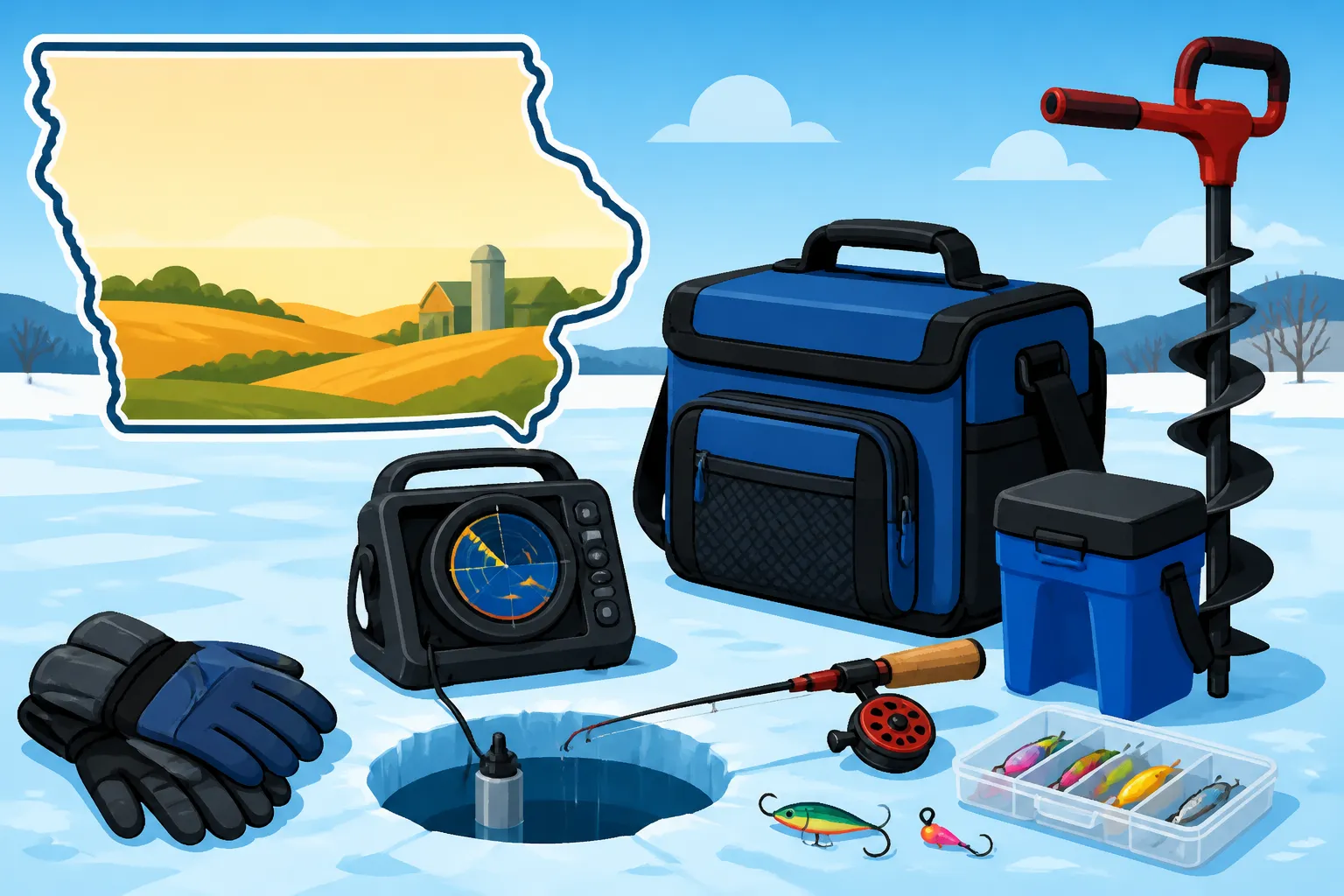
While not every single piece of gear in this category is absolutely mandatory for your very first trip, some items like an auger are non-negotiable, and others, like a fish finder, will significantly improve your success and enjoyment on the ice. They help you find fish, get your lines in the water, and manage your catch efficiently.
Ice Augers: Manual, Electric, or Gas?
An auger is how you make holes in the ice, and you absolutely need one. The choice depends on your budget, strength, and how many holes you plan to drill.
- Manual Augers: These are hand-cranked and the most affordable option. They are perfect for beginners who want to try ice fishing without a big investment. They work great for drilling a few holes, especially in thinner ice (under 10 inches). Brands like Mora and Eskimo make reliable manual augers. If you're only planning a couple of holes on thinner ice, this is a perfectly good starting point.
- Electric Augers: Powered by rechargeable batteries, these augers are quiet, eco-friendly, and require minimal effort. They're becoming increasingly popular as battery technology improves, offering the power to drill many holes on a single charge. Brands like Strikemaster and ION are leaders in this space. They are more expensive than manual augers but offer a huge convenience upgrade.
- Gas Augers: These are the most powerful and fastest augers, capable of drilling dozens of holes through thick ice with ease. However, they are also the heaviest, noisiest, and require fuel and maintenance. They're usually favored by serious ice anglers who move around a lot or fish on very thick ice. Jiffy and Strikemaster are well-known gas auger manufacturers.
For a beginner, a manual auger is perfectly sufficient. If you catch the ice fishing bug, an electric auger is often the next logical upgrade. You can learn more about choosing the right one in our guide on Best Auger for Iowa Ice Fishing.
Fish Finders: Flasher, LCD, or Livescope?
A fish finder, or "flasher" as they're often called in ice fishing, is a game-changer. While you can certainly catch fish without one, a good fish finder allows you to:
-
See your bait: You can watch your jig or minnow as it descends, ensuring it's at the correct depth.
-
Locate fish: It shows you fish swimming directly under your hole, allowing you to react instantly.
-
Identify structure: Some units can even help you pinpoint underwater structure that holds fish.
-
Flasher Units: These are the traditional ice fishing fish finders. They use a rotating LED display to show real-time sonar returns as flashes of color. They are incredibly intuitive once you understand them, very durable, and excel in cold weather. Brands like Vexilar, Marcum, and Humminbird (with their Ice Helix series) are top choices. For a beginner, a basic flasher is often the easiest to learn and interpret.
-
LCD Units: Many open-water fish finders can be converted for ice use with a special transducer. These offer a more detailed, traditional screen display. Some even have GPS mapping capabilities, which is great for marking productive spots.
-
Livescope/Panoptix (Forward-Facing Sonar): This is the cutting edge of ice fishing electronics, allowing you to see fish moving around your hole in real-time, often out to 50-100 feet. It's incredibly effective but also very expensive and complex for a beginner.
For your first few trips, a simple flasher will give you an immense advantage. Being able to see how fish react to your bait is an invaluable learning tool.
Basic Tools: Scoopers, Skimmers, and Pliers
Beyond your auger, a few other small tools will make your life easier on the ice.
- Ice Scoop/Skimmer: As discussed earlier, this is essential for keeping your hole clear of slush and ice buildup. Choose a sturdy one with a long handle.
- Pliers/Hook Removers: Fish have teeth! A good pair of long-nosed pliers or a dedicated hook remover is crucial for safely extracting hooks, especially from toothy fish like northern pike or even larger walleye. This prevents injuries to both you and the fish, allowing for safe release if you're not keeping them.
- Line Clippers: Small, sharp clippers (or even nail clippers) are perfect for cleanly cutting fishing line.
- Tape Measure or Ruler: To ensure your catch meets legal size requirements, especially for species like walleye which often have minimum length limits. Many state regulations, like those detailed in the Iowa Fishing Regulations Explained, specify these limits.
- Small Buckets or Sled: Great for carrying gear to your spot, sitting on, or holding your catch. A 5-gallon bucket is a versatile friend on the ice.
Safety First: Beyond the Basics for a Worry-Free Trip
No matter how much gear you have or how many fish you catch, safety should always be your top priority when ice fishing. Iowa's frozen lakes and rivers can be beautiful but unforgiving. Being prepared for potential hazards is just as important as having the right rod and reel. Never take unnecessary risks on the ice.
Personal Safety Gear: Ice Picks and Spud Bars
These items are inexpensive, easy to use, and could save your life.
- Ice Picks (Ice Claws): These are two sharp, spiked handles connected by a cord, worn around your neck. If you happen to fall through the ice, you can use the picks to gain traction on the slippery ice and pull yourself out. They are absolutely non-negotiable for anyone stepping onto the ice. You can find them for under $20 at most sporting goods stores or on Amazon.
- Spud Bar: A heavy, pointed steel bar used to test ice thickness as you walk. You strike the ice in front of you; if it goes through easily, the ice is too thin. This is especially important early in the season or on unfamiliar bodies of water. A spud bar can help you avoid dangerous spots before you even get close. While a manual auger can be used to check ice, a spud bar allows you to quickly check larger areas while moving. Knowing the Best Ice Thickness for Safe Ice Fishing is critical.
These two items are your first line of defense against the most significant danger in ice fishing: falling through the ice. Carry and use them diligently.
Emergency Preparedness on the Ice
Beyond personal safety gear, thinking about what you'd do in a minor emergency can make a big difference.
- First-Aid Kit: A small, waterproof kit with bandages, antiseptic wipes, pain relievers, and any personal medications. Slips and falls can happen, and minor cuts from hooks or knives are always a possibility.
- Fire Starter/Matches: In a worst-case scenario where you're stranded or extremely cold, having a way to start a small fire (even if just for warmth and morale) can be vital.
- Whistle: For signaling for help if you're out of earshot.
- Fully Charged Phone: Keep it in an inside pocket to protect the battery from the cold. A portable charger is also a good idea. Make sure you know how to dial 911 or contact local authorities.
- Throw Rope: If fishing with others, a throw rope (a bag containing a coil of rope) can be thrown to someone who has fallen through the ice, allowing you to pull them to safety from a distance.
- Buddy System: Never ice fish alone, especially as a beginner. Always go with at least one other person. This ensures there's someone to help in an emergency.
Planning ahead for emergencies doesn't mean you're expecting something bad to happen; it means you're a responsible angler who values safety. Our comprehensive guide to Ice Fishing Safety on Iowa Lakes covers many more important considerations.
Understanding Ice Thickness and Conditions
The single most critical piece of safety knowledge is how to assess ice conditions. Ice is rarely uniform, and its thickness can vary dramatically even on the same body of water.
- New, Clear Ice: Generally the strongest.
- 2 inches or less: Stay off!
- 4 inches: Minimum for ice fishing on foot.
- 5-7 inches: Safe for ATVs/Snowmobiles.
- 8-12 inches: Safe for small cars.
- 12-15 inches: Safe for medium trucks.
- Cloudy or "Snow Ice": Formed from frozen snow and slush, it's about half as strong as clear ice.
- Spring Ice: Even if thick, it's often honeycomb-structured and very weak. Stay off!
- River Ice: Rivers and areas with currents (like those near the Mississippi River Pool 9 Fishing spots) can have highly unpredictable ice conditions, even in severe cold. Currents can erode ice from underneath, making seemingly thick ice dangerously thin. Always exercise extreme caution on moving water.
- Ice near structures: Around bridges, docks, inlets, or outlets, ice can be thinner due to water movement or heat absorption by structures.
Always check with local bait shops, the Iowa DNR, or fellow anglers for current ice conditions before heading out. Never assume the ice is safe, even if others are out there. Take the time to assess it yourself, and if in doubt, stay off.
Disclaimer
The information provided in this guide is for general informational purposes only and does not constitute professional advice. Ice fishing can be a dangerous activity. Always exercise caution, adhere to all local regulations, and prioritize your safety. Ice conditions can change rapidly; never assume ice is safe without proper verification. The author and publisher are not responsible for any accidents, injuries, or other incidents that may occur while following the advice in this article.