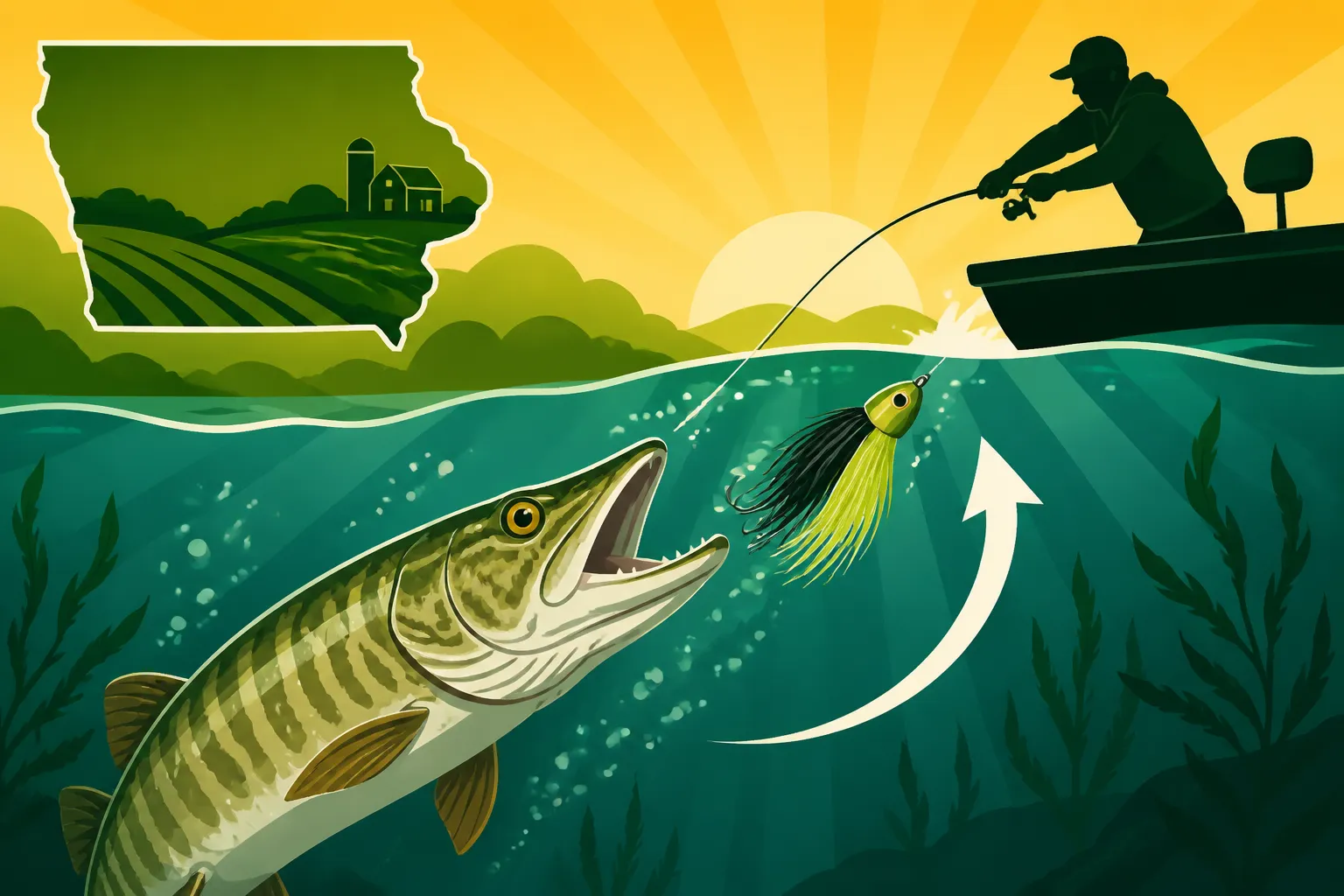
How to Retrieve a Bucktail for Muskie
The thought of chasing a muskie can be exhilarating, but many anglers get overwhelmed by the sheer variety of lures and techniques. One of the most iconic and effective lures for these apex predators is the bucktail, yet simply casting it out isn't enough. Mastering the retrieve is what separates a casual cast from a fish-producing presentation, and this guide is here to walk you through the nuances of making your bucktail irresistible to Iowa's muskies.
Understanding the Bucktail's Appeal to Muskie
Bucktails are truly classic muskie lures, and for good reason. They are designed to create a lot of flash, vibration, and a realistic profile in the water, mimicking a fleeing baitfish. Muskies are ambush predators, often lurking in cover, waiting for an easy meal to pass by. A properly retrieved bucktail screams "easy meal" directly into their lateral line.
The Dynamics of Flash and Vibration
The spinning blades on a bucktail create incredible flash, especially on sunny days or in clear water. This visual stimulation is a major trigger for muskies, drawing them in from a distance. But it's not just about what they see. The blades also displace water, creating a powerful vibration that muskies can detect with their lateral line, even in murky conditions or low light. Think of it like a sonar ping for the fish, telling them exactly where their next meal is swimming. Different blade shapes, like Colorado, Indiana, or willowleaf, will produce varying degrees of flash and thumping vibration. Learning to choose the right blade for the conditions is a key part of your Iowa Fishing Techniques Guide.
Emulating a Fleeing Baitfish
Beyond the flash and vibration, the bucktail's hair (traditionally deer hair, hence the "bucktail") pulsates and breathes in the water, giving it a lifelike appearance. As you retrieve, the hair flares and collapses, mimicking the natural movement of a distressed or fleeing baitfish. Muskies are opportunistic hunters, and a lure that appears vulnerable is often more enticing than one that looks perfectly healthy. This combination of visual and auditory cues, paired with a realistic motion, makes the bucktail an incredibly effective tool for attracting these toothy giants.
The Art of the Retrieve: Techniques and Variations
Retrieving a bucktail isn't just about reeling in your line. It's a dynamic dance of speed, pauses, and sudden movements that can turn a following muskie into a striking machine. The goal is to imitate a baitfish that's either fleeing in panic or acting erratically, piquing the muskie's predatory instinct.
The Steady Burn Retrieve
The "steady burn" is often the first technique anglers learn, and it's a foundation for all other bucktail retrieves. It involves a consistent, medium-to-fast retrieve where the blades are constantly spinning and the bucktail is moving smoothly through the water. The key here is consistency; you want to maintain constant tension on the line and keep those blades turning. This retrieve is excellent for covering a lot of water and eliciting a reaction strike from active fish. It also helps muskies track the lure from a distance. If you're fishing in areas like the Iowa Great Lakes, a steady retrieve can be very effective over weed flats or open water where fish are cruising.
A common mistake is retrieving too slowly, causing the blades to foul or not spin properly. You want enough speed to keep the blades fully engaged. This retrieve relies on the muskie's instinct to chase down prey that's trying to escape. Varying your speed slightly within this steady retrieve can also be beneficial, occasionally speeding up for a few cranks before settling back into your rhythm.
Incorporating Pauses and Twitches
While the steady burn is great for active fish, sometimes a muskie needs a little more coaxing. This is where pauses and twitches come in. Imagine a baitfish swimming along, suddenly pausing, perhaps disoriented, then darting off again. That momentary hesitation can be the trigger for a muskie to strike.
To execute this, try reeling at your steady burn pace for a few seconds, then briefly pause your retrieve for a split second, letting the bucktail helicopter or flutter slightly, before immediately resuming your retrieve. The key is that the pause should be quick and intentional, not a full stop. You can also add small rod twitches during the retrieve, causing the lure to briefly dart or change direction. This erratic movement can mimic a wounded or struggling baitfish, making it an even more enticing target. These techniques are particularly effective when muskies are following but not committing to a strike, often seen in cooler water or when fish are more lethargic. You might find the best time of year for muskie fishing in Iowa often involves slightly more aggressive retrieves, while colder water demands more finesse.
The Figure-Eight at the Boat
This is perhaps the most crucial retrieve technique for muskie fishing and often leads to strikes right at the boat. Muskies are notorious for following a lure all the way to the boat without striking, only to be triggered by the "figure-eight." When your bucktail is about a rod's length from your rod tip, instead of simply lifting it out of the water, plunge your rod tip into the water and begin drawing a large figure-eight pattern with your lure.
Keep the lure moving through the water smoothly, maintaining blade spin, tracing wide loops right next to your boat. The idea is to keep the lure in the water, imitating a fish that's attempting to escape the boat's presence. Many times, a muskie will be right behind the lure, and this sudden, continuous movement in a tight pattern is the final trigger. It's an adrenaline rush when a muskie suddenly appears out of nowhere during the figure-eight and slams your bucktail! Mastering the Figure-Eight Technique for Muskie at the Boat will significantly increase your success rate.
Using the Current to Your Advantage
When fishing rivers like the Mississippi River or the Des Moines River, the current can be your friend. Instead of fighting it, use it to enhance your bucktail's presentation. Casting slightly upstream and retrieving with the current allows the bucktail to move naturally, often resembling a baitfish being swept downstream.
You can also cast across the current and let the bucktail swing downstream, creating a sweeping arc. During this swing, the current will help keep the blades spinning, and you can add subtle twitches or pauses. This often exposes the bucktail to muskies that are holding in current breaks or behind structure, waiting for food to drift by. Experiment with different cast angles and retrieve speeds to see what the fish are responding to on a given day. Always be mindful of your line control when using the current, ensuring you maintain a direct connection to your lure to feel any subtle strikes.
Matching Bucktails to Conditions
The world of bucktails is vast, with countless variations in size, color, and blade type. Choosing the right one for the specific conditions you're fishing in Iowa can make a huge difference in your success. It's not just about what looks good to you; it's about what looks appealing and visible to the muskie.
Color Selection for Water Clarity and Light
Color plays a vital role in lure visibility. In clear water, natural baitfish patterns like perch, shad, or sucker imitations work well. Silver, white, and subtle greens can be highly effective. If the water is stained or murky, brighter, more contrasting colors become essential. Chartreuse, orange, firetiger, or black are often go-to choices because they create a stronger silhouette against the darker water. On bright, sunny days, metallic blades (silver, gold) add maximum flash, while on cloudy days or in low light, fluorescent colors and darker blades can provide better contrast. Many anglers keep a diverse selection of bucktails in their tackle boxes, often purchased from reputable outdoor retailers or even online through platforms like Amazon, ensuring they have options for any situation.
Blade Type and Water Resistance
The type of blade on your bucktail significantly impacts its vibration and how easily it can be retrieved.
- Colorado Blades: These are round and dish-shaped, creating the most vibration and "thump" in the water. They offer a lot of resistance, making them slower to retrieve and ideal for shallower water, slower retrieves, or when you want to really feel the lure working.
- Indiana Blades: These are a hybrid, oval-shaped, offering a good balance of flash and vibration. They are easier to retrieve than Colorado blades and work well for a medium-speed retrieve in various conditions.
- Willowleaf Blades: Long and slender, these blades create the least resistance and spin very fast, producing maximum flash with minimal vibration. They are perfect for fast retrieves, deeper water, or when muskies are keying in on speed. These are often easier to find in various sizes and colors, sometimes even in multi-packs on sites like Amazon.
Knowing when to switch between these blade types based on fish activity and water depth is a sign of a seasoned muskie angler. If you're struggling to get a bite, try a different blade type!
Size Matters: Matching the Hatch and Aggression
Bucktails come in a dizzying array of sizes, from small "mini" bucktails to monstrous "magnum" versions. Generally, larger bucktails create more commotion and are intended for bigger, more aggressive fish. Smaller bucktails might be better for pressured waters or when muskies are feeding on smaller baitfish.
A good rule of thumb is to "match the hatch," meaning using a bucktail size that approximates the size of the predominant baitfish in the area you're fishing. However, muskies are often drawn to larger prey, so don't be afraid to throw a big bucktail, especially if you're targeting a Trophy Muskie Size in Iowa. If fish are actively feeding, a larger, more aggressive presentation might be what they're looking for. If they're a bit more sluggish, a slightly smaller or slower presentation might entice them. Keeping a range of sizes, potentially from different manufacturers or found on outdoor gear sites, is always a good strategy.
| Condition | Recommended Blade Type | Recommended Color Palette | Recommended Retrieval Speed | Notes |
|---|---|---|---|---|
| Clear Water, Sunny | Willowleaf, Indiana | Natural, Silver, White | Medium to Fast | Max flash, subtle vibration. |
| Clear Water, Cloudy | Indiana, Colorado | Natural, Chartreuse | Medium | Good balance, some thump. |
| Stained Water | Colorado, Indiana | Firetiger, Chartreuse, Black | Slow to Medium | Max vibration, strong silhouette. |
| Murky Water | Colorado | Black, Orange | Slow | Strongest thump, high contrast. |
| Aggressive Fish | Willowleaf, Indiana | Bright, Contrasting | Fast, Jerky | Evokes chase, reaction strikes. |
| Neutral/Followers | Indiana, Colorado | Natural, Subtle | Medium with Pauses/Twitches | Triggers commitment. |
Fine-Tuning Your Setup for Bucktail Success
Your rod, reel, and line setup are just as important as your bucktail selection and retrieval technique. Muskie fishing, especially with larger bucktails, puts a lot of strain on your gear, so having a balanced and robust setup is critical. Without the right tools, even the best retrieve can fall short.
The Right Rod and Reel Combination
For bucktail fishing, you need a powerful rod with a fast or extra-fast action. A heavy or extra-heavy power rod, typically 8 to 9 feet in length, provides the leverage needed to cast large, heavy bucktails long distances and to drive hooks into a muskie's bony mouth. The length also helps with those crucial figure-eights at the boat.
Pair this with a heavy-duty baitcasting reel, specifically designed for muskie or saltwater use. It needs a strong drag system and a good retrieve ratio (around 5.1:1 to 6.4:1) that can handle the resistance of large blades and quickly pick up slack when a muskie charges. A good quality muskie reel will ensure you can retrieve those bucktails all day without fatigue and have the power to bring in a monster. You can find excellent options for specific Best Rod Length for Iowa River Walleye Fishing or even muskie on major online retailers.
Line and Leader Choices
When it comes to line, braided line is almost universally preferred for muskie fishing with bucktails. It offers superior strength, no stretch for solid hooksets, and excellent sensitivity, allowing you to feel the blades spinning and detect subtle bites. A good Best Line Weight for Muskie Fishing is typically 80-100 pound test. This might seem excessive, but it's necessary for handling the lure weight, the powerful fight of a muskie, and the potential for snags.
A robust leader is non-negotiable for muskie. These fish have razor-sharp teeth that will easily cut through monofilament or fluorocarbon. A heavy-duty fluorocarbon leader (100-150 lb test) or a wire leader is essential. The leader should be at least 12-18 inches long to prevent the muskie from biting through your main line. Some anglers prefer solid wire leaders for maximum tooth protection, while others opt for fluorocarbon for its lower visibility. Always check your leader for nicks and abrasions after every fish or snag.
The Importance of Sharp Hooks
This might seem obvious, but it's often overlooked. Bucktails come with treble hooks, and ensuring they are sticky-sharp is paramount. Muskies have hard, bony mouths, and a dull hook will often just bounce off, resulting in a lost fish. Carry a hook sharpener with you and periodically check your hooks. If they're not sharp enough to easily catch on your fingernail, sharpen them.
Sometimes, after a few fish or snags, hooks can become bent or dull beyond repair. Don't hesitate to replace them. Quality replacement hooks can significantly improve your hook-up ratio. You can usually find a good selection of treble hooks on sites like Amazon, ensuring you're always prepared.
Remember, every element of your setup works together. A well-tuned rod and reel, strong line and leader, and razor-sharp hooks will empower your bucktail retrieve and significantly increase your chances of landing one of Iowa's elusive muskies.
Disclaimer
This article is for general informational purposes only and does not constitute professional advice. Laws, prices and regulations vary by location and change over time. Consult a qualified professional for guidance on your specific situation.