Fishing the Mississippi River in Iowa
The Mississippi River. Just saying the name conjures images of mighty currents, historic steamboats, and endless fishing possibilities. But for many Iowa anglers, that feeling of awe is often mixed with a touch of intimidation. This isn't your average farm pond; it's a vast, dynamic system with unique challenges, from powerful currents to complex backwaters. If you've ever felt overwhelmed by where to start, what to use, or how to even navigate this colossal waterway, you're not alone. This comprehensive guide is designed to cut through the confusion, offering you realistic, actionable advice to confidently tackle and master fishing the Mississippi River in Iowa.
Understanding the Mighty Mississippi's Unique Challenges
Fishing the Mississippi River is an experience unlike any other in Iowa. Its sheer size, the constant flow of water, and its ever-changing landscape present both incredible opportunities and significant hurdles. It’s a river that demands respect and a solid understanding of its character before you even cast a line. Many anglers get frustrated because they approach it like a lake, but that's where the learning curve kicks in. This river is a living, breathing system, and understanding its rhythms is your first step to success.
Navigating the River's Complex Currents
The most defining feature of the Mississippi is its current. It’s not static; it varies wildly depending on recent rainfall, dam operations, and even the time of year. Strong currents can sweep your bait away, make boat control a nightmare, and push fish into specific holding areas. Conversely, slack water pockets can be fish magnets. Learning to "read the water" – identifying seams where fast water meets slow, recognizing eddies behind structures, and understanding how current influences fish behavior – is an essential skill. Think of it as a giant, ever-shifting puzzle. A common frustration is fighting the current all day, only to realize the fish are tucked away in a quiet backwater, completely out of the main flow.
Boat control is paramount here. If you're drifting, knowing how to use your motor or a drift sock to slow down and stay over productive areas is critical. For those fishing from shore, finding spots with natural current breaks, like points or brush piles, becomes even more important. It’s all about finding those sweet spots where fish can conserve energy while still having access to passing food.
Identifying Key Structures: Wing Dams, Backwaters, and Eddies
The Mississippi River in Iowa is absolutely riddled with fish-holding structures, many of them man-made or significantly influenced by human activity. These aren't just random spots; they are key pieces of the puzzle that dictate where fish will be.
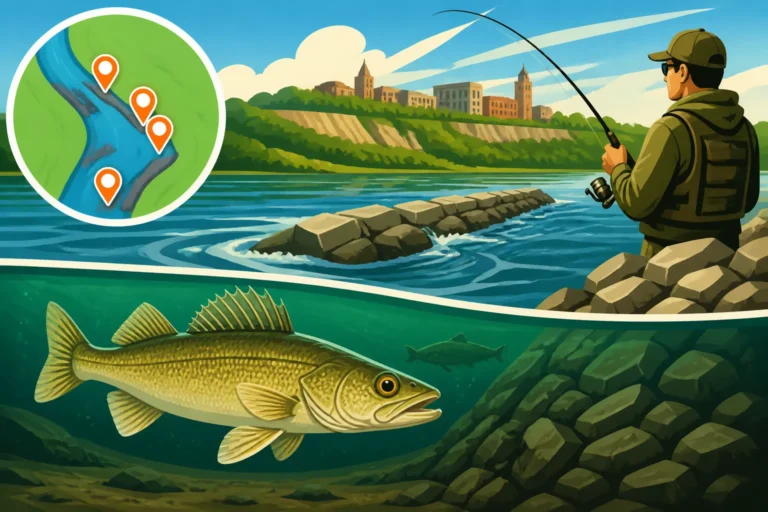
- Wing Dams: These rock structures extend from the bank out into the river, designed to funnel water and maintain navigation channels. They create incredible current breaks on their downstream side, as well as scour holes at their ends where fish love to ambush prey. The top of the wing dam itself, where the current washes over it, can also be a hotspot. Anglers often refer to these as their personal fish factories because of the diverse habitats they create. For a deep dive into specific strategies, our guide on Wing Dam Fishing on the Mississippi River is an excellent resource.
- Backwaters: These are the quiet, often shallower areas away from the main channel, connected by narrow cuts or sloughs. They offer refuge from strong currents, serve as vital spawning grounds, and are prime habitat for panfish, bass, and northern pike, especially during colder months. Accessing them can sometimes be tricky, requiring smaller boats or kayaks, but the rewards are often worth the effort.
- Eddies and Seams: An eddy is a circular current created when water flows past an obstruction. Fish often sit in the calmer water of an eddy, waiting for food to be swept past by the main current. Seams are the visible lines where fast-moving water meets slower water. These are classic ambush points for predatory fish like walleye and smallmouth bass. Learning to spot these subtle differences in water movement is a game-changer.
- Revetments and Riprap: Many sections of the riverbanks are reinforced with rock revetments to prevent erosion. These rocky banks provide excellent habitat for baitfish and, consequently, game fish. Bass and catfish often patrol these areas, especially where there's submerged timber or other cover.
Seasonal Fluctuations and Their Impact on Fishing
The Mississippi River changes dramatically throughout the year, and what works in April might be completely ineffective in August. Understanding these seasonal shifts is crucial for consistent success.
- Spring: High water from snowmelt and spring rains is common. The river can be muddy and swift, pushing fish into calmer backwaters or tight against current breaks. This is also a major spawning period for many species, leading to unique patterns. The Iowa Fishing Season Dates and Limits article provides a great overview of when different species become active.
- Summer: Water levels generally stabilize, and temperatures rise. Fish spread out more, but still relate to current, seeking cooler, oxygenated water. Catfish activity heats up significantly. You might find fish in deeper holes during the day, moving shallower during low light.
- **Fall: As temperatures cool, fish go on a major feeding binge, bulking up for winter. This is often considered one of the best times for walleye and bass fishing, as they become very aggressive. Water levels can start to drop, concentrating fish in certain areas.
- Winter: The river can freeze over in quieter backwaters and sloughs, opening up ice fishing opportunities. The main channel often remains open, and winter walleye fishing can be phenomenal in specific areas, often below dams or in deep holes.
Each season presents its own set of challenges and rewards, requiring anglers to adapt their strategies, baits, and even their target species. There’s no "one size fits all" approach on the Mississippi.
Top Fish Species to Target on the Iowa Mississippi
The Mississippi River is a fantastic multi-species fishery, boasting a diverse population that appeals to every type of angler. Whether you're after a trophy, a tasty meal, or just a fun fight, you'll find something biting here. Knowing what to target and where they typically hang out will save you a lot of time and frustration.
Walleye and Sauger: River Kings
Walleye are undoubtedly one of the most sought-after fish on the Mississippi. Known for their delicious white flesh and challenging bite, they thrive in the river's dynamic environment. Their close cousin, the sauger, is often found in similar habitats and can provide just as much angling excitement.
- Walleye: These fish prefer deeper, cooler water and relate strongly to current breaks. You'll often find them on the downstream side of wing dams, in current seams, and in deep holes, especially those with rocky or gravel bottoms. They are ambush predators, so presentation is key. Many anglers find the best success by using jigs tipped with live bait (like minnows or nightcrawlers) or by trolling crankbaits along contours. Early morning and late evening are prime times, as walleye are light-sensitive. Our guide on How to Catch Walleye in Iowa offers even more detailed techniques.
- Sauger: Sauger are often more tolerant of turbid (murky) water than walleye and tend to inhabit slightly stronger currents and deeper areas. They can be found in similar locations as walleye but often in greater numbers in areas with more current flow. Distinguishing between the two can be tricky, but sauger typically have distinct spots on their dorsal fin and lack the white tip on the lower caudal fin that walleye possess. They strike aggressively and provide an excellent fight.
- Best Seasons: Walleye and sauger fishing is excellent in the spring during their spawning runs, and again in the fall when they feed heavily. Winter can also be highly productive, particularly in open water sections below dams or in deep scour holes. Remember to check the Walleye Season and Size Limits to ensure you're fishing legally.
Channel and Flathead Catfish: Bottom Dwellers
For many, catfish are the true workhorses of the Mississippi, offering powerful fights and incredible eating. Both channel cats and flatheads grow to impressive sizes in this fertile river system.
- Channel Catfish: These are arguably the most abundant and easiest-to-catch catfish species in the Mississippi. They are scavengers and opportunistic feeders, found almost everywhere – from deep holes in the main channel to shallower backwaters and rocky banks. They'll readily take a variety of baits, including cut bait (like shad or suckers), stink baits, chicken livers, and even nightcrawlers. Fishing on the bottom with a simple weight-and-hook rig is the most effective method. Night fishing for channel cats can be particularly rewarding. You can learn more techniques in our How to Catch Catfish in Iowa guide.
- Flathead Catfish: The "king" of Mississippi River cats, flatheads are solitary, predatory fish that prefer live bait. They are often found in areas with heavy cover, such as logjams, submerged trees, and deep holes with structure. They can grow to enormous sizes, often exceeding 50 pounds, making them a trophy fish for many. Live bluegill, carp, or suckers are typical baits, fished right on the bottom near their hideouts. They are notoriously powerful fighters and demand heavy-duty tackle.
- Best Seasons: Catfish fishing is strong from late spring through fall, peaking in the summer when water temperatures are warm. Flatheads are especially active during the summer nights. Always be aware of the Catfish Possession Limits before heading out.
Largemouth and Smallmouth Bass: Structure Hunters
While not as famous for bass as some southern lakes, the Iowa Mississippi offers fantastic opportunities for both largemouth and smallmouth bass, especially if you know where to look.
- Largemouth Bass: You'll typically find largemouth in the calmer, vegetated backwaters, oxbows, and sloughs off the main river channel. They love submerged wood, lily pads, and thick grass. Spinnerbaits, jigs, plastic worms, and topwater lures are all effective, especially when fished around dense cover. The key is to get into those quieter, protected areas that offer them ambush points.
- Smallmouth Bass: The "river smallie" is a powerful, aggressive fighter that thrives in current. Look for them around rocky areas, wing dams, riprap banks, and current seams in the main channel or larger side channels. They love to ambush baitfish from cover. Crankbaits, jigs, tubes, and topwater lures can be incredibly effective. Casting parallel to wing dams or rocky banks, letting the current work your lure, is a proven strategy.
- Best Seasons: Bass fishing is excellent from late spring through early fall. The pre-spawn and post-spawn periods can be particularly good, as bass are actively feeding. As summer progresses, they might move deeper or into denser cover.
Panfish and Northern Pike: Hidden Gems
Don't overlook the smaller but abundant species in the Mississippi. Panfish provide consistent action, especially for families and beginners, while northern pike offer thrilling, aggressive strikes.
- Crappie and Bluegill: These popular panfish are abundant in the Mississippi's backwaters, sloughs, and protected bay areas. They gravitate towards submerged timber, brush piles, and weed beds. Small jigs, minnows, or worms fished under a bobber are classic and effective methods. They provide fantastic table fare and can be caught year-round, with spring and fall being particularly productive.
- Northern Pike: Often found in cooler, vegetated backwaters and slower-moving side channels, northern pike are ambush predators with a fierce strike. Large spoons, spinnerbaits, and live minnows are go-to baits. They are known for their sharp teeth, so heavy leaders are a must. Pike fishing can be very exciting, especially during cooler months when they are actively feeding.
- Yellow Bass and White Bass: These schooling fish are incredibly fun to catch, often providing non-stop action when you find a school. They chase baitfish in open water, often near current breaks or dam structures. Small spoons, jigs, and spinners are excellent for these feisty fighters. Keep an eye out for feeding frenzies on the surface!
The diversity of the Mississippi truly means there’s never a dull moment. You can easily switch your focus if one species isn't biting, making every trip an adventure.
Essential Gear for Mississippi River Angling
Fishing the Mississippi isn't just about showing up with a rod and reel. Its vastness, powerful currents, and the size of its fish demand specific gear that can withstand the rigors of river fishing. Skimping on tackle here can lead to lost fish, broken lines, and a lot of frustration. Let's talk about what you really need to be successful.
Rods, Reels, and Line: Power and Sensitivity
Your choice of rod, reel, and line is critical for tackling the Mississippi's diverse conditions and powerful fish. You'll want a balance of strength to handle current and heavy fish, and sensitivity to feel subtle bites.
- Rods:
- Medium-Heavy Action Spinning Rod (6'6" – 7'6"): This is your versatile workhorse. Ideal for throwing jigs, working crankbaits for walleye and bass, and even some lighter catfish setups. The length helps with casting distance and managing line in current.
- Heavy Action Casting Rod (7' – 8'): Essential for serious catfish anglers, particularly those targeting flatheads with live bait, or for muskie fishing (if you're venturing into that realm). This rod needs the backbone to set hooks into tough mouths and muscle large fish out of heavy cover.
- Medium Action Panfish Rod (5' – 6'6"): For lighter pursuits in backwaters, a sensitive panfish rod is perfect for crappie and bluegill. It makes catching these smaller species much more enjoyable.
- Reels:
- Spinning Reels (Size 2500-4000): Match these to your medium-heavy rods for walleye, bass, and general river fishing. A smooth drag system is non-negotiable for fighting fish in current. Brands like Shimano and Daiwa offer excellent options for durability and performance.
- Baitcasting Reels (Heavy Duty): For your heavy casting rod, a reliable baitcasting reel with a strong retrieve and large line capacity is a must for catfish and muskie. Look for models designed for heavy-duty applications.
- Line:
- Braided Line (10-30 lb test): This is highly recommended for most Mississippi River applications. Its zero-stretch quality provides incredible sensitivity, allowing you to feel those subtle bites in current. It also has a smaller diameter for its strength, helping to cut through the water. For catfish, you might even go up to 50-80 lb test. Always use a fluorocarbon or monofilament leader (8-20 lb test) for abrasion resistance and invisibility, especially for walleye and bass.
- Monofilament Line (8-20 lb test): While less sensitive, monofilament's stretch can be beneficial for certain techniques, like trolling crankbaits, or for panfish where sensitivity isn't as critical. It's also more forgiving for beginners.
- Fluorocarbon Line (10-20 lb test): As a main line, it offers low stretch and invisibility, making it a favorite for bass anglers in clearer backwaters. However, it's more expensive and can be stiffer than braid.
Baits and Lures: Matching the Hatch and Conditions
The Mississippi's vastness means a wide array of baitfish, so having a diverse tackle box is key. What works one day might not work the next, or in a different section of the river.
- Live Bait:
- Minnows: Crucial for walleye and sauger, especially when jigging or drift fishing.
- Nightcrawlers: A universal bait, effective for walleye, sauger, bass, and panfish.
- Cut Bait: Shad, skipjack, or even pieces of carp are deadly for channel catfish and can attract flatheads.
- Live Panfish (Bluegill/Suckers): The go-to bait for trophy flathead catfish.
- Artificial Lures:
- Jigs (1/4 oz to 1 oz+): Indispensable for walleye, sauger, and bass. Tipped with plastic grubs, paddle tails, or live bait. You'll need a variety of weights to combat different current speeds and depths.
- Crankbaits: Great for trolling or casting for walleye, sauger, and bass. Look for deep-diving models for deeper river sections and those with natural baitfish patterns. Rapala, Berkley, and Bandit are popular brands.
- Spinnerbaits: Excellent for bass in backwaters and around cover, also effective for northern pike.
- Soft Plastics: Grubs, paddle tails, worms, and creature baits on jig heads or Texas-rigged are versatile for bass and walleye.
- Spoons: Good for casting to aggressive fish, particularly northern pike, and for vertical jigging in deeper spots.
Don't be afraid to experiment! The fish often tell you what they want. For those looking for local expertise on what baits are currently hot, a guided trip with a local outfitter found on platforms like FishingBooker can provide invaluable real-time advice.
Boat and Safety Equipment: Navigating Big Water
The Mississippi is a big river, and safety should always be your top priority. Whether you're in a bass boat, a jon boat, or a kayak, proper equipment is non-negotiable. Our guide on Best Boats for the Mississippi River can help you choose the right vessel.
- Boat:
- Jon Boats: Popular for their stability and ability to navigate shallower backwaters, while still being capable in the main channel on calmer days.
- Bass Boats/Walleye Boats: Offer speed and comfort for covering large distances and fishing varied conditions.
- Kayaks/Canoes: Excellent for accessing shallow backwaters and sloughs, but require extreme caution and ideal conditions in the main channel due to commercial traffic and strong currents.
- Safety Gear (Required by Law!):
- Life Jackets: One approved PFD (Personal Flotation Device) for every person on board, readily accessible. Kids 12 and under must wear them at all times on moving vessels.
- Throwable Flotation Device: A buoyant cushion or ring buoy.
- Sound-Producing Device: A whistle, horn, or bell.
- Navigation Lights: If operating between sunset and sunrise.
- Fire Extinguisher: Required for boats with inboard engines, closed compartments, or permanent fuel tanks.
- Visual Distress Signals: Required for vessels 16 feet or longer when operating in coastal waters (though Iowa is inland, it's good practice for large waters).
- Other Essential Gear:
- Anchor(s): You'll need a heavy anchor (or two) to hold your boat in current. A substantial grapple or river anchor is best.
- Trolling Motor: Essential for precise boat positioning, especially when fishing wing dams or subtle current breaks.
- Fish Finder/GPS: Invaluable for locating structure, marking fish, and navigating the vast river. A good GPS will help you mark hotspots and safely return to boat ramps.
- Maps/Charts: Detailed river charts are a must-have for identifying channels, depths, wing dams, and hazards.
- First-Aid Kit: Always be prepared for minor injuries.
- Emergency Contact Info/Communication: Cell phone (fully charged) and perhaps a marine radio for larger boats.
Always remember that the Mississippi is shared with large barges and other commercial traffic. Be aware of your surroundings, understand navigation rules, and give commercial vessels a wide berth. For a complete list of what's required, consult the Required Safety Equipment for Iowa Boats guide.
Mastering Mississippi River Fishing Techniques
The Mississippi River isn't a place for one-trick ponies. Its varied depths, structures, and currents demand a diverse toolkit of fishing techniques. What works for walleye in the main channel won't cut it for bass in a secluded backwater. Let's explore some of the most effective methods to fill your cooler and your photo album.
Jigging and Drifting for Walleye and Sauger
These two techniques are foundational for catching walleye and sauger on the Mississippi, allowing you to present baits effectively in current.
- Jigging: This is a versatile and often highly effective method. Use heavier jigs (1/4 to 1 ounce, sometimes more, depending on current and depth) tipped with a minnow, nightcrawler, or soft plastic grub. The key is to maintain bottom contact, bouncing the jig along the riverbed.
- Vertical Jigging: This works exceptionally well when you've located a concentration of fish, often in deeper holes or below dams. Position your boat directly above the fish (using your fish finder) and keep your line as vertical as possible, just letting the current give your jig action. This is particularly effective during colder months when fish are less active.
- Casting and Retrieving: When fishing wing dams or rocky banks, cast your jig upstream, let it sink to the bottom, and then retrieve it slowly, letting the current carry it downstream while maintaining contact. Many strikes occur as the jig falls or as it drifts over a subtle current break. Experiment with different jig colors and soft plastic tail styles to see what the fish prefer on a given day.
- Drifting: A fantastic way to cover water and find active fish. You can drift with the current in your boat, often using a drift sock to slow your pace.
- Bottom Bouncing: A popular rig involves a "bottom bouncer" weight (often 1 to 3 ounces) with a snelled hook or a spinner rig trailing behind it. This allows your bait (typically a live minnow or nightcrawler on a crawler harness) to tick along the bottom while your boat drifts. This is incredibly effective on flats, humps, and along the edges of channels.
- Three-Way Rig: This classic river rig uses a three-way swivel with a bell sinker on a short dropper line, and a snelled hook or a shallow-running crankbait on a longer leader. This allows you to present your bait just off the bottom while drifting or slowly trolling, keeping your lure in the strike zone without constant snagging.
The beauty of these techniques is their adaptability. You can adjust jig weight, drift speed, and bait presentation to match the specific conditions of the river on any given day.
Bottom Fishing for Catfish
When it comes to catfish on the Mississippi, it's all about getting your bait on the bottom and letting the scent do its work. Simplicity and patience are your best friends here.
- Slip Sinker Rig (Carolina Rig): This is the quintessential catfish rig. A weight (egg sinker, bullet sinker, or flat river sinker) slides freely on your main line, above a swivel. A leader (12-24 inches) is tied to the other side of the swivel, with a strong hook at the end. This allows the fish to pick up the bait and move away without feeling the weight of the sinker, leading to a more confident bite.
- Stationary Fishing: Find a promising spot – a deep hole, a logjam, the base of a riprap bank, or a scour hole below a wing dam – and anchor your boat. Cast your baited rigs to different spots around the boat and wait. This is a game of patience, as catfish often take their time to find and commit to a bait.
- Bait Selection is Key: As mentioned earlier, channel cats love cut bait, stink bait, and chicken livers. Flatheads demand fresh live bait. Don't be afraid to use generous chunks of bait; river cats aren't shy.
- Night Fishing: Catfish, especially flatheads, are primarily nocturnal feeders. Fishing after dark significantly increases your chances of success for larger fish. Use headlamps and glow sticks to keep track of your rods.
The heavy current of the Mississippi means you'll need heavier sinkers than you might typically use on a lake. Be prepared to use 1, 2, or even 3 ounces of lead to keep your bait pinned to the bottom. For more specialized techniques, look into Summer Catfish Techniques on the Mississippi River.
Targeting Bass in Backwaters and Wing Dams
Bass fishing on the Mississippi is all about finding and working structure, particularly where current is present but not overwhelming.
- Backwater Tactics (Largemouth):
- Flipping and Pitching: When fishing dense cover like lily pads, submerged timber, or thick grass beds in backwaters, flipping and pitching jigs, creature baits, or plastic worms is highly effective. Use heavy line and a strong rod to pull bass out of the cover.
- Topwater Lures: During low-light conditions (early morning, late evening) or on overcast days, topwater frogs, poppers, and walking baits can provoke explosive strikes over lily pads and shallow grass.
- Spinnerbaits: Excellent for covering water in backwaters, especially along weed lines or near fallen trees.
- Wing Dam Strategies (Smallmouth):
- Crankbaits and Jerkbaits: Cast shallow- to medium-diving crankbaits or jerkbaits parallel to the face of the wing dam or into the current break behind it. Let the current give the lure action.
- Jigs and Tubes: Smallmouth will readily hit jigs (swim jigs, hair jigs) or tube baits worked along the rocky edges of wing dams.
- Topwater (Walkers/Poppers): In calmer pockets around wing dams, especially during warmer months, topwater can be incredibly exciting.
- Riprap and Rocky Banks: Cast crankbaits, spinnerbaits, or jigs tight to these rocky banks. Smallmouth and occasionally largemouth will patrol these areas looking for crayfish and baitfish.
The constant flow and natural debris in the Mississippi make it a rich environment for bass, but it also means understanding how they use current breaks and cover to ambush prey.
Trolling Strategies for Wider Waters
Trolling can be a highly efficient way to cover large expanses of the Mississippi, particularly for walleye, sauger, and even some bass. It allows you to present multiple lures at specific depths and speeds.
- Deep-Diving Crankbaits: This is a primary trolling technique for walleye and sauger, especially along channel edges, humps, and flats in the main river. Use your fish finder to identify promising depths and structures, then select crankbaits that dive to that specific zone. Different models, like those from Bagley or Rapala, offer varying dive curves.
- Leadcore Line: For reaching extreme depths without heavy weights, leadcore line is often employed. The color changes on leadcore tell you approximately how much line is out, helping you control depth.
- Planer Boards: These devices allow you to spread your lines out horizontally from the boat, covering a wider swath of water and keeping lures away from the boat's propwash. This is especially useful in wider sections of the river.
- Three-Way Rig Trolling: Similar to drifting, a three-way rig can also be trolled slowly, keeping your bait or crankbait just off the bottom. This is particularly effective in areas with a consistent bottom contour.
- Speed and Direction: Experiment with trolling speeds and directions relative to the current. Sometimes trolling upstream at a slow pace works best, while other times, a faster downstream troll is more effective. The fish will tell you what they prefer.
- Contour Trolling: Use your GPS and depth finder to follow specific depth contours, especially along the edges of the main channel or around submerged islands. Walleye and sauger often relate to these breaks.
Trolling allows you to actively search for fish and present a wide profile of lures, making it a powerful tool on such a large river system. It’s also a great way to find fish when they're scattered.
Seasonal Strategies for Success on the Mississippi
The Mississippi River is a dynamic system, constantly changing with the seasons. A technique that worked wonders in spring might yield nothing in summer. To truly master this river, you need to adapt your approach throughout the year, understanding how temperature, water levels, and fish behavior shift.
Spring Runoff and Pre-Spawn Action
Spring on the Mississippi is a time of awakening, but it can also be a challenge due to fluctuating water levels and often muddy conditions from snowmelt and rain.
- Walleye and Sauger Spawning Runs: As ice melts and water temperatures rise into the 40s and 50s (Fahrenheit), walleye and sauger begin their annual spawning migration. They often concentrate below dams and in tributary mouths, where they stack up before moving to shallower, rocky areas to spawn.
- Tactics: Vertical jigging with minnows or plastics is incredibly effective below dams. Pitching jigs or suspending stickbaits in calmer current breaks near spawning areas can also be very productive. This is an exciting time, but remember that fish are often focused on reproduction, so handle them with care. The Iowa Walleye Season Opening Day is highly anticipated for good reason.
- Catfish Awakening: Channel catfish become active as water temperatures climb into the 50s. They'll start to move out of their wintering holes and look for food. Flatheads will follow a bit later.
- Tactics: Cut bait or nightcrawlers fished on the bottom in slightly warmer, calmer areas, like protected bends or tributary mouths, can yield good results.
- Bass in Backwaters: Largemouth bass will move into warmer, shallower backwaters and sloughs, staging for their spawn. Smallmouth will begin to frequent rocky banks and wing dams in the main river.
- Tactics: Lipless crankbaits, spinnerbaits, and jigs can be effective for prespawn largemouth. Smallmouth will often hit tubes, jigs, and crankbaits worked slowly along rocks.
- High Water/Muddy Conditions: If the river is high and muddy, focus your efforts on backwaters, tributary mouths, or areas with clearer incoming water. Fish will often seek refuge from the main current and use their lateral lines to locate prey in low visibility.
Summer Heat and Deep Water Tactics
Summer brings stable weather, but also higher water temperatures, which can push fish into specific comfort zones.
- Catfish Prime Time: Summer is peak season for catfish. Both channel and flathead catfish are incredibly active, especially during warm nights.
- Tactics: Fish deep holes, scour areas, and logjams for flatheads using live bait. Channel cats will be everywhere; use cut bait, stink bait, or chicken livers in the main channel, tributary mouths, and even some backwaters. The Night Fishing Rules for Anglers are especially relevant here.
- Walleye and Sauger Relocations: As water warms, walleye and sauger often move to deeper areas with good current flow and higher oxygen levels. They'll still relate to structure but might be found deeper on wing dams or along main channel drop-offs.
- Tactics: Deep-diving crankbaits trolled along contours, or vertical jigging with heavier jigs and plastics in deep holes are effective. Look for them on the deep side of wing dams or in scour holes.
- Bass in Cover: Largemouth will hold tight to heavy cover in backwaters – lily pads, submerged timber, and deep grass. Smallmouth will be found on current breaks, rocky points, and wing dams in deeper water.
- Tactics: Flipping and pitching jigs or worms into dense cover for largemouth. For smallmouth, crankbaits, tubes, and jigs worked along deeper structure. Topwater in low-light hours can still be productive.
- Panfish Action: Crappie and bluegill will be abundant in backwaters, relating to brush piles and submerged structure.
- Tactics: Small jigs and minnows/worms under a bobber remain effective. Target shaded areas or deeper brush piles during the heat of the day.
Fall Turnover and Feeding Frenzies
Fall is often considered one of the most exciting times to fish the Mississippi, as cooling water temperatures trigger aggressive feeding behavior in many species.
- Walleye and Sauger Feast: As water temperatures drop into the 50s and 40s, walleye and sauger go on a major feeding binge, bulking up for winter. They often become more aggressive and less particular about baits.
- Tactics: Trolling crankbaits, jigging with minnows or plastics, and casting blade baits are all highly effective. They will be found on wing dams, channel edges, and deep flats. This is a prime time for targeting trophy-sized fish. Our guide on Fall Fishing in Iowa has more details on this hot bite.
- Bass Aggression: Both largemouth and smallmouth will be actively feeding, often moving shallower to ambush baitfish.
- Tactics: Crankbaits, spinnerbaits, and jigs are excellent for covering water and triggering strikes. Look for smallmouth on rocky points and wing dams, and largemouth along shallow weed lines and wood in backwaters.
- Catfish Slowdown: Catfish activity will start to slow down as water temperatures continue to drop, but they can still be caught, particularly channel cats.
- Tactics: Focus on deeper holes and areas with a consistent food source. Cut bait will still work, but their metabolism will be slower.
- Northern Pike: Fall is a fantastic time for northern pike, as they become very aggressive.
- Tactics: Large spoons, spinnerbaits, and twitch baits in backwaters and protected bays.
Winter and Ice Fishing Opportunities
While sections of the main channel remain open and fishable year-round, calmer backwaters and sloughs offer unique ice fishing prospects.
- Open Water Walleye/Sauger: Even in winter, dedicated anglers can find success in open water. Focus on deep holes below dams or in the main channel where fish congregate.
- Tactics: Vertical jigging with heavy jigs (often spoons or blade baits) tipped with minnows. A good fish finder is crucial for locating these deep-holding fish. Winter Walleye Fishing Near Dubuque is a famous spot for this.
- Ice Fishing Backwaters: When stable ice forms on backwaters and protected bays, crappie, bluegill, and pike become primary targets.
- Tactics: Small jigs (often tipped with wax worms or minnow heads) for panfish. Tip-ups with large minnows for northern pike. Always prioritize Ice Fishing Safety on Iowa Lakes – ice thickness can vary greatly, even in backwaters.
- Catfish (less active): Catfish are much less active in winter but can still be caught in very deep holes, often near power plants or areas with slightly warmer water discharge. It’s a slow bite, but not impossible.
Regardless of the season, checking current river conditions – including water levels, temperature, and clarity – is paramount before heading out. Websites like the Iowa DNR and NOAA provide valuable, up-to-date information.
Navigating Regulations and Border Water Rules
Fishing the Mississippi River is an incredible experience, but it also comes with a unique set of rules, particularly because it acts as a border between Iowa and other states. Getting caught off guard by a regulation can quickly turn a fun day into a frustrating one, so understanding the nuances is absolutely essential.
Understanding Iowa's Specific River Regulations
While the river is shared, Iowa has its own set of rules that apply to its side of the Mississippi. These cover everything from license requirements to daily bag limits and length restrictions.
- Iowa Fishing License: Every angler 16 years or older needs a valid Iowa fishing license. This applies whether you're fishing from the bank, a boat, or through the ice. There are various options, including annual resident and non-resident licenses, as well as shorter-term permits like the Iowa One-Day Fishing License or Iowa Three-Day Nonresident Fishing License. Always make sure your license is current and on your person while fishing. You can purchase one easily through the Go Outdoors Iowa app or website.
- Daily Bag and Possession Limits: These limits are in place to manage fish populations and ensure sustainable fishing for everyone. They specify how many fish of a certain species you can keep in a single day (daily bag limit) and how many you can have in your possession after multiple days of fishing (possession limit, often twice the daily bag). These limits can vary by species (e.g., walleye, bass, catfish) and sometimes even by specific bodies of water. Always check the latest Iowa Fishing Regulations booklet or the DNR website for current limits. Our guide on Iowa Fishing Daily Bag Limits Guide provides a general overview.
- Length Limits: For certain species, there are minimum or maximum length limits. For instance, a walleye might need to be at least 15 inches long to be kept. These limits are designed to protect younger fish or trophy-sized breeding stock. Always have a measuring device handy.
- Allowed Fishing Methods: The regulations also detail what fishing methods are permitted. This includes the number of lines you can use, whether trotlines or jug fishing are allowed (and under what specific rules), and restrictions on certain types of bait. For example, some states have specific rules for transporting live fish to prevent the spread of diseases or invasive species.
It's your responsibility to know and follow these rules. Ignorance of the law is not an excuse, and penalties for violations can include fines and loss of fishing privileges.
Reciprocal Agreements with Neighboring States
This is where fishing the Mississippi gets particularly interesting – and sometimes confusing! Because the river forms a border with Wisconsin, Illinois, and Missouri, Iowa has reciprocal agreements with these states regarding fishing licenses and regulations.
- What Reciprocity Means: Generally, a valid fishing license from either Iowa or an adjacent state (Wisconsin, Illinois, or Missouri) will allow you to fish the entire navigable waters of the Mississippi River bordering those states. This means if you have an Iowa license, you can fish the Wisconsin side of the main channel without needing a Wisconsin license, and vice versa. The same applies to Illinois and Missouri.
- Where Reciprocity Applies: This agreement typically applies only to the main channel of the Mississippi River. It usually does not extend to inland waters, tributary streams, or backwaters that are entirely within one state's boundary. For example, if you float into a slough that's fully on the Iowa side, your Iowa license covers you. But if you drift into a backwater that's wholly within Illinois, you'd need an Illinois license. This is a common point of misunderstanding and can lead to violations. Our specific article on Iowa Fishing Regulations on the Mississippi River Border clarifies these often-tricky scenarios.
- Species-Specific Regulations: Even with reciprocal license agreements, the fishing regulations themselves (bag limits, length limits, seasons) might still be dictated by the state whose regulations are more restrictive, or there might be an agreed-upon common set of rules for border waters. This is why having the most current regulations booklet for both Iowa and the bordering state (if you're fishing near that border) is highly advisable. Don't assume that because your Iowa license is valid, Iowa's bass length limit automatically applies to the entire river.
- Boat Registration: Boat registration is generally by the state where the boat is principally used. So, if your boat is registered in Iowa, you can operate it on the Mississippi border waters without registering it in Illinois, Wisconsin, or Missouri. However, the safety equipment requirements of the state you are physically operating in may still apply. Details can be found in Iowa Boat Registration Requirements.
Always, always double-check the latest regulations from both Iowa and the bordering state you intend to fish, especially before venturing into unfamiliar backwater areas. When in doubt, it's safer to err on the side of caution or purchase a non-resident license for the other state if you plan to spend significant time in their exclusive waters.
Boat Registration and Safety Checklist
Operating a boat on the Mississippi is subject to both state and federal regulations, particularly regarding registration and safety equipment.
- Boat Registration: Any motorized vessel, and any sailboat over 13 feet, must be registered in Iowa if it's principally operated here. This includes boats with electric trolling motors. Registration involves paying a fee and obtaining registration numbers and a decal to display on your hull. Our guide on How to Register a Boat in Iowa walks you through the process.
- Boater Education: If you were born after January 1, 1979, and operate a motorboat of 10 horsepower or more, you need to complete a boater education course. This is crucial for safety and understanding navigation rules. Boater Education Requirements for Young Anglers has more information.
- Safety Equipment: Beyond your license, a boat on the Mississippi needs essential safety gear. As previously detailed in the "Essential Gear" section, this includes:
- PFDs (life jackets) for everyone on board.
- A throwable flotation device.
- A sound-producing device (whistle/horn).
- Navigation lights for night operation.
- A fire extinguisher if your boat has an engine or enclosed compartments.
- Visual distress signals for larger boats.
The Mississippi is a working river, shared with commercial barges and pleasure craft. Understanding the rules of the road, respecting navigation channels, and always prioritizing safety will ensure a smooth and enjoyable trip. Consider using a service like FishingBooker to hire a local guide who can not only put you on fish but also guide you through the intricacies of river navigation and regulations.
Prime Fishing Spots Along the Iowa Stretch of the Mississippi
The Mississippi River is a colossal fishery, and trying to tackle it all at once is a recipe for being overwhelmed. The good news is that the Iowa stretch is divided into distinct pools by a series of locks and dams, each offering unique characteristics and prime fishing spots. Focusing on specific pools allows you to get to know their nuances and find consistent success.
Pool-by-Pool Breakdown
The Iowa border runs along Pools 9 through 19, each managed by a specific lock and dam system that controls water levels and flow. While fish species are generally consistent across the pools, the prevalence of certain structures and the character of the backwaters can vary.
- Pool 9 (Lansing to Lynxville, WI): This is one of the more natural and diverse pools on the upper Mississippi. It's known for its extensive backwaters, sloughs, and islands, providing excellent habitat for largemouth bass, northern pike, crappie, and bluegill. The main channel also holds good populations of walleye, sauger, and catfish, particularly around wing dams and deeper scour holes. The sheer amount of fishable water here means you can always find a quiet spot. Learn more with our specific guide on Mississippi River Pool 9 Fishing.
- Pool 10 (Lynxville, WI to Guttenberg, IA): Similar to Pool 9, Pool 10 is characterized by its significant backwater areas and islands. It’s a fantastic multi-species fishery, with strong populations of walleye and sauger below Lock and Dam 10, as well as plenty of bass and panfish in its abundant sloughs. Wing dams are plentiful and productive throughout the pool. Check out Mississippi River Pool 10 Fishing for more in-depth information.
- Pool 11 (Guttenberg to Dubuque, IA): This pool sees a bit more urbanization, especially around Dubuque, but still offers excellent fishing. The tailwaters below Lock and Dam 11 near Dubuque are famous for their winter walleye and sauger bite. The backwaters here are still productive for bass and panfish, though perhaps not as vast as those in Pools 9 and 10.
- Pool 12 (Dubuque to Bellevue, IA): Known for its strong walleye and sauger fishery, particularly below Lock and Dam 12 at Bellevue. The numerous wing dams and current breaks make it a prime spot for jigging and trolling. Mississippi River Pool 12 Fishing offers specific tips for this area. It also has good bass and catfish opportunities, especially in the larger backwater areas.
- Pools 13-19 (Bellevue to Keokuk): As you move downstream, the river generally becomes wider and straighter in many sections, though diverse structures still exist. These pools are highly productive for catfish (especially flatheads), walleye, and sauger, with excellent wing dam complexes. The backwaters might be somewhat less extensive in certain stretches compared to the northern pools, but still provide great bass and panfish habitat. Areas around Clinton, Davenport, Muscatine, Burlington, and Keokuk all offer unique fishing opportunities and river access points.
Identifying Public Access Points and Boat Ramps
Getting onto the Mississippi is usually not a problem, thanks to numerous public access points and boat ramps managed by local municipalities, the Iowa DNR, and the U.S. Army Corps of Engineers.
- Marinas and City Ramps: Most towns along the river (Lansing, Guttenberg, Dubuque, Bellevue, Clinton, Davenport, Muscatine, Burlington, Keokuk, etc.) have well-maintained public boat ramps, often with ample parking. These are typically the easiest places to launch larger boats. Many also offer amenities like restrooms and bait shops.
- State Parks and Wildlife Management Areas: The Iowa DNR manages several public lands along the river that provide boat ramps, canoe/kayak access, and shore fishing opportunities. These areas often provide access to some of the quieter backwaters and sloughs.
- Smaller Access Points: For smaller boats, kayaks, or shore anglers, there are often less developed access points, including gravel ramps or simple parking areas that lead to the riverbank or calmer side channels. These can be great for getting away from the crowds.
- Iowa Fishing Atlas: The Iowa DNR's online Fishing Atlas is an invaluable tool. It maps out public access points, boat ramps, fish stocking locations, and even habitat structures like brush piles. It’s a must-use resource for planning your trip.
Before you go, it's always wise to check the local conditions of specific ramps. High water can sometimes temporarily close ramps, or make launching difficult.
Renowned Hotspots and Local Favorites
Beyond the general pool descriptions, certain spots have earned a reputation for consistent production.
- Below the Dams: The tailwaters immediately below any of the locks and dams are almost always hotspots, especially for walleye and sauger, due to the concentrated current and abundant baitfish. This is often where you'll find guides and local experts stacked up.
- Wing Dam Complexes: Many stretches of the river have clusters of wing dams. Learning to identify a good sequence of wing dams and how current flows around them can be incredibly productive. Focus on the tips of the dams and the calmer water immediately downstream. The area below Lock and Dam 12 at Bellevue is particularly famous for its wing dam fishing.
- Mouths of Tributaries: Where smaller rivers and creeks (like the Turkey River, Maquoketa River, Wapsipinicon River, Skunk River, Iowa River) enter the Mississippi, they create current breaks and often introduce warmer or cooler water, attracting fish. These are excellent spots for catfish and often concentrations of walleye.
- Large Backwater Lakes: Pools with extensive backwater lakes, like those in Pool 9 and Pool 10, offer incredible fishing for largemouth bass, crappie, bluegill, and northern pike. Look for areas with lily pads, submerged timber, and deep weed lines.
- Railroad Bridges and Old Bridge Pilings: These structures create current breaks and scour holes, offering prime habitat for a variety of species, particularly smallmouth bass and catfish.
Finding a local guide through a service like FishingBooker can provide immediate access to these local favorites and the techniques required to fish them effectively. They live and breathe the river and often know exactly where the fish are biting, depending on the conditions. The Mississippi is a treasure trove for anglers; with a little planning and the right approach, you can unlock its secrets and experience some truly phenomenal fishing.
Conservation and Responsible Angling on the Mississippi
The Mississippi River is a vital ecosystem and a cherished resource for countless anglers. As much as we love fishing it, we also have a responsibility to protect it. Practicing responsible angling ensures that future generations can enjoy the same incredible opportunities we do today. This isn't just about following the rules; it's about being a good steward of the environment.
Catch and Release Practices
While keeping some fish for the dinner table is a common and enjoyable part of fishing, thoughtful catch-and-release practices are crucial for maintaining healthy fish populations, especially for trophy species or those with restrictive length limits.
- Minimize Stress: The goal is to release fish in the best possible condition. This means reducing the time a fish is out of the water. Have your camera and measuring board ready before you even net the fish.
- Proper Handling:
- Wet Hands: Always wet your hands before touching a fish. Dry hands remove the fish's protective slime coat, making it vulnerable to disease.
- Support the Fish: If you must hold a fish, support its entire body horizontally, especially larger fish. Avoid holding a fish vertically by its jaw or gill plates, as this can damage its internal organs and spine. For big catfish, a lip gripper can be useful if the fish is well-supported with its body in the water.
- Remove Hooks Quickly: Use needle-nose pliers or a dehooking tool to quickly and carefully remove hooks. If a fish is deeply hooked, sometimes it's best to cut the line as close to the hook as possible rather than tearing vital organs. Barbless hooks can also make removal much easier.
- Revival: For a tired fish, especially after a long fight, gently hold it upright in the water, facing into a mild current. Move it back and forth slightly to flush water over its gills until it swims away under its own power. Don't just toss it back; make sure it's strong enough to survive.
- Protecting Trophy Fish: Consider releasing larger, breeding-size fish of certain species (like big walleye, bass, or flathead catfish) to ensure they can continue to contribute to the fishery. While impressive, these larger fish might not always be the best eating, and their reproductive value is immense.
Practicing these methods shows respect for the fish and contributes directly to the sustainability of the Mississippi River fishery.
Protecting Against Invasive Species
Invasive species are a serious threat to the Mississippi River ecosystem, potentially outcompeting native fish, altering habitats, and disrupting the food chain. Anglers play a critical role in preventing their spread.
- "Clean, Drain, Dry" is Key: This mantra is the single most effective way to prevent the spread of aquatic invasive species (AIS).
- Clean: Inspect your boat, trailer, and all fishing gear (nets, waders, anchors, ropes) and remove any visible plants, mud, or debris before leaving the boat launch. Pay special attention to crevices and hidden areas.
- Drain: Drain all water from your boat, livewell, bilge, bait buckets, and any other water-holding compartments before leaving the launch.
- Dry: Allow all equipment to thoroughly dry for at least 5 days before using it in another body of water. If drying isn't possible, a high-pressure wash with hot water is recommended.
- Never Transport Live Fish or Bait Across Water Bodies: This is a major vector for spreading AIS. Use only bait from the body of water you are fishing, or purchase certified disease-free bait locally and dispose of any unused bait in the trash, not back into the water. The Rules for Transporting Live Fish are stringent for a reason.
- Be Aware of Asian Carp: Silver, Bighead, and Grass Carp are highly invasive and present in the Mississippi River. They can outcompete native fish for food and, in the case of Silver Carp, jump out of the water when startled by boats, posing a physical danger to boaters. If you catch an Asian Carp, it is generally recommended not to release it. Many states encourage harvest and consumption.
- Report Sightings: If you encounter an unusual or suspected invasive species, take a photo, note its location, and report it to the Iowa DNR. Early detection is crucial for managing new invaders.
Your actions, or inactions, can have significant consequences for the river. Taking a few extra minutes to clean your gear can make a world of difference.
Respecting the Environment and Other Users
The Mississippi River is a shared space, not just among anglers but also with boaters, commercial traffic, wildlife, and riverside communities. Respecting everyone and everything ensures a positive experience for all.
- Pack It In, Pack It Out: Leave no trace. All trash, including fishing line, bait containers, and food wrappers, must be packed out and disposed of properly. Fishing line, in particular, is a deadly hazard to wildlife.
- Respect Private Property: If you're fishing from shore, be mindful of private property signs and always obtain permission before accessing private land.
- Give Commercial Traffic a Wide Berth: The Mississippi is a major commercial waterway. Barges have the right of way, and they cannot stop or turn quickly. Stay out of navigation channels, give them plenty of space, and be aware of their large wakes.
- Minimize Noise and Disturbances: Be courteous to other anglers and boaters. Keep noise levels down, especially in quiet backwaters, and avoid cutting off other boats or casting directly into their fishing area.
- Know Your Boat Wake: Be mindful of your boat wake, especially near anchored boats, docks, or shorelines. Excessive wakes can be a nuisance and potentially dangerous.
- Report Violations: If you witness fishing violations (e.g., exceeding bag limits, fishing without a license, pollution), report them to the Iowa DNR's Turn In Poachers (TIP) program. This helps protect the resource for everyone. Our guide on Where to Report a Fishing Violation in Iowa can help.
The Mississippi River offers a lifetime of fishing opportunities. By embracing responsible angling and respecting its environment and fellow users, we can all contribute to keeping it a thriving and welcoming place for years to come.
Disclaimer
The information provided in this guide is for general informational purposes only and is not intended as legal advice. Fishing regulations and conditions on the Mississippi River can change frequently. Always consult the latest official Iowa Department of Natural Resources (DNR) regulations and local advisories before engaging in any fishing activities. It is your responsibility to ensure compliance with all applicable laws and safety guidelines.