Rules for Transporting Live Fish
It's a common dilemma: you've had a fantastic day on the water, maybe caught some extra bait, or perhaps you're moving a beloved catch to a private pond. But before you just scoop them up and hit the road, understanding the rules for transporting live fish in Iowa is absolutely critical. It's not just about what's legal; it's about protecting our precious waterways and preventing ecological disasters. This guide will walk you through the ins and outs, so you can transport your finned friends responsibly and legally.
Why Live Fish Transport Regulations Exist
It might seem like a bit of a hassle, all these rules and permits for moving fish around, especially if it's just from one pond to another within your own property. But the Iowa Department of Natural Resources (DNR) isn't trying to make your life difficult; they're trying to safeguard Iowa's aquatic ecosystems. The core reason behind these strict regulations is to prevent the introduction and spread of aquatic invasive species (AIS) and fish diseases.
Think about it: many of Iowa's lakes, rivers, and streams are interconnected. If you move a fish from a water body that contains an invasive species or a particular disease, even if the fish itself doesn't show symptoms, you could be unknowingly carrying that threat to an entirely new, vulnerable environment. Once established, invasive species like Asian Carp or zebra mussels can outcompete native fish, destroy habitat, and disrupt the entire food chain, leading to irreversible damage. You can learn more about various invasive fish species in Iowa Waters, and why they pose such a threat. Similarly, a seemingly healthy fish could be a carrier for devastating diseases that could wipe out entire populations in a new pond or lake. So, while it feels like a personal inconvenience, these rules are truly about the bigger picture—preserving Iowa's natural beauty and fishing future for everyone.
Understanding Iowa's General Live Fish Transport Rules
Iowa's regulations concerning the transport of live fish are quite specific and depend heavily on the type of fish and its intended purpose. It's not a one-size-fits-all situation, and getting it wrong can lead to serious consequences, including hefty fines. Generally, the DNR wants to know where fish are coming from and where they're going to ensure no unwanted guests are tagging along.
Transporting Live Bait Fish
This is where many anglers often encounter their first set of rules. You might catch minnows or other small bait fish and want to take them to another fishing spot. Here’s the deal:
- Source Matters: If you caught your live bait fish from an Iowa public water body, you generally can transport them, but only within the same watershed. This means if you caught minnows from a stream in the Des Moines River watershed, you can use them in another lake or river within that same watershed. You cannot, for example, catch minnows from the Mississippi River and then transport them to West Okoboji Lake. This rule is a direct defense against moving localized invasive species or diseases. The idea is to keep what’s in one drainage basin, in that basin.
- Commercial Bait: If you purchase live bait fish from a licensed bait dealer, things are a little different. These bait shops are regulated, and the bait is typically certified disease-free. You can transport these commercially purchased bait fish across watersheds, but you absolutely must retain proof of purchase (a receipt!) to show where and when you bought them. This receipt is your golden ticket if a conservation officer asks. You can usually find great aerated bait buckets on Amazon, which can help in keeping those store-bought minnows lively for your trip.
- Draining Water: Regardless of the source, when you leave any body of water, you must drain all water from your livewell, bait bucket, and any other containers. This includes pulling the plug on your boat. This prevents the transport of microscopic organisms, plant fragments, and potentially tiny invasive species larvae that might be in the water itself. This "Drain, Clean, Dry" principle is fundamental to preventing the spread of AIS. Learning how to keep minnows alive longer is also key, as healthy bait means fewer issues with draining water and restarting.
Moving Game Fish and Other Species
This category has even stricter rules, as moving larger game fish, even if caught legally, poses a greater risk.
- Permit Required: For almost any intentional movement of live game fish (think walleye, bass, crappie, catfish, muskie, etc.) from one water body to another, a permit from the Iowa DNR is required. This isn't something you can just decide to do on a whim. These permits are meticulously reviewed to ensure that the move won't harm the receiving water body or the overall aquatic environment. This applies even if you're moving fish from a public lake to your own private pond. Want to know more about Iowa Fishing Regulations Explained? This is certainly one of the more complex areas.
- Private Pond Transfers: Many people own private ponds and might think they have free rein to move fish into or out of them. While private pond fishing rules in Iowa are generally more relaxed regarding licenses for fishing within your own pond, moving live fish between private ponds, or from a public water body to a private pond, almost always requires a DNR permit. The DNR needs to verify that you aren't introducing disease or non-native species that could escape during a flood and infest public waters downstream. This also covers instances like stocking fish, where you'd be looking for a reputable, permitted supplier.
- Catch and Release: For recreational anglers who catch fish and intend to release them, the general rule is to release them immediately back into the same water body from which they were caught. Transporting a live game fish in a livewell or cooler for a long distance, even if you intend to release it, without a specific permit, is generally not allowed and can be considered illegal transport. The exception is usually when transporting them for immediate consumption or to a weigh-in station within the legal time frame and parameters defined by fishing tournaments, which often have specific DNR-approved protocols. This means your prized catch from West Okoboji Lake can't be put into a bucket and driven to a friend's farm pond in southern Iowa for release.
Practical Tips for Responsible Live Fish Transport
Even with all the regulations, sometimes you genuinely need to transport live fish, whether it's legal bait or permitted stock for a pond. Doing it safely and responsibly isn't just about following the law; it's about giving the fish the best chance of survival and protecting Iowa's waters.
Ensuring Fish Health During Transport
Fish are delicate creatures, and transport is inherently stressful. Minimizing that stress is crucial for their survival.
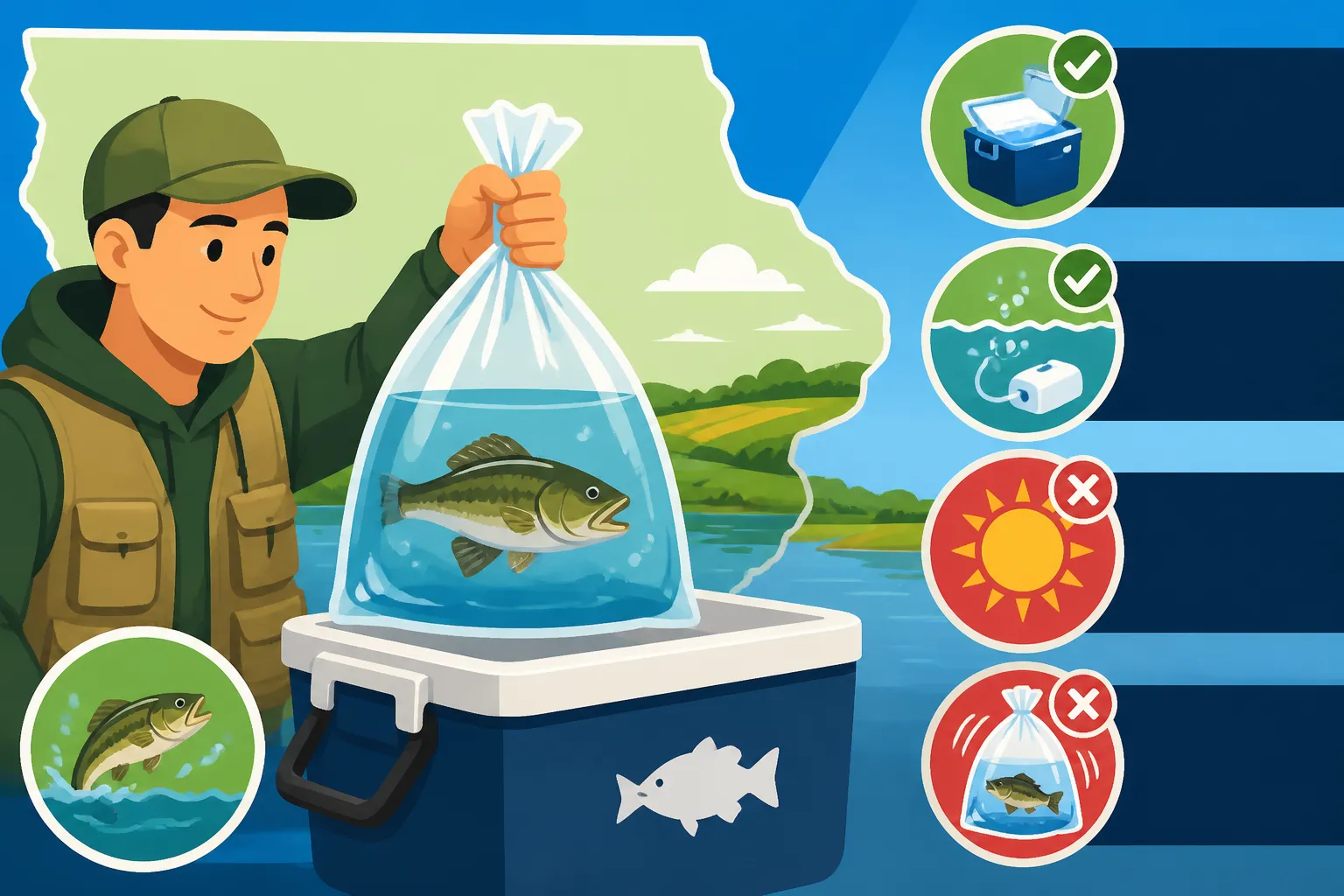
- Oxygenation is Key: Fish need oxygen to breathe, just like us. In a confined container, oxygen depletes rapidly. A good aerator is indispensable. You can find excellent portable aerators on Amazon that run on D-cell batteries or even rechargeable packs. An aerator like the Marine Metal Products Power Bubbles or the Bubble Box Portable Aerator can make a huge difference. Without adequate oxygen, fish will quickly become stressed, turn upside down, and eventually die. This is particularly important for species sensitive to low oxygen levels.
- Temperature Stability: Rapid temperature changes can shock and kill fish. Try to keep the water temperature in your transport container as close as possible to the water temperature of the source. If it's a hot day, you might need to add a small amount of ice (made from dechlorinated water) to gradually cool the water, but avoid drastic drops. For short trips, an insulated cooler can help maintain temperature stability.
- Water Quality: Don't overcrowd your container. Too many fish in a small space will quickly foul the water with waste and reduce oxygen levels. Clean, fresh water from the source is best. Avoid adding tap water directly unless it has been treated to remove chlorine and chloramines, which are toxic to fish. For longer trips, some anglers even use specialized fish transport chemicals that reduce stress and neutralize ammonia.
Essential Gear for Legal and Safe Transport
Having the right equipment not only makes the process easier but also ensures you're compliant with regulations.
- Proper Containers: For bait, a purpose-built bait bucket with an aerator port is ideal. For larger fish, a boat's livewell is designed for this, but remember the "drain water" rule when leaving the ramp. If using a cooler, make sure it’s clean and can be properly oxygenated. Hard-sided coolers often hold temperature better.
- Proof of Purchase: As mentioned, if you're transporting commercially purchased bait, keep that receipt handy. It's your legal documentation.
- DNR Permit (if applicable): If you're moving game fish or stocking a pond, your DNR permit is non-negotiable. Have it with you and be ready to present it.
- "Drain, Clean, Dry" Tools: A plug for your livewell, brushes for cleaning boat hulls, and a towel for drying are simple but effective tools in the fight against invasive species. Regularly checking the Iowa DNR website for updates on "Iowa Fishing Regulations Explained" will keep you informed on any changes to these crucial guidelines.
Penalties for Non-Compliance and Reporting Violations
Ignoring live fish transport rules isn't just about bending the rules; it's a serious offense that can carry significant penalties. The Iowa DNR takes these regulations very seriously, and for good reason—the ecological impact of non-compliance can be catastrophic and long-lasting.
What Happens If You Break the Rules
The consequences of illegally transporting live fish in Iowa can range from fines to confiscation of equipment, and in some severe cases, even jail time.
- Fines: Expect to pay fines. The exact amount can vary depending on the severity of the violation, the species involved (especially if it's an invasive species), and whether it's a repeat offense. These fines can quickly add up, often costing hundreds or even thousands of dollars. Transporting something like an Asian Carp could incur very substantial penalties due to its highly invasive nature.
- Equipment Confiscation: A conservation officer has the authority to confiscate your fishing gear, bait buckets, livewells, and even your boat if it was used in the commission of an illegal fish transport. This can be a huge blow, especially for avid anglers.
- Loss of Privileges: Beyond monetary fines, you could face the suspension or revocation of your fishing license. This means you might not be allowed to fish in Iowa for a certain period, or even permanently. If you need a refresher on your fishing license, check out the Iowa Fishing License Guide.
- Ecological Damage: While not a legal penalty, the biggest consequence is the potential harm to Iowa's natural resources. An illegal introduction could decimate native fish populations, ruin recreational opportunities, and cost taxpayers millions in mitigation efforts. The ripple effect of introducing one invasive species can be felt for decades.
Reporting Suspicious Activity
You play a vital role in protecting Iowa's waters. If you witness someone illegally transporting live fish, introducing fish into public waters without a permit, or engaging in other suspicious activities, it's important to report it.
- "Turn in Poachers" (TIP) Program: The Iowa DNR operates the "Turn In Poachers" (TIP) program, which allows citizens to confidentially report violations. You can call their hotline, and specially trained operators will take your information. You can often remain anonymous. The more details you can provide—description of the person, vehicle, location, time, and specific activity—the better. You can also find information on where to report a fishing violation in Iowa on the DNR's website.
- Contact Local Conservation Officers: If you know your local conservation officer, reaching out directly can also be an effective way to report. However, for immediate concerns or if you prefer anonymity, the TIP hotline is generally the best route.
- Why Report? Reporting these violations isn't "snitching"; it's being a responsible steward of our environment. It helps prevent irreversible damage to our lakes and rivers, ensuring that future generations can enjoy the same incredible fishing opportunities that Iowa offers today. Remember, preventing the spread of harmful species is a collective effort, and your vigilance is incredibly valuable.
Summary of Live Fish Transport Rules
To help keep things clear, here's a quick overview of the essential rules for transporting live fish in Iowa. This table summarizes the main points we've covered.
| Type of Live Fish Transport | Key Regulation | Required Documentation / Action | Important Considerations |
|---|---|---|---|
| Bait Fish (Caught in Public Waters) | Can only be transported and used within the same watershed where they were caught. Cannot be moved to a different watershed. | None (for transport within watershed) | Must drain all water from bait buckets/livewells when leaving a water body. |
| Bait Fish (Commercially Purchased) | Can be transported across watersheds. | Proof of purchase (receipt) | Must drain all water from bait buckets/livewells when leaving a water body. |
| Game Fish (Public Waters to Public Waters) | Generally NOT ALLOWED unless for immediate release back into the same water body or under specific tournament rules/DNR permit. | DNR Permit (if applicable) | Release immediately back into the same water. Avoid transporting for extended periods. |
| Game Fish (Public Waters to Private Pond) | REQUIRES a DNR permit. This includes stocking your own private pond with fish from public waters. | DNR Permit | Stringent review process to prevent disease/invasive species transfer. |
| Game Fish (Private Pond to Private Pond) | REQUIRES a DNR permit. Even between two private ponds, a permit is needed to prevent ecological risks. | DNR Permit | DNR ensures disease-free movement and proper species management. |
| All Live Fish Transport | Mandatory "Drain, Clean, Dry" principle. All water must be drained from vessels, livewells, bait buckets, and equipment immediately upon leaving any water body. | None | Prevents spread of microscopic invasives, plant fragments, and larvae. |
Remember, these rules are in place to protect Iowa's rich aquatic resources. Always err on the side of caution and when in doubt, contact the Iowa DNR for clarification. Knowing your Iowa Fishing Daily Bag Limits Guide is also important, as it complements these transport rules by dictating how many fish you can keep in the first place.
Disclaimer
The information provided in this guide is for general informational purposes only and does not constitute legal advice. While we strive to be accurate and up-to-date, fishing regulations in Iowa can change. Always consult the official Iowa Department of Natural Resources (DNR) website or their current fishing regulations booklet for the most precise and current rules and laws before engaging in any fishing or fish transportation activities. Your compliance with all state and federal regulations is your responsibility.