Best Boats for the Mississippi River
Oh, the mighty Mississippi! There's something truly majestic and equally daunting about fishing Iowa's eastern border. It's not like your average calm lake or gentle stream. The Mississippi River is a dynamic, powerful beast, constantly shifting, with currents that can humble even the most experienced angler, and choosing the right boat is absolutely crucial for both success and safety. This guide is all about helping you navigate the waters of boat selection, ensuring you pick a vessel that's perfectly suited for tackling the unique challenges and incredible fishing opportunities the Mississippi River offers.
Understanding the Mississippi River's Unique Challenges
Before we even think about boat types, let's talk about why the Mississippi River isn't just "any" body of water. It's a complex, ever-changing ecosystem that demands respect and the right equipment to fish it effectively and safely. You can't just drop any old johnboat in and expect to have a smooth day, especially if you plan to venture beyond the quiet backwaters.
The Ever-Changing Current and Depth
One of the biggest factors you'll contend with on the Mississippi is its current. It's not a gentle flow; it can be powerful, especially in the main channel or near wing dams and locks. This strong current directly impacts how you fish, how you navigate, and what kind of boat can handle it. A lightweight boat with insufficient power will struggle to hold position or make headway, turning a fun fishing trip into a constant battle against the river. Depth, too, is incredibly variable. You can go from several feet to mere inches in a short distance, especially when you factor in the natural silting and the fluctuating water levels.
Beyond the obvious safety implications, these currents and depths affect your fishing strategy. Drifting for catfish, holding over a walleye spot, or navigating tight backwater channels all require specific boat characteristics. If you're constantly fighting the current, you're not focusing on your presentation, which means fewer fish in the livewell. It's a major frustration that many anglers new to the big river quickly discover.
Navigating Wing Dams, Sandbars, and Debris
The Mississippi River is full of hidden (and not-so-hidden) hazards. Wing dams, those rock structures built out from the bank, are fish magnets but also notorious boat wreckers if you're not careful. Their purpose is to direct current and scour out deeper channels, but they can create treacherous boils and eddies, and their rocky ends are always waiting. Then there are the ever-shifting sandbars and snags. One day a channel is clear, the next a sandbar has shifted, or a submerged log has found a new resting place. Fishing the Mississippi River in Iowa means constantly being aware of your surroundings and having a boat that can handle unexpected encounters.
The amount of debris floating in the river, especially after heavy rains or during spring runoff, can also be astonishing. Large logs, branches, and even whole trees can be a severe hazard to your hull and prop. A durable boat that can withstand minor bumps and a motor that can be quickly trimmed up are invaluable here. This isn't a place for fragile fiberglass if you're planning on exploring the wilder parts.
Varying Fishing Styles from Backwaters to Main Channel
The beauty of the Mississippi River is its diversity. You can spend a tranquil morning fishing for crappie in a calm backwater slough, or you can run out to the main channel, anchoring or drifting for big walleye or catfish. Each of these fishing styles demands different things from your boat. A boat optimized for shallow backwaters might be completely unsuitable for the rough main channel, and vice-versa.
For example, a dedicated bass angler might want a fast boat with a large casting deck for skipping jigs under cover in slack water areas, while a walleye angler might prioritize a stable, deep-V hull for handling chop and a powerful trolling motor for precise boat control over structure. Thinking about how you plan to fish most often will greatly influence your best boat choice. You don't want to show up to fish a main channel walleye chop in a flat-bottomed boat, nor do you want to try to sneak a large, heavy walleye boat into tight backwater cover.
Common Boat Types for Mississippi River Anglers
Given the river's complexities, it's no surprise that certain boat types have become staples for Iowa anglers. Each has its strengths and weaknesses, making them suitable for different fishing preferences and river conditions.
Jon Boats: The Workhorses of the River
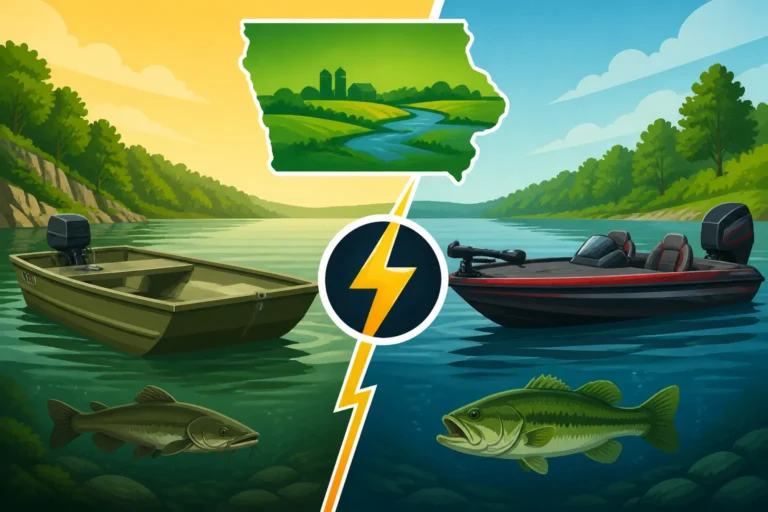
Jon boats are probably one of the most common sights on the Mississippi, and for good reason. These flat-bottomed, aluminum boats are incredibly versatile and durable. Their shallow draft allows them to access incredibly skinny water, which is a huge advantage for getting into backwater sloughs, marshy areas, and over submerged obstacles that would stop a deeper-hulled boat dead in its tracks. They're usually pretty affordable, too, which is a big plus for many anglers.
However, their flat bottom, while great for shallow water, isn't ideal for rough conditions. When the main channel kicks up a chop, a jon boat can deliver a very wet and bumpy ride. They tend to pound over waves rather than cut through them, which can be uncomfortable and even unsafe if you're out in big water. You'll often see anglers using smaller jon boats primarily for Private Pond Fishing Rules in Iowa or only in the calmest backwaters of the Mississippi. For bigger water, a larger, wider jon boat with a higher transom might offer a bit more stability, but it's still not a deep-V. When you're considering a jon boat, think about where you'll spend most of your time. If it's mostly tranquil sloughs and shallow flats, they are hard to beat.
Aluminum V-Hull Boats: Versatility for Many Conditions
Stepping up from a jon boat, the aluminum V-hull offers a fantastic compromise for the diverse conditions of the Mississippi River. These boats have a V-shaped hull that allows them to cut through chop much more effectively than a flat-bottomed jon boat, providing a smoother, drier ride in moderate waves. The aluminum construction still offers excellent durability against accidental bumps with submerged logs or rocky shorelines – a real benefit on a river known for its debris.
Many V-hulls come with deeper sides (higher freeboard), which makes them feel safer in larger waves and helps keep spray out. They're also often equipped with more powerful outboard motors, allowing you to cover long distances on the river more quickly. These boats are popular with multi-species anglers who might chase bass in the backwaters one day and walleye in the main channel the next. Brands like Lund, Crestliner, and Alumacraft are well-known for producing excellent aluminum V-hulls suitable for river use. They strike a great balance between shallow water access and main channel capability.
Bass Boats: Speed and Stability for Specific Pursuits
For the dedicated bass angler who values speed, precise boat control, and large, uncluttered casting decks, a bass boat can be an excellent choice on the Mississippi, particularly in the lower pools where the river can be quite wide. These boats are designed for rapid transit between fishing spots and are usually outfitted with powerful outboard motors and sophisticated electronics. Their low profile makes them less susceptible to wind when fishing, and the expansive casting platforms are perfect for standing and working lures with accuracy.
However, bass boats are quite specialized. While fast, their lower freeboard can make them vulnerable to waves in rough main channel conditions, and they can be a wet ride when things get choppy. Their fiberglass construction, while offering a smooth ride in ideal conditions, is also more susceptible to damage from submerged objects than aluminum. They also often require deeper water for launching and running, which might limit access to some of the shallower backwater areas. If your primary target is bass, and you prioritize speed and casting space, and typically fish in the less turbulent parts of the river or during calm weather, a bass boat could be your go-to. However, for sheer durability and navigating unknown obstacles, they aren't always the top choice.
Walleye Boats: Designed for the Big Water
Walleye boats, often a type of deep-V aluminum or fiberglass boat, are built with big, open water in mind, making them a strong contender for fishing the main channel and larger pools of the Mississippi. They boast high freeboard, deep V-hulls, and wide beams, all contributing to exceptional stability and a dry, smooth ride even in significant chop. These characteristics are crucial when battling strong currents and the wakes of passing barges or towboats. Walleye Fishing in Iowa often means dealing with challenging conditions, and these boats are designed precisely for that.
They typically feature powerful outboards, advanced electronics, and comfortable seating, as walleye fishing can involve long runs and hours of precise boat control, often in less-than-ideal weather. While excellent for rough water, their deeper draft and larger size can limit access to very shallow backwaters or tight sloughs. They might also require more substantial launch facilities. If you're serious about chasing walleye, sauger, or trophy catfish in the main body of the Mississippi, and you prioritize comfort, safety, and capability in rough conditions, a dedicated walleye boat is definitely worth considering.
Key Features to Look for in a Mississippi River Fishing Boat
Once you have a general idea of the boat type that fits your style, it's time to dive into the specifics. Certain features are absolutely non-negotiable for a boat that will thrive on the Mississippi River.
Hull Design and Material Considerations
The hull is the foundation of your boat, and its design and material dictate much of its performance and durability on the river.
- Aluminum vs. Fiberglass: As mentioned, aluminum is king for durability on a river like the Mississippi. It can take a beating from logs, stumps, and rocky shorelines much better than fiberglass, which can crack or chip. This resilience can save you a lot of heartache (and repair bills). Fiberglass offers a smoother, quieter ride in calm water and allows for more complex hull designs, but the trade-off in impact resistance is significant. For the Mississippi, the toughness of aluminum often wins out, especially if you plan to explore diverse areas or are prone to accidental bumps.
- Hull Shape (V-hull vs. Flat-bottom): A deep-V hull will cut through waves, providing a softer, drier ride in choppy conditions. This is essential for the main channel or larger open pools. A modified-V hull offers a balance, providing some wave-cutting ability while retaining relatively shallow draft for accessing slightly shallower areas. A flat-bottom hull (like on a jon boat) is fantastic for extremely shallow water access but will pound mercilessly in waves. For the Mississippi, unless you are only sticking to the calmest backwaters, some form of V-hull is generally recommended for safety and comfort.
- Freeboard: This is the height of the boat's side from the waterline to the gunwale. Higher freeboard means more protection from waves and spray, keeping you and your gear drier and safer, especially when a barge passes or a sudden storm whips up waves. On a big river like the Mississippi, you want decent freeboard.
Engine Power and Control
Your engine is your lifeline and your primary tool for navigating the Mississippi's currents.
- Horsepower: Don't skimp on horsepower on the Mississippi. You need enough power to fight strong currents, get up on plane quickly (which is safer in rough water), and cover long distances. Being underpowered can be dangerous if you're caught in a strong current or rapidly changing weather. For aluminum V-hulls, think in the 75-150 HP range, depending on boat size. For jon boats that might venture out of pure backwaters, a minimum of 25-40 HP is often recommended.
- Propeller: Having the right propeller is crucial. A prop designed for shallow water might be different from one optimized for speed or pulling heavy loads. It's often a good idea to carry a spare propeller, as striking a submerged object is a real possibility on the river.
- Trim and Tilt: Power trim and tilt are absolutely essential. Being able to raise your motor quickly is invaluable when you encounter shallow areas, sandbars, or unexpected debris. It also allows you to adjust the boat's attitude for a better ride in different water conditions.
- Kicker Motor: Many serious river anglers opt for a secondary, smaller "kicker" motor. This provides a backup in case your main engine fails (a huge safety advantage on a big river) and is often used for trolling, as it's more fuel-efficient and quieter than a large main engine. It's a great investment in safety and versatility.
Storage and Deck Space
Practicality matters when you're spending long hours on the water.
- Rod Storage: Whether it's in-floor lockers or side rod holders, having secure, protected storage for your Fishing Rod and Reel Guide for Iowa Anglers is important. The Mississippi can be a bumpy ride, and you don't want expensive rods bouncing around or getting damaged.
- Livewell/Baitwell: If you plan to keep fish or use live bait, a well-aerated livewell is a must. Many walleye and bass boats come equipped with large, insulated livewells with recirculation systems. For multi-species anglers, having separate baitwells can also be incredibly useful.
- Gear Storage: You'll accumulate a lot of gear. Tackle boxes, safety equipment, coolers, rain gear – it all needs a place. Ample, dry storage compartments are critical to keep your boat organized and your equipment protected from spray and the elements. You might even find storage solutions for things like a Best Cooler for Keeping Fish Fresh to make your trips more comfortable.
- Deck Layout: Consider how you fish. Do you prefer casting from the bow? Do you need space for multiple anglers? Bass boats offer large, flat casting decks, while many V-hulls have more open cockpits. Think about the flow of movement on your boat and where you'll be storing your tackle and equipment.
Electronics and Trolling Motors
Modern fishing electronics and powerful trolling motors have revolutionized river fishing.
- Fish Finder/Chartplotter: A good quality fish finder with GPS and mapping capabilities is almost non-negotiable for the Mississippi. It helps you find structure, identify fish, navigate safely around hazards, and mark your favorite spots. Brands available from retailers like Bass Pro Shops or Amazon offer a wide range of options to fit every budget and need. Best Fish Finder for Iowa River Fishing often involves understanding depths, currents, and subtle changes in bottom contour.
- GPS/Mapping: Built-in GPS with detailed mapping (or an add-on card) is crucial for navigating the river, especially the complex backwater systems. You can mark waypoints for hazards, fishing hot spots, and safe channels.
- Trolling Motor: A bow-mounted electric trolling motor with adequate thrust (and potentially GPS-enabled spot-lock technology) is a game-changer for precise boat control. It allows you to hold your position against the current, slowly drift, or sneak silently into shallow areas. For the Mississippi, you'll want a powerful one, often 24V or 36V, depending on your boat size. Don't underestimate the power of the current; a weak trolling motor will struggle. You'll want to review options for Best Trolling Motor for Small Iowa Lakes and consider how they scale up for river use.
- Battery System: All these electronics and trolling motors require a robust battery system. You'll likely need separate batteries for your starting motor and your trolling motor, and a good onboard charger is invaluable for keeping them topped up.
Tailoring Your Boat Choice to Your Fishing Style
Ultimately, the "best" boat isn't a one-size-fits-all answer. It's the one that best matches your personal fishing habits and the specific parts of the Mississippi River you intend to fish.
For the Casual Backwater Angler
If your idea of a perfect day on the Mississippi involves quietly exploring calm backwater sloughs, fishing for panfish, bass, or smaller catfish, and avoiding the main channel's hustle and bustle, then your boat needs are quite different.
- Ideal Boat: A smaller, wider jon boat (14-16 feet) with a 25-40 HP outboard or even a smaller aluminum V-hull (16-17 feet) is often perfect. You'll want something with a shallow draft to navigate tight, skinny water and an aluminum hull for durability against stumps and shallow bumps.
- Key Features: Focus on portability, easy launching (even from primitive ramps), and a decent amount of open deck space for your gear. A smaller bow-mounted trolling motor for silent maneuvering and a basic fish finder for depth and structure are excellent additions. Consider how Kayak Fishing Techniques in Iowa might also appeal for extremely shallow, inaccessible spots if you're truly aiming for solitude.
- Why It Works: These boats are nimble, tough, and designed to access the kinds of quiet, protected waters where many species thrive away from the main river traffic. They're also generally more budget-friendly both to purchase and operate.
For the Serious Main Channel Hunter
If you're after those trophy walleye, sauger, or monster flathead catfish, and you don't mind the challenges of the main channel – the current, the barges, the potential for big waves – then your boat needs to be a robust, big-water machine.
- Ideal Boat: A deep-V aluminum fishing boat (18-20+ feet) or a dedicated fiberglass walleye boat is your best bet. These vessels are built to handle rough water, provide a stable fishing platform, and get you to distant spots quickly and safely.
- Key Features: High freeboard, powerful outboard (150-250+ HP), a reliable kicker motor, and top-tier electronics (advanced fish finder/chartplotter, GPS-enabled trolling motor with spot-lock). You'll need plenty of rod storage for a variety of Iowa Fishing Techniques Guide and a large, well-aerated livewell.
- Why It Works: These boats offer the stability, power, and comfort required for long days on big water. They can navigate strong currents, run in choppy conditions, and provide the technological edge needed to locate and stay on target fish in the vast main channel. They are built for the serious angler who isn't afraid to brave the elements for a shot at a trophy.
The Multi-Species Enthusiast's Choice
For many Iowa anglers, the Mississippi offers a smorgasbord of opportunities. You might start the day chasing bass, switch to crappie in the afternoon, and end with a night run for catfish. If you want to do it all, you need a boat that can adapt.
- Ideal Boat: A versatile aluminum V-hull in the 17-19 foot range with a moderate V-hull design. Something that balances stability in moderate chop with enough shallow-water capability to poke into backwater areas without getting stuck.
- Key Features: A strong outboard (75-150 HP) for decent speed and current fighting, a reliable bow-mounted trolling motor, and a good fish finder/GPS combo. Ample, flexible storage is key – maybe some removable casting decks or versatile seating options. A durable aluminum hull is a must for navigating diverse river conditions.
- Why It Works: This type of boat offers the best compromise. It's tough enough for river conditions, capable of handling moderate waves, and still able to access a good variety of fishing spots, from larger sloughs to the edges of the main channel. It allows you to pursue various species without feeling under-equipped for any particular task.
| Boat Type | Primary Strength | Primary Weakness | Ideal Mississippi Usage | Material Often Used | Avg. Hull Shape |
|---|---|---|---|---|---|
| Jon Boat | Shallow water access, durability, cost | Rough water ride, lower speed | Calm backwaters, shallow sloughs, quiet creek mouths | Aluminum | Flat-bottom |
| Aluminum V-Hull | Versatility, durability, moderate chop | Not as fast as bass boats, not for extreme rough water | Mixed use: moderate backwaters, main channel edges, larger pools | Aluminum | Modified-V |
| Bass Boat | Speed, large casting decks, precise control | Rough water vulnerability, deeper draft, less durable | Specific bass fishing in calmer areas, lower pools | Fiberglass | Shallow-V |
| Walleye Boat | Rough water stability, comfort, power | Deeper draft, less agile in tight spots | Main channel, large open pools, windy conditions, long runs | Aluminum/Fiberglass | Deep-V |
Essential Safety and Navigation for Mississippi River Boating
Beyond choosing the right boat, understanding and adhering to safety and navigational practices is paramount when boating on the Mississippi. The river is powerful and unpredictable, and a little preparation goes a long way.
Must-Have Safety Gear
Even with the perfect boat, safety should always be your top priority. Accidents can happen quickly on the river.
- Life Jackets: This is non-negotiable. Every person on board must have an approved Best Life Jackets for Iowa Boaters readily accessible, and children under a certain age are legally required to wear them while the boat is underway. Don't just have them; make sure everyone knows where they are and how to put them on.
- Throwable Flotation Device: A life ring or cushion that can be thrown to someone in the water.
- Signaling Devices: Whistle or horn for sound signals, and visual distress signals (flares for night, flag for day) are essential, especially on such a large waterway.
- Fire Extinguisher: Required on most motorboats. Make sure it's charged and easily accessible.
- First-Aid Kit: For cuts, scrapes, and other minor injuries that can occur unexpectedly.
- Anchor and Line: A good anchor with plenty of rope is critical for holding position against current or in an emergency. You'll need more line than you might think for deeper sections of the river. How Much Anchor Rope You Need is often a rule of thumb of 7:1 scope, meaning 7 feet of line for every 1 foot of depth, plus freeboard.
- Oars/Paddle: Even with a motor, a set of oars or a strong paddle can be a lifesaver if your engine quits or you run out of fuel.
- Communication Device: A fully charged cell phone (in a waterproof bag!) or a VHF radio for contacting help in an emergency. Remember, cell service can be spotty in some river stretches.
- Tool Kit: Basic tools for minor engine repairs or adjustments.
These items aren't just recommendations; many are part of the Required Safety Equipment for Iowa Boats regulations. Always check the current rules before heading out.
Navigational Aids and River Awareness
Navigating the Mississippi is an art and a science. It's not just about getting from point A to point B; it's about doing so safely and efficiently.
- Charts and Maps: Electronic chartplotters are fantastic, but having a physical chart or map of the river sections you're fishing is an excellent backup. These show channel markers, depths, wing dams, and other crucial navigational information.
- River Markers and Buoys: Learn to interpret the system of buoys and markers. Red buoys mark the right side of the channel when going upstream, green on the left. Pay attention to regulatory markers that indicate no wake zones, hazards, or restricted areas. These are literally your signposts for safe passage.
- Barge Traffic: Be incredibly aware of barge traffic. Barges and towboats are massive, cannot stop quickly, and create enormous wakes that can swamp smaller boats. Always give them a wide berth, and if you're crossing the channel, do so well in front or well behind them. Never assume they see you.
- Current and Debris: Constantly assess the current, especially around wing dams and bends. Look for boils, eddies, and subtle changes in the water's surface that might indicate shallow spots or submerged objects. Keep a sharp lookout for floating debris.
- Weather Monitoring: Weather on the river can change rapidly. A clear morning can turn into a violent thunderstorm in an hour. Monitor forecasts closely and be prepared to seek shelter if conditions deteriorate. Strong winds can quickly whip up dangerous waves.
Iowa Boat Registration Requirements and Regulations
Owning and operating a boat in Iowa comes with certain legal obligations. Understanding these is crucial to avoid fines and ensure you're compliant.
- Registration: Most motorized vessels, including those used for fishing on the Mississippi, need to be registered with the Iowa Department of Natural Resources (DNR). This includes a unique registration number displayed on the bow and a current decal. There are specific Iowa Boat Registration Requirements that detail what types of vessels need registration and how to apply. Even small inflatable boats might need to be registered if they have a motor.
- Titling: Similar to vehicles, most boats will also need a title. This proves ownership.
- Boater Education: While not all Iowa boaters are required to take a boater education course, it's highly recommended, especially for those new to navigating large rivers. Young operators often have specific Boater Education Requirements for Young Anglers. Even if not required, the knowledge gained from such a course can be invaluable for safety and confidence on the water.
- Navigation Rules: Familiarize yourself with the "Rules of the Road" – the international navigation rules that govern vessel traffic. These include rules for passing, meeting head-on, crossing, and signaling.
- Fishing Regulations: Of course, your boat is for fishing, so always stay updated on Iowa Fishing Regulations Explained, including Iowa Fishing Daily Bag Limits Guide and size limits for specific species like Walleye Season and Size Limits or Catfish Possession Limits.
Maintenance and Ownership Tips for River Boats
Investing in a boat for the Mississippi River is a significant commitment. Proper maintenance and smart ownership practices will protect your investment, extend its lifespan, and ensure it's always ready for your next adventure.
Protecting Your Investment from River Wear
The Mississippi River is tough on boats. The combination of strong currents, debris, varying water levels, and constant exposure to the elements means your boat needs consistent care.
- Regular Cleaning: After every trip, rinse your boat thoroughly, especially the hull. This removes mud, grime, and any invasive species you might inadvertently pick up. Pay attention to the bilge and livewells.
- Engine Flush: If you've been running in silty or muddy water, it's a good practice to flush your outboard engine with fresh water. This prevents sediment buildup and corrosion.
- Propeller and Lower Unit Inspection: Regularly check your propeller for dings, bends, or missing pieces. Even minor damage can affect performance and fuel economy. Also, inspect the lower unit for any leaks or damage. Given the river's propensity for submerged objects, this is a critical check.
- Battery Maintenance: Keep your batteries charged, especially in the off-season. Check terminals for corrosion and keep them clean. Proper battery care extends their life and ensures reliable starts.
- Trailer Care: Your trailer takes a beating too, especially when launching and retrieving in muddy or sandy ramps. Lubricate wheel bearings, check tire pressure, and ensure all lights are working.
- Winterization: If you store your boat outside during Iowa's cold winters, proper winterization is essential to prevent damage from freezing temperatures. This usually involves stabilizing fuel, draining water from the engine, and protecting internal components.
Trailering and Launching Considerations
Getting your boat to and from the Mississippi River often involves specific challenges, especially with its diverse launch facilities.
- Trailer Sizing: Ensure your trailer is correctly sized for your boat. It needs to support the boat properly and have adequate tongue weight for safe towing. Overloaded or improperly balanced trailers are dangerous.
- Towing Vehicle: Make sure your tow vehicle has sufficient towing capacity for your boat and trailer. Remember to factor in the weight of fuel, gear, and any passengers.
- Launch Ramp Conditions: Mississippi River launch ramps vary wildly. Some are paved and well-maintained, while others might be steep, muddy, or have strong currents near the ramp itself. Always scout a new ramp before attempting to launch or retrieve.
- Launching Technique: Learn to launch and retrieve your boat smoothly, especially in current. A strong current can quickly push your boat sideways, making it difficult to control. Practice makes perfect, and don't be afraid to ask for help or wait for a clear moment.
- Securing Your Boat: Always double-check that your boat is securely fastened to the trailer before hitting the road. Use proper tie-downs at the bow and stern. How Long an Iowa Boat Registration Lasts is generally a three-year period, but it's vital that it's current before you head to the ramp.
Choosing the right boat for fishing the Mississippi River in Iowa isn't just about finding something that floats; it's about finding a vessel that empowers you to safely and effectively explore its incredible waters, chase its diverse fish species, and create lasting memories. By understanding the river's unique demands and matching them to the right boat and features, you'll be well on your way to many successful days on Iowa's legendary eastern border.
Disclaimer
This article is for general informational purposes only and does not constitute professional advice. Laws, prices and regulations vary by location and change over time. Consult a qualified professional for guidance on your specific situation.