Where to Report a Fishing Violation in Iowa
It's incredibly frustrating, isn't it? You spend time planning your fishing trip, you make sure your Iowa Fishing License Guide is current, you check the Iowa Fishing Regulations Explained, and then you see someone clearly flaunting the rules, whether it's keeping undersized fish or using too many lines. These violations don't just feel unfair; they actively harm Iowa's precious fish populations and make it tougher for everyone to enjoy our beautiful waterways. This guide is here to empower you with the knowledge of exactly how and where to report fishing violations in Iowa, ensuring you can contribute to preserving our natural resources.
Why Reporting Fishing Violations Matters in Iowa
When you spot a fishing violation, it's easy to feel a pang of frustration and wonder if reporting it will even make a difference. Let me tell you, it absolutely does. Every single report helps maintain the delicate balance of our aquatic ecosystems, ensures fair access for all anglers, and upholds the integrity of Iowa's conservation efforts.
Think about the long game. Our fish populations, whether it's the trophy walleye in Clear Lake or the abundant panfish in local farm ponds, aren't endless. They're managed through careful regulations based on scientific data. When individuals disregard these rules – perhaps by exceeding the Iowa Fishing Daily Bag Limits Guide, taking fish during a closed season, or keeping undersized specimens – they chip away at the very foundation of sustainable fishing. This can lead to depleted stocks, fewer mature fish, and a general decline in the quality of fishing for everyone. It's a tragedy that takes years, even decades, to reverse. By reporting, you're acting as a steward for these resources, helping the Iowa Department of Natural Resources (IDNR) protect them for future generations of anglers.
Beyond the ecological impact, there's the simple matter of fairness. Most anglers put in the effort to understand the rules, purchase the necessary licenses and stamps (like the Iowa Trout Fishing Fee and Stamp Guide), and practice ethical angling. When someone blatantly breaks these rules, it undermines that collective effort and can breed resentment. It creates an uneven playing field, where those who follow the law might feel disadvantaged compared to those who don't. Your report helps to ensure that everyone plays by the same rules, fostering a sense of community and shared responsibility among Iowa's outdoor enthusiasts.
Finally, while less common, some violations can even pose safety risks. Illegal fishing methods, such as using unmarked trotlines in busy areas or engaging in unsafe boating practices while fishing, can endanger other recreational users on the water. Conservation officers are not just enforcing fishing laws; they're also ensuring public safety on our lakes and rivers. Your vigilance and willingness to report can therefore contribute to a safer environment for all who enjoy Iowa's outdoors.
Your Options for Reporting a Violation in Iowa
Knowing where to turn when you witness a violation is half the battle. Fortunately, the Iowa Department of Natural Resources has established clear, accessible channels for reporting illegal activities. Whether it's an emergency situation or a less urgent observation, there's a method that fits.
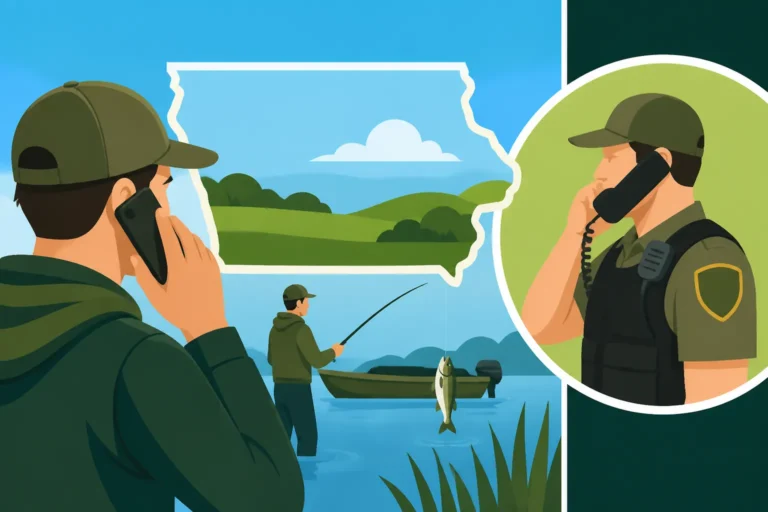
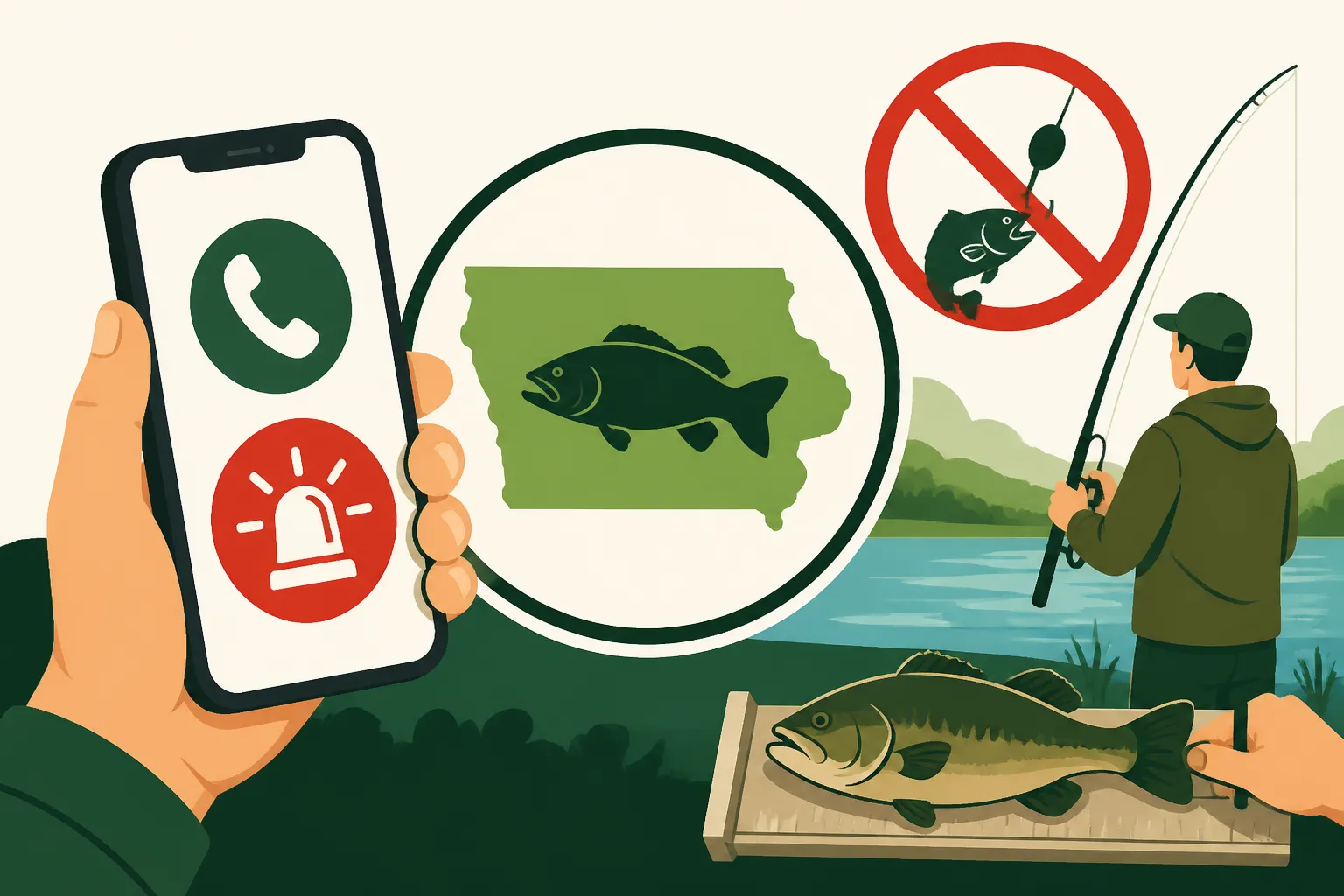
The most direct and often most effective way to report a fishing violation, especially if it's in progress or seems urgent, is by calling the Turn In Poachers (TIP) Hotline. This service is available 24 hours a day, 7 days a week, and is specifically designed for reporting fish and wildlife violations. The number is 1-800-TIP-IDNR, which translates to 1-800-847-4367. What's crucial to understand is that your call to the TIP Hotline can be completely anonymous. You don't have to give your name, which can be a relief for those who might feel uncomfortable about directly involving themselves. When you call, be prepared to provide as many details as possible (we'll cover that next). The operators are trained to gather critical information quickly and will dispatch a conservation officer to investigate if the situation warrants immediate attention. This hotline is your frontline defense in protecting Iowa's natural resources.
For situations that aren't quite an emergency, but still require attention, the IDNR also offers an online reporting option. While the TIP Hotline is best for in-progress violations, you might opt for the online form if you've witnessed something after the fact, or if it's a less time-sensitive issue that still needs to be addressed. You can typically find a link to the online reporting form on the official Iowa DNR website under their law enforcement or conservation sections. This method allows you to type out a detailed account at your leisure and even upload any photos or videos you might have collected safely. Just search for "Iowa DNR Report a Violation" to navigate to the correct page.
Another option, particularly if you're a regular in a specific area, is to directly contact your local conservation officer. Many anglers get to know their local officers through community events or simply seeing them patrolling popular spots like Rathbun Lake or the Mississippi River. If you know the officer for your county, you can often find their contact information (email or phone) on the Iowa DNR website. This can be a good route for non-urgent matters, or if you want to provide additional context that might be easier in a direct conversation rather than a hotline call. However, for immediate response or if you prefer anonymity, the TIP Hotline remains the gold standard.
Regardless of the method you choose, the key is to prioritize your safety. Never confront individuals you suspect of violating fishing laws. Doing so could escalate the situation and put you in harm's way. Your role is to observe, collect information from a safe distance, and report. Let trained conservation officers handle the enforcement.
What Information to Collect When You Spot a Violation
Reporting a fishing violation effectively hinges on providing as much precise and actionable information as possible to the Iowa DNR. The more details you can give, the better equipped conservation officers will be to investigate and potentially apprehend the individuals involved. Think of yourself as an objective observer, gathering facts.
First and foremost, focus on the "Five W's": Who, What, Where, When, and How.
- Who: Can you describe the individual(s) involved? Note their gender, estimated age, hair color, clothing, and any distinguishing features like tattoos, hats, or specific gear they might be using. If there's more than one person, try to get descriptions of each.
- What: What exactly is the violation? Are they keeping undersized bass? Do they have more crappie than the daily limit allows? Are they using an illegal fishing device, or perhaps fishing without a visible license? Be specific about the type of fish and the number or size if you can estimate it. For instance, if you see someone with a stringer full of fish that look too small for the species, note that.
- Where: This is critical. Provide the exact location. GPS coordinates are ideal if you have a smartphone or device that can provide them. Otherwise, give specific landmarks, road names, nearest town, or even body of water and section (e.g., "North shore of Saylorville Reservoir, near the Polk City boat ramp" or "Mississippi River, Pool 12, just below Lock and Dam 12 at Bellevue"). The more precise, the faster an officer can respond.
- When: Note the date and time you observed the violation. If it's an ongoing issue you've seen multiple times, mention the dates and times of previous occurrences.
- How: What method are they using? Are they shore fishing, from a boat, or ice fishing? Are they using bait, lures, or something unusual? For example, if you observe them using more than the legal limit of fishing lines (How Many Fishing Poles You Can Use in Iowa), specify that.
In addition to the Five W's, any details about their vehicle or boat are incredibly valuable. Look for the make, model, color, and especially the license plate number of any vehicle they drove or the boat registration number on their vessel. Even a partial license plate can be helpful. Note if there are any distinguishing stickers, dents, or modifications on their vehicle or boat.
If it's safe to do so and doesn't put you in any danger, consider gathering photographic or video evidence. A quick photo from a distance with your phone can capture crucial details like the license plate, the number of fish, or the method being used. Just remember, your safety is paramount; never confront or approach individuals to get a better shot. After capturing, you might want to consider a rugged, waterproof phone case or a waterproof notebook from Amazon to quickly jot down observations without fear of losing your notes.
It’s also helpful to note if they have any equipment that might be illegal or out of the ordinary, or if they appear to be transporting live fish in a way that violates Rules for Transporting Live Fish. Remember, the goal isn't to be a detective, but to be a good witness. Your detailed observations are the backbone of any successful investigation.
Here’s a quick reference table for reporting methods:
| Reporting Method | Best Use Case | Anonymity Option | Response Time | Key Information to Provide |
|---|---|---|---|---|
| TIP Hotline (1-800-847-4367) | In-progress violations, urgent matters | Yes | Immediate | Who, What, Where, When, How, Vehicle/Boat details (Plate/Reg) |
| Iowa DNR Online Form | Non-urgent violations, after-the-fact reports | No (typically) | 1-3 business days | Detailed narrative, photos/videos, exact location, date/time |
| Local Conservation Officer | Non-urgent, follow-up questions, known officer | No | Varies | Specific details of violation, location, date/time |
Understanding the Consequences of Fishing Violations
When you take the time to report a fishing violation, you're not just making a phone call; you're initiating a process that can lead to real consequences for those who break the law. It’s important to understand that the Iowa Department of Natural Resources takes these reports seriously, and their conservation officers are dedicated to investigating and enforcing the regulations that protect our state’s natural resources.
The legal ramifications for fishing violations in Iowa can vary widely depending on the severity and nature of the offense. For minor infractions, like fishing without a license or slightly exceeding a daily bag limit, an individual might face warnings or citations with fines. However, for more serious offenses, such as repeated violations, taking protected species, or large-scale poaching, the penalties become much steeper. This could involve significant fines, ranging from hundreds to thousands of dollars, mandatory court appearances, forfeiture of equipment (including boats and gear), and even potential jail time for egregious cases.
One of the most impactful consequences for an angler is the suspension or revocation of their fishing privileges. The IDNR can suspend an individual's right to fish in Iowa for a period of time, which can be devastating for passionate anglers. Furthermore, if a person's fishing license is revoked, they might be unable to purchase another one for several years. For instance, What Happens If You Fish Without a License in Iowa can lead to fines and loss of privileges, and the Fine Amount for Fishing Without a License in Iowa can be substantial. Similarly, Penalties for Exceeding the Daily Bag Limit are designed to deter overfishing and protect fish populations.
Beyond the legal penalties, there's the broader conservation impact. Every enforcement action taken by the IDNR sends a clear message that illegal fishing will not be tolerated. This deterrence helps protect fragile fish populations from unsustainable harvest pressure, allowing them to thrive and ensuring healthy ecosystems. For example, specific regulations exist to protect spawning areas or sensitive species, and compliance is crucial for their survival. Your report directly contributes to this protective framework. It reinforces the idea that our natural resources are a shared heritage, and everyone has a responsibility to respect them.
The enforcement process typically involves a conservation officer reviewing the information you've provided. They may visit the location, look for additional evidence, or even conduct surveillance if necessary. While you might not always see immediate action or be informed of the outcome due to privacy laws, rest assured that your report triggers a response. It allows the IDNR to allocate resources effectively and focus their efforts where they are most needed, ensuring that our collective commitment to responsible angling and conservation is upheld. So, the next time you're out enjoying a beautiful day on the water and observe something amiss, remember the profound impact your report can have.
Disclaimer
Please remember that fishing regulations and reporting procedures can change. Always refer to the most current Iowa Department of Natural Resources (IDNR) regulations handbook or their official website (you can check How to Check Current Iowa Fishing Regulations Online for up-to-date information) for the latest rules and contact details before heading out. This guide is for informational purposes only and should not be considered legal advice.