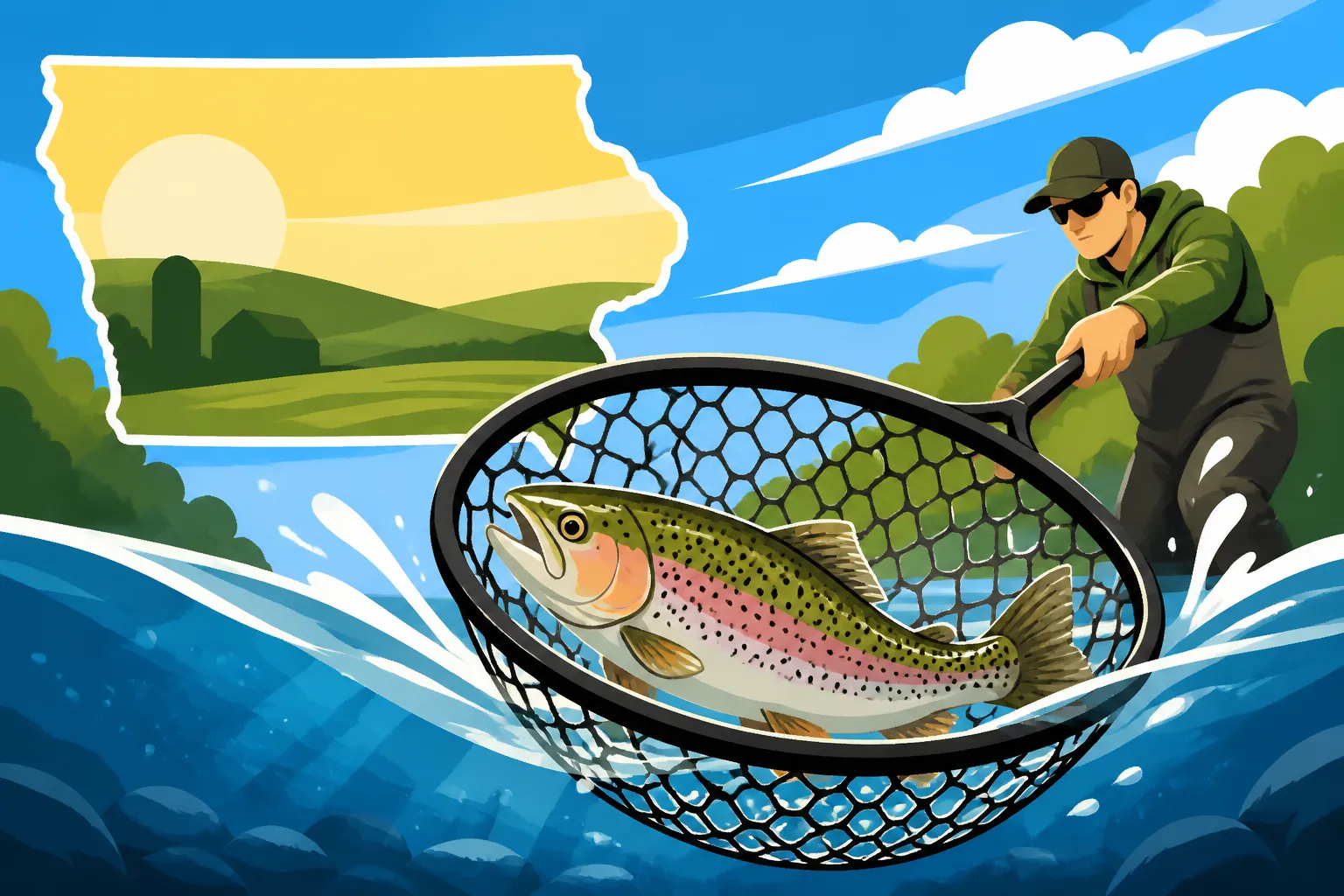
Best Net for Landing Trout
There’s nothing quite as exhilarating as feeling that distinct tug on your line, the bend in your rod, and the frantic fight of a beautiful Iowa trout. But that moment of triumph can quickly turn to heartbreak if you don't have the right landing net ready. Too often, anglers lose a fish right at the boat or bank, or worse, accidentally harm it during a clumsy landing attempt. This guide is here to help you navigate the world of trout nets, ensuring you choose the perfect one for safely and successfully landing those prized catches in Iowa's streams and ponds.
Why a Good Landing Net is Crucial for Trout Fishing
When you're out on one of Iowa's picturesque trout streams, like those found in Northeast Iowa, the right equipment isn't just about catching fish; it's about respecting the fish and the regulations that protect them. A high-quality landing net is more than just a convenience; it's an essential tool for conservation and successful angling.
Protecting Iowa's Trout Population
Iowa's trout fishery, primarily supported by our fantastic stocking program, thrives on careful handling. Many anglers practice catch-and-release, especially with larger or wilder trout, to ensure these fish can continue to grow and reproduce. A traditional knotted nylon net, while effective at holding a fish, can be incredibly abrasive. The coarse knots can strip away a trout's protective slime coat, leaving it vulnerable to infection and disease once it's returned to the water. This is a critical concern, especially for delicate species like rainbow trout and brown trout that populate our streams.
Imagine you've just reeled in a gorgeous Rainbow Trout Fishing in Iowa from a cold, clear stream. You want to admire its colors, perhaps snap a quick photo, and then release it unharmed. A net with a soft, rubberized or knotless mesh minimizes contact damage, reducing stress on the fish. It prevents fins from getting tangled and eyes from being scraped, giving that trout the best possible chance of survival after release. It's a small change that makes a huge difference for the health of our fishing waters.
Securing Your Catch Safely
Beyond conservation, a good net dramatically improves your chances of actually landing the fish you hooked. We’ve all been there: the fish is close, you reach for it, and just as your fingers brush its tail, it gives one last powerful kick and throws the hook. Frustrating, right? A net provides a controlled environment to quickly and securely bring the fish to hand.
It also protects you. Trout, especially larger ones, can have sharp fins and sometimes a thrashing wildness that can lead to dropped hooks or even minor injuries if you're trying to grab them bare-handed. A net allows you to subdue the fish gently but firmly, keeping it contained while you prepare to remove the hook. This is particularly important when you're fishing in slippery conditions or from a wobbly boat. A reliable net means fewer lost fish, less stress for both angler and fish, and a much more enjoyable experience overall. It’s about making that hard-won battle end in a graceful victory.
Key Features to Look For in a Trout Net
Choosing the "best" net isn't about finding the most expensive option; it's about finding the net that best suits your fishing style, the size of the trout you expect to catch, and the environments you fish in. Several features play a critical role in a net's effectiveness and its ability to protect trout.
Netting Material: Rubber vs. Knotted Mesh
This is arguably the most important decision when selecting a trout net, especially if you practice catch-and-release.
-
Rubberized or Silicon Mesh Nets: These are the gold standard for trout fishing today. The smooth, soft material is gentle on a fish's delicate slime coat, preventing abrasions and reducing the risk of disease transmission. Hooks rarely get tangled in the smooth rubber, which means less time fumbling with a thrashing fish and quicker, safer releases. They're also easier to clean and don't absorb fish odors, making them a more hygienic choice. The downside? They can be a bit heavier and sometimes more expensive than traditional nylon nets. However, for the health of the fish and the ease of use, many anglers find the investment well worth it. You'll often see guides and serious trout anglers carrying these. You can find many excellent rubberized net options at Bass Pro Shops or by searching online retailers like Amazon.
-
Knotless Nylon Mesh Nets: These are a step up from traditional knotted nets. While not as gentle as rubber, the knotless design still reduces the abrasive damage to a fish's slime coat. They are typically lighter and more compact than rubber nets, and generally more affordable. Hooks can still get tangled occasionally, but less so than with knotted versions. If rubber is outside your budget or you prefer a lighter net, a knotless nylon option is a decent compromise for catch-and-release.
-
Knotted Nylon Mesh Nets: These are the traditional, often inexpensive, nets you might remember from childhood. While they catch fish, they are the least friendly to trout. The knots can severely abrade scales and slime, and hooks get notoriously stuck, prolonging handling time and increasing fish stress. For serious trout anglers, especially those committed to conservation, these are generally avoided for trout.
Here's a quick comparison:
| Feature | Rubberized/Silicone Mesh | Knotless Nylon Mesh | Knotted Nylon Mesh |
|---|---|---|---|
| Fish Safety | Excellent (preserves slime coat, prevents tangles) | Good (less abrasive than knotted, fewer tangles) | Poor (abrasive, high tangling risk, harms slime coat) |
| Hook Tangles | Minimal | Low to Moderate | High |
| Durability | Very good (resists tears, UV resistant) | Good (can fray over time) | Moderate (can snag and tear) |
| Weight | Moderate to Heavy | Light | Light |
| Cleaning | Very easy (rinse clean, doesn't absorb odor) | Easy (dries quickly, can absorb some odor) | Moderate (can retain odor, harder to thoroughly clean) |
| Cost | Higher | Moderate | Lower |
| Best Use | Catch-and-release, all trout fishing, fly fishing | General trout fishing, budget-friendly catch-and-release | Keeping fish (not recommended for catch-and-release trout) |
Hoop Size and Depth: Matching the Trout
The size of your net's hoop and the depth of its bag should correspond to the size of the trout you're targeting. For Iowa's typical stocked trout, a hoop size of 10-14 inches wide and a bag depth of 12-18 inches is usually sufficient.
- Smaller Hoops/Shallower Bags: Ideal for small streams and panfish, but can be challenging with larger, more feisty trout. A trout exceeding 15 inches might flop out or be difficult to contain.
- Medium Hoops/Deeper Bags: This is the sweet spot for most Iowa trout fishing, handling everything from freshly stocked fingerlings to impressive holdovers. A deeper bag is crucial to prevent a hooked fish from jumping out once netted.
- Larger Hoops/Deeper Bags: While good for truly trophy-sized trout or other species, these can be cumbersome in tight streams or when wading. Consider the trade-off between capacity and maneuverability. Remember, if you're targeting bigger species in other parts of Iowa, like Muskie Fishing in Iowa, you'd need a much larger, more robust net entirely.
Handle Design and Portability
The handle is another key element, impacting how you carry and deploy your net.
- Fixed Handles: Most traditional nets have a fixed handle. For wading or fly fishing in smaller streams, a short, fixed handle (6-12 inches) that can be easily tucked into a vest or clipped to your back via a magnetic release is perfect. Longer fixed handles (18-36 inches) are great for bank fishing, providing extra reach.
- Telescoping Handles: These handles extend, offering versatility. A compact telescoping net can be stored easily but then extended for reaching out from a boat, high bank, or over difficult terrain. They tend to be a bit heavier and may have more moving parts that can wear out over time.
- Wooden Handles: Many traditional trout nets feature beautiful laminated wooden frames. These are often aesthetically pleasing and offer a comfortable grip. They can be a bit heavier than aluminum or composite options but are durable and float if dropped (though always tether your net!).
- Aluminum/Composite Handles: Lighter and often more durable than wood, these are common in modern nets. They are resistant to rot and often feature ergonomic grips.
For stream anglers, a magnetic net release is a game-changer. It allows you to quickly detach the net from your vest or pack, use it, and then reattach it with one hand. Make sure the lanyard is strong enough to keep your net attached, even if it falls into the current.
Different Types of Trout Nets for Various Situations
Just like there are different types of rods for different fishing techniques, there are various net styles designed for specific angling scenarios. The "best" net depends on where and how you plan to fish for trout in Iowa.
Wading Nets: The Stream Angler's Companion
If you primarily fish Iowa's beautiful trout streams by wading, a compact, lightweight wading net is your best friend. These nets are designed for maximum portability and quick, easy deployment in fast-moving water.
- Characteristics: Typically feature a shorter handle (6-12 inches), often made of wood or a lightweight composite. The hoop is usually medium-sized (10-12 inches). Many come with a built-in lanyard or a D-ring for attaching a magnetic release system, allowing the net to hang comfortably from your back or vest until needed. The mesh should almost always be rubberized or knotless to protect the fish.
- Scenario: Imagine you're Fly Fishing for Trout in Iowa Streams in a section of French Creek. You're wading upstream, casting small dry flies or nymphs. A trout hits, and after a thrilling fight, you bring it close. With a quick flick, your net detaches from your back, and you scoop the fish securely without fumbling or taking your eyes off the stream. This quick action minimizes the time the fish is out of the water, which is vital for its health. A net like this can be invaluable when employing Nymphing Techniques for Iowa Trout Streams where you might be battling fish in strong currents.
Bank/Shore Fishing Nets: Reach and Power
For anglers who prefer to stay on dry land, whether fishing from the bank of a community trout pond or a larger stream, reach becomes a primary concern.
- Characteristics: These nets typically have longer handles, often fixed at 18-36 inches or telescoping to provide even greater extension. The hoop size might be slightly larger to accommodate potentially bigger trout found in lakes or wider river sections. Durability is also key, as these nets might be subjected to more bumps and scrapes along rocky banks.
- Scenario: Picture yourself fishing the stocked trout pond at Banner Lakes. You've cast a spinner from shore, and a robust rainbow trout takes the bait a good distance out. As you reel it in, you realize you need a few extra feet of reach to get past the weeds along the bank. A long-handled net allows you to scoop the fish without risking a fall or having the fish rub against obstacles, keeping it safe and secure as you bring it in. These nets are also excellent for reaching over tall grasses or navigating tricky shorelines.
Boat Nets: For Bigger Water and Bigger Fish
While many Iowa trout streams are wade-only, some larger rivers and lakes that hold trout, or multi-species waters where trout might be present, call for a boat-specific net.
- Characteristics: Boat nets are generally the largest and most robust. They feature longer, heavy-duty handles (often telescoping) and substantial hoop sizes (14-20+ inches) with deep bags. They need to be strong enough to handle larger fish and withstand the rigors of boat life. Some are designed to float if dropped.
- Scenario: Perhaps you're trolling for walleye on one of Iowa's larger lakes, but also hoping to hook into a surprise trophy brown trout. Or maybe you're exploring wider sections of the Mississippi River that might hold various species. A sturdy, sizable boat net can quickly and effectively land a wide range of fish, ensuring your valuable catch doesn't get away at the last moment. These nets often have non-slip grips and might have folding hoops for easier storage on board. If you're considering Best Boats for Iowa Fishing, you'll definitely want to ensure you have a net that complements your vessel and target species.
Maintaining Your Trout Net for Longevity
A good trout net is an investment, both in your fishing success and in the well-being of the fish you catch. Proper care and maintenance will ensure your net lasts for many seasons, continuing to perform optimally and safely.
Cleaning and Sanitizing Your Net
After a successful day of fishing, your net has likely been in contact with fish, water, mud, and maybe even a few stray leaves. Keeping it clean is essential for both hygiene and the health of the fishery.
- Rinsing: The most basic step is a thorough rinse with clean, fresh water immediately after each use. This removes slime, dirt, and any fish scales or bait fragments. Pay special attention to the mesh, making sure no debris is stuck.
- Sanitizing: If you've been fishing in different bodies of water, or if you're particularly concerned about preventing the spread of aquatic invasive species or fish diseases, a light sanitization can be beneficial. A diluted solution of mild soap and water (like dish soap) can be used, followed by a thorough rinse. Some anglers use a very diluted bleach solution (1 part bleach to 10 parts water) for mesh only, but this must be rinsed thoroughly multiple times to ensure no residue remains that could harm fish. Always air dry completely after sanitizing.
- Odor Control: Rubberized nets are excellent at resisting odors, but nylon nets can sometimes retain a fishy smell. Regular cleaning and complete drying will help prevent this. If odors persist, a soak in a baking soda solution followed by a thorough rinse can help.
Remember, a clean net is not only more pleasant to use but also helps protect the ecosystem by not transporting unwanted organisms from one fishing spot to another.
Storage Tips for Longevity
How you store your net when not in use significantly impacts its lifespan.
- Dry Storage: Always ensure your net is completely dry before storing it. Storing a damp net, especially one with nylon mesh, can lead to mildew, rot, and unpleasant smells. Hang it in a well-ventilated area, away from direct sunlight, until thoroughly dry.
- Away from Sunlight: UV rays from the sun can degrade rubber and nylon over time, making them brittle and prone to tearing. Store your net in a shaded area or a gear bag when not actively fishing.
- Prevent Tangles and Kinks: If you have a net with a folding hoop or telescoping handle, ensure it's stored in its intended configuration. Avoid jamming your net into tight spaces where the hoop or handle could bend, or the mesh could get snagged or kinked. For nets with lanyards or magnetic releases, ensure they are not stretched or strained during storage.
- Check Fasteners and Connections: Periodically inspect any screws, rivets, or connecting points on your net, especially if it's a folding or telescoping model. Tighten anything loose and apply a small amount of lubricant to moving parts if they become stiff.
When to Replace Your Net
Even with the best care, nets don't last forever. Knowing when to replace yours is important for both performance and fish safety.
- Damaged Mesh: The most obvious sign is torn, ripped, or brittle mesh. A damaged net can fail when you need it most, leading to a lost fish. More importantly, sharp tears or frayed edges can cause significant harm to a fish.
- Broken Hoop or Handle: If the net's frame or handle is bent, cracked, or severely weakened, it's time for a replacement. A compromised frame can collapse under the weight of a fish or break during a critical moment.
- Degraded Rubber/Nylon: Over time, rubberized mesh can become sticky or brittle, and nylon can become stiff or frayed beyond repair. If you notice significant changes in the material's integrity, it’s a good indicator that its fish-friendly properties are diminishing.
- Magnetic Release Issues: If your magnetic release system starts to fail – either not holding securely or being too difficult to release – that’s a safety issue for both you and your gear. Replace the release, or the net if it's integrated.
Staying on top of your gear's condition is just another part of being a responsible angler on Iowa's beautiful waters. Ensuring your net is in top shape means you're always ready for that next exciting trout hook-up! When you're preparing for your next trout adventure, don't forget to check out articles like Iowa Trout Fishing Fee and Stamp Guide and Trout Stream Regulations in Northeast Iowa to make sure you're fully prepared. You might also want to read up on Best Waders for Iowa Trout Stream Fishing and Do You Need Waders for Iowa Trout Streams? to complete your gear setup for an enjoyable day on the water.
Disclaimer
This article is for general informational purposes only and does not constitute professional advice. Laws, prices and regulations vary by location and change over time. Consult a qualified professional for guidance on your specific situation.