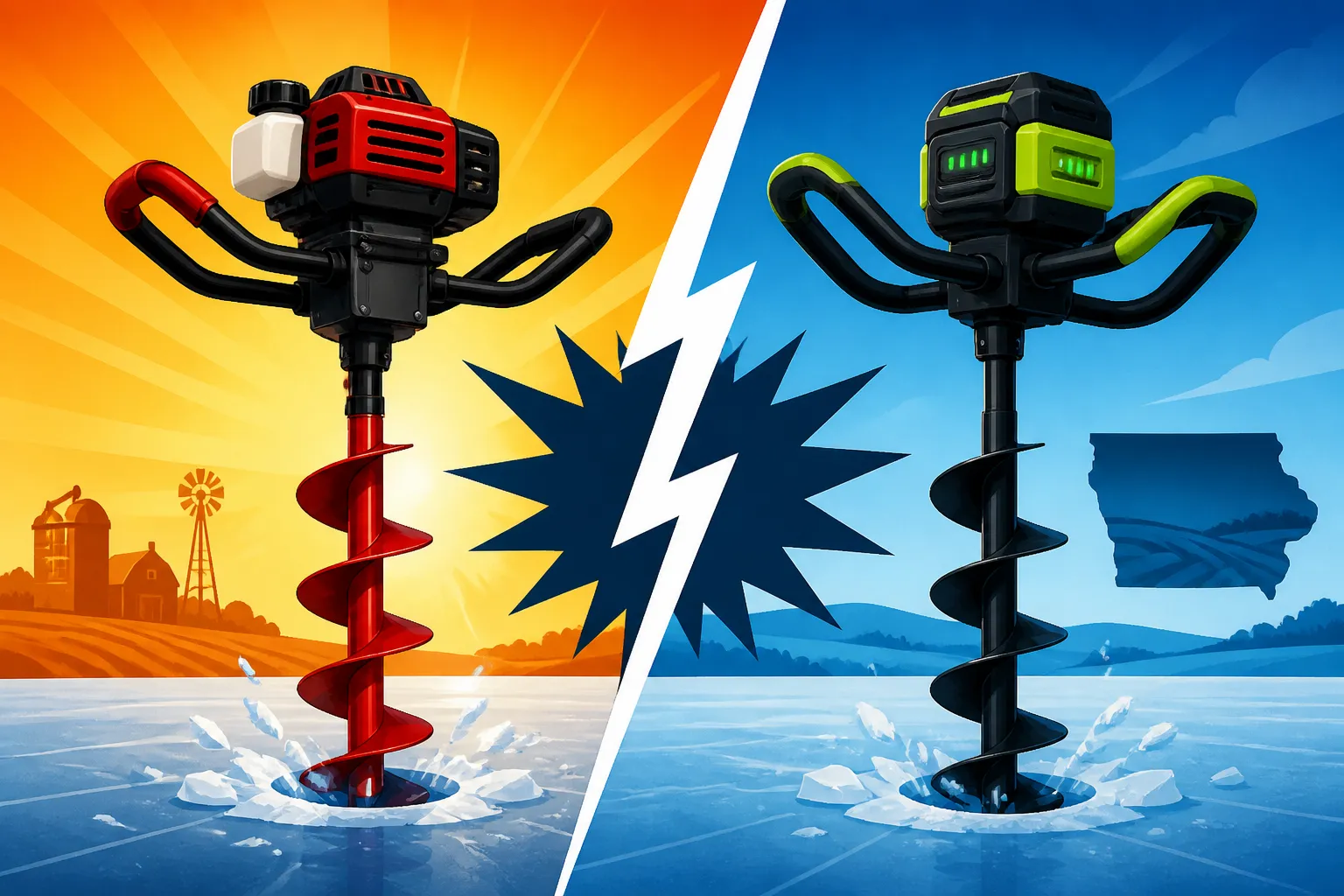
Gas vs Electric Ice Auger
Ah, the age-old debate on the ice! When you're standing on a frozen lake in Iowa, bundled head-to-toe, ready to drop a line, the last thing you want is to be wrestling with your equipment before you even get a hole drilled. Many folks face the genuine frustration of choosing the right ice auger, wondering if they should stick with the roaring power of a gas-powered machine or embrace the silent efficiency of an electric one. This guide is here to help you cut through the confusion, literally and figuratively, so you can make an informed decision for your next hardwater adventure.
The Classic Choice: Gas Ice Augers
For decades, the gas-powered ice auger has been the undisputed king of the ice. Its distinctive rumble and smell are almost synonymous with the sport itself. There's a certain satisfaction that comes from firing one up and watching it chew through thick ice, and for many seasoned anglers, it’s simply what they know and trust.
Power and Performance
When it comes to sheer, brute-force power, gas augers are hard to beat. They are engineered to tackle some of the toughest ice conditions Iowa can throw at you, from the early season skim ice to the several feet of late-season concrete you might find on massive bodies of water like West Okoboji Lake or Rathbun Lake. These machines typically boast larger engines, often two-stroke, delivering consistent torque that allows their sharp blades to slice through ice with impressive speed. If your fishing style involves drilling dozens of holes in a single outing, perhaps running and gunning across a vast expanse of ice, a gas auger will generally keep pace without breaking a sweat. It’s that reliable, unyielding power that keeps many anglers loyal, especially when chasing those elusive walleyes that might require you to drill a new set of holes frequently.
The feeling of a powerful gas auger eating through the ice beneath your feet is truly something. You feel connected to the machine, guiding it through the layers, knowing it won't quit on you even when the ice gets exceptionally thick. This consistent performance is a huge draw for those who don't want to worry about their power source diminishing halfway through their drilling session.
Fueling Up and Maintenance Realities
Now, let's talk about the less romantic side of gas augers: the fueling and maintenance. This is where the commitment truly comes in. You'll need to remember to bring your fuel mix – typically a precise ratio of gasoline and two-stroke oil – and potentially a separate container for it. Mixing fuel correctly is crucial for engine longevity, and let's be honest, it's an extra step that can be forgotten in the rush to get on the ice. The fumes from both the mixed fuel and the exhaust can be quite strong, especially if you're drilling close to your ice shack or in a crowded area. Nobody wants a headache from exhaust fumes when they're trying to enjoy a peaceful day of fishing.
Then there's the starting process. On those brutally cold Iowa mornings when the mercury dips well below freezing, getting a gas auger to fire up can sometimes feel like a test of wills. Repeated pulls on the starter cord, adjustments to the choke, maybe a primer bulb squeeze or two – it can be a workout before you even wet a line. And once the season is over, proper winterization is essential: draining the fuel, stabilizing the engine, cleaning spark plugs, and checking air filters are all part of the routine to ensure it starts reliably next year. It's a hands-on piece of equipment that demands attention. If you’re not particularly mechanically inclined, or simply don’t want the fuss, this aspect can certainly be a deterrent.
When a Gas Auger Shines
So, who is a gas auger truly for? It's often the preferred choice for professional guides, avid tournament anglers, or anyone who plans on drilling a large number of holes – sometimes 50 or more – in a single day. If you're fishing expansive lakes where you're constantly searching for fish and moving your setup, the consistent power and endurance of a gas auger are invaluable. They excel in situations where you might encounter exceptionally thick ice, perhaps three feet or more, particularly during the late season or in parts of northern Iowa where the winter bite is long and strong.
Consider it a workhorse: reliable, powerful, and built for demanding conditions. If you fish religiously throughout the winter and want an auger that you know will power through anything, even on remote, windy days on Spirit Lake Fishing Guide, a gas auger is a solid contender. They're also often readily available at outdoor retailers like Bass Pro Shops, giving you plenty of options to compare models and brands.
The Modern Contender: Electric Ice Augers
In recent years, electric ice augers have really stepped up their game, offering a compelling alternative to their gas-guzzling counterparts. What started as a niche product has evolved into a high-performance option that many Iowa anglers are now embracing.
Quiet Efficiency and Portability
One of the most immediate and appreciated benefits of an electric auger is its quiet operation. Instead of the loud roar of a gas engine, you get a much more subdued hum, or in some cases, barely any sound at all. This is a huge advantage, especially during those serene early morning hours when you're trying to be stealthy on the ice, or if you're fishing in close quarters with other anglers. There are no exhaust fumes either, which means no more headaches or clothes smelling like gasoline. This is particularly nice if you often find yourself drilling holes inside an ice shelter or close to your vehicle.
The quietness can also be a game-changer for the fish. Some believe the loud thrum of a gas auger can spook fish in shallower water, and while it's tough to prove definitively, the idea of a less intrusive approach certainly holds appeal. Moreover, electric augers tend to be significantly lighter than gas models, making them much easier to carry across a snow-covered field or a frozen lake. There's no heavy engine or fuel tank to lug around, which is a major plus for those who prefer to walk onto the ice or use a lightweight sled. Getting a quick start is a breeze too; most electric augers start with a simple push of a button, no choke, no primer, no pull cord. It's instant power right when you need it. Ice Fishing in Iowa has become much more accessible for many thanks to these features.
Battery Life and Cold Weather Concerns
The Achilles' heel of the electric ice auger has traditionally been its battery life, especially in the extreme cold that Iowa winters often deliver. Cold weather saps battery power faster than you might think, meaning that a battery rated for 50 holes in mild conditions might only give you 25-30 when it's five degrees below zero. This can lead to what many affectionately call "battery anxiety" – that nagging worry about running out of juice halfway through your fishing trip.
To combat this, most serious electric auger users carry multiple batteries. While this adds to the overall cost and weight, it’s often a necessary safeguard. Keeping spare batteries warm, perhaps in an insulated bag or inside your coat, can help extend their life. The type of battery matters too; lithium-ion technology has greatly improved, offering better cold-weather performance than older battery types, but physics still plays a role. It’s important to manage your expectations: if you need to drill 40 holes in sub-zero temps, one battery might not cut it. Thinking ahead about how many holes you'll need and having a charging strategy (like a portable power station for longer trips) is crucial for a successful outing. How Cold Iowa Gets During Ice Fishing Season is a real consideration here!
When an Electric Auger is Your Best Bet
Electric augers are ideal for casual anglers, weekend warriors, or anyone who prioritizes quietness, portability, and ease of use. If you typically drill a handful of holes and then settle in, or if you fish smaller lakes and ponds primarily for panfish like bluegill and crappie, an electric auger is an excellent choice. They are fantastic for early ice conditions where the ice isn't overly thick, or for those quick morning or evening trips after work.
They're also a great fit for those who are sensitive to gas fumes, or who simply want to avoid the maintenance associated with gas engines. If you're a "walk-on" angler or use a snowmobile or ATV for access and want to minimize extra gear and weight, the lighter electric option is highly appealing. You can find a wide selection of these modern augers at outdoor recreation stores like Bass Pro Shops, or even online through retailers like Amazon, often with various battery configurations to suit different needs. If you’re planning a trip to one of the Community Trout Ponds Near Des Moines, the quiet approach of an electric auger can be perfect.
Key Differences: Gas vs. Electric at a Glance
Sometimes, seeing the key distinctions side-by-side can really help clarify your decision. While both types of augers aim to get you through the ice, they go about it in very different ways, each with its own set of advantages and compromises.
| Feature | Gas Ice Auger | Electric Ice Auger |
|---|---|---|
| Noise Level | Very loud, can be disruptive to wildlife and other anglers | Very quiet, often just a hum, ideal for stealth and conversation |
| Fumes | Produces exhaust fumes, requiring ventilation if drilling indoors | No fumes whatsoever, making it suitable for enclosed spaces |
| Weight/Portability | Heavier, more cumbersome to carry, requires carrying fuel | Lighter, easier to transport, no need for fuel containers |
| Power Output | Raw, consistent power for very thick ice or high volume of holes | Strong, but performance and consistency can diminish with low battery |
| Start-Up | Pull-cord start, can be challenging in extreme cold, requires priming | Instant push-button start, reliable in any temperature |
| Maintenance | Requires fuel mix, spark plug checks, air filter cleaning, winterizing | Minimal, primarily involves battery care and blade sharpening |
| Cold Weather | Can be hard to start initially, but maintains power once running | Battery life significantly reduced, performance can drop in extreme cold |
| Fuel/Power Source | Gasoline/oil mix, needs to be refilled | Rechargeable Lithium-Ion batteries, needs to be charged |
| Typical Use | Heavy-duty, guides, anglers drilling many holes, extremely thick ice | Casual angling, fewer holes, quiet operation, enhanced portability |
| Environmental Impact | Produces emissions from burning fuel | Cleaner operation, no direct emissions from the auger itself |
Making Your Decision: Factors to Consider
Choosing between a gas and electric auger isn't just about power or quietness; it's about aligning the tool with your specific needs, preferences, and the unique challenges of Iowa ice fishing.
Your Fishing Style and Frequency
Think critically about how often you hit the ice and what your typical day looks like. Are you the type of angler who goes out once or twice a season for a casual afternoon of panfish, drilling just a few holes near a comfortable spot? In that case, the simplicity and lighter weight of an electric auger would likely be a fantastic fit. You wouldn't need to mess with fuel mixes, endure loud noises, or perform extensive seasonal maintenance.
On the other hand, if you're a hardcore ice fishing enthusiast, hitting the ice every weekend, or even several times a week, from first ice to last ice, and you often find yourself drilling 20, 30, or even 50+ holes in a day, then the robust power and endurance of a gas auger might be more suitable. A guide or a serious tournament angler who needs consistent, unyielding performance regardless of the number of holes or ice thickness would lean heavily towards gas. Consider the physical effort involved too; if you're constantly on the move, chasing fish, an electric auger’s lighter weight could save you a lot of energy. For more general advice on getting started, check out Ice Fishing Gear Basics for Beginners.
Ice Conditions and Species Target
Iowa's winters can be fickle, and the ice conditions can vary dramatically from one week to the next, and from one part of the state to another. Early ice on a small farm pond might be a mere 6-8 inches, easily tackled by any auger. However, late-season ice on the larger reservoirs or the Great Lakes region could be two or three feet thick, presenting a much tougher challenge.
If you primarily target panfish like bluegills or crappies, you might not need to drill excessively large holes, and the ice usually isn't so thick that an electric auger struggles. If you're chasing trophy walleye, northern pike, or muskie, you might prefer a larger diameter hole (10-inch vs. 6-inch), which demands more power from your auger. Gas augers traditionally handle larger diameter bits with less strain. When considering Best Ice Thickness for Safe Ice Fishing, remember that the thicker the ice, the more work your auger has to do. If you're often fishing for panfish and not needing to cut through extreme depths, an electric auger, perhaps with an 8-inch bit, is often plenty. However, if you're out there How to Jig for Walleye Through the Ice on a frozen lake with 30 inches of ice, the consistent power of gas may offer more peace of mind.
Budget and Long-Term Investment
The initial cost of gas and electric augers can be comparable, but it's crucial to look beyond the sticker price to the long-term investment. While a basic gas auger might sometimes be slightly less expensive upfront than a high-end electric model, you need to factor in the recurring costs of gasoline and two-stroke oil. Also, consider the cost of maintenance parts like spark plugs, air filters, and potential engine repairs over the years.
For electric augers, the initial purchase might include one battery, but for reliable, worry-free fishing, you’ll almost certainly want to invest in at least one or two spare batteries. These batteries can be a significant upfront cost. However, once you have them, your "fuel" costs are essentially the electricity to charge them, which is negligible. Over several seasons, the operational costs of an electric auger can be lower, assuming the batteries maintain their capacity.
When you're comparing models, don't forget to explore options available at major retailers. You can find a vast selection of both gas and electric models at a Bass Pro Shops, where you can often get expert advice, or scour online marketplaces like Amazon for competitive pricing on specific brands and models. Reading reviews for Best Ice Fishing Auger Types can give you insights into real-world performance and durability. Considering all these factors will help you choose not just an auger, but a reliable partner for your Iowa ice fishing adventures.
Disclaimer
This article is for general informational purposes only and does not constitute professional advice. Laws, prices and regulations vary by location and change over time. Consult a qualified professional for guidance on your specific situation.