How Many Rods a Beginner Should Own
When you're just starting out in the wonderful world of Iowa fishing, it can feel like you need a whole sporting goods store's worth of gear just to get your line wet. The sheer volume of rods, reels, and tackle out there is enough to make anyone's head spin! You might find yourself wondering if you need a different rod for every single type of fish, or if that seasoned angler down the bank with five rod holders on his boat is the norm. It's easy to get overwhelmed and think you need to break the bank before you even cast your first line.
But trust me, you don't. This guide is all about cutting through that noise and helping you figure out the sweet spot for a beginner angler in Iowa: how many fishing rods you really need to start enjoying the waters, and how to make smart choices as you grow your passion.
Starting Simple: The One-Rod Approach
For most new anglers dipping their toes into Iowa's abundant waters, one good, versatile fishing rod is absolutely all you need. Seriously, don't let anyone tell you otherwise. The goal here is to learn the basics, get comfortable casting, understand how different baits work, and most importantly, enjoy your time outdoors. You're not trying to win a tournament on day one; you're building a foundation.
The All-Purpose Spinning Combo
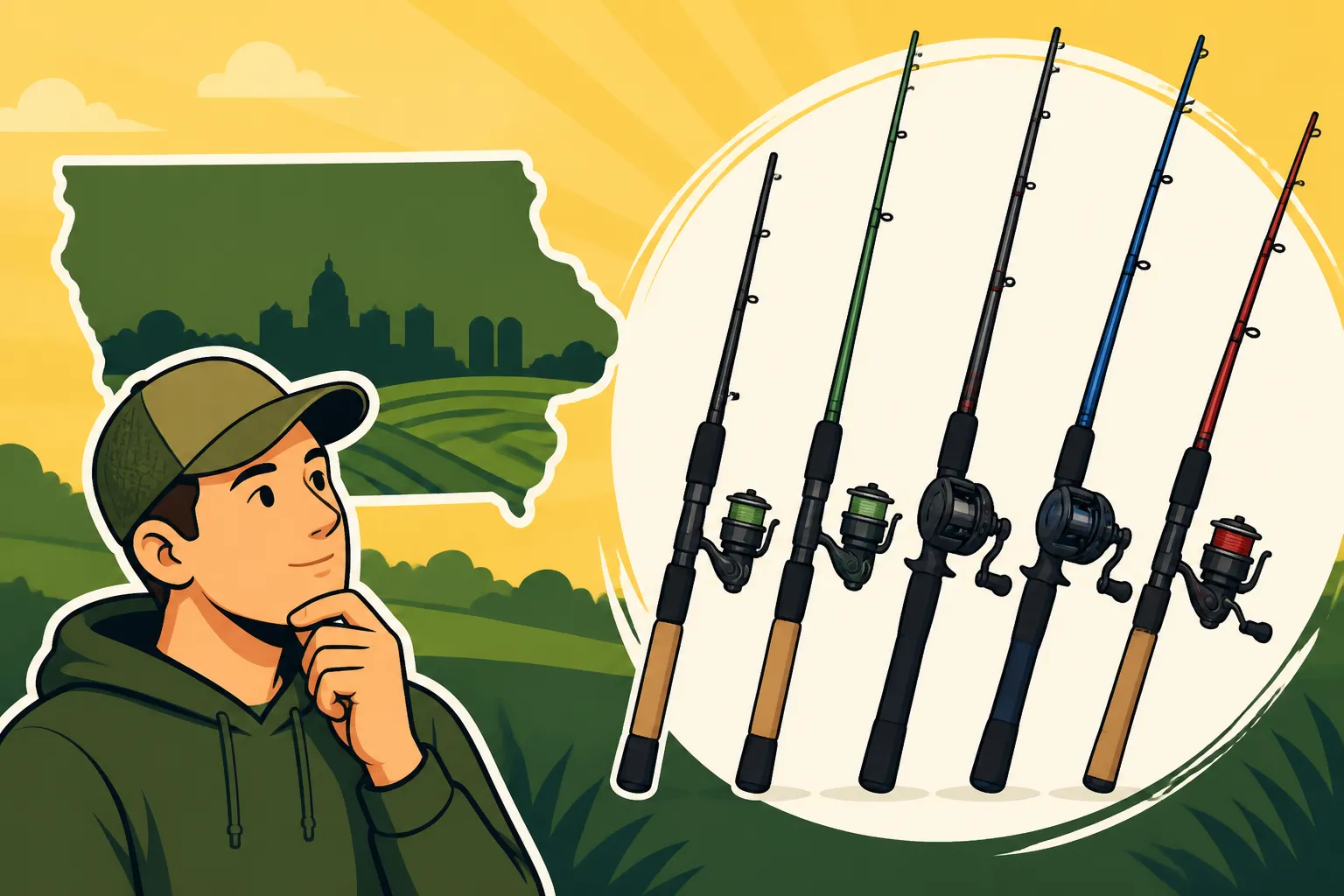
When we talk about "one rod," we're almost always talking about a medium-action spinning rod paired with a matching spinning reel. This setup is the workhorse of the fishing world for a reason. It's incredibly forgiving for beginners, easy to cast with a wide range of lures and baits, and capable of handling a huge variety of fish species you'll encounter in Iowa.
Imagine heading to a local pond or one of Iowa's smaller lakes. With a good medium-action spinning rod, you can cast a worm and bobber for bluegill, throw a small spinner for crappie, or even pitch a soft plastic worm for a feisty largemouth bass. It's truly a "do-it-all" option that will serve you well across many different fishing scenarios. You'll want something in the 6-foot to 7-foot range, which offers a good balance of casting distance and maneuverability, especially if you're fishing from shore or a smaller boat. Finding a Best All-Around Rod for Iowa Anglers that fits your budget is a fantastic first step. You can often find excellent combos that include both the rod and reel at a very reasonable price point, making it super easy to get started. Retailers like Bass Pro Shops often have great beginner combos, as do many local bait and tackle shops.
Learning the Ropes with a Single Setup
One of the biggest advantages of starting with just one rod is that it forces you to truly learn that specific piece of equipment. You'll get a feel for how it casts, how it handles a fish on the line, and what its limitations are. This deep understanding of a single setup is far more valuable than fumbling with three different rods when you're still figuring out how to tie a knot. It simplifies your outing, reduces the amount of gear you have to haul around, and allows you to focus on the act of fishing itself.
Think about it: less gear means less to worry about. You can spend more time focusing on where the fish might be, observing the water, and enjoying the tranquility, rather than untangling lines or debating which of your three identical rods to use. This singular focus helps build confidence and crucial angling skills that will benefit you no matter how many rods you eventually accumulate. If you're looking to stretch your dollar without sacrificing quality, a Best Budget Spinning Combo for Panfish can easily double as your all-around beginner rod, proving that great fishing doesn't require a huge investment.
Expanding Your Arsenal: When Two Rods Make Sense
Once you've spent some time on the water with your trusty single rod and you've gotten a feel for things, you might start noticing specific needs or desires that a second rod could fulfill. This is where the idea of a "dynamic duo" comes into play. It's not about having more for the sake of it, but about adding a tool that genuinely enhances your fishing experience or allows you to target different species or techniques more effectively.
Diversifying by Species or Technique
The most common reason for a beginner to add a second rod is to specialize a bit. Maybe you've fallen in love with fishing for big channel catfish in the rivers, and your light spinning rod just isn't cutting it for those hard-fighting whisker fish. Or perhaps you're venturing into throwing heavier bass lures that a spinning rod struggles to handle efficiently.
Here's where a second rod comes in handy:
- Heavier Duty for Larger Fish: If you're targeting bigger species like catfish, northern pike, or even some of the larger walleye in Iowa's deeper lakes and rivers, a medium-heavy or heavy action rod with a more robust reel can be a game-changer. This allows you to use stronger line and bigger baits, and it gives you the leverage needed to land larger fish without overstressing your lighter gear. You'll find that a dedicated Best Rod for Catfish Fishing will make those battles much more manageable and enjoyable.
- Different Lure Presentations: Sometimes, it's about the technique. If you're trying to throw crankbaits for walleye in a river or larger jigs, a longer, slightly stiffer rod might give you better casting distance and hook-setting power. For river walleye specifically, understanding Best Rod Length for Iowa River Walleye Fishing can help you select a rod that's perfect for current and larger fish.
- Baitcasting for Bass: Many bass anglers prefer baitcasting setups for their precision casting, power, and ability to handle heavier lines and lures. If you find yourself gravitating towards bass fishing and want to use specific techniques like flipping, pitching, or heavy cover fishing, a baitcasting combo might be your second rod. It's a bit of a learning curve, but it opens up a new world of bass angling.
Convenience and Efficiency on the Water
Having two rods can also be a matter of convenience and efficiency. Imagine you're fishing a lake where you know there are both crappie and bass. Instead of retying your line every time you want to switch from a tiny jig for crappie to a larger crankbait for bass, you can have one rod rigged for each. This saves precious fishing time and reduces frustration, especially when the bite is hot.
It also gives you a backup. Snag a lure and break your line? Drop your rod in the water (it happens to the best of us!)? Having a second rigged rod means you're back in action almost immediately, without having to spend valuable time re-rigging or having your day cut short. This peace of mind, especially on a longer outing, can be invaluable. However, before jumping into multiple specialized rods, it's worth pondering the question: Do You Need Different Rods for Different Fish?. For many beginners, the answer is "eventually, yes, but not right away."
Building Your Arsenal: Beyond Two Rods for the Enthusiast
Okay, so you've mastered your single spinning rod, and you've added a specialized second rod for your favorite species or technique. Now, you're officially hooked on Iowa fishing! This is when you might start looking at truly expanding your arsenal. This stage isn't about needing more rods but rather about pursuing specific passions, techniques, or species with dedicated, optimized equipment.
Specializing in Niche Fisheries
Iowa offers a fantastic variety of fishing, and as you explore different facets of it, you'll find that certain situations are best handled by a highly specialized rod.
- Trout Fishing: If you venture to the coldwater streams of Northeast Iowa, a light-action ultralight spinning rod or even a fly rod becomes essential. These delicate rods allow you to present small baits and flies naturally, and they make even smaller trout feel like a trophy. Trout Fishing Gear for Iowa Streams will guide you through the specific equipment needed for this beautiful, often technical, style of fishing. This isn't just about having another rod; it's about having the right rod for the unique environment and fish.
- Ice Fishing: When winter descends upon Iowa and the lakes freeze over, a whole new fishing season begins. Ice fishing requires incredibly short, sensitive rods designed to detect subtle bites in frigid conditions while sitting over a hole in the ice. Your open-water rods simply won't cut it. A dedicated ice fishing setup is a must for this popular winter pastime. Check out the Ice Fishing Gear Guide for Iowa to see just how different these specialized setups are.
- Muskie Hunting: For those who chase the "fish of 10,000 casts," the elusive muskie, you'll need heavy-duty gear. Muskie rods are long, stiff, and designed to throw massive lures and handle powerful, toothy predators. This is a commitment, and your general-purpose rods won't stand up to the task.
The Collector's Mentality and Advanced Techniques
For some anglers, collecting different rods becomes part of the hobby itself. They might have a dedicated crankbait rod, a jigging rod, a topwater rod, or a drop-shot rod, each finely tuned for a specific presentation. This level of specialization usually comes after years of experience and a deep understanding of how subtle differences in rod action, power, and length impact lure performance and fish fighting.
Think of it like a carpenter with a full toolbox – they have different hammers for different nails. Similarly, an advanced angler might choose a specific Best Reel Size for Walleye Fishing or a certain Best Pound Test Line for Catfish Fishing on Iowa Rivers for each rod, creating a truly optimized setup for every scenario. This isn't something a beginner needs to worry about, but it's often the natural progression for those who become truly passionate about angling. It's a journey of continuous learning and refinement.
Making Your Choice: What to Look For in a Beginner Rod
Deciding on that initial rod (or even your first two) doesn't have to be complicated. The key is understanding a few basic terms and matching them to the kind of fishing you're most likely to do in Iowa. Remember, versatility is king for your first rod!
Rod Action, Power, and Length
These three terms describe a rod's characteristics and are crucial for making an informed choice:
- Action: This refers to where the rod bends.
- Fast Action: Bends mostly near the tip. Great for quick hook sets and feeling subtle bites.
- Moderate/Medium Action: Bends in the upper half of the rod. Good all-around action, offering a balance of sensitivity and casting distance. Excellent for a beginner.
- Slow/Full Action: Bends throughout the entire rod. More parabolic bend, often used for smaller fish or specific casting techniques.
For your first rod, a moderate-fast or fast action is a fantastic choice, offering versatility for many Iowa species.
- Power (or Taper): This refers to the rod's stiffness or lifting power.
- Ultralight/Light: Very flexible, ideal for panfish, trout, and small baits.
- Medium: A great all-around power for bass, walleye, and most general fishing. This is your sweet spot for a beginner rod.
- Medium-Heavy/Heavy: Stiffer, designed for larger fish, heavy cover, and bigger lures.
For that first versatile rod, aim for medium power. It will handle everything from panfish to decent-sized bass and catfish without feeling overwhelmed or underpowered.
- Length: This is pretty straightforward – how long the rod is.
- Shorter Rods (under 6 feet): Better for tight spaces, accurate casting, and fighting larger fish in close quarters.
- Medium Rods (6 to 7.5 feet): The sweet spot for versatility, offering good casting distance and control.
- Longer Rods (over 7.5 feet): Excellent for long casts, covering more water, and fighting fish on open water, but can be unwieldy in brushy areas.
A rod between 6 and 7 feet is ideal for beginners in Iowa, offering a good balance for shore fishing, smaller boats, and various casting situations.
Choosing Your First Setup: A Quick Guide
Here's a simple table to help you visualize what to look for based on common Iowa fishing targets:
| Target Fish / Scenario | Recommended Rod Action | Recommended Rod Power | Recommended Rod Length | Notes for Beginners |
|---|---|---|---|---|
| All-Purpose Beginner | Moderate-Fast to Fast | Medium | 6' – 7' | Your go-to for panfish, smaller bass, walleye, light catfish. Most versatile. |
| Panfish (Bluegill, Crappie) | Fast | Ultralight to Light | 5' – 6'6" | Very sensitive for light bites; often a great second specialized rod. |
| Largemouth Bass | Fast | Medium to Medium-Heavy | 6'6" – 7'6" | Good for various lures; a baitcaster might be preferred later. |
| Walleye | Fast | Medium | 6'6" – 7' | Sensitive for jigging; longer models for casting/trolling. |
| Channel Catfish | Moderate-Fast to Fast | Medium-Heavy to Heavy | 7' – 9' | Strong backbone for big fights and heavy baits. |
For your absolute first rod, stick with that "All-Purpose Beginner" recommendation. It’s the Best Starter Rod for Beginners because it covers so much ground without being overly specialized. You'll gain confidence and skills without feeling like you have the wrong tool for the job.
As you start to look for that first rod, don't hesitate to visit a local bait shop. The folks there are often anglers themselves and can provide invaluable advice tailored to the specific waters you're planning to fish. If you prefer shopping online, platforms like Amazon offer a huge selection, but reading reviews and understanding the specs becomes even more critical. Remember, the goal isn't to buy the most expensive gear, but the most appropriate and versatile gear to get you started on your Iowa fishing adventure!
Disclaimer
This article is for general informational purposes only and does not constitute professional advice. Laws, prices and regulations vary by location and change over time. Consult a qualified professional for guidance on your specific situation.