Do Largemouth Bass Live in Rivers?
It’s a common misconception, especially among anglers new to the Hawkeye State, that largemouth bass are creatures exclusively of calm, placid waters like farm ponds, private lakes, or the quiet coves of larger reservoirs. Many assume that the flowing currents of Iowa's rivers are solely the domain of smallmouth bass or catfish. However, that couldn't be further from the truth! This guide is here to unravel that myth and show you exactly how and where largemouth bass not only survive but thrive in many of Iowa's river systems.
Debunking the Myth: Largemouth Bass in Riverine Environments
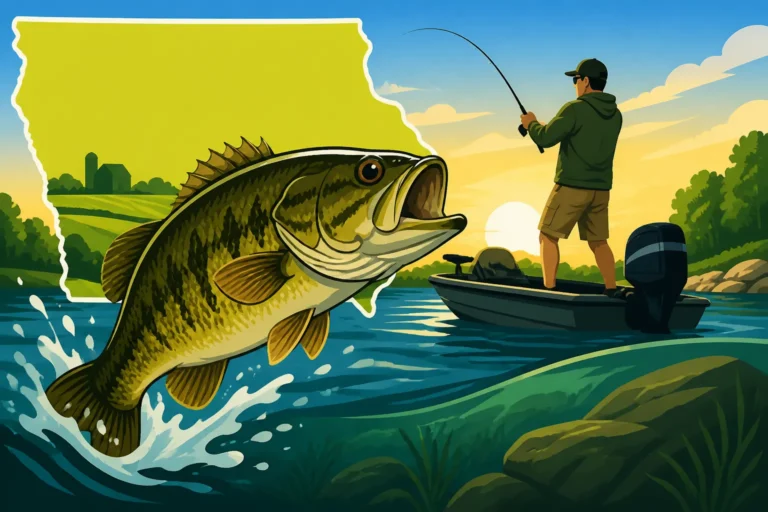
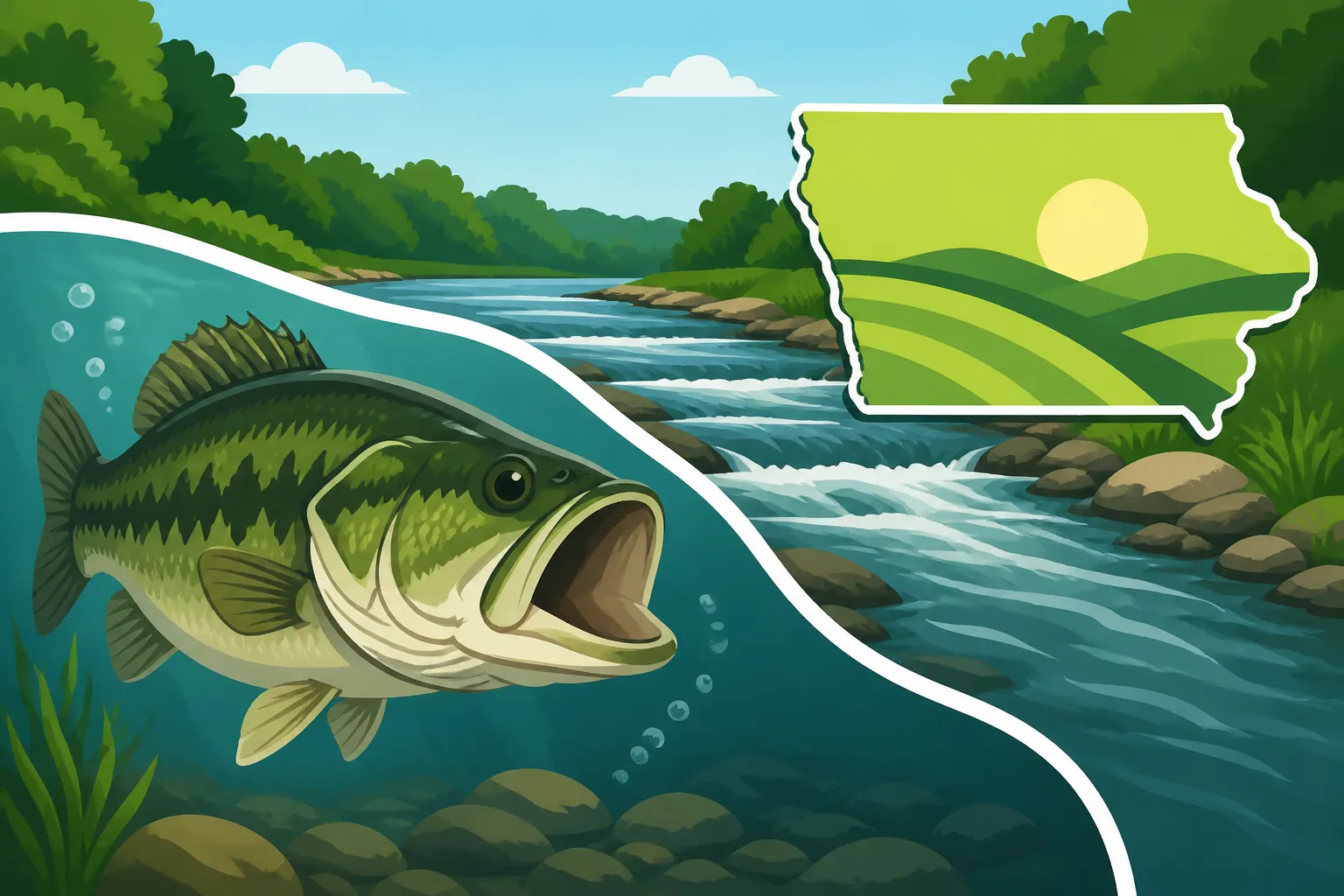
When you think of a river, your mind probably conjures images of fast-moving currents, rocky bottoms, and perhaps the unmistakable tug of a spirited smallmouth bass. And while it's true that smallmouth bass absolutely adore those conditions, their larger, greener cousins, the largemouth, are far more adaptable than many give them credit for. They might not be found in the raging rapids, but venture into the slower, more intricate parts of an Iowa river, and you'll find them holding court.
Why the Misconception?
The idea that largemouth bass are solely still-water fish comes from their preferred hunting strategy and body shape. Their broad, deep bodies are perfectly designed for ambush tactics in areas with abundant cover, such as weed beds, submerged timber, and lily pads – classic still-water features. Smallmouth bass, with their more torpedo-like shape, are built for navigating currents and feeding on crayfish and baitfish in open, flowing water. This visual difference naturally leads anglers to categorize them strictly.
However, rivers aren't uniform. Iowa's river systems are incredibly diverse, featuring long stretches of slow-moving water, oxbow lakes, backwater sloughs, old river channels, and flooded timber that provide exactly the kind of habitat largemouth bass crave. It's not about the "river" versus "lake" label, but rather the specific micro-habitats within these larger water bodies. Think of it like a neighborhood – some parts are bustling, and some are quiet and tucked away. Largemouth bass prefer the quiet, food-rich cul-de-sacs of the river.
The Adaptability of Largemouth Bass
Largemouth bass are incredibly opportunistic and can adapt to a surprising range of conditions as long as their core needs are met: cover, food, and suitable water temperatures. In a river, this means finding areas that mimic their preferred still-water habitats. They seek out slack water areas where they can expend less energy fighting current and more energy hunting. These might be behind large boulders, fallen trees, or along the inside bends of a river where the flow is significantly reduced.
Their presence in rivers adds an exciting dimension to river fishing in Iowa. It means that while you're targeting smallmouth in the riffles, you can easily shift your focus to the quiet eddies and wood cover for a chance at a chunky largemouth. This versatility makes river fishing here a true adventure, often allowing you to catch multiple species in a single outing, which is always a bonus for any angler! How to Catch Bass in Iowa offers more general tips, but we'll dive into river specifics here.
Identifying Prime Largemouth Bass Habitat in Iowa Rivers
So, now that we know largemouth bass do live in rivers, the next logical question is, where exactly do you find them? It's not as simple as casting into the main current. You need to train your eye to spot those specific features that offer the shelter and ambush points these fish desire.
Slow-Moving Backwaters and Oxbows
These are, without a doubt, the quintessential largemouth bass havens in a river system. Backwaters are areas that have been cut off from the main flow, often forming small ponds or lakes adjacent to the river. Oxbows are U-shaped bodies of water that form when a meandering river changes course, leaving a former bend isolated. These areas are characterized by minimal current, abundant aquatic vegetation, and plenty of fallen timber – everything a largemouth bass needs.
Imagine a late spring day on the Cedar River, and you see an old oxbow lake just off the main channel. It's choked with lily pads and fallen trees, completely still save for a few dragonflies buzzing overhead. That's a perfect largemouth hotspot. These areas warm up faster in the spring, concentrate baitfish, and provide excellent spawning grounds. Fishing these areas often involves punching through mats of vegetation or skipping lures under overhanging branches, requiring precision and a robust setup.
Deep, Slow Pools and Eddies
Even within the main river channel, there are pockets of water that offer refuge from the relentless current. Deep pools, especially those on the inside bends of a river, will often have significantly reduced current flow. Here, largemouth bass can drop down into the cooler, calmer water and wait for unsuspecting prey to drift by. Eddies, which are swirling pockets of water often found downstream of obstructions like wing dams, bridge pilings, or large rocks, also provide excellent holding areas.
Picture fishing the Des Moines River. You come across a large, slow-moving pool where the river takes a wide turn. On the bank side, there's a submerged log jam. That calm water near the structure, especially if it has a good depth change, is exactly where a largemouth might be lurking. They use the structure as a current break and an ambush point. You'll often find them tucked right into the cover, waiting to dart out. For more on river fishing, checking Des Moines River Catfish Spots can give you an idea of areas with slower currents that might also hold bass.
Flooded Timber and Vegetation Lines
When rivers experience higher water levels, adjacent low-lying areas often become flooded, creating temporary habitat with submerged trees, bushes, and grassy areas. This flooded timber offers incredible cover and new feeding opportunities for largemouth bass. They will move into these areas to hunt and seek shelter. Similarly, any line of natural vegetation along the riverbank – be it cattails, reeds, or overhanging bushes – provides shade, cover, and a prime location for bass to ambush prey.
Consider a section of the Mississippi River in Iowa. After a period of heavy rain, the water level rises, pushing into the adjacent floodplain. Suddenly, those standing trees that were on dry land are now partially submerged. That's a perfect scenario for largemouth. Casting jigs or soft plastics into that flooded timber can be incredibly productive. Anglers often find success working parallel to these vegetation lines, allowing their lures to bump along the edges where bass often stage. You'll be looking for any irregularity in the flow or any kind of natural cover. Mississippi River Pool 10 Fishing and Mississippi River Pool 12 Fishing are excellent resources if you're exploring these expansive river areas.
| River Habitat Type | Current Speed | Key Features | Likelihood of Largemouth Bass | Recommended Lures/Baits |
|---|---|---|---|---|
| Oxbows/Backwaters | Very Slow to Still | Dense vegetation, fallen trees, lily pads, shallow flats | Very High | Soft plastics (worms, jigs), topwater frogs, spinnerbaits |
| Deep Pools (Inside Bends) | Slow | Submerged logs, rock piles, depth changes, current seams | High | Crankbaits, jigs, Texas-rigged worms |
| Eddies (Behind Obstructions) | Swirling/Slow | Current breaks, bridge pilings, large boulders, wood | Medium-High | Spinnerbaits, swim jigs, small crankbaits |
| Flooded Timber/Shoreline Veg | Varies (often slow) | Submerged trees, bushes, cattails, overhanging branches | High | Jigs, soft plastic creature baits, weedless spoons |
| Main Channel (Fast Flow) | Fast | Open water, strong current, rocky bottoms | Very Low | (More suited for smallmouth) |
Essential Tactics for Riverine Largemouth Bass
Catching largemouth bass in a river requires a slight adjustment from your typical lake or pond approach. The dynamic nature of flowing water means you need to be more mindful of current, cover, and presentation.
Precision Casting and Cover Exploitation
Unlike open lake fishing, river largemouth fishing is all about precision. You'll often be casting into tight pockets of slack water, around submerged timber, or under overhanging branches. Accuracy is key to getting your lure into the strike zone without getting hung up. Flipping, pitching, and skipping techniques become invaluable here.
For example, when you spot a log jam on the Des Moines River, you don't just cast at it; you aim to place your lure into the small pocket of calm water created by the logs, or gently skip it under a low-hanging limb. These are ambush predators, so you want to put your bait right in their face. Heavy cover often calls for heavy line – think braided line or sturdy fluorocarbon – to wrestle those bass out of the snags. Many anglers prefer baitcasting reels for this kind of precision and power, and you can find great options on sites like Amazon. Best Baitcasting Reels for Bass Fishing provides some excellent choices for this scenario.
Lure Selection for River Conditions
Your lure choice will largely depend on the specific river section you're fishing and the type of cover present. In the stiller backwaters with dense vegetation, weedless lures are paramount. Topwater frogs, soft plastic swimbaits rigged weedless, or punching jigs can be incredibly effective when worked over or through heavy cover.
For areas with submerged wood or rock, crankbaits, spinnerbaits, and jigs are excellent choices. A square bill crankbait, for instance, is designed to deflect off cover, making it perfect for bumping into logs and rocks, triggering reaction strikes. Soft plastic creature baits or Texas-rigged worms can be worked slowly through brush piles or around bridge pilings. Don't forget the power of a good old spinnerbait, especially in stained or slightly muddy river water; the flash and vibration can draw bass from a distance. You can often find a wide variety of these lures on Amazon, helping you stock your tackle box for various river conditions.
Current Awareness and Boat Positioning
Even in slow-moving sections, current is a factor. When fishing from a boat, positioning yourself upstream of your target cover and drifting down, or anchoring strategically, allows for controlled presentations. If you're bank fishing, understanding how the current sweeps your lure is crucial. Cast slightly upstream and let the current carry your bait naturally into the strike zone.
Consider a situation where you're kayak fishing a tributary of the Mississippi. Is Kayak Fishing Good on Iowa Rivers? and Best Kayak for Iowa River Fishing offer great insights. You approach a stretch with a laydown tree extending into the water. Instead of paddling right up to it, you position your kayak a bit upstream, cast your soft plastic towards the bank, and let it drift naturally alongside the tree, mimicking a baitfish swept by the gentle current. This subtle approach often triggers strikes from wary river bass.
Gear Up: Equipping for River Largemouth Action
Having the right gear makes all the difference when tackling river largemouth. You need tackle that can handle strong fish, navigate current, and extract bass from dense cover.
Rods, Reels, and Line
For river largemouth, a medium-heavy to heavy power rod, typically 6'6" to 7'6" in length, is a solid choice. This provides the backbone needed to cast heavier lures, get a good hook set, and pull fish away from snags. A fast action tip will give you the sensitivity to detect subtle bites while retaining power.
Pair this with a baitcasting reel with a good retrieve ratio (around 7.1:1 to 8.1:1) for quickly taking up slack and controlling fish. Spool your reel with 15-20 lb fluorocarbon or 30-50 lb braided line. Braided line is particularly advantageous in heavy cover due to its strength and lack of stretch, which helps cut through weeds. For clear water situations or finesse presentations, a good fluorocarbon leader can be a game-changer. Best Pound Test Line for Catfish Fishing on Iowa Rivers gives an idea of line strength suitable for strong river fish, which applies to bass too.
Tackle Box Essentials for River Bass
Beyond your basic lures, consider some river-specific additions:
- Extra Weights: River current can sometimes necessitate heavier weights to get your lure down, especially when fishing jigs or Texas rigs. Have a variety of tungsten weights on hand.
- Weedless Hooks: If you're fishing heavy cover, offset shank worm hooks or superline hooks are a must to minimize snags.
- Snag Removers: Trust me, you'll get snagged. A good lure retriever can save you a lot of money and frustration.
- Pliers/Forceps: Crucial for safely removing hooks from fish, especially those with treble hooks or when fishing near heavy cover.
- First-Aid Kit: Rivers can be rugged environments. A small kit for minor cuts or scrapes is always a good idea.
- Sun Protection: Sunscreen, a wide-brimmed hat, and polarized sunglasses are essential for comfortable and successful fishing. Polarized sunglasses, in particular, help you spot submerged structure and fish in clearer water.
When stocking up, it's incredibly convenient to browse options on Amazon for things like Best Tackle Bag for Bank Fishing or various types of soft plastics. Building a versatile tackle box specifically for river bass will dramatically increase your success rate.
Boat or Bank: Accessing River Largemouth
Whether you're fishing from a boat or the bank, having the right approach to access is important.
Boat Fishing: A small jon boat, a kayak, or even a canoe can be incredibly effective for reaching prime largemouth spots in rivers. They allow you to navigate shallow backwaters, creep silently into oxbows, and position yourself precisely near cover. For larger rivers like the Mississippi, a more robust bass boat or even a larger jon boat with a good motor might be necessary, but even then, you'll be focusing on those calmer backwater areas. Best Boats for the Mississippi River can guide you if you're venturing onto those broader waters.
Bank Fishing: Don't discount bank fishing for river largemouth! Many public access points along Iowa's rivers offer fantastic opportunities, especially where trails lead to oxbows or calmer stretches. Look for areas with downed trees, bridge abutments, or deep pockets near shore. Walking the banks of smaller rivers or creeks can lead you to untouched largemouth honey holes. Just be mindful of private property and always secure permission if you're unsure. Best Tackle for Bank Fishing on Iowa Rivers can help you get equipped for success on foot.
Remember, exploring new stretches of river can be the most rewarding part of fishing for largemouth bass. They are there, and with a keen eye for habitat and the right tactics, you'll be reeling them in from Iowa's flowing waters in no time!
Disclaimer
This article is for general informational purposes only and does not constitute professional advice. Laws, prices and regulations vary by location and change over time. Consult a qualified professional for guidance on your specific situation.