Trophy Muskie Size in Iowa
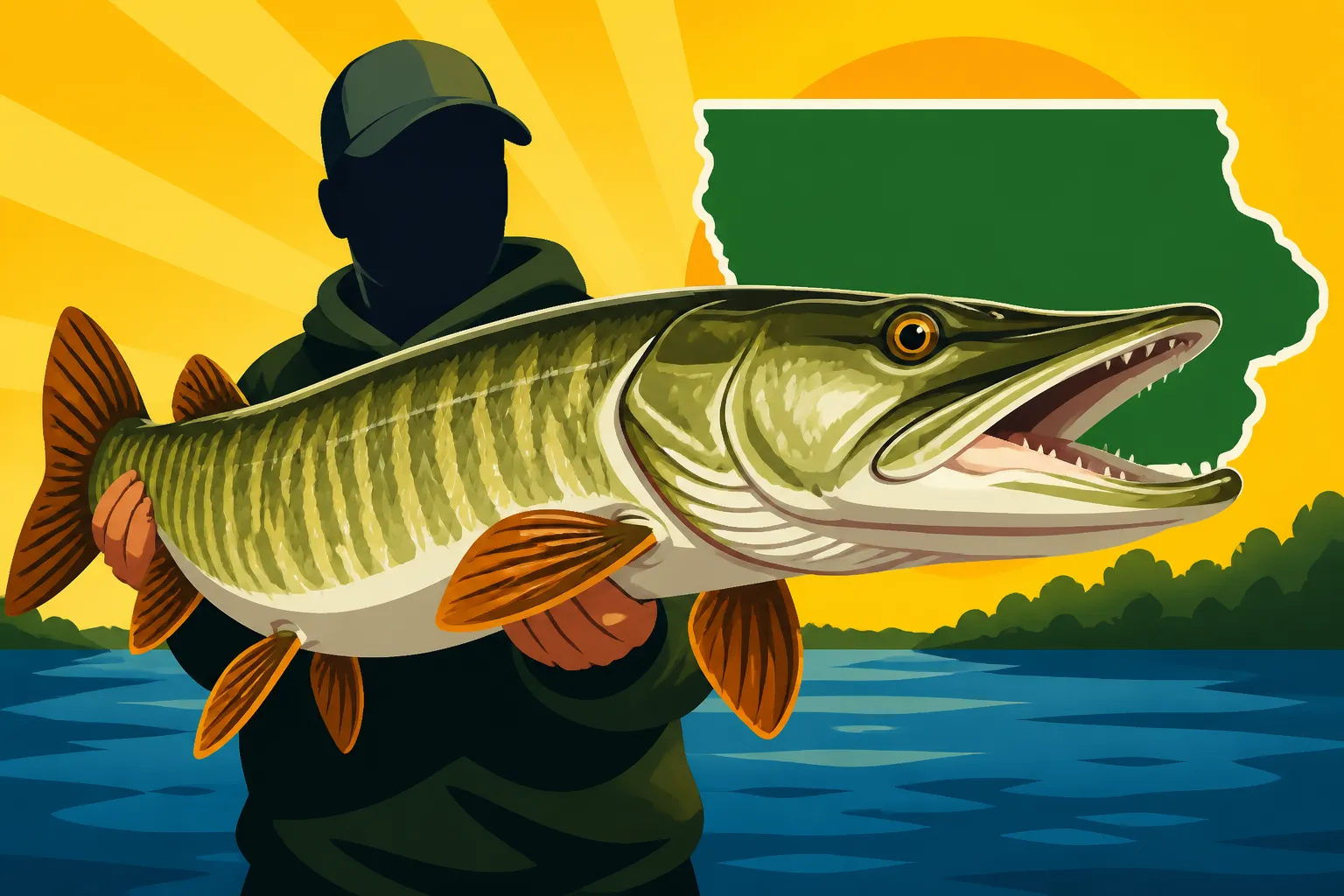
Chasing a trophy muskie in Iowa can feel like searching for a ghost—they’re elusive, powerful, and notoriously challenging to catch. Many anglers dream of landing one of these "fish of 10,000 casts," but what exactly qualifies as a trophy muskie in the Hawkeye State? This comprehensive guide will dive into what makes a muskie truly exceptional in Iowa's waters, the factors influencing their size, where to find them, and how you can prepare for the epic battle.
What Defines a "Trophy" Muskie in Iowa?
When we talk about "trophy" fish, it's not just about a personal best, though that's certainly a huge part of the excitement. In Iowa, there's a collective understanding, a kind of unspoken benchmark, that sets certain muskie apart. These aren't just big fish; they're truly magnificent specimens that represent the pinnacle of an angler's pursuit.
Understanding Iowa's Muskie Fishing Culture
Muskie fishing in Iowa is a passionate pursuit. It's not for the faint of heart, and it's certainly not about catching a lot of fish. It's about patience, persistence, and the thrill of the chase for that one magnificent fish. Because of their elusive nature, every muskie caught is a victory, but a "trophy" muskie holds a special place. For many, it's a testament to countless hours on the water, mastering specialized techniques, and understanding the complex behaviors of these apex predators. It’s a badge of honor in the Iowa fishing community, where tales of massive muskie are told and retold with reverence. The sheer power and aggression of a muskie on the line, especially a big one, is an experience that hooks anglers for life, making the concept of a "trophy" fish even more significant.
The Official Iowa State Record
The ultimate "trophy" in Iowa, as in any state, is undoubtedly the state record. This is the gold standard, the fish that has officially out-sized every other specimen brought to the scales (or documented and released, depending on the recordkeeping rules). While specific numbers can change, the Iowa state record for muskie typically sits in a range that most anglers would consider absolutely massive—think well over 40 pounds, and certainly pushing or exceeding 50 inches in length. This is the fish that every muskie angler secretly dreams of, the one that sets the bar for all others. Achieving a state record involves not just incredible luck and skill, but also meticulous documentation and adherence to strict guidelines. For many, simply knowing what that benchmark is helps frame their own personal goals. If you're curious about the ultimate challenge, you might want to read up on the Iowa State Record Muskie.
Common Trophy Benchmarks for Anglers
While the state record is the pinnacle, most anglers have more attainable, yet still incredibly impressive, goals for what constitutes a "trophy" muskie. Generally, an Iowa muskie over 40 inches is considered a fantastic catch, often referred to as a "true muskie." When you start getting into the 45-inch range, you're looking at a truly exceptional fish that will make any angler's year. And then, there's the magical 50-inch mark. A 50-inch muskie in Iowa is the holy grail for many, a fish that commands respect and envy among peers. These fish are typically mature, powerful, and represent years of growth in Iowa's challenging environments. While length is often the primary measure for muskie (especially with catch and release becoming standard), weight is also a factor, with muskie pushing or exceeding 25-30 pounds often falling into the trophy category. It’s important to remember that these are general guidelines, and any muskie you catch, especially after hours of effort, is a trophy in its own right.
Here's a quick look at how various "trophy" sizes stack up in Iowa:
| Category | Length (Inches) | Weight (Pounds) | Description |
|---|---|---|---|
| Personal Best | Varies | Varies | Any muskie bigger than you've ever caught before! |
| "True Muskie" | 40+ | 15-20+ | A significant catch, often the first major milestone. |
| Exceptional | 45+ | 20-25+ | A rare and highly respected fish, requires dedication. |
| "Holy Grail" | 50+ | 25-30+ | The ultimate goal for many, a truly magnificent specimen. |
| State Record | 50+ | 40+ | The pinnacle, requiring exceptional size and formal recognition. |
The Factors Influencing Muskie Size and Growth in Iowa Waters
Muskie don't just magically become giants. Their growth is a complex interplay of environmental conditions, genetics, and how we, as anglers, manage and interact with the species. Iowa's unique blend of lakes and rivers provides different opportunities and challenges for muskie to thrive and reach their impressive sizes.
Habitat and Food Availability
Just like any growing creature, muskie need a consistent and abundant food source to reach trophy dimensions. Iowa's premier muskie waters are often rich in forage fish like shad, perch, and even smaller walleye or bass. Lakes with vast open water coupled with structured areas like weed beds, rocky points, and submerged timber provide ideal ambush points and hunting grounds for these top predators. The nutrient content of the water, its temperature, and overall water quality also play significant roles in the health and growth rate of muskie. A lake with a stable ecosystem and a healthy food chain is far more likely to produce massive muskie than one that struggles with these factors. Understanding where these food sources congregate is a huge part of locating big muskie. Check out our guide on Muskie Habitat in Iowa Waters for more in-depth information.
Genetics and Age
While a great environment is crucial, a muskie's genetic makeup also dictates its potential for growth. Some muskie are simply predisposed to grow larger and faster than others. The age of the fish is, of course, a direct correlate to its size. A muskie needs many years, often well over a decade, to reach those coveted 40 and 50-inch lengths. In colder climates, fish tend to grow slower but live longer, potentially reaching larger sizes. Iowa’s climate allows for a decent growth rate, but the real key is survival. The longer a muskie can avoid anglers (and other natural predators), disease, and harsh environmental conditions, the bigger it has the chance to become. It’s why catching a true trophy feels like such a special event – you’re encountering a fish that has beaten the odds for a very long time.
Catch and Release Practices
This factor cannot be stressed enough when it comes to trophy muskie. Muskie fishing, by its very nature, is largely a catch-and-release sport, especially for the larger specimens. The vast majority of trophy muskie caught today are released back into the water to grow larger and provide future angling opportunities. This conservation ethic is absolutely vital for maintaining and enhancing Iowa's trophy muskie fisheries. Without the diligent efforts of anglers to properly handle, revive, and release these magnificent fish, the chances of encountering a true giant would diminish significantly. Educating yourself on proper handling techniques—like using large nets, keeping the fish in the water as much as possible, and using long-nosed pliers for hook removal—is paramount. Every released muskie is a potential future trophy, ensuring that the next generation of anglers can also experience the thrill.
Iowa's Best Waters for Chasing Trophy Muskie
Iowa might not be the first state that comes to mind for muskie, but don't let that fool you. We have some fantastic waters that consistently produce impressive fish. Knowing where to focus your efforts is half the battle when targeting these giants.
The Iowa Great Lakes
When you think of trophy muskie in Iowa, the Iowa Great Lakes region, particularly Spirit Lake and Big Spirit Lake, often comes to mind first. These natural lakes offer expansive, clear waters with abundant forage and excellent habitat. West Okoboji Lake and East Okoboji Lake also hold good populations. The deep, diverse structure of these lakes provides ideal conditions for muskie to grow large and old. Anglers here regularly report catches in the high 40-inch range, with 50-inchers making an appearance each season. The challenging conditions and sometimes extreme weather mean that those who brave these waters are often rewarded with a fight they won't soon forget. These lakes are truly the proving ground for Iowa muskie enthusiasts, and a great place to learn about Muskie Fishing in Iowa.
Mississippi River Backwaters
The mighty Mississippi River, forming Iowa's eastern border, is another phenomenal, albeit different, muskie fishery. The backwater areas, sloughs, and interconnected channels provide a complex ecosystem where muskie thrive. Unlike the clearer lakes, fishing the Mississippi often involves navigating current and diverse structures like wing dams and fallen timber. These river muskie are often incredibly strong, owing to their life in moving water. While perhaps not as famous for sheer size as the Great Lakes, the Mississippi regularly gives up muskie in the trophy class, with plenty of fish over 40 inches and the potential for true giants. The dynamic nature of the river means that finding these fish can be a constantly evolving puzzle, but the reward is immense. Be aware that Muskie Daily Bag Limit on Border Waters can vary, so always check local regulations.
Other Productive Lakes and Reservoirs
Beyond the Great Lakes and the Mississippi, Iowa boasts several other productive lakes and reservoirs that are worth exploring for trophy muskie. Lakes like Clear Lake, Rathbun Lake, and Three Mile Lake have strong muskie populations, often stocked by the Iowa Department of Natural Resources (DNR). These waters, while perhaps not yielding the sheer numbers of muskie as some other areas, consistently produce fish that reach impressive sizes. They often have robust stocking programs for Tiger Muskie Stocking in Iowa, which are a sterile hybrid of muskie and northern pike, known for fast growth and aggressive strikes. Anglers willing to put in the time and study the specific nuances of these individual lakes can be greatly rewarded with a personal best or even a state-worthy catch. Each body of water has its own rhythm and challenges, making the pursuit of muskie a constantly engaging adventure across the state.
Gear and Techniques for Targeting Large Muskie
Landing a trophy muskie isn't something you can do with just any old fishing setup. These are powerful, toothy predators that demand specialized gear and refined techniques. Skimping on your equipment will almost certainly lead to heartbreak when that fish of a lifetime strikes.
Heavy-Duty Rods, Reels, and Line
To stand a chance against a muskie, you need heavy-duty equipment. Forget your bass rod—we're talking about stout, fast-action rods typically 8 to 9 feet long, designed to cast massive baits and absorb the shock of a powerful strike. These rods need serious backbone to turn a large muskie and handle heavy braided line. Paired with these rods are robust baitcasting reels, capable of holding hundreds of yards of heavy line and delivering incredible cranking power. You'll want reels with a strong drag system that can withstand the blistering runs of a big muskie. As for line, braided line in the 80 to 100-pound test range is standard for muskie fishing due to its strength, sensitivity, and lack of stretch. This is often paired with a heavy-duty fluorocarbon or wire leader to withstand those razor-sharp teeth. You can find a fantastic selection of these specialized rods, reels, and lines by searching for "muskie fishing gear" on a platform like Amazon, where you can compare different brands and features. For more specifics, check out our guide on Best Line Weight for Muskie Fishing.
Lure Selection for Trophy Muskie
Muskie are sight feeders, and they often key in on large, erratic presentations. This means your tackle box for muskie fishing will look very different from a typical bass or walleye setup. We're talking about baits that are often 8 to 14 inches long, sometimes even larger!
- Bucktails: These are probably the most iconic muskie lures. Large spinnerbaits with flowing bucktail hair create a lot of flash and vibration, mimicking a fleeing baitfish. Different blade sizes and colors are essential.
- Crankbaits: Giant crankbaits, some diving over 20 feet, are effective for trolling or casting over deep structure. These often have realistic finishes and strong vibrations.
- Glide Baits and Jerkbaits: These lures require specific retrieve techniques, imparting a walk-the-dog or side-to-side motion that can entice a following muskie to strike.
- Topwater Lures: For explosive strikes, large topwater baits like walk-the-dogs or prop baits can be incredible, especially during low light conditions or over shallow weeds.
- Soft Plastics: Increasingly popular, large soft plastic swimbaits or shads, often rigged on heavy jig heads, offer a more subtle but equally effective presentation.
Having a diverse selection of these large lures, and understanding when and how to present them, is crucial for consistently hooking into trophy muskie.
Best Practices for Landing and Releasing Big Muskie
Hooking a trophy muskie is only half the battle; properly landing and, crucially, releasing it is just as important for its survival. Remember, these are future trophies!
- Use a Large Net: A huge, muskie-specific net (with a wide hoop and rubberized, knotless mesh to protect scales and fins) is essential. Do not try to boat flip or hand-land a big muskie.
- Minimize Air Time: Keep the muskie in the water as much as possible. Prolonged exposure to air can be deadly for these large, oxygen-sensitive fish.
- Use Proper Tools: Have long-nosed pliers, bolt cutters (for cutting hooks if necessary), and a hook-out tool ready. Often, a single large hook on a big bait is all you'll need.
- Support the Fish: If you must lift the fish for a quick photo, support its body horizontally with two hands—one under the belly, one grasping the base of the tail. Never hang a muskie vertically by its jaw or gill plate.
- Revive Properly: After release, hold the muskie gently in the water, facing into any current, until it kicks strongly and swims off on its own. This might take several minutes.
Practicing the Figure-Eight Technique for Muskie at the Boat is also crucial, as many muskie follow to the boat and will strike at the last second when the lure is worked in a figure-eight motion beside the boat. Responsible angling ensures that Iowa's muskie fishery remains vibrant for years to come.
Conservation and the Future of Iowa's Trophy Muskie
The existence of trophy muskie in Iowa isn't by accident. It's a testament to dedicated conservation efforts and responsible angling. Looking ahead, maintaining and improving these fisheries requires a continued commitment from everyone involved.
The Role of Anglers in Protecting Muskie
As muskie anglers, we are the first line of defense for these magnificent fish. Our actions directly impact the health and sustainability of Iowa's muskie populations. Adhering to Iowa Fishing Regulations Explained, specifically those pertaining to Muskie Season and Bag Limit, is non-negotiable. But beyond just following the rules, it's about embracing the spirit of muskie conservation. This means actively practicing catch and release, especially for trophy-sized fish, handling them with the utmost care, and minimizing stress. It also means educating newer anglers on these best practices, becoming ambassadors for the species. Every time we responsibly release a large muskie, we're not just ensuring it lives to fight another day; we're also contributing to the genetic pool that will produce future generations of trophy fish. We have a direct impact on How Big Muskie Get in Iowa in the coming years.
Iowa DNR Stocking and Management Efforts
The Iowa Department of Natural Resources (DNR) plays a critical role in managing and enhancing muskie populations across the state. This includes strategic stocking programs, particularly for purebred muskie and tiger muskie, into various lakes and reservoirs. These stockings often focus on waters that have suitable habitat but limited natural reproduction, ensuring a viable fishery. Beyond stocking, the DNR conducts research, monitors populations, and sets regulations to promote sustainable growth. They analyze factors like growth rates, age structures, and environmental conditions to make informed decisions that support the trophy potential of Iowa's muskie. Their efforts, combined with responsible angling practices, create the foundation for the incredible muskie fishing experiences that Iowa offers. This collaborative approach ensures that the dream of catching a trophy muskie remains a thrilling reality for anglers in Iowa.
Disclaimer
This article is for general informational purposes only and does not constitute professional advice. Laws, prices and regulations vary by location and change over time. Consult a qualified professional for guidance on your specific situation.