Where Northern Pike Spawn in Iowa
It's early spring in Iowa, and many anglers are itching to get out on the water, but pinpointing where Northern Pike are during their spawning season can feel like trying to find a needle in a haystack, especially with fluctuating water levels and temperatures. It's a critical time for these toothy predators, and understanding their unique spawning habits is key to not only respecting their reproductive cycle but also potentially improving your chances of finding them before or after the spawn. This guide will walk you through the precise types of habitats Northern Pike seek out in Iowa when it's time to reproduce, helping you understand their patterns better.
Understanding Northern Pike Spawning Habits
Northern Pike are a fascinating species, known for their aggressive strikes and impressive size. Unlike some other fish, they don't build elaborate nests or guard their eggs. Instead, they are what we call "broadcast spawners," scattering their eggs over specific types of submerged vegetation. This method requires very particular conditions, and if you know what to look for, you can often deduce where they're concentrating.
They're typically one of the earliest fish to spawn in Iowa, often getting started right after the ice melts, sometimes even while there's still a bit of ice lingering in shaded bays. This early timing is crucial because it gives their young a head start on other species, allowing them to grow larger and stronger before the competition for food intensifies. It's a tough world out there for a tiny pike fry!
The Annual Pike Spawning Window in Iowa
The exact timing of the Northern Pike spawn in Iowa isn't set in stone; it's a dynamic window that shifts each year based on a couple of major environmental cues. Primarily, it's all about water temperature and the spring runoff. Generally, you can expect the pike to begin their spawning rituals when water temperatures creep into the low to mid-40s Fahrenheit. This often means late March through April, but a warm, early spring could kick things off sooner, while a prolonged cold spell might delay it into May.
Think about those first few weeks after the ice leaves the lake or river. The days might be getting longer, and the sun feels a bit warmer, but the water is still bone-chilling cold. That's often when the pike are starting to stage in preparation. This early activity also means that if you're out fishing right after ice-out, you might encounter large, pre-spawn females bulking up on forage before their big event. It's a time when you really need to be paying attention to local conditions, perhaps checking water temperatures with a thermometer or looking for reports from fellow anglers.
Why Specific Habitats are Crucial for Pike Reproduction
Pike aren't just looking for any old shallow water to drop their eggs. Their eggs are adhesive and need something to stick to, specifically flooded vegetation. This isn't just a preference; it's a biological necessity for the survival of their offspring. The submerged plants provide protection from predators, a steady food source for the newly hatched fry (think tiny insects and zooplankton), and a stable environment where the eggs can develop without being swept away by currents or suffocated by silt.
Without these specific vegetative habitats, the eggs and fry would face significantly lower survival rates. This is why you'll rarely find pike spawning in open, sandy areas or rocky shorelines. Their strategy relies entirely on these soft, marshy, vegetated zones. It’s also why understanding Northern Pike Habitat in Iowa Lakes is so important throughout the year, not just during spawning. A healthy pike population truly depends on the availability of these nursery areas.
Key Characteristics of Pike Spawning Habitat
So, what exactly does this ideal spawning habitat look like in Iowa? It’s a combination of several factors that, when present together, create the perfect nursery for future generations of Northern Pike. If you're out scouting potential spots, knowing these characteristics will give you a serious advantage.
Shallow, Flooded Vegetation
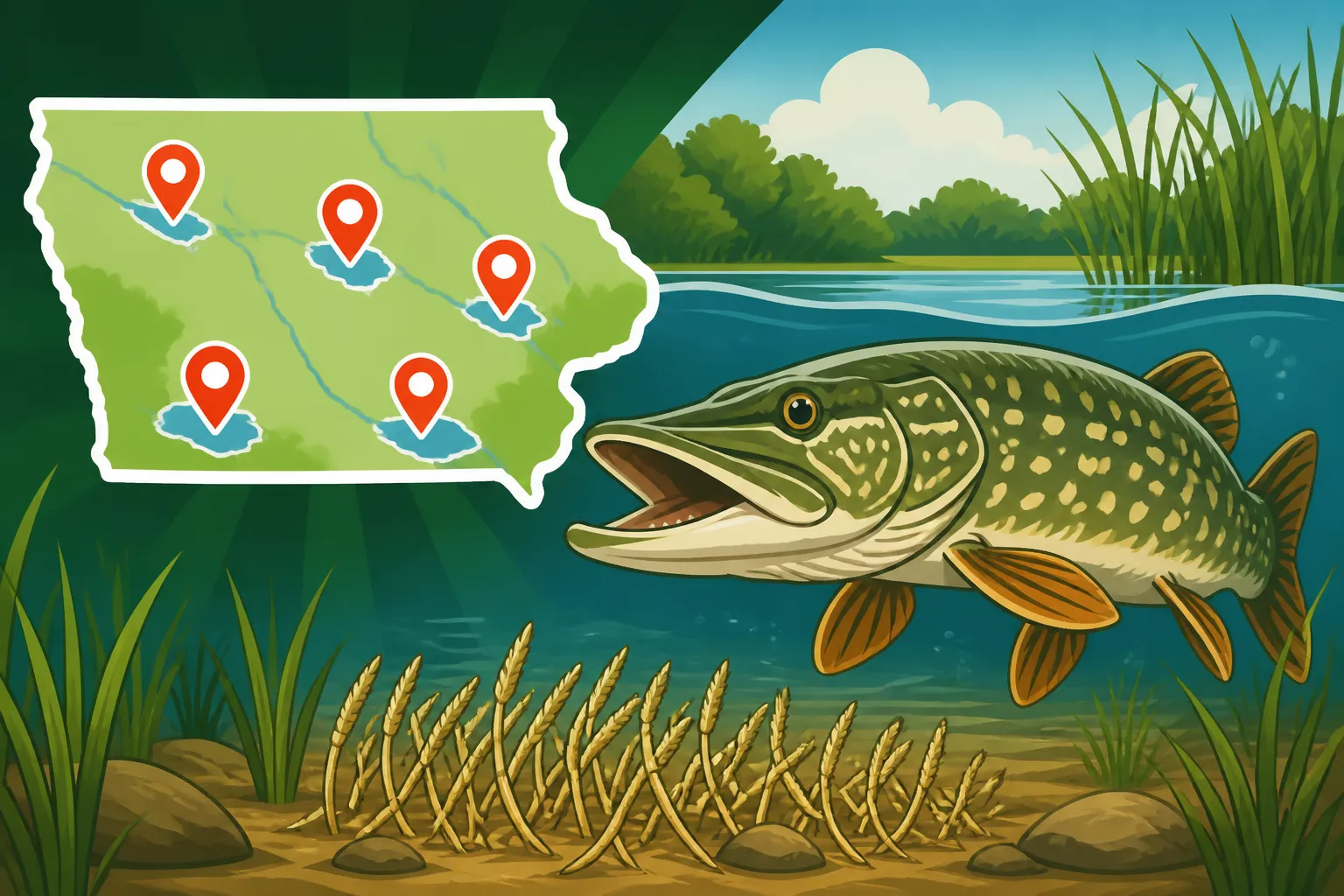
This is the absolute non-negotiable requirement for spawning pike. They seek out areas where recent spring rains or snowmelt have caused water levels to rise, flooding adjacent fields, marshes, or low-lying areas with thick, grassy vegetation. Imagine a farmer's field that's now a couple of feet underwater, or a marshy bay that's expanded its boundaries. The old cattails, sedges, and emergent grasses that were dry land just weeks ago are now submerged, providing an intricate network of stems and blades for the eggs to cling to.
These areas are typically quite shallow, often less than 3-4 feet deep, allowing the sun to penetrate and warm the water slightly faster than deeper sections of the lake or river. This slight warmth helps accelerate egg development. You'll often see these areas connected to larger bodies of water, but somewhat sheltered from strong winds and currents. Without this flooded, dense vegetation, pike simply won't spawn successfully. It's their maternity ward, and they're very particular about it!
Soft, Mucky Bottoms and Slow Currents
Another key characteristic of prime pike spawning habitat is the underlying bottom composition. While the vegetation is paramount, it usually grows best in areas with soft, mucky, or silty bottoms. These substrates are rich in organic matter, which supports the growth of the necessary plant life. Hard, rocky, or sandy bottoms are generally avoided.
Furthermore, these areas will almost always have very slow or negligible current. Strong currents would simply wash away the adhesive eggs or make it difficult for the fragile fry to survive. Think of stagnant or very slowly moving backwaters, oxbow lakes, flooded ditches connected to main bodies of water, or sheltered marshy bays. On rivers, this means away from the main channel, deep into the sloughs and flooded embayments. If you're on a river like the Mississippi, you're looking for those hidden, tranquil spots that feel like a world away from the main flow.
Water Temperature and Oxygen Levels
As mentioned, water temperature is the primary trigger for the spawn. Pike prefer water in the 40s Fahrenheit for spawning. This relatively cool temperature is ideal for egg development and ensures the fry emerge before other predators become too active. Once the water gets much warmer, say into the 50s and 60s, the pike have typically completed their spawning activities and dispersed.
Oxygen levels are also critical. While these shallow, vegetated areas can sometimes have lower oxygen in summer due to decomposition, in early spring, fresh meltwater and cooler temperatures typically ensure sufficient oxygen for the eggs and fry. Healthy water quality in these sheltered zones is paramount for a successful hatch. Anglers should remember that disturbing these delicate areas during the spawn can have a negative impact, so it's always best to observe from a distance if you suspect spawning is taking place.
Prime Spawning Locations in Iowa's Waters
Knowing what to look for is one thing, but where to start looking in Iowa is another. While pike will use suitable habitat wherever they find it, some types of Iowa water bodies are more renowned for providing these specific conditions.
Natural Lakes and Marshes
Iowa's natural lakes, particularly the Iowa Great Lakes region, are classic Northern Pike territory. Lakes like West Okoboji, East Okoboji, and Spirit Lake, along with their associated wetlands and marshes, offer extensive shallow, vegetated bays that fit the pike's spawning requirements perfectly. The extensive cattail beds and flooded grass areas around the edges of these lakes, especially in their shallower arms and protected coves, are prime real estate. Fishing the Iowa Great Lakes often means understanding these ecological nuances.
Many of these natural lakes have adjacent state-owned wetlands or wildlife management areas that are deliberately managed to provide this type of habitat, recognizing its importance for pike and other wildlife. When spring runoff occurs, these areas become flooded, creating temporary nurseries that are absolutely vital. You might even find yourself looking at detailed maps, perhaps even finding some helpful ones on sites like Amazon, to pinpoint these extensive shallow zones.
Large Rivers and Backwater Areas
Iowa's major rivers, especially the Mississippi River along the eastern border and even sections of the Des Moines River, also offer significant Northern Pike spawning opportunities. However, on rivers, you need to focus specifically on the backwater lakes, sloughs, and flooded embayments that are sheltered from the main current. These are often the areas that fill with water during spring floods, creating those critical shallow, vegetated zones.
Think about the pools of the Mississippi River. Within these pools, there are countless islands, floodplains, and old oxbows that become inundated in spring. These backwaters, with their muddy bottoms and dense submerged grasses, are incredibly important for pike. Fishing the Mississippi River in Iowa definitely includes exploring these quieter, off-channel areas. Identifying these spots can be challenging, but maps and satellite imagery (also often available through digital platforms) can be a huge help in spotting potential flooded areas.
Flood Control Reservoirs and Impoundments
While not always as extensive as natural lakes or river backwaters, Iowa's larger flood control reservoirs like Saylorville Reservoir, Rathbun Lake, and Coralville Reservoir can also provide spawning habitat for Northern Pike, particularly in their upper reaches or shallow, protected coves that experience seasonal flooding. These reservoirs are often designed with fluctuating water levels, and the receding and rising waters can create temporary wetlands that pike will utilize.
The key here is finding areas where the water has risen into brush, grasses, or even young trees, creating that crucial submerged structure. Look for shallow bays that are fed by smaller creeks or tributaries, as these areas often have rich vegetation and slower currents. Fishing Saylorville Reservoir in Iowa or Fishing Rathbun Lake in Iowa will show you that even these larger bodies of water have subtle nuances in their shorelines that offer these specific conditions.
Fishing Considerations During Pike Spawning Season
Understanding where Northern Pike spawn isn't just for ecological curiosity; it also profoundly impacts your fishing strategy. Knowing their movements during this critical time can help you decide when and where to target them, or perhaps, when to give them a bit of space.
Pre-Spawn Strategies
Before the actual spawn, typically in late March to early April (or even earlier depending on the year), large female pike will be gorging themselves, building up energy reserves for the strenuous act of spawning. They'll often stage in areas adjacent to their preferred spawning grounds – think just outside those shallow, vegetated bays, often along the first significant drop-off or channel edge leading into them.
This can be an excellent time to target trophy pike. They're often aggressive and looking for substantial meals. Larger jerkbaits, swimbaits, or even larger spoons can be effective. This is also when ice-out conditions might transition to open water, so you might be packing your Ice Fishing Gear Basics for Beginners away and getting out your casting rods. Just remember to be mindful of water temperatures; if they're still in the high 30s or low 40s, the pike will likely be sluggish and closer to the bottom.
During the Spawn: A Time for Respect
When pike are actively spawning, they are highly focused on reproduction and typically aren't interested in eating. They're in those very shallow, heavily vegetated areas, sometimes with their backs almost out of the water. Attempting to catch them during this period is often unproductive and can be detrimental to the fish and the future of the fishery. Hooking a large, egg-laden female can stress her, potentially leading to egg resorption or other negative impacts on her ability to successfully spawn.
Most ethical anglers choose to avoid targeting pike when they are visibly engaged in spawning. This is a time to explore other species or simply observe nature's cycle. Check the Iowa Fishing Season Dates and Limits to ensure you're aware of any specific regulations that might apply during this sensitive period. It’s a good moment to appreciate these fish without intruding on their vital life event.
Post-Spawn Recovery and Dispersal
After the spawn, which can last a week or two depending on conditions, pike will often move out of the very shallowest nursery areas into slightly deeper water to recover. They'll be tired and often skinny from the exertion. However, after a short recovery period, they will quickly begin feeding heavily to regain their strength. This can mark the start of an excellent fishing period.
They might still be near the spawning areas, but in slightly deeper edges or weed lines, or they could disperse to their more typical hunting grounds. As the water warms into the high 40s and 50s, their metabolism will pick up, and they'll become more active. Look for them along emerging weed beds, submerged points, and around structural elements near those shallow bays. This is also when many other species become active, so you might find yourself switching tactics for Spring Fishing in Iowa in general.
Finding the Best Spawning Grounds: Tips for Anglers
Locating these specific spawning grounds can be challenging, but a little research and on-the-water observation can go a long way.
Using Maps and Satellite Imagery
Before you even leave your house, pull up some maps or satellite imagery of your favorite Iowa fishing spots. Look for large, shallow bays, extensive marshy areas, or floodplains adjacent to rivers or lakes. Areas marked as "wetlands," "marshes," or "sloughs" are prime candidates. Pay attention to how high the water levels are reported to be, as this directly correlates to how much adjacent land will be flooded. You can often find detailed topographic maps or even recent satellite images online, some of which might be bundled with outdoor products you find on Amazon.
Look for areas with dense vegetation that would become submerged with a slight rise in water level. River anglers should specifically seek out areas well off the main channel that are known for seasonal flooding. Having a good understanding of the geography of your chosen body of water is incredibly helpful year-round, not just for spawning pike.
On-the-Water Observation
Once you're actually out on the water, your eyes are your best tools. Look for physical signs of flooded vegetation. This could be last year's cattails or reeds now standing in water, flooded grass, or even partially submerged shrubs and small trees along the shoreline. If the water is clear enough, you might even spot the dark backs of pike moving through these shallow areas.
Pay attention to water clarity and temperature in these shallow bays. Often, the water in spawning areas will be slightly warmer than the main lake or river. Also, listen for any sounds of splashing, which could indicate active fish. Patience and quiet observation are key. If you're unsure where to start, consider exploring known pike waters.
Local Knowledge and DNR Resources
Don't underestimate the value of local knowledge! Chat with bait shop owners, other experienced anglers, or fishing guides in the area. They often have decades of experience with local patterns and can point you in the right direction. The Iowa Department of Natural Resources (DNR) is also an invaluable resource. They often publish fishing reports, stocking information, and even habitat maps that can highlight important areas for various species, including Northern Pike. Many of their publications can be found online, and they sometimes offer physical copies at their offices or local bait shops.
Talking to people who have fished a body of water for years can save you a lot of time and effort. They might even share insights into Iowa Fishing Regulations Explained or Iowa Fishing License Guide details specific to certain areas, which is always important.
| Habitat Feature | Ideal for Northern Pike Spawning | Less Ideal / Avoided |
|---|---|---|
| Water Depth | Very shallow (1-4 feet), especially areas that were dry land previously. | Deep open water, steep drop-offs. |
| Vegetation Type | Dense, submerged grasses, cattails, sedges, marsh plants, flooded brush. Adhesive eggs need substrate. | Sparse vegetation, emergent lily pads (later in season), no vegetation. |
| Bottom Composition | Soft, mucky, silty bottoms rich in organic matter. | Hard, rocky, sandy, or heavily graveled bottoms. |
| Water Movement | Stagnant, slow-moving, or very gently flowing water (e.g., backwaters, sheltered bays). | Strong currents, main river channels, wave-exposed shorelines. |
| Water Temperature | 40-50°F (4-10°C), triggering the spawn in early spring. | Colder (below 38°F) or warmer (above 55°F) for active spawning. |
| Connectivity | Connected to larger water body for adult fish access, but sheltered. | Isolated small puddles, entirely open water far from cover. |
Disclaimer
This article is for general informational purposes only and does not constitute professional advice. Laws, prices and regulations vary by location and change over time. Consult a qualified professional for guidance on your specific situation.