Are Paddlefish Legal to Catch in Iowa?
It's a common question for many Iowa anglers, and one that often comes with a bit of confusion: can you actually fish for paddlefish in Iowa? These magnificent, prehistoric-looking creatures hold a special place in our state's waterways, but pursuing them is a whole different ballgame compared to chasing walleye or catfish. This guide is here to untangle the specific rules and realities of paddlefish angling in Iowa, ensuring you're both informed and responsible when you hit the water.
The Allure of the Paddlefish: Iowa's Ancient River Dweller
Before we dive into the nitty-gritty of regulations, let's take a moment to appreciate the paddlefish itself. These aren't your typical Iowa game fish; they are truly unique and command a special kind of respect from those who encounter them.
A Living Fossil with a Unique Story
Imagine a fish that has roamed the rivers of North America for millions of years, largely unchanged since the age of dinosaurs. That's the paddlefish. Their most striking feature, of course, is that long, flattened snout, or rostrum, which can make up a third of their total body length. This isn't just for show; it's packed with electroreceptors that help them detect the tiny electrical fields produced by plankton, their primary food source. They literally "filter feed" through the water, mouth agape, much like a baleen whale.
Their skin is smooth, not scaly, and they can grow to truly impressive sizes, sometimes exceeding six feet in length and over 100 pounds. Landing one of these giants is an unforgettable experience, a testament to the raw power they possess. However, their slow growth rate and long lifespan (they can live for decades) also make them particularly vulnerable to overfishing and habitat changes, which is a major reason why their management is so crucial. They are truly a marvel of natural engineering right here in our Iowa waters.
Where These Giants Roam in Iowa
While you won't find paddlefish in every pond or creek in Iowa, their main strongholds are our magnificent border rivers. The Mississippi River, with its vast backwaters and intricate main channels, is a prime habitat, as is the Missouri River along our western border. These large, free-flowing river systems provide the extensive open water and plankton-rich environments that paddlefish need to thrive.
Occasionally, you might hear reports or see them in larger impoundments that are connected to these major river systems, especially during certain times of the year. However, for serious paddlefish enthusiasts, the focus is almost always on these mighty rivers. Understanding their preferred habitats is the first step toward understanding why specific regulations are in place to protect these incredible fish, especially in these vital waterways. If you want to dive deeper into their biology, check out our guide on Paddlefish in Iowa Waters.
What Makes Them Special
Beyond their ancient lineage and unique appearance, paddlefish hold a special ecological niche. As filter feeders, they play a role in maintaining the health of their aquatic ecosystems by consuming plankton. Historically, they were also prized for their meat and, famously, their roe (eggs), which is considered a delicacy similar to caviar. This historical demand, coupled with habitat alterations like dam construction which fragmented their spawning migrations, led to significant population declines in many areas, including Iowa.
Today, thanks to dedicated conservation efforts and thoughtful management by the Iowa DNR and other state agencies, paddlefish populations are slowly recovering in many parts of their range. This makes responsible angling practices even more important. It's not just about catching a fish; it's about participating in the careful stewardship of a remarkable natural resource.
Navigating the Regulations: Is Paddlefish Fishing Legal in Iowa?
This is the question that brings most anglers here, and it's a good one to ask because the answer isn't a simple "yes" or "no." It's more of a "yes, but with very specific and strict rules." Ignoring these rules isn't just bad angling etiquette; it can lead to serious legal consequences.
The Definitive "Yes, But" to Catching Paddlefish
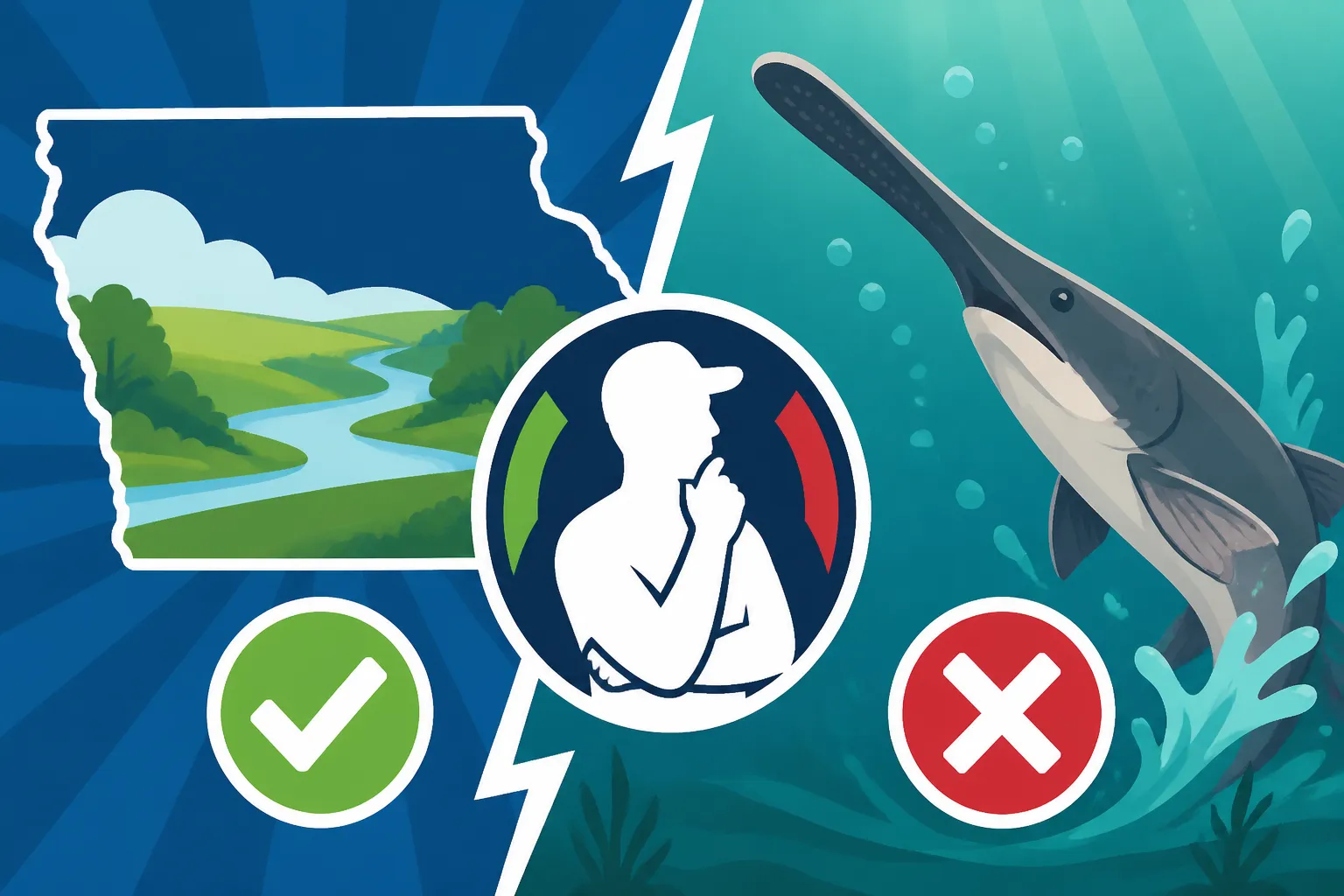
Yes, it is legal to catch paddlefish in Iowa, but this permission comes with substantial caveats. Unlike species you can target year-round in most waters, paddlefish are managed with extreme care. The key thing to remember is that this isn't a free-for-all. Iowa's Department of Natural Resources (DNR) has implemented precise regulations to ensure these vulnerable populations remain viable for generations to come.
Many anglers find the regulations around paddlefish to be confusing or even frustratingly complex, especially when they just want to enjoy a day on the river. It's true, the rules are detailed, but they exist for a very good reason: to protect a slow-growing, long-lived species that has faced significant challenges. So, while you can legally pursue them, you must do your homework and understand every aspect of the law before you cast a line. For a broader overview of all the rules, our Iowa Fishing Regulations Explained article is a great resource.
Understanding Seasons, Zones, and Methods
One of the biggest distinctions with paddlefish is the method of capture. Because they are filter feeders and don't typically bite on traditional baits, paddlefish are almost exclusively taken by "snagging" in Iowa. Snagging involves casting out a weighted, large treble hook and retrieving it with a sweeping motion, hoping to hook the fish externally. This method is highly regulated and only permitted in specific areas and during very short seasons.
Generally, paddlefish snagging seasons in Iowa are confined to certain stretches of the Mississippi and Missouri Rivers. These seasons are often in the spring or fall, tied to specific biological events like spawning migrations, and they are usually quite brief, sometimes only a few weeks long. It's absolutely critical to check the current Iowa Fishing Regulations booklet or the DNR website for the exact dates and permissible waters each year, as these can change. For instance, specific pools of the Mississippi, like those mentioned in our Mississippi River Pool 9 Fishing guide, or sections of the Missouri River detailed in Missouri River Border Fishing Spots, will have their own specific rules. Always be aware of reciprocal agreements if you're fishing border waters, as rules can differ slightly even on the same river. Reciprocal Fishing Rules on the Mississippi River Border
Daily Limits, Size Restrictions, and Equipment Specifics
Iowa's paddlefish regulations also include strict daily bag limits and possession limits, which are usually very conservative – often just one or two fish per angler per season or year, not per day. The idea is to allow for some harvest while keeping overall pressure low. In addition to numerical limits, there may be specific length restrictions, meaning any paddlefish you snag below or above a certain size must be immediately released unharmed. You can learn more about general limits in our Iowa Fishing Daily Bag Limits Guide.
When it comes to equipment, the rules are also specific to the snagging method. You'll need heavy-duty rods and reels capable of handling powerful runs and the strain of snagging a large fish. Line strength is critical, often 80-pound test or heavier braided line. The hooks must be large treble hooks, and in some areas, barbless hooks might be required or strongly encouraged for easier, less damaging release of undersized fish. It's crucial to consult the regulations for specifics on hook size and type. You also need to consider How Many Fishing Poles You Can Use in Iowa; generally, the limit is two, but specific rules might apply during snagging season, so always double-check.
Here’s a simplified look at general paddlefish regulation types in Iowa's major river systems. Remember, actual dates and limits always need to be verified with the official Iowa DNR regulations before you head out, as they are subject to change annually. Our guide Iowa Fishing Season Dates and Limits is a great place to start looking.
| Feature | Mississippi River (Border Waters) | Missouri River (Border Waters) |
|---|---|---|
| Primary Method | Snagging Only | Snagging Only |
| Season Length | Short, specific dates (e.g., Spring & Fall) | Short, specific dates (e.g., Spring & Fall) |
| Daily Bag Limit | Very restrictive (e.g., 1 or 2 per season) | Very restrictive (e.g., 1 or 2 per season) |
| Possession Limit | Often same as daily bag | Often same as daily bag |
| Length Limit | Often required (e.g., slot limits or minimum) | Often required (e.g., slot limits or minimum) |
| Hook Type | Large treble, often barbless recommended | Large treble, often barbless recommended |
| Boating Needs | Essential for access, safety gear | Essential for access, safety gear |
The Practice of Paddlefish Snagging: Techniques and Ethics
Now that you know paddlefish fishing is legal but highly regulated, let's talk about what it actually takes to pursue these magnificent fish. It's a method that requires effort, specialized gear, and a strong sense of ethical angling.
Mastering the Snagging Technique
Snagging for paddlefish isn't like casting a lure or bait fishing. It's a brute-force technique that involves strong, repetitive motions. Anglers typically cast a heavy weight (often several ounces) with a large treble hook attached, allowing it to sink to the bottom in areas where paddlefish are known to congregate. Once it's on the bottom, the angler makes long, powerful sweeps of the rod, reeling in slack as they sweep, to effectively "sweep" the hook through the water column. The goal is to externally hook the paddlefish as it swims by.
This technique is physically demanding, especially when battling strong river currents like those on the Mississippi or Missouri. It requires a good understanding of river dynamics, current breaks, and where paddlefish might be staging. It’s also a waiting game, with many casts and sweeps before you might connect with a fish. Patience and persistence are absolutely key.
Essential Gear for a Successful (and Legal) Outing
To tackle paddlefish, you'll need a serious setup. Forget your ultralight panfish rod; this calls for heavy artillery. Think about what you'd use for big catfish, but even sturdier. A heavy-action rod, typically 7-9 feet long, paired with a robust reel capable of holding hundreds of yards of heavy braided line (80-100 lb test is not uncommon) is essential. For comparison, you can look at gear discussed in Best Rod for Catfish Fishing, but upsize it even further.
The business end of your setup will be your weights and hooks. Weights can range from 4 ounces to a pound or more, depending on current. Your hooks need to be large, stout treble hooks – often 8/0 or 10/0. While many local bait shops in Iowa will have general fishing tackle, specialized paddlefish snagging gear, especially the heaviest rods and specific large treble hooks, might sometimes be easier to find online through retailers like Amazon, if your local store doesn't stock them. Make sure whatever gear you buy conforms to Iowa's regulations regarding hook size and type.
Beyond your rod and reel, you'll want a strong, long-handled landing net or a heavy-duty gaff to safely land such a large, powerful fish. Personal safety is paramount, especially when fishing from a boat on powerful rivers. Always wear a Best Life Jackets for Iowa Boaters when on the water, and ensure your boat has all the required safety equipment. Checking out equipment options on Amazon for specialized gear can be a smart move, especially for those hard-to-find items.
Handling Your Catch and Releasing Responsibly
Hooking a paddlefish is just the first step; landing it and handling it properly are equally important. These fish are incredibly strong and can put up a tremendous fight. Once landed, if the fish is within legal size and season limits and you intend to keep it, it's generally recommended to dispatch it quickly and bleed it immediately to ensure the best meat quality.
However, many paddlefish that are snagged will be outside of the legal slot limits or caught outside of the open season. In these cases, immediate and careful release is mandatory. This means minimizing their time out of the water, handling them gently, and using barbless hooks can make the release process much smoother and less damaging to the fish. Always be prepared with pliers or hook removers to quickly and safely unhook a fish that must be released. Remember, our goal is not just to catch fish, but to ensure the health of the fishery.
Protecting Iowa's Paddlefish: Conservation and Your Role
The existence of such specific and often restrictive regulations for paddlefish isn't an arbitrary decision. It's a direct result of their unique biology and the historical pressures on their populations. Understanding the "why" behind the rules can help us all be better stewards of this incredible species.
Why Strict Rules are Paramount
Paddlefish populations are particularly sensitive to environmental changes and overharvest. Their long lifespan, late sexual maturity, and specific spawning migration needs mean they can't bounce back quickly from population declines. Dams, for example, have blocked their ancestral migration routes, impacting their ability to reproduce naturally. Historically, they were harvested heavily for their meat and roe, leading to dramatic declines in many parts of their range.
The strict rules currently in place in Iowa are a vital part of a broader conservation strategy. They are designed to manage harvest pressure, allow fish to reach spawning age, and maintain healthy, sustainable populations in our rivers. Without these regulations, we risk losing this truly unique species from our waters. The Iowa DNR meticulously monitors these populations and adjusts rules as needed, making it essential for anglers to stay updated.
The Importance of Adherence and Reporting
As an angler, you play a critical role in the conservation of paddlefish. Adhering to every aspect of the regulations – including season dates, daily and possession limits, and equipment restrictions – is not just a legal requirement but an ethical imperative. If you're unsure about any rule, always err on the side of caution or consult the official Iowa DNR regulations.
Should you witness anyone violating these regulations, whether it's snagging out of season, keeping over the limit, or using illegal methods, it's important to report it. Protecting our natural resources is a collective effort, and illegal activities undermine the hard work of conservationists and responsible anglers. You can find information on Reporting a Fishing Violation in Iowa through the Iowa DNR's dedicated channels. By reporting, you help ensure that paddlefish populations can continue to thrive for future generations of anglers to appreciate.
Supporting Paddlefish Through Responsible Angling
Beyond simply following the rules, responsible angling means approaching paddlefish with a sense of respect and stewardship. Every interaction with these fish, whether it's a successful snag or a careful release, contributes to their future. Take the time to educate yourself and others about their unique biology and conservation needs.
Consider supporting organizations dedicated to river conservation and native fish species. When you purchase fishing licenses and stamps, a portion of those funds often goes directly to conservation and management efforts, which directly benefits species like the paddlefish. Ultimately, being a responsible paddlefish angler means recognizing that you are part of a larger ecosystem and that your actions have an impact. Enjoy the thrill of the chase, but always prioritize the health and sustainability of these magnificent living fossils. You can find many informative books and resources on conservation and river fishing on Amazon, which can help deepen your understanding.
Disclaimer
This article is for general informational purposes only and does not constitute professional advice. Laws, prices and regulations vary by location and change over time. Consult a qualified professional for guidance on your specific situation.