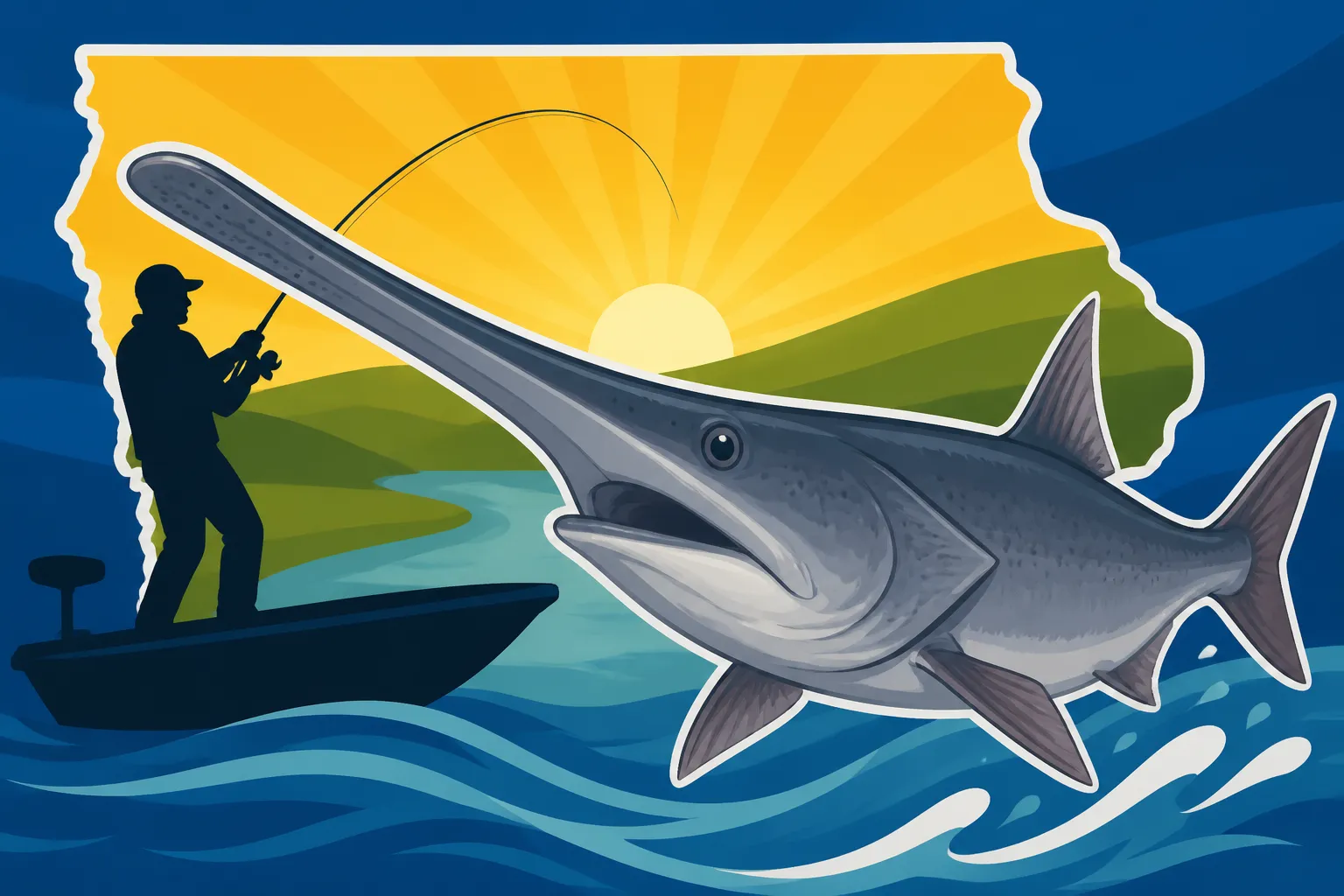
What a Paddlefish Is
Many Iowa anglers, especially those who spend time on our larger rivers, have heard whispers or seen photos of a truly unique, ancient-looking creature known as the paddlefish. But what exactly is this mysterious fish with the elongated, paddle-like snout? This guide will dive deep into the fascinating world of the paddlefish, helping you understand its biology, its role in Iowa's waterways, and what to do if you're lucky enough to encounter one.
What Exactly is a Paddlefish? The Ancient River Giant
Let's cut right to it: the paddlefish, or Polyodon spathula, is one of the most distinctive and ancient fish species swimming in North American waters today. Often referred to as "spoonbills" by locals due to their prominent, flattened snouts, these incredible creatures are remnants of a bygone era, having evolved over 300 million years ago. They belong to a very small, primitive group of fish, most closely related to sturgeon, and unlike many bony fish, their skeleton is primarily composed of cartilage, much like sharks. This gives them a unique, flexible yet robust structure.
Their appearance is truly unmistakable. Imagine a sleek, dark grey to bluish-black body that can grow to impressive lengths and weights, often exceeding five feet and tipping the scales at over 100 pounds. But what immediately catches your eye is that "paddle"—an elongated, oar-like snout that can be a third of their total body length. This isn't just for show; it's a highly specialized sensory organ, covered in thousands of electroreceptors that help them detect the weak electrical fields generated by their primary food source: plankton. This incredible adaptation allows them to literally "feel" their food in the often murky waters where they live. They are filter feeders, swimming with their enormous mouths open, sifting microscopic organisms from the water. It's a truly passive, yet highly effective, way to feed.
When you think about it, finding a fish that relies on microscopic food in large, powerful rivers like the Mississippi is quite a feat. They are perfectly adapted to this niche, navigating vast expanses of water and thriving on a diet that most other large fish couldn't sustain themselves on. Their slow growth and late maturity mean they live long lives, making them a truly grand and venerable presence in our river ecosystems. If you're ever looking for a definitive guide on their identification, there are many excellent books on freshwater fish species available on platforms like Amazon that can help you distinguish them from other unique river inhabitants.
Where Paddlefish Live and How They Thrive in Iowa's Waters
Paddlefish aren't just found anywhere; they have very specific habitat requirements that dictate their presence in Iowa. These magnificent fish primarily inhabit large, slow-moving rivers and associated backwaters, oxbow lakes, and reservoirs. In Iowa, this means our mighty border rivers – the Mississippi and the Missouri – are their main strongholds. These vast river systems provide the perfect conditions: expansive stretches of deep, turbid water, ample plankton, and connectivity to tributaries for their crucial spawning migrations.
During certain times of the year, particularly in spring, paddlefish undertake significant migrations upstream into tributaries to spawn. They seek out specific conditions, often areas with gravel bars or rocky substrates, where they can lay their eggs. This migratory behavior is critical to their life cycle and makes them vulnerable to habitat changes, damming, and other disruptions that block their pathways or alter water flow. After spawning, they typically return to the main river channels, continuing their filter-feeding existence.
Their unique feeding method means they are constantly on the move, slowly swimming through the water column with their mouths agape. They are not predatory in the way a walleye or a bass is; they don't chase down minnows or strike at lures. Instead, they cruise, letting the water flow over their gill rakers, which filter out zooplankton and phytoplankton. This makes them a fascinating study in ecological adaptation, existing at a completely different trophic level than most of the sport fish we target. Their presence is often a good indicator of a healthy, diverse river ecosystem, signifying a robust base of microscopic life. Understanding their movements and preferred habitats is key to their conservation, and organizations involved in Iowa Fishing Regulations Explained often put a lot of effort into monitoring these populations.
The Conservation Status and Management of Paddlefish in Iowa
It's crucial to understand that paddlefish, despite their size and resilience, are considered a sensitive species across much of their range, including Iowa. Their slow reproductive rate, coupled with historical overharvesting and habitat degradation (like the construction of dams that block migratory routes and alter river flows), led to significant declines in their populations. As a result, they are heavily protected and closely managed in Iowa.
In most parts of Iowa, the purposeful fishing for paddlefish, especially by snagging, is prohibited. Snagging, which involves blindly dragging a large, weighted treble hook through the water to foul-hook fish, was historically a common method for catching paddlefish due to their filter-feeding nature and non-biting behavior. However, this method proved to be unsustainable for a species that takes a long time to mature and reproduce. The state's wildlife agencies work tirelessly to balance conservation efforts with any potential angling opportunities, often through strict regulations and permits in very specific, limited circumstances, which are primarily for research or very controlled harvests. It's a far cry from the more common Walleye Season and Size Limits or Bass Season and Size Limits which allow for regular recreational harvest.
If you happen to accidentally snag a paddlefish while targeting other species, the law requires its immediate release. This isn't just a suggestion; it's a vital part of conservation. The delicate cartilaginous skeleton and the long, sensory paddle are easily damaged, making careful handling paramount. Anglers are encouraged to cut the line as close to the hook as possible if the hook is deeply embedded, rather than trying to remove it, to minimize stress and injury to the fish. Educating yourself on these rules is part of responsible angling in Iowa, and resources like the Iowa Fishing License Guide often contain detailed sections on protected species.
Encountering a Paddlefish While Fishing (and What to Do)
So, you're out on the Mississippi River, perhaps targeting catfish, and suddenly you feel a heavy, thumping weight on your line that doesn't feel quite like anything you've ever caught. Chances are, you might have accidentally snagged a paddlefish. These encounters, while rare, do happen, and knowing what to do is essential for the fish's survival and for staying within the bounds of Iowa's conservation laws.
First and foremost, remember that snagging for paddlefish in Iowa is generally illegal, but accidentally foul-hooking one while legally fishing for other species is a different story. The key is what you do next. If you realize you've hooked a paddlefish, the immediate priority is to release it quickly and safely, minimizing any harm. These fish are powerful, and bringing a large one to the boat or shore can be quite a fight.
Here’s a quick guide to safe paddlefish release:
- Keep it in the Water: Whenever possible, try to unhook the paddlefish while it's still in the water. This supports its body weight and reduces stress on its internal organs and delicate paddle.
- Minimize Handling: Avoid touching the fish's eyes, gills, or the sensitive paddle. If you must handle it, do so gently, supporting its belly with wet hands or a wet net.
- Cut the Line if Necessary: If the hook is deeply embedded or difficult to remove, it is far better to cut your line close to the hook. Modern hooks will often rust out over time, and the harm from a deeply embedded hook is less than the trauma of attempting a forceful removal.
- Avoid Rough Surfaces: Do not drag the fish over rocks, sand, or the bottom of a boat. This can remove their protective slime coat, making them vulnerable to disease.
- Revive if Needed: If the fish seems sluggish, hold it gently upright in the water, facing into any current, until it regains its strength and swims away on its own.
Responsible anglers understand that protecting species like the paddlefish ensures the health of our waterways for generations to come. While some states have very limited, highly regulated seasons for snagging paddlefish with special permits, Iowa's approach is protective. Always consult the current Iowa Fishing Regulations Explained booklet or website for the most up-to-date information. Understanding species like the Lake Sturgeon Protection in Iowa also highlights similar conservation efforts for ancient river dwellers.
It's a really special moment when you cross paths with such a primeval creature. Having the right tools on hand can make a big difference in a smooth release. A good pair of heavy-duty, long-nosed pliers or line cutters, which you can easily find on Amazon, can be incredibly useful for quickly snipping a line if a hook is stubborn.
| Feature | Paddlefish | Channel Catfish |
|---|---|---|
| Appearance | Large, sleek, cartilaginous, prominent paddle-like snout, no scales (smooth skin) | Long, slender, whiskered mouth (barbels), smooth, scaleless skin, often mottled grey/brown |
| Skeleton | Primarily cartilage (primitive) | Bony (like most fish) |
| Mouth/Feeding | Huge, toothless mouth, filter-feeds on plankton while swimming | Large, toothed mouth, bottom feeder/scavenger, eats almost anything |
| Habitat | Large, slow-moving rivers, deep channels, backwaters | Diverse, from small streams to large rivers and lakes, often near structure |
| Typical Size | 3-5+ feet, 20-100+ lbs (can be much larger) | 1-3 feet, 2-20 lbs (can be larger) |
| Angling Method | Primarily snagged (often accidentally in Iowa), not caught with bait/lures | Caught with bait (cut bait, worms, stink bait), lures |
| Conservation | Protected, strict regulations due to slow reproduction | Widely abundant, common sport fish, managed with bag limits |
This table clearly illustrates just how unique the paddlefish is compared to a more common and widely targeted river species like the channel catfish. Their differences in biology, behavior, and conservation status truly set them apart as one of Iowa's most intriguing aquatic residents. For more information on different species, check out Iowa Fish Species Guide. You might even encounter them in major fishing destinations like Fishing the Mississippi River in Iowa or Fishing the Missouri River Border.
Disclaimer
This article is for general informational purposes only and does not constitute professional advice. Laws, prices and regulations vary by location and change over time. Consult a qualified professional for guidance on your specific situation.