Northern Pike Fishing in Iowa
Anyone who's spent time on Iowa's lakes and rivers knows the thrill of chasing popular species like walleye and bass. But if you haven't yet dipped your line for Northern Pike, you're missing out on one of the most exciting and formidable freshwater predators our state has to offer. Many anglers are intimidated by their toothy grins or simply don't know where to start, leading to missed opportunities for an unforgettable fight. This comprehensive guide will equip you with all the knowledge you need to confidently pursue, hook, and successfully land Northern Pike in Iowa, turning those frustrating "pike sightings" into memorable catches.
Understanding Northern Pike in Iowa: The Freshwater Wolf
Northern Pike are a true marvel of the aquatic world, known for their aggressive nature and impressive size. In Iowa, they're often overlooked by those focusing on other sportfish, but once you understand their habits and habitat, you'll see why they're such a rewarding target. Think of them as the freshwater wolves of our waters, cunning and powerful.
Pike Identification and Unique Characteristics
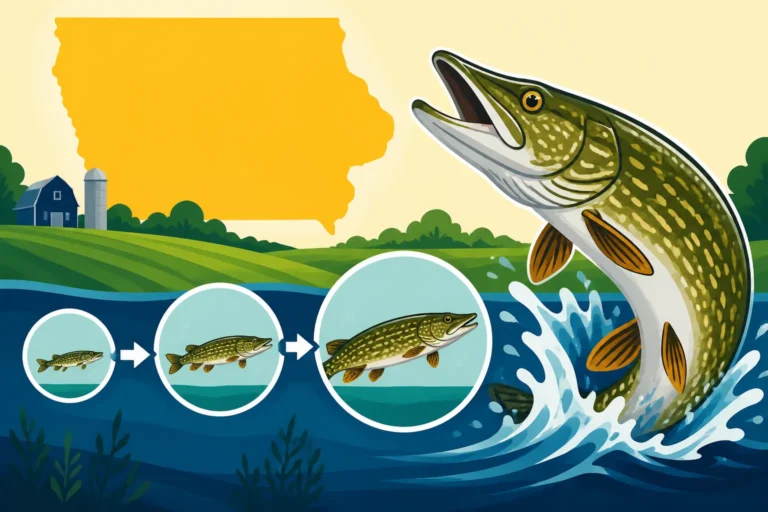
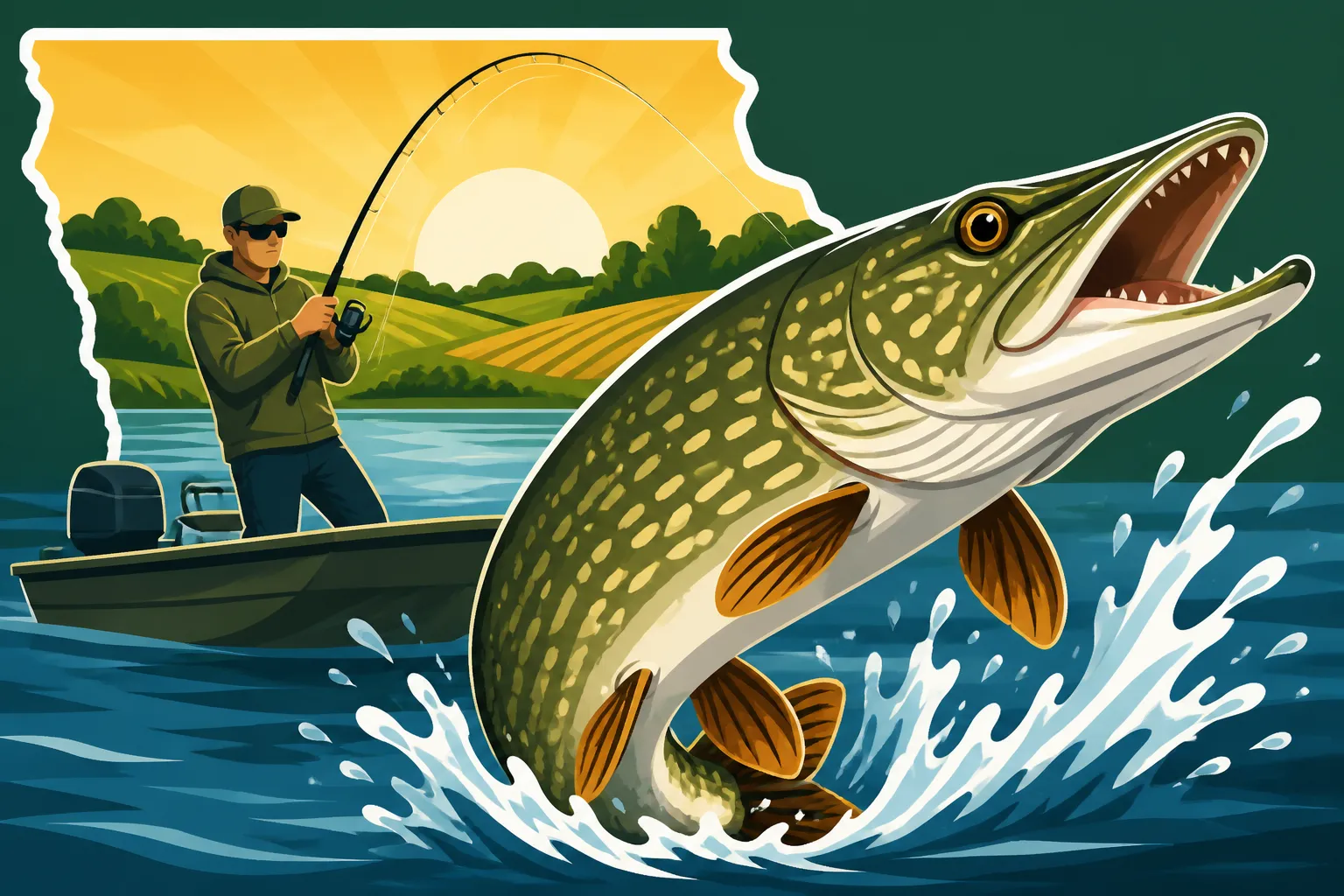
Northern Pike are unmistakable once you get a good look at them. They possess a long, slender, almost torpedo-shaped body, perfectly adapted for explosive bursts of speed. Their most distinctive feature is arguably their "duckbill" snout, which is lined with rows of razor-sharp teeth—a clear indicator of their predatory prowess. Their coloration is typically a dark green to brownish-green on the back, fading to a lighter, often yellowish-white belly. What really sets them apart are the distinctive light, bean-shaped spots scattered along their sides. These spots vary slightly in size and distribution but are a reliable identifier.
Beyond their looks, their behavior truly defines them. Pike are ambush predators, meaning they lie in wait, often camouflaged among weeds or submerged structures, before launching a lightning-fast strike on unsuspecting prey. This makes them incredibly exciting to target, as their strikes are often sudden and violent. Unlike some fish that nibble, a pike strike is usually a decisive take, sending a jolt of adrenaline right up your fishing rod.
Imagine you're casting a spinnerbait along a weed line, steadily reeling it in, when suddenly your rod nearly gets ripped from your hands. That explosive, unexpected strike is classic pike behavior. A new angler might initially mistake the sheer force for a snag or a much larger, more common fish, but once you see that long, green body emerge with those characteristic spots, you'll know you've hooked into a Northern Pike. Their distinctive appearance and aggressive fighting style make every encounter a memorable one.
Preferred Habitats in Iowa Waters
Northern Pike are quite particular about their living arrangements, generally preferring cool, clear, and highly vegetated waters. These conditions offer them the perfect blend of ambush cover, ample oxygen, and a thriving population of baitfish. Think of shallow bays choked with lily pads, extensive submerged weed beds, or areas with significant timber and brush piles. These areas provide the perfect camouflage for them to hide and wait for prey.
Their movements often follow seasonal patterns. In the cooler months of spring and fall, you'll frequently find pike in shallower water, often along the edges of weed beds or in sun-warmed coves. As summer progresses and water temperatures rise, they tend to seek out deeper, cooler sections of lakes and rivers, often retreating to the thermocline if one exists, or finding solace in the cooler water near springs or deep drop-offs. They'll still relate to structure and vegetation, but often deeper.
Consider an early spring morning on a lake like West Okoboji. The sun is just starting to warm the shallow bays, and you can see new weed growth beginning to emerge. This is prime pike territory. An experienced angler might focus their efforts right where the new weeds meet the open water, knowing that pike are likely lurking there, looking for an easy meal as the water warms and baitfish become more active. Or, in the dog days of summer, they might transition to trolling deep-diving lures over offshore humps, knowing that the pike have moved to cooler, deeper water but still want to ambush prey from structure. Understanding these seasonal shifts is crucial for consistently finding pike in Iowa.
Dietary Habits and Predatory Nature
As you might expect from a fish nicknamed the "freshwater wolf," Northern Pike are voracious eaters and opportunistic predators. Their diet is incredibly varied, but it primarily consists of other fish. They'll gorge themselves on whatever is most abundant, including perch, suckers, minnows, small panfish, and even smaller members of their own species. But their predatory scope extends beyond just fish; they're known to consume frogs, ducklings, muskrats, and any other small creature that makes the mistake of venturing into their strike zone.
Pike are perfectly designed for their role as ambush predators. They possess incredible acceleration, able to go from zero to top speed in a fraction of a second. They'll lie perfectly still, often for extended periods, until an unsuspecting meal swims within striking distance. Then, with a sudden burst, they'll lunge, often engulfing their prey whole. This explains why they are so attracted to erratic movements and flashy presentations from lures—it mimics an injured or fleeing baitfish, triggering their instinct to strike.
Imagine you're standing on the bank of a slough off the Mississippi River, casting a large spoon. As your lure wobbles and flashes, you can almost visualize a pike hidden beneath a fallen log, its eyes locked on your offering. Then, suddenly, it explodes from its cover, a green blur, hitting your lure with such force that you feel it all the way up your arm. This isn't just a fish biting; it's a calculated, instinctual strike from a finely tuned predator. This aggressive nature is precisely what makes pike fishing so addictive for many Iowa anglers.
Prime Northern Pike Fishing Spots in Iowa
While Northern Pike might not be as widespread as some other species in Iowa, there are certainly prime locations where they thrive and offer fantastic fishing opportunities. Knowing where to focus your efforts is half the battle when targeting these toothy giants.
The Iowa Great Lakes Region: Pike Paradise
When you talk about Northern Pike fishing in Iowa, the first place many anglers think of is the Iowa Great Lakes region. Lakes like Spirit Lake, West Okoboji, and East Okoboji are truly pike paradise. These natural lakes offer ideal pike habitat: cool, clear water with an abundance of submerged vegetation and various forms of structure. The expansive weed beds in these lakes provide endless ambush points for pike, and the healthy populations of baitfish ensure a robust food source.
Spirit Lake, in particular, is renowned for its strong pike population, with plenty of fish reaching impressive sizes. Look for them along the edges of extensive weed flats, especially where there are deeper drop-offs nearby. West Okoboji's incredible depth means that while pike can be found shallower in spring and fall, they often retreat to cooler, deeper water around structure during the summer months. East Okoboji, being shallower and often weedier, offers excellent opportunities, particularly in its numerous bays and channels.
Picture yourself on a calm morning, slowly navigating a boat through the northern bays of Spirit Lake. You're casting parallel to a dense wall of reeds and coontail, letting your spinnerbait tick the top of the weeds. Suddenly, a huge swirl erupts behind your lure, followed by a powerful strike. These lakes consistently produce exciting pike action, and exploring their diverse structure and vegetation will lead you to some incredible catches. For more details on fishing this region, check out our guide on Fishing the Iowa Great Lakes.
Mississippi River Backwaters and Tributaries
The mighty Mississippi River, forming Iowa's eastern border, is another fantastic, albeit different, playground for Northern Pike. While you won't typically find them in the main, fast-flowing channel, the vast network of backwater sloughs, oxbows, and slower-moving tributaries and feeder creeks offers excellent pike habitat. These areas often have abundant submerged vegetation, fallen timber, and calmer waters that pike prefer.
The pools of the Mississippi, from Pool 9 in the north down through Pool 19, all hold pike. Anglers often find success by exploring the quieter sections of these pools, particularly those with plenty of woody debris and dense aquatic plant growth. These areas are typically rich in forage fish, providing a buffet for hungry pike. The subtle currents and varied bottom structure of the backwaters create numerous ambush points that pike love to call home.
Imagine maneuvering a jon boat through a narrow chute into a sprawling Mississippi River backwater, the current barely perceptible. You cast your large spoon towards a tangle of submerged logs, letting it sink for a moment before starting your retrieve. The expectation of a violent strike in such a wild, untamed setting adds an extra layer of excitement to every cast. These backwater areas offer a true wilderness fishing experience for pike. For those interested in exploring this extensive waterway, our article Fishing the Mississippi River in Iowa has more details.
Other Notable Iowa Pike Waters
Beyond the Great Lakes and the Mississippi, Iowa has several other lakes and even some larger ponds that can hold healthy populations of Northern Pike. While they might not be as famous for pike, these spots can often offer fantastic, less-pressured fishing. Lakes such as Clear Lake, Big Creek Lake, and even some areas of Storm Lake have been known to produce good numbers of pike.
Clear Lake, for example, is primarily known for its walleye fishing, but its extensive weed beds and varied depths also provide excellent habitat for pike. Exploring the shallower, vegetated bays here can often yield surprising results. Big Creek Lake, near Polk City, is another popular multi-species lake where pike are present and can be targeted, especially around its abundant cover. Don't be afraid to consult local DNR stocking reports or fishing forums, as pike populations can sometimes pop up in unexpected places.
A perfect scenario might be a weekend trip to Clear Lake, where after an unsuccessful morning of walleye fishing, you decide to switch tactics and target pike. You head into a shallower, weedy cove, perhaps one that's a bit neglected by other anglers, and start casting a brightly colored spoon. The sudden, jarring strike confirms that pike are indeed lurking there, providing an unexpected bonus to your fishing day. Sometimes, these lesser-known or secondary pike spots can become your favorite secret fishing holes. While our guide on Clear Lake Walleye Fishing focuses on walleye, remember that these predatory fish often share similar habitats.
Essential Gear for Northern Pike Success
Catching Northern Pike isn't just about finding them; it's also about having the right tools for the job. These fish are powerful, have a mouth full of sharp teeth, and can easily destroy inadequate gear. Investing in the proper equipment isn't just about landing more fish; it's about doing so safely and efficiently.
Rods, Reels, and Line: Power and Durability
When it comes to Northern Pike, you need gear that can withstand a powerful fight and the occasional battle with dense weeds. Forget your ultralight panfish setups; for pike, you want something with backbone. A medium-heavy to heavy power rod, typically between 6'6" and 7'6" in length, with a fast action tip, is ideal. The heavy power provides the leverage needed to control a surging pike, while the fast action helps with casting accuracy and detecting subtle strikes (though pike strikes are rarely subtle!).
For reels, you have a couple of options. A sturdy baitcasting reel is often preferred for throwing heavier pike lures like large spinnerbaits and crankbaits, offering excellent control and power. If you're using lighter presentations or prefer the simplicity, a robust spinning reel in the 3000-4000 series range with a smooth, reliable drag system will do the trick. A good drag is paramount, as a big pike can make blistering runs.
Line choice is equally critical. Many pike anglers opt for braided line, typically in the 30-65 pound test range. Braided line offers superior strength, a smaller diameter, and most importantly, zero stretch, which translates into better hook sets and sensitivity. If you prefer monofilament, you'll want to go with a heavier test, perhaps 15-25 pounds, but be aware of its stretch. For a complete overview of rod and reel choices, see our Fishing Rod and Reel Guide for Iowa Anglers.
Imagine hooking into a 35-inch pike on a sturdy 7-foot medium-heavy baitcasting rod spooled with 50-pound braid. That rod will absorb the violent head shakes, and the line will hold strong as the fish tries to bury itself in the weeds. Without that power and durability, you'd likely be looking at a snapped line or a bent hook. It's truly a test of your gear, and having the right setup makes all the difference between a triumphant catch and a frustrating loss.
Lures and Baits That Drive Pike Wild
Northern Pike are not shy about hitting a lure, but some presentations are undeniably more effective than others. Their aggressive nature means they respond well to flashy, erratic, and often larger baits that mimic their natural prey. Your tackle box for pike should reflect this.
Common lure types that consistently produce include large spinnerbaits (1/2 oz to 1 oz or more) with big blades, casting spoons (like Dardevles or Doctor Spoons) in various sizes and colors, and jerkbaits that can be twitched and paused to imitate a struggling baitfish. Larger crankbaits, particularly those with a wide wobbling action, are also excellent, especially for trolling or covering deeper water. Don't forget soft plastic swimbaits rigged on heavy jig heads, which can be incredibly versatile.
When it comes to colors, adaptability is key. In stained or murky waters, bright, attention-grabbing colors like chartreuse, firetiger, or neon orange often work best. In clearer waters, more natural patterns such as silver, white, or perch-imitating finishes can be incredibly effective. Sometimes, a subtle splash of red or orange on a natural-colored lure can be the trigger. If you're into live bait, large minnows or suckers, fished under a bobber or on a bottom rig, are often irresistible to big pike, provided they are legal and available in your fishing area. You can find a huge variety of proven pike lures on platforms like Amazon, often with detailed reviews from other anglers, giving you a good starting point for building your collection.
Consider a scenario where the pike are sluggish on a bright, sunny day. You might start with a natural-colored spoon, but if that doesn't produce, you switch to a bright chartreuse spinnerbait that pushes more water and has a more aggressive action. Often, this change in presentation or color is all it takes to trigger a strike. Experimentation with different lures and colors is a critical part of successful pike fishing.
Pike-Specific Accessories: Safety First!
Given their impressive set of teeth, targeting Northern Pike necessitates a few specialized accessories, not just for catching them, but crucially, for handling them safely and ensuring the well-being of the fish you plan to release. This isn't optional; it's essential.
The single most important accessory for pike fishing is a good quality leader. Pike have teeth designed to shred flesh and bone, and they will easily cut through monofilament or fluorocarbon main lines. You need a leader made of steel, titanium, or heavy-duty fluorocarbon (80-100 lb test) to prevent cut-offs. A 9-12 inch leader is usually sufficient. Attaching your lure directly to your main line when fishing for pike is practically guaranteeing you'll lose fish and expensive lures.
Beyond leaders, you need tools for safe unhooking. Long-nose pliers (at least 10-12 inches) are absolutely critical for reaching deep into a pike's mouth to remove hooks. A jaw spreader can also be invaluable for safely holding the fish's mouth open to access deeply embedded hooks, protecting both your fingers and the fish. A good quality, large, rubberized landing net is also a must. The rubberized mesh protects the fish's slime coat and fins, and its size allows you to safely secure a thrashing pike without fumbling or risking injury.
Imagine hooking a lively 25-inch pike, and it's swallowed your lure deep. Without long-nose pliers and perhaps a jaw spreader, you'd be in a precarious situation, risking a painful bite or severely injuring the fish. Being prepared with these simple, yet vital, accessories allows you to enjoy the fight and then safely release or handle your catch, making the experience better for everyone involved. For more general fishing gear advice, refer to our Iowa Fishing Gear Guide. These specific pike tools can be easily sourced from sporting goods stores or from online retailers like Amazon.
Effective Techniques for Landing Iowa Pike
Northern Pike are aggressive, but they're not always easy. Understanding the various techniques available to you can significantly increase your chances of success, whether they're actively feeding or in a more lethargic mood.
Casting and Retrieving: Covering Water
Casting and retrieving is arguably the most common and often most effective method for targeting Northern Pike, especially when they're active in weed beds or around other structures. The key here is to cover water efficiently and present your lure in a way that triggers their predatory instincts.
Start by fan casting an area methodically. This means casting to your left, then straight ahead, then to your right, gradually working your way around your position or boat. This ensures you're covering all potential ambush points. When fishing along a weed line, cast parallel to it, drawing your lure just along the edge or just over the top of the submerged vegetation. Pike often lurk right on the transition zone, ready to dart out. For submerged timber or rock piles, cast past the structure and retrieve your lure so it passes directly through or very close to the cover.
The retrieve itself is crucial. Often, a fast, erratic retrieve will trigger an aggressive pike. Think about reeling quickly, adding jerks, pauses, and changes in direction to mimic a panicked or injured baitfish. Sometimes, however, a slower, more deliberate retrieve with longer pauses can be the ticket, especially in colder water or when the fish are less active. Experimentation is key; let the fish tell you what they prefer on any given day.
Picture a crisp autumn morning on one of the Iowa Great Lakes. You're casting a large silver spoon with a fast, stop-and-go retrieve along a deep weed edge. Suddenly, your line goes taut, and your rod bends sharply as a pike absolutely crushes the lure on the pause. The explosive strike and the ensuing battle are the rewards of covering water effectively and presenting your lure with enticing action.
Trolling for Deeper Water Pike
While casting is great for visible cover, trolling becomes a highly effective strategy when pike move to deeper, less defined areas, or when you need to cover large expanses of water quickly. This technique allows you to present lures at specific depths over long distances, often enticing fish that might not respond to a stationary cast.
Trolling is particularly useful during the summer months when pike often retreat to deeper, cooler sections of lakes, such as offshore humps, deep points, or the main lake basin. It’s also effective for exploring areas where the bottom contours or submerged structures aren't easily visible. The goal is to get your lure in front of as many potential fish as possible.
Lure selection for trolling often involves larger crankbaits that are designed to dive to specific depths, or heavy inline spinners and spoons. You'll need to match your lure's diving depth to the depth where you expect pike to be holding. Pay attention to your boat speed; generally, a consistent speed that gives your lure its intended action is best, but subtle changes in speed or occasional turns can often trigger a strike. Using a fish finder to identify depth changes, baitfish schools, or deeper structure will greatly enhance your trolling success.
Imagine cruising slowly across a large reservoir like Saylorville, the sonar screen showing a distinct drop-off. You've got a deep-diving crankbait running at 15 feet, precisely where you've marked some fish. Suddenly, one of your rods doubles over, and the reel screams as a powerful pike hits the trolled lure. Trolling allows you to systematically search these open water areas where pike might be spread out, turning what would otherwise be a daunting task into a manageable and often highly productive fishing method.
Live Bait Presentations for Patient Anglers
While artificial lures certainly trigger aggressive strikes, sometimes the natural appeal of live bait is simply irresistible, especially for larger, more wary Northern Pike. This technique often requires more patience but can be incredibly rewarding, particularly in certain situations or conditions.
Live bait setups typically involve using larger minnows or suckers, hooked either through the lips or lightly behind the dorsal fin to keep them lively. A popular rig is a slip bobber setup, which allows you to suspend your bait at a precise depth above weed tops or structure. The bobber signals a bite, and the slip mechanism lets the fish run with the bait without feeling resistance until you set the hook. Another option is a simple bottom rig, often used in conjunction with a heavier weight to keep the bait near the bottom on a point or drop-off.
The key to live bait fishing for pike is strategic placement. Position your bait near known pike holding areas: along deep weed lines, at the base of drop-offs, near submerged timber, or in channels connecting different parts of a lake. Give the pike time to find the bait and take it completely. Unlike artificial lures where you might set the hook immediately, with live bait, it's often best to let the fish run with it for a few seconds to ensure it has fully committed before setting the hook firmly.
Consider a cold, overcast day when the pike are less inclined to chase fast-moving lures. You've anchored your boat near a dense patch of lily pads, suspending a lively sucker under a large slip bobber. The bobber slowly bobs and then dips out of sight, indicating a pike has picked up the bait. The anticipation builds as you wait for the bobber to move again, signaling the fish is swimming away with the meal. This patient approach with live bait can often entice the biggest, smartest pike that might otherwise ignore your flashy lures.
Seasonal Strategies for Northern Pike Fishing
Northern Pike behavior is heavily influenced by the changing seasons, largely driven by water temperature and their spawning cycle. Adapting your approach throughout the year is crucial for consistent success.
Spring Pike: Post-Spawn Aggression
Spring is arguably one of the most exciting times to target Northern Pike in Iowa. Immediately after ice-out, as water temperatures begin to rise (typically late March through May, depending on the year), pike become incredibly active. They've just completed their spawning rituals, which usually occur in shallow, vegetated areas, and are now looking to feed aggressively to recover their energy.
During this post-spawn period, pike will often be found in relatively shallow water, particularly in bays that warm up quickly, newly emergent weed beds, and along sun-drenched shorelines. These areas not only offer warmer water but also attract schools of baitfish, creating a perfect feeding ground for hungry pike. The key here is to focus on areas with cover that receive plenty of sunlight.
Techniques in spring generally involve aggressive casting with a variety of lures. Large spinnerbaits with pulsating skirts and bright blades are excellent, as are casting spoons and jerkbaits that can be worked with an erratic, fast retrieve. Pike are often not picky at this time and will strike anything that looks like an easy meal. This is a fantastic time for sheer numbers of fish, and often some of the biggest ones, as they haven't been pressured all winter. For more tips on early season fishing, be sure to read our guide on Spring Fishing in Iowa.
Imagine an early April afternoon, the sun shining brightly on a sheltered bay on Clear Lake. You're casting a brightly colored firetiger spinnerbait into pockets between last year's decaying reeds and the new green growth. Every few casts, a fish explodes on your lure, and you're battling a feisty pike. The action can be fast and furious, making it an ideal time for anglers eager to shake off the winter rust and enjoy some truly exhilarating fishing.
Summer Pike: Seeking Deeper, Cooler Water
As Iowa's summer heat sets in and water temperatures climb (June through August), Northern Pike tend to make a significant shift in their behavior and location. Unlike some other species that might tolerate warmer surface waters, pike will seek out deeper, cooler refuge. This means they often move away from the shallow, sun-baked bays and congregate around deeper structures and cooler sections of lakes and rivers.
During summer, you'll want to target deeper weed lines, which still offer cover but are in cooler water. Offshore humps, sunken islands, deep points, and main lake basins, especially those with cooler springs or a well-defined thermocline, are prime spots. Pike will often hold right on the edge of these deeper structures, waiting for baitfish to pass by.
Techniques for summer pike often involve getting your lures down to the fish. Trolling with deep-diving crankbaits is highly effective for covering these larger, deeper areas. Large soft plastic swimbaits rigged on heavy jig heads can be bounced along the bottom of drop-offs. Live bait presentations, such as large suckers suspended with a slip bobber over deep structure, are also a top choice for enticing lethargic summer pike.
Picture a scorching July day on Rathbun Lake. Instead of focusing on the shallow bays, you're using your electronics to find a deep weed edge that drops into a 20-foot basin. You're slowly trolling a large, deep-diving crankbait along that edge, ensuring it ticks the tops of the deeper weeds. Suddenly, the rod tip buries, and a solid pike is on the other end, having struck from the comfort of its cooler, deeper sanctuary. Adapting to their summer retreat is key to continued success.
Fall Pike: The Feed Before Freeze-Up
Fall in Iowa (September through freeze-up) is another fantastic season for Northern Pike fishing, often considered by many to be the best. As water temperatures begin to cool significantly, pike become incredibly active and aggressive once again. They're driven by an instinct to feed heavily, packing on reserves for the long winter ahead, making them more willing to chase and strike lures.
During this pre-winter feeding frenzy, pike will often move back into shallower flats, particularly those with healthy green weed growth. They'll also be found along prominent points, steep drop-offs, and ambush points near cover where baitfish are congregating. The cooling water revitalizes them, and they become incredibly powerful fighters, often in peak physical condition.
Techniques in fall often revert to aggressive casting. Large casting spoons, hefty jerkbaits, and big soft plastic swimbaits are all excellent choices. Focus on fast, erratic retrieves, sometimes even faster than in spring, to capitalize on their heightened metabolism. Don't be afraid to use larger lures; big pike are looking for a substantial meal. This is a prime time for trophy-sized pike. For more information on fishing during this productive season, check out our guide on Fall Fishing in Iowa.
Imagine a blustery October day on West Okoboji, the leaves on shore ablaze with color. You're casting a large, silver jerkbait along a rocky point that's still holding some scattered weeds. You rip the lure sharply, pause, and then rip it again. On one of those pauses, your line jumps, and you feel the raw power of a robust fall pike on the other end, its green and gold scales flashing as it thrashes at the surface. The fall bite for pike is truly special, offering some of the most memorable angling experiences.
Winter Pike: Ice Fishing Opportunities
Even when Iowa's lakes and rivers freeze over, the pursuit of Northern Pike doesn't have to end. Ice fishing for pike is a popular winter pastime and can be incredibly productive, offering a unique challenge and reward. When the ice is safe, pike are still active under the hard water.
During winter, pike will often relate to the same kinds of structures they prefer in open water, but perhaps in slightly different depths. Look for them in areas with remaining green weed beds, along points that extend into deeper water, or on the edges of major drop-offs. They're often found in slightly shallower water than you might expect in summer, as oxygen levels can be higher in these areas.
The primary technique for ice fishing pike is using tip-ups. These simple devices allow you to set multiple lines with large live bait, such as suckers or shiners, suspended under the ice. When a pike takes the bait, a flag springs up, signaling a bite. It's a waiting game, but when that flag goes up, the adrenaline rush is immense. Jigging with large spoons or heavy soft plastics near these same structures can also entice strikes, especially if the pike are actively cruising. Always prioritize safety on the ice, checking ice thickness regularly. Our guide on Ice Fishing in Iowa provides essential safety tips and techniques for the winter angler.
Picture yourself on a frozen lake, the biting wind kept at bay by your ice shelter, watching the tip-up flags. Suddenly, one snaps up, a vivid orange against the stark white snow. You rush over, grab the line, and feel the powerful surge of a big pike making a run under the ice. The battle through a small ice hole is a different kind of challenge, but the reward of pulling a magnificent winter pike onto the ice is truly exhilarating.
Handling Northern Pike: Safety and Conservation
Landing a Northern Pike is only half the battle; knowing how to handle them safely and responsibly is just as important, for both your well-being and the fish's. Their formidable teeth demand respect, and proper handling ensures they can swim away healthy if you choose to release them.
Safe Handling for Both Angler and Fish
The most crucial aspect of handling Northern Pike is remembering their teeth. Their mouths are packed with sharp, needle-like teeth that can inflict serious cuts. Never put your fingers inside a pike's mouth unless you are absolutely confident in your technique and have the right tools.
When unhooking, immediately reach for your long-nose pliers and, if necessary, your jaw spreader. Use the jaw spreader to gently but firmly open the pike's mouth, exposing the hook. With your long-nose pliers, carefully extract the hook. If the hook is deeply embedded, don't rush. Take your time to carefully back it out. For larger fish, a gentle "gill plate hold" (sliding your hand under the gill plate, gripping the lower jaw, but being very careful to avoid the sensitive gill rakers) can provide control, but for most anglers, simply holding the fish by supporting its belly with one hand and the base of its tail with the other is safer.
To minimize stress on the fish, try to keep it in the water as much as possible, especially if you plan to release it. Have your tools ready before you even lift the fish. Get a quick photo if you want one, and then release it gently, allowing it to swim away on its own power. A healthy release ensures these magnificent predators can continue to thrive in Iowa's waters.
Consider a moment when a lively pike has taken your lure deep, and it's thrashing wildly by the boat. If you try to grab it without tools or proper technique, you're almost guaranteed a cut. But with your long-nose pliers and perhaps a quick, firm grab behind the head, you can safely remove the hook, take a quick picture, and watch it swim away, strong and healthy. This conscious effort makes the entire fishing experience more ethical and enjoyable.
Iowa Regulations for Northern Pike
Responsible fishing means knowing and adhering to the local regulations. Iowa has specific rules in place for Northern Pike to manage their populations and ensure sustainable fishing for future generations. These regulations can vary by body of water and can change periodically, so it’s always essential to check the most current information.
Typically, regulations cover aspects such as minimum length limits and daily bag limits. A minimum length limit means any pike caught below a certain size must be immediately released. This is designed to protect juvenile fish and allow them to grow to maturity and reproduce. Daily bag limits restrict the number of pike an angler can keep in a single day, preventing overharvesting. There might also be special regulations for specific lakes or river stretches, particularly those with unique management goals.
It's crucial to consult the official Iowa Department of Natural Resources (DNR) fishing regulations booklet or their website before you head out. Never rely solely on hearsay or outdated information. Being caught with undersized fish or over the bag limit can result in fines and even loss of fishing privileges.
Imagine you've just landed a beautiful Northern Pike, and you're contemplating keeping it for dinner. Before you put it on your stringer, you quickly measure it against your rod or a measuring board. If it falls short of the legal length, you gently slide it back into the water, knowing that it will grow to be a larger fish for someone else to catch another day, or contribute to the next generation of pike. This respect for the regulations is a hallmark of a responsible angler. For comprehensive information on all Iowa's fishing rules, our article Iowa Fishing Regulations Explained is a great resource.
Preparing Pike for the Table (If Keeping)
While many anglers prefer to release Northern Pike, they are an excellent eating fish when properly prepared. Their meat is white, flaky, and has a mild flavor. The main challenge often cited is dealing with the "Y-bones" – a set of small, often frustrating bones found in the pike's fillet. But with the right cleaning technique, these can be easily managed.
The most common method for dealing with Y-bones is the "five-fillet" method. This technique involves making strategic cuts to separate the boneless portions of the meat from the sections containing the Y-bones. Essentially, you remove the two side fillets first, then make an additional cut above and below the Y-bones on each side, yielding two upper "loins" and two lower "belly strips" that are boneless. The Y-bone section is then discarded. This method ensures you get nearly boneless, delicious portions of meat.
Once cleaned, pike meat is incredibly versatile. It can be baked, pan-fried, deep-fried, grilled, or even smoked. Many recipes specifically designed for flaky white fish will work wonderfully with pike. Some anglers enjoy pickling pike, particularly the smaller ones, as the pickling process softens the Y-bones to the point where they are unnoticeable.
Picture a successful day on the water, and you've decided to keep a couple of legal-sized pike. Back at home, you methodically work through the five-fillet method, carefully removing the boneless meat. That evening, you're enjoying perfectly pan-fried pike fillets, a delicious reward for your efforts, proving that these toothy predators are not just a thrill to catch but a treat to eat as well.
Common Challenges and Troubleshooting
Even for seasoned anglers, pike fishing can present its share of challenges. From finicky bites to frustrating snags, having a few troubleshooting strategies up your sleeve can turn a tough day around.
Pike Aren't Biting: What to Do
We've all been there: the conditions look perfect, you're in a prime spot, but the pike simply aren't cooperating. This is when adaptability becomes your best friend. Don't be afraid to change things up if the fish aren't biting your initial presentation.
First, change your location. Pike can be incredibly localized. If you've worked a section thoroughly without success, move to a different area of the lake or river. Try a different depth, a different type of structure, or a different side of a weed bed. Sometimes, just a slight shift can put you on active fish.
Second, change your lures. If your go-to spinnerbait isn't working, switch to a spoon, then a jerkbait, then a soft plastic. Vary the size, shape, and, critically, the color. Remember, bright colors for stained water, natural colors for clear water, but sometimes the opposite can be true. Experiment with subtle differences, like a different blade style on a spinnerbait. Sometimes, it's worth checking out new lure designs or proven classics on Amazon when your go-to tackle isn't working, as new innovations or old standbys might just be the ticket.
Third, change your retrieve. If you've been reeling fast, try slowing down significantly, adding long pauses. If you've been working it slow, try speeding up your retrieve, making it more erratic and aggressive. The subtle variations in how you present the lure can make all the difference, as different retrieves can trigger different responses from the fish based on their mood and activity level.
Imagine a frustrating morning where you've thrown every bright, flashy lure in your box without a sniff. Instead of giving up, you decide to tie on a natural-colored soft plastic swimbait and work it slowly along the bottom of a drop-off, mimicking a sluggish baitfish. Suddenly, your line jumps, and you're on! That small adjustment in lure and retrieve transformed a silent morning into a successful one.
Dealing with Snags and Break-Offs
Fishing for Northern Pike often means targeting areas with heavy cover: dense weeds, submerged timber, and rocky bottoms. While these are prime pike habitats, they are also notorious for snags, leading to lost lures and frustrating break-offs. Minimizing these issues is key to maintaining your sanity and your tackle.
Prevention is often the best medicine. When fishing extremely weedy areas, consider using weedless or semi-weedless presentations, such as soft plastics rigged weedless or spinnerbaits that shed weeds well. Learn to "read" the bottom with your line and rod tip; if you feel your lure approaching heavy cover, slow your retrieve or lift your rod tip to guide it over or through without getting hung up.
When you do get snagged, resist the urge to simply pull straight back with force. Often, a different angle can free your lure. Try pointing your rod tip directly at the snag, then giving quick, sharp jerks to try and dislodge it. If fishing from a boat, sometimes motoring directly above the snag and trying to pull straight up can free the lure. Lure retrievers, which are devices designed to slide down your line to the snagged lure and dislodge it, can be invaluable tools and save you many expensive lures over time.
It's heartbreaking to lose a favorite, productive lure to a snag, especially when you know a big pike might have been lurking there. By being mindful of your casting, understanding the bottom, and having strategies for freeing snags, you can significantly reduce the number of lost lures and break-offs, allowing you to spend more time fishing and less time re-rigging.
Weather Considerations for Pike Fishing
Like all fish, Northern Pike are highly influenced by weather patterns. Understanding how different conditions can affect their behavior can help you adjust your strategy and increase your chances of success. It's not just about comfort; it's about predicting where the fish will be and how active they'll be.
Cold fronts are typically tough on fishing. A sudden drop in air temperature, especially after a period of stable weather, often makes pike less active. They might move deeper or become more lethargic, requiring slower presentations, smaller lures, or live bait. During these times, patience is key, and you might need to really work your lure slowly and deliberately to draw a strike.
Conversely, warm fronts can often invigorate pike, especially in spring and fall. A period of warming temperatures can make them more active and willing to chase. This is when aggressive retrieves and flashy lures truly shine.
Wind is another major factor. While a strong wind can make boat control difficult, it can also be your friend. Wind creates current and chop, which can concentrate baitfish and disorient them, making them easier prey for pike. Focus on windblown points and shorelines where baitfish might be pushed. However, extreme winds might force pike to seek shelter, requiring you to fish the calmer, lee side of structures.
Consider a scenario where a cold front has just rolled through Iowa, dropping temperatures significantly. Your initial plan to aggressively cast spinnerbaits might need to be reevaluated. Instead, you might switch to a suspending jerkbait that you can twitch and pause for extended periods, giving a sluggish pike more time to decide to strike, or deploy a live bait rig. Being attuned to the weather and its impact on pike behavior will make you a more versatile and successful angler.
Beyond the Catch: The Thrill of the Hunt
Northern Pike fishing isn't just about the numbers or the size of the fish you bring in; it's about the entire experience, from the anticipation of the strike to the respect for a formidable predator. It's a passion that goes beyond the mechanics of casting and retrieving.
The Aggression and Fight of Northern Pike
There’s something uniquely exhilarating about hooking into a Northern Pike. Unlike the subtle tap of a walleye or the head-shaking tug of a bass, a pike strike is often explosive, jarring, and unmistakable. They hit lures with a vengeance, often with a powerful, sudden jolt that can nearly rip the rod from your hands.
Once hooked, the fight is characterized by powerful, bulldogging runs, often accompanied by impressive acrobatic jumps and violent head shakes. They are known for their sheer power and their willingness to fight all the way to the boat, making every battle a test of your gear and your angling skill. These aren't fish that give up easily. The raw power they exhibit, especially larger specimens, is truly something to behold.
Compare this to other species: a bass might leap and thrash, but a pike has a different kind of sustained power. A walleye might pull hard but typically doesn't offer the same dramatic, aggressive fight. The sheer ferocity of a pike taking your lure and then attempting to peel line from your reel is what keeps many anglers coming back for more.
Imagine the thrill of a large pike slamming your lure, tearing off on its first powerful run, then breaking the surface in a shower of spray, shaking its head violently, trying to throw the hook. That heart-pounding moment, the adrenaline coursing through your veins, is what makes pike fishing so addictive and memorable. It’s a true test of strength and will, ending in a victorious moment of landing one of Iowa's most impressive freshwater predators.
Pike Fishing as a Lifestyle
For many, pike fishing in Iowa isn't just a hobby; it’s a lifestyle. It embodies a continuous journey of learning, adapting, and exploring. Every trip to the water offers new insights into fish behavior, new challenges, and new opportunities for discovery. You learn to read the water, understand subtle changes in conditions, and interpret the nuances of a fish's strike.
This passion often extends into a vibrant community. Sharing stories of epic battles, offering tips on successful lures, and recounting tales of the one that got away builds camaraderie among fellow pike anglers. Whether it’s connecting with others at a local tackle shop, through online forums, or simply exchanging nods with another angler on the lake, there's a shared appreciation for these magnificent fish. Connecting with the broader fishing community online or through resources like those found on Amazon can provide endless tips and tricks, and even lead to discovering new gear that enhances your experience.
Ultimately, this lifestyle fosters a deep respect for the fish and their ecosystem. Understanding their role as apex predators, and appreciating the delicate balance of their habitat, encourages responsible angling practices, such as catch and release, and adherence to regulations. It’s about more than just catching fish; it’s about becoming a part of the natural world and appreciating its wild beauty.
Think of a seasoned angler, decades into their pike fishing journey, still getting excited about trying a new lure or exploring an uncharted backwater. They've seen countless fish, but each one still holds a unique story, a lesson learned, or a memory made. This continuous chase, this connection to nature, and the shared passion with others, is what makes pike fishing a true lifestyle.
Planning Your Next Iowa Pike Adventure
With all this knowledge, you're now better equipped to plan your next, or perhaps your first, dedicated Northern Pike adventure in Iowa. Proper preparation and a flexible mindset will set you up for success.
Start by doing your research. Consult the Iowa DNR website for the latest regulations, including size and bag limits for pike in your target area. Look at fishing reports for specific lakes or river sections to get an idea of recent activity. Study maps—both topographic lake maps and aerial views—to identify potential weed beds, drop-offs, points, and other structures that pike are likely to inhabit. Our article Iowa Fish Species Guide can help round out your knowledge.
Next, gather your gear. Ensure your rods and reels are up to the task, your leaders are tied, and your tackle box is stocked with a variety of proven pike lures. Don't forget your essential safety accessories: long-nose pliers, jaw spreaders, and a large landing net. Pack appropriate clothing for the weather, plenty of water, snacks, and a first-aid kit.
Finally, approach your trip with patience and a willingness to adapt. Pike fishing can be incredibly rewarding, but there will be slow days. Don't be discouraged. Experiment with different lures, retrieves, and locations. Enjoy the process of the hunt, the beauty of Iowa's waters, and the anticipation of that explosive strike.
Imagine yourself poring over a detailed map of Spirit Lake, highlighting promising weed lines and deep points, mentally selecting the lures you'll start with. You check the weather forecast, organize your tackle, and ensure your boat is ready. The night before your trip, the excitement is palpable, filled with the promise of battling one of Iowa's most thrilling freshwater predators. This meticulous planning is not just about catching fish; it's an integral part of the pike fishing experience itself.
| Season | Typical Location | Recommended Techniques | Best Lure Types | Key Considerations |
|---|---|---|---|---|
| Spring | Shallow bays, emergent weed beds, warm coves | Aggressive casting | Spinnerbaits, Spoons, Jerkbaits | Post-spawn aggression, warming water, active fish |
| Summer | Deeper weed lines, offshore humps, main lake basins | Trolling, deeper casting, live bait | Deep-diving Crankbaits, Large Swimbaits, Live Suckers | Seek cooler water, thermocline, often slower bite |
| Fall | Shallow flats, weed edges, ambush points | Fast casting, erratic retrieves | Large Spoons, Jerkbaits, Swimbaits | Pre-winter feed, high activity, potential for trophy fish |
| Winter (Ice) | Weed beds, points, drop-offs (under ice) | Tip-ups with live bait, jigging | Large Live Minnows, Jigging Spoons, Plastics | Safety on ice, precise bait placement, patient approach |
Disclaimer
This article is for general informational purposes only and does not constitute professional advice. Laws, prices and regulations vary by location and change over time. Consult a qualified professional for guidance on your specific situation.