Is Black Crappie More Common Than White Crappie in Iowa?
It’s a question that’s probably crossed every Iowa angler’s mind while staring at a stringer full of slabs: "Are these all the same kind of crappie, or am I catching both?" The truth is, distinguishing between black crappie and white crappie can be tricky, even for seasoned pros, and understanding their individual preferences can really change your fishing game. This guide dives deep into the world of Iowa crappie, clarifying which species tends to be more prevalent and why, helping you target them more effectively.
The Crappie Conundrum: Understanding Iowa's Popular Panfish
Crappie are undeniably one of Iowa's most beloved panfish. They’re fun to catch, put up a decent fight on light tackle, and oh-so-delicious on the dinner plate. But beneath the surface of that general term "crappie" lies two distinct species: the black crappie and the white crappie. While they share many similarities, understanding their subtle differences and preferences is key to becoming a more successful angler in the Hawkeye State.
Why Differentiating Crappie Species Matters
You might be thinking, "A crappie is a crappie, right? Who cares what color it is?" And honestly, for a casual angler just looking for some fun and fish for supper, that sentiment is perfectly valid. However, for those who want to consistently put more crappie in the boat or on the bank, knowing the difference can be a game-changer. These two species, while similar in appearance and behavior, often prefer slightly different habitats. This means if you're not catching fish, it might not be that the crappie aren't biting; it could be that you're in the wrong type of crappie habitat.
For instance, one species might favor clear, weed-choked bays, while the other might be more at home in a turbid river channel. Knowing which one you're targeting allows you to select the right water body, the right spot within that water body, and even the right presentation to maximize your chances. It’s about being more strategic than simply dropping a minnow in the water and hoping for the best. It helps you understand the bigger picture of Crappie Fishing in Iowa and refine your tactics.
A Tale of Two Crappies: Black vs. White
Both black crappie and white crappie belong to the Pomoxis genus, meaning "covered operculum," referring to their gill covers. They are part of the sunfish family, which explains their panfish status and why they are often found alongside bluegill and other sunfish. While both are widespread across Iowa, their distinct physiological traits lead to differing habitat tolerances and, consequently, different distribution patterns across the state’s diverse aquatic environments.
Anglers often get them confused because they can vary in color based on water clarity, diet, and even spawning conditions. A black crappie caught in very murky water might appear lighter, and a white crappie from clear water might have more pronounced markings, blurring the lines of identification. It takes a keen eye and sometimes a quick count of fin spines to be truly certain, as we'll explore in detail below. Understanding these two species is the first step in unlocking the secrets of Iowa's crappie fisheries. You can learn more about Crappie Species Found in Iowa in our detailed guide.
Black Crappie in Iowa: A Closer Look
Black crappie, often admired for their deeper bodies and sometimes more intense spotting, are a significant part of Iowa's crappie population. They are a prized catch, especially in clearer lakes where their preferred habitats are abundant. Knowing where and how they live can greatly increase your success rate.
Where Black Crappie Thrive
If you're looking for black crappie in Iowa, you generally want to seek out areas with clearer, cooler water and abundant vegetation or complex cover. Think about lakes with good water quality, submerged timber, weed beds, and rocky points. These fish love to hang out around structure that provides both ambush points for feeding and protection from predators. They are often found in deeper sections of lakes, especially during the warmer months, retreating to depths where the water remains stable and oxygenated.
In Iowa, this often means the clearer natural lakes like those in the Iowa Great Lakes region, or some of the larger flood control reservoirs that maintain decent clarity for portions of the year. They might be found suspended over brush piles, especially those planted by the DNR, or tucked into the shaded areas under docks and overhanging trees. They feed on a variety of prey, including small minnows, aquatic insects, and crustaceans, often preferring live bait that mimics their natural food sources. The presence of ample food and good cover dictates their presence.
Identifying Black Crappie
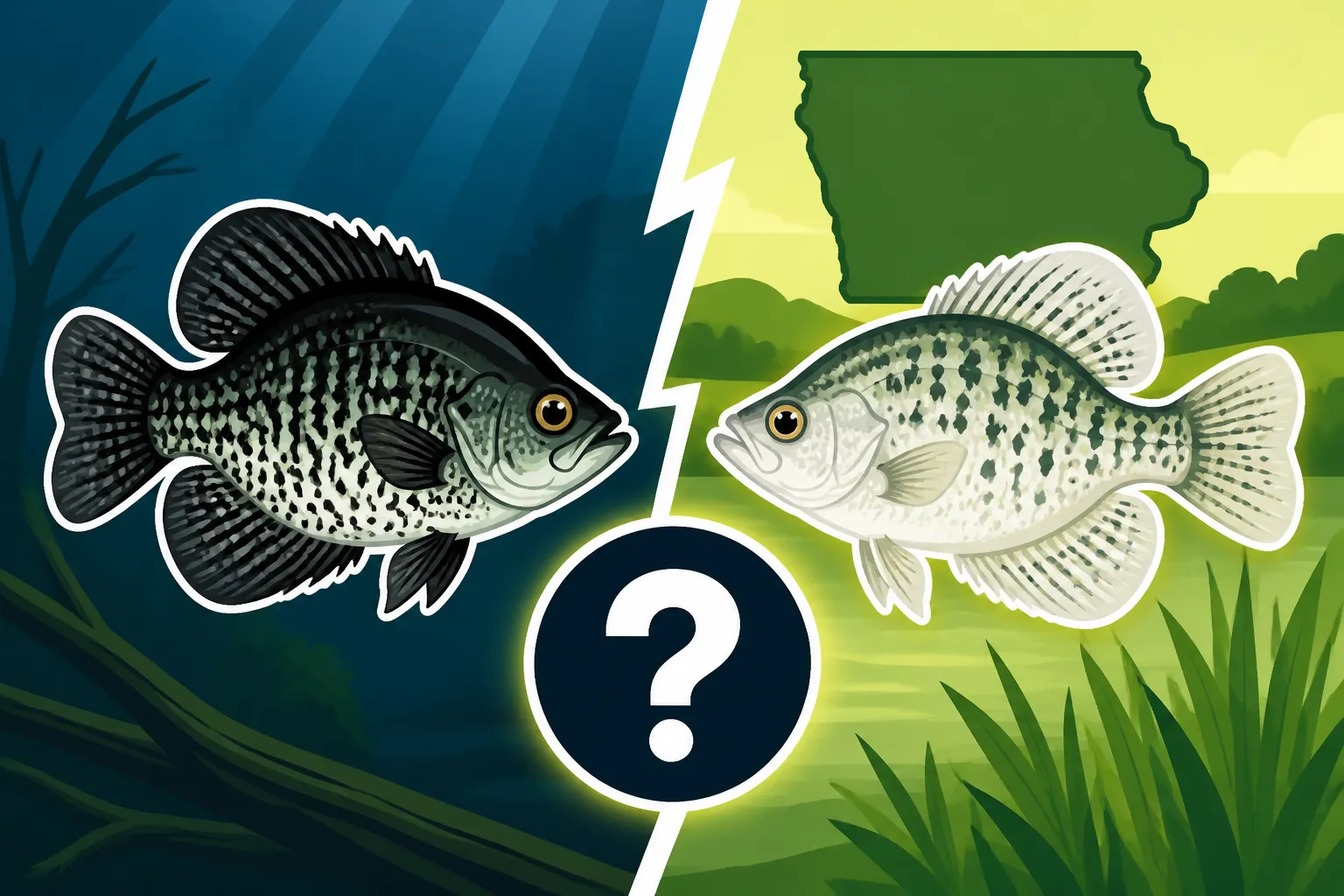
Identifying a black crappie isn't just about looking at its color, which, as mentioned, can be deceiving. The most reliable way to tell a black crappie apart from a white crappie is to count the spines in its dorsal fin. Black crappie typically have 7 or 8 dorsal spines. In addition to the spine count, look for irregular, scattered black spots all over their silvery-green or silvery-gray bodies. These spots don't usually form distinct vertical bars like their white crappie cousins.
They also tend to have a deeper, more compressed body shape, appearing almost rounder or 'thicker' from top to bottom compared to the white crappie's more elongated profile. Their mouths are also quite large, extending back to beneath the middle of their eye. Pay attention to the overall pattern and the dorsal fin count, and you'll be able to confidently identify your catch. This careful observation is crucial when trying to discern Black Crappie vs White Crappie in Iowa.
White Crappie in Iowa: A Widespread Favorite
White crappie are another cornerstone of Iowa's panfish scene, often praised for their ability to adapt to a wider range of environmental conditions. This adaptability plays a significant role in their widespread distribution throughout the state.
Preferred Haunts of White Crappie
Unlike their black crappie counterparts, white crappie are far more tolerant of turbid (murky) water and fluctuating conditions, making them prevalent in many of Iowa's river systems, larger reservoirs, and even some nutrient-rich natural lakes. They don't shy away from areas with silty bottoms or less vegetation. Instead, they often congregate around submerged brush, fallen trees, bridge pilings, and other man-made structures in these less-than-pristine environments.
You'll frequently find white crappie in the slower currents of rivers, oxbow lakes, and the backwaters of larger systems like the Mississippi or Missouri rivers. They are notorious for schooling up in large numbers around these structures, especially during pre-spawn and post-spawn periods. Their diet is similar to black crappie, consisting of small fish, minnows, and invertebrates, and they are often highly responsive to both live bait and small jigs. Understanding their preference for these environments can help you locate them more reliably, particularly when you're looking for How to Find Crappie Brush Piles in murkier waters.
Key Identifiers for White Crappie
To confidently identify a white crappie, again, the dorsal fin spines are your most reliable indicator. White crappie generally have 5 or 6 dorsal spines. Beyond the spine count, a key visual cue is the pattern of their spots. White crappie typically have a series of distinct vertical bars or stripes running down their sides, rather than the scattered, irregular spots of the black crappie. These bars might be faint in some individuals, but they are usually discernible.
Their body shape also tends to be more elongated and slender compared to the deeper body of the black crappie. Their snout is more pointed, and their mouth is also large, though it typically extends only to the front edge of their eye. When you're trying to figure out which crappie you’ve caught, remember the spine count and the stripe pattern – these are the quickest and most accurate ways to tell them apart.
The Verdict: Which Crappie Reigns Supreme in Iowa?
Now for the million-dollar question: is black crappie more common than white crappie in Iowa? The answer, like many things in fishing, isn't a simple "yes" or "no." It's more nuanced and depends heavily on where you're fishing.
Factors Influencing Crappie Distribution
Generally speaking, white crappie tend to be more widespread and arguably more common overall across the diverse aquatic environments of Iowa. This is largely due to their higher tolerance for various water conditions, particularly turbid or murkier water, and fluctuating water levels often found in large flood control reservoirs and river systems. Iowa has a significant number of these types of water bodies. White crappie thrive where black crappie might struggle, allowing them to colonize and flourish in a broader range of habitats.
Black crappie, on the other hand, are often found in higher concentrations in the state's clearer, more stable lake environments with ample submerged vegetation and deep-water structure. While they might dominate in these specific, pristine habitats, these conditions are less universally common across the entire state compared to the more adaptable environments favored by white crappie. Stocking programs by the Iowa Department of Natural Resources also play a role, ensuring healthy populations of both species in suitable waters.
Here's a quick comparison of their typical characteristics:
| Feature | Black Crappie | White Crappie |
|---|---|---|
| Dorsal Spines | 7 or 8 | 5 or 6 |
| Spotting | Irregular, scattered dark spots | 5-9 distinct vertical bars |
| Body Shape | Deeper, more compressed (rounder) | More elongated, slender |
| Water Clarity | Prefers clearer water | Tolerant of turbid/murkier water |
| Habitat | Dense vegetation, submerged timber, rocky points | Brush piles, submerged trees, open water structure |
| Distribution | Common in clearer lakes, reservoirs | Widespread in rivers, turbid lakes, reservoirs |
Practical Implications for Iowa Anglers
Knowing these distinctions empowers you to become a more effective crappie angler. If you're heading to a clear natural lake in northern Iowa, you might be primarily targeting black crappie, which means focusing on weed lines, deep brush, and clearer bay areas. Your Best Bait for Spring Crappie might differ slightly based on the clarity and available forage.
Conversely, if your fishing trip takes you to a larger river backwater or a reservoir known for its slightly murkier water, white crappie are likely your main quarry. Here, you'll want to focus on distinct structures like fallen trees, bridge pilings, or larger brush piles in open water. Your choice of Crappie Jig Fishing Techniques might lean towards bolder colors or presentations that create more vibration in less clear water.
Always check the local fishing reports and the Iowa DNR's fishing atlas for specific water bodies you plan to visit. These resources often indicate which crappie species are predominant in a particular lake or river, helping you tailor your approach before you even wet a line. For example, some anglers swear by specific small jigs or minnow-imitating lures for clear-water black crappie, which you can often find readily available on sites like Amazon. For turbid water white crappie, a larger, brightly colored jig might be more effective.
Maximizing Your Crappie Success in Iowa
Regardless of which crappie species you're chasing, there are general strategies that will boost your success in Iowa waters. Understanding their behavior throughout the year is key.
Tailoring Your Approach to Crappie Habitat
When fishing for black crappie in clearer waters, subtlety can be your friend. Use lighter line, smaller jigs, and more natural bait colors. Since these waters often have more vegetation, learn to fish the edges of weed beds or probe pockets within them. Electronics can be invaluable for finding schools suspended over deeper structure. Vertical jigging or slowly presenting a minnow under a slip bobber near cover can be highly effective. During the spawn, they'll move into shallower, vegetated areas, but will retreat to deeper structure quickly post-spawn.
For white crappie in murkier environments, don't be afraid to use slightly heavier line or jigs with a bit more flash and vibration. These fish often rely more on their lateral line to detect prey in low visibility. Focus on distinct vertical structure like standing timber or bridge supports, as these offer significant current breaks and ambush points. Trolling small crankbaits or jigs can be very productive for covering water and locating schools in open areas of large reservoirs or river stretches. Knowing where Iowa Walleye Season Opening Day and other species' seasons fall can also influence overall angler pressure and crappie behavior.
Gear and Techniques for Both Species
For both black and white crappie, light to ultralight spinning gear is generally preferred. A sensitive rod helps detect those subtle crappie bites, and a reel spooled with 4-6 pound test monofilament or fluorocarbon is perfect. Many anglers opt for small jigs, typically 1/32 to 1/8 ounce, tipped with a small plastic grub, tube, or live minnow. Live minnows, particularly small fatheads or crappie minnows, are consistently one of the best baits for both species.
Beyond the basics, consider specialized gear like Best Jig Heads for Iowa Crappie Fishing for different presentations, or even a small boat or kayak to access more remote crappie hotspots. For ice fishing, specialized short rods and small jigs are essential for success. Remember, crappie are schooling fish, so when you find one, there are often more nearby. Pay attention to the depth and structure where you get bites, and try to replicate those conditions. A fish finder can be a fantastic tool for locating these schools and understanding the underwater topography, no matter the species you're targeting.
Disclaimer
This article is for general informational purposes only and does not constitute professional advice. Laws, prices and regulations vary by location and change over time. Consult a qualified professional for guidance on your specific situation.