Best Jig Heads for Iowa Crappie Fishing
Oh, the elusive crappie! We've all been there, standing by the water, trying every trick in the book, only to be met with a frustrating lack of bites. It often feels like you're doing everything right, but those papermouths just aren't cooperating. This guide is dedicated to solving that specific headache by diving deep into one of the most critical, yet often overlooked, pieces of crappie fishing gear: the jig head. We're going to explore how choosing the right jig head can completely transform your crappie fishing experience in Iowa, turning those frustrating days into memorable ones.
Understanding Crappie Behavior and Habitat in Iowa
Before we even talk about jig heads, we need to get inside the head of a crappie. These aren't just any fish; they have their own quirks and preferences that directly influence what kind of tackle will entice them. Understanding their world is the first step to choosing the perfect presentation. For a broader look at target species, check out our Iowa Fish Species Guide.
The Finicky Nature of Crappie
Crappie, whether it's the black crappie or white crappie found across Iowa, can be notoriously picky eaters. One day they might hit anything you throw at them, and the next, they'll turn up their noses at your most trusted lures. Their sensitivity to light, water temperature, and even subtle changes in current means that a successful crappie angler needs to be adaptable. They often prefer a slow, subtle presentation, especially when the water is cold or they're holding tight to cover. If your jig head isn't weighted correctly or doesn't allow your bait to behave naturally, you might as well be casting a bare hook. This finicky behavior is why having a range of jig heads and knowing when to use each is absolutely crucial.
Think about those days when the bite is just off. You're casting the same lure that worked wonders last week, but nothing. It's not always the lure itself, but how it's presented. A crappie might be interested in a small grub, but if that grub is sinking too fast on a heavy jig head, or if it's not staying in the strike zone long enough, they'll ignore it. Or, conversely, if the current is strong and your jig head is too light, your bait might be swept away before a crappie even gets a chance to see it. It's a delicate balance, and the jig head plays a starring role in achieving that perfect, irresistible action.
Preferred Crappie Habitats in Iowa Lakes and Rivers
Crappie are masters of cover. You'll typically find them congregating around submerged timber, brush piles, dock pilings, weed beds, and even bridge abutments. In Iowa's numerous lakes and reservoirs, like Rathbun Lake or Saylorville Reservoir, they'll relate to these structures, using them for ambush points and protection. In rivers, they'll often tuck into slack water eddies, behind current breaks, or around submerged logs. Knowing where crappie like to hang out gives us clues about what kind of jig heads we need. If they're deep in a brush pile, you'll want a jig head that can get in there without getting constantly snagged. If they're suspended over open water, a different approach is needed.
Consider the classic scenario: you've located a promising brush pile using your electronics, a prime spot for How to Find Crappie Brush Piles. Now, getting your bait into that cover without hanging up every other cast is the challenge. A traditional exposed hook jig head might be a nightmare. This is where specialized weedless jig heads shine, allowing you to penetrate the densest cover. Conversely, if you're fishing a relatively open lake bed, a more exposed hook offers a better hook-up ratio. The environment dictates the jig head, and Iowa offers a diverse range of fishing environments, from the shallow, reedy backwaters to deep, rocky lake bottoms.
Essential Jig Head Characteristics for Iowa Crappie
Now that we understand a bit more about crappie themselves, let's break down the actual components of a jig head and why each characteristic is so important for Iowa crappie fishing. This is where the rubber meets the road, or rather, where the lead meets the water! For a general overview of fishing strategies, our Iowa Fishing Techniques Guide might be helpful.
Weight Matters: Matching Jig Heads to Conditions
The weight of your jig head is arguably the most critical factor. It dictates how fast your bait sinks, how deep it runs, and how it behaves in the water column. Crappie anglers in Iowa often carry a wide range of weights, from tiny 1/64 oz up to 1/8 oz or even 1/4 oz for deeper water or heavy current.
- Light Jig Heads (1/64 oz – 1/32 oz): These are your go-to for shallow water, calm conditions, or when crappie are very finicky and suspended high in the water column. A 1/64 oz jig head paired with a small soft plastic grub will have an incredibly slow, natural fall, mimicking a dying insect or a tiny minnow. This slow fall is often irresistible to crappie. Imagine fishing a quiet backwater slough on a calm spring morning. You see some subtle surface activity. Tossing a super-light jig head allows you to keep your bait in the strike zone longer, giving those wary crappie ample time to inspect and commit. It's also fantastic for Crappie Jig Fishing Techniques that involve a lot of finesse.
- Medium Jig Heads (1/16 oz – 1/8 oz): These are the workhorses for most situations. A 1/16 oz jig head is probably the most common size, versatile enough for moderate depths, light current, and various presentations. When fishing around brush piles in 10-15 feet of water, a 1/16 oz jig head will get down efficiently without plummeting past the fish. It offers a good balance of fall rate and casting distance. If you're on a larger body of water like Clear Lake, where you might encounter varying depths and some wind, a 1/16 oz or 1/8 oz will give you the control you need.
- Heavy Jig Heads (1/8 oz – 1/4 oz and up): When you're dealing with deeper water (20+ feet), stronger currents (like on the Mississippi River), or windy conditions, a heavier jig head is essential. These weights get your bait down quickly and keep it there, preventing it from being swept away. Trolling for crappie, especially with multiple rods, often benefits from heavier jig heads to keep baits at a consistent depth. Say you're fishing a deep channel break on the Des Moines River. A 1/4 oz jig head ensures your bait reaches the bottom quickly and allows you to maintain contact with it as you bounce it along.
The key is to use the lightest jig head possible that still allows you to reach your desired depth and maintain control. Too heavy, and your bait won't look natural; too light, and you'll struggle to fish effectively.
Hook Size and Style: Securing the Catch
The hook itself is just as vital as the weight. Crappie have paper-thin mouths, hence the nickname "papermouths," so you need a sharp, appropriately sized hook that can penetrate easily and hold firmly.
- Hook Size: For crappie, you'll typically be looking at hook sizes ranging from a small size 8 up to a larger size 2 or 1. A size 4 or 2 hook is often a great all-around choice. If you're using tiny grubs or micro plastics, a size 6 or 8 might be necessary to avoid overpowering the bait. Conversely, if you're tipping your jig with a large minnow, a size 2 or 1 hook will provide more bite. Matching the hook size to your bait size is paramount for both presentation and successful hook sets. A good rule of thumb is to ensure the hook point extends well beyond the body of your soft plastic bait.
- Hook Style: Most crappie jig heads feature a simple J-hook, but there are variations.
- Aberdeen Hooks: These are a classic choice for crappie jigs. They have a long shank, which is great for threading on soft plastics or minnows, and a round bend. Their thin wire design also means they tend to bend out under pressure rather than breaking off when snagged, sometimes allowing you to retrieve your jig. This is a lifesaesaver when you're fishing in those dense How to Find Crappie Brush Piles.
- Sickle Hooks: Gaining popularity, sickle hooks have a unique bend that creates a wider gap than traditional Aberdeen hooks of the same size. This wider gap can lead to better hook-up ratios, especially with timid bites, and once a crappie is hooked, they tend to stay on. The pointed barb often sets deeper.
- Weedless Hooks: When fishing heavy cover, brush piles, or lily pads, weedless jig heads are a game-changer. These often incorporate a wire guard, a fiber brush guard, or a recessed hook point (like a Texas-rig style) to prevent snagging. While they can sometimes impede hook sets, the ability to fish in previously inaccessible areas often outweighs this minor drawback. When I'm fishing the thick cattails and reeds in some of the smaller farm ponds around Iowa, I wouldn't dream of using anything but a weedless option.
Color and Material: Attracting Bites
While not as critical as weight or hook size, color and material can certainly make a difference, especially when crappie are being particular.
- Jig Head Color: Some anglers swear by specific colors, while others believe it's less important than bait color. A good rule of thumb is to have a variety.
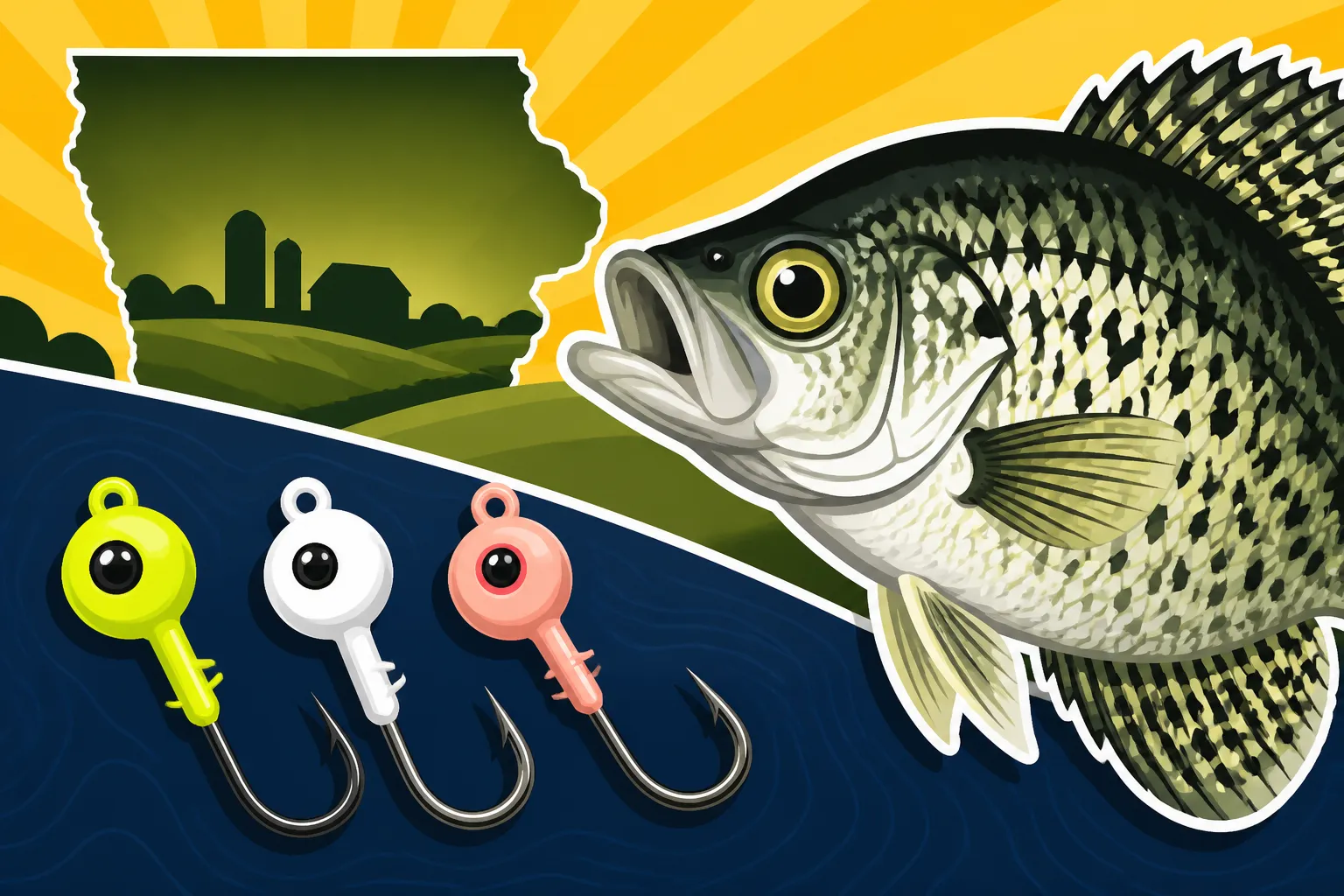
- Bright Colors (Chartreuse, Pink, Orange): These are excellent in stained or muddy water, low light conditions, or when you want to attract attention. Crappie often respond well to a flash of color. In the turbid waters of some of Iowa's rivers after a rain, a chartreuse jig head might be the only thing they see.
- Natural Colors (Black, White, Brown, Green Pumpkin): These are great for clear water or when crappie are shy. A black jig head can create a subtle silhouette, especially effective on sunny days. White is a fantastic all-around color that imitates many baitfish.
- Metallic/Glitter: Some jig heads incorporate glitter or metallic finishes that add extra flash and appeal, especially in sunny conditions.
The thinking here is often about contrast and visibility. In murky water, you want something that stands out. In clear water, you want something that looks natural. It’s also often about a confidence color. If a particular color has worked for you in the past, you’re more likely to fish it with confidence, and confidence can make a difference!
- Jig Head Material: While most jig heads are made of lead, you'll also find options made from tungsten.
- Lead: The traditional and most common material. It's inexpensive and works perfectly for most applications.
- Tungsten: Tungsten is much denser than lead, meaning a tungsten jig head can be smaller in profile but have the same weight. This can be a huge advantage when you want a compact presentation that sinks fast. It's also more sensitive, transmitting subtle bites and bottom structure better, which is a real plus for finesse fishing or when crappie are hitting very lightly. The downside is that tungsten is more expensive. However, for a serious angler, the benefits often outweigh the cost, especially for those highly pressured Best Fishing Spots in Iowa.
Top Jig Head Styles for Different Iowa Crappie Scenarios
Now that we know the individual characteristics, let's explore some popular jig head styles and when they really shine on Iowa waters. Having a diverse selection in your Best Tackle Box Setup for Beginners is key.
Ball Head Jigs: The Versatile Workhorse
The classic ball head jig is undoubtedly the most common and versatile jig head style, and for good reason. It's simple, effective, and can be used in almost any crappie fishing scenario.
- Description: As the name suggests, it features a round, ball-shaped lead head. The line tie is typically at a 90-degree angle to the hook shank.
- Why it's great for crappie: Its balanced design allows for a natural horizontal presentation of soft plastics or live bait. It's easy to cast, sinks predictably, and can be retrieved with a straight retrieve, a lift-and-drop, or a slow troll. You can find these in every weight imaginable, from tiny 1/64 oz for finesse fishing to heavier 1/8 oz for deeper water. If you're just starting your crappie jig head collection, you'll want to stock up on ball heads in 1/32 oz and 1/16 oz, maybe a few 1/8 oz, in various colors like black, white, and chartreuse.
- Best scenarios: This is your go-to for general crappie fishing, whether you're casting to visible cover, vertical jigging from a boat, or even Trolling for Crappie in Iowa. It's excellent for pairing with small grubs, tubes, and minnow-imitating soft plastics. When fishing the edges of weed lines or submerged brush in a lake like Lake Macbride, a ball head jig will consistently get the job done.
Mushroom and Stand-Up Jigs: Presenting Baits on the Bottom
Sometimes, crappie are relating tightly to the bottom, especially when feeding on aquatic insects or small crustaceans. That's when a jig head designed to sit upright becomes invaluable.
- Description:
- Mushroom Head Jigs: These have a rounded, mushroom-shaped head, often with a flat bottom.
- Stand-Up Jigs: These are specifically designed to keep the hook point and bait elevated off the bottom, preventing snags and presenting the bait in a more natural, upright position. The head shape is often flatter or has a specific keel to achieve this.
- Why they're great for crappie: When crappie are glued to the bottom, a regular ball head jig might lay flat, burying your bait in the muck or making it less visible. A mushroom or stand-up jig ensures your bait is always presented upright, mimicking a foraging minnow or an insect. This can be especially effective when fishing slowly, dragging the jig along the bottom, or twitching it subtly.
- Best scenarios: These are perfect for fishing areas with a relatively clean, hard bottom, or when you suspect crappie are feeding directly off the bottom. Think about targeting crappie on main lake points or humps in Rathbun Lake, where they might be staging on rocky structure. They also excel when using live bait like minnows, keeping them wiggling enticingly above the substrate.
Specialty Jigs: Underspins, Weedless, and More
Beyond the basics, there's a world of specialized jig heads designed to tackle specific challenges and add unique appeal.
- Underspin Jigs:
- Description: These jig heads feature a small spinner blade (often a willow leaf or Colorado blade) attached to a swivel under the jig head.
- Why they're great for crappie: The spinning blade adds flash and vibration, making your bait more noticeable, especially in stained water or low light conditions. It can also help crappie zero in on your lure when they're scattered or less aggressive. The flash can mimic a fleeing baitfish, triggering a reaction strike.
- Best scenarios: Underspins are fantastic for covering water quickly, searching for active crappie. They're also excellent when crappie are feeding on shad or other baitfish in open water. Try them on the Mississippi River when searching for scattered crappie in the backwaters. Best Lures for Panfish often includes these flashy options.
- Weedless Jigs:
- Description: As discussed, these have various mechanisms (wire guards, fiber guards, Texas-rig style hooks) to prevent snagging.
- Why they're great for crappie: Their ability to navigate heavy cover is unmatched. Instead of constantly re-tying, you can confidently cast into the thickest brush piles, lily pads, or submerged grass beds where crappie love to hide.
- Best scenarios: Any time you're fishing dense cover, whether it's fallen timber in a farm pond or thick vegetation in the shallow bays of East Okoboji Lake, a weedless jig head is your best friend.
- Tube Jigs:
- Description: While often just a simple lead head, these are specifically designed to fit inside the hollow body of a tube bait, creating a seamless, natural presentation.
- Why they're great for crappie: The weight is internal, giving the tube a unique spiraling or gliding action on the fall that crappie find very enticing. The hook usually exits through the side or top of the tube.
- Best scenarios: Tube jigs are particularly effective for vertical jigging or ice fishing, where their subtle action in a small area can draw strikes. They're also great for casting to structure, allowing the tube to spiral down naturally.
Pairing Jig Heads with Baits and Techniques
A jig head is only half the equation; what you put on it and how you work it through the water makes all the difference. This section will help you combine the right jig head with the right bait and technique to maximize your crappie catch. For general tackle advice, check out our Best Tackle for Iowa Fishing.
Soft Plastic Pairings: Grubs, Tubes, and Minnow Imitations
Soft plastics are a staple for crappie anglers due to their versatility, durability, and endless color options. Pairing them with the right jig head unlocks their full potential.
- Grubs: These are probably the most popular crappie soft plastic. They typically have a curly tail that provides enticing action with even the slightest movement.
- Jig Head Pairing: Ball head jigs are the perfect match for grubs. The round head allows the grub's tail to flutter freely. For smaller 1-inch grubs, use a 1/32 oz or 1/16 oz jig head. For larger 2-inch grubs, move up to a 1/16 oz or 1/8 oz.
- Technique: Cast and retrieve with a slow, steady retrieve, allowing the tail to kick. You can also twitch it, pause, and let it fall. This is a deadly combination for active crappie around cover. Many anglers swear by these for the pre-spawn bite.
- Tubes: Tube baits have a hollow body and usually multiple tentacles, creating a subtle, natural presentation.
- Jig Head Pairing: As mentioned, internal tube jig heads are ideal. For external rigging, a standard ball head jig works well, allowing the tube to hang naturally.
- Technique: Tubes excel at vertical jigging, especially through the ice or when fishing directly over a crappie school. They also shine with a lift-and-drop retrieve, where the tube spirals enticingly on the fall. You can even try a tube jig under a bobber for suspended fish.
- Minnow Imitations (Swim Baits, Shad Darts): These soft plastics are designed to mimic small baitfish, often with a paddle tail for swimming action.
- Jig Head Pairing: Ball head jigs or even some underspin jigs are great for these. The key is to match the jig head's size and weight to the soft plastic's profile so it swims naturally.
- Technique: A straight retrieve is often all it takes to get the paddle tail kicking. You can also add pauses or jerks to simulate an injured baitfish. These are particularly effective when crappie are actively chasing bait.
When buying soft plastics, remember to also stock up on a variety of colors. Some days they want chartreuse, other days it's black and blue, or maybe a natural shad color. Having options, readily available from places like Bass Pro Shops or even online through Amazon, ensures you're prepared for whatever mood the crappie are in.
Live Bait Rigs: Minnows and Crappie Nibs
While soft plastics are fantastic, sometimes live bait is simply irresistible to crappie. Your jig head plays a crucial role in presenting that live bait effectively.
- Live Minnows: The gold standard for many crappie anglers, a lively minnow is hard for a crappie to resist.
- Jig Head Pairing: A simple ball head jig with a sharp Aberdeen or sickle hook is perfect. Hook the minnow lightly through the lips or just behind the dorsal fin, allowing it to swim freely. The weight of the jig head will keep the minnow in the strike zone.
- Technique: You can suspend a minnow on a jig head under a bobber, letting it drift near cover. For active fishing, vertical jigging or slow trolling with a minnow can be incredibly effective, especially for larger crappie. Just be sure your Crappie Daily Limit in Iowa is in mind.
- Crappie Nibs/Worms: These small, scented baits, often resembling tiny worms or larvae, are fantastic for tipping jigs.
- Jig Head Pairing: Tiny jig heads, like 1/64 oz or 1/32 oz ball heads, are ideal for tipping with these small baits. The scent and subtle action are key.
- Technique: These are excellent for finesse fishing, especially in cold water or when crappie are sluggish. Use a very slow retrieve or vertical jig them with minimal movement. The added scent can often trigger bites when visual appeal isn't enough.
Mastering the Retrieve: Jigging and Trolling Strategies
The best jig head and bait combination is useless without the right retrieve. How you work your lure through the water directly influences its action and appeal to crappie.
- Vertical Jigging: This technique involves dropping your jig head and bait directly down to the fish, often done from a boat positioned over a brush pile or school of crappie.
- Jig Head Choice: Medium to heavy ball heads (1/16 oz to 1/8 oz) or tube jigs are excellent. Tungsten jig heads can be a real advantage here due to their sensitivity.
- Execution: Drop your jig to the desired depth, then gently lift and drop your rod tip, imparting subtle action to the bait. Pay close attention to your line for the slightest twitch, which could indicate a bite. This is perfect for crappie holding tight to structure or when you've pinpointed a school on your fish finder.
- Casting and Retrieving: This is a broad category encompassing many techniques, from a simple straight retrieve to more active twitching and pausing.
- Jig Head Choice: Ball heads and underspins are generally best here, allowing for good casting distance and versatile action.
- Execution: Cast towards your target cover, let the jig sink to the desired depth, then begin your retrieve. Experiment with speed and action. Sometimes a slow, steady reel is all it takes; other times, sharp jerks and long pauses will trigger a strike. Imagine casting to a fallen tree in a lake. You want your jig head to fall naturally through the branches, then twitch and pause near the trunks.
- Trolling: Especially popular on larger Iowa lakes, trolling involves dragging your jig head and bait behind a slow-moving boat, covering large areas.
- Jig Head Choice: Heavier jig heads (1/8 oz to 1/4 oz) are often preferred to ensure baits run at consistent depths. Underspins also work well to add flash.
- Execution: Use multiple rods with different jig head weights and bait combinations until you find what the crappie are hitting. Vary your boat speed until you find the sweet spot. Trolling can be incredibly effective for locating schools of suspended crappie in open water.
Where to Find Your Perfect Crappie Jig Heads in Iowa
You've got the knowledge, now you need the gear! Finding the right crappie jig heads is easier than ever, with options ranging from local shops to major online retailers.
Local Bait Shops and Sporting Goods Stores
Supporting your local bait shop is not only great for the community, but it also provides invaluable local knowledge. These folks know what's biting, where it's biting, and often, what specific jig heads and colors are producing results on nearby waters.
- Benefits:
- Expert Advice: The staff at a local bait shop can offer real-time, hyper-local advice. They'll tell you if the crappie are hitting 1/32 oz jigs in pink or if you need to go heavier for the current on the Iowa River. They've often been fishing those waters for years!
- Immediate Availability: Need a specific jig head right now for your weekend trip? A local shop is your best bet. No waiting for shipping.
- Community Connection: These shops are hubs for local anglers. You might pick up a hot tip on a new spot or technique just by chatting with other customers.
- Considerations: Selection might be more limited than online, and prices can sometimes be slightly higher, but the expertise and convenience often make it worth it. Places like Scheels or smaller, independent bait shops across Iowa are fantastic resources.
Online Retailers and Bulk Buying Options
For sheer selection and often better pricing, especially if you're buying in bulk, online retailers are unbeatable. Both Bass Pro Shops and Amazon offer extensive selections.
- Benefits:
- Vast Selection: You can find virtually any jig head style, weight, color, and hook combination imaginable. This is great for stocking up on niche items or trying out new trends.
- Competitive Pricing: Online stores often have sales and can offer lower per-unit prices, especially if you're buying jig heads in packs of 25 or 50. This can save you a lot of money in the long run, considering how many jig heads we inevitably lose to snags!
- Convenience: Shop from the comfort of your home, any time of day.
- Considerations: You'll need to plan ahead for shipping times. You also miss out on the local expertise you'd get from a brick-and-mortar store. However, for stocking up on your favorite tried-and-true jig heads or exploring new options, online platforms from companies like Bass Pro Shops provide an incredible array of choices.
Here's a quick comparison of buying methods:
| Feature | Local Bait Shop/Sporting Goods Store | Online Retailers (e.g., Bass Pro Shops, Amazon) |
|---|---|---|
| Local Advice | Excellent, specific to local waters | Minimal to none |
| Immediate Need | Best option | Requires planning/shipping time |
| Selection | Good, but often curated | Extremely vast, covers all niches |
| Pricing | Can be slightly higher | Often more competitive, good for bulk buying |
| Community | High interaction, local tips | None |
Renewing Your Crappie Gear Alongside Your License
It’s always a good practice to check your gear, including your jig heads, when you're thinking about renewing your fishing license. Just as you need to stay on top of your Iowa Fishing License Guide, you should also assess your tackle. Are your hooks still sharp? Are you running low on your favorite crappie jig head weight? It's a great habit to link these two tasks, ensuring you're fully prepared for the upcoming season. While you're at it, you might want to look at our guide on Renewing an Iowa Fishing License to make sure you're always legal on the water.
Troubleshooting Common Crappie Jig Head Challenges
Even with the best jig heads, crappie fishing can throw curveballs. Here are some common problems and how to adjust your jig head strategy to overcome them.
When Crappie Are Shut Down: Downsizing and Subtle Presentation
We've all been there: the crappie are on the fish finder, but they just won't bite. This is when finesse truly comes into play, and your jig head selection becomes paramount.
- The Problem: Crappie are sluggish, wary, or simply not actively feeding. They might be in cold water, post-frontal conditions, or just highly pressured. They see your offering but refuse to commit.
- Jig Head Solution:
- Downsize, Downsize, Downsize: This is the golden rule. If you're using a 1/16 oz jig head, drop down to a 1/32 oz or even a 1/64 oz. The lighter weight results in an incredibly slow, tantalizing fall that's often irresistible to inactive fish. This is where those tiny crappie jigs really shine.
- Use Tungsten: The increased sensitivity of tungsten can help you detect those super subtle "thumps" or "mushy" bites that finicky crappie often deliver. Plus, its smaller profile can be less intimidating.
- Natural Colors: Switch to more natural, translucent soft plastic colors and pair them with a black, white, or unpainted jig head. In clear water, bright colors can sometimes spook inactive fish.
- Technique Adjustment: Pair your lighter jig head with an extremely slow retrieve or minimal jigging action. Just a slight twitch of the rod tip, a long pause, and let the bait slowly drift. Think about the slightest movement that could mimic a dying minnow or an insect weakly struggling.
Dealing with Snags and Heavy Cover
Crappie love cover, which means snags are an inevitable part of the game. Constantly re-tying can quickly eat into your fishing time and frustrate even the most patient angler.
- The Problem: You're fishing dense brush piles, submerged trees, or thick weed beds, and your jig heads are constantly getting hung up and lost.
- Jig Head Solution:
- Weedless Jigs are Your Friend: As discussed earlier, this is where weedless jig heads earn their keep. Whether it's a fiber guard, wire guard, or a Texas-rig style, these designs significantly reduce snags. While you might miss an occasional fish, the ability to fish the heart of the cover often leads to more bites overall.
- Use Aberdeen Hooks: If you prefer traditional jig heads, opt for those with Aberdeen hooks. Their thin wire is designed to bend out under pressure, allowing you to often retrieve your jig by pulling it free, rather than losing it completely. You can then bend the hook back into shape with pliers.
- Experiment with Exposed Hook Jig Head Placement: Sometimes, simply rigging your soft plastic slightly differently can help. For instance, burying the hook point slightly back into the plastic's body (not fully Texas-rigged, but just covered) can offer a slight weedless advantage.
- Technique Adjustment:
- Vertical Presentation: When fishing dense cover, try to approach it vertically if possible. Dropping your jig straight down into a pocket in a brush pile is less likely to snag than casting horizontally through branches.
- Controlled Fall: Don't just let your jig plummet. Control its fall with your rod tip and line, feeling for branches or obstructions. If you feel resistance, lift your rod tip slightly to guide the jig over the obstacle.
- Pop and Retrieve: If you do feel a snag, don't just yank. Try giving your line some slack, then a sharp "pop" with the rod tip. Sometimes this will dislodge the jig. If it doesn't, try pulling steadily until the hook bends out, allowing retrieval.
By carefully considering your jig head choices and adapting your techniques, you can turn challenging crappie fishing days into rewarding ones. Remember, it's not always about having the most expensive gear, but understanding how to use the right tools for the job.
Disclaimer
This article is for general informational purposes only and does not constitute professional advice. Laws, prices and regulations vary by location and change over time. Consult a qualified professional for guidance on your specific situation.