Best Budget Fish Finder for Beginners
It's a common dilemma for anglers, especially those just starting out or working with a tighter budget: you see all the fancy boats with massive screens, intricate sonar, and GPS mapping, and you wonder if you'll ever be able to afford the technology that helps find fish. The good news is, you absolutely don't need to break the bank to get a decent fish finder. This guide is all about helping you navigate the options and find the best budget-friendly fish finder that will genuinely enhance your fishing trips across Iowa's lakes and rivers, without feeling like you're missing out.
Why a Budget Fish Finder is a Game-Changer for Beginners
Let's be real, fishing can sometimes feel like a guessing game. You cast, you wait, and sometimes you wonder if there are even any fish down there! That feeling of uncertainty is exactly where a fish finder, even an entry-level one, comes into play. It takes some of the guesswork out of the equation and gives you a much better understanding of what's happening beneath your boat or even right off the bank.
Imagine you're out on Saylorville Reservoir, and you know there are catfish around, but you're just not finding them. A simple fish finder can reveal a drop-off, a submerged log, or even a school of baitfish that signals where the predators are lurking. This isn't about cheating; it's about learning the water and improving your efficiency, which makes the whole experience more rewarding. For many new anglers, the initial investment in a fish finder feels daunting, but seeing actual returns in terms of more bites and a deeper understanding of fish behavior quickly justifies the cost. It really helps you progress from simply hoping for a bite to actively targeting fish.
Essential Features to Prioritize in an Affordable Fish Finder
When you're looking at budget-friendly fish finders, it's easy to get overwhelmed by all the terminology and features. Don't worry, you don't need everything. The key is to focus on the core functionalities that provide the most value for your dollar. Think about what will genuinely help you locate fish and structure, rather than getting caught up in advanced options you might not even use yet.
Basic Sonar (2D Sonar)
This is the bread and butter of any fish finder, and it's where your budget should primarily focus. Standard 2D sonar sends a sound wave down into the water and interprets the returning echoes to display fish arches and bottom structure on your screen. Don't let the term "basic" fool you; a good 2D sonar unit is incredibly effective. It's the technology that has been finding fish for decades, and modern budget units do it quite well.
When you're comparing units, pay attention to the transducer's cone angle. A wider cone angle (like 45-60 degrees) covers a larger area under the boat, which can be great for searching large flats or open water. A narrower cone (around 20 degrees) gives you more detail directly beneath you, excellent for pinpointing specific structure or fish in deeper water. Many budget units offer dual-beam transducers, giving you the best of both worlds with selectable wide and narrow cones. For an angler learning the ropes on diverse Iowa waters, understanding What a Fish Finder Actually Shows from a reliable 2D sonar can be incredibly helpful.
Display Size and Resolution
You're not going to get a massive, crystal-clear display on a budget fish finder, and that's perfectly okay. What you do want is a screen that's large enough to comfortably read and has decent resolution. A 3.5-inch or 5-inch screen is often the sweet spot for budget models, offering enough real estate to see fish arches and bottom contours without straining your eyes.
Resolution, measured in pixels, determines how sharp the image is. While you won't get high-definition on a budget, look for units with at least a 240×160 pixel display or better. The goal is clarity, especially when you're trying to differentiate between a fish and a submerged branch. A monochrome (black and white) screen is often perfectly adequate for 2D sonar and can be much more affordable than color displays while still offering excellent contrast. Many anglers find black and white displays easier to read in bright sunlight, which is a real plus on a clear Iowa summer day.
Portability and Mounting Options
Consider how you'll be fishing most often. Are you primarily in a small jon boat, a kayak on a river, or fishing from shore? Your budget fish finder needs to be adaptable. Many affordable units are designed with portability in mind, featuring clamps for mounting transducers on transom or kayak hulls, and quick-release mounts for the head unit.
If you're a kayak angler, look for compact, lightweight models that won't take up too much space or drain a small battery too quickly. Units like those from brands often found at Bass Pro Shops or on Amazon might come with portable kits, including a small battery and charger, making them incredibly versatile for different fishing scenarios. This flexibility means you can use the same unit whether you're targeting smallmouth bass on the Des Moines River from a kayak or going after crappie in a small fishing boat on a local pond. For more specific advice, you might want to check out Kayak Fishing Gear Guide for Iowa Rivers.
Top Considerations for Iowa Anglers on a Budget
Iowa's diverse waters, from the mighty Mississippi to its many small lakes and farm ponds, present a variety of fishing challenges and opportunities. When choosing a budget fish finder, thinking about these local conditions can help you make the smartest choice.
Water Depth and Clarity
Iowa's waters vary wildly in depth. The Iowa Great Lakes can be quite deep, while many community ponds are relatively shallow. Most budget fish finders are more than capable of handling typical Iowa depths (up to a few hundred feet), but it's still worth checking the depth rating. More importantly, consider clarity. Many Iowa rivers, especially after heavy rains, can be quite muddy. While sonar works by sound waves, not light, extreme murkiness can sometimes affect signal interpretation, though usually not significantly for 2D sonar.
On clearer lakes like Clear Lake or West Okoboji, a good budget fish finder will reveal subtle thermoclines and schooling baitfish much more effectively. If you're often fishing shallower, clearer waters, you might even consider units that offer a flasher mode, which provides a real-time, circular display of what's directly beneath the transducer, popular with ice anglers or those fishing vertically from a boat.
Battery Life and Power Source
A budget fish finder needs a reliable power source, and for portable units, that means a good battery. Most units run on 12V batteries, and the size of your battery will dictate how long you can run the unit. For a typical day out, a 7Ah (amp-hour) sealed lead-acid battery is usually sufficient. These are relatively inexpensive and widely available online or at sporting goods stores.
Always factor in the cost of a good battery and a charger if your chosen fish finder doesn't include them. Running out of power in the middle of a hot bite is incredibly frustrating! Many budget units are energy efficient, which helps extend battery life, but it's a critical component to consider, especially if you plan long days on the water.
Build Quality and Durability
Let's face it, fishing gear takes a beating. It gets wet, it gets knocked around in the boat, and it sits in the sun. Even budget units need to be reasonably robust. Look for fish finders with good water resistance ratings (IPX7 is ideal, meaning it can withstand immersion). Check reviews for feedback on screen durability and button quality.
While you won't get military-grade construction on an inexpensive unit, many reputable brands that sell through retailers like Bass Pro Shops or online platforms such as Amazon offer surprisingly tough entry-level models. It's a balance: you want something that won't fall apart after a few trips, but you also don't need something designed for deep-sea exploration if you're primarily fishing the small lakes and rivers around Iowa.
Making the Most of Your Budget Fish Finder
Having a fish finder is one thing; knowing how to use it effectively is another. Even the most basic unit can be a powerful tool if you take the time to learn its nuances.
Understanding the Display: Fish Arches and Structure
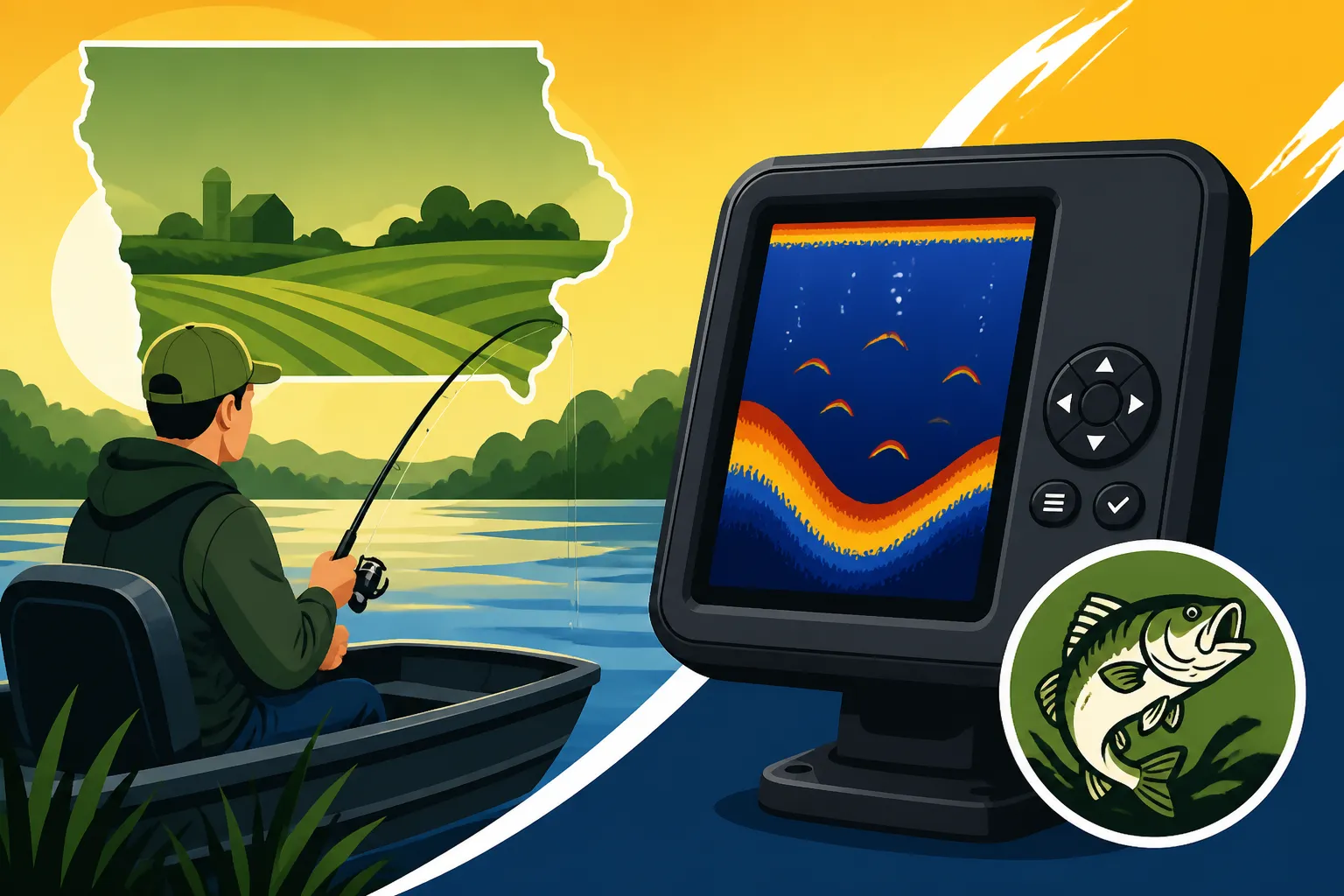
The most common question beginners have is, "What do these lines and blobs mean?" Don't expect perfect fish icons. On 2D sonar, fish often appear as arches or boomerang shapes. A full arch usually means a fish passed through the entire sonar cone; a partial arch means it was only in part of it. The thickness and length of the arch can give you clues about the size of the fish.
More important, however, is learning to identify structure. Humps, ledges, submerged trees, rock piles – these are the places where fish hide and feed. Your fish finder will display these as variations in the bottom contour. A hard, flat bottom might show as a thin, solid line, while a soft, muddy bottom will appear thicker and less defined. Look for abrupt changes, "clutter" on the bottom, or even schools of baitfish (which often look like cloudy masses) near these structures. Mastering How to Read a Depth Finder for Structure will significantly improve your catch rate.
Using it for Different Fishing Scenarios
A budget fish finder isn't just for finding fish directly under your boat. It's a scout!
- Trolling: If you're trolling for walleye on Rathbun Lake, your fish finder helps you stay at the right depth and identify schools of fish as you pass over them. You can adjust your lure depth to match what the screen is telling you.
- Drifting: Drifting for catfish on the Mississippi River? Use your unit to find deeper holes or current seams where catfish like to congregate.
- Shore Fishing: Portable, castable fish finders connect wirelessly to your smartphone or tablet and are fantastic for bank anglers. You can cast them out, reel them back slowly, and map out the underwater terrain from shore, giving you an edge that conventional shore anglers don't have. This is a fantastic way to approach spots where you're Shore Fishing Techniques for Beginners.
- Ice Fishing: Many budget fish finders have a flasher mode that's perfect for ice fishing. This real-time circular display shows you your jig and any fish that approach it, allowing you to react instantly.
| Feature / Consideration | Budget-Friendly Expectation | Why it Matters for Beginners |
|---|---|---|
| Sonar Type | 2D Sonar (often Dual Beam) | Core functionality, easy to interpret fish arches and bottom structure. |
| Screen Size | 3.5 to 5 inches | Large enough to comfortably read without excessive cost. |
| Resolution | 240×160 pixels or better | Sufficient detail for clear identification of fish and structure. |
| Color/Monochrome | Monochrome (Black & White) | Often clearer in sunlight, more affordable, perfectly functional for 2D. |
| GPS/Charting | None or basic waypoint only | Advanced features increase cost; focus on fish finding first. |
| Portability | High (with quick-release mounts) | Essential for diverse Iowa fishing from various craft or shore. |
| Power Source | 12V battery (external) | Common, affordable, reliable power for a day's fishing. |
| Depth Capability | Up to 600-1000 ft | More than enough for most Iowa lakes and rivers. |
Integrating Your Budget Fish Finder with Other Gear
Your fish finder isn't a standalone miracle worker; it's part of your overall fishing strategy. Think about how it complements your other gear and techniques. For example, if your fish finder shows you a school of Walleye Fishing in Iowa suspended at 15 feet, you'll know to adjust your lure and line accordingly.
Rods, Reels, and Line
Once you've located fish or structure, you still need the right tackle to catch them. If your fish finder shows small panfish like crappie or bluegill schooling up, you might want to switch to a lighter spinning combo with a small jig. If it's big catfish lurking in a deep hole, heavier gear is a must. Knowing what's down there allows you to make informed decisions about your Fishing Rod and Reel Guide for Iowa Anglers and line choice.
Lures and Baits
A fish finder gives you clues about the species and behavior of fish. Are they hugging the bottom? Suspended in open water? Active or sluggish? This information helps you choose the right lures and baits. For instance, if you're seeing fish tightly packed on the bottom, a jigging spoon or a bottom-bouncing rig might be more effective than a topwater lure. If they're suspended, a crankbait or a slip bobber rig could be the ticket. It's all about matching the presentation to what your sonar is showing you.
Where to Find and Buy Your Budget Fish Finder
Finding a good budget fish finder is easier than ever thanks to a wide range of retailers.
Online Retailers
Websites like Amazon offer an incredible selection of entry-level fish finders from various brands. You can easily compare features, read user reviews, and often find competitive pricing. Just be sure to check return policies and warranty information before purchasing. This is also a great place to find affordable accessories like portable battery kits and mounting hardware.
Specialty Fishing Stores
Stores like Bass Pro Shops are excellent resources. Not only do they often carry a good selection of budget-friendly models, but you can also see the units in person, get a feel for their size and build quality, and ask knowledgeable staff questions. Sometimes, getting hands-on with a unit can help you decide if the screen is truly readable for you or if the controls are intuitive. You might even find specific units that are popular in Iowa for certain types of fishing, like Trout Fishing Streams in Northeast Iowa.
Remember, a budget fish finder isn't about having the fanciest tech; it's about getting valuable information that makes you a more confident and successful angler. Start simple, learn what your unit is telling you, and you'll be amazed at how much it improves your time on the water.
Disclaimer
This article is for general informational purposes only and does not constitute professional advice. Laws, prices and regulations vary by location and change over time. Consult a qualified professional for guidance on your specific situation.