Do Iowa Trout Streams Have Wild Trout?
It's a common dream for many anglers: finding a truly wild trout stream, one where the fish aren't simply dropped in by a truck but have lived their entire lives, generation after generation, sustained by the natural environment. In a state like Iowa, known more for its sprawling cornfields and meandering rivers than its cold, clear trout streams, this idea often feels like a far-fetched fantasy. Many anglers wonder if the trout they catch here are always a product of stocking programs, or if Iowa actually harbors pockets of naturally reproducing, truly wild trout. This guide is here to unravel that mystery, exploring the unique conditions that allow wild trout to survive and thrive in our beloved Hawkeye State.
Understanding Iowa's Trout Fishery: Stocked vs. Wild
When most folks talk about trout fishing in Iowa, they're usually referring to the excellent, well-managed put-and-take fisheries. These are fantastic for a day out, offering consistent action and a chance to bring home some delicious fish. But the concept of "wild trout" introduces a whole different layer to the angling experience, one rooted in conservation and the subtle nuances of natural ecosystems.
The Iowa DNR's Stocking Program
Let's be clear: the vast majority of trout fishing opportunities in Iowa exist thanks to the dedicated efforts of the Iowa Department of Natural Resources (DNR) and their robust stocking program. Each year, thousands of trout are raised in hatcheries and released into designated streams, primarily in the beautiful Driftless Area of Northeast Iowa. These streams, while cold enough to support trout, often lack the specific habitat features or consistent water quality needed for sustained natural reproduction.
You'll find mostly Rainbow Trout and some Brook Trout, and occasionally Brown Trout, being stocked. These fish provide immediate gratification for anglers, and the program is expertly designed to offer a fantastic experience, especially for those new to trout fishing. They often release fish multiple times a season, ensuring good numbers are available. If you're looking for information on permits, our guide on the Iowa Trout Fishing Fee and Stamp Guide can help you get started. Without these stockings, many of Iowa's beautiful coldwater streams wouldn't have any trout at all, and a significant part of our state's angling tradition would simply disappear.
What "Wild Trout" Truly Means in Iowa
The term "wild trout" isn't just a romantic notion; it carries a very specific biological meaning. In Iowa, a wild trout is a fish that was born in the stream, grew up there, and, crucially, is capable of reproducing itself to create the next generation of trout. It means the stream environment is so healthy and stable that it can support the entire life cycle of the trout, from egg to adult, without human intervention. This is in stark contrast to stocked trout, which, while often released as healthy juveniles, may not possess the instincts or the habitat necessary to spawn successfully, or may simply be caught before they have the chance.
For a stream to support wild trout, it needs a continuous supply of cold, clean water, stable gravel beds for spawning, plenty of cover from predators, and a rich insect and invertebrate base for food. These conditions are much harder to come by in Iowa than in, say, the Rocky Mountains or even parts of Wisconsin. So, when we talk about wild trout in Iowa, we're talking about a precious, often rare, natural phenomenon that requires very specific, delicate environmental conditions to persist. The difference is profound, offering a unique challenge and immense satisfaction to the angler who seeks them out.
Identifying Wild Trout Streams in Iowa
Finding a truly wild trout stream in Iowa is like discovering a hidden gem. It's not something you stumble upon every day. The state's geography and climate present significant challenges, making these self-sustaining populations quite rare.
The Rarity of Self-Sustaining Populations
Iowa's landscape, largely shaped by ancient glaciers, generally doesn't lend itself to the type of cold, clear, spring-fed streams that wild trout need to survive. The majority of our state's streams and rivers warm up too much in the summer, become too turbid after heavy rains, or lack the consistent gravel bottom required for trout to lay their eggs successfully. The main issue comes down to water temperature and flow stability. Trout eggs and young fry are incredibly sensitive to temperature fluctuations and siltation. If a stream experiences a warm summer where temperatures consistently exceed 70 degrees Fahrenheit, or if its gravel beds get choked with sediment from agricultural runoff, any natural reproduction is quickly doomed.
This is why most of our famous trout streams, while beautiful and productive, rely on regular stocking. They're cold enough for trout to live in and grow, but not quite resilient enough for generations of wild fish to establish themselves. It takes a very special combination of factors for a stream in Iowa to escape these common pitfalls and foster a truly wild population. We're talking about streams that are essentially living relics, holding on in a landscape that often fights against their very existence.
Key Characteristics of a Wild Trout Stream
So, what makes a stream capable of holding wild trout? It's a precise recipe of environmental factors:
- Consistent Cold Water: This is paramount. Wild trout streams in Iowa are almost always fed by numerous cold springs that keep water temperatures stable and low, even during the hottest summer months. These springs act like natural air conditioners for the stream.
- Clean, Clear Water: Silt and sediment are deadly to trout eggs. A healthy wild trout stream will have very little runoff, often protected by intact riparian buffers (trees and plants along the banks) that filter pollutants and prevent erosion.
- Stable Gravel Beds: Trout, especially brown trout, need clean, loose gravel to dig their redds (nests) and deposit their eggs. Without these stable spawning grounds, successful reproduction is impossible.
- Abundant Instream Cover: Large rocks, fallen trees, undercut banks, and deep pools provide essential refuge for trout from predators and strong currents. These aren't just good fishing spots; they're vital survival zones.
- Diverse Aquatic Insect Life: Wild trout rely heavily on insects for food. A healthy wild stream will buzz with mayflies, caddisflies, stoneflies, and other aquatic invertebrates, indicating a robust food web.
When you're exploring streams in Northeast Iowa, keep an eye out for these signs. You might even spot areas where trout have recently spawned – depressions in the gravel where they've fanned out their nests. If you see a stream exhibiting these qualities, especially in the rugged, unglaciated terrain of the Driftless Area, your chances of encountering wild trout increase dramatically. Checking resources like the Iowa Fishing Atlas Access Points can also give you clues about the quality of various streams.
The Presence of Naturally Reproducing Trout in Iowa
Now for the exciting part! Despite the challenges, Iowa does indeed harbor naturally reproducing trout populations. They are rare, they are precious, and they are largely confined to a specific, unique region of the state.
Focus on Northeast Iowa's Driftless Area
If you're searching for wild trout in Iowa, you absolutely must turn your attention to the Driftless Area. This geological marvel in Northeast Iowa—a region that famously "drifted" around the glaciers that flattened much of the Midwest—is characterized by its steep bluffs, deeply incised valleys, and, most importantly for trout, abundant cold-water springs. These springs bubble up from the ground at a constant cool temperature, providing the lifeblood for Iowa's wild trout streams.
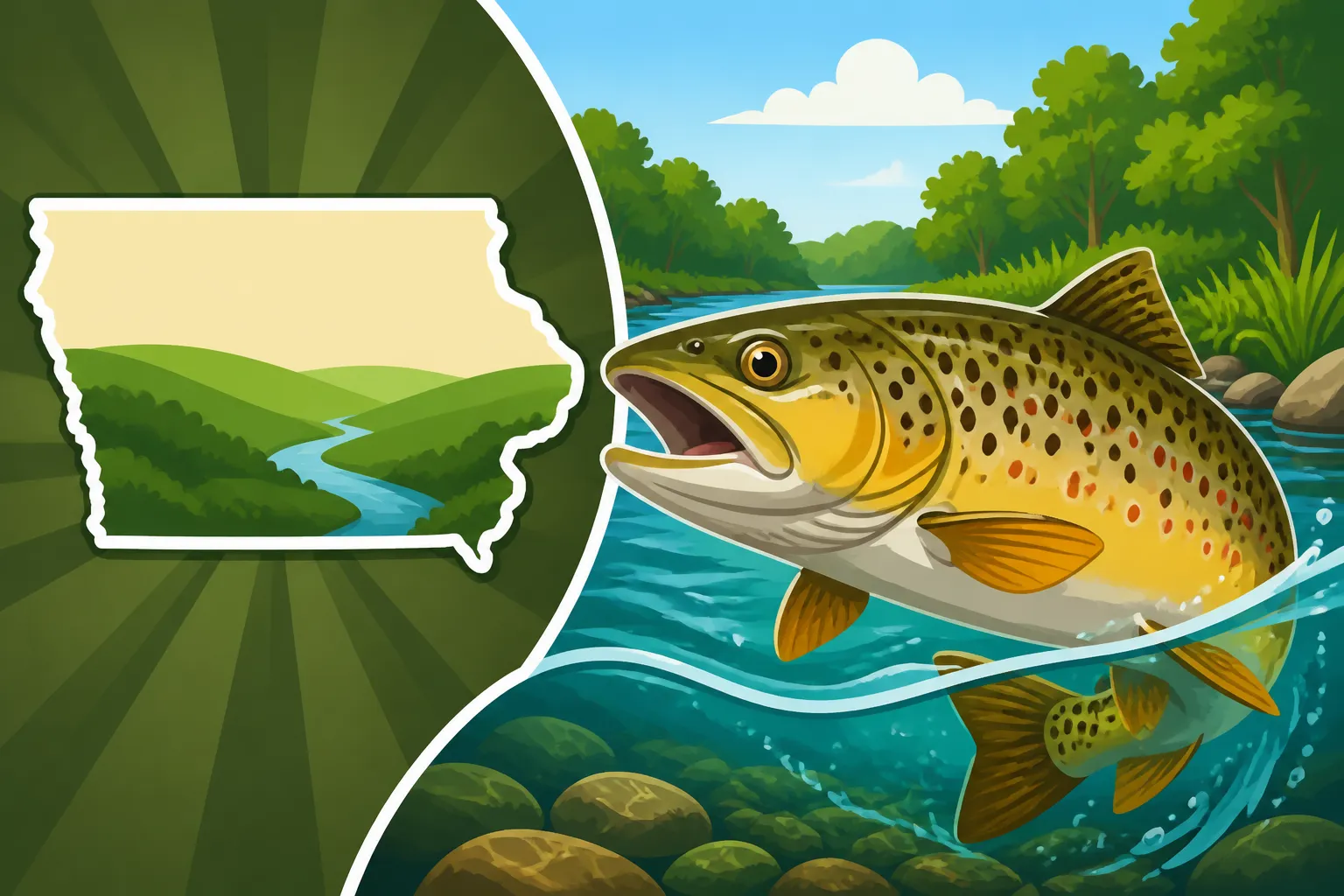
Within counties like Allamakee, Clayton, Fayette, Howard, and Winneshiek, you'll find a handful of exceptional streams where Brown Trout, and in very limited cases, Brook Trout, have established self-sustaining populations. These aren't huge, trophy-laden rivers; rather, they are often smaller, intimate streams, sometimes feeling more like creeks, but they hold a wildness that is truly special. The Brown Trout are the most successful at natural reproduction in Iowa, being a bit more resilient to fluctuating conditions than their rainbow or brook cousins. Anglers often spend years exploring these regions to find these elusive stretches of water. Our article on Trout Streams Near Decorah can give you a head start on finding some of these promising locations.
The Impact of Conservation Efforts and Habitat Improvement
The existence of these wild trout populations isn't purely accidental; it's also a testament to ongoing conservation efforts. The Iowa DNR, along with various local conservation groups and private landowners, actively works to protect and enhance these critical habitats. This includes:
- Stream Bank Stabilization: Preventing erosion by planting vegetation and installing rock structures helps keep sediment out of spawning beds and provides crucial cover for fish.
- Riparian Buffer Zones: Creating and maintaining natural vegetated strips along stream banks acts as a filter for runoff and helps regulate water temperature by providing shade.
- Instream Habitat Improvement: Adding large rocks, logs, and creating deeper pools and riffles mimics natural stream features that benefit all life stages of trout.
- Water Quality Monitoring: Regular testing ensures that pollution levels remain low, which is absolutely vital for sensitive trout populations.
These efforts are not just about helping the trout; they improve the entire stream ecosystem, benefiting countless other species. When you cast your line into a stream knowing that these conservation efforts are at play, there's an even deeper appreciation for the wildness you encounter. It’s a delicate balance, and we anglers play a crucial role in supporting these initiatives.
How to Approach Wild Trout Waters
Fishing for wild trout is a different beast entirely than fishing for recently stocked fish. It requires a more subtle approach, a deeper understanding of trout behavior, and an unwavering commitment to responsible angling practices. These fish are survivors, highly attuned to their environment, and incredibly wary.
Gear and Techniques for Sensitive Streams
Forget the heavy gear you might use for bass or catfish; wild trout fishing calls for finesse. These streams are often smaller, and the trout are spooky, meaning any heavy footfalls on the bank or sloppy casts can send them darting for cover.
- Light Tackle: A lightweight spinning rod (ultralight to light power, 5-foot to 6-foot range) paired with a small spinning reel spooled with 2-4 pound test monofilament or fluorocarbon line is ideal. For fly anglers, a 2-4 weight fly rod is perfect. You can find excellent options for either setup on platforms like Amazon, often with detailed reviews from other trout enthusiasts. Our guide on Best Fly Rod Setup for Trout offers some great suggestions.
- Stealth and Observation: Approach the stream quietly, staying low and out of sight. Observe the water before casting – look for rises, seams, and likely hiding spots. Trout often face upstream, so casting upstream and letting your bait or fly drift naturally downstream is usually the most effective approach.
- Small Baits and Lures: Wild trout are often smaller and more selective. Tiny inline spinners (like Panther Martins or Mepps), micro jigs, small spoons, or natural baits like garden worms or crickets can be very effective. Fly anglers will find success with small nymphs, dry flies that mimic local hatches, or even tiny streamers. For tips on specific fly patterns, check out our piece on Nymphing Techniques for Iowa Trout Streams.
- Delicate Presentations: Whether you're casting a spinner or a fly, aim for a soft, accurate presentation. Avoid heavy splashes that can alarm fish. The goal is to make your offering look as natural as possible.
Catch and Release Ethics
For the handful of streams that hold naturally reproducing trout, catch and release isn't just a suggestion; it's vital for preserving these rare populations. Every wild trout is a valuable genetic contributor to the stream's future.
- Minimize Handling: The less you handle a fish, the better. Try to unhook them in the water if possible.
- Wet Hands: Always wet your hands before touching a fish. Dry hands can remove the protective slime coat, making the fish susceptible to disease.
- Support the Fish: If you must take a fish out of the water for a quick photo, support its body horizontally and only keep it out of the water for a few seconds. Avoid squeezing it or holding it vertically by the jaw.
- Barbless Hooks: Consider crimping down the barbs on your hooks. This makes hook removal quicker and less damaging to the fish. You can buy barbless hooks or easily modify standard hooks with a pair of pliers, which you can also find on Amazon.
- Revival: If a fish seems sluggish after release, gently hold it upright in the current, allowing water to flow over its gills, until it swims away under its own power.
By practicing these ethics, you become a steward of these precious resources, ensuring that future generations of anglers can also experience the thrill of catching a truly wild Iowa trout. Remember, respecting the resource is just as important as the catch itself.
Trout Stream Characteristics: Stocked vs. Wild
To help clarify the differences, here's a quick comparison of what you might typically find when fishing a stocked trout stream versus a rare wild trout stream in Iowa.
| Characteristic | Stocked Trout Stream (Typical) | Wild Trout Stream (Rare) |
|---|---|---|
| Primary Fish Source | Iowa DNR Hatchery Program | Natural reproduction within the stream itself |
| Fish Numbers | Generally high, especially after stocking; can decrease over time | Lower density, but consistent population across age classes |
| Species | Rainbow Trout, Brook Trout, Brown Trout | Primarily Brown Trout; very limited Brook Trout |
| Fish Behavior | Often less wary, more aggressive feeders immediately after stocking | Extremely wary, sensitive to disturbance, more selective feeders |
| Habitat Requirements | Cold enough for survival, but may lack spawning grounds/cover | Abundant cold springs, clean gravel, stable banks, varied cover |
| Water Quality | Good to excellent, but may be prone to some turbidity or warming | Excellent, highly stable temperatures and very low turbidity |
| Location | Widespread in Northeast Iowa's Driftless Area (e.g., Trout Fishing Streams in Northeast Iowa) | Limited to specific, highly pristine spring-fed tributaries in Driftless Area |
| Angling Pressure | Can be high, especially after stocking events | Generally lower, requires more skill and stealth |
| Conservation Focus | Maintaining access and stocking levels | Habitat protection, water quality, catch and release promotion |
This table highlights why those truly wild streams are such special places. They are delicate ecosystems that require our utmost respect and careful management to ensure they continue to provide a home for Iowa's naturally reproducing trout.
Disclaimer
This article is for general informational purposes only and does not constitute professional advice. Laws, prices and regulations vary by location and change over time. Consult a qualified professional for guidance on your specific situation.