Bass Fishing Tips for Iowa Farm Ponds
There’s nothing quite like the allure of a quiet Iowa farm pond. You’ve probably driven past countless ones, seeing that ripple or splash and wondering what secrets lie beneath the surface. For many anglers, the thought of fishing these private, often overlooked waters can be intimidating – where do you even start? This comprehensive guide is here to strip away the mystery, providing you with practical, real-world bass fishing tips specifically tailored for the unique challenges and incredible rewards of Iowa’s farm ponds, helping you unlock their full potential.
Why Farm Ponds Are Bass Havens
Iowa is dotted with thousands of private farm ponds, each one a potential honey hole for largemouth bass. Unlike heavily pressured public lakes, these smaller, often unmanaged waters offer a unique environment that allows bass to thrive, often growing to impressive sizes. Understanding why these ponds are so productive is the first step to successfully fishing them.
The Allure of Seclusion and Unpressured Fish
One of the biggest advantages of farm ponds is their relative seclusion. Public waters can get hammered by anglers, leading to "educated" fish that are wary of common lures and presentations. Farm pond bass, however, often see far less fishing pressure. This means they're frequently more aggressive, less shy, and more willing to strike a well-presented bait. It’s like stepping back in time to when fishing was simpler, where the fish weren't yet wise to every trick in the book. You might be surprised at how readily a chunky largemouth attacks a topwater frog in a pond where it rarely sees a lure. This lack of pressure often translates into higher catch rates and a more exhilarating experience, which is a big reason why so many anglers seek permission to fish these hidden gems.
Beyond the lack of pressure, the small size of these ponds often concentrates the fish. Instead of vast expanses of water, bass in a pond have a more limited area to roam, making them easier to locate once you understand their preferred habitats within that specific pond. This means you spend less time searching and more time fishing. The environment itself is often calmer, free from the roar of high-horsepower boats, allowing for a more peaceful and immersive fishing experience that connects you directly with nature.
Understanding Pond Ecosystems and Structure
Every farm pond is a mini-ecosystem, and understanding its unique characteristics is key to finding bass. These ponds are often built in natural depressions or dammed creek beds, leading to varying depths, bottom compositions, and cover types. Unlike large reservoirs with complex contour maps, pond structure is usually more straightforward but no less critical. Bass are ambush predators, and they will always relate to some form of cover or structure that provides shade, concealment, or a food source.
Typical structures you'll encounter include fallen trees, submerged brush piles, old fence lines, rock piles, or even remnants of agricultural equipment. Aquatic vegetation is also a huge factor. From lily pads and cattails along the edges to submerged coontail or pondweed, these plants provide essential habitat. Healthy vegetation creates oxygen, harbors baitfish and insects, and offers bass prime ambush points. Look for transitions – where a weed line meets open water, a shallow flat drops into deeper water, or where a hard bottom meets a soft, muddy one. These "edge" areas are always bass magnets. Understanding how Largemouth Bass Habitat in Iowa Ponds influences their behavior is paramount to consistent success.
Essential Gear for Farm Pond Bass Fishing
You don't need a boatload of specialized gear to fish farm ponds, which is part of their charm. However, having the right basic setup will significantly improve your chances and make your day on the water much more enjoyable. Think versatile and efficient.
Rod, Reel, and Line Combos for Pond Power
For most farm pond bass fishing, a medium to medium-heavy power casting or spinning rod, between 6'6" and 7'3" in length, is ideal. This length offers a good balance of casting distance and accuracy in tighter quarters, which is often the case around pond edges. A fast action tip is usually preferred, as it allows for quick hook sets and sensitivity to detect subtle bites, while the stronger backbone helps you wrestle larger bass out of heavy cover. You can find excellent options on Amazon, from brands like Ugly Stik or Berkley, that offer great performance without breaking the bank.
Pair your rod with a reliable spinning reel in the 2500-3000 size or a baitcasting reel with a gear ratio around 6.4:1 to 7.1:1. Spinning reels are generally more forgiving for beginners and excel at casting lighter baits, while baitcasters offer more control for heavier lures and are excellent for pitching into tight spots. Line choice is critical. For spinning setups, 8-12 lb monofilament or fluorocarbon is a good all-around choice. If you're dealing with thick vegetation, consider a 15-20 lb braided line with a short fluorocarbon leader for abrasion resistance and stealth. For baitcasters, 15-20 lb fluorocarbon or 30-50 lb braid (again, with a leader) is commonly used, especially when fishing heavier cover. Your line strength needs to match the potential size of the fish and the density of the cover you're fishing.
Must-Have Lures and Baits for Farm Ponds
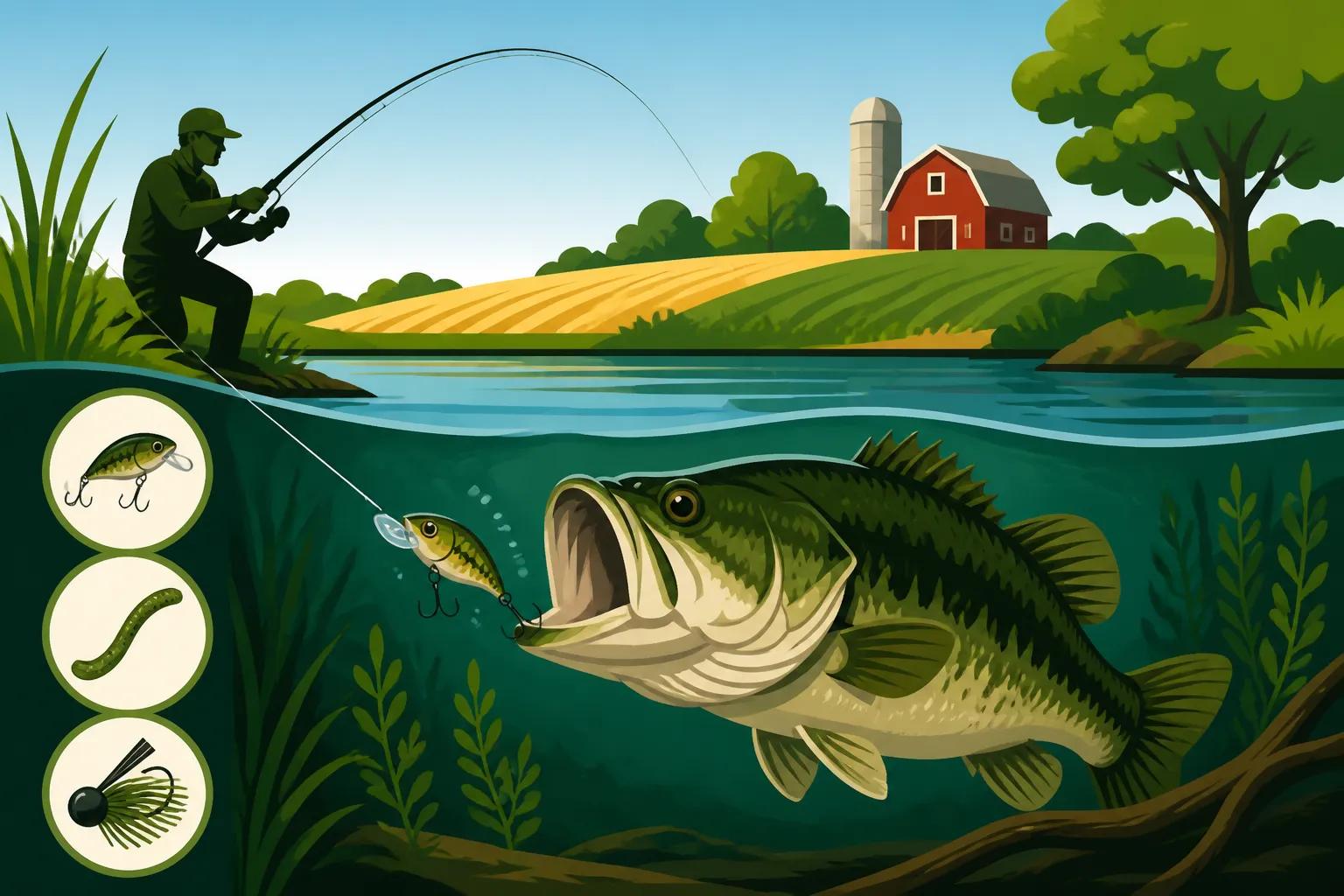
The beauty of farm pond fishing is that bass often aren't picky, but having a selection of proven lures can make all the difference. You want versatile options that can imitate common baitfish or frogs and work through various cover types. Here’s a quick rundown of what you should always have in your tackle box for How to Catch Bass in Iowa:
| Lure Type | Best Use Case | Retrieve Speed | Bass Reaction |
|---|---|---|---|
| Plastic Worms | Texas-rigged for weeds, Carolina-rigged for open | Slow, erratic | Subtle bites, deep cover |
| Jigs | Flipping into heavy cover, mimicking crawfish | Slow, hopping | Aggressive strikes, strong hook |
| Spinnerbaits | Covering water, through moderate weeds, windy days | Medium, steady | Reaction strikes |
| Crankbaits | Deeper areas, deflecting off structure, searching | Medium to fast | Predatory attack, erratic path |
| Topwater Frogs | Dense lily pads, matted vegetation | Slow, twitching, pause | Explosive blow-ups |
Soft Plastics: These are your bread and butter. Texas-rigged plastic worms or creature baits are unbeatable for fishing through weeds, brush, and timber without snagging. Colors like green pumpkin, black and blue, or junebug are perennial favorites. You can find an incredible variety of shapes and sizes on Amazon, making it easy to experiment.
Jigs: A weedless jig, often paired with a crawfish or creature trailer, is a fantastic option for pitching into dense cover like fallen trees or thick brush piles. The compact profile and heavy weight allow it to penetrate cover where other lures might get hung up. Black and blue, green pumpkin, and brown are excellent jig colors. Learn How to Fish a Jig and Pig for Bass for optimal results.
Spinnerbaits: When bass are actively feeding or the water has a bit of a stain, a spinnerbait can be deadly. The flash and vibration mimic baitfish, and they can be retrieved through sparse weeds or around submerged timber. White, chartreuse, and perch patterns are effective. If you want to know How to Fish a Spinnerbait for Bass, focus on steady retrieves with occasional twitches.
Topwater Lures: Nothing beats a bass exploding on a topwater bait. Poppers, walk-the-dog lures, and especially soft plastic frogs like the Spro Bronzeye Frog are phenomenal for fishing over matted vegetation or lily pads. These lures are best in low-light conditions or when bass are actively feeding near the surface. For an adrenaline rush, mastering Topwater Frog Fishing for Bass at Dawn is a must.
Crankbaits: Medium-diving crankbaits that mimic shad or bluegill can be very effective for covering water and targeting bass holding slightly deeper around channel swings or drop-offs. Choose colors that match local baitfish or chartreuse variations for stained water.
Top Techniques for Iowa Farm Pond Bass
Fishing a farm pond effectively isn't just about showing up; it's about understanding how bass behave in these environments and then employing the right techniques to trigger a bite. Forget bomb-casting across the whole pond; precision and stealth are your friends here.
Pitching and Flipping Cover
Farm ponds, by nature, are often full of natural cover: overhanging trees, dense cattails, lily pad fields, and submerged brush. These are prime ambush points for bass, and pitching and flipping are the most effective ways to target them. Pitching involves a short, underhand cast that sends your lure flying low and accurately to a specific piece of cover, while flipping is an even shorter, pendulum-like presentation where you're essentially dropping your bait into extremely tight spots.
The key to both techniques is precision and minimal splash. You want your bait to enter the water quietly, as if a natural food source just dropped in. Use a heavy-duty jig or a Texas-rigged soft plastic with a stout hook and heavy line to prevent snags and quickly extract fish from the thick stuff. Once your bait is in the cover, let it sink naturally, then work it slowly with subtle twitches and hops. Many bites occur on the initial fall, so be ready. This is a game of patience and methodical searching, targeting every dark pocket, every shaded overhang, and every clump of vegetation. It’s a technique that truly shines when bass are tucked deep, seeking refuge from the sun or waiting for an unsuspecting meal.
Slow-Rolling Soft Plastics and Spinnerbaits
While pitching and flipping are excellent for isolated cover, sometimes you need to cover more water or fish through slightly sparser vegetation. This is where slow-rolling soft plastics and spinnerbaits come into their own. "Slow-rolling" refers to a steady, often slow retrieve that keeps your lure just above the bottom or through the mid-column of the water, allowing the blades of a spinnerbait to turn slowly or the tail of a plastic worm to undulate enticingly.
For spinnerbaits, this means using a single Colorado blade or a combination of Colorado and willow leaf blades, which provide more lift and vibration at slower speeds. Cast your spinnerbait past your target area – perhaps a submerged weed line or a subtle drop-off – and begin a slow, consistent retrieve, maintaining contact with the lure. The thumping vibration and flash can draw bass out of cover or trigger bites from less active fish. For soft plastics, consider a weighted swimbait or a larger curly-tail worm rigged on a weighted hook. Cast it out and let it sink, then slowly reel it back, perhaps adding a gentle twitch or two. This technique is particularly effective in stained water or during overcast conditions when bass are less likely to chase fast-moving baits.
Topwater Thrills: When and Where to Use Them
Few things in bass fishing are as exciting as a topwater strike. The sudden explosion on the surface is pure adrenaline, and farm ponds offer some of the best topwater action you'll find. The prime conditions for topwater fishing are typically low-light periods – dawn, dusk, or heavily overcast days – and in waters with abundant surface cover.
Focus your topwater efforts around lily pad fields, matted duckweed, emergent cattails, or areas where fallen trees create significant shade on the surface. Lures like hollow-bodied frogs (like those often found on Amazon), poppers, or "walk-the-dog" style baits are perfect for these scenarios. Cast your frog onto a lily pad or into a small opening in the cover and let it sit for a few seconds. Then, twitch it gently, making it "walk" or "pop" across the surface, pausing frequently. The key is to imitate a frog, mouse, or injured baitfish struggling on the surface. Bass often observe the lure for a moment before striking, so don't set the hook on the initial splash! Wait until you feel the weight of the fish on your line before sweeping the rod back to drive the hook home. For more specialized advice, check out Topwater Frog Fishing for Bass at Dawn.
Reading the Water: Locating Bass in Ponds
Finding bass in a farm pond often comes down to observation and understanding their basic needs: food, cover, and comfortable temperatures. Since ponds are relatively small, every subtle change in structure or depth can be a significant fish-holding spot.
Prime Structural Elements in Ponds
Even a seemingly featureless pond will have elements that attract bass. These can be natural or man-made. Start by visually dissecting the pond from the bank. Look for variations in the shoreline – points, coves, and bends in the bank. Points that extend into deeper water are always high-percentage spots, as bass can ambush baitfish moving along the contour. Coves offer protection from wind and sun, making them ideal spawning or feeding grounds, especially during certain times of the year.
Beyond the visible, think about what might be hidden. Old Christmas trees dropped in for fish habitat, rock piles, or even a subtle hump on the bottom that you can only detect with a cast and retrieve. A small creek channel running through the pond, often identifiable by a dip in the bank, will act as a migration route and holding area for bass. Deeper areas, often found near the dam or in a dug-out section, provide thermal refuge in both summer and winter. These are crucial spots for bass when temperatures are extreme. Understanding Best Time to Fish a Farm Pond often involves knowing where bass relate to these structures throughout the day and season.
Seasonal Movements of Pond Bass
Bass behavior in farm ponds changes dramatically with the seasons, just like in larger lakes. Being aware of these patterns will help you hone your approach.
Spring: As water temperatures rise, bass move from deeper wintering holes into shallower, warmer water, especially towards the north-facing banks that receive more sun. This is the pre-spawn phase, and bass are aggressively feeding to build energy for spawning. Look for them in shallow coves, on flats near drop-offs, and around emergent vegetation. This is a fantastic time for spinnerbaits, crankbaits, and even some early topwater action. Understanding Pre-Spawn Bass Patterns in Iowa is critical during this period.
Summer: Summer can be challenging due to high water temperatures and bright sun. Bass will often seek refuge in deeper, cooler water or tuck tight into dense shade and thick cover during the day. Target them early mornings, late evenings, or during overcast days with topwater lures, or fish jigs and Texas-rigged plastics deep in brush piles and heavy weed mats during the midday heat. Night fishing can also be incredibly productive for summer pond bass.
Fall: As water temperatures begin to cool, bass become very active, feeding heavily to prepare for winter. They'll often school up and chase baitfish in open water or along prominent points and humps. Spinnerbaits, crankbaits, and jerkbaits are excellent for covering water and finding these active fish. Towards late fall, as temperatures drop further, bass will start moving back to deeper water, often suspending near baitfish schools. For specific insights, delve into Iowa Bass Season Late-Fall Patterns.
Winter: While many ponds freeze over in Iowa, those that remain open or offer safe ice fishing can still hold bass. Bass are lethargic in cold water, holding tight to deep cover or structure. Your best bet is to slow down considerably, using small jigs, blade baits, or slow-fished soft plastics presented directly to the fish. Ice fishing for bass in ponds requires patience and precise vertical presentations. Remember, How Weather Affects Bass Fishing is a significant factor in all seasons, but especially in winter.
Conservation and Best Practices for Farm Ponds
Fishing on private land, especially farm ponds, comes with a unique set of responsibilities. It’s not just about catching fish; it’s about respecting the landowner, the resource, and ensuring these special fishing opportunities remain available for everyone.
Practicing Catch and Release Effectively
Many farm ponds are small, self-contained ecosystems that can be easily over-fished. While it's tempting to keep every bass you catch, especially if they're good eaters, practicing selective harvest or complete catch and release is vital for maintaining a healthy bass population. If a pond is small and produces many smaller bass, keeping a few of the smaller ones can actually help reduce competition and allow the remaining fish to grow larger. However, for those prized larger bass, it's almost always best to release them carefully.
When practicing catch and release, handle fish gently with wet hands, minimize their time out of water, and use needle-nose pliers or a de-hooking tool to quickly remove hooks. Avoid dragging fish on the bank or putting them on dry surfaces. If a fish is deeply hooked, cut the line as close to the hook as possible rather than trying to rip it out. Releasing fish properly ensures they survive to fight another day and contribute to the pond's future trophy potential. Many anglers even pinch down the barbs on their hooks (barbless fishing) to make hook removal quicker and less traumatic for the fish. For those interested in the potential sizes, refer to our guide on Trophy Bass Size in Iowa.
Respecting Private Property and Landowners
This is perhaps the most crucial aspect of farm pond fishing in Iowa. These ponds are on private property, and gaining permission is non-negotiable. Never trespass. Always ask for permission from the landowner before you even think about setting foot on their property. A friendly knock on the door, a polite request, and a promise to leave no trace can go a long way. Many landowners are happy to let respectful anglers fish, especially if you offer to share some of your catch or help with a small chore.
Once you have permission, treat their property with the utmost respect. Close gates, stay clear of crops and livestock, and park your vehicle where it won't impede farm operations. Pack out all your trash – and then some, if you see litter left by others. Don't disturb wildlife unnecessarily. The relationship you build with a landowner can open up incredible fishing opportunities for years to come, but a single act of disrespect can close those doors permanently for everyone. Showing gratitude, perhaps with a small thank-you gift or simply by sharing photos of your catches, can also strengthen these valuable relationships. Remember, fishing in these spots is a privilege, not a right.
Disclaimer
Fishing regulations can change, and it's always the angler's responsibility to know and follow the most current rules. Before heading out, please consult the latest Iowa Department of Natural Resources (DNR) fishing regulations booklet or their official website to ensure compliance with all licensing, length, and bag limit requirements for bass and any other species you might encounter.