Best Hook Size for Crappie Jigs
There’s nothing quite like the excitement of chasing crappie in Iowa. Whether you're casting tiny jigs under docks on Clear Lake or dropping through the ice on Spirit Lake, these panfish offer incredible fun and delicious table fare. But if you've ever stood in an aisle, staring at dozens of crappie jigs, each with a different, seemingly arbitrary number stamped on the package, you know the frustration. How do you pick the right hook size to actually put fish in the boat or on the ice? This guide is here to untangle that mystery, giving you the confidence to choose the perfect hook size for your crappie jigs, no matter where or how you’re fishing in Iowa.
Why Crappie Jig Hook Size Really Matters for Iowa Anglers
It might seem like a small detail, but the size of the hook on your crappie jig can be the difference between a triumphant day on the water and one filled with frustrating missed bites. Crappie, those notorious paper-mouthed panfish, have a unique way of striking, and their mouth anatomy dictates a lot about effective hook-setting. When you understand why hook size is critical, you'll start making more informed choices and, inevitably, catching more fish.
The Anatomy of a Crappie Bite
Crappie are masters of subtle feeding. Unlike aggressive bass that might inhale a lure, crappie often "mouth" their prey. They'll swim up to a jig, flare their gills, and suck the bait into their mouth. This quick suction mechanism means the jig and hook need to be easily consumable and properly sized to fit entirely within their oral cavity. If the hook is too large, the crappie might only get a part of the jig in its mouth, leading to a "short strike" where they feel the resistance and spit it out before you can react.
Consider a scenario where you're fishing for Crappie Fishing in Iowa in a brush pile, and you feel that tell-tale tap, tap, tap. If your hook is too big, the crappie might just be pulling on the plastic body of the jig, never actually getting the hook point inside its mouth to catch on the delicate skin around its jaw. This often results in a soft "thump" on your line that doesn't translate into a hook-set, leaving you bewildered and empty-handed. A properly sized hook allows the entire jig to be sucked in, ensuring the hook point is in a position to do its job.
Hook-Setting Success and Failure
The goal, of course, is a successful hook-set – that moment when the hook penetrates the fish's mouth and holds firm. For crappie, this is heavily influenced by hook size. A hook that's too small, say a tiny size #10, might get swallowed too deeply, making it incredibly difficult to remove without harming the fish, especially if you're practicing catch and release. Or, it might get lodged in a fleshy part of the mouth that tears easily, leading to the fish shaking free at the boat or hole.
On the flip side, a hook that is too large can prevent the crappie from fully engulfing the bait, as mentioned earlier. Even if they do manage to get it in, the larger gap and heavier wire might not penetrate their thin, papery mouths cleanly. It's a delicate balance. The right hook size offers enough gap to catch on the corner of the mouth or the upper jaw, but isn't so large that it becomes an impediment to the crappie's natural feeding behavior. Thinking about the actual mechanism of the crappie's mouth opening and closing around your offering is key to understanding why this choice is paramount for consistent hook-ups.
Decoding Crappie Jig Hook Sizes: A Practical Guide
Understanding hook sizes can be a bit confusing at first glance because the numbering system works in reverse of what you might intuitively expect. Once you grasp this fundamental principle, choosing the right hook becomes much simpler, allowing you to focus on the actual fishing strategy.
The Hook Numbering System Explained
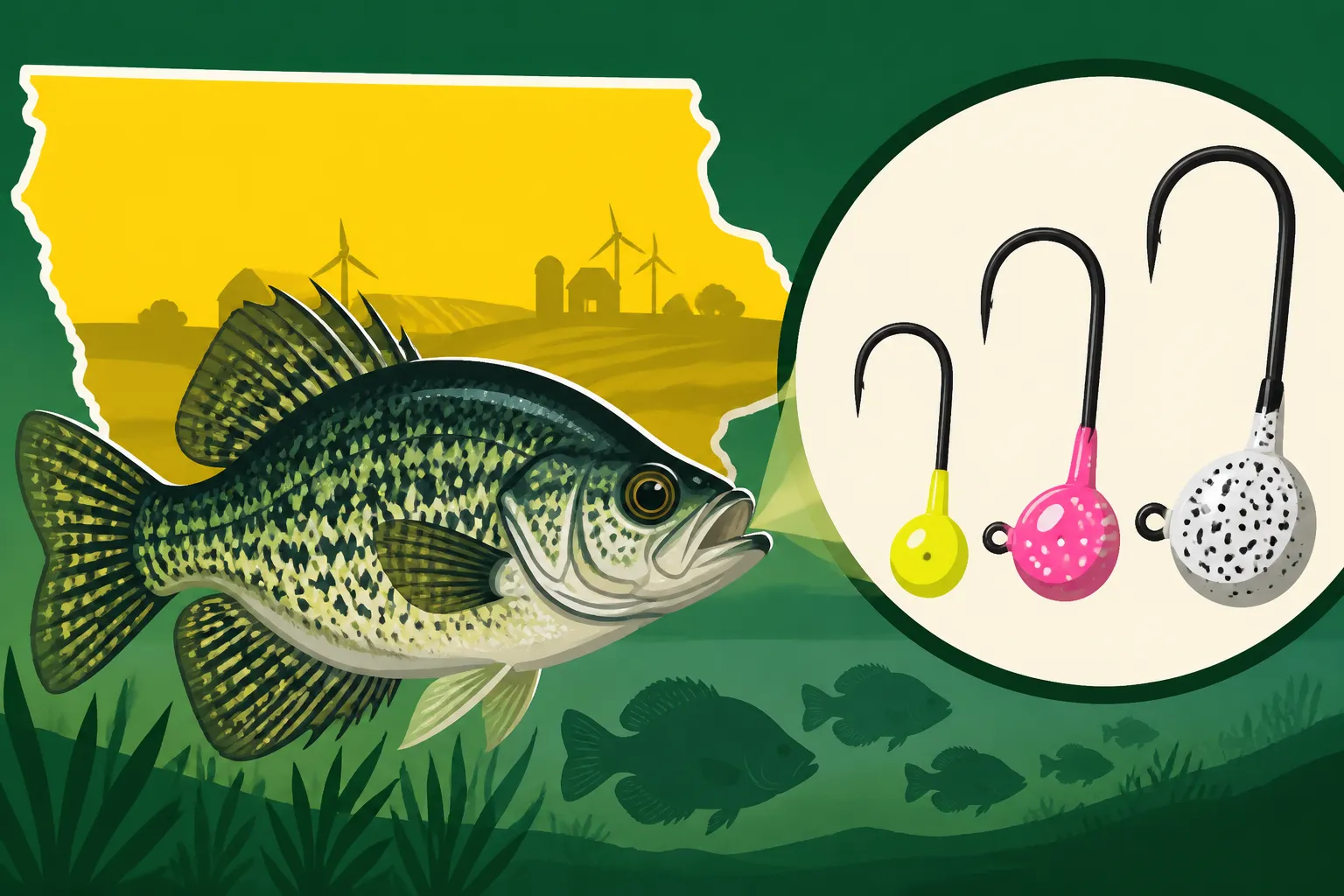
When you look at a package of fishing hooks, you’ll see numbers like #10, #8, #6, #4, #2, and then sometimes numbers followed by a zero, like 1/0, 2/0, 3/0, and so on. Here’s the critical part: for hooks without a zero, the higher the number, the smaller the hook. So, a #10 hook is quite small, while a #2 hook is considerably larger.
Once you hit the "zero" sizes (often pronounced "aught"), the system reverses again: the higher the number before the zero, the larger the hook. So, a 3/0 hook is much larger than a 1/0 hook. For crappie jigs, you'll almost exclusively be dealing with the smaller numbered hooks, usually ranging from about a #10 up to a #1. It’s rare to use anything in the "aught" sizes for crappie, as those are typically reserved for larger game fish like bass or catfish. The key is to remember that a #8 hook is smaller than a #6 hook, and a #6 is smaller than a #4. This inverse relationship is fundamental to understanding crappie jig hook sizes.
Common Crappie Jig Hook Sizes and When to Use Them
Let's break down the typical hook sizes you'll encounter for crappie jigs and when they really shine. This table should give you a quick reference point when you're stocking up on jigs or tying your own.
| Hook Size | Typical Jig Head Weight | Ideal Crappie Size | Common Usage Scenario | Notes |
|---|---|---|---|---|
| #10 | 1/64 oz – 1/32 oz | Small (6-8 inches) | Finicky bites, ultra-light presentations, shallow clear water | Very subtle, for highly pressured or small crappie |
| #8 | 1/32 oz – 1/16 oz | Medium (8-10 inches) | Most common, versatile for various conditions, spring and fall | Great all-around size for most crappie |
| #6 | 1/16 oz – 1/8 oz | Large (10-12+ inches) | Larger crappie, heavier jig bodies, deeper water, active bites | Good for trophy crappie or when they are aggressive |
| #4 | 1/8 oz – 1/4 oz | Trophy (12+ inches) | Targeting slab crappie, using larger minnows or plastics | Can be too big for average crappie, but perfect for giants |
| #2 | 1/8 oz – 1/4 oz | Very Large/Aggressive | Power fishing, larger baits, strong current, targeting giants | Less common for crappie, but useful in specific big fish situations |
When you're out buying new jigs, whether from a big box store like Bass Pro Shops or browsing online on Amazon, pay close attention to the hook size specified. Sometimes, manufacturers will use a general "panfish" hook which might be a #8 or #6, but others will be more specific. If you’re ever in doubt about what jig to pick up, a jig with a #8 hook is often an excellent starting point for the majority of crappie fishing situations across Iowa. This size offers a good balance of being small enough for average crappie to easily engulf, yet large enough to handle a decent-sized fish without bending out. For very small or finicky fish, dropping down to a #10 can make a significant difference in getting bites. Conversely, if you know you’re targeting true slab crappie, bumping up to a #6 or even a #4 can give you better hook-up ratios on those bigger fish.
Beyond the Basics: Factors to Consider When Choosing Your Hook Size
While the general guidelines for hook sizes are a fantastic starting point, experienced crappie anglers know that successful fishing often means adapting to specific conditions. Several factors can, and should, influence your final decision on crappie jig hook size, helping you fine-tune your presentation for maximum effectiveness.
Matching Hook Size to Jig Head and Bait
The overall presentation needs to be balanced. It wouldn't make sense to put a tiny #10 hook on a bulky 1/4 ounce jig head, or a massive #4 hook on a minuscule 1/64 ounce jig. The hook, jig head, and the bait (whether it's a soft plastic body or a live minnow) should complement each other.
Think about the profile in the water. If you're using a small 1/32 ounce jig head with a tiny 1-inch plastic tube, a #8 hook is likely your sweet spot. The hook's gap will be proportional to the bait, ensuring the hook point is exposed and ready to penetrate. If you were to use a #4 hook with that small body, the hook would dominate the presentation, making it look unnatural and difficult for a crappie to swallow. Conversely, if you're rigging a larger 2.5-inch curly tail grub on a 1/8 ounce jig head, a #6 or even a #4 hook might be more appropriate. The larger hook provides the necessary backbone and gap to hold the longer plastic securely and ensures the hook point clears the bulk of the lure body. When you're fishing with Best Live Bait for Iowa Walleye, a small minnow on a crappie jig is a killer combo. For smaller minnows, a #8 hook usually works well, but for larger shiners, you might need to jump up to a #6 to ensure the minnow is properly secured and the hook has enough exposed point to grab the fish.
Adapting to Crappie Size and Water Conditions
The size of the crappie you're typically catching in a particular body of water is a huge indicator for hook size. If you're fishing a community pond known for producing smaller panfish, sticking with #10 or #8 hooks will give you the best chance of successful hook-ups. However, if you're hitting one of Iowa's legendary crappie lakes like Rathbun Lake, known for its slab crappie, you'll want to lean towards #8 or #6 hooks, and even #4 if you're truly targeting trophy fish. Rathbun Lake Crappie Hotspots often produce bigger fish that can handle a larger hook.
Water conditions also play a role. In clear water, crappie can be incredibly finicky and visual. A smaller, less intrusive hook (#10 or #8) that disappears better into the bait might be preferred. In murky or stained water, where visibility is low, crappie rely more on vibration and scent. They might be less discerning about hook size, allowing you to use a slightly larger hook (like a #6) if you're also using a larger profile jig or live bait. During times of low activity or cold water, such as Ice Fishing in Iowa, crappie bites can be incredibly subtle. In these scenarios, a smaller hook can be crucial because it requires less effort for the fish to inhale and offers less resistance when they mouth the bait, increasing your chances of detecting a bite and converting it into a catch.
Specific Scenarios for Hook Size Adjustments
Beyond the general guidelines, specific fishing situations demand tactical adjustments to hook size. These nuances can make a big difference in your catch rates.
For instance, consider fishing deep timber or heavy cover. Crappie love to hide in brush piles and submerged trees. When you're trying to extract them from these snaggy areas, a slightly heavier wire hook – which often comes with a larger hook size like a #6 – can be beneficial. While the size helps with bigger fish, the stronger wire reduces the chances of the hook bending out if you get snagged or if a large crappie makes a powerful run. You might lose a few more jigs, but you’ll land more fish when you do get a bite.
Another scenario is when crappie are very aggressive. Perhaps it's Spring Fishing in Iowa and the crappie are actively spawning, or you've located a huge school in a feeding frenzy. In these moments, they're less cautious. You can often get away with, and even benefit from, a slightly larger hook. A #6 or even a #4 hook will ensure a solid hook-set on a hard-hitting fish, and it's robust enough to handle the fight. Don't be afraid to experiment when conditions are hot! Conversely, if you're encountering short strikes repeatedly, where you feel a tap but fail to hook up, it's a strong signal to drop down a hook size. Often, going from a #6 to a #8, or an #8 to a #10, can suddenly turn those frustrating taps into solid fish on the line.
Pro Tips for Rigging and Maximizing Your Crappie Jig Success
Choosing the right hook size is just one piece of the puzzle. How you rig your jig and bait, and how you fish it, will ultimately determine your success. A few simple techniques can significantly improve your crappie catch rate, regardless of the hook size you've chosen.
The Art of Tying Your Crappie Jig
The way you tie your crappie jig to your line might seem trivial, but it has a direct impact on the lure's action and, consequently, the crappie's willingness to strike. The most common and effective knot for crappie jigs is a loop knot, such as a Rapala knot or a non-slip mono loop. This knot creates a small loop at the eye of the hook, allowing the jig to swing freely. This freedom of movement gives your jig a more natural, lifelike action, which is especially important for smaller jigs with #10 or #8 hooks that rely on subtle movements to entice bites.
When tying, make sure the knot is snug but still allows that small loop. If you tie a standard clinch knot directly to the eye, it restricts the jig's movement, making it swim unnaturally stiffly. This can be enough to turn off cautious crappie, especially in clear water or when they are finicky. Remember to trim your tag end closely to avoid any distractions for the fish. A properly tied loop knot can breathe life into your jig, making even a simple plastic body look irresistible to hungry crappie. You can find many great tutorials on tying these knots by checking out resources from tackle manufacturers you find on Amazon, or from experts featured by Bass Pro Shops.
Live Bait vs. Soft Plastic Combinations
Crappie jigs are incredibly versatile, working well with both soft plastic bodies and live bait. The hook size you choose might vary slightly depending on your preferred presentation.
When using soft plastics, ensure the plastic body is threaded onto the hook shank straight and that the hook point exits the plastic cleanly and is exposed. For tiny 1-inch plastics, a #10 or #8 hook is usually perfect. The plastic should fully cover the hook shank but leave the point and barb clear. If you find your plastics bunching up or not sitting right, your hook might be too large for that specific plastic body, or vice versa. Best Jig Heads for Iowa Crappie Fishing discusses how different jig head shapes can also influence how your plastic sits.
If you're tipping your jig with live bait, like a small minnow, the hook size decision becomes even more critical. You want a hook that is small enough to avoid killing the minnow quickly, but large enough to secure it firmly and ensure a good hook-up. For most small crappie minnows, a #8 hook works beautifully. You can lightly hook the minnow through the lips or just behind the dorsal fin. If you’re using larger shiners, a #6 hook might be necessary to keep the minnow on and provide enough bite for the crappie. Remember, a lively minnow is often the best minnow, so choose a hook size and hooking method that allows it to swim naturally and stay active for as long as possible. The goal is always to present a natural, appealing meal, and the right hook size is crucial for achieving that.
Disclaimer
This article is for general informational purposes only and does not constitute professional advice. Laws, prices and regulations vary by location and change over time. Consult a qualified professional for guidance on your specific situation.