Best Fly Patterns for Iowa Trout Streams
It's easy to feel overwhelmed when you're staring at a wall of fly patterns, wondering which tiny, feathered creation will actually fool a trout in an Iowa stream. The sheer variety can make your head spin, and sometimes it feels like everyone has a "secret weapon" fly. But for Iowa's unique trout waters, figuring out what works doesn't have to be a mystery. This guide is here to cut through the confusion and equip you with the knowledge of essential fly patterns that consistently entice Iowa's vibrant trout population, ensuring your next outing is a success.
Decoding Iowa's Trout Stream Ecosystem
Before we dive into specific fly patterns, it’s crucial to understand the environment you’ll be fishing. Iowa's trout streams, particularly the renowned cold-water havens of Northeast Iowa, are distinct ecosystems. Knowing what the trout are likely feeding on, and how they behave in these specific conditions, will give you a massive advantage when selecting your flies.
Understanding Water Conditions and Insect Life
Iowa’s trout streams are generally smaller, spring-fed, and characterized by their cold, clear waters. You'll find a mix of riffles, runs, and deeper pools, often with undercut banks and overhanging vegetation. This diversity in structure provides ample hiding and feeding opportunities for trout. The clarity of the water means trout can be quite discerning, especially in areas with high fishing pressure. They get a good look at what you’re offering!
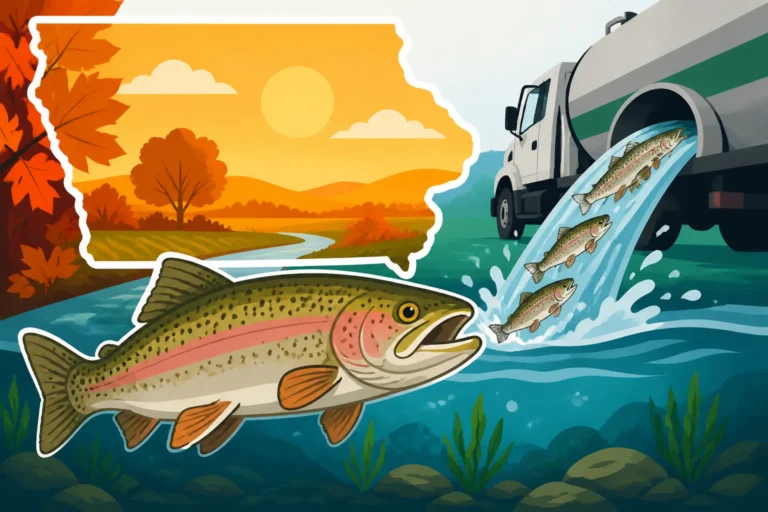
The aquatic insect life in these streams forms the backbone of a trout's diet. You'll encounter various species of mayflies, caddisflies, and stoneflies throughout the year. However, it’s not just about aquatic insects; terrestrials like grasshoppers, ants, beetles, and even worms become critically important, especially during the warmer months when they accidentally fall into the water. Additionally, many Iowa streams are heavily stocked by the Iowa Department of Natural Resources, particularly with rainbow trout. These stockers, often raised on pellets, can sometimes be less selective initially, making attractor patterns or even simple worm imitations incredibly effective. Understanding the different types of fish available is key to success, and a great resource for this is the comprehensive guide on Iowa Fish Species Guide which can help identify what you might encounter.
The Importance of Presentation over Pattern
While having the "right" fly pattern is important, an even more critical factor in successful fly fishing in Iowa is your presentation. A perfectly tied fly that drifts unnaturally will rarely fool a discerning trout. Imagine a natural insect tumbling down the current – it doesn't suddenly dart upstream or drag sideways. Your fly needs to mimic that natural, unhindered drift. This is especially true for nymphing and dry fly fishing.
In many of Iowa's more popular trout streams, like those found around Decorah, Manchester, or Elkader, trout have seen a lot of flies. They become "educated" quickly, and a drag-free drift is paramount. You could be using the most recommended fly pattern, but if it's dragging or skating across the surface, you're unlikely to get a strike. Focus on casting upstream and allowing your fly to drift naturally back towards you, mending your line as needed to eliminate drag. This nuanced approach will consistently outfish someone who simply casts the "right" fly with poor technique.
Essential Fly Patterns for Iowa Trout Streams
You don't need a fly box overflowing with hundreds of patterns to be successful on Iowa's trout streams. A carefully curated selection of versatile, proven flies in various sizes will cover almost any situation you encounter. These are the workhorse patterns that every Iowa trout angler should have.
Nymphs: The Subsurface Powerhouses
The vast majority of a trout's diet consists of subsurface insects, making nymphs incredibly effective year-round. These flies imitate the larval and pupal stages of aquatic insects. Mastering nymphing techniques is arguably the most consistent way to catch trout in Iowa. For deeper dives into technique, consider checking out Nymphing Techniques for Iowa Trout Streams.
-
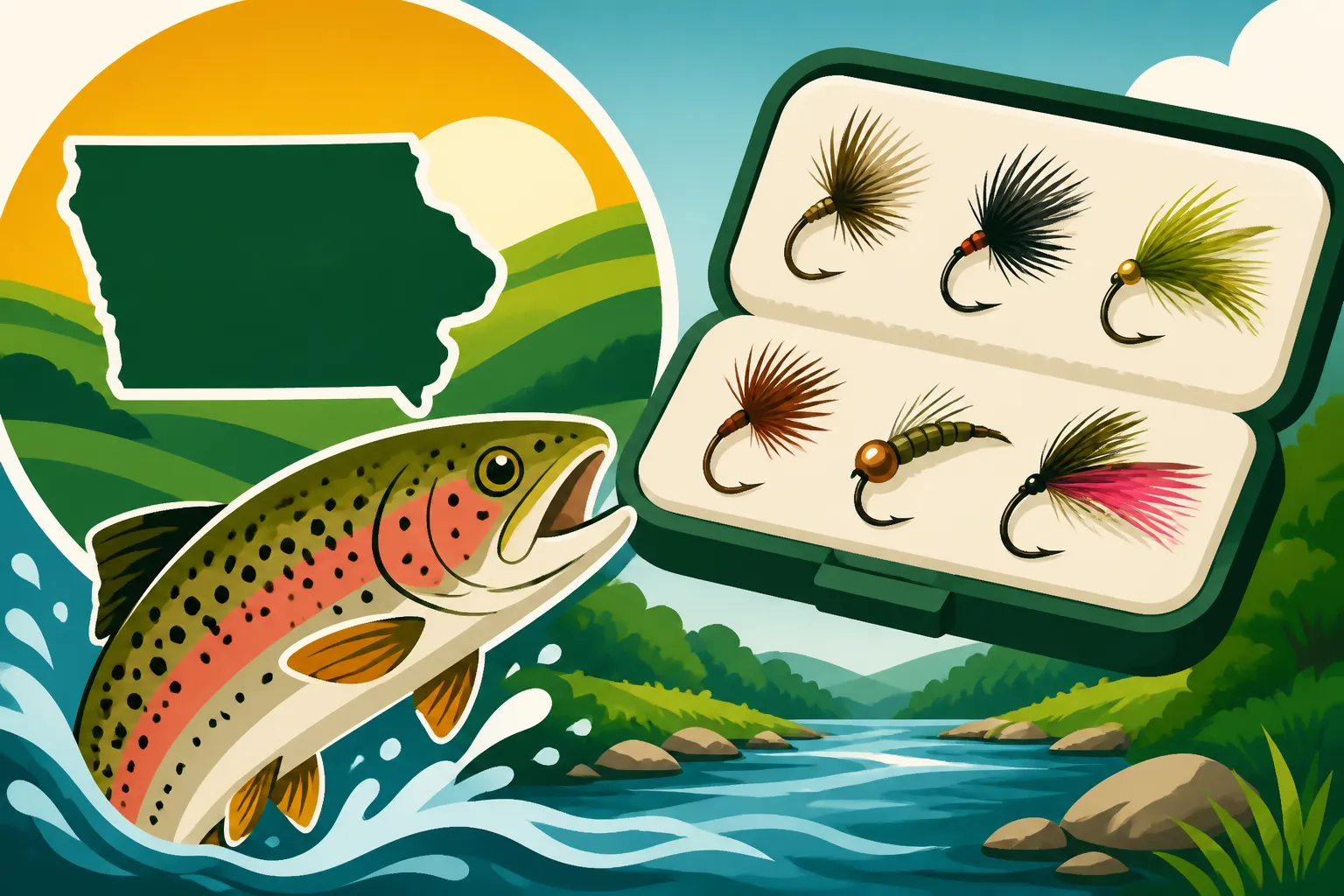
Pheasant Tail Nymph: This fly is an absolute staple in any fly angler’s box, and for good reason. It’s a fantastic imitation for a wide variety of mayfly nymphs, which are abundant in Iowa’s cold, clear waters. Its slim profile and subtle movement perfectly mimic a natural insect drifting along the stream bottom. You'll want to carry these in sizes ranging from 12 to 18. It’s effective all year round, whether fished under an indicator, on a Euro-nymphing rig, or even as a dropper off a dry fly. It's particularly deadly in the riffles and runs where trout actively feed on drifting nymphs.
-
Hare's Ear Nymph: Another incredibly versatile pattern, the Hare's Ear Nymph does a superb job imitating various caddis larvae and mayfly nymphs. Its buggy, shaggy appearance gives it a lifelike quality in the water, and its subtle movements attract attention. Like the Pheasant Tail, sizes 12-18 are ideal. This pattern is a great choice when you're not seeing a specific hatch, or when you want a more "generalist" nymph that trout will instinctively take. Many anglers fish it as a lead fly in a two-nymph rig due to its slightly heavier profile.
-
Prince Nymph: If you're looking for a fly that grabs attention even when trout aren't actively feeding on a specific hatch, the Prince Nymph is your go-to attractor pattern. With its white biots and peacock body, it has enough flash and contrast to entice a strike. While it can imitate stoneflies or larger mayflies, its strength lies in its ability to simply look "tasty" to a trout. Carry sizes 10-16. It’s an excellent searching pattern when you’re exploring new water or when conditions are a bit off, and trout might need a little extra convincing.
-
Walt's Worm / Squirmy Wormy: Let's be honest, these flies are sometimes affectionately (or disparagingly) called "cheater flies" because they are so effective, especially for recently stocked trout. Walt's Worm, a simple grub-like pattern, and the even more lifelike Squirmy Wormy, imitate aquatic worms that get washed into the stream. They're incredibly appealing to trout, particularly after a rain or when streams are slightly off-color. They also mimic the pellet food that hatchery-raised trout are accustomed to. For these, sizes 10-16 are good. Don't be shy about using them; they’ll put fish in your net, especially in early spring or immediately after stockings.
Dry Flies: For Surface Action and Excitement
There’s nothing quite like the thrill of seeing a trout rise and sip your dry fly off the surface. While nymphing might be more consistent, dry fly fishing offers some of the most visually rewarding experiences. These patterns imitate adult insects that have hatched and are either flying or resting on the water's surface.
-
Elk Hair Caddis: When caddisflies are hatching, or even when they're not, the Elk Hair Caddis is an indispensable fly. Its bushy elk hair wing and hackled body make it float exceptionally well, even in choppy water, and it’s relatively easy to see. It’s a fantastic prospecting pattern to use when you suspect trout are looking up but haven't identified a specific hatch. Sizes 12-18 are a must. Cast it into riffles, pockets, and along current seams where caddisflies are often found.
-
Adams / Parachute Adams: The Adams is arguably the most versatile general mayfly imitation out there. Its blend of grizzly and brown hackle, coupled with a dark body, suggests a variety of mayfly species. The Parachute Adams, with its white parachute post, offers even better visibility for the angler and sits lower in the water film, appearing more natural to a discerning trout. These are excellent choices when multiple mayfly species are hatching, or when you don't see a distinct hatch but still want to fish a dry fly. Stock up on sizes 12-18.
-
Grasshopper/Hopper Imitations: As summer progresses and into early fall, terrestrial insects become a significant food source for trout. Large, foam-bodied grasshopper imitations are absolutely crucial during this time. Fish them along grassy banks, under overhanging vegetation, and near agricultural fields where grasshoppers are abundant. The splat they make when they hit the water often triggers an aggressive strike from larger trout. Carry a few in sizes 8-12.
-
Ants/Beetles: Smaller terrestrial patterns like foam ants and beetles are often overlooked but can be incredibly effective during the summer months when larger hatches are scarce. Trout frequently feed on these insects that accidentally fall into the water. Fish them subtly, especially in slower pools or eddies. Sizes 14-18 are usually appropriate. They can be especially deadly on hot, sunny days when trout might be looking for an easy meal close to the banks.
Streamers: Hunting for Bigger Bites
If you're targeting larger, more aggressive trout, or simply want to cover water quickly, streamers are your weapon of choice. These flies imitate baitfish, leeches, sculpins, or other larger forage that bigger trout prey upon.
-
Woolly Bugger: The Woolly Bugger is arguably the most versatile fly ever invented. Its pulsating marabou tail and hackled body give it incredible action in the water, imitating everything from a leech to a baitfish to a large aquatic insect. It's effective in virtually any water condition and season. You'll want to carry Woolly Buggers in black, olive, brown, and white, in sizes 6-10. Strip them aggressively, swing them through currents, or dead-drift them under an indicator. They are a consistent producer in deep pools, undercuts, and along current seams.
-
Clouser Minnow (smaller versions): While often associated with saltwater fishing, smaller versions of the Clouser Minnow (e.g., in sizes 8-12) can be incredibly effective in Iowa's trout streams. Patterns in chartreuse/white, olive/white, or gray/white do an excellent job imitating small baitfish that trout might be feeding on. The dumbbell eyes give them a jigging motion that can provoke reaction strikes from aggressive trout. Fish them with short, sharp strips in deeper runs and pools.
Seasonal Strategies for Fly Pattern Selection
The trout’s diet and behavior change with the seasons, and so should your fly selection. Adapting your approach to the time of year will significantly increase your success rates on Iowa's trout streams.
Spring Tactics: Matching the Hatch and Post-Stocking Blitz
Spring in Iowa is a season of transition and renewed activity for trout. As snow melts and water temperatures slowly rise, insect life begins to stir, and importantly, the Iowa DNR begins its spring trout stocking program. Knowing when trout are stocked can make a huge difference, and you can learn more about this through the Spring Trout Stocking Strategy.
Early spring, when water temperatures are still quite cold, is prime time for subsurface fishing. Nymphs like the Pheasant Tail and Hare's Ear are consistently effective. However, this is also when those "cheater" flies like the Squirmy Wormy truly shine, especially for recently stocked rainbow trout that are still acclimatizing and are highly receptive to easy meals. Don't be afraid to fish these aggressively. Mid-to-late spring sees increasing insect activity. Caddis hatches start to become more prevalent, making the Elk Hair Caddis a top dry fly choice. Early season mayfly hatches, such as Blue-Winged Olives, will also start to appear, and a Parachute Adams in smaller sizes can be deadly. Fishing after a stocking event can be incredibly productive, and understanding Best Time to Fish After Trout Stocking can maximize your chances.
Summer Challenges and Terrestrial Opportunities
Summer in Iowa can present unique challenges for trout anglers. Waters can become lower and clearer, and ambient temperatures rise, making trout more cautious and spooky. Long, clear leaders and finer tippets (e.g., 5x or 6x) become essential for a stealthier approach.
Despite these challenges, summer also brings fantastic opportunities, particularly with terrestrial patterns. As we discussed, grasshoppers, ants, and beetles are key players. Fishing hopper-dropper rigs (a dry grasshopper pattern with a nymph trailing below) is a popular and effective method. Early mornings and late evenings often provide the best dry fly action when trout are more willing to rise. During the brighter, warmer parts of the day, focus on nymphing in deeper pools, undercuts, and shaded areas where trout seek refuge from the sun and heat. You'll often find that trout congregate in these cooler pockets of water.
Fall Fishing: Cooler Waters and Renewed Activity
Fall is often considered by many to be the most beautiful and productive time to fish Iowa's trout streams. The crisp air, vibrant foliage, and cooler water temperatures revitalize both the trout and the insect populations. Trout become more active, feeding aggressively as they prepare for the leaner winter months.
Mayfly hatches, particularly Blue-Winged Olives and some larger drakes, can pick up again, providing excellent dry fly opportunities. Sizes 16-20 Parachute Adams or specific BWO patterns will be invaluable. The cooling water also makes streamers incredibly effective. Trout are eager to chase down a Woolly Bugger or a smaller Clouser Minnow, especially in deeper pools and runs. Target larger fish by swinging streamers through current seams and around structure. The Fall Trout Stocking Strategy also contributes to the fall bite, bringing fresh fish into the system that are often eager to feed. This combination of natural activity and stocked fish makes fall a truly special time for trout fishing in Iowa.
Mastering Your Fly Box: Selection and Presentation Tips
Having the right flies is just one piece of the puzzle. Knowing how to select them, build a versatile kit, and present them effectively is what truly sets successful anglers apart.
Building a Versatile Fly Kit
You absolutely don't need to purchase every fly pattern you see at the shop. A well-rounded fly box for Iowa trout streams focuses on versatility. Aim for a selection that includes the core nymph patterns (Pheasant Tail, Hare's Ear, Prince Nymph, Squirmy Wormy) in various sizes and a few key dry flies (Elk Hair Caddis, Parachute Adams, Hoppers, Ants), plus some Woolly Buggers. Having 3-5 of each essential pattern in different sizes (e.g., 12, 14, 16) will cover most scenarios.
While supporting local fly shops is always a fantastic idea, especially for local knowledge and unique patterns, resources like Amazon also offer an incredible selection of fly patterns. This can be particularly useful when you're looking to stock up on staples or find specific niche patterns to fill gaps in your existing collection. For other essential equipment, consider reviewing a general guide to Trout Fishing Gear for Iowa Streams, which will help you ensure you have everything from your rod to your waders.
Reading the Water and Adjusting Your Approach
Being observant is one of the most powerful tools an angler possesses. Before you even make your first cast, take a few minutes to "read the water." Look for rising trout, which indicates surface feeding, signaling that dry flies might be effective. Turn over a few rocks in the stream to see what nymphs are crawling around—this gives you clues about the natural insects available. Observe spiderwebs or stream banks for emerging adult insects.
Start with a "searching" pattern, like a Woolly Bugger, Prince Nymph, or Elk Hair Caddis, to cover water and see if you get any interest. If you're not getting bites, don't be afraid to change flies, change depths, or change your presentation. Be flexible! Sometimes, simply adding a little weight to your nymph rig to get deeper, or switching to a smaller, more subtle dry fly, can make all the difference. Understanding the specific regulations for the streams you are fishing is also critical, and the Trout Stream Regulations in Northeast Iowa provide invaluable information in this regard.
The Art of the Drift and Strike Detection
Achieving a drag-free drift is paramount for both nymphs and dry flies. For nymphs, this often involves "high-stick nymphing" where you keep as much line off the water as possible, allowing your flies to tumble naturally with the current. Strike indicators are incredibly helpful for nymphing, helping you detect those subtle takes that you might otherwise miss. If you're interested in learning more about this, there's a specific guide on How to Nymph for Trout in Cold Water that covers techniques in detail.
For dry flies, a drag-free drift means ensuring your fly floats downstream at the exact same speed as the current, without your line pulling it unnaturally. This often requires strategic casting and mending your line. Detecting strikes, especially with nymphs, can be tricky. Sometimes it's a subtle hesitation of your indicator, a slight twitch of your line, or a sudden flash of white in the water. Remember, "set the hook on anything that looks suspicious!" A comprehensive look at the art of fly fishing itself can be found in Fly Fishing for Trout in Iowa Streams.
Essential Gear for Iowa Trout Fishing
Beyond the flies themselves, having the right gear can significantly enhance your experience and success on Iowa's trout waters. A few key items can make a world of difference.
Waders and Footwear: Staying Warm and Dry
Iowa's trout streams, especially in early spring or late fall, can be quite cold. Quality waders are not just about staying dry; they're about staying comfortable and warm, allowing you to focus on fishing rather than shivering. Breathable chest waders are often the most versatile, as they can be layered underneath for cold weather and are comfortable enough for warmer days.
Pair your waders with appropriate wading boots that provide good ankle support and grip on slippery stream bottoms. Felt soles offer excellent traction on slick rocks, but some regulations might prohibit them in certain areas due to invasive species concerns, so always check local guidelines. Rubber soles with studs are a great alternative. For more detailed information, you can consult guides like Best Waders for Iowa Trout Stream Fishing and Do You Need Waders for Iowa Trout Streams?.
Rod, Reel, and Line: Your Primary Tools
For most Iowa trout stream fishing, a moderate-action fly rod in a 3-weight to 5-weight range, between 7.5 and 9 feet long, is ideal. A 4-weight, 8.5-foot rod is a fantastic all-around choice for handling smaller flies and still having enough backbone for larger fish. Pair this with a matching fly reel that balances the rod, and a weight-forward floating fly line. A good quality fly line will help with casting accuracy and presentation.
Don't forget your leader and tippet. A 7.5-foot or 9-foot tapered leader ending in 4x-6x tippet will be your go-to for most situations. For very small flies or spooky trout in clear water, you might drop down to a 7x tippet. For more detailed guidance, check out Best Fly Rod Setup for Trout. Remember that obtaining the proper licenses and stamps, such as the Iowa Trout Fishing Fee and Stamp Guide, is also essential before you hit the water.
Disclaimer
Fishing regulations can change. Always consult the latest Iowa Department of Natural Resources fishing regulations booklet or website before heading out on the water to ensure you are compliant with all current rules and limits. This guide is for informational purposes only and does not constitute legal advice.