How to Fly Fish for Trout in a Small Stream
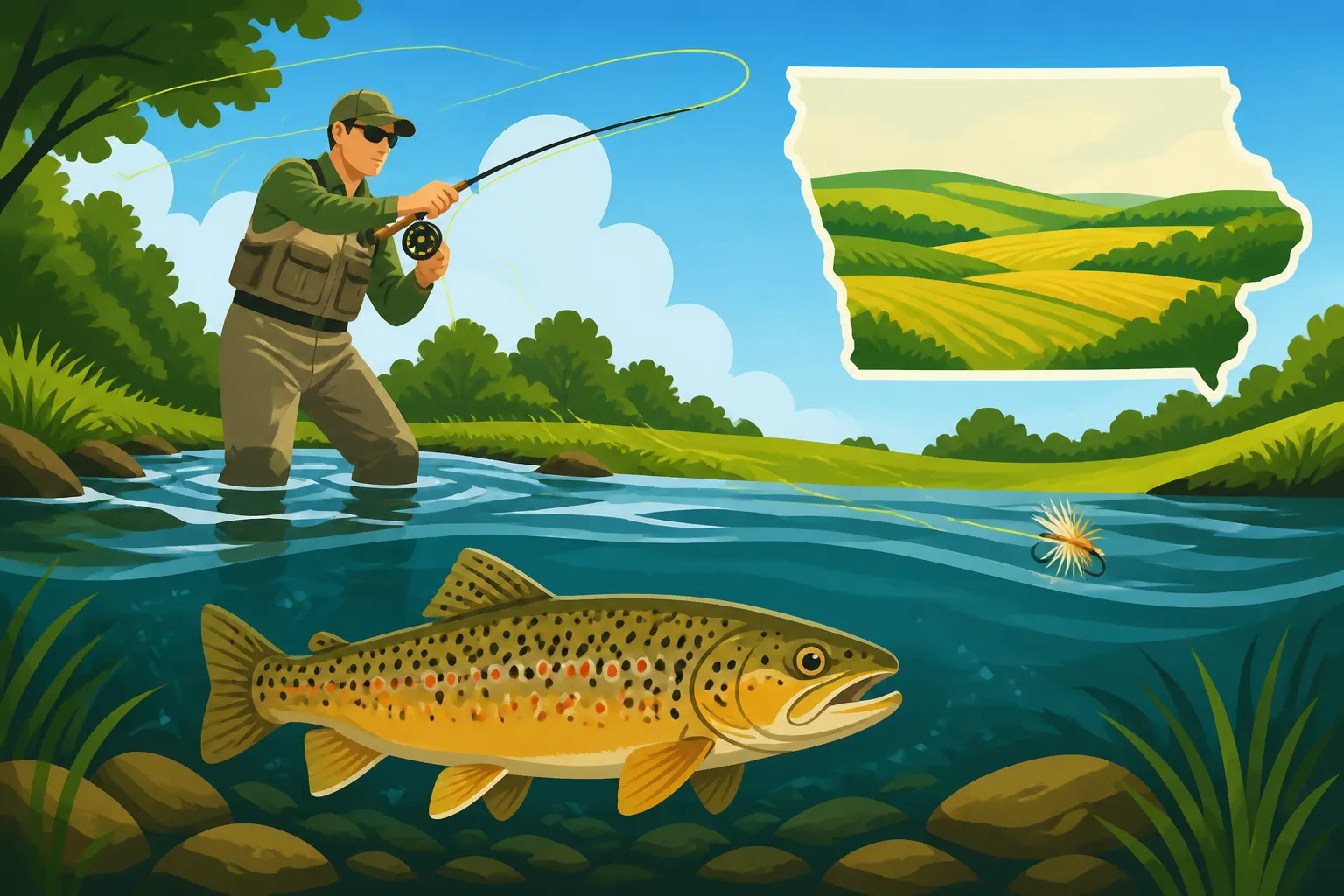
The thought of fly fishing often conjures images of wide-open Western rivers, but the reality for many Iowa anglers is much different: navigating the tight, tree-lined confines of our beautiful small trout streams. It can be incredibly frustrating to try and cast a long line when overhead branches are constantly snatching your fly, or to spook every fish before you even get a chance to present your offering. This comprehensive guide is here to help you conquer those challenges, giving you the practical knowledge and confidence to successfully fly fish for trout in Iowa's charming, yet sometimes tricky, small stream environments.
Understanding Iowa's Unique Small Trout Streams
Iowa might not be the first place that comes to mind when you think of trout fishing, but our state, especially the northeastern region, boasts a fantastic network of coldwater streams teeming with trout. These aren't your typical vast, open rivers; they are often narrow, winding ribbons of water, tucked away in verdant valleys, fed by cold groundwater springs that create perfect trout habitat. Understanding their specific characteristics and how the seasons affect them is the first step to becoming a successful small stream fly angler.
Unique Characteristics of Iowa Trout Waters
Iowa's trout streams are distinct. Unlike the broad, powerful rivers out west, our streams are typically much smaller, averaging just 10 to 30 feet wide, with some even narrower. This intimate setting means you're often fishing in very close quarters, sometimes needing to bushwhack your way through dense foliage to reach prime spots. The water itself is usually crystal clear, flowing over rocky bottoms, gravel beds, and sometimes silty stretches. The clarity is a double-edged sword: it allows for incredible sight-fishing opportunities but also means the fish have a better chance of seeing you if you're not careful. Many of these streams are nestled within private lands or state parks, offering diverse access points. You'll find a great resource on these locales in our guide to Trout Fishing Streams in Northeast Iowa. These coldwater havens are often spring-fed, keeping water temperatures stable even during hot summers, which is crucial for trout survival. Look for streams with a good mix of riffles, runs, and deeper pools, as this variety provides the varied habitat trout need for feeding, resting, and spawning.
The fish themselves are primarily stocked rainbow and brown trout, though you might encounter wild browns in some of the more secluded and naturally reproducing streams. Because of the stocking programs, the fish can sometimes be less wary than their wild counterparts, especially right after a fresh stocking. However, they quickly adapt and become more challenging to catch. The smaller size of these streams also means that currents can be quite complex, swirling around rocks, fallen logs, and undercut banks. Mastering how to achieve a drag-free drift in these chaotic micro-currents is an ongoing challenge, but incredibly rewarding when you finally fool a finicky trout. It's a truly immersive experience, demanding a different approach than what you might see in those glossy magazine photos of anglers in wide-open spaces.
Seasonal Considerations for Stream Trout
Just like any fishing, timing is everything when it comes to small stream trout in Iowa. While the streams are fishable year-round, each season brings its own set of challenges and opportunities. Spring, from April through June, is often considered prime time. As the weather warms and insect activity picks up, trout become very active, feeding heavily on emerging insects. This is when you'll see some of the best dry fly action, especially during prolific hatches. The Iowa Department of Natural Resources (DNR) also conducts frequent trout stockings throughout the spring, ensuring a healthy population.
Summer, from July through August, can be more challenging. While the spring-fed nature of Iowa's trout streams helps keep water temperatures cool, lower water levels and increased angling pressure can make fish more cautious. Early mornings and late evenings are often the most productive times. Terrestrial patterns, like grasshoppers or beetles, can be very effective as fish look for larger meals that accidentally fall into the water. Fall, especially September and October, offers another fantastic window. The foliage turns vibrant, crowds thin out, and brown trout become particularly aggressive as they prepare for their spawn. Stocking continues into the fall, and the cooler water temperatures mean active fish. Even winter, from December through March, can provide excellent opportunities for hardy anglers, particularly during mild spells or when targeting deeper, slower pools. Our guide on Iowa Trout Fishing Season Dates and Limits provides more specific details on open seasons and regulations.
Essential Gear for Small Stream Fly Fishing
Outfitting yourself for small stream fly fishing in Iowa doesn't require a fortune, but having the right tools for the job can make a world of difference. Forget the heavy 9-foot rods; small streams demand a more specialized, lightweight approach. From the rod in your hand to the flies in your box, choosing gear suited for tight spaces and cautious trout will elevate your experience from frustration to pure enjoyment.
The Right Rod, Reel, and Line Setup
For Iowa's smaller trout streams, a delicate touch is key. You'll want a shorter, lighter rod than what's typically used on larger rivers. A fly rod in the 6-foot to 7.5-foot range, with a weight of 2-weight to 4-weight, is ideal. This lighter setup allows for precise casting in tight quarters, protects lighter tippets, and makes even a modest 10-inch trout feel like a trophy. A 3-weight rod around 7 feet is a fantastic all-around choice for most of Iowa's streams. These shorter rods excel at roll casting and "bow and arrow" casts, which are indispensable when you have branches looming over you. If you're looking for more details on selecting the perfect rod, our Best Fly Rod Setup for Trout guide offers in-depth advice.
Pair your rod with a lightweight, single-action fly reel that balances the rod well. For these lighter line weights, the reel primarily serves as line storage rather than a drag system for fighting large fish, though a smooth drag is always a plus. Most importantly, load your reel with a weight-forward (WF) floating fly line matching your rod's weight. A WF line helps to load the rod quickly for short casts and turn over flies effectively. For leaders, start with a 7.5-foot or 9-foot tapered leader, typically in 4x or 5x, and attach a lighter tippet (5x or 6x fluorocarbon) for stealth and sensitivity. Fluorocarbon is less visible in clear water and sinks faster, which can be an advantage when nymphing. You can find a wide array of these specialized fly fishing tools and accessories on platforms like Amazon, making it easy to assemble your ideal setup.
Waders, Boots, and Streamside Essentials
Given the nature of Iowa's small streams, you're going to be getting wet. Quality waders and wading boots are non-negotiable for comfort, safety, and access. Breathable chest waders are generally preferred over hip waders because they offer more protection from deeper water and cold temperatures, and they allow you to access more of the stream efficiently. Combine these with sturdy wading boots that provide excellent ankle support and grip on slippery rocks. Felt soles offer superior traction on wet, mossy rocks, while rubber soles with aggressive lugs are better for muddy banks and can be studded for extra grip. We have a dedicated guide on Do You Need Waders for Iowa Trout Streams? that explores this topic further.
Beyond your primary attire, a few other stream-side essentials will make your trip smoother. A small, lightweight fishing vest or chest pack is perfect for carrying your fly boxes, tippet spools, nippers, hemostats (forceps), and a small bottle of floatant. A small, soft-mesh landing net is also crucial, especially if you plan on practicing catch and release. This minimizes stress on the fish and makes for easier, safer handling. When navigating rocky terrain, a wading staff can provide extra stability, preventing slips and falls that could ruin your day or injure you. Finally, always bring a water bottle and some snacks, as you might find yourself far from easy access points. Many of these practical items, from waders to nets, are readily available on Amazon, often with reviews from fellow anglers.
Fly Selection for Iowa's Small Streams
Choosing the right flies for Iowa's trout streams isn't about having a massive collection, but rather a thoughtful selection of patterns that imitate the local insect life. Trout in these streams are often opportunistic feeders, but they can also be incredibly selective, especially on heavily pressured waters. Your fly box should contain a good mix of dry flies, nymphs, and a few small streamers. For dry flies, think smaller sizes (16-22) that imitate common midges, caddis, and mayflies. Patterns like Parachute Adams, Elk Hair Caddis, and small Tricos are staples. Terrestrial patterns like tiny ant or beetle imitations can also be deadly, especially during summer and early fall when insects fall from streamside vegetation.
Nymphs are often the most consistent producers, as trout feed subsurface for the vast majority of their lives. Keep a variety of patterns that mimic larval and pupal stages of aquatic insects. Popular choices include Pheasant Tail Nymphs, Hare's Ear Nymphs, Prince Nymphs, and Caddis Larva patterns in sizes 14-20. Adding a few beaded versions will help them sink quickly in faster currents. Lastly, don't overlook small streamers (sizes 8-12), such as Woolly Buggers (black, olive, or brown) or muddler minnows. These can be particularly effective for enticing larger brown trout, especially in deeper pools or during periods of low light. Our guide on Best Fly Patterns for Iowa Trout Streams offers a more detailed breakdown. Remember, presenting the right fly naturally is often more important than the specific pattern itself, but a good selection gives you options when fish are being picky.
Mastering Techniques for Iowa's Trout
Fly fishing on small streams demands a unique skillset that prioritizes accuracy and subtlety over distance. Long casts are rarely needed, and often impossible. Instead, success hinges on precise presentations, drag-free drifts, and a stealthy approach that won't spook the ever-wary trout. Let's delve into the techniques that will make you a more effective small stream angler in Iowa.
Casting in Tight Quarters
The biggest challenge on many Iowa trout streams is simply getting your fly to the fish without tangling in overhead branches or streamside vegetation. Traditional overhead casting, while fundamental, often isn't practical. This is where specialized casts become your best friends. The roll cast is indispensable. It allows you to cast with minimal backcasting room, simply rolling the line forward off the water. Practice this cast until it's second nature; it will unlock countless fishing opportunities. To execute a roll cast, let your line dangle straight down from the rod tip, then raise the rod tip sharply to create a D-loop behind you, and finally, smoothly snap the rod forward. The momentum of the loop will carry your fly to the target.
Another crucial technique is the bow and arrow cast. This is perfect for extremely tight spots where even a roll cast isn't possible, or for very short, precise presentations under overhanging brush. To do this, grasp the fly by the bend of the hook with one hand, bending the rod tip back like a bow, and using the tension in the rod to propel the fly forward. Release the fly as you straighten the rod, guiding the cast to your target. Accuracy is paramount with both these casts. You're not aiming for distance, but rather for placing your fly exactly where you want it – often a small pocket of water just upstream of a likely hiding spot. Learning these casts takes practice, but the rewards are well worth the effort, allowing you to access fish that others might miss.
Presentation and Drift for Success
Once you can get your fly to the water, the next crucial step is ensuring a natural, drag-free drift. Trout in small, clear streams are incredibly attuned to unnatural movement. Any "drag" on your fly line, caused by conflicting currents pulling on different parts of the line, will immediately make your fly look artificial, sending trout scurrying. For dry flies, this means having your fly float downstream as if it's completely unattached to your line, exactly like a natural insect. To achieve this, use a technique called mending. As your fly drifts, watch your line. If you see it beginning to bow or pull the fly unnaturally, gently lift and reposition the upstream portion of your line to straighten it out, allowing the fly to continue its free float.
When nymphing, the principle of a drag-free drift is equally important, though often harder to detect. You'll often be fishing with an indicator (a small bobber-like device) or "tight-lining" without one. The key is to match the speed of your fly to the speed of the current at the depth where you expect the fish to be. This means careful line management, often involving frequent mends, especially in complex currents. Our guide to Nymphing Techniques for Iowa Trout Streams dives deeper into this effective method. Imagine your fly as a real insect drifting downstream; it shouldn't speed up, slow down, or veer off course unexpectedly. A perfect drift often requires multiple casts to a single spot, adjusting your line and presentation each time until you nail it.
Reading the Rise and Setting the Hook
Observing how trout feed can tell you a lot about what they're eating and how to present your fly. A "rise" is when a trout breaks the surface to eat an insect. Different types of rises can indicate different feeding behaviors. A subtle dimple might mean the fish is sipping tiny midges just below the surface film, requiring a very small dry fly and delicate presentation. A splashy rise could indicate the trout is aggressively chasing larger insects like caddis or even small terrestrials. Pay close attention to these signs. If you see fish rising, try to "match the hatch" by selecting a dry fly that mimics the size, shape, and color of the natural insects on the water.
Setting the hook is a quick, decisive action. When a trout takes your dry fly, you'll see the fly disappear or a flash of color. Resist the urge to yank the rod back aggressively, especially with light tippets. Instead, make a firm, upward twitch of the wrist, lifting the rod tip smoothly but quickly. This sets the hook without breaking your line. When nymphing, detecting a strike can be trickier, as it might just be a slight twitch of your indicator, a hesitation in its drift, or even just feeling a subtle "tick" through your line. This is where sensitivity and focus are critical. Any unnatural movement of your indicator or a sudden stop in its drift should prompt a hook set. It's often said, "if in doubt, set the hook!" Many small stream trout will spit the fly quickly, so a swift, controlled response is key to hooking and landing them.
Reading the Water and Finding Fish
Finding trout in small streams is less about blind casting and more about understanding where fish prefer to hold. Trout are creatures of habit and efficiency, always seeking out spots that provide food, cover, and a comfortable current. By learning to "read the water" and approaching strategically, you can significantly increase your chances of success.
Identifying Prime Holding Lies
Trout, especially in smaller streams, are always looking for the easiest meal with the least effort, and the best protection from predators. This means they congregate in specific types of water features. Riffles are shallow, turbulent sections where water tumbles over rocks, oxygenating the water and dislodging insects. Trout often sit just downstream of these, in the calmer water, waiting for food to drift by. Runs are deeper, faster sections of water that connect riffles to pools. Fish will often hold in the seam between the fast and slow water, again, waiting for food.
Pools are deeper, slower sections, often found on the outside bends of a stream or below a waterfall. These provide excellent holding areas, especially for larger trout, offering depth for security and a wide feeding lane. Look for undercut banks, where the current has eroded the soil beneath the bank, creating a cave-like sanctuary. These are prime hiding spots and feeding stations. Fallen logs, submerged rocks, and overhanging vegetation also create fantastic cover and current breaks. A trout will often position itself just in front of or behind a large obstruction, out of the main current, waiting for food to wash into its strike zone. If you can identify these features, you're well on your way to finding the fish.
Approach and Stealth on the Water
Even with the perfect fly and flawless cast, a careless approach will send every trout scattering. Small stream trout are incredibly wary, especially in clear Iowa waters. Your approach needs to be as subtle as possible. Before you even step into the water, take a moment to observe. Stand back from the bank and look for rises, flashes of fish, or interesting structure. Often, the biggest mistake anglers make is rushing into the stream, sending vibrations and shadows that alert fish to their presence.
When moving, go slowly and deliberately. If possible, stay out of the water and fish from the bank, using natural cover like trees and bushes to conceal your presence. If you must wade, shuffle your feet rather than stomping, and avoid kicking up silt, which can alarm fish downstream. Keep a low profile, especially if the sun is high and casting a long shadow. Wear neutral-colored clothing that blends into the natural environment. Think of yourself as a predator stalking prey; minimize noise, movement, and visibility. Always try to approach from downstream, casting upstream into the current. This allows your fly to drift naturally towards the fish before the line or leader become visible, and it minimizes the chance of fish seeing you or your shadow before you get a cast off. This cautious, respectful approach is not only effective for catching fish but also enhances the overall serenity and enjoyment of your small stream fly fishing experience.
Disclaimer
Fishing regulations, license requirements, and local conditions can change. Always check the latest Iowa Department of Natural Resources (DNR) regulations before heading out. This guide provides general information and should not be considered legal advice or a substitute for official DNR publications.