How to Nymph for Trout in Cold Water
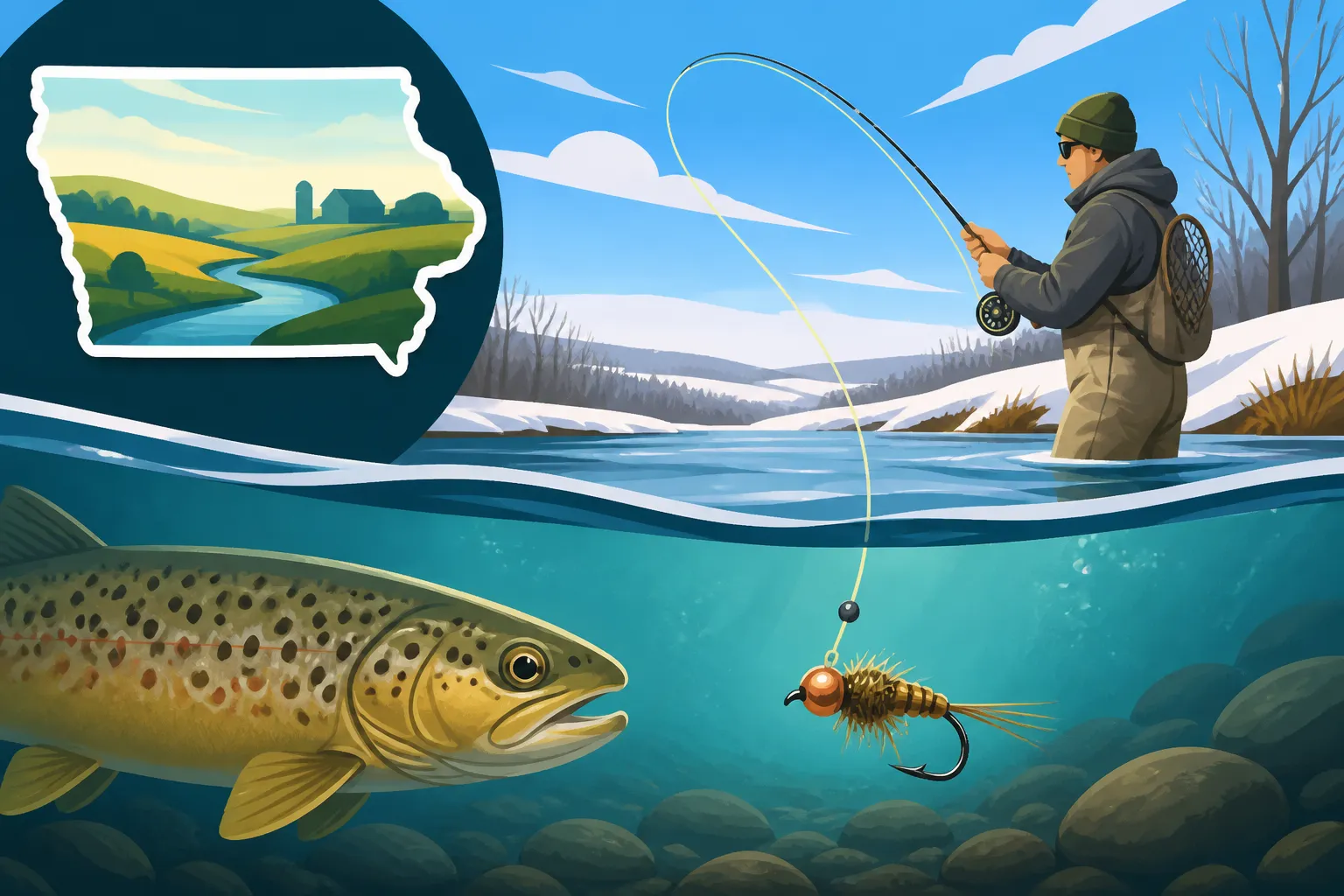
There’s nothing quite like the crisp air of an Iowa winter morning, the steam rising off a cold stream, and the promise of a beautiful trout. But let's be real, chasing trout in freezing temperatures can be incredibly frustrating. They become lethargic, hold tight to the bottom, and often ignore those flashy dries and streamers that worked so well in summer. This guide is here to walk you through the art of nymphing for trout in cold water, making those chilly days on the stream much more productive.
Understanding Cold Water Trout Behavior
When the mercury drops, trout don't just vanish; they adapt. Understanding their changed behavior is the first step to successfully nymphing for them. It’s not about finding the most aggressive fish, but rather anticipating where they’ll conserve energy and seek easy meals.
Why Trout Slow Down in Winter
Think about it: just like us, trout don't enjoy expending a ton of energy when it's cold. Their metabolism slows down significantly when water temperatures drop below 40-45 degrees Fahrenheit. This means they're less likely to chase a fast-moving fly or venture far from their comfort zones for a meal. Instead, they become much more selective and prefer their food delivered right to their nose. They'll often sit in predictable, slow-moving water, conserving every calorie. This is why aggressive retrieves or highly active presentations are often met with indifference. The key is to present an irresistible meal right in their holding lie, without making them work for it. This shift in behavior makes techniques like nymphing exceptionally effective, as you're imitating the slow, drifting insects that are still available.
Prime Cold Water Feeding Zones
During colder months, trout aren't spread out like they might be in spring or fall. They gravitate towards areas that offer three things: minimal current, protection from predators, and a consistent food supply. Look for deep pockets, slow runs behind large boulders, or the deepest parts of pools. These areas provide refuge from strong currents, allowing them to expend less energy, and often have stable water temperatures. Structure is also incredibly important. Submerged logs, undercut banks, and large rocks offer vital cover and act as current breaks, creating perfect holding lies. On many of the famous Trout Fishing Streams in Northeast Iowa, you'll notice these features clearly. Even seemingly insignificant changes in depth or current speed can create a prime cold-water lie. A subtle seam where faster water meets slower water can be a goldmine, as it delivers food without forcing the trout into a strong current.
Essential Nymphing Gear for Iowa's Winter
Getting your gear dialed in for cold water nymphing is crucial. It’s not just about what catches fish, but also what keeps you comfortable and allows for a precise presentation in less-than-ideal conditions.
Rods, Reels, and Lines for Cold Water Nymphing
When it comes to rods for cold water nymphing, a longer rod, typically between 9 to 10.5 feet, with a softer tip and a 3 to 5-weight rating, is often ideal. The extra length helps with line control, mending, and reaching those tricky seams without spooking fish. A softer tip is incredibly important for protecting light tippets and detecting those incredibly subtle takes that are common in cold water. You're not casting huge distances, so a fast-action cannon isn't necessary. Instead, precision and feel are paramount. For reels, a simple, reliable click-and-pawl or disc drag reel that balances your rod is all you need. The drag isn't as critical as it would be for larger, hard-fighting fish in open water, but smoothness is always a plus. As for lines, a weight-forward floating line that matches your rod is standard. Some anglers prefer a specialized nymphing line, which has a thinner diameter and less taper for improved sensitivity and roll casting. You can find a good selection of specialized fly lines on Amazon that can enhance your nymphing experience. For more detailed insights into setups, check out our guide on the Best Fly Rod Setup for Trout.
When choosing leaders, a longer, tapered leader (9-12 feet) helps with turnover and presentation. However, many dedicated nymphers go straight to a fluorocarbon leader or an indicator leader that has a colored butt section for better visibility. The most critical part of your setup will be your tippet. In cold water, trout can be extremely line-shy. Using fluorocarbon tippet in 5X, 6X, or even 7X is often necessary. Fluorocarbon is nearly invisible in water and sinks faster than monofilament, which is a huge advantage when you need your nymphs to get down quickly and naturally. Be prepared to scale down your tippet size as conditions get tougher.
Nymph Selection and Weighting
The adage "match the hatch" still applies in winter, but the hatches are much sparser. Instead, focus on nymphs that imitate common aquatic insects like midges, tiny mayflies, and small stoneflies that are always present in the water column. Good old Pheasant Tail Nymphs, Hare's Ear Nymphs, and Prince Nymphs in sizes #16 to #22 are always reliable. Don't overlook midge patterns like the Zebra Midge or tiny Brassies, especially on bright, clear days. These small, subtle patterns are often exactly what lethargic trout are looking for.
Weighting your nymphs correctly is paramount for cold water success. You need to get your fly down to the bottom where the trout are holding, and you need it to drift naturally with the current, not drag or swing too fast. This often means adding split shot. Start with one or two small split shots (B or BB size) placed 6-12 inches above your lead nymph. Adjust as needed; if you're not ticking the bottom occasionally, add more weight. If you're constantly snagging, reduce it. Tungsten-bead nymphs are incredibly effective because tungsten is much denser than lead, allowing for smaller, heavier flies that sink quickly without adding bulk. Often, I'll run a two-nymph rig: a heavier "anchor" nymph like a heavily weighted Stonefly or caddis larva to get depth, and a smaller, unweighted or lightly weighted midge or mayfly pattern trailed off it. This allows for excellent depth control while presenting a subtle second option.
Here’s a quick guide to some go-to cold water nymphs:
| Nymph Pattern | Common Sizes | Preferred Colors | Notes |
|---|---|---|---|
| Zebra Midge | #18 – #22 | Black, Red, Olive | Excellent for clear water, year-round; often fished as a dropper. |
| Pheasant Tail Nymph | #16 – #20 | Natural, Olive, Black | Versatile mayfly imitation, a true classic. |
| Hare's Ear Nymph | #14 – #18 | Natural, Tan, Olive | Imitates a wide range of aquatic insects, very buggy. |
| Prince Nymph | #14 – #18 | Black, Brown | Attractor pattern, great for colder, slightly off-color water. |
| Copper John | #14 – #18 | Copper, Red, Chartreuse | Heavily weighted, sinks fast, good lead fly for two-nymph rigs. |
| Stonefly Nymph | #10 – #14 | Black, Brown, Olive | Larger profile, often used as an anchor or for larger trout in faster runs. |
For more patterns and rigging ideas, check out our piece on Nymphing Techniques for Iowa Trout Streams and Best Fly Patterns for Iowa Trout Streams.
Mastering Cold Water Nymphing Techniques
Nymphing in cold water isn't about brute force; it's about finesse, patience, and precise presentations. The subtle takes and slow movements of the fish demand your full attention.
Reading the Water and Presentation
Reading the water in winter is slightly different than in other seasons. As we discussed, trout are in slower, deeper water. Look for those dark, quiet seams, the tailouts of deep pools, and especially the water directly behind large current breaks like submerged rocks or logs. These are the fish's winter homes. Once you've identified a promising spot, your goal is to present your nymph so it drifts naturally, just above the bottom, for as long as possible. This is called a "dead drift."
To achieve a dead drift, cast slightly upstream of your target area and immediately begin mending your line. Mending involves flipping a loop of line upstream to keep slack out of your leader and allow your fly to drift at the same speed as the current, preventing drag. This is where that longer rod really shines. Keep your rod tip high, pointing directly at your indicator, and try to keep as little line as possible on the water. The less line on the water, the less susceptible it is to conflicting currents that will pull your fly unnaturally. Imagine your fly is a real insect drifting downstream; it shouldn't be accelerating or decelerating unnaturally. This perfect drift is crucial because cold, lethargic trout aren't going to move much for a fly that isn't acting precisely like their natural food. If you're getting no bites, even in prime lies, your drift is likely the problem.
Detecting Subtle Bites
This is arguably the most challenging and rewarding part of cold water nymphing. Gone are the aggressive tugs of summer. In winter, a trout's take can be incredibly subtle – sometimes just a slight hesitation of your indicator, a tiny dip, or even just your line twitching unnaturally. Your indicator, whether it's a yarn indicator, a small foam bobber, or even just a brightly colored section of leader (known as a sighter), is your window into what's happening subsurface. Keep your eyes glued to it.
Any abnormal movement, however slight, warrants a hookset. Don't think, just react. If your indicator stops, twitches, moves sideways, or dips under even slightly, set the hook with a quick, upward sweep of your rod. It’s better to set the hook on a rock or a twig than to miss a fish. Many times, the trout will simply open its mouth, allow the nymph to drift in, and then gently close its mouth without any discernible pull. That small stoppage or sideways movement of your indicator is often the only sign. Practice makes perfect here. The more you watch your indicator and set the hook, the more you'll develop a feel for those phantom bites. Remember to fish with a tight line as much as possible, as this transmits those subtle takes more effectively.
Setting the Hook and Fighting Fish
Once you detect that subtle take, a quick, firm, upward sweep of the rod is all it takes to set the hook. Avoid a violent strip set, as this often results in breaking light tippets. With a good hookset, you'll feel the weight of the fish. In cold water, trout often don't put up a huge fight initially; they might feel like a dead weight. However, they can still make powerful runs when they feel the hook.
During the fight, keep your rod tip high to maintain tension and absorb head shakes. Try to guide the fish into slower water downstream of you if possible, which makes landing them much easier. Be gentle, especially when bringing them in. The cold water combined with the stress of the fight can take a toll on trout. Use a soft, knotless net, and handle them minimally if you intend to release them. Getting them back into the water quickly and allowing them to recover fully is essential for their survival. Remember, proper handling is a critical part of ethical angling, especially for species in sensitive environments, which is often a focus of Iowa Fishing Regulations Explained.
Common Challenges and Troubleshooting
Even with the right gear and techniques, cold water nymphing presents unique challenges. Being prepared for these can make or break your day on the stream.
Dealing with Ice and Frozen Guides
One of the most annoying aspects of winter fishing is dealing with ice. Your rod guides can freeze solid, preventing your line from passing through smoothly. Your fly line itself can become stiff and coated in ice, making casting and mending a nightmare.
There are a few ways to combat this. Before you even get to the stream, apply a thin layer of lip balm or a specialized guide lubricant (available on Amazon) to your rod guides. This creates a barrier that slows down ice formation. During your fishing session, regularly dip your rod tip into the water to de-ice the guides. A quick, forceful flick of the rod can also dislodge ice. Some anglers carry a small thermos of warm water to periodically dunk their rod tip, but be careful not to thermal shock your rod. When your line gets stiff, try to work it back and forth through your guides to break up the ice. You can also coat your line with a silicone-based line dressing to keep it supple and reduce ice buildup. Keeping warm gloves or mitts on when not actively casting can help, too, ensuring your hands don't freeze while you're trying to clear a frozen guide.
Adjusting to Changing Conditions
Iowa's winter weather can be fickle. A sunny, relatively mild day can quickly turn into a cloudy, blustery ordeal, and vice-versa. These changes directly impact trout behavior.
On brighter, sunnier days, trout might become even more skittish, and you'll likely need to downsize your tippet even further, perhaps to 7X, and use smaller, more natural nymph patterns. They might also move into slightly shallower water that's warmed by the sun. On cloudy days, trout can be a bit bolder, and you might get away with slightly larger patterns or a 5X tippet. Water clarity is another big factor. After a snowmelt or heavy rain, the water might become a bit off-color. In these situations, slightly larger, darker, or flashier nymphs can sometimes be more effective, as they offer better visibility. Don't be afraid to experiment with a "hot spot" nymph, which incorporates a touch of bright color like orange or chartreuse. Always pay attention to water levels and temperature throughout the day. A slight bump in water temperature, even a degree or two, can trigger a noticeable increase in feeding activity. This kind of adaptability is what separates a good cold-water angler from a great one. Don't forget, knowing when the Iowa Trout Stocking Strategy happens can also give you an edge, as recently stocked fish can sometimes be less wary.
Disclaimer
Please note that fishing regulations can change. Always consult the latest Iowa Department of Natural Resources (DNR) regulations before heading out. This guide is for informational purposes and should not be considered a substitute for official regulations.