Best Ice Fishing Auger Types
There's nothing quite like the crisp air and the anticipation of a tug on the line while ice fishing in Iowa. But before you can even drop a lure, you've got to get through that thick layer of ice, and that's where the humble ice auger becomes your best friend. Choosing the right one can make the difference between a frustrating, back-breaking start to your day and a smooth, effortless experience, letting you focus on the fish. This guide will walk you through the various types of ice fishing augers available, helping you understand their pros, cons, and what might be the perfect fit for your Iowa ice fishing adventures.
Understanding Ice Fishing Augers: Why the Right Tool Matters
For many, ice fishing is a cherished winter tradition, a chance to escape the everyday and connect with nature, often in the company of good friends and family. But that beautiful sheet of ice covering your favorite lake or pond isn't just a picturesque backdrop; it's a significant barrier. Cutting through it with the wrong tool, or a poorly maintained one, can quickly sour the whole experience. That's why understanding the different types of ice augers and how they operate is crucial for any serious Iowa angler. It's not just about making a hole; it's about making the right hole, efficiently and safely.
The Core Function of an Ice Auger
At its heart, an ice auger is a tool designed to bore a circular hole through frozen water. Think of it like a giant drill bit, specifically engineered to cut through ice rather than wood or metal. The fundamental components typically include a cutting head (the blades or chipper), a shaft that extends down into the ice, and a power source or handle to turn it. The diameter of the hole, usually ranging from 4 to 10 inches, is critical; a smaller hole might be easier to cut but limits the size of fish you can bring up, while a larger hole requires more effort but offers more flexibility. The science behind it involves shearing and chipping the ice, often with sharp, angled blades that spiral the ice chips upwards and out of the way as the auger descends.
Different designs, materials, and power sources have evolved over the years, each aiming to improve efficiency, reduce effort, and enhance the overall ice fishing experience. From the simplest hand-cranked models to powerful electric units, they all share that singular purpose: getting you to the water below the ice. Without a reliable auger, your ice fishing trip might end before it even begins, leaving you staring at an unbroken expanse of ice while other anglers are already pulling in their catch.
Factors Influencing Your Auger Choice in Iowa
Iowa's winters can be fickle, offering a wide range of ice conditions. Some seasons might see consistently thick, hard ice, while others might present thinner, softer layers, or even layers with significant snowmelt refrozen on top. These varying conditions directly impact what type of auger will serve you best. For instance, if you're primarily fishing early or late ice when it's not super thick, a lighter, less powerful option might be perfectly adequate. However, if you're venturing out in the dead of January when the ice can be well over a foot or two thick on lakes like West Okoboji, you'll appreciate the extra power a motor-driven auger provides.
Beyond ice thickness, your personal fishing style plays a huge role. Are you a minimalist, hiking miles across the frozen landscape with just a bucket and a rod, seeking out solitude? Then portability and minimal gear might be paramount. Or are you a mobile angler, constantly drilling new holes to find those elusive Walleye Fishing in Iowa or Crappie Fishing in Iowa schools, covering a large area? In that case, speed and efficiency will be key. Your budget, physical strength, and even environmental considerations (like noise and emissions) will also steer you towards one type of auger over another. There's no one-size-fits-all answer, which is why exploring each type in detail is so important.
Manual Ice Augers: Simple, Reliable, and Cost-Effective
Before the advent of motors, anglers relied solely on their own strength and ingenuity to cut through the ice. Manual augers embody this tradition, offering a straightforward, dependable, and often more affordable way to prepare your fishing spot. They might require a bit more elbow grease, but for many, they represent the authentic ice fishing experience.
Hand Augers: The Original Way Through the Ice
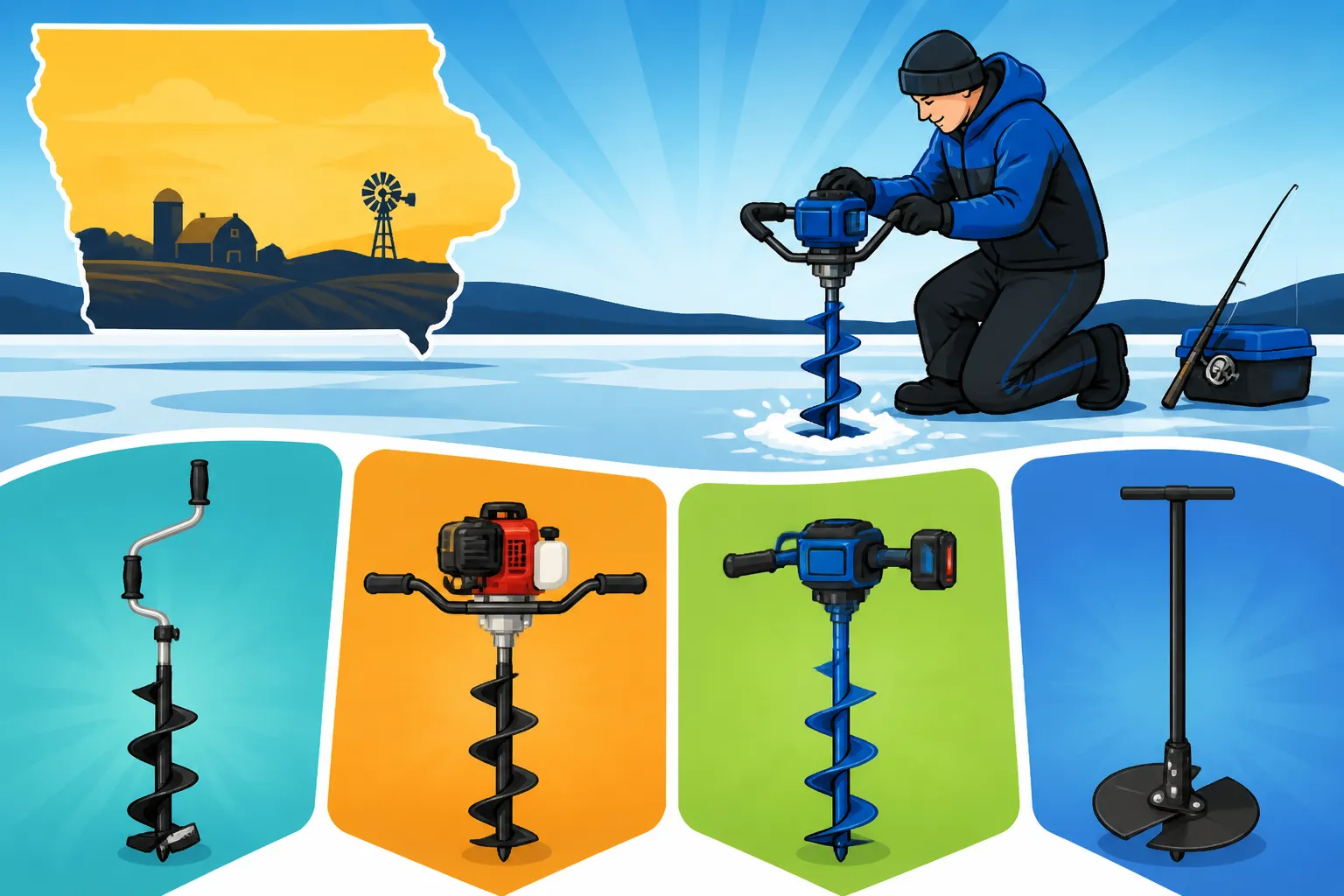
Hand augers are the most basic type, consisting of a cutting head, a long shaft, and a handle that you turn manually. You use your body weight to push down while simultaneously rotating the handle, letting the sharp blades slice through the ice. They typically come in smaller diameters, usually 4-8 inches, which makes them easier to turn by hand. These augers are incredibly lightweight and portable, breaking down into two or three pieces for easy transport in a sled or backpack. They are quiet, emit no fumes, and require no fuel or batteries, making them an eco-friendly and low-maintenance option.
For anglers who prefer to stay on the move, walking from spot to spot on smaller lakes or ponds, a hand auger is an excellent companion. They are also ideal for those new to ice fishing who don't want to invest heavily in equipment right away. While they demand more physical effort, especially in thick ice, the satisfaction of cutting your own hole with nothing but your strength is a reward in itself. Plus, they offer a great workout! Many seasoned anglers still keep a hand auger as a backup or for quick scouting holes, even if they primarily use a power auger.
Pros and Cons for the Iowa Angler
Let's look at the ups and downs of using a hand auger, especially with Iowa's varied ice fishing scene in mind.
Pros:
- Affordability: Hand augers are significantly cheaper than their motorized counterparts, making them a great entry-level option or for those on a tight budget.
- Portability: They are very lightweight and often collapse, making them easy to carry long distances across the ice, especially for minimalist anglers who walk to their spots.
- Reliability: With no moving parts beyond the shaft and blades, there's very little that can go wrong. No engine to fail, no battery to die.
- Quiet Operation: They produce no noise, which means you won't spook fish and can enjoy the serene quiet of the winter landscape. This can be a huge advantage when fishing for finicky species.
- No Fuel/Battery Concerns: You don't need to worry about carrying gas, oil, or charging batteries. Just grab it and go.
- Good for Thinner Ice: They work efficiently on ice up to about 12-18 inches, which is common during early and late ice periods or on smaller, shallower ponds.
Cons:
- Physical Exertion: Cutting multiple holes, especially in thick ice (18+ inches), can be tiring and time-consuming. This can limit how many holes you're willing to drill in a day.
- Slower Drilling: It simply takes longer to cut a hole manually compared to a power auger. This can be frustrating when fish are actively moving and you need to drill many holes quickly to find them.
- Limited Diameter: Most hand augers max out at 8 inches in diameter. While sufficient for panfish and smaller walleye, it might be restrictive if you're targeting larger fish like Muskie Fishing in Iowa or bigger catfish.
- Not Ideal for Very Thick Ice: When Iowa's larger lakes like the Fishing the Iowa Great Lakes get very thick ice in mid-winter, a hand auger can be a real struggle, potentially taking several minutes or more per hole.
- Wear and Tear on Blades: Dull blades on a hand auger are immediately noticeable and make drilling incredibly difficult, requiring frequent sharpening or replacement.
For those venturing out for a casual day, especially on smaller bodies of water like community ponds or less-frequented lakes where you don't need to drill many holes, a good hand auger is more than sufficient. You can find quality options at Bass Pro Shops or online at Amazon that will serve you well for years.
Power Augers: The Evolution of Ice Drilling
As ice fishing grew in popularity and technology advanced, anglers sought ways to make drilling holes faster and less physically demanding. Enter the power auger, a game-changer that brought motorized efficiency to the ice. These machines have revolutionized how many anglers approach ice fishing, allowing them to drill more holes, cover more ground, and fish more comfortably.
Gas-Powered Augers: Raw Power for Thick Ice
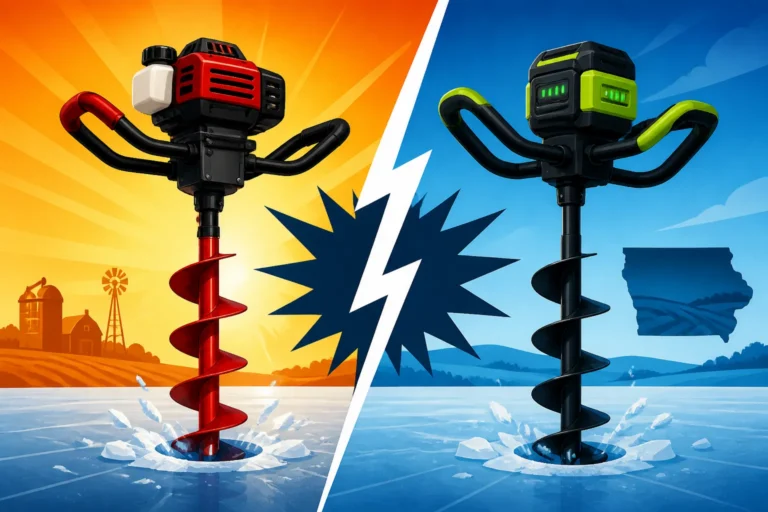
Gas-powered augers were among the first motorized options, and they remain a popular choice, especially for those who demand raw power and reliability in challenging conditions. These augers feature a small gasoline engine, typically a two-stroke or four-stroke, which drives the auger bit. They are known for their ability to chew through even the thickest ice quickly and with minimal effort from the angler. Diameters usually range from 6 to 10 inches, making them versatile for various species.
The power of a gas auger is undeniable. They are workhorses, built to withstand harsh winter conditions and drill hole after hole without faltering, provided they are properly maintained. This makes them ideal for anglers who spend a lot of time on large lakes with consistently thick ice, or those who frequently move and drill many holes throughout the day. However, that power comes with certain trade-offs, which we'll explore. Proper cold-weather starting techniques and fuel mixtures are essential for smooth operation, especially on those frigid Iowa mornings.
Propane-Powered Augers: Cleaner Burn, Consistent Performance
Propane augers emerged as a response to some of the drawbacks of gasoline engines. Instead of gasoline, they run on small, disposable propane cylinders (like those used for camping stoves) or refillable larger tanks. The key advantage here is a cleaner burn – propane engines produce fewer emissions and significantly less odor than gas engines, which is a major plus, especially if you're fishing in an enclosed ice shelter. They also tend to start more reliably in cold weather since there's no carburetor to flood or choke to manage in the same way.
While they might not always offer the absolute peak power of some gas models, propane augers still provide ample strength to cut through thick ice quickly and efficiently. Their consistent performance and cleaner operation have made them a favorite among anglers who value convenience and a more pleasant experience. You'll often see these being used by anglers who appreciate not having to deal with messy gasoline spills or the lingering smell of exhaust on their gear. The ready availability of propane cylinders at many bait shops and hardware stores also adds to their appeal.
Electric-Powered Augers: The Rise of Battery Power
The newest and rapidly growing segment of the power auger market is the electric auger. Leveraging advancements in battery technology, these augers are powered by rechargeable lithium-ion batteries. They combine many of the benefits of both hand and propane augers while adding their own unique advantages. Electric augers are incredibly quiet, producing almost no noise beyond the blades cutting through the ice. They are also completely emission-free, making them perfect for use inside portable or permanent ice shelters without ventilation concerns.
Electric augers are also very easy to start – usually just a push of a button. They offer respectable power, capable of drilling dozens of holes on a single charge, depending on ice thickness and battery capacity. Their lighter weight compared to gas augers also makes them more portable. The main considerations are battery life, which can be affected by extreme cold, and the need to remember to charge them. Many come with multiple batteries or options for larger capacity packs. Brands like Strikemaster and Ion, often found at Bass Pro Shops, have really led the charge in this category, offering powerful and dependable electric augers that are changing the game for many Iowa anglers. The convenience of simply charging and going, without the need for fuel, has made them extremely popular for quick trips or for anglers who prefer a hassle-free experience.
| Auger Type | Power Source | Pros | Cons | Ideal For |
|---|---|---|---|---|
| Hand Auger | Manual / Arm Power | Lightweight, portable, inexpensive, quiet, no fuel/battery, reliable. | Requires physical effort, slower drilling, not ideal for very thick ice or many holes. | Minimalist anglers, thinner ice, occasional use, budget-conscious. |
| Gas Auger | Gasoline Engine | Very powerful, fast drilling, handles thick ice easily, robust. | Noisy, smoky, heavy, requires fuel mixing/storage, harder to start in extreme cold, more maintenance. | Anglers needing maximum power, thick ice, drilling many holes, larger diameters. |
| Propane Auger | Propane Cylinder | Cleaner burn, less odor, reliable cold starts, good power, less maintenance than gas. | Cylinders can be costly/run out, slightly less power than some gas, still produces some noise. | Anglers wanting clean operation, reliable starts, good power, enclosed shelters. |
| Electric Auger | Rechargeable Battery | Quiet, no emissions/odor, easy start, lightweight, good power, low maintenance. | Battery life limited by cold/usage, requires charging, initial cost can be higher, less power than gas. | Mobile anglers, enclosed shelters, mid-thickness ice, convenience, eco-conscious. |
Key Considerations When Choosing an Ice Auger for Iowa
Selecting the best ice auger isn't just about picking a type; it's about matching the tool to your specific needs and the conditions you'll face. Iowa's diverse fishing opportunities, from the deep glacial lakes to the smaller farm ponds and flowing rivers, mean that one auger might be perfect for one scenario but less ideal for another.
Ice Thickness and Your Fishing Habits
The average ice thickness you expect to encounter is arguably the most crucial factor in your decision. Early and late in the season, when the ice might only be 6-12 inches thick, even a hand auger can perform quite well. However, during the peak of winter, especially on larger, deeper lakes, ice can easily reach 18-30 inches or more. Trying to cut through 2 feet of ice with a hand auger multiple times will quickly exhaust you and potentially cut your fishing trip short. For consistently thick ice, a power auger (gas, propane, or electric) becomes almost a necessity.
Consider also how many holes you typically drill in a day. Are you a "sit and wait" angler who drills one or two holes and stays put? Or are you a "run and gun" angler who drills a dozen or more holes, constantly moving to find active fish? If you're the latter, the speed and ease of a power auger will be invaluable. The time saved drilling allows more time for actual fishing. Think about your target species too; if you're after Trophy Walleye Size in Iowa or Trophy Muskie Size in Iowa, you'll likely need a wider hole than if you're focused on Bluegill Fishing in Iowa or crappie. This directly impacts the auger's diameter.
Weight, Portability, and Ease of Use
When you're out on the ice, every pound you carry matters, especially if you're walking a considerable distance or towing a sled by hand. Hand augers, being the lightest, win hands-down in the portability department. Electric augers are a close second, offering a good balance of power and manageable weight. Gas and propane augers, with their engines and fuel tanks, are significantly heavier and can be cumbersome to haul, particularly over uneven snow or slush.
Ease of use encompasses several aspects. How quickly can you set up and start the auger? Electric augers are usually instant-on, while gas and propane might require priming, choking, and a few pulls of a cord, especially in the cold. How easy is it to transport? Many augers break down into two pieces, making them fit better in vehicles or sleds. Consider the physical demands as well. If you have any physical limitations or simply prefer to conserve your energy for reeling in fish, a power auger will be a much more "easy to use" option compared to the manual effort of a hand auger.
Blade Types and Maintenance
The blades are where the rubber (or rather, the steel) meets the ice. There are generally two main types:
- Chipper Blades: These are common on many older or less expensive augers. They "chip" away at the ice, typically with a single, wide blade or several smaller, fixed blades. They are robust and can handle dirty ice (ice with embedded sand or gravel) better without dulling immediately, but they cut slower.
- Shaving Blades: Found on most modern augers, especially higher-end models, these blades are designed to "shave" thin layers of ice. They are incredibly sharp and cut through ice very quickly and smoothly. However, they are more susceptible to dulling if they hit anything other than clean ice (like the bottom of a shallow pond or a stray rock).
Regardless of the type, sharp blades are absolutely crucial for efficient drilling. Dull blades will turn any auger into a frustrating workout. Regular inspection and maintenance are key. Blades can be sharpened by a professional or replaced entirely. Carrying a spare set of blades, especially for shaving-style augers, is always a good idea, as a damaged blade can end your fishing day prematurely. You can often find replacement blades at local tackle shops or through online retailers like Amazon. Remember, even the most powerful engine is useless if the blades can't cut. Regular care, like wiping blades dry after each use to prevent rust, will significantly extend their lifespan.
Maintaining Your Ice Auger for Longevity
Just like any piece of outdoor equipment, your ice auger will perform best and last longest with proper care and maintenance. Neglecting it can lead to frustrating breakdowns on the ice and costly repairs. Taking a little time after each trip and before storage can save you a lot of headaches.
Blade Care and Replacement
The blades are the business end of your auger, and their condition directly impacts drilling performance. After each fishing trip, it's essential to wipe your blades thoroughly with a dry cloth to prevent rust. Ice and water, especially if mixed with road salt from transportation, can cause corrosion surprisingly quickly. If you have chipper blades, inspect them for any nicks or bends. Shaving blades are more delicate; check for dull spots, chips, or bent edges.
If your blades become dull or damaged, you have a couple of options:
- Sharpening: Some blade types, especially chipper blades, can be professionally sharpened. Attempting to sharpen them yourself without proper tools and expertise can be dangerous and may actually ruin the precise cutting angle.
- Replacement: For most shaving blades, replacement is the best option. Keep a spare set on hand. Changing blades is usually a straightforward process, often involving just a few screws. Always use caution when handling sharp blades, and consider wearing gloves. A fresh set of sharp blades will make your auger feel brand new, effortlessly slicing through the ice. When buying new blades, ensure they are the correct model and size for your specific auger. Websites like Amazon or specialized outdoor retailers like Bass Pro Shops usually stock a wide range of replacement blades.
Proper storage is also vital. Always use a blade guard when transporting or storing your auger. This protects both the blades from damage and you from accidental cuts. Store your auger in a dry place, ideally upright, to keep the blades from resting on anything that could dull or damage them.
Engine Maintenance (Gas/Propane) and Battery Care (Electric)
Each type of power auger has its own maintenance requirements that are critical for reliable performance, especially in the cold.
Gas-Powered Augers:
- Fuel Management: Always use fresh, high-octane gasoline mixed with the correct two-stroke oil ratio (if it's a two-stroke engine). Old fuel can gum up the carburetor and cause hard starting or engine failure. For longer storage, drain the fuel tank or use a fuel stabilizer.
- Spark Plug: Inspect and clean or replace the spark plug annually. A fouled or worn spark plug can lead to misfires and poor performance.
- Air Filter: Clean or replace the air filter regularly, especially if operating in dusty or snowy conditions, to ensure proper air intake.
- Carburetor Care: If your auger sits for a long time, the carburetor may need cleaning. This is often best left to a small engine mechanic.
- Winter Storage: Before storing for the off-season, drain the fuel system completely or run the engine dry with fuel stabilizer. Remove the spark plug and add a small amount of engine oil into the cylinder, then pull the rope a few times to distribute it before replacing the plug.
Propane-Powered Augers:
- Propane Cylinders: Always ensure your propane cylinders are stored and handled safely. Disconnect them when transporting or storing the auger.
- Hoses and Connections: Periodically check the propane hose and connections for any signs of wear, cracks, or leaks. Replace if damaged.
- Air Filter/Spark Plug: Like gas engines, propane augers often have a spark plug and sometimes an air filter that need occasional inspection and cleaning/replacement.
- General Cleanliness: Keep the engine clean and free of debris.
Electric-Powered Augers:
- Battery Charging: Always follow the manufacturer's instructions for charging your lithium-ion batteries. Avoid overcharging or completely draining them. Charge them at room temperature, not in extreme cold.
- Battery Storage: For long-term storage, charge batteries to about 50-75% capacity and store them in a cool, dry place at room temperature. Extreme cold or heat can degrade battery performance and lifespan.
- Contacts: Keep the battery contacts and the auger's battery port clean and free of corrosion or debris.
- Motor Housing: Keep the electric motor housing clean and dry. Avoid submerging it in water.
- Charging Cables: Inspect charging cables for frays or damage regularly.
Regardless of your auger type, a little preventative maintenance goes a long way. This ensures that when the ice is thick and the fish are biting, your auger is ready to go, making your Iowa ice fishing experience enjoyable and productive. After all, the last thing you want is a mechanical issue to cut short a perfect day on the ice. When considering a power auger, remember to also read about Ice Fishing Gear Basics for Beginners and Ice Fishing Safety on Iowa Lakes to ensure you're fully prepared for the frozen water.
Disclaimer
This article is for general informational purposes only and does not constitute professional advice. Laws, prices and regulations vary by location and change over time. Consult a qualified professional for guidance on your specific situation.