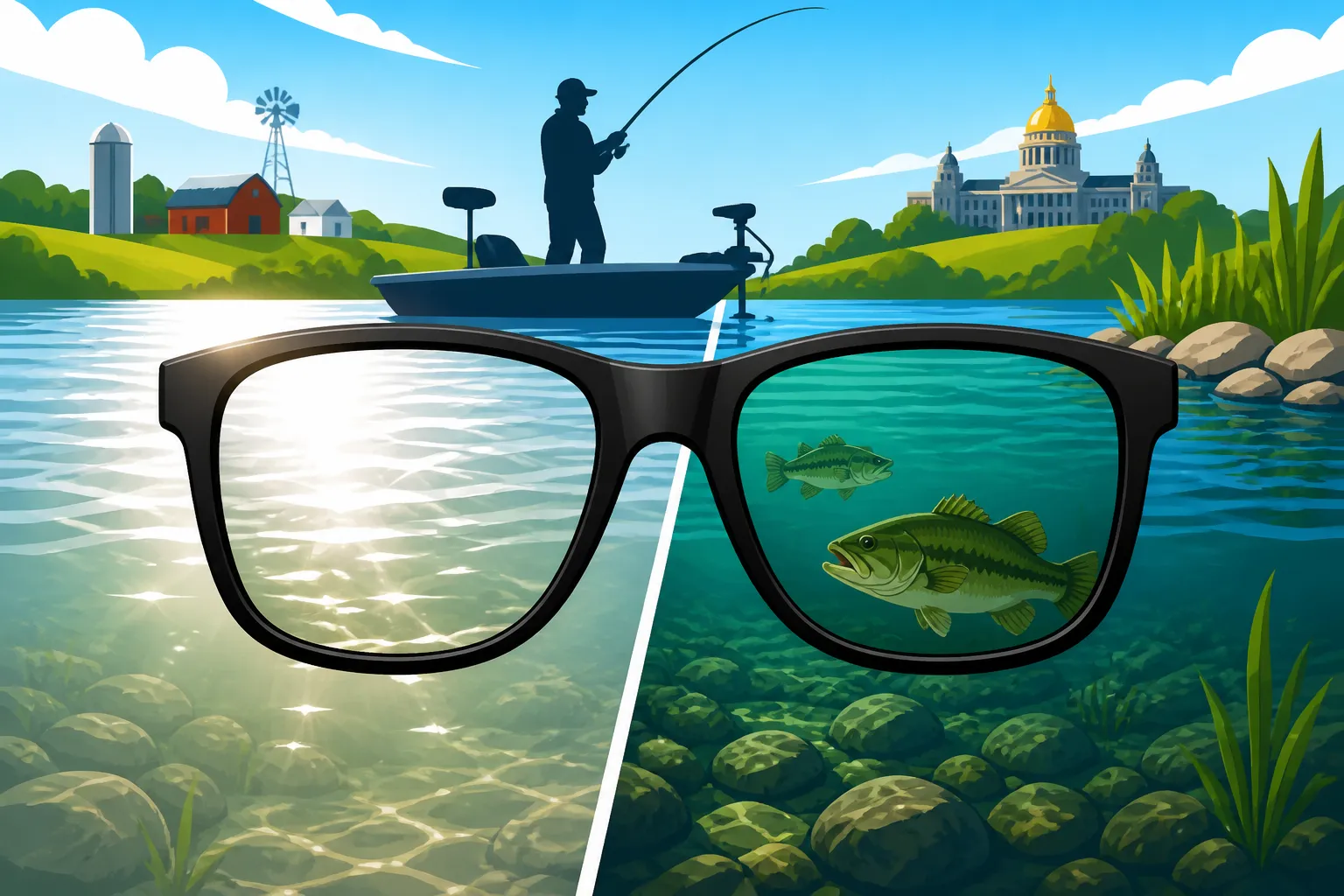
Do Polarized Sunglasses Really Help You See Fish?
If you've ever spent a beautiful Iowa morning out on the lake or river, eagerly scanning the water for signs of fish or submerged structure, only to be blinded by a harsh, shimmering glare, you know the frustration. That bright reflection off the water's surface can turn a promising fishing trip into a constant squinting match, making it nearly impossible to see what's happening beneath the waves. This comprehensive guide will explore whether polarized sunglasses truly live up to their hype for anglers and how they can significantly enhance your vision and success on the water.
The Science Behind Polarized Lenses and Water
Before we dive into what you can see, let's understand why those special lenses work their magic. It’s not just about making things a little darker; there's a specific scientific principle at play that makes polarized sunglasses an angler's best friend.
How Glare Works on Water
Imagine sunlight hitting the surface of a lake. When light waves from the sun hit a flat, reflective surface like water, they scatter in all directions. However, a significant portion of that light gets horizontally polarized, meaning the light waves vibrate mostly on a horizontal plane. This horizontally vibrating light is what we perceive as blinding glare. It's that intense, bright sheen that washes out colors and makes it impossible to see through the surface.
Think about driving on a wet road after a rain shower – the reflections off the puddles can be dazzling. Or looking at a glossy magazine cover and having the overhead lights bounce right back into your eyes. That's horizontal glare at its finest. On the water, this glare isn't just annoying; it actively obscures your view, creating a literal barrier between your eyes and the underwater world. It hides fish cruising just below the surface, conceals subtle ripples that might indicate a feeding frenzy, and makes it impossible to locate crucial underwater structure where fish might be hiding.
How Polarization Eliminates Glare
This is where the magic of polarized lenses comes in. Polarized sunglasses contain a special filter that's designed to block this horizontal light. Think of it like a microscopic Venetian blind, but instead of blocking all light, it's specifically oriented to only block those horizontally vibrating light waves. Vertical light waves, which carry information about color and depth from under the water, are allowed to pass through the filter and reach your eyes.
The result? The blinding glare is dramatically reduced or eliminated, allowing you to see past the surface reflections and into the water itself. It's like flipping a switch. Suddenly, the shimmering silver sheet transforms into a transparent window, revealing the hidden world below. This isn't just about dimming the light; it's about selectively filtering out the problematic glare, providing clarity and detail that non-polarized lenses simply cannot offer. For anyone serious about Iowa Fishing Techniques Guide, this is a game-changer.
Beyond Glare Reduction: What You Can Actually See
So, we know polarized lenses cut glare, but what does that really mean for your fishing experience when you're out on an Iowa lake or river? It’s about unlocking a whole new level of visual information.
Seeing Beneath the Surface
With polarized sunglasses, you're not just guessing what's under the water; you can actively see it. This newfound clarity allows you to spot submerged structure like fallen logs, rock piles, weed beds, and even subtle changes in the bottom contour. Imagine floating along the banks of Rathbun Lake, and instead of just seeing the reflection of the sky, you can pick out the dark shadows of a brush pile where crappie are likely congregating. This ability to identify cover directly impacts where you cast your lure and how you retrieve it.
But it’s not just about structure. You can also spot the fish themselves! Whether it's a school of bluegill darting in shallow water, a dark walleye hugging the bottom near a drop-off, or a bass patrolling the edge of a lily pad field, polarized lenses help you pick them out. Sometimes it's a flash, other times a distinct shadow, or even the subtle movement of a fin. This is particularly useful when targeting species like How to Catch Bass in Iowa in clear water ponds or smallmouth bass in rocky river stretches. Being able to visually confirm fish presence before making a cast gives you a huge advantage.
Limitations and Conditions
While polarized sunglasses are incredibly effective, they aren't magic x-ray glasses. There are definitely limitations to what you can see, and it's important to manage expectations. Water clarity is a huge factor. If you're fishing in extremely muddy or turbid water, say after a heavy rain along the Des Moines River, even the best polarized lenses won't allow you to see through the murk. There just isn't enough light penetrating the water, and too many particles are suspended to make anything visible.
Depth also plays a role. While you might see a fish in five feet of clear water, seeing one in twenty feet of water, even with perfect clarity, is much less likely. Light simply doesn't penetrate that deeply with enough intensity to reflect back visible details. The angle of the sun and your own position relative to it can also influence effectiveness. Polarized lenses work best when the sun is at an angle, reflecting glare off the water. Directly overhead, when light penetrates more vertically, the glare effect is naturally lessened, and the polarization has less "horizontal light" to filter. So, while they are a fantastic tool, they complement, rather than replace, your understanding of How to Read Water for Structure Fishing and fish behavior.
Choosing the Right Polarized Sunglasses for Iowa Fishing
Selecting the perfect pair of polarized sunglasses for your Iowa fishing adventures isn't just about picking the coolest looking frames. The right lens color, fit, and protective features can make a significant difference in your comfort and ability to spot fish.
Key Features to Look For
When you’re staring at a display full of sunglasses, it can be overwhelming. Let's break down what truly matters for an angler:
-
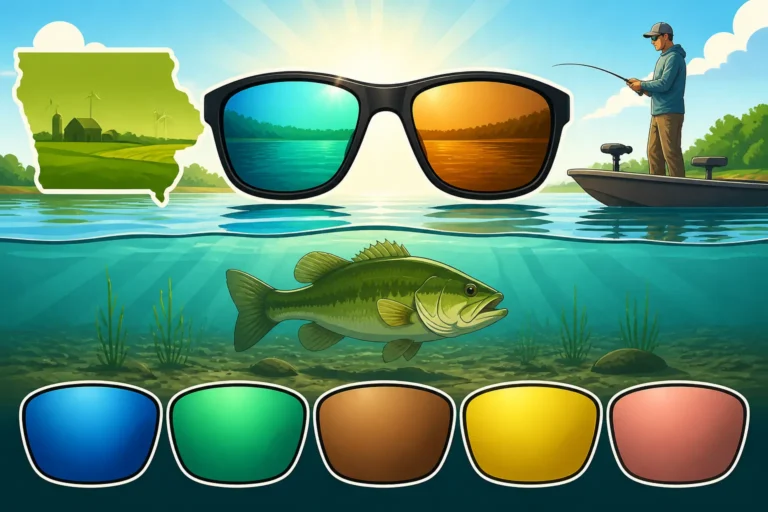
Lens Color: This is probably the most critical choice after ensuring they're actually polarized. Different lens colors are designed for different light conditions and environments.
- Amber/Copper/Brown: These are fantastic all-around choices, especially for varying light conditions common in Iowa. They enhance contrast and depth perception, making it easier to spot fish and structure in both bright sun and overcast skies. If you're often fishing brushy shorelines or looking for Best Fishing Spots in Iowa with submerged cover, these colors really pop.
- Gray: Ideal for bright, sunny conditions. Gray lenses reduce overall brightness without distorting natural colors. If you primarily fish on wide-open lakes like the Iowa Great Lakes on clear, sunny days, gray will be very comfortable for your eyes.
- Yellow/Rose: These are best for low-light conditions, like dawn, dusk, or heavily overcast days. They brighten the field of vision and increase contrast, but they might be too bright and cause eye strain in full sun.
-
UV Protection: This isn't just a nicety; it's a necessity for eye health. Look for lenses that block 100% of UVA and UVB rays. You're spending hours under the sun, often with reflections bouncing off the water, intensifying exposure. Protecting your eyes from harmful UV radiation is paramount for long-term vision health.
-
Frame Fit and Comfort: You'll be wearing these for hours, sometimes in active situations like casting or netting a fish. They need to fit securely without pinching or slipping. A good fit also helps prevent light from leaking in from the sides or top, which can defeat the purpose of polarization. Many frames are designed specifically for active use, with features like rubberized nose pads and temple tips for a better grip, even when wet or sweaty.
-
Lens Material:
- Polycarbonate: These lenses are lightweight and highly impact-resistant, making them a good choice if you're prone to dropping your sunglasses or fish in rugged environments. They're also generally more affordable.
- Glass: Glass lenses offer superior optical clarity and are highly scratch-resistant. However, they are heavier and can shatter if dropped on hard surfaces. For anglers who prioritize the absolute clearest vision and are careful with their gear, glass can be a premium option.
Here’s a quick guide to lens colors for Iowa fishing conditions:
| Lens Color | Best Conditions | Benefits for Anglers |
|---|---|---|
| Amber/Copper | Variable light, cloudy, partly sunny | Excellent contrast, enhanced depth perception, good for spotting structure |
| Gray | Bright, sunny conditions | Reduces overall brightness, natural color rendition, minimizes eye strain |
| Yellow/Rose | Low light, dawn/dusk, heavily overcast | Brightens view, boosts contrast in dim conditions |
Where to Find Quality Options
When it comes to purchasing quality polarized sunglasses, you have a few excellent avenues, whether you prefer to shop in person or from the comfort of your home. Many anglers swear by trying them on in person, especially to check the fit and how different lens colors truly appear to their eyes.
Big box outdoor retailers are a prime spot. Places like Bass Pro Shops often have dedicated sections for fishing eyewear, stocking a wide range of brands and styles specifically designed for anglers. You can try on different frames, step outside to see how they perform in natural light, and get advice from staff who understand the needs of fishermen. This hands-on approach is invaluable for finding that perfect pair that feels good and performs well.
Online retailers like Amazon also offer an immense selection, often at competitive prices. The advantage here is the sheer variety and the ability to read numerous reviews from other anglers. While you can't try them on before buying, many online stores have generous return policies, making it easier to order a few pairs to test out. Just be sure to check the polarization claims – always confirm that the lenses are indeed polarized and not just tinted. Look for clear descriptions and reputable brands. Regardless of where you buy, investing in a quality pair of polarized sunglasses is a smart move for any dedicated Iowa angler. You'll thank yourself during those long, sunny days on the water.
Practical Benefits for Iowa Anglers
Okay, so we've covered the science and how to pick a pair. Now, let's talk about the real-world impact these sunglasses have on your fishing success right here in Iowa. From the Mississippi River to a quiet farm pond, the advantages are significant.
Spotting Structure and Cover
One of the most immediate and profound benefits of polarized sunglasses is the ability to actually see the underwater world that was previously hidden by glare. This is critical for targeting many popular Iowa species. For instance, when you're How to Catch Walleye in Iowa, they often relate to subtle changes in bottom composition, rock piles, or current breaks. With polarized lenses, you can often pick out these darker patches of rocks against a sandy bottom, or the distinct edge of a drop-off, allowing you to present your bait exactly where those fish are likely to be holding.
The same goes for bass fishing. Largemouth bass love cover – laydowns, brush piles, submerged stumps, and thick weed lines. Instead of blindly casting to an area you think has cover, polarized lenses allow you to visually identify those hotspots. You might spot a subtle weed edge that extends further than you thought, or a single submerged log that looks like a prime ambush point for a big hawg. This precision in targeting cover means less wasted casts and more time putting your lure in front of fish. Being able to see these nuances significantly ups your game, whether you're using Best Lures for a Starter Tackle Box or specialized tackle.
Enhanced Fish-Spotting and Presentation
Beyond structure, the ability to spot the fish themselves is an unparalleled advantage. Imagine sight-fishing for carp in a shallow creek, or seeing a cruising northern pike near a reed bed. Even if you don't see the whole fish, a subtle flash or a dark shadow can be enough to alert you to their presence. This allows for a more targeted presentation. If you see a fish moving, you can lead your cast, placing your bait ahead of its path, rather than behind it, which is often crucial for enticing a strike.
Polarized sunglasses also help immensely with detecting subtle bites, especially when fishing for species like panfish or trout in clear water. Sometimes, a fish might just inhale a bait without a dramatic tug on the line; the only indication might be a slight twitch of your line or a shift in the fish's body language that you can only see through clear water. This heightened visual awareness means you'll react faster, setting the hook on those delicate takes that you might have missed otherwise. This visual edge is an invaluable part of Iowa Fishing Techniques Guide, helping you refine your approach.
Eye Health and Comfort on Long Days
It's not all about catching more fish, though that's certainly a huge perk! Polarized sunglasses also offer significant benefits for your long-term eye health and overall comfort during extended fishing trips. The relentless glare from the water, combined with direct sunlight, can cause serious eye fatigue. Squinting all day long leads to headaches and tired eyes, taking away from the enjoyment of your time outdoors. By eliminating that glare, polarized lenses dramatically reduce eye strain, allowing you to stay focused and comfortable for longer periods.
Furthermore, these lenses provide crucial protection from harmful UV rays. Just like your skin, your eyes need protection from sun exposure, which can contribute to serious conditions over time. Wearing sunglasses that block 100% of UVA and UVB rays is a simple yet effective way to safeguard your vision. Think about those long summer days bass fishing on Clear Lake, or winter ice fishing, where the sun reflects intensely off the snow and ice; good eye protection is non-negotiable. Combined with a good hat and proper Best Cold Weather Clothing for Ice Fishing, polarized sunglasses ensure you're protecting your most valuable assets while enjoying your passion.
Disclaimer
This article is for general informational purposes only and does not constitute professional advice. Laws, prices and regulations vary by location and change over time. Consult a qualified professional for guidance on your specific situation.