Is Saugeye a Natural Hybrid or Stocked in Iowa?
It's completely understandable to feel a bit confused when you hear about saugeye in Iowa. Are they just naturally occurring oddities, or is there a bigger story behind how they ended up in our waters? This guide is here to untangle that mystery, explaining what saugeye are and shedding light on their presence in Iowa's diverse fishing landscape.
Understanding the Saugeye: A Unique Iowa Fish Story
When you first hear "saugeye," you might picture something straight out of a science fiction movie, but in the angling world, it's a name that brings a smile to many faces. These intriguing fish offer a fantastic sport fishing experience, and their story in Iowa is quite fascinating.
What Exactly is a Saugeye?
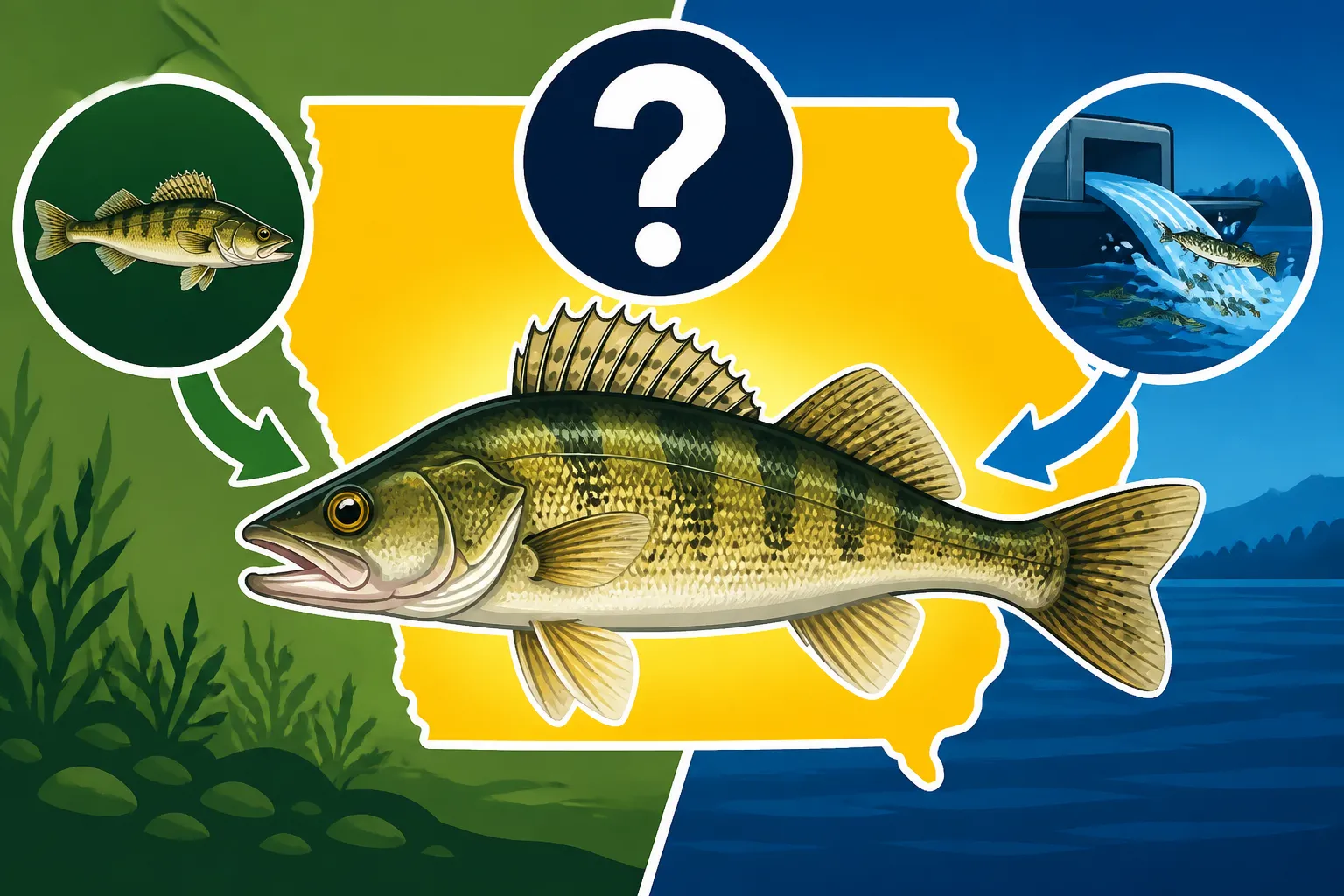
Let's clear up the main question right away: a saugeye isn't a new, distinct species discovered in the wild. It's actually a hybrid, a crossbreed between two very popular and well-known fish: the walleye ( Sander vitreus) and the sauger (Sander canadensis). Think of it like a mule, which is a hybrid of a horse and a donkey – not a new species, but a distinct and often very useful animal born from two different parents. The saugeye inherits characteristics from both its mother (usually a female walleye) and its father (a male sauger), resulting in a fish that often combines the best traits of both.
From a fisherman's perspective, this hybrid vigor is a real treat. Saugeye tend to grow faster than sauger and are more tolerant of turbid (cloudy) waters than pure walleye, making them perfectly suited for some of Iowa's larger river systems and reservoirs. They typically have a sleek, elongated body similar to a sauger but with the larger eyes and often a more gold or brassy coloration like a walleye. One tell-tale sign is the absence of a distinct white tip on the lower caudal (tail) fin, which is present on a walleye, and less distinct spotting on the dorsal fin compared to a sauger. They're often aggressive eaters, making them a blast to catch, and their flaky, white flesh makes them excellent table fare. If you're looking to learn more about the parent species, check out our Walleye Identification and Habitat in Iowa and Sauger Identification on the Mississippi River guides.
Why Iowa Anglers Care About Saugeye
For many Iowa anglers, saugeye represent an exciting addition to their fishing repertoire. Their appealing traits make them a highly sought-after fish. First off, they're known for their robust growth rate. This means they get to a catchable size quicker and can offer more substantial fillets than an average sauger. Secondly, saugeye are often spirited fighters. When you hook into one, expect a good tussle, making the experience all the more rewarding. They have a reputation for hitting lures hard and putting up a respectable fight all the way to the boat.
Furthermore, saugeye are quite resilient. They can thrive in a wider range of habitat conditions than pure walleye, especially in the murkier waters common in some of Iowa's larger impoundments and river systems. This adaptability means that areas where walleye might struggle to establish strong self-sustaining populations can become excellent saugeye fisheries. This effectively expands the fishing opportunities across the state, giving anglers more places to target quality game fish. Finally, their reputation as delicious eating fish is a major draw. Many anglers consider saugeye to have some of the finest tasting white meat, rivaling or even surpassing their walleye cousins. It's truly a win-win for sport and supper!
The Hybrid Question: Natural Occurrence vs. Human Intervention
The core of the saugeye mystery for many Iowans revolves around how these fish come to be. Is it nature's own random act, or is there a deliberate hand in their existence in our state? The answer lies mostly in the latter, though a tiny bit of the former isn't entirely impossible.
Can Saugeye Occur Naturally?
In theory, yes, saugeye can occur naturally. Walleye and sauger are closely related species, belonging to the same genus (Sander). Where their habitats overlap, and both species are present and spawning in proximity, there is a chance for hybridization. For example, in certain stretches of the Mississippi River or other large river systems where both species coexist, it's not entirely unheard of for a walleye and a sauger to cross paths during spawning season and produce hybrid offspring.
However, natural hybridization is generally quite rare and often not highly successful in terms of producing large, self-sustaining populations of saugeye. There are several biological barriers that make it uncommon: slight differences in spawning times, preferred spawning habitats, and genetic compatibility issues can all reduce the likelihood of successful natural crosses. So, while it's a fascinating thought that you might catch a naturally occurring saugeye in a place like the Mississippi, the vast majority of saugeye caught in Iowa waters are there because of intentional management efforts. It's far more common to encounter pure walleye or sauger in their respective prime habitats.
Iowa's Strategic Stocking Program
This brings us to the most significant reason saugeye are prevalent in Iowa: strategic stocking programs. The Iowa Department of Natural Resources (DNR) has a long history of actively stocking saugeye in specific lakes and reservoirs across the state. This isn't just a random act; it's a calculated decision based on extensive fishery research and management goals.
The primary driver behind stocking saugeye is their superior performance in certain environments. As mentioned, saugeye are more tolerant of turbid water conditions and fluctuating water levels often found in Iowa's large flood control reservoirs like Saylorville or Coralville. Walleye, while popular, can struggle to thrive and reproduce consistently in these challenging environments. Sauger, on the other hand, prefer riverine habitats and are less suitable for still-water reservoirs. By stocking saugeye, the DNR can create robust, productive fisheries in waters that might otherwise offer limited walleye or sauger angling. This careful planning ensures that anglers have diverse and plentiful opportunities across the state, from Fishing the Des Moines River in Iowa to Fishing Saylorville Reservoir in Iowa. The stocking program helps provide a consistent and reliable angling experience, something that a random natural hybrid population simply couldn't guarantee.
Where to Find Stocked Saugeye in Iowa Waters
Knowing that saugeye are largely stocked opens up a whole new world of understanding for Iowa anglers. It means we can look at specific management strategies and target areas where these fish are known to thrive.
Prime Saugeye Destinations in Iowa
If you're looking to target saugeye in Iowa, you'll generally want to focus on larger reservoirs and river systems that have historically been part of the stocking program. These are the waters where saugeye's adaptability truly shines, allowing them to flourish where their parent species might not.
Some of Iowa's major reservoirs are fantastic saugeye hotspots. Places like Saylorville Reservoir near Des Moines, Coralville Reservoir near Iowa City, and Rathbun Lake in south-central Iowa are often prime examples. These large bodies of water, with their often-turbid conditions and fluctuating water levels, are ideal for saugeye survival and growth. The rivers connected to these reservoirs, or other larger rivers with slower stretches and deeper pools, can also hold saugeye that have migrated from the stocked impoundments.
Remember that stocking programs can shift based on various factors, including fish health, forage availability, and habitat changes. Always check the latest Iowa DNR fishing reports and stocking schedules (available through their website or local offices) to get the most up-to-date information on which waters are actively managed for saugeye. This ensures you're fishing where the fish actually are!
Identifying Saugeye for Responsible Angling
Because saugeye share so many characteristics with walleye and sauger, accurate identification is crucial for responsible angling, especially when size and bag limits vary. Iowa's fishing regulations are specific, and knowing your fish can save you from potential penalties.
Here are the key things to look for:
- Dorsal Fin: Walleye typically have a solid, dark spot on the spinous dorsal fin, and it usually lacks distinct spots on the webbing between the spines. Sauger, on the other hand, have distinct rows of dark spots or bars on their dorsal fin, and no prominent dark spot. Saugeye often exhibit a mix – some spotting, but usually not as defined as a sauger, and sometimes a faint smudge where a walleye's dark spot would be.
- Tail Fin: This is often the easiest differentiator. Walleye almost always have a distinct white tip on the lower lobe of their caudal (tail) fin. Sauger do not have this white tip. Saugeye, being a hybrid, generally lack the prominent white tip of a walleye, more closely resembling the sauger in this regard.
- Body Pattern/Coloration: Sauger tend to have blotchy, saddle-like markings along their back and sides, giving them a somewhat "splotchy" appearance. Walleye are usually more uniform in color, often golden or olive. Saugeye can display a blend of these, sometimes with faint saddle markings but a more overall golden hue than a sauger.
- Cheeks/Head: Walleye typically have smooth cheeks, while sauger often have rough patches of scales on their cheeks. Saugeye can vary here, sometimes showing a mix of smooth and rough scales.
When in doubt, it's always best to practice catch and release or refer to an Iowa Fishing Regulations Explained booklet to be absolutely certain you're adhering to the rules.
The Benefits of Iowa's Saugeye Stocking
The decision to stock saugeye isn't made lightly. It's part of a broader, well-thought-out strategy to enhance Iowa's fishing opportunities and manage our aquatic resources effectively.
Boosting Fishing Opportunities
One of the most immediate and tangible benefits of saugeye stocking is the direct boost it gives to fishing opportunities across the state. Imagine a large reservoir where pure walleye stocking struggles to maintain a fishable population due to environmental factors like silty water or rapid water level changes. Without intervention, that body of water might not offer a quality walleye-like fishery. Enter the saugeye.
By introducing this hardy hybrid, the Iowa DNR can transform these challenging environments into vibrant fisheries. Anglers gain access to a fantastic sport fish that grows large, fights hard, and tastes great, all in waters that might otherwise be underutilized. This means more diverse fishing experiences, more places to wet a line, and ultimately, more happy anglers. It also helps distribute fishing pressure across different bodies of water, which can benefit other fish populations. You'll find plenty of gear on sites like Amazon that are perfect for targeting these tough fish, from sturdy rods to an array of lures designed for aggressive strikes.
Enhancing Fish Populations and Ecosystems
Beyond just creating new fishing spots, saugeye stocking plays a role in enhancing overall fish populations and local ecosystems. In situations where walleye populations are limited by habitat, saugeye can fill that niche, becoming a significant predator and helping to balance the prey base. Their adaptability means they can effectively utilize the available forage, which might include shad or other baitfish that thrive in the same conditions.
This doesn't mean saugeye outcompete native species in an undesirable way. Instead, they provide a complementary option, thriving in conditions where walleye or sauger might not, without negatively impacting their natural counterparts where those species do well. It's about maximizing the potential of Iowa's waters, providing a richer and more varied aquatic environment for both fish and anglers. The DNR carefully monitors these populations to ensure ecological balance is maintained, making saugeye a responsible and beneficial addition to Iowa's fish management toolkit.
Fishing for Saugeye: Tips and Techniques
Now that you know the why and where, let's talk about the how! Fishing for saugeye is incredibly rewarding, and many of the techniques you'd use for walleye or sauger will work, but with a few saugeye-specific tweaks.
Best Baits and Lures for Saugeye
Saugeye are generally aggressive feeders, which is great news for anglers! They'll readily strike a variety of baits and lures, making them a fun fish to target. Just like their walleye cousins, they often prefer presentations that mimic baitfish or offer an easy meal.
- Jigs and Plastics: This is a classic for a reason. Jigs tipped with soft plastics like grubs, paddle tails, or creature baits are incredibly effective. Colors can vary, but chartreuse, white, and darker colors like black and blue often work well, especially in the turbid waters saugeye frequent. Vary your retrieve, from a slow drag along the bottom to a more aggressive jigging motion, until you find what they're hitting. For a comprehensive look at jigging, consider our Crappie Jig Fishing Techniques article, which has principles that can apply to saugeye.
- Crankbaits: Trolling or casting crankbaits is another highly productive method. Medium-diving crankbaits that reach the depths where saugeye are holding are ideal. Colors mimicking shad or perch are good starting points, but don't shy away from brighter colors on cloudy days or in stained water. The vibration and flash of a crankbait can really call in saugeye. You can find a huge selection of effective crankbaits on Amazon, perfect for experimenting with different dives and colors.
- Live Bait Rigs: You can't go wrong with live bait. Minnows, shiners, or nightcrawlers fished on a bottom-bouncing rig, a slip bobber, or a simple jig head can be deadly. A How to Rig a Crawler Harness for Walleye can also be adapted for saugeye, especially when drifting or trolling. Saugeye are opportunists, and a juicy live bait is often too tempting to resist.
- Spinner Rigs: Harnesses with blades and a nightcrawler or minnow are excellent for covering water, particularly when drifting or trolling over flats or along channel edges. The flash and vibration of the blade, combined with natural bait, is a powerful combination. For more general advice, our Iowa Fishing Techniques Guide delves into many methods suitable for saugeye.
Optimal Times and Locations for Saugeye Fishing
Saugeye often exhibit similar behaviors to walleye and sauger when it comes to preferred habitats and feeding times. Understanding these patterns will significantly increase your chances of success.
- Structure is Key: Look for areas with distinct underwater structure. This includes old creek channels, humps, points, submerged timber, rock piles, and transitions in bottom composition. Saugeye will use these features to ambush prey and hold out of current. In reservoirs, the old river channel is almost always a prime target.
- Twilight and Night Fishing: Like walleye, saugeye often become more active during low-light conditions. Early mornings, late evenings, and even night fishing can be incredibly productive, especially during warmer months. During these times, they'll often move shallower to feed.
- Depth: Their preferred depth can vary significantly with season, water temperature, and time of day. In warmer water, they might be deeper, often relating to the thermocline if one is present. In cooler water or during low light, they might move shallower. A good fish finder is invaluable for locating schools of saugeye and understanding the contours of the lake bottom. You can find reliable fish finders on Amazon that can help you pinpoint these elusive fish.
- Current Breaks (Rivers): If you're fishing a river system, focus on current breaks. This could be behind wing dams, submerged logs, rock jetties, or anywhere the faster current meets slower water. Saugeye will sit in the slower water, waiting for baitfish to be swept past them.
- Seasonal Movements: In spring, look for them staging in pre-spawn areas or moving into shallower bays to feed. During summer, they often retreat to deeper, cooler water. Fall can see them become very active again as they feed heavily before winter.
Saugeye vs. Walleye vs. Sauger – Key Identification Differences
To help you distinguish between these similar-looking fish, here's a quick comparison table focusing on the most reliable identification features.
| Feature | Walleye (Sander vitreus) | Sauger (Sander canadensis) | Saugeye (Sander vitreus x canadensis) |
|---|---|---|---|
| Tail Fin Tip | Distinct white tip on lower lobe | No white tip | No distinct white tip |
| Dorsal Fin | Solid dark spot on spinous dorsal fin, no spots on webbing | Distinct rows of dark spots/bars on dorsal fin | Variable: some faint spots, sometimes smudge |
| Body Coloration | More uniform, golden to olive, sometimes faint bars | Distinct dark saddle blotches/spots | Blend: often golden with faint blotches |
| Cheeks | Generally smooth scales | Rough, scaled patches | Variable: mix of smooth and rough |
| Body Shape | More robust, deeper body | More slender, elongated | Intermediate |
| Habitat Preference | Clearer lakes, large rivers | Turbid rivers, deeper pools | Tolerant of turbid reservoirs & rivers |
Remember, practice makes perfect, and with a keen eye, you'll soon be able to confidently identify your catch! For more details on these species, check out the Iowa Fish Species Guide.
Disclaimer
This article is for general informational purposes only and does not constitute professional advice. Laws, prices and regulations vary by location and change over time. Consult a qualified professional for guidance on your specific situation.