What a Saugeye Is
It can be really confusing trying to keep track of all the different fish species swimming in Iowa's waters, especially when some of them look so similar. Many anglers, even seasoned ones, often find themselves scratching their heads when they pull in a fish that looks like a walleye, but just… isn't quite right. That's usually when they've encountered a saugeye, a fascinating hybrid that brings its own unique challenges and rewards to the fishing scene. This guide is all about shedding some light on what a saugeye is, why they're in our lakes and rivers, and how you can get better at identifying and catching them.
The Curious Case of the Saugeye: A Hybrid Explained
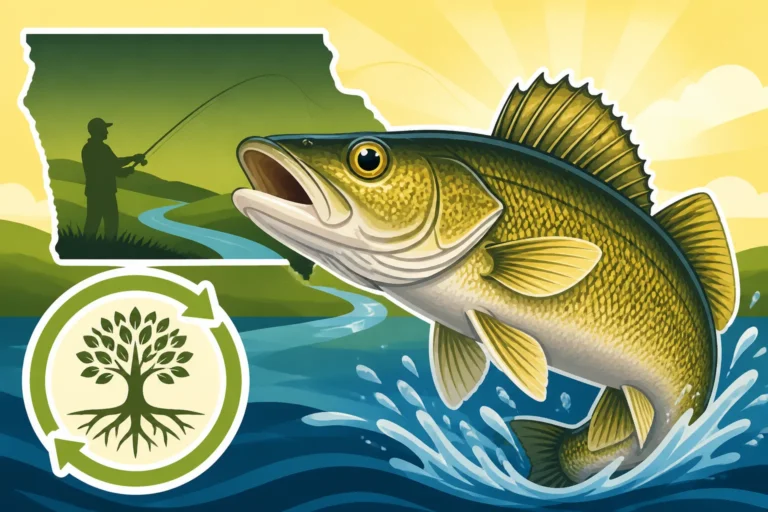
You've probably heard of walleye and sauger, two of Iowa's prized game fish. Well, imagine if those two decided to have a baby – that's essentially what a saugeye is! A saugeye is a hybrid fish, a cross between a female walleye and a male sauger. It's not a naturally occurring phenomenon in Iowa's wild waters; these fish are intentionally produced in hatcheries and then stocked into specific lakes and rivers across the state. The goal behind stocking saugeye is to create a fast-growing, hardy game fish that combines the best characteristics of both parent species, offering anglers an exciting new target.
Think of it like this: walleye are known for their impressive size and delicious fillets, but they can be a bit finicky and prefer clearer, deeper waters. Sauger, on the other hand, are often more tolerant of turbid (cloudy) river conditions and can be quite aggressive biters, though they generally don't reach the same trophy sizes as walleye. The saugeye is bred to inherit the walleye's potential for larger size and eating quality, while also getting the sauger's adaptability to a wider range of water conditions and its willingness to bite. It's a win-win for anglers who want a robust fishery in waters where pure walleye might struggle. You'll find them thriving in places where the water might be a bit murkier or have more current, making them accessible in different fishing scenarios than their walleye cousins.
This deliberate stocking program by the Iowa Department of Natural Resources (DNR) means that if you catch a saugeye, it's usually because it was placed there to enhance fishing opportunities. They're a testament to the effort put into managing our fisheries for the best possible angling experience. Understanding this genetic background is the first step in appreciating what makes a saugeye unique in our local ecosystems.
Why Stock a Hybrid? The Benefits of Saugeye in Iowa
The decision to stock a hybrid like the saugeye isn't made lightly; it's a strategic move based on specific biological and angling advantages. Iowa's waters present diverse challenges, and sometimes, a purebred species might not be the most effective choice for a thriving fishery.
One major benefit is their growth rate and hardiness. Saugeye tend to grow faster than pure walleye, reaching catchable sizes more quickly. This means a quicker turnover in the fishery, providing more opportunities for anglers to put fish in the boat or on the bank. They also exhibit what's called "hybrid vigor," meaning they often display enhanced traits compared to their parent species, making them more resilient to varying water temperatures, oxygen levels, and turbidity. For many Iowa rivers and reservoirs that experience fluctuations in water clarity or flow, saugeye simply handle these changes better than walleye. This adaptability makes them a fantastic option for waters like the Des Moines River, where conditions can change rapidly. You might not always find them in every single water body, but where they are stocked, they tend to do quite well, complementing the existing fish populations.
Another key advantage is their aggressive feeding habits. While walleye can be notoriously subtle biters, saugeye often inherit the sauger's more assertive nature, leading to more frequent and noticeable strikes. This can be particularly appealing to anglers who appreciate a more active fishing experience. Plus, they offer excellent table fare, with white, flaky meat that many consider on par with walleye. It's all about providing a diverse and productive fishery that appeals to a broad range of anglers. You can read more about various angling approaches in our Iowa Fishing Techniques Guide.
Spotting the Difference: Identifying a Saugeye
Okay, so you've reeled in a fish, and it looks like a walleye, but there's just something… off. This is where identification comes in, and distinguishing a saugeye from its walleye or sauger parents is a common challenge. While they share many characteristics, there are a few key features that can help you tell them apart. It's a skill that comes with practice, but knowing what to look for can make all the difference when you're on the water.
The biggest giveaway for a saugeye often lies in its markings and fin structure. Walleye typically have a large, distinct dark spot at the base of the last few spines on their dorsal fin (the fin on their back). Sauger, on the other hand, will have distinct dark spots or bars all over their dorsal fin, along with a somewhat speckled body pattern. A saugeye usually shows a mix of these traits – often having some dark spots on the dorsal fin like a sauger, but not always the pronounced, uniform dark patch of a walleye. Their body might also have a more mottled, "worm-like" pattern, though this can vary.
Another good indicator is the overall body shape and color. Saugeye often have a more streamlined body than a walleye, and their coloration can lean more towards the sauger's golden-brown and olive hues, sometimes appearing a bit darker or muddier than a typical walleye. Of course, individual variations exist, and water clarity can also affect how colors appear. It's like trying to tell apart different breeds of dogs; they're all canines, but the subtle differences add up. For more detailed comparisons, checking out resources like How to Tell a Walleye From a Sauger can be incredibly helpful.
Key Features to Look For
When you're holding that fish in your hands, trying to decide if it's a walleye, sauger, or saugeye, here's a quick checklist to help you out. It’s all about focusing on those small, often overlooked details that unlock the mystery.
- Dorsal Fin Markings: This is often the most reliable clue.
- Walleye: Usually has a single, prominent dark blotch on the lower rear portion of the spiny dorsal fin. The rest of the fin is generally clear or lightly barred.
- Sauger: Exhibits distinct rows of round, dark spots on the spiny dorsal fin, creating a barred or speckled appearance. No single large blotch.
- Saugeye: Often a mix. You might see some scattered spots on the dorsal fin, but generally not as distinct or numerous as a sauger's, and usually without the prominent dark blotch of a walleye. It's typically more mottled or cloudy.
- Body Pattern:
- Walleye: Can be somewhat uniform, with subtle bars or blotches.
- Sauger: More pronounced dark spots, blotches, or "saddle" markings along the sides, often described as a worm-like or mottled pattern.
- Saugeye: Tends to inherit some of the sauger's mottled or worm-like pattern on its sides, which is usually more distinct than on a walleye but might not be as bold as a pure sauger.
- Cheek Scales:
- Walleye: Cheeks are typically smooth, with very few or no scales.
- Sauger: Cheeks are fully scaled.
- Saugeye: Can be a mixed bag, often having some scales on the cheeks, but not always fully covered. This one can be tricky and requires a closer look.
To really get a feel for the differences, it's worth studying images online or carrying a small identification guide with you. Many anglers find the fin markings to be the easiest and most consistent identifier. You can even find waterproof fish identification cards on Amazon that you can keep in your tackle box for quick reference. This comparison can be especially critical given that Iowa Fishing Daily Bag Limits Guide and size restrictions can differ between species in some waters.
Distinguishing Saugeye from Walleye and Sauger
Let's lay it out clearly. The differences, while subtle, become much clearer when you put them side-by-side. Think of it like a family photo – everyone has shared traits, but each individual also has their own unique quirks. Here's a table to help crystallize those key distinctions:
| Feature | Walleye | Sauger | Saugeye |
|---|---|---|---|
| Dorsal Fin | Single dark blotch on the rear | Distinct rows of black spots/bars | Often mottled, few scattered spots, no distinct blotch |
| Body Markings | Subtle bars, often uniform | Pronounced dark "saddle" or worm-like markings | Mottled, often more distinct than walleye, less than sauger |
| Cheek Scales | Generally scaleless or very few | Fully scaled | Partially scaled or intermediate |
| Tail Fin | White tip on lower lobe (distinctive) | No white tip on lower lobe | May or may not have a white tip, often less pronounced |
| Overall Shape | Typically more robust, deeper bodied | More slender, cigar-shaped | Intermediate, often robust like a walleye but sleeker |
| Habitat | Clearer, deeper lakes/reservoirs, large rivers | Turbid rivers, main channels of large rivers | Tolerant of turbid water, often stocked in rivers/reservoirs |
Understanding these nuances is important not just for satisfying your curiosity, but also for adhering to regulations. Size and bag limits can sometimes vary slightly for walleye versus sauger/saugeye, so accurate identification is key to being a responsible angler. For example, if you're fishing the Mississippi, specific rules apply, which you can learn about in Iowa Fishing Regulations on the Mississippi River Border.
Where to Find and How to Catch Saugeye in Iowa
Now that you know what a saugeye is and how to identify one, the next logical question is: where do you find these feisty hybrids, and how do you entice them to bite? Because they're a stocked fish, knowing their preferred habitats and typical behavior patterns will be your biggest advantage. They're often found in specific environments that play to their hybrid strengths.
Saugeye in Iowa are primarily stocked in larger rivers and certain reservoirs where walleye populations might struggle or where the DNR wants to enhance fishing opportunities. They love structure and current, making rivers like the Des Moines River and the Cedar River prime locations. Reservoirs such as Saylorville Reservoir, Rathbun Lake, and Coralville Reservoir are also known saugeye hotspots. These are typically larger bodies of water with varied depths and underwater features like humps, points, and channel edges, all of which saugeye gravitate towards. They appreciate areas with some current that concentrates baitfish, or deep holes and submerged timber that offer cover. If you're wondering about specific locations, checking out Best Fishing Spots in Iowa or more detailed guides like Fishing the Des Moines River in Iowa can point you in the right direction.
When it comes to catching them, saugeye often respond to many of the same techniques used for walleye and sauger, but with a bit more aggression. They're generally less finicky than walleye, which means they might be more forgiving for beginner anglers. They can be active throughout the day, but dawn, dusk, and even night fishing can be particularly productive, especially in warmer months. They're often found in slightly shallower water than walleye during low light conditions, moving up onto flats or along weed edges to feed. Like walleye, they are predatory fish, primarily feeding on smaller baitfish, so mimicking their natural forage is key.
Top Baits and Lures for Saugeye
Saugeye aren't incredibly picky, which is great news for anglers. Their aggressive nature means they'll often hit a wide variety of baits and lures, giving you plenty of options when you're out on the water. The key is to match the hatch and present something appealing in their strike zone.
Live Bait:
- Minnows: Hands down, live minnows are one of the most effective baits for saugeye. Whether fished under a slip bobber, on a jig, or on a three-way rig, minnows perfectly mimic their natural food source. Shiner minnows or fatheads are always a good choice. You can find quality live bait at most local bait shops, and some anglers even stock up on portable aerators from Amazon to keep them lively throughout their trip.
- Nightcrawlers: While perhaps more commonly associated with walleye, saugeye won't pass up a juicy nightcrawler, especially when rigged on a spinner harness or a simple worm rig.
- Leeches: Another walleye staple, leeches can be very effective for saugeye, particularly in warmer water.
Artificial Lures:
- Jigs: Jigs tipped with soft plastics (grubs, paddle tails, minnow imitations) or live bait (minnows or half a nightcrawler) are incredibly versatile. Varying jig head weight is important to match the current or depth you're fishing. Colors like chartreuse, white, orange, and natural baitfish patterns are popular. For those deeper river channels, heavier jigs are a must.
- Crankbaits: Trolling or casting lipped crankbaits that dive to the appropriate depth can be deadly, especially when saugeye are actively chasing baitfish. Colors mimicking shad, perch, or crawfish are often effective.
- Blade Baits: These vibrating metal lures are excellent for vertical jigging, especially over structure or in deeper pockets of rivers. Their strong vibration can call in saugeye from a distance.
- Spinner Rigs: A classic for walleye, a spinner rig with a live minnow or nightcrawler can be very productive when drifted or trolled, especially in current.
Don't be afraid to experiment with different presentations and retrieve speeds. Sometimes, a slow, methodical retrieve works best, while other times, a more aggressive jigging or twitching motion will trigger a strike. It really depends on the mood of the fish and the conditions of the water. You can explore a vast selection of these lures on Amazon to build out your tackle box.
Essential Techniques for Saugeye Success
When targeting saugeye, adapting your techniques to their preferred habitat and behavior will significantly increase your chances of success. They're a versatile fish, so having a few tricks up your sleeve can make a big difference.
- Bottom Bouncing/Drifting: This technique is fantastic for covering water in rivers and open lake areas where saugeye might be scattered. Using a bottom bouncer with a spinner rig or a crawler harness allows you to present bait directly near the bottom, where saugeye often feed. Drift with the current in rivers, or slowly troll in lakes, letting your line tick the bottom occasionally. This helps you locate active fish and their preferred depth. Drift Fishing the Mississippi River techniques can be easily adapted for saugeye in other river systems.
- Jigging Structure: Saugeye love structure – submerged timber, rock piles, sudden drop-offs, and channel edges. Vertical jigging directly over these features with a jig and minnow or soft plastic is often highly effective. Use your fish finder to pinpoint structure and baitfish, then position your boat directly over the top. A subtle lift-and-drop motion is usually all it takes to entice a strike. For river saugeye, focusing on the downstream side of current breaks or eddies can be particularly productive. Check out our Jigging Techniques for River Walleye guide for more insights, as these methods apply well to saugeye too.
- Casting & Retrieving: When saugeye are actively feeding in shallower areas, especially during low light, casting crankbaits or even heavier jigs with soft plastics can work wonders. Fan-cast around points, weed lines, or rocky shores, varying your retrieve speed until you find what they want. Sometimes a steady retrieve is best, other times a stop-and-go twitching motion will trigger a reaction strike. This is a great technique for shore anglers too.
- Night Fishing: Don't overlook the night shift for saugeye! Like walleye, saugeye often become more active after dark, moving into shallower feeding flats. Trolling shallow-diving crankbaits or casting stickbaits that stay in the top few feet of the water column can be very effective. Use a good headlamp to help you see, but try to keep bright lights off the water as much as possible to avoid spooking the fish. You can find excellent fishing headlamps on Amazon.
Remember, persistence and observation are key. If one technique isn't working, don't be afraid to switch it up! Change your lure, adjust your depth, or move to a new spot. Saugeye are out there, and with a bit of knowledge and the right approach, you'll be enjoying the thrill of catching these unique Iowa hybrids.
Disclaimer
This article is for general informational purposes only and does not constitute professional advice. Laws, prices and regulations vary by location and change over time. Consult a qualified professional for guidance on your specific situation.