Difference Between White Bass and Yellow Bass
It's incredibly common for Iowa anglers, whether they're seasoned veterans or just starting out, to get a little mixed up when a silver-sided fish hits their line, especially when they're in a feeding frenzy. You haul in a feisty fighter, and your mind immediately goes to "Is this a white bass or a yellow bass?" It's a valid question, as both are abundant, aggressive, and often school together, making identification tricky in the heat of the moment. But knowing the difference can actually help you refine your techniques and understand the fish better. This guide is here to clear up that confusion once and for all, helping you distinguish between these two fun-to-catch species, understand where they hang out, and how to target them effectively across Iowa's fantastic waters.
Unraveling the Mystery: Why White and Yellow Bass Get Confused
The struggle is real. You're out on the water, maybe at a popular spot like Clear Lake, and the panfish bite is on fire. You're pulling fish after fish, and they all look pretty similar at first glance – silver, with those distinct horizontal stripes. Both white and yellow bass are members of the Moronidae family, which includes temperate bass, and they share some general characteristics that lead to their common mix-up. They're both schooling fish, often found in similar habitats, and they both put up a decent fight for their size, making them exciting targets for anglers. Their aggressive nature and willingness to strike a wide variety of baits and lures further contribute to their popularity, but also to the identification challenge.
Many anglers might just lump them together as "stripers" or "silver bass" and not give it a second thought. However, understanding the subtle differences can enhance your fishing experience. For instance, knowing which species you're primarily catching can inform your choice of bait or lure for the next cast, or even help you predict where the bigger fish might be holding. It also speaks to a deeper appreciation for the biodiversity right here in our Iowa lakes and rivers. So, while it's easy to dismiss the distinction, a keen eye can unlock a lot more about your local fishery.
Key Identification Marks: How to Tell Them Apart
Alright, let's get down to brass tacks. While they might look like twins from a distance, white bass and yellow bass have some clear, distinguishing features that, once you know them, make identification a breeze. Think of it like telling apart two family members who share a strong resemblance – you look for those unique quirks.
The Stripes Don't Lie: Broken vs. Solid
This is often the easiest and most reliable way to tell the two apart. Look closely at those horizontal stripes running along their bodies.
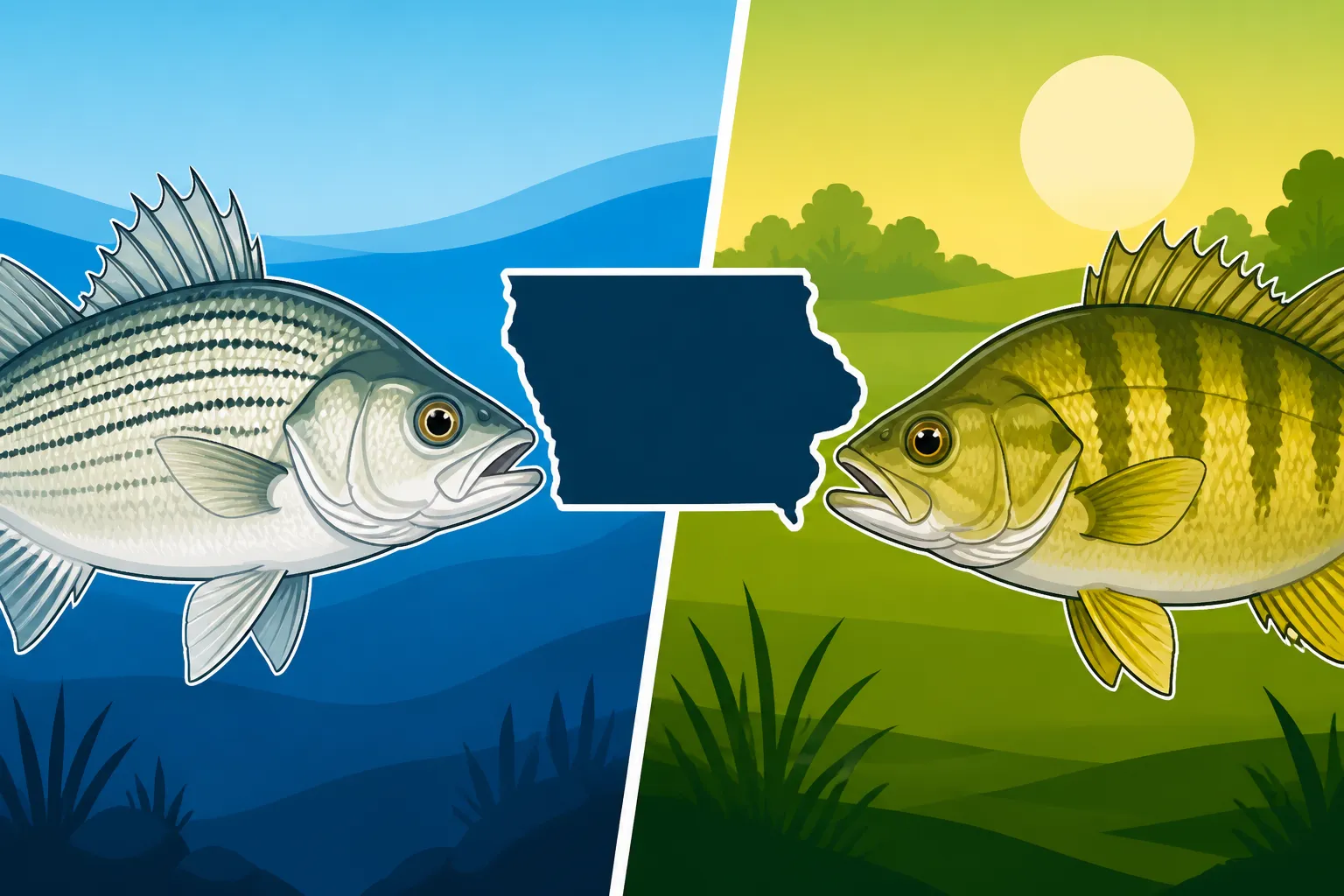
- White Bass: The stripes on a white bass are typically broken or irregular, especially below the lateral line. You'll notice that the lower stripes, near the belly, often don't connect all the way to the tail, or they might appear faint and somewhat disjointed. It's like someone drew the lines and then smudged a few of them. Some stripes might even angle upward slightly towards the tail. They usually have one prominent stripe running centrally from the gill plate to the tail, with others less defined. You can find these feisty fighters in many Iowa waters, especially during the White Bass Runs in Iowa Rivers.
- Yellow Bass: On the other hand, yellow bass have stripes that are almost always solid and continuous. These dark stripes run cleanly from behind the gill plate all the way to the tail, unbroken and well-defined. Think of perfectly drawn lines, usually numbering between five and seven on each side. If you're fishing at Clear Lake Walleye Fishing, you're likely to encounter plenty of yellow bass, often schooled up. The clarity of these stripes, contrasted against their often more pronounced yellowish tint, really stands out.
It's a subtle difference, but once you've seen a few of each, your eye will quickly pick up on whether those stripes are neatly organized or a bit chaotic.
Body Shape and Color: Subtle Nuances
Beyond the stripes, pay attention to their overall build and general coloration.
- White Bass: White bass tend to have a more streamlined, deeper body profile, giving them a somewhat "taller" appearance when viewed from the side. Their coloration is predominantly silver, often with a faint greenish-blue tint on the back that fades into silvery-white on the sides and belly. Their fins are usually clear or lightly pigmented. They can reach respectable sizes, making them a popular target for many anglers.
- Yellow Bass: Yellow bass typically have a more compressed, somewhat shallower body, making them appear a bit more elongated and less "tall" than their white bass cousins. As their name suggests, they often have a distinct yellowish hue to their sides and belly, which can be quite vibrant, especially in certain water conditions. Their fins can also sometimes show a yellowish tint. This yellow color, combined with those solid stripes, is a dead giveaway.
The body shape difference can be a bit harder to discern if you're only seeing one fish, but if you happen to catch both species back-to-back, you'll likely notice the white bass is a bit more robust in its vertical profile.
Dorsal Fin Arrangement: A Definitive Clue
Here's another super important detail that scientists use, and you can too! Look at their dorsal fins – the ones on their back.
- White Bass: White bass have two distinct dorsal fins, but they are connected at the base. There's a slight notch between the spiny front portion and the softer-rayed rear portion, but the two sections are still joined by a membrane. Imagine two parts of a fence that are joined at the bottom.
- Yellow Bass: Yellow bass, conversely, have dorsal fins that are clearly separated. There's a distinct gap between the spiny dorsal fin and the soft-rayed dorsal fin. You can actually slip a thin piece of paper or your fingernail between them. This is a very reliable feature to look for.
This dorsal fin arrangement is a scientific classification point and an absolute solid indicator you can rely on when the stripe pattern isn't immediately obvious, or if you're dealing with a particularly faded specimen.
Here's a handy table to summarize these key differences:
| Feature | White Bass | Yellow Bass |
|---|---|---|
| Body Stripes | Broken, irregular, especially below midline | Solid, continuous, well-defined (5-7 stripes) |
| Body Shape | Deeper, more streamlined | Shallower, more compressed, somewhat elongated |
| Primary Color | Silvery, greenish-blue back, white belly | Distinct yellowish hue on sides/belly |
| Dorsal Fins | Connected at the base, with a slight notch | Clearly separated, distinct gap between fins |
| Typical Size | Often larger, 1-3 lbs common | Generally smaller, 0.5-1.5 lbs common |
Habitat and Behavior Differences in Iowa Waters
While there's often overlap, white bass and yellow bass do have some preferences in where they live and how they act, which can influence how you find and catch them. Both species are highly migratory and schooling, especially when feeding, but their environmental niches have subtle differences.
White Bass: The Open Water Roamers
White bass are often considered the more pelagic (open water) of the two. They thrive in larger bodies of water, including our major rivers and big reservoirs like Rathbun Lake or Saylorville Reservoir. You'll find them:
- In large lakes and reservoirs: They love big, open expanses of water where they can chase schools of baitfish. Think about the wide-open waters of the Iowa Great Lakes or the expansive Fishing Rathbun Lake in Iowa.
- Rivers: They are very common in rivers, especially during spring spawning runs. They congregate in eddies, below dams, and around current breaks, as seen during the White Bass Runs in Iowa Rivers. Their aggressive nature makes them a blast to catch in river current.
- Deeper water: While they will come to the surface for feeding frenzies, they often suspend in deeper water column during other times, actively searching for food. They relate to structure like humps, points, and channel edges in lakes, but won't be as tied to vegetation as some other species.
Their behavior is highly tied to baitfish movements. When you see gulls diving and water boiling, it's often a school of white bass pushing shad or other forage to the surface. This is a prime opportunity for some fast and furious action!
Yellow Bass: Structure-Oriented and Sometimes Shallower
Yellow bass, while also schooling, tend to be a bit more associated with specific structures and can tolerate slightly murkier or shallower conditions.
- Smaller lakes and impoundments: While present in larger lakes, they are particularly dominant in many smaller to medium-sized lakes and even some oxbows and backwaters. Clear Lake Walleye Fishing is a famous spot for them, but they're also common in many of our urban and community fishing ponds.
- Weed lines and submerged cover: Unlike white bass, yellow bass often relate more closely to aquatic vegetation, brush piles, and other submerged cover. They'll use these areas for ambush points and security. If you're fishing near a prominent weed bed or a fallen tree, you're more likely to encounter yellow bass.
- Shallow flats and humps: They are frequently found over shallow flats, especially those with some bottom contour or scattered weeds. They might not be as deep-water oriented on average as white bass.
While they can also create surface feeding frenzies, it's often in slightly more defined areas or closer to shorelines where baitfish might be seeking refuge. They are incredibly prolific and can populate a fishery quickly, sometimes even leading to stunted growth if their numbers aren't managed.
Fishing Strategies for Each Species
Knowing the differences between white and yellow bass isn't just for identification; it can truly help you dial in your fishing approach. While many techniques will catch both, tailoring your presentation can lead to more consistent success for your target species.
Targeting White Bass: Speed and Aggression
White bass are generally more aggressive and will hit faster-moving baits. Their open-water tendencies mean covering ground and watching for signs of activity are key.
- Look for feeding frenzies: This is the ultimate white bass opportunity. Watch for birds diving or splashes on the surface. When you spot them, cast jigs, spoons, or small crankbaits right into the melee. The action can be non-stop.
- Trolling: In large lakes and reservoirs, trolling small crankbaits or spoons at moderate speeds can be highly effective for covering water and finding schools of suspended white bass. Downriggers or lead core line can help get your lures to the right depth.
- Vertical Jigging: When you mark schools on your fish finder in deeper water (say, 15-30 feet), vertical jigging with a spoon or a heavy jig and soft plastic can be incredibly productive. Drop your lure down to the depth of the fish and use sharp, short jerks to entice bites.
- Lure Selection: Think shiny and fast. Small Kastmasters, Little Cleos, Road Runner jigs, Chatterbaits, or even small crankbaits like Rapala Shad Raps are excellent choices. Many anglers find success with these from brands you can easily find on Amazon, ensuring you're stocked up for your next trip.
- Seasonal considerations: Spring is prime time for their river runs. Look for them in current breaks and below dams. In summer, they'll chase baitfish in open water.
Remember, white bass are often caught using techniques similar to those for larger game fish like walleye, especially when they're actively schooling. Don't be afraid to experiment with different retrieve speeds and lure colors.
Targeting Yellow Bass: Finesse and Structure
Yellow bass, while also aggressive, can sometimes be a bit more subtle, and their association with structure means a slightly different approach.
- Focus on structure: Concentrate your efforts around weed lines, brush piles, submerged timber, docks, and bridge pilings. A Best Lures for Panfish guide will give you some excellent ideas for these spots.
- Small jigs and plastics: Tiny jigs (1/32 to 1/8 oz) tipped with small soft plastic grubs, tubes, or plastic minnows are deadly. Fishing these under a bobber can also be effective, especially if you want to keep your lure in the strike zone longer.
- Small spoons and blade baits: Small jigging spoons or blade baits can also work well, especially when jigged vertically around structure. They mimic small baitfish and trigger reaction strikes.
- Live Bait: Minnows are always a top choice for yellow bass, fished either under a bobber or on a small jig head. Worm pieces or even corn can also tempt them, particularly if they are stunted in numbers.
- Consider light tackle: Because yellow bass are generally smaller, ultra-light spinning gear makes catching them much more enjoyable and allows for lighter presentations. A sensitive rod and a small reel spooled with light line (4-6 lb test) will maximize the fun.
- Patience and stealth: While they can be aggressive, yellow bass in pressured areas or shallower water might require a more subtle approach. Cast beyond your target structure and retrieve your bait slowly into the cover.
If you're looking to stock up on a variety of small jigs and soft plastics specifically for panfish, a quick search on Amazon will reveal an overwhelming selection. It's smart to have a range of colors, from natural greens and browns to bright chartreuses and pinks, as their preferences can change daily.
Culinary Notes: Which One for the Dinner Table?
Let's be honest, for many of us, fishing isn't just about the fight; it's about the feast! Both white and yellow bass are considered excellent table fare, offering flaky, white meat with a mild flavor. They are often compared to crappie or walleye in terms of taste and texture.
- White Bass: Many anglers consider white bass to be slightly superior in taste, especially the larger specimens. Their meat is firm, white, and has a very mild, non-fishy flavor. They fry up beautifully and are fantastic baked or grilled. Just be sure to remove the red meat along the lateral line when filleting, as this can impart a stronger, oilier taste. If you're looking for the Best Eating Fish in Iowa, white bass are definitely in the running.
- Yellow Bass: Yellow bass also offer delicious, firm, white meat. They are generally smaller, so you might need more of them to make a meal. Like white bass, filleting them properly and removing the red meat will ensure the best flavor. They are perfect for pan-frying or turning into fish tacos. They're particularly abundant in places like Clear Lake Panfish and Crappie Spots, making them a consistent option for a fresh fish dinner.
Both species are relatively easy to clean, especially once you get the hang of filleting. A good, sharp fillet knife (many reliable options available on Amazon) is your best friend here. Always remember to check Iowa Fishing Daily Bag Limits Guide before you head out, so you know how many you can legally keep for your next fish fry. No matter which bass you bring home, you're in for a treat!
Disclaimer
This article is for general informational purposes only and does not constitute professional advice. Laws, prices and regulations vary by location and change over time. Consult a qualified professional for guidance on your specific situation.