Are Perch and Crappie the Same Fish?
It’s a question that has probably crossed every angler’s mind at some point, especially when you’re pulling in panfish in Iowa waters and trying to figure out what exactly you’ve got on the end of your line. You've heard people use "perch" and "crappie" interchangeably, or perhaps seen them grouped together, and it's easy to get confused. This guide is here to clear up that common misunderstanding, diving deep into the distinct characteristics that set these popular Iowa game fish apart, helping you identify them correctly and improve your fishing strategy.
Understanding the Distinctive Features of Perch
When we talk about "perch" in Iowa, most anglers are referring to the yellow perch, a true staple in many of our lakes and reservoirs. These feisty, schooling fish are a joy to catch, especially for families and new anglers, but they have some very specific traits that make them unique. It's crucial to recognize these features so you don't mistake them for something else, especially since regulations can vary.
Physical Appearance and Markings
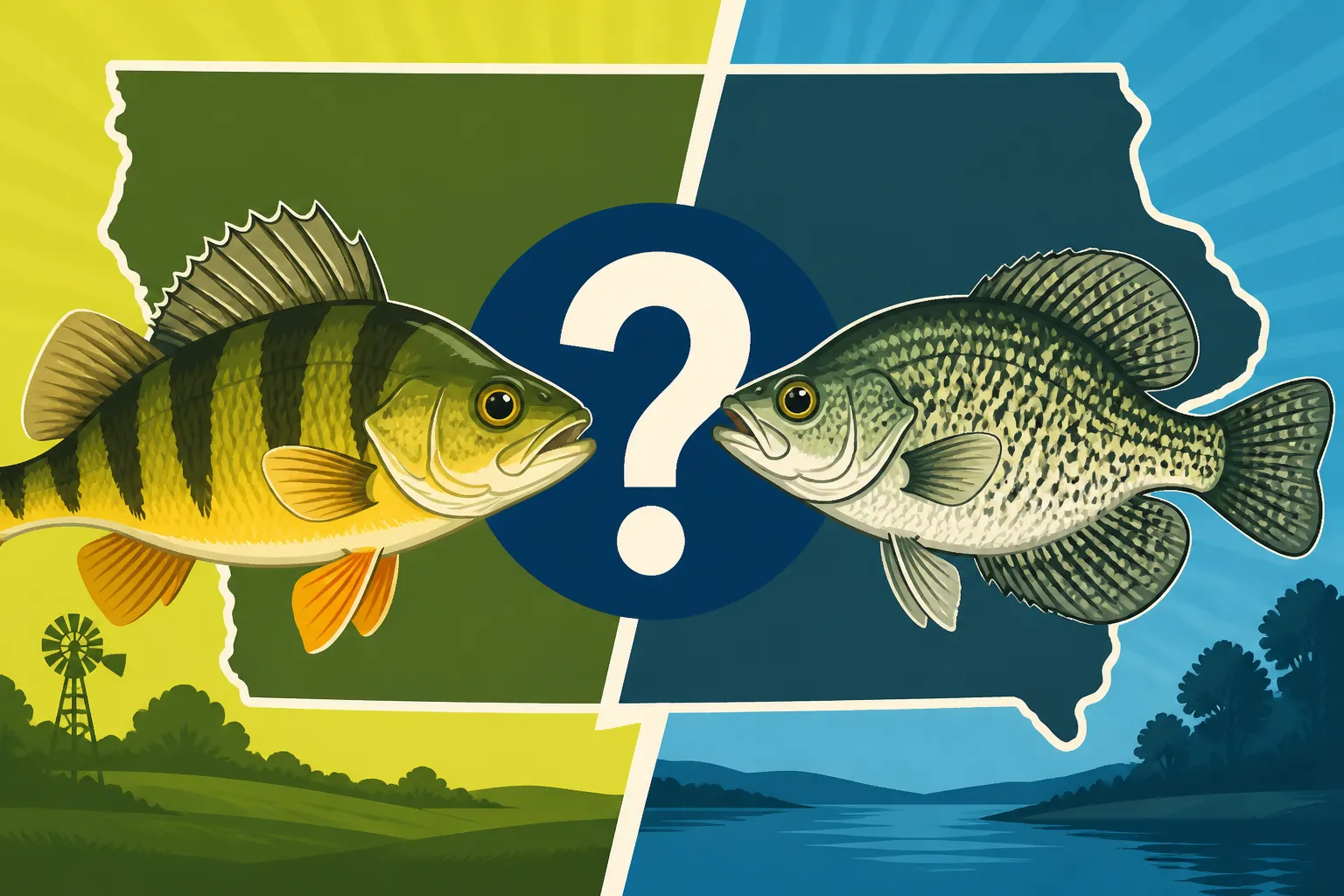
Yellow perch have a very distinctive look that, once you know it, makes them hard to confuse with other species. They typically have a golden-yellow to brassy-green body, fading to white or yellow on their belly. What truly sets them apart are the prominent, dark vertical bars running down their sides – usually between six to eight of them – which look almost like tiger stripes. Their dorsal fins are separated: the first one is spiny, and the second is softer-rayed. Look closely at their anal and lower caudal (tail) fins, too; they often have a reddish-orange tint, especially during spawning season. Their bodies are somewhat elongated, not quite as disc-shaped as some other panfish, and they have a slightly humped back.
When you're out on the water, having a good field guide can really help. I've often seen anglers quickly flip through a waterproof guide bought from Amazon to double-check their catch. This quick visual confirmation helps you learn the nuances, like the exact color of their fins or the spacing of those vertical bars, which can sometimes vary slightly depending on the water clarity and food sources in a particular lake.
Typical Habitat and Behavior in Iowa Waters
Yellow perch are incredibly adaptable and can be found in a wide range of Iowa's freshwater environments. They prefer cooler, clear water with some vegetation, but they're not strangers to murkier conditions either. You'll typically find them in larger natural lakes, like those in the Perch Populations at the Iowa Great Lakes region, and many of our larger reservoirs. They love to hang around structure – think submerged weed beds, fallen timber, docks, and rocky points. In deeper lakes, they'll often suspend over open water, especially during the colder months.
One of the most defining behaviors of perch is their schooling nature. They are rarely found alone; instead, they move in groups, sometimes quite large ones. This is fantastic for anglers because once you find one, you've often found a whole school! This schooling behavior also impacts how you fish for them, as you'll want to present your bait in a way that appeals to a group, rather than just a single fish. Understanding their preferred habitat and tendency to school is key to consistent catches throughout the year, from open water to ice fishing.
Fishing Techniques and Preferences for Perch
Catching yellow perch is usually a pretty straightforward and enjoyable experience. They're not overly picky, making them a great target for anglers of all skill levels. When fishing for them, light tackle is generally best – a sensitive rod and reel combo will allow you to feel their subtle bites. Small jigs, often tipped with a minnow, wax worm, or a small piece of nightcrawler, are incredibly effective. You can also do well with small spoons or spinners.
Perch often feed close to the bottom or suspended in the water column near structure. So, a common technique involves jigging these small baits vertically, letting them hit the bottom, and then gently lifting and dropping them. During ice fishing season, this vertical jigging method is king, and you'll find entire communities of anglers huddled over holes, patiently working their tiny baits. Pay attention to how deep you're getting bites; once you find the depth, you can often replicate it across the school. Best Lures for Panfish are often effective for perch as well.
Unpacking the Characteristics of Crappie
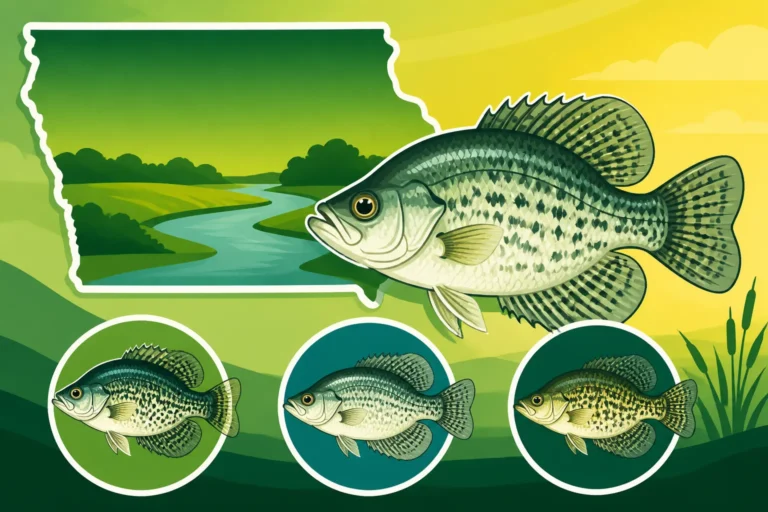
Now, let's turn our attention to crappie, another incredibly popular panfish in Iowa. Crappie are renowned for their delicious white meat and their tendency to school, offering exciting action when you find them. However, they are distinctly different from perch, both in appearance and behavior. In Iowa, we primarily encounter two species: black crappie and white crappie, each with their own subtle differences.
Physical Appearance and Fin Differences
Crappie have a much more compressed, disc-shaped body compared to the more elongated perch. Their color can vary, but generally, they are silvery-green to black with distinct irregular blotches or vertical bars on their sides. This mottled pattern is a key differentiator from the uniform vertical bars of the yellow perch. A crucial identifying feature lies in their dorsal fin. Unlike perch, crappie have a single, long dorsal fin that starts well forward on their back, often with 7-8 dorsal spines for black crappie and 5-6 for white crappie. This is a dead giveaway!
To distinguish between the two crappie species, remember that Black Crappie vs White Crappie in Iowa can be tricky. Black crappie tend to have more irregular, mottled dark spots and 7-8 dorsal spines. White crappie, on the other hand, usually have more distinct, dark vertical bars on their sides (though not as pronounced or consistent as perch bars) and possess 5-6 dorsal spines. Their mouths are also quite large, extending back under the eye, indicating their predatory nature.
Preferred Habitats and Schooling Behavior
Crappie are true lovers of structure, and that's where you'll almost always find them. They thrive in lakes, reservoirs, and slow-moving rivers with plenty of submerged cover. Think brush piles, fallen trees, old stumps, dock pilings, and weed beds. They prefer clear to moderately turbid water and are often found in areas with deep water access nearby, allowing them to move up and down the water column as conditions change.
Just like perch, crappie are highly schooling fish. When they're on, you can often pull them in one after another from a single brush pile. This makes them incredibly rewarding to target once you locate their hideouts. Their schooling behavior is often tied to temperature and spawning, and they'll move into shallower, warmer waters during the spring spawn, making them more accessible to anglers. Understanding these patterns is essential for successful crappie fishing. Many Iowa anglers target them in popular spots such as Rathbun Lake Crappie Hotspots or Saylorville Reservoir Crappie Spots.
Effective Fishing Methods for Crappie
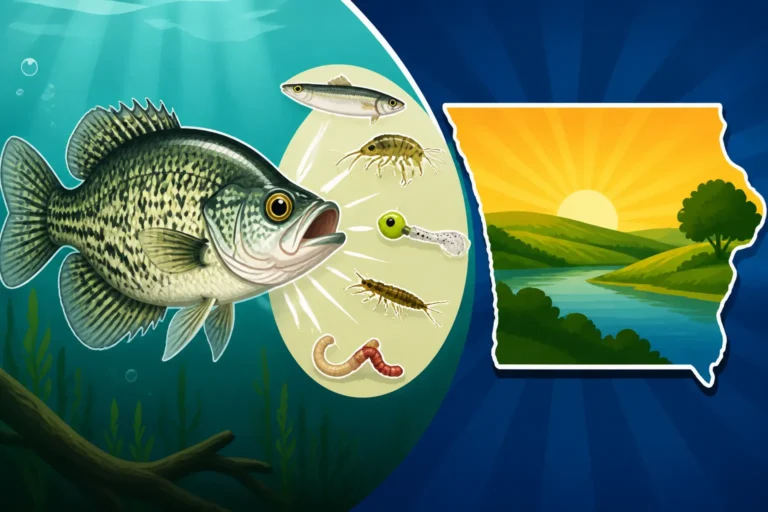
Crappie are often targeted using light spinning tackle, just like perch, but with a few nuances. Small jigs, typically 1/32 to 1/16 ounce, are incredibly effective, often tipped with a tiny plastic grub, tube jig, or a live minnow. Live minnows fished under a bobber are a classic and highly successful method, especially when crappie are suspended in cover. Crappie Jig Fishing Techniques are popular because of their versatility.
When fishing for crappie, presentation is key. They can be finicky eaters, so a slow, subtle retrieve or a gentle vertical jigging motion is often best. Look for them holding tight to structure. Many anglers use electronics to locate submerged brush piles, then gently drop their baits right into the heart of the school. How to Catch Crappie in Iowa often involves patience and precise bait placement. During the colder months, they'll often gather in deeper holes, making vertical jigging through the ice or boat fishing with electronics particularly productive.
The Key Differences: Perch vs. Crappie in Iowa Fishing
Okay, so we've established that perch and crappie are indeed different fish. But how do you quickly tell them apart when you're on the water, especially if you're pulling them out fast? And why does it even matter? Knowing the distinctions can save you from unintentional regulation violations and greatly enhance your fishing success. Let's break down the most critical differences.
Visual Cues for Easy Identification
The fastest way to differentiate between a perch and a crappie is by looking at their body shape, coloration, and dorsal fins.
- Body Shape: Perch are more elongated and streamlined, with a somewhat humped back. Crappie are distinctly more round or disc-shaped, flatter on their sides.
- Coloration/Markings: Yellow perch have those unmistakable, bold vertical dark bars on a golden-yellow body. Crappie, whether black or white, have more mottled, irregular dark blotches or faint vertical bars on a silvery body. There are no bright golden hues on a crappie like you'd see on a yellow perch.
- Dorsal Fin: This is probably the most reliable visual cue. Perch have two separate dorsal fins – a spiny one followed by a soft-rayed one. Crappie have a single, long dorsal fin that starts further forward on their back, with a prominent number of spines (5-8, depending on the species).
Here's a quick comparison table to keep these visual cues handy:
| Feature | Yellow Perch | Crappie (Black/White) |
|---|---|---|
| Body Shape | Elongated, somewhat humped back | Deep, compressed, disc-shaped |
| Color/Markings | Golden-yellow with 6-8 distinct dark vertical bars | Silvery with irregular dark blotches or faint bars |
| Dorsal Fins | Two separate fins (spiny & soft-rayed) | One long, continuous fin (5-8 spines) |
| Mouth Size | Relatively small | Large, extends under the eye |
| Fin Color | Often reddish-orange on lower fins | Generally clear or lightly tinted |
This table, perhaps printed and laminated for your tackle box, could be a real lifesaver on the water. You can even find ready-made identification charts and books on Amazon that clearly illustrate these differences for various panfish species.
Habitat and Dietary Distinctions
While both are panfish and can sometimes be found in similar general areas, their preferred specific habitats and diets can differ.
- Habitat: Yellow perch are often found over sandy or gravelly bottoms, near weed beds, or in open water, especially in deeper, cooler lakes and reservoirs. They’re comfortable both in vegetation and more open areas. Crappie, however, are almost exclusively structure-oriented. They cling tightly to brush piles, fallen trees, docks, and submerged timber. If you're targeting crappie, you're almost always fishing cover. If you're looking for Perch Populations at the Iowa Great Lakes, you'll find them in different zones than you would crappie.
- Diet: Both are opportunistic feeders, but their mouth structure gives clues to their preferences. Perch have smaller mouths and primarily feed on insect larvae, small crustaceans, and smaller baitfish. Crappie, with their larger, upturned mouths, are more aggressive predators of small baitfish like shad and minnows, along with insects and zooplankton. This distinction helps explain why minnows are such a universally effective crappie bait.
Understanding these subtle ecological differences helps you narrow down where you're most likely to find each species. If you're fishing a deep, clear lake with lots of weed edges, you might be in prime perch territory. If you're exploring a shallow, brush-filled cove, you're probably on the crappie trail.
Fishing Strategy Adjustments
Because of their differing habits and preferences, you’ll want to adjust your fishing techniques.
- For Perch: Focus on vertical presentations near the bottom or suspended in open water. Small jigs, ice spoons, or simple bobber rigs with worms or minnows are excellent. Drift fishing can also be productive when covering large areas where schools might be roaming. How Deep to Fish for Walleye in Spring might inform your approach for perch, as they can sometimes share similar depths.
- For Crappie: Concentrate on vertical presentations directly into submerged cover. Drop small jigs or live minnows straight down into brush piles. Light line is crucial for feeling those subtle crappie bites, and a sensitive rod helps. Trolling small crankbaits or jigs can also be effective when crappie are suspended in open water or along contours. Crappie Jig Fishing Techniques emphasize this precision.
By understanding what fish you’re targeting, you can select the right gear, bait, and location, significantly improving your chances of success and filling your cooler.
Why This Distinction Matters to Iowa Anglers
Beyond simply knowing what you’ve caught, correctly identifying perch and crappie has real-world implications for any Iowa angler. It impacts everything from obeying the law to how much fun you have and even how your dinner tastes!
Impact on Catch Rates and Bag Limits
Iowa has specific fishing regulations designed to manage fish populations and ensure sustainable angling for everyone. These regulations often include daily bag limits and sometimes even size limits, which are unique to each species. If you can't tell the difference between a crappie and a perch, you might accidentally keep too many of one species, putting you at risk of a violation.
For example, the Crappie Daily Limit in Iowa might be different from the limit on yellow perch, or the combined limit for crappie and sunfish could factor in. Knowing exactly what you've landed ensures you stay within the legal limits and do your part to protect Iowa's fisheries. It's not just about avoiding a fine; it's about being a responsible angler who contributes to the health of our aquatic ecosystems for future generations.
Enhancing Your Overall Fishing Experience
Imagine you're out on the lake, and the bite is slow. If you can accurately identify what you're catching, or not catching, you can make smarter decisions. If you're getting small perch but no crappie, and crappie were your target, you know to change your location, bait, or presentation. Conversely, if you keep pulling in crappie from a brush pile, you know to stick with that technique and location.
This knowledge empowers you to adapt on the fly, making you a more effective and adaptable angler. It helps you understand what fish prefer which conditions, what baits are working best, and where to find them. This learning process is part of the joy of fishing, and correct identification is a foundational skill. It's also helpful when discussing tactics with fellow anglers, using precise terms to describe your success or challenges.
Culinary Differences and Taste Profiles
While both perch and crappie are absolutely delicious panfish, many anglers have strong preferences for one over the other, often based on subtle differences in their taste and texture.
- Crappie: Crappie are widely celebrated for their flaky, white, and very mild-flavored meat. They are often considered one of the best-tasting freshwater fish, making them a prime target for anglers looking to stock their freezers. Their delicate flavor holds up well to various cooking methods, from pan-frying to baking.
- Perch: Yellow perch also boast firm, flaky white meat, but many describe their flavor as slightly richer or "fishier" than crappie, though still very mild and pleasant. They are a popular choice for fish fries, especially in the Midwest, where their small size makes them perfect for a quick meal.
Ultimately, taste is subjective, and you might find you prefer one over the other, or love both equally! But knowing which fish you're cleaning and cooking means you can appreciate its unique culinary qualities and perhaps even prepare it in a way that best highlights its specific flavor and texture.
Remember, fishing in Iowa is a fantastic pastime, and part of the enjoyment comes from really understanding the fish you're after. Now that you know the clear differences between perch and crappie, you're better equipped to identify them, follow regulations, and ultimately, have more success and fun on the water!
Disclaimer
This article is for general informational purposes only and does not constitute professional advice. Laws, prices and regulations vary by location and change over time. Consult a qualified professional for guidance on your specific situation.