Where to Find Deep Water Structure on West Okoboji
It’s a common frustration for anglers, isn't it? You stare at that vast, beautiful expanse of water like West Okoboji, knowing there are fish down there, but feeling completely overwhelmed trying to figure out where "down there" actually is, especially when you're looking for those elusive deep water structures. This guide is here to unravel the mystery, providing you with practical insights and strategies to confidently locate and fish those hidden deep-water havens where West Okoboji’s most sought-after species love to hang out.
Understanding West Okoboji's Unique Deep Water Environment
West Okoboji Lake isn't just any lake; it's a deep, clear, glacially-carved gem, boasting depths that can make finding fish feel like searching for a needle in a haystack. But these very characteristics create incredible, often overlooked, deep water structures that are magnets for fish. Understanding the lake's unique underwater landscape is the first step to unlocking its deep-water secrets.
The Lake's Depth and Topography
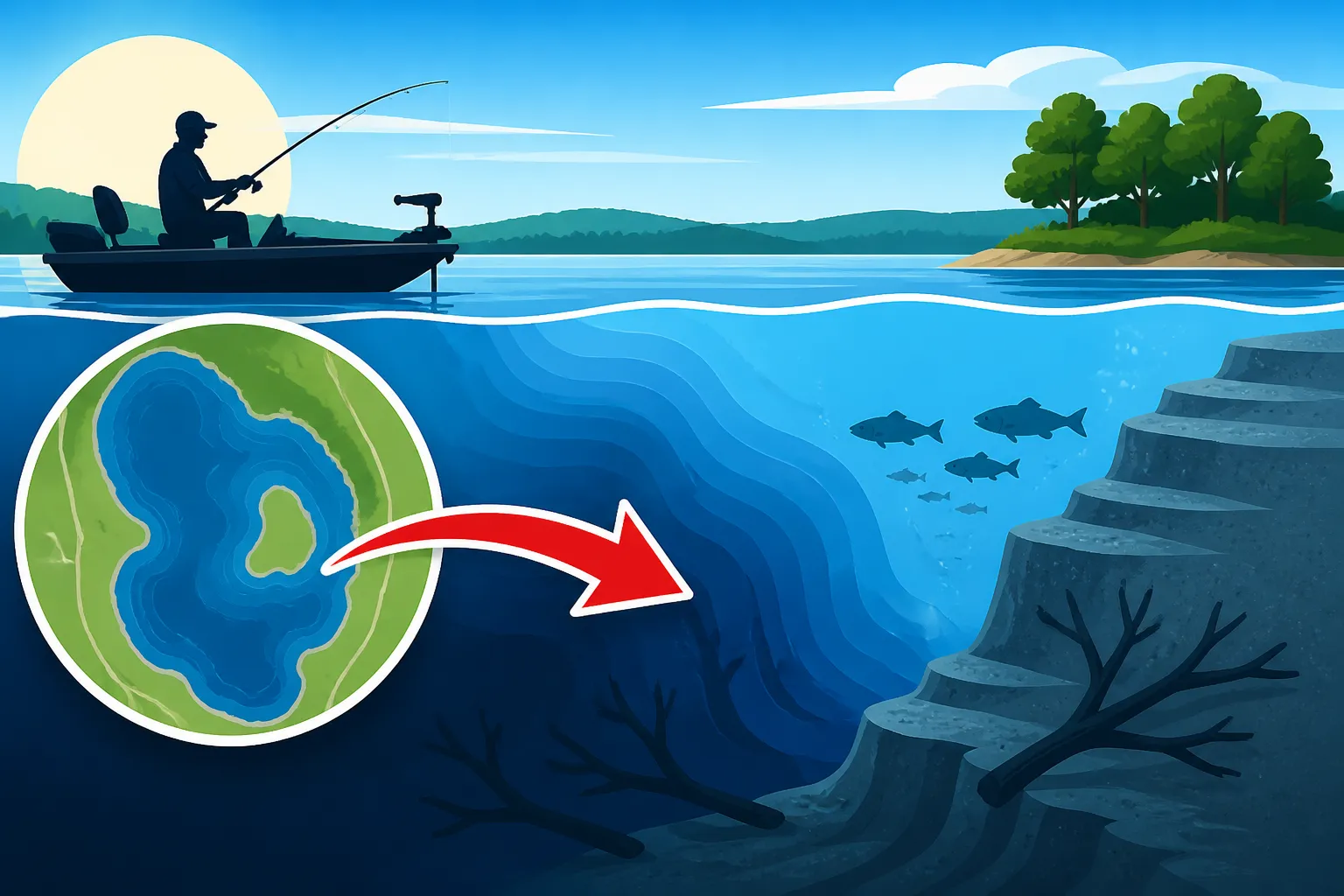
West Okoboji is Iowa's deepest natural lake, plunging over 130 feet in certain areas. This isn't your average shallow prairie lake, and that's precisely why it holds such diverse and often trophy-sized fish. The lake bed isn't a simple bowl; it's a complex tapestry of steep drop-offs, rocky ledges, submerged points, and hidden humps left behind by ancient glaciers. Imagine submerged cliffs and vast, undulating plains far beneath the surface. These dramatic changes in depth create thermal layers, oxygen variations, and current flows that dictate where baitfish and game fish will congregate. When you’re out on the water, think of it less as a flat surface and more as a submerged mountain range with valleys, peaks, and plateaus – each offering potential holding spots for fish. The clearer water also means fish can be more finicky and often prefer deeper, darker haunts away from surface light and boat traffic, making these structures even more critical to locate.
Identifying Key Structural Features
When we talk about "deep water structure" on West Okoboji, we're referring to any submerged feature that deviates from the smooth bottom and provides cover, ambush points, or feeding opportunities for fish. These are the fish's highways and homes. Without a solid understanding of what you're looking for, your electronics might just seem like a confusing kaleidoscope of colors.
- Drop-offs and Ledges: These are abrupt changes in depth, often forming steep walls or stair-step formations. Walleye and smallmouth bass frequently cruise these edges, moving up to feed and retreating into deeper water for safety. A ledge might be a small, almost imperceptible shelf at 30 feet, or a dramatic drop from 20 to 60 feet.
- Submerged Humps and Islands: These are underwater hills or mounds that rise from the main lake basin. They can be small, isolated bumps or large, sprawling plateaus. Humps are absolute goldmines because they concentrate baitfish and provide excellent ambush points. Think of them as underwater reefs.
- Deep Water Points: These are extensions of shoreline points that continue to taper into the lake's deeper zones. The tip and flanks of these points, especially where they hit a significant depth change, can be highly productive.
- Breaklines: A breakline is simply a line where the bottom contour changes significantly. This could be where a flat transitions to a steep drop, or where rock turns to sand. These are natural travel corridors for fish.
- Deep Reefs and Rocky Piles: West Okoboji has significant rocky bottom areas, and these extend into deeper water. Large rock piles or even just scattered boulders provide excellent cover for crayfish and baitfish, which in turn attract predators.
Understanding these features means you're not just looking for "fish," but for the habitat that fish prefer. It’s like knowing the difference between a dense forest and an open field – each attracting different wildlife for different reasons.
Essential Tools for Locating Deep Water Structure
Without the right tools, finding these hidden deep-water gems on West Okoboji would be an exercise in pure guesswork and endless casting. Modern fishing electronics have revolutionized the game, transforming once-impossible tasks into manageable challenges. Equipping yourself with the knowledge to use these tools effectively is paramount.
The Role of Sonar and GPS
Gone are the days of dragging lead weights to find depth changes. Today's anglers have incredibly sophisticated technology at their fingertips. A good quality fish finder isn't just a luxury; it's an indispensable guide to the underwater world of West Okoboji.
- 2D Sonar (Traditional Sonar): This is your bread and butter. It sends a cone-shaped signal straight down, showing you depth, bottom hardness, and fish arches. In deep water, a narrow cone angle (typically 20 degrees or less) is crucial for accurate readings, as it reduces the size of the area you're scanning, preventing too much "noise" from cluttering the screen. You're looking for strong returns that indicate a hard bottom (rock or gravel) and changes in the bottom line itself.
- Down Imaging (or DownScan/ClearVü): This technology provides a picture-like view directly below your boat, rendering images with incredible detail. It's excellent for distinguishing between a log and a rock pile, or seeing individual fish holding tight to structure. When you're searching for deep ledges or specific rock formations, Down Imaging can clarify what your 2D sonar is suggesting.
- Side Imaging (or SideScan/SideVü): This is perhaps the most powerful tool for locating deep water structure. Side Imaging sends sonar beams out to the sides of your boat, covering a wide swath of the bottom. You can see humps, drop-offs, submerged timber, and even schools of baitfish far off to the port or starboard. On a large lake like West Okoboji, this allows you to scout vast areas quickly, identifying promising structures without having to drive directly over them. Many anglers use Side Imaging to locate the structure, then use 2D and Down Imaging to pinpoint fish on that structure.
- GPS and Mapping (Lakemaster, Navionics): Your GPS unit, paired with high-definition mapping chips (like those from Humminbird's Lakemaster or Garmin's Navionics), is your treasure map. These maps often include detailed contour lines, showing depth changes, humps, and points with surprising accuracy. You can pre-plan your attack by studying the contours before you even launch the boat. Mark waypoints on your GPS for any promising structure you find on the map, then use your sonar to confirm what's there once you're on the water. This combination of real-time sonar and pre-loaded mapping is how you systematically dissect West Okoboji's deep water. For a deeper dive into boat electronics, you might find our guide on How to Read a Depth Finder for Structure particularly helpful.
Interpreting Your Electronics
Having fancy electronics is one thing; understanding what they're telling you is another. It takes practice, but once you learn to "read" your screen, the underwater world opens up.
- Bottom Hardness: Harder bottoms (like rock or gravel) show up as a thicker, more intense return on your 2D sonar screen. Softer bottoms (mud or silt) will be thinner and less intense. Fish often prefer hard bottoms for spawning or feeding.
- Contour Changes: Look for areas where the bottom line changes quickly – a sharp rise indicates a hump, a steep drop suggests a ledge. On Side Imaging, shadows cast by objects on the bottom are key indicators of height and structure. A long shadow means a tall object.
- Fish Arches and Baitfish: On 2D sonar, fish often appear as arches, especially when they move through the sonar cone. Bigger, stronger arches usually mean bigger fish. Don't just look for game fish; schools of baitfish (which appear as clouds or masses on your screen) are huge indicators that predatory fish are likely nearby. If you see baitfish holding on a deep hump, you can bet something bigger is lurking.
- Sensitivity and Gain: Adjusting your sonar's sensitivity or gain setting is crucial, especially in deep water. Too low, and you'll miss fish and subtle structure. Too high, and your screen will be full of clutter. It's a balance you'll learn through experience on West Okoboji. Start at a default setting and adjust slowly until you get a clear, detailed picture of the bottom and any suspended objects.
Many anglers find it beneficial to spend time simply "idling" over promising areas, observing their electronics, and mentally mapping the bottom. This reconnaissance helps you build a mental picture of the deep water landscape before you even make a cast.
Prime Deep Water Structure Zones on West Okoboji
Now that you know what to look for and how to find it, let's talk about where on West Okoboji you might want to focus your deep-water structure search. Remember, fish are creatures of habit, and their habits are dictated by their environment, especially as seasons change.
Targeting Specific Depths for Different Species
Different species on West Okoboji have different preferences for deep water structure, often related to temperature, oxygen levels, and prey availability.
- Walleye: These beloved fish are often found relating to deep points, humps, and drop-offs, especially those with rock-to-sand transitions. In the summer, they might be found in 25-50 feet of water, often suspending just off the breaks or hugging the bottom of main lake humps. Their eyes are adapted for low light, so they'll often be on the "dark side" of structure or deeper during the day. Consider areas where you'd target Walleye Fishing in Iowa in general, and apply those principles to West Okoboji's deeper contours.
- Smallmouth Bass: West Okoboji is renowned for its smallmouth. These bronzebacks love rocky structure. Look for deep rock piles, rocky ledges, and the steep sides of humps and points, especially in 15-40 feet of water. They're aggressive and will often relate directly to the contours. You'll find similar patterns here to Smallmouth Bass Fishing in Iowa rivers, just in a deeper, lake environment.
- Perch: Often overlooked, jumbo perch also frequent deep water structures. They tend to school up in large groups around submerged humps and along deep breaklines, often in 20-50 feet. If you find a school of baitfish on your electronics in these depths, there's a good chance perch (or walleye) aren't far behind. Knowing the patterns of Perch Populations at the Iowa Great Lakes can give you a real advantage.
- Crappie: While crappies are often thought of as shallow-water, brush-pile fish, they will also suspend over deeper structure, especially brush piles or timber that have settled in deeper channels or along steep breaks.
Seasonal Movements and Deep Water Structure
Fish don't stay in one spot all year. Their relationship with deep water structure changes with the seasons, primarily driven by spawning cycles, water temperature, and food availability.
- Spring: As water temperatures rise post-spawn, many species will transition from shallower spawning grounds to deeper holding patterns. Walleye might be found on shallower parts of deep points early, before moving to the deeper breaks as water warms. Smallmouth will often stage on deep rock piles near their spawning flats before moving up.
- Summer: This is prime time for deep water structure fishing. With warm surface temperatures, many game fish seek the cooler, more oxygenated water found in the depths. Walleye and smallmouth will often relate to the deepest humps and drop-offs, sometimes suspending over vast deep basins if baitfish are present. This is when side imaging truly shines, allowing you to cover large areas of the main lake to find those deep humps and schools of fish.
- Fall: As water temperatures cool, fish often become more active and can be found transitioning between deep and shallower structures more frequently. They're feeding heavily in preparation for winter. Walleye and smallmouth might move to deeper sections of main lake points or humps, following baitfish that are also schooling up.
Understanding these seasonal shifts is key. A spot that produced in 20 feet in spring might be dead in summer, with fish holding on the same structure but in 40 feet of water.
Notable Deep Water Hotspots
While giving exact GPS coordinates for secret spots is never advisable (fish move, conditions change, and local knowledge is best earned), we can identify types of areas on West Okoboji that are known for holding significant deep water structure.
- Central Lake Basin Humps: The main basin of West Okoboji, particularly from the area south of Pillsbury Point extending towards the middle of the lake, contains several submerged humps and rises. These "mountains" in the middle of the lake are prime targets. Look for rises that come up from 60-80 feet to 30-40 feet. These are often rocky and hold incredible numbers of walleye, smallmouth, and perch.
- Gull Point and Miller's Bay Entrances: While Gull Point and Miller's Bay themselves have shallower features, pay close attention to the points and drop-offs at their entrances as they transition into the main lake. These areas often have steep breaks and rocky contours that extend into deeper water, providing excellent ambush points.
- The "North Grade" Area: The north end of West Okoboji, particularly around the "North Grade" causeway, has some fascinating deep structure, including sharp drop-offs and channels, as well as access to the deepest parts of the lake. Fish will relate to these deep breaks where currents might be present, even subtly.
- Rocky Shoreline Extensions: Identify any prominent rocky points visible from shore that seem to extend a significant distance out. Then, follow those contours with your electronics as they drop into deeper water. The ends of these deep-water points, where they flatten out or hit another major break, are often productive. The guides on platforms like FishingBooker often specialize in these nuances, knowing precisely how these submerged features play out.
Remember, the goal isn't just to find "a spot," but to understand why fish are there. Once you grasp the relationship between fish and structure, you can apply that knowledge to any promising contour you find on West Okoboji. Our comprehensive guide to Best Fishing Spots in Iowa often details the unique characteristics of each location.
Practical Tips for Fishing Deep Water Structure
Finding the deep water structure is half the battle; the other half is effectively presenting your bait or lure to entice a strike. Fishing deep requires specific techniques and a keen understanding of how your gear behaves underwater.
Presentation Techniques and Bait Choices
The key to success in deep water is maintaining contact with the bottom or the fish-holding depth, and presenting your offering in a natural, appealing way.
- Jigging: This is a cornerstone of deep water fishing. Vertical jigging with heavy jigs (1/2 to 1 oz or more, depending on depth and wind) tipped with plastics, minnows, or worms is incredibly effective for walleye, smallmouth, and perch. Drop your jig to the bottom, reel up any slack, then lift and drop, letting the jig fall back on a semi-slack line. The fall is often when fish strike. For species like crappie, small jigs tipped with minnows or soft plastics can be deadly when suspended over deep structure.
- Drop-shot Rigs: A drop-shot rig keeps your bait suspended at a precise depth above a weight, making it perfect for presenting soft plastics or live bait to fish holding slightly off the bottom or hugging a particular contour. It's incredibly sensitive and allows for subtle movements of the bait. This technique is a fantastic choice for smallmouth bass and walleye relating to deep ledges or humps.
- Deep Cranking: Large, deep-diving crankbaits can be trolled or cast to target fish on or around deep structure. When trolling, use your electronics to keep your lure running just above or occasionally "tickling" the top of humps and along breaklines. Make sure your crankbait dives to the depth where you're seeing fish. The vibration and profile can trigger aggressive strikes.
- Blade Baits and Spoons: These heavy, compact lures are excellent for vertical jigging in deep water. Blade baits create a lot of flash and vibration on the lift and flutter on the fall. Spoons, especially slender jigging spoons, imitate injured baitfish. Both are great for walleye, smallmouth, and even perch when schools are suspended deep.
- Live Bait Rigs: For walleye, a simple live bait rig, like a Lindy Rig or a plain slip sinker rig with a leech, minnow, or nightcrawler, slowly drifted or trolled along deep contours can be irresistible. This is particularly effective when fish are less active. When deciding on your rod and reel setup for these techniques, our guide on Best Rod Length for Iowa River Walleye Fishing can offer valuable insights, adaptable for deep lake fishing too.
The Importance of Boat Control and Positioning
Successfully fishing deep water structure often boils down to precise boat control. The slightest wind or current can pull you off your target, making it nearly impossible to present your lure effectively.
- Electric Trolling Motor: A quality electric trolling motor with GPS-controlled spot-lock (like those from Minn Kota with i-Pilot or Lowrance Ghost) is a game-changer. It allows you to automatically hold your position over a deep hump or precisely follow a breakline, even in windy conditions. This frees you up to focus on fishing, rather than constantly steering.
- Drifting Socks/Sea Anchors: If you're drifting a deep flat or a long breakline, using a drift sock can slow your boat down to a more manageable speed, keeping your lines more vertical and improving your bait presentation.
- Anchoring: In specific situations, especially if you've found a small, isolated deep rock pile or a tight school of fish, anchoring directly over or just upwind of the spot can be effective. Make sure you have enough anchor rope for the depth you're fishing!
- Using the Wind: Sometimes, the wind can be your friend. If you can use it to slowly drift over a long section of deep structure, it can be a highly effective way to cover water and find active fish, especially when combined with a drift sock for speed control.
Mastering boat control takes practice, but it's an essential skill for deep water structure fishing on West Okoboji. It means the difference between consistently catching fish and constantly fighting the elements.
Table: Deep Water Structure & Target Species Guide
Here's a quick reference for matching common West Okoboji deep water structures with the fish they attract and the depths to typically consider.
| Deep Water Structure Type | Target Species | Typical Depth Range (feet) | Key Attraction for Fish |
|---|---|---|---|
| Steep Drop-offs/Ledges | Walleye, Smallmouth Bass, Perch | 20-60 | Ambush points, temperature breaks, travel corridors |
| Submerged Humps/Islands | Walleye, Smallmouth Bass, Perch | 25-50 (top), 50-80 (base) | Baitfish concentration, feeding stations |
| Deep Water Points | Walleye, Smallmouth Bass | 15-45 | Transition zones, current breaks, feeding |
| Rocky Piles/Reefs | Smallmouth Bass, Walleye, Perch | 15-40 | Cover for prey, spawning areas, ambush |
| Deep Timber/Brush Piles | Crappie, Walleye, Smallmouth Bass | 20-50 | Excellent cover, baitfish habitat |
This table serves as a general guide, but remember that fish behavior can vary day-to-day. Always use your electronics to confirm fish presence and adjust your tactics accordingly. Checking current Iowa Fishing Season Dates and Limits is always a good idea before heading out. For a more general overview of fishing in the area, our West Okoboji Lake Fishing Guide offers a broad perspective. If you are ever unsure about regulations, please consult the Iowa Fishing Regulations Explained guide. If you're looking for an experienced hand to show you the ropes on West Okoboji, many excellent local guides can be found through services like FishingBooker, often with specific expertise in targeting these deep-water fish. Many anglers find our resource on Iowa Fishing Techniques Guide helpful for different approaches. Planning your trip around the best times of the year, as outlined in Best Time of Year to Fish the Iowa Great Lakes, can also significantly increase your chances of success.
Disclaimer
Fishing conditions, regulations, and fish behavior can change rapidly. Always consult the latest Iowa Department of Natural Resources (DNR) fishing regulations before heading out. This guide is for informational purposes only and should not replace official sources or local expert advice. Be safe and enjoy your time on the water!