Do Gizzard Shad Bite Hooks?
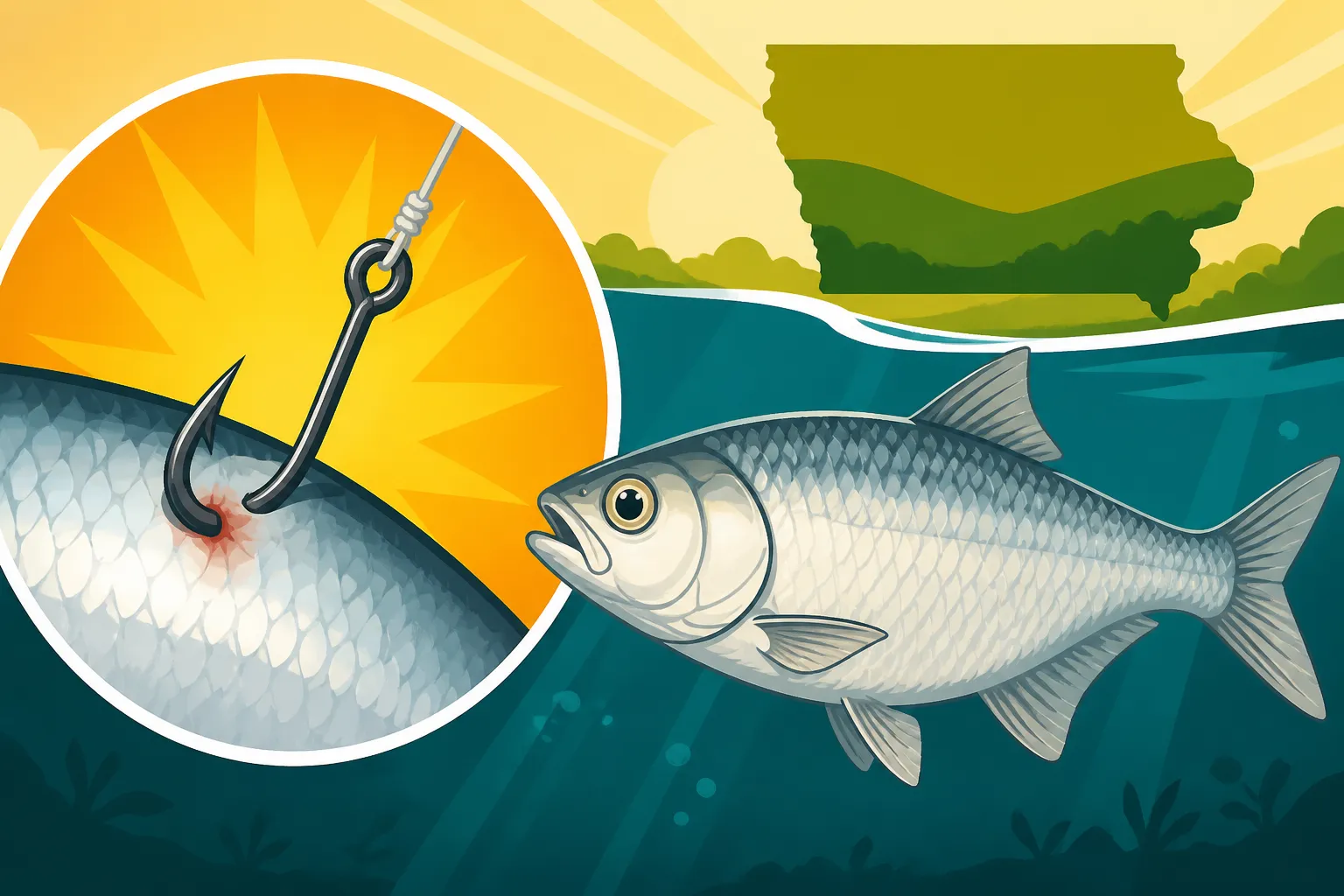
It's a question many Iowa anglers have pondered, often with a mix of frustration and curiosity: can you actually catch a gizzard shad on a hook? You've likely seen them dimpling the surface in vast schools, or perhaps you've pulled one out of a predatory fish's stomach, sparking that thought. The short answer is, not really with any consistency or intent using traditional hook-and-line methods. But don't despair! This guide is here to shed light on why these important forage fish are so elusive to a hook and what you can do if you need them for bait.
Understanding Gizzard Shad Behavior and Diet
Gizzard shad (Dorosoma cepedianum) are incredibly abundant in many Iowa waters, from large reservoirs to our major rivers. They form a crucial link in the food chain, serving as a primary food source for many of the sportfish we love to catch. But their unique lifestyle makes them a tough nut to crack for hook-and-line anglers.
What Makes Gizzard Shad Unique?
Unlike most of the fish we target, gizzard shad are primarily filter feeders. Imagine them as tiny, aquatic vacuum cleaners. Their mouths are perfectly adapted to strain microscopic plankton, algae, and detritus from the water. They don't have the sharp teeth or aggressive predatory instincts of a bass or walleye, nor do they root around for worms or insects like a catfish. Their diet consists of things you can't really put on a hook. This filter-feeding mechanism means they aren't looking for a minnow, a worm, or a crankbait to strike. They're constantly sifting the water, and a hook with bait just isn't part of their natural feeding behavior.
They also move in incredibly dense schools, often numbering in the hundreds or even thousands. This schooling behavior offers protection from predators but also means if you do somehow get a hook near them, it's more likely to be a foul hook on the outside of their body than a clean mouth hook. It's a common misconception that because they are so numerous, they must be easy to catch. In reality, their abundance just highlights how successful their filter-feeding strategy is, and how different it is from what we usually try to entice with a hook.
The Gizzard Shad's Place in the Iowa Ecosystem
Don't underestimate the gizzard shad, even if they won't bite your hook! These fish are the backbone of many aquatic ecosystems in Iowa. They convert tiny, otherwise inaccessible food sources like plankton into a readily available protein package for larger fish. Think of them as living energy bars for the lake. Without healthy populations of gizzard shad, our prized game fish like Walleye Fishing in Iowa, Largemouth Bass Fishing in Iowa, and Channel Catfish Fishing in Iowa would struggle to reach their impressive sizes.
When you're out fishing and see a school of shad dimpling the surface, or when your fish finder lights up with a bait ball, it's a good sign that the food chain is thriving. Many anglers specifically look for these shad schools because they know where the bait is, the predators aren't far behind. Understanding Iowa Fish Species Guide means recognizing that every creature, no matter how small or seemingly insignificant, plays a vital role. These shad keep our sportfish fat and happy, even if they aren't directly contributing to your cooler.
The Challenges of Catching Gizzard Shad on a Hook
So, if you've ever tried to catch a gizzard shad on a tiny hook with a piece of bread or a small worm, and ended up empty-handed or with a snagged fish, you're not alone. It's a universal experience for anglers trying to figure out these tricky baitfish.
Why Conventional Hook-and-Line Methods Fail
The primary reason why conventional hook-and-line methods are ineffective for gizzard shad boils down to their anatomy and feeding strategy. Their mouths are small and soft, designed for siphoning water, not for engulfing prey or bait. They simply don't have the instinct to "bite" a hook in the way a bass or even a bluegill would. Even if a piece of bait drifted into their path, it's highly unlikely they would mouth it with enough force to get hooked in the jaw. It's like trying to catch a cow with a fishing lure; it's just not what they're built for.
Anglers often assume that if a fish is in the water, it can be caught on a hook. But gizzard shad defy this assumption due to their evolutionary adaptations. They've specialized in a diet that doesn't involve striking at objects, which means they lack the sensory cues and predatory responses that make other fish susceptible to lures or baited hooks. You could have the most expensive tackle or the most enticing bait, and it would likely go ignored by a gizzard shad. This makes targeting them directly with a rod and reel almost an exercise in futility.
Accidental Catches: When a Shad Might "Bite"
While intentional catches are practically non-existent, accidental hook-ups do happen. These aren't usually true "bites" but rather instances of foul-hooking or snagging. Imagine a dense school of gizzard shad swimming through the water, practically shoulder to shoulder. If you're casting a small lure or a tiny jig into the middle of that school, there's a chance your hook might snag one by the side, tail, or even the top of its head. It’s less about the fish wanting to eat your offering and more about your hook passing through its body in a crowded environment.
Sometimes, especially with very tiny hooks and micro baits (like a single piece of corn or a small piece of bread dough), an exceptionally curious or unlucky shad might actually "mouth" it and get lightly hooked in the corner of its jaw. These instances are extremely rare and almost always a fluke rather than a repeatable fishing technique. It's not something you can reliably replicate for bait collection. If you find yourself in this situation, consider it a statistical anomaly rather than a secret method for catching shad. For most practical purposes, if you need gizzard shad, you'll need to explore other means.
Alternative Methods for Obtaining Gizzard Shad (for Bait)
Okay, so we've established that trying to catch gizzard shad on a hook is a losing battle. But what if you need gizzard shad? They are, after all, some of the best natural bait for trophy fish in Iowa. The good news is, there are highly effective, and often preferred, methods for collecting them.
Cast Nets: The Primary Method for Shad Collection
When it comes to gathering gizzard shad, the cast net is truly your best friend. These specialized nets are designed to be thrown by hand, spread out, and sink quickly, ensnaring schools of baitfish. They are incredibly efficient at catching gizzard shad, precisely because these fish school in such large numbers. You simply locate a school, often near the surface or along submerged structures, cast your net, and retrieve your haul. It's a technique that directly addresses the schooling and non-biting nature of the shad.
Before you go out and buy a cast net, though, it's crucial to understand the local regulations. Iowa Fishing Regulations Explained will be your go-to resource, as rules regarding cast net use, mesh size, and specific water bodies can vary. Generally, cast nets are permitted in many Iowa waters, but there might be restrictions on diameter or where they can be used. A good quality cast net, typically ranging from 4 to 8 feet in radius, can be found at most sporting goods stores or online retailers like Amazon. When choosing one, consider the mesh size – too large, and smaller shad will escape; too small, and it might be too heavy or illegal. For most gizzard shad, a 3/8-inch mesh is a popular choice, effectively retaining them while still allowing the net to sink adequately.
Other Less Common Techniques (and their limitations)
While cast nets are the undisputed champion for recreational anglers seeking gizzard shad, a few other methods exist, though they come with significant limitations or are not legal for typical anglers. For instance, electrofishing is an incredibly effective scientific method for stunning and collecting fish, but it's exclusively used by fisheries biologists for population surveys and is absolutely illegal for public use. It's a powerful tool, but not one you'll find in your tackle box.
Dip netting can sometimes be effective in very specific, confined situations, such as shallow spawning areas or where shad are temporarily trapped in a small pool. However, it's highly situational and nowhere near as efficient or versatile as a cast net for covering larger areas or deeper water. Similarly, fine mesh seines might be used in some research or commercial operations, but they often require multiple people and specific conditions to deploy effectively, making them impractical for most individual anglers. Ultimately, for the average angler wanting to catch shad for bait, focusing on mastering the cast net is the only truly viable and legal option.
The Value of Gizzard Shad as Bait in Iowa
So, why go through all the trouble of cast-netting these filter feeders? Because for many of Iowa's most prized game fish, a gizzard shad is like a gourmet meal. The effort is well worth it when you're targeting big predators.
Why Predatory Fish Love Gizzard Shad
Predatory fish in Iowa, such as big walleye, largemouth bass, and especially monster catfish, are hardwired to recognize and hunt gizzard shad. Shad are a high-protein, fatty food source that represents a substantial meal, crucial for growth and energy. When a big predator sees a shad, it sees an easy, nutritious snack. This makes them incredibly effective bait. Their natural oily scent disperses in the water, creating a powerful attractant that artificial lures can only hope to mimic.
Many of the top Iowa Fishing Techniques Guide revolve around "matching the hatch" – meaning using bait or lures that resemble the natural forage of the target species. In many Iowa lakes and rivers, gizzard shad are the hatch to match. Live shad, where permitted, have an irresistible natural movement. Cut shad, on the other hand, releases a strong blood and oil trail that drives catfish wild. Even artificial lures designed to imitate gizzard shad are popular for a reason: they tap into that primal predatory instinct. If you're serious about catching big fish, especially when other baits are failing, a fresh gizzard shad can be the ultimate game-changer. Just remember to check the Rules for Transporting Live Fish if you plan to move them to a different body of water, as this is often regulated.
Preparing and Using Shad as Bait
Once you've successfully gathered your gizzard shad, the next step is to prepare and use them effectively. The most common uses are as live bait (if regulations allow and it's feasible) or as cut bait. For species like How to Catch Walleye in Iowa or bass, a lively shad on a weighted hook can be deadly. You might hook it through the back or lips, allowing it to swim naturally and entice nearby predators. Keeping them alive can be a challenge, requiring a good aerated livewell or bait bucket, often found on Amazon, especially if you plan a longer trip.
For catfish, cut bait is king. A gizzard shad can be cut into steaks, strips, or even chunks, with the blood and oils leaching out to create an irresistible scent trail. Many anglers prefer to use the head or the meaty body sections for larger catfish. For How to Catch Catfish in Iowa, this is often considered a top-tier bait. You can also take this a step further by using shad-flavored commercial scent sprays or dips on your artificial lures to add that extra layer of natural attraction. The key is freshness: the fresher the shad, the more potent and effective it will be as bait.
Here's a quick comparison of the two main methods for getting your hands on gizzard shad:
| Feature | Conventional Hook & Line | Cast Net |
|---|---|---|
| Effectiveness for Shad | Extremely Low (accidental only) | Very High (designed for schooling baitfish) |
| Targeting Intent | Impractical for intentional catch | Primary method for intentional bait collection |
| Required Skill | Basic fishing, highly unreliable | Practice to throw accurately, highly reliable |
| Typical Catch | Rarely a shad, often foul-hooked | Multiple shad per throw |
| Gear Needed | Rod, reel, small hooks, tiny bait | Cast net (various sizes available on Amazon) |
| Legality | Generally legal (but ineffective) | Varies by state/water body, check regulations |
If you're looking for the Best Live Bait for Iowa Walleye or a potent offering for catfish, knowing how to procure gizzard shad is a valuable skill. And while they might not bite your hook, their contribution to our fisheries, both as a food source and as premium bait, is undeniable.
Disclaimer
This article is for general informational purposes only and does not constitute professional advice. Laws, prices and regulations vary by location and change over time. Consult a qualified professional for guidance on your specific situation.