How Wind Direction Affects Walleye Location
We've all been there: standing on the bank or out in the boat, watching the wind whip across the water, wondering if it's helping or hindering our walleye quest. It can be incredibly frustrating to hit a favorite spot only to find the fish are nowhere to be found, and often, the culprit is something as simple yet complex as the wind. Understanding how wind direction affects walleye location is crucial for any angler hoping to consistently put these elusive fish in the net here in Iowa. This guide will help you decode the wind's secrets and adapt your strategy for more successful days on the water.
The Science Behind Wind and Walleye Location
It might seem like just a breeze, but wind has a profound impact on the underwater world, and consequently, on where walleye choose to hang out. It's not just about the surface chop; it's a chain reaction that influences everything from water temperature to the availability of their favorite snacks. We often think of walleye as creatures of habit, but they're also highly opportunistic, always seeking comfort and an easy meal, and the wind dictates both.
Wind-Driven Currents and Water Movement
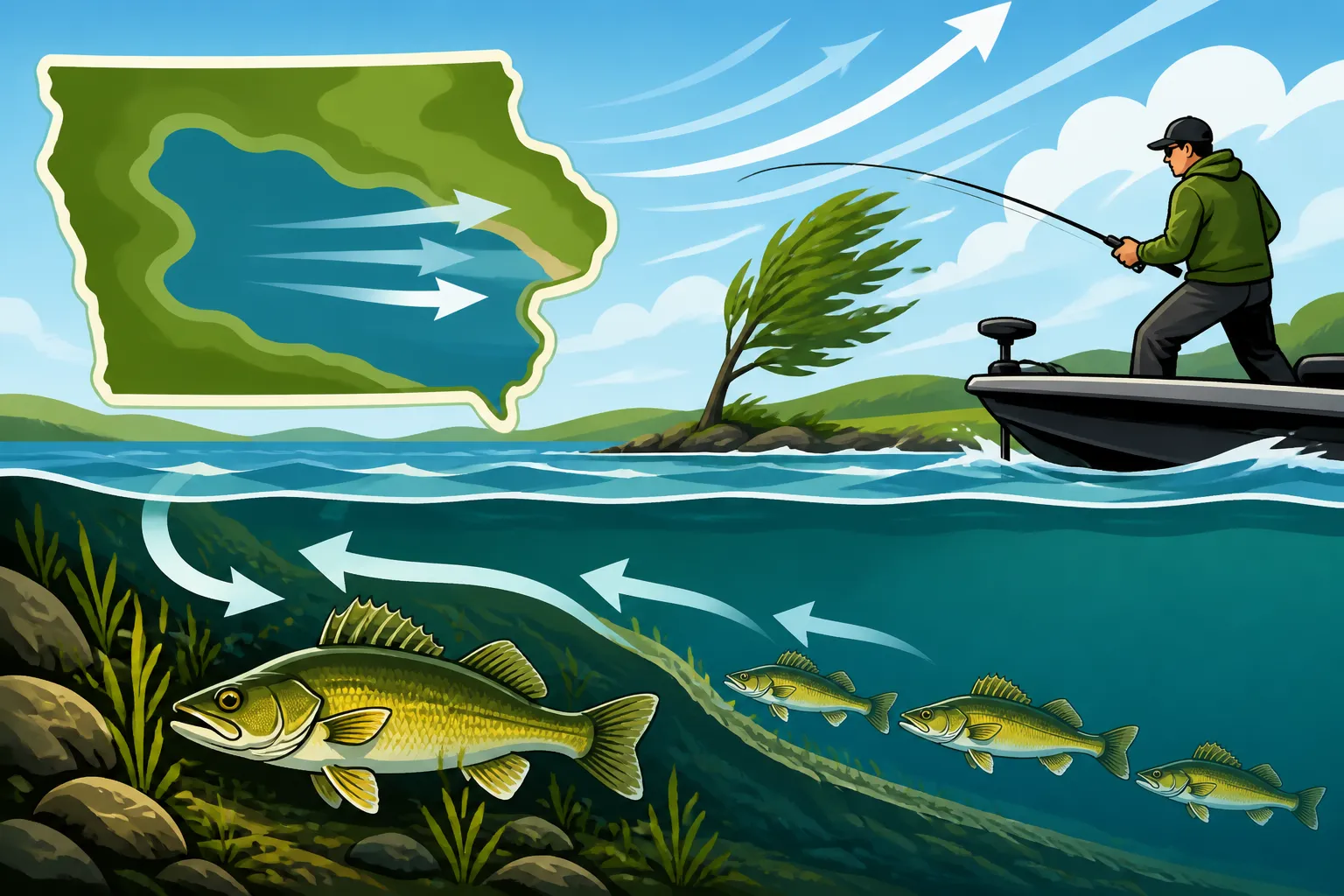
One of the most significant ways wind affects walleye is through the creation of currents and overall water movement. When a sustained wind blows across a lake or reservoir, it literally pushes the surface water, creating a current that can extend surprisingly deep, especially in shallower areas. This movement isn't just an inconvenience for us anglers; it's a critical factor for the fish. Forage fish, like shad or minnows, are often small and not strong swimmers, making them susceptible to these wind-driven currents. They get pushed along, sometimes congregating on the wind-blown side of a lake or around points and structures that break the current.
Walleye, being apex predators, follow their food. If the baitfish are being pushed to a particular area, the walleye won't be far behind. These currents also help to oxygenate the water, particularly in warmer months, which can be a huge draw for active fish. Imagine a stagnant cove versus a choppy, oxygen-rich point – the walleye will almost always prefer the latter, especially if there's a buffet of baitfish being delivered right to them. This effect is especially pronounced in larger bodies of water, like the Iowa Great Lakes, where a strong, consistent wind can dramatically alter the underwater landscape over several hours.
Turbidity and Walleye Vision
Another crucial element wind influences is water clarity, or turbidity. A strong wind churning up the water can lift sediment from the bottom, especially in shallower areas or places with soft, mucky substrates. This increased turbidity can make the water cloudy or even muddy. Now, many fish struggle in dirty water, but walleye actually thrive in it. They have exceptionally large, sensitive eyes that are adapted for low-light conditions, giving them a distinct advantage over many prey species when the water gets murky.
This means that a wind-blown bank, while potentially rough to fish, might actually be creating prime hunting conditions for walleye. The reduced visibility acts like a natural camouflage for the walleye, allowing them to ambush baitfish more easily. Conversely, the baitfish, disoriented by the chop and reduced visibility, become easier targets. This phenomenon is often observed on expansive waters like Rathbun Lake or Saylorville Reservoir, where certain shallow flats can get quite churned up by the wind, turning into feeding zones for walleye. Don't be afraid to fish slightly stained water; it might just be exactly what the walleye are looking for.
How Different Wind Directions Affect Walleye Hotspots
Understanding the general principles is one thing, but applying them to specific wind directions is where the real magic happens. It’s not enough to know that wind matters; you need to know how to react to a north wind versus a south wind on your favorite body of water. Each wind direction can create unique conditions that either concentrate walleye or spread them out.
Onshore Winds: The Walleye Magnet
When the wind blows directly into a shoreline or structure, we call it an "onshore" wind, and this is often an angler's best friend when targeting walleye. Picture yourself on a lake in Iowa, and a steady wind has been hitting the eastern shore for several hours. What's happening? That wind is pushing warm surface water (if it’s a warm-weather wind), oxygen, and most importantly, baitfish directly into that bank. The baitfish, trying to escape the open water turbulence, will often seek refuge in the slightly calmer water closer to shore, or they'll simply be driven there by the current.
This creates a high-activity feeding zone. Walleye will move into these wind-blown banks, points, and even rip-rap areas to capitalize on the concentrated food source. The chop on the surface also helps break up light penetration, making the walleye feel more comfortable moving into shallower water, even during the day. Areas like the wind-swept points on West Okoboji Lake or the rock rip-rap along public access points on larger reservoirs often light up during these conditions. When you're considering your Iowa Fishing Techniques Guide for walleye, always prioritize these wind-blown areas first.
Offshore Winds: The Dispersal Effect
An offshore wind, conversely, blows away from the shoreline, pushing water and baitfish out towards the open lake. This can be a bit trickier for walleye fishing, as it tends to disperse the baitfish rather than concentrating them. The near-shore areas become calmer and clearer, which often makes walleye less comfortable moving into them during daylight hours, as they prefer those low-light conditions.
However, offshore winds aren't necessarily a death sentence for walleye fishing. Instead of focusing on the immediate shoreline, you might need to adjust your strategy to target transition areas where baitfish might be accumulating as they're pushed out. This could mean looking for deeper structure just off the shore, such as submerged humps, rock piles, or weed lines where fish can ambush passing prey. Another strategy is to look for areas where the wind starts to churn as it moves further out, creating a "seam" where calmer water meets choppier water. Often, the fish will position themselves along this seam, waiting for food to be carried past. On a vast body of water like the Mississippi River in Iowa, offshore winds might push bait into current breaks or eddies further out from the main channel, requiring a different approach.
Crosswinds and Current Seams
Crosswinds, where the wind blows parallel or at an angle to the shore, can create some of the most dynamic and often overlooked walleye hotspots. These winds don't create a direct "push" into or away from the bank but rather generate a subtle current that runs along the shoreline or across points. This can be particularly effective because it often creates distinct current seams where faster-moving, wind-driven water meets calmer water. Walleye are masters at using these seams to their advantage.
They'll position themselves just out of the main current, often on the calmer side of the seam, waiting for baitfish and other food items to be swept past. These current breaks can occur around points, submerged humps, or even inside protected bays where the crosswind still creates a gentle flow. Learning How to Read Water for Structure Fishing becomes paramount here. Look for subtle lines on the surface, areas where debris might accumulate, or changes in water color indicating where different water masses are interacting. A fish finder, easily found on a platform like Amazon, can also be invaluable for identifying these subtle underwater currents and the fish holding in them. These scenarios are common on many of Iowa's larger reservoirs where the geography allows for complex wind interactions.
Practical Strategies for Anglers
Knowing why wind affects walleye is the first step, but putting that knowledge into action on the water is what truly makes a difference. Adjusting your approach based on the wind can turn a slow day into a memorable one.
Reading the Water and Interpreting Wind
The first and most critical step is to truly "read the water." Before you even cast a line, take a moment to observe the wind's direction and strength. Look at the waves, the foam lines, and how the current is moving any floating debris. Is it a strong, sustained wind, or is it gusty and shifting? A long, consistent blow will have a much more significant impact on walleye location than a short, intermittent breeze.
Consider the layout of the lake or river you're fishing. Where are the main points, bays, and flats relative to the wind direction? If the wind is blowing into a shallow flat, that area is likely to be churned up and potentially holding active walleye. If it's blowing offshore, you might want to move deeper or look for protected leeward (downwind) sides of islands or points where baitfish might be congregating in calmer water. Remember, walleye are often found on the edges of these wind-affected zones – where the current begins or ends, or where murky water meets clearer water. For instance, on the Mississippi River, you might find walleye stacked up below a wing dam on the wind-blown side, creating an excellent opportunity for Jigging Techniques for River Walleye.
Lure and Presentation Adjustments for Windy Conditions
Wind doesn't just dictate where the fish are; it also influences how you need to present your lures. Casting into a strong wind can be incredibly challenging, and maintaining a feel for your bait can be even harder. This is where adjustments to your gear and technique come into play.
- Heavier Lures: When fishing windy, choppy areas, you'll often need to use heavier jigs or crankbaits to get your presentation down to the strike zone and keep it there. Lighter baits will simply get swept away by the current and waves, preventing you from reaching the fish. If you're drifting or trolling, heavier bottom bouncers or deeper diving crankbaits might be necessary.
- Line Choice: Braided line has less stretch and a thinner diameter than monofilament, which can help you maintain better contact with your lure in windy conditions, especially when jigging or casting. However, it can also be more prone to wind knots if not handled carefully.
- Casting Techniques: Instead of overhead casts, try sidearm or roll casts to keep your lure lower to the water and reduce wind resistance.
- Trolling: Trolling into or with the wind can be effective, but you'll need to constantly adjust your speed to maintain the desired lure action. Sometimes, a faster troll into the wind can help keep your baits deep, while a slower troll with the wind might be necessary to prevent them from rising too high in the water column. Finding the right Best Trolling Speed for Walleye is critical here.
- Live Bait Rigs: For live bait, like a minnow on a How to Rig a Live Minnow for Walleye setup, heavier sinkers can help keep your bait near the bottom where walleye are likely feeding in wind-blown areas. A good selection of diverse weights can be found at any well-stocked tackle shop or online from retailers like Amazon.
Safety First: Fishing in Windy Conditions
While wind can be a friend to walleye anglers, it can also be a significant safety hazard, especially on larger bodies of water. Always prioritize your safety and the safety of anyone fishing with you.
- Check the Forecast: Before heading out, always check the marine or wind forecast. Strong winds can quickly whip up dangerous waves on Iowa's lakes and reservoirs.
- Boat Size and Stability: If you're in a boat, be realistic about its size and stability. A small johnboat might be perfectly fine on a calm day, but it can quickly become unsafe in heavy chop. Consider what the Best Boats for Iowa Fishing are for different conditions.
- Life Jackets: Always wear your life jacket, especially in windy or choppy conditions. Accidents can happen quickly.
- Know Your Limits: If the wind becomes too strong, or if you feel uncomfortable, don't hesitate to pull off the water or find a more protected area. There's always another day to fish.
- Shore Fishing Precautions: Even from shore, high winds can make casting difficult and uncomfortable. Dress warmly, protect your eyes from blowing sand or debris, and be mindful of your footing near slick, wet rocks.
Spotting the "Wind-Blown Bank" and Other Key Features
When you're trying to figure out where the walleye are, a critical concept is the "wind-blown bank." This isn't just a generic shoreline; it's a dynamic zone created by sustained wind, and it's where you want to be.
Understanding Walleye Forage and Wind's Impact
Walleye are opportunistic feeders, and their diet consists mainly of smaller baitfish like shad, minnows, and even young perch or crappie. Wind plays a direct role in concentrating these forage species. As wind pushes water, it essentially herds these baitfish. Imagine a strong west wind on Clear Lake; the western shore will become a buffet line for walleye because all the smaller fish are getting pushed right into it. They're disoriented, trying to find shelter from the waves, and often end up in shallower water where they become easy targets.
Beyond baitfish, wind can also concentrate zooplankton and other microscopic organisms that smaller baitfish feed on. This creates a food chain reaction: zooplankton attract small baitfish, and small baitfish attract walleye. This is why a consistent wind can be so powerful. It doesn't just move fish; it sets up an entire ecosystem's feeding cycle in a particular area. When the wind switches, the walleye will often follow this shift in forage concentration. This dynamic is a key consideration when planning your fishing trips, helping you understand When Iowa Walleye Season Opens and where to focus your efforts.
Best Locations for Different Wind Speeds
Not all wind is created equal, and different wind speeds will call for different strategies.
- Light Breeze (0-5 mph): A very light breeze might just create a ripple on the water. This can be beneficial as it breaks up the surface, making walleye feel more comfortable in shallower water without creating strong currents. Focus on typical walleye haunts like points, humps, and weed edges, but with less emphasis on extreme wind-blown areas. The fish might be more scattered.
- Moderate Wind (5-15 mph): This is often considered the "sweet spot" for walleye fishing. It creates noticeable chop and current, driving baitfish and oxygen without making conditions too rough for anglers or fish. This is when those classic wind-blown banks, points, and transition zones truly shine. The walleye will be actively feeding, positioned to ambush. This is the perfect time to explore aggressive presentations like casting crankbaits or jigging heavier baits.
- Strong Wind (15+ mph): While strong winds can be excellent for walleye feeding activity, they can also be incredibly challenging and potentially dangerous for anglers, especially on large open bodies of water. If you can safely fish, look for areas with natural protection from the direct force of the wind, but which still receive the "spillover" of wind-driven current and baitfish. This might be a slightly more protected cove adjacent to a wind-blown point, or the downstream side of a major structure like a bridge or dam that creates a powerful current break. You might also find walleye deeper, seeking refuge from the surface turmoil but still in areas influenced by the underlying currents. Always err on the side of caution when faced with truly strong winds.
When you're out on the water, whether you're targeting the majestic walleye of the Iowa Great Lakes or searching for them in the currents of the Des Moines River, paying close attention to the wind is paramount. It’s a dynamic force that can either be your greatest ally or your biggest challenge. Learn to read it, adapt to it, and you'll find yourself bringing more Iowa walleye to the boat.
| Wind Direction | Walleye Behavior | Best Locations | Fishing Strategy |
|---|---|---|---|
| Onshore | Walleye move to the wind-blown side, feeding actively on concentrated baitfish and taking advantage of reduced light penetration. | Wind-swept points, shallow flats, rip-rap banks, rocky shorelines, weed lines on the windy side. Look for areas with crashing waves and churned water. | Focus on casting crankbaits, jigs, or even slip bobber rigs with live bait right into the turbulent zones. Fish shallow, even during the day. Use heavier baits to maintain contact with the bottom. Consider power-trolling parallel to the wind-blown bank. |
| Offshore | Walleye tend to disperse from the immediate shore or move to deeper structure. Baitfish are pushed to open water. | Deep breaks just off shore, submerged humps, offshore reefs, deeper points or ledges that still offer current breaks. Look for wind-blown surface current seams further out in the lake. | Target deeper structure with vertical jigging, drop-shotting, or deep-diving crankbaits. If baitfish are being pushed far out, look for walleye suspended beneath them in open water, often found with a fish finder. Consider trolling deeper open water or focusing on protected leeward sides that might create an eddy. |
| Crosswind | Walleye position themselves in current seams and eddies, ambushing baitfish carried along the parallel current. | Side of points, gradual sloping banks, areas where the wind-driven current creates distinct "lines" or seams on the water. Inside protected bays where the crosswind still creates a gentle flow. | Drift fishing along current seams using jigs or live bait rigs can be highly effective. Casting parallel to the shore, working lures through the current break. Pay close attention to your boat's drift and presentation speed, as fish might be very particular about how the bait is presented in these subtle current zones. |
| Calm/No Wind | Walleye often relate tightly to structure or suspend in deeper water, typically less active during daylight hours. | Deep structure, main lake points, sunken islands, deep weed edges. During low light, they might move shallower to feed. | Focus on low-light periods (dawn/dusk). Use subtle presentations like slow retrieves, finesse jigs, or slip bobbers with live bait. Fish deeper structure carefully, using electronics to pinpoint fish. Consider night fishing, as walleye will often move shallower to feed under the cover of darkness. |
Disclaimer
This article is for general informational purposes only and does not constitute professional advice. Laws, prices and regulations vary by location and change over time. Consult a qualified professional for guidance on your specific situation.