How to Catch Walleye at Night
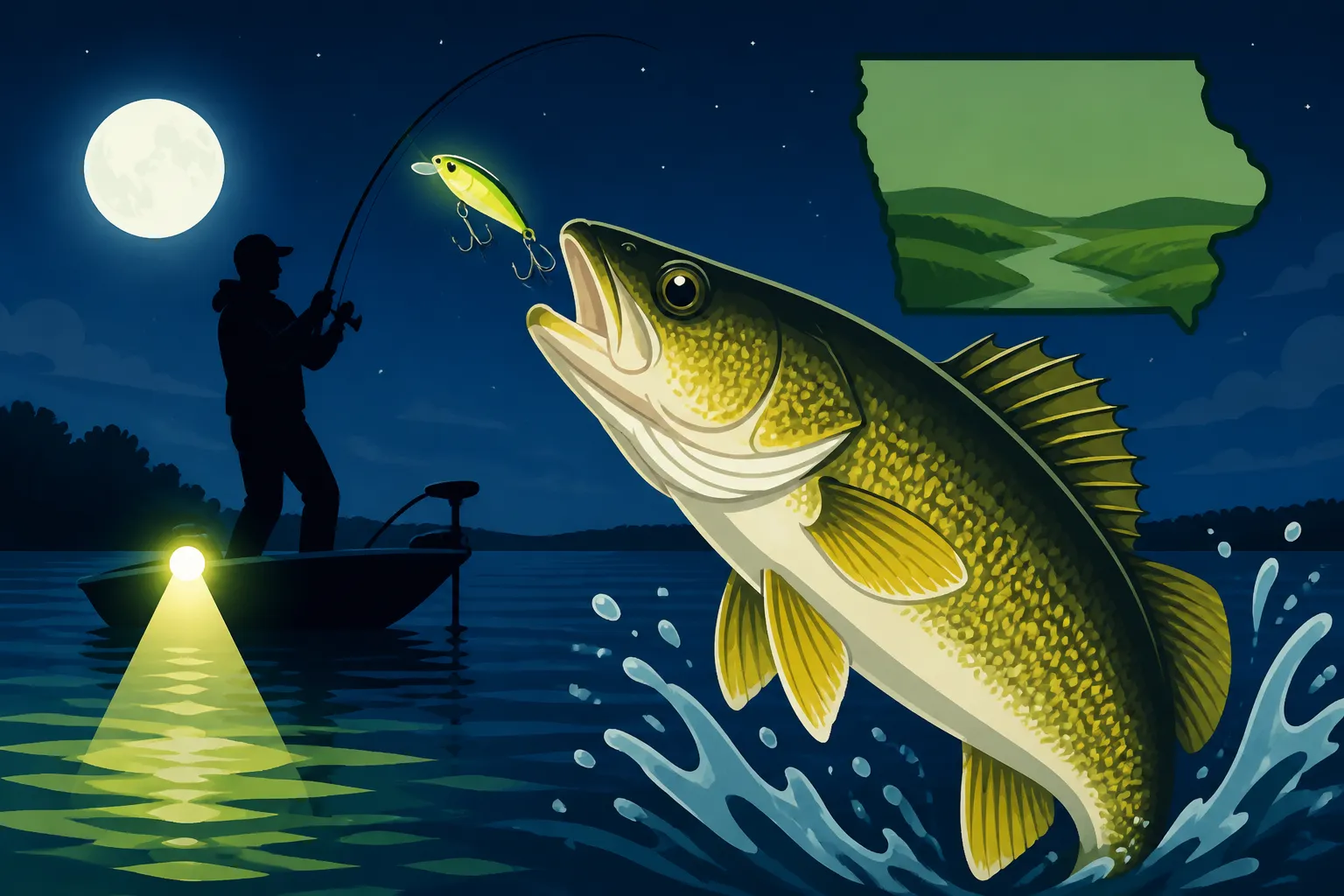
If you've spent frustrating days on Iowa's waters, casting and reeling without much to show for your walleye efforts, you're not alone. Walleye can be notoriously elusive during the bright sunshine, often preferring deeper, darker hideouts. But when the sun dips below the horizon, a whole new world of opportunity opens up for these cunning predators. This guide is all about unlocking the secrets to how to catch walleye at night, transforming those slow daytime trips into thrilling after-dark successes.
The Nocturnal Advantage: Why Walleye Hunt After Sundown
It might seem counterintuitive to head out when you can barely see your hand in front of your face, but for walleye, twilight and darkness are prime hunting times. Understanding why they become more active after dusk is the first step to figuring out how to catch them.
Walleye's Specialized Vision in Low Light
Walleye possess incredible vision, specifically adapted for low-light conditions. Their eyes have a tapetum lucidum, a reflective layer behind the retina, which essentially gives them "night vision." This reflective layer gathers and amplifies whatever minimal light is available, making them superior predators in dim environments. While other fish might struggle to see in the murk, walleye thrive, turning the tables in their favor. This means that as darkness falls, they gain a distinct advantage over their prey, and often, over the angler who packed up at sunset.
Think of it like this: during the day, the walleye might be in deeper, shadier water to avoid bright light and hide from larger predators. But at night, they can comfortably move into shallower feeding grounds, where baitfish, disoriented by the fading light or simply less cautious without the sun's glare, become easier targets.
Cooler Waters and Reduced Pressure
As the sun sets, the water temperature begins to drop, especially in shallower areas. While not a dramatic shift, even a slight cooling can stimulate fish activity, particularly during warmer months. Walleye are often more comfortable and active in cooler water. This temperature change, combined with the decreased boat traffic and human activity, creates a more tranquil environment. Fewer motors running, fewer lines splashing, and less overall disturbance can make walleye feel safer and more inclined to roam and feed freely. It’s like the busy daytime restaurant clearing out, allowing the more reserved diners to finally come out and enjoy their meal.
You'll often find that the biggest walleye, the ones that are shy and elusive during the day, are the very ones that venture out under the cloak of darkness. They feel secure enough to abandon their deepwater sanctuaries and cruise the flats or shallow breaks where forage is abundant.
Baitfish Become More Accessible
Walleye don't just move for their own comfort; they follow their food. Many baitfish species, such as shiners, ciscoes, and perch, become more active or move into shallower water to feed on plankton or insects that are also more active at night. These baitfish, without the bright sun to reveal their every move, are often less wary and more exposed.
When these schools of baitfish rise from deeper water or congregate in shallower bays and points, the walleye are right there with them, ready to capitalize on the easy meal. Understanding this nocturnal migration of baitfish is crucial. If you can locate where the baitfish are staging after dark, you're halfway to finding the walleye. This often means focusing on the edges of weed beds, submerged structures, or shallow points leading to deeper water.
Essential Gear for Your Nocturnal Walleye Adventure
Fishing at night requires a few specialized pieces of gear, not just for catching fish, but for safety and comfort. Don't just grab your daytime tackle box and head out; a little preparation goes a long way when you're navigating the dark.
Rods, Reels, and Line Choices for Night Fishing
For walleye, sensitivity is paramount, especially when fishing after dark where you're relying purely on feel.
- Rods: Opt for a medium-light to medium power rod, typically 6'6" to 7'6" in length, with a fast or extra-fast action tip. This provides the backbone to fight a strong walleye while having a super sensitive tip to detect subtle bites. Graphite rods are excellent for this as they transmit vibrations exceptionally well.
- Reels: A good quality spinning reel in the 2500-3000 size range or a baitcasting reel with a smooth drag system is ideal. Ensure it's spooled with fresh line.
- Line: Many anglers prefer braided line for its zero stretch and incredible sensitivity, which helps you feel those faint nibbles in the dark. A 8-15 pound test braided line is usually sufficient, and you can add a fluorocarbon leader (6-10 lb test) for invisibility in clear water and abrasion resistance. If you prefer monofilament, choose a low-memory, high-visibility option in 8-12 lb test. Some even suggest Braided Line vs Monofilament for Walleye depending on the specific technique. You can always check out a wide variety of "fishing gear" options on Amazon before your next trip.
Illumination: Your Guiding Light in the Dark
This is perhaps the most critical piece of gear for night fishing, not just for tying knots, but for safety and navigation.
- Headlamps: A good headlamp with multiple brightness settings and a red-light option is indispensable. The red light preserves your night vision, allowing your eyes to adjust quicker after looking at something illuminated. A bright white light is good for rigging, but use it sparingly to avoid blinding yourself or your fishing buddies. Need to upgrade? There's a great selection of "best headlamp brightness for night fishing" available on Amazon.
- Boat Lights: If you're fishing from a boat, ensure all navigational lights are fully functional and properly displayed. Consider adding a few portable LED utility lights to illuminate your deck for safer movement and rigging.
- Glow Sticks/Lights: These are fantastic for marking bobbers, rod tips, or even specific spots on your boat. Small clip-on glow sticks for your bobbers make it incredibly easy to see when a walleye takes the bait, offering a clear visual cue in the dark.
Essential Safety & Comfort Items
Night fishing in Iowa, especially in cooler seasons or on large bodies of water, requires extra attention to safety and comfort.
- Life Jackets: This isn't optional; it's non-negotiable. Wear a Coast Guard-approved life jacket at all times, especially when moving on the water or when conditions are choppy. In the dark, hazards are harder to see, and accidents can happen quickly.
- Warm Clothing: Even on a mild summer day, nights in Iowa can get surprisingly cool, especially on the water. Dress in layers, including waterproof outer shells. A good stocking hat and gloves can make a huge difference in comfort.
- First-Aid Kit: Always have a well-stocked first-aid kit readily accessible for minor cuts, hook punctures, or other mishaps.
- Bug Spray: Mosquitos and other biting insects can be relentless after dark, particularly in certain areas. Don't let them ruin your experience; apply repellent generously.
- Communication Device: A fully charged cell phone (in a waterproof case) or a marine radio is vital for emergencies.
- Navigation: A GPS unit or a map of the lake/river you're fishing is crucial. Navigating in the dark can be disorienting, even on familiar waters.
Top Night Fishing Techniques for Iowa Walleye
Walleye behavior changes at night, and so should your tactics. The slow, methodical approach often yields the best results. These techniques capitalize on the walleye's nocturnal feeding patterns.
Slow Trolling with Crankbaits
Trolling is a fantastic way to cover water and locate active walleye after dark, particularly in larger lakes like Fishing the Iowa Great Lakes or the Mississippi River. The key here is slow.
- Speed: Aim for a very slow trolling speed, typically 1.0 to 1.8 miles per hour. Walleye are often less aggressive at night and prefer an easy meal that doesn't require much chase.
- Crankbait Selection: Use shallow-running or medium-diving crankbaits that mimic the local baitfish. Jointed crankbaits often have a more erratic, enticing action at slower speeds. Choose lures with rattles to add sound attraction in the dark water. For colors, many night anglers swear by dark, silhouetted patterns (like black, dark purple, or blue) or bright, contrasting patterns (chartreuse, firetiger) that stand out against the moonlit or starlit surface. Some anglers even add glow tape to their crankbaits for extra visibility.
- Depth Control: Use your fish finder to monitor depth and identify submerged structures. If you're not using electronics, vary your line length to experiment with different depths until you find where the walleye are holding. You can explore more about Best Trolling Speed for Walleye to fine-tune your approach.
- Target Areas: Focus on distinct structural elements like points, humps, weed line edges, and the break lines leading from shallow flats to deeper water. Walleye will often cruise these edges, ambushing baitfish.
Jigging Near Structure
Vertical jigging can be incredibly effective when you've pinpointed a specific area where walleye are concentrated, such as over a submerged hump or around a bridge pilings on the Fishing the Mississippi River in Iowa.
- Jig Selection: Glow jigs are your best friend here. The subtle glow can be a powerful attractant in the dark. Tip your glow jig with a live minnow, a piece of nightcrawler, or a scented soft plastic. Jigs weighing between 1/8 to 1/2 ounce are common, depending on depth and current.
- Presentation: Drop your jig directly below the boat or off the bank, allowing it to hit the bottom. Then, impart a subtle lift-and-drop motion, letting the jig fall back on a semi-slack line. Most bites will occur on the fall or when the jig is paused near the bottom. The takes can be very light—often just a slight "tick" or a feeling of added weight—so pay close attention to your line.
- Location: Target areas with current breaks, rock piles, downed trees, or any other structure that provides ambush points for walleye. These are natural congregating spots for both predators and prey. When you know How Deep to Fish for Walleye in Spring, you can adapt similar depth principles for night fishing, though walleye often move shallower in the dark.
Slip Bobber Mastery
Using a slip bobber setup is a fantastic way to present live bait at a precise depth, which is often crucial for nocturnal walleye. This method is particularly useful when walleye are suspended at a specific depth or are cruising along a distinct contour.
- Setup: Rig your line with a bobber stop, a small bead, a glow slip bobber, a small weight (like a split shot or an egg sinker), and a plain hook (size 4-8, depending on bait size).
- Bait: Live minnows (shiners or fatheads) are usually king for this technique. Hook them lightly through the lips or just behind the dorsal fin. Leeches and nightcrawlers can also be very effective. Ensure your bait is lively and swimming naturally. You can learn more about Best Live Bait for Iowa Walleye to help you decide.
- Depth Control: The beauty of a slip bobber is that you can easily adjust your bait's depth. Experiment by moving your bobber stop up or down the line until you find the strike zone. Walleye often cruise just above the bottom or along the top of weed beds at night.
- Visual Strike: The glow bobber is key. When a walleye takes your bait, the bobber will usually dip, move sideways, or simply disappear. Give the fish a few seconds to fully take the bait before setting the hook firmly. This technique is often more effective than standard fixed bobbers because you can cast further and manage line more easily without the bobber impeding the cast. You'll find many useful glow bobbers on Amazon for this specific application.
Baits and Lures That Shine in the Dark
When the sun goes down, what tempts a walleye the most? It often comes down to scent, vibration, and a subtle visual appeal that leverages their excellent night vision.
Live Bait Dominance
It's hard to beat the natural appeal of live bait for night walleye, especially when they're less aggressive.
- Minnows: Live minnows like fatheads, shiners, or creek chubs are consistently effective. Their natural scent and erratic swimming action are irresistible to walleye. Present them on a plain hook under a slip bobber, or slowly retrieved on a Lindy Rig or simple split shot rig. Always consider How to Rig a Live Minnow for Walleye for the best presentation.
- Leeches: During warmer months, leeches are a walleye magnet. They are incredibly tough, stay lively for a long time, and offer a unique wriggling action. They can be fished under a bobber or on a jig.
- Nightcrawlers: A classic for a reason. Thread a whole or half nightcrawler onto a hook, either under a bobber or on a slow-drift rig. The scent trail and subtle movement are very appealing.
Artificials with an Edge: Glow, Rattle, and Dark Profiles
While live bait often reigns supreme, certain artificials can be incredibly productive, especially if you want to cover ground.
- Glow Lures: Jigs, spoons, and even some soft plastics come in glow-in-the-dark varieties. Charge them with a flashlight periodically to maintain their glow. The subtle luminescence can be just enough to grab a walleye's attention without being too overwhelming in the dark.
- Dark Profile Plastics: When fishing clear water under a bright moon, a dark-colored soft plastic jig (black, purple, dark blue) can create a strong silhouette against the lighter sky or water surface, making it easier for walleye to spot. Paddle-tail swimbaits, grubs, and curly-tail worms rigged on a jig head are excellent choices.
- Rattling Crankbaits: Sound can be a huge factor in dark water. Crankbaits with internal rattles emit vibrations that walleye can detect with their lateral lines, drawing them in even when visibility is minimal. Choose models that run at the depth you're targeting. These can be particularly effective when slow trolling. Consider the classic Rapala Shad Rap or Berkley Flicker Shad, both of which can be found on Amazon.
Prime Nighttime Walleye Haunts in Iowa
Knowing the right techniques and gear is only part of the battle; you also need to know where to cast your line. Walleye will gravitate to specific types of structure and depth zones after dark.
Lake Hotspots: Points, Humps, and Weed Lines
Iowa has many fantastic lakes where night walleye fishing can be exceptional.
- Points and Shoals: These are classic walleye holding areas. As night falls, walleye will often move up onto the shallower portions of points or the tops of submerged humps to feed. Focus on the transition zones where the shallow water drops off into deeper areas.
- Weed Lines: The edges of healthy weed beds provide cover for baitfish and are prime ambush points for walleye. Fish the outside edge of these weed lines, especially where they intersect with a drop-off or a channel. Walleye will often cruise these edges looking for unsuspecting prey. Lake spots like Clear Lake Walleye Fishing can be very productive around these features.
- Rock Piles and Riprap: Rocky areas, whether natural formations or man-made riprap along shorelines, attract crayfish and other small invertebrates, which in turn attract baitfish and walleye. Cast your lures parallel to these structures or slowly troll along them.
River Systems and Current Breaks
Iowa's rivers, especially border waters like the Mississippi River, offer incredible night walleye opportunities due to their diverse structure and consistent current.
- Wing Dams and Submerged Jetties: These structures are goldmines for river walleye, day or night. The current breaks created by wing dams allow walleye to rest out of the main flow while waiting for baitfish to be swept past. At night, they might move up onto the tops of the dams or cruise the eddy lines behind them. How to Fish a Wing Dam for Walleye provides great insights into these areas.
- Eddies and Slack Water: Any area where the current slows down, such as behind islands, large rocks, or bridge pilings, will concentrate baitfish and provide a calmer feeding ground for walleye. Work your jigs or troll your crankbaits through these areas.
- Deeper Holes and Channels: While walleye often move shallower at night, they will still relate to deeper holes and channels, especially on larger rivers. As they transition from deeper daytime haunts to shallower feeding areas, they’ll use these channels as highways. Drifting live bait through these deeper sections can be very effective. If you're looking for more general information, our comprehensive guide on Iowa Fishing Techniques Guide covers a lot of ground.
Table: Popular Night Walleye Baits & Lures
| Bait/Lure Type | Best Presentation | Key Attraction Features | Ideal Depth/Location |
|---|---|---|---|
| Live Minnows | Under slip bobber; slow retrieve on a rig | Natural scent, erratic movement, lifelike profile | Shallow to mid-depths; structure |
| Leeches | Under slip bobber; jig tipped | Toughness, sustained wriggling action, unique scent | Shallow to mid-depths; weed lines |
| Nightcrawlers | Under slip bobber; slow drift rig | Strong scent trail, subtle movement, classic appeal | Bottom-oriented; varied depths |
| Glow Jigs | Vertical jigging; casting & retrieving | Luminescence attracts in low light, subtle action with bait/plastic | Over structure; current breaks |
| Dark Soft Plastics | Jigged; slow retrieve on a jig head | Strong silhouette, natural swimming action, versatility | Weed edges, drop-offs, clear water |
| Rattling Crankbaits | Slow trolling; casting & slow retrieve | Vibrations and sound, aggressive action, covers water efficiently | Mid-depths to shallow flats, open water |
Safety First: Prioritizing Your Well-being After Dark
Fishing at night carries inherent risks that aren't present during the day. Taking a few extra precautions can ensure a safe and enjoyable trip.
Navigational Awareness and Lighting
As mentioned, proper lighting is paramount. Ensure your boat's navigational lights are fully functional and visible from all directions. Carry a powerful spotlight or handheld light to scan for hazards like floating debris, buoys, or other boats. Using a reliable GPS system with updated maps can prevent you from getting disoriented. Always travel at a slower, safer speed at night, especially in unfamiliar waters. Even on lakes you know well, landmarks disappear in the dark, making navigation tricky.
Never assume you're the only one out there. Other anglers, especially those tending trotlines or stationary fishing, might be out without proper lighting. Be extra vigilant.
Personal Safety and Emergency Preparedness
Beyond just navigation, your personal well-being is critical.
- Inform Others: Always tell someone where you're going, when you expect to return, and who you're with. This "float plan" is crucial in case of an emergency.
- Buddy System: If possible, fish with a partner. There's safety in numbers, and an extra set of hands or eyes can be invaluable in a pinch.
- Weather Watch: Check the weather forecast meticulously before heading out, and keep an eye on conditions while you're on the water. Storms, sudden winds, or heavy fog can turn a pleasant night into a dangerous situation very quickly.
- Warmth and Hydration: Staying warm and dry is not just about comfort; it's about preventing hypothermia, which can impair judgment. Bring plenty of water and snacks to stay hydrated and energized.
- Respect the Water: The water always deserves respect, but even more so at night. Avoid alcohol, wear your life jacket, and be aware of your surroundings at all times. If you have any doubts about conditions or your ability to navigate safely, it's always better to err on the side of caution and postpone your trip. For more on staying safe, review topics like Required Safety Equipment for Iowa Boats.
By embracing the darkness, understanding walleye behavior, and equipping yourself with the right gear and knowledge, you can unlock some of the most rewarding fishing experiences Iowa has to offer. The tranquility of the night, the subtle tap of a walleye bite, and the thrill of landing a trophy under the stars are experiences every angler should seek out. So, next time the sun sets, don't pack up – gear up!
Disclaimer
This article is for general informational purposes only and does not constitute professional advice. Laws, prices and regulations vary by location and change over time. Consult a qualified professional for guidance on your specific situation.