Fall Turnover and How It Affects Fishing
There's nothing quite like the crisp air and vibrant colors of an Iowa autumn, but for many anglers, fall brings with it a confusing and often frustrating phenomenon known as "fall turnover." You head out to your favorite lake, expecting fish to be biting aggressively as they fatten up for winter, only to find the bite completely shut down and fish seemingly vanished from their usual haunts. It can be incredibly disheartening when the conditions feel perfect, yet the fish are nowhere to be found. This guide will walk you through exactly what fall turnover is, why it happens, how it impacts fish behavior in Iowa's lakes, and most importantly, how you can adapt your fishing strategies to find success during and after this seasonal reset.
Understanding Fall Turnover: Nature's Great Reset
Fall turnover sounds mysterious, but it's a completely natural, annual event that occurs in many of Iowa's deeper lakes and reservoirs. It's essentially the lake's way of hitting the "reset" button, redistributing water, oxygen, and nutrients throughout the water column. Understanding this process is the first step to unlocking fall fishing success.
What Exactly Is This "Turnover" Phenomenon?
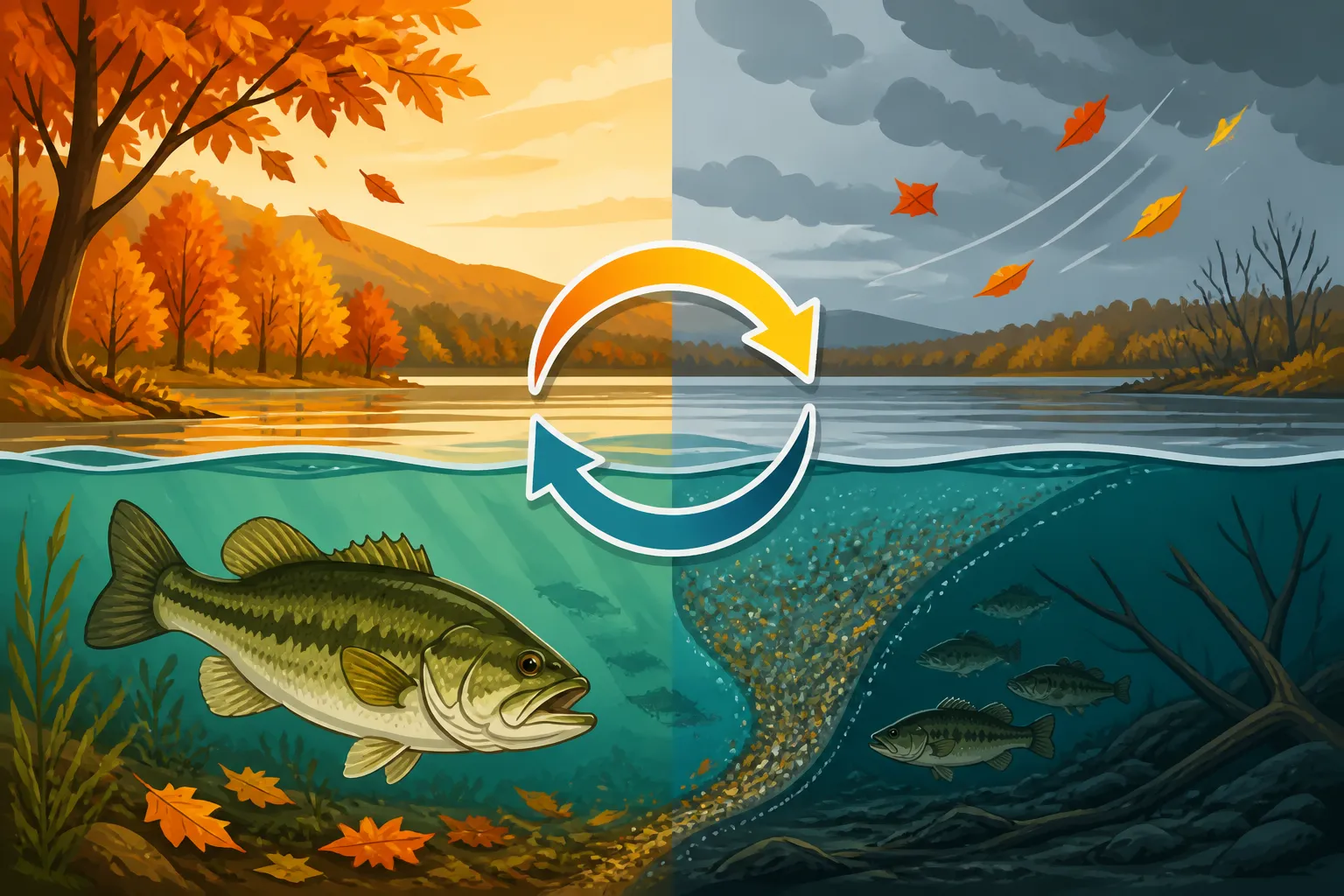
Imagine your favorite Iowa lake in the middle of summer. It's likely stratified, meaning it has distinct layers of water that don't mix much. At the top, you have the warm, oxygen-rich epilimnion, where most of the life thrives. Below that is the thermocline, a relatively thin layer where the temperature drops rapidly. And at the bottom, there's the cold, often oxygen-depleted hypolimnion. This layering is stable during summer because warm water is less dense than cold water, so it naturally floats on top. Fish relate heavily to these layers, often congregating around the thermocline where there's a good balance of cool temperatures and adequate oxygen.
As autumn arrives and the air temperatures start to drop significantly, especially overnight, the surface water of the lake begins to cool down. As this surface water cools, it becomes denser. Picture a glass of ice water: the colder water sinks. The same principle applies here. This increasingly dense, colder surface water starts to sink through the water column. Eventually, it becomes heavy enough to push through the lighter, warmer water below, initiating a slow but powerful mixing process. This continues until the entire water column reaches a nearly uniform temperature and density, allowing it to "turn over" or mix completely from top to bottom.
The Science Behind the Stir: Why it Happens in Iowa Lakes
The primary drivers behind fall turnover in Iowa's lakes are decreasing air temperatures and increased wind activity. When days get shorter and nights get longer and colder, the lake's surface radiates heat much more effectively. A strong, consistent cold front can really kickstart the process, chilling the top layer of water quickly. This cooler, denser water then begins its descent.
Wind plays a crucial supporting role. As the temperature difference between the surface and deeper layers diminishes, the wind's force can more easily agitate the entire lake. It creates currents and waves that help break down any remaining thermal resistance, literally stirring the pot from shore to shore. This combination of cooling and wind action ensures that the lake's water column becomes isothermal – meaning it's all roughly the same temperature throughout. Once this uniform temperature is achieved, the lake can mix freely, bringing nutrient-rich bottom water to the surface and pushing oxygen-depleted surface water down, essentially resetting the lake's chemistry for the winter. This process is crucial for the overall health of the lake ecosystem.
How Turnover Throws a Wrench in Fish Behavior and Location
For anglers, fall turnover often means one thing: frustrating fishing. The stable conditions fish relied on all summer suddenly vanish, leaving them disoriented and scattered. It's like someone came into your house and rearranged all the furniture overnight – you'd be a bit confused too!
Oxygen, Temperature, and Food: The Unsettling Truth for Fish
During the summer, fish sought out specific zones based on temperature and oxygen. Walleye might hang near the thermocline, bass might be in warmer shallow weeds, and panfish could be suspended. Turnover obliterates these comfort zones. As the lake mixes, the oxygen-depleted water from the bottom is brought to the surface, and the oxygenated surface water is pushed down. For a period, oxygen and temperature levels can be erratic and unstable throughout the entire water column. This lack of stable conditions stresses fish, making them less likely to feed aggressively. It's a period of adjustment.
Furthermore, the mixing disperses baitfish. What was once a concentrated school of shad or minnows in a specific depth range might now be spread out from top to bottom. This means predators like bass and walleye, who often key in on these baitfish schools, have to work harder to find their meals. They become more nomadic, roaming rather than holding tight to structure. This dispersal of both predator and prey makes finding a consistent bite incredibly challenging. Think about trying to find a needle in a haystack – that's what it feels like for both the angler and the fish during turnover!
Where Did All the Fish Go? The Dispersal Effect
The most common lament during fall turnover is, "Where did all the fish go?" The simple answer is: everywhere. Before turnover, fish were often concentrated. They might be piled up on specific points, holding to deep weed lines, or suspended over humps. These were predictable patterns. Once turnover starts, those patterns dissolve. The uniform water conditions mean there's no longer a strong incentive for fish to be in one place over another regarding temperature or oxygen. This leads to them scattering throughout the lake.
Suddenly, a weed bed that was teeming with bass a week ago might be empty. A deep hump that held walleye all summer might now only have a few stragglers. Fish are literally roaming, trying to figure out their new normal. This dispersal effect is why fishing can be so tough. You can fish your usual spots with your usual lures and come up empty, not because the fish aren't there, but because they're simply not concentrated there anymore. It takes a shift in mindset and tactics to account for this widespread distribution, a period that can last from a few days to a couple of weeks depending on the lake's size and weather conditions. Understanding How Water Temperature Affects the Walleye Bite is critical here, as stable temperatures are key to predictable fishing.
Adapting Your Approach: Fishing Strategies for Fall Turnover
While turnover can be frustrating, it's not impossible to catch fish. It simply requires a more flexible and often aggressive approach. Think of it as a puzzle – you just need to find the new pieces.
Locating Fish in the Post-Turnover Mix
When the entire lake feels like a washing machine, your first goal is to eliminate dead water and find active fish. Start by focusing on shallower areas, especially those that have more exposure to sunlight. These areas tend to warm up a bit faster on sunny days, which can attract both baitfish and predators. Look for hard structure like rock piles, gravel bars, riprap, or even isolated green weed lines. These structures provide cover and ambush points, even if the fish aren't holding tight to them due to a thermal preference. Areas with current, such as river sections of reservoirs or bottlenecks in natural lakes, can also concentrate fish because the moving water often has better oxygen.
Don't be afraid to cover a lot of water. Trolling, power fishing, and making long casts are your friends during this period. Your electronics, like a good fish finder, become invaluable. Don't just look for concentrated schools; instead, look for isolated arches or baitfish scattered throughout the water column, as these might indicate actively roaming fish. Experiment with different depths until you find a pattern. You might find fish suspended 10 feet down over 30 feet of water, or hugging the bottom in 5 feet. When learning How to Read a Fish Finder for Walleye, remember that during turnover, patterns will be much less distinct.
Lure Selection and Presentation: Enticing Dispersed Fish
Since fish are often scattered and potentially a bit disoriented, you'll want lures that can cover water effectively and elicit a reaction strike. Crankbaits are excellent for this, especially those with wide wobbles and loud rattles. Try different diving depths to match the water column you're exploring. Spinnerbaits and chatterbaits are also great choices, particularly around shallow cover or dying vegetation. If the water is stained from the turnover, brighter colors like chartreuse, orange, or firetiger can be effective. If the water is clearer, more natural baitfish patterns might be the ticket. You can find a wide array of options on platforms like Amazon to build out your tackle box with these versatile lures.
Once you locate some fish, you might need to slow down your presentation. Jigs tipped with soft plastics or live bait, Ned rigs, or slow-rolled swimbaits can entice fish that aren't actively chasing. Sometimes a subtle presentation is what it takes to trigger a bite from a hesitant fish. Don't be afraid to experiment with retrieve speeds and pauses. A lot of anglers also report success by understanding Iowa Fishing Techniques Guide and using some of the more finesse presentations often reserved for tougher bites.
Timing is Everything: Capitalizing on Feeding Windows
During turnover, consistent patterns can be tough to establish, but fish will still have feeding windows. Pay close attention to environmental cues. Cooler mornings and evenings, especially on days leading up to a stable high-pressure system, can be prime times. These periods often have more stable light conditions and slightly cooler water, which can trigger a bite. On sunny days, look for specific areas that might warm up slightly more than others, such as shallow, dark-bottomed bays or north-facing banks that get more direct sunlight.
These feeding windows might be short, so be ready to capitalize when they happen. If you catch a fish, make a mental note of the exact conditions, depth, and lure, and try to replicate it quickly. The bite might turn on for an hour and then shut down completely. This erratic behavior is typical during turnover. Patience and persistence are key, as is a willingness to adapt on the fly. This period truly tests an angler's understanding of Iowa Fishing Seasons Explained and how dynamic conditions can be.
Beyond the Turnover: Fall Fishing Gold
While turnover is a challenging phase, it's temporary. Once the lake has completely mixed and conditions stabilize, you'll often find some of the best fishing of the year.
The Post-Turnover Payoff: Stable Conditions Return
Once turnover is complete, the entire lake's water column will be uniformly oxygenated and at a consistent temperature from top to bottom. This often leads to fish being able to utilize the entire lake, not just restricted layers. However, this uniformity eventually gives way to a new stratification as the surface water cools further towards winter, but it's a much more gradual and predictable process. The immediate post-turnover period can be fantastic because fish, having adjusted to the new conditions, start to actively feed again, often aggressively. They know winter is coming, and they need to bulk up.
This means you'll often find fish shallower again, especially the cool-water species like walleye and northern pike, as they chase baitfish in the cooling water. Bass will also move shallower to feed. Many Iowa lakes benefit from robust fish stocking programs, and these fish, too, will become active in the stabilized conditions. This "fall bite" can be incredibly rewarding, offering opportunities for trophy fish as they are at their heaviest. It's a prime time to be on the water after the initial confusion of the turnover has passed. You might want to consider checking out Fall Fishing in Iowa for more specific tactics during this prime time.
Essential Gear for Navigating Fall's Challenges
Being prepared for fall fishing means more than just having the right lures; it also means having the right gear to stay comfortable and safe. Fall weather in Iowa can be unpredictable, with warm sunny days quickly turning into cold, wet, or windy conditions. Layers are your best friend! Start with a good moisture-wicking base layer, add insulating layers, and top it off with a waterproof and windproof outer shell. This allows you to adjust to changing temperatures throughout the day. You can find excellent options for Best Cold Weather Clothing for Ice Fishing, which can be adapted for late fall conditions, on sites like Amazon.
Beyond clothing, ensure your boat is in top shape. Best Boats for Iowa Fishing will vary by species and water, but safety gear is universal. A good marine battery for your electronics and trolling motor is essential, especially with shorter daylight hours. And don't forget a variety of tackle. As we discussed, you might need to switch between aggressive search baits and more subtle presentations, so having a well-stocked tackle box is crucial. Consider a tackle bag that makes it easy to organize and access different lure types. For guidance, our Best Tackle for Iowa Fishing article can offer some fantastic insights.
| Factor | Pre-Turnover (Late Summer) | During Turnover (Mid-Fall) | Post-Turnover (Late Fall) |
|---|---|---|---|
| Water Layers | Stratified (warm surface, cold deep, thermocline) | Mixing, unstable, uniformizing | Uniform temperature, then slowly re-stratifying with cooler top |
| Oxygen Levels | High at surface, low at bottom | Variable, can be poor throughout as bottom water mixes up | Uniformly good throughout |
| Fish Location | Concentrated near thermocline or specific structure | Scattered, disoriented, roaming throughout water column | Often shallower, relating to baitfish and structure, very active |
| Bite | Consistent in known patterns | Tough, inconsistent, fish stressed, erratic feeding | Strong, aggressive, fish feeding heavily for winter |
| Best Strategy | Target specific depths/structure, precise presentations | Cover water, reaction baits, hunt for isolated fish, experiment | Aggressive presentations, target baitfish schools, specific structures |
| Key Challenge | Finding the right depth/layer | Locating fish in vast, uniform water | Adapting to colder water, identifying new patterns |
Disclaimer
This article is for general informational purposes only and does not constitute professional advice. Laws, prices and regulations vary by location and change over time. Consult a qualified professional for guidance on your specific situation.