How to Fish a Beetle Spin for Panfish
There’s nothing quite as satisfying as a cooler full of panfish after a morning on the water, but sometimes these little guys can be surprisingly elusive. If you’ve ever found yourself scratching your head, wondering what lure will finally tempt those finicky crappie, bluegill, or perch, then you’re in the right place. This guide is all about mastering the simple yet incredibly effective beetle spin, a true panfish magnet that can turn a slow day into a memorable one on Iowa's abundant lakes and rivers.
What Makes the Beetle Spin So Effective for Panfish?
The beetle spin is one of those classic lures that just works, and it’s been a staple in tackle boxes for generations. It combines several fish-attracting elements into one compact, easy-to-use package, making it particularly deadly for panfish species that are often more interested in subtle presentations or small, fleeing prey.
The Irresistible Flash and Vibration
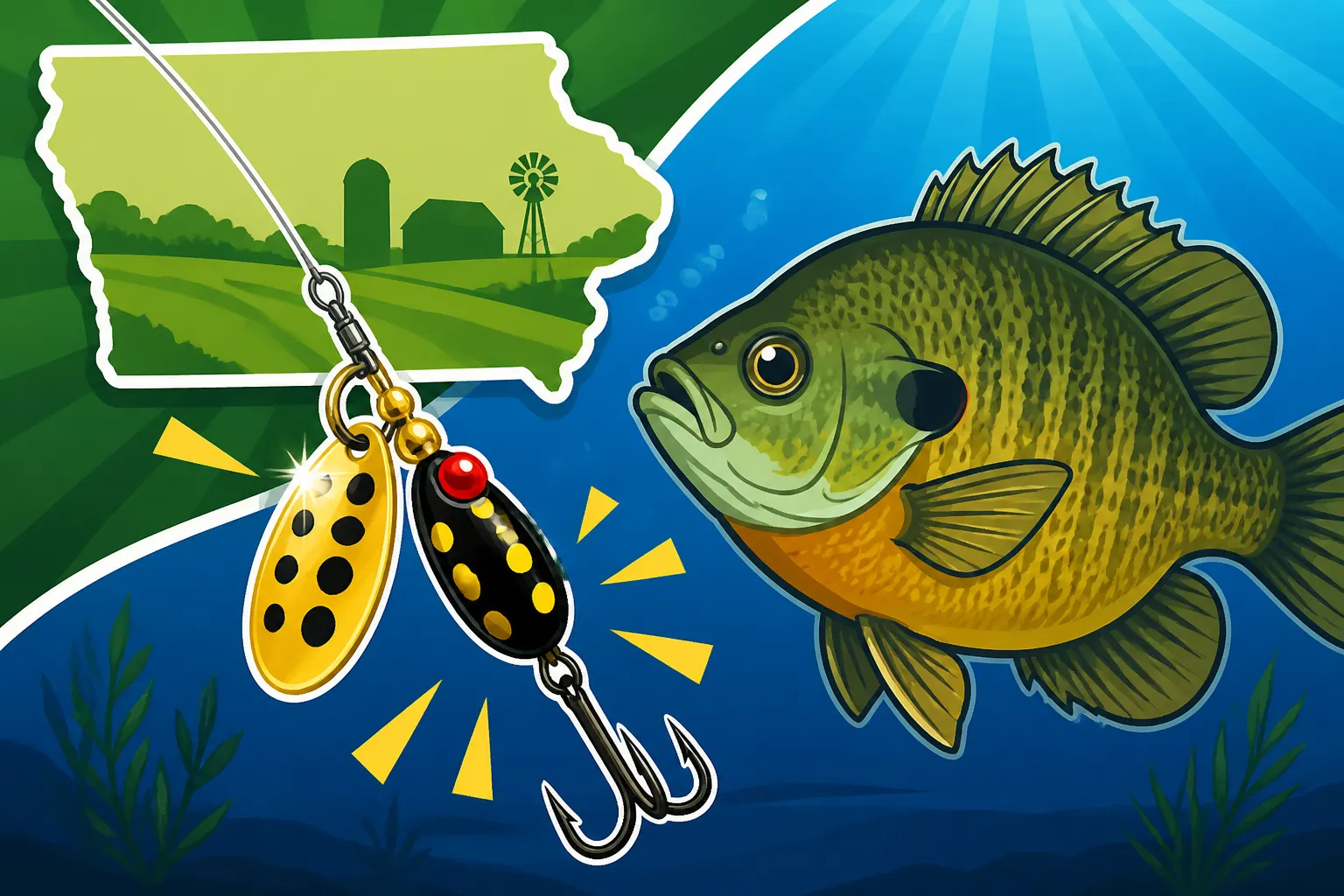
At the heart of the beetle spin's appeal is its unique combination of flash and vibration. The lure consists of a weighted jig head, usually adorned with a soft plastic body, and an attached wire arm with a small spinner blade. When you retrieve it through the water, that spinner blade rotates rapidly, creating both visual flash and subtle vibrations that panfish absolutely cannot resist.
Think about it: in many Iowa waters, especially those with a bit of stain or during low-light conditions, fish rely heavily on their lateral line to detect prey. The vibration from the spinning blade sends out a clear signal that something small and edible is moving nearby. The flash, on the other hand, mimics the glint of a small baitfish or a struggling insect, drawing attention from a distance. This dual action is crucial, as it allows the lure to stand out in a crowded underwater environment, beckoning curious crappie and hungry bluegill to investigate. It's a fantastic way to cover water and locate active fish, even when they're not overtly aggressive.
Simplicity in Design and Use
One of the greatest beauties of the beetle spin is its incredible simplicity. Unlike some complicated rigs or techniques, you don't need a special degree in angling to make a beetle spin work. It's essentially a jig with an added spinner, making it incredibly intuitive for anglers of all skill levels. You simply tie it on, cast it out, and retrieve. The design itself is quite robust, with the wire arm protecting the hook point from many snags, giving it a somewhat "weedless" quality, which is a huge plus when fishing around submerged vegetation or brush piles that panfish love to call home.
This straightforward approach means you spend less time fussing with tackle and more time actually fishing. For beginners, it’s an excellent choice for building confidence and getting bites. For seasoned anglers, it’s a reliable go-to when other, more complex presentations aren’t yielding results. Its effectiveness across a wide range of conditions makes it an indispensable part of any panfish angler's arsenal. You can find many different styles and brands of beetle spin lures, with the classic Johnson Beetle Spin being a popular choice, readily available from various retailers including online marketplaces like Amazon.
Rigging Your Beetle Spin for Iowa Panfish Success
Getting your beetle spin setup correctly is a crucial step toward maximizing its effectiveness. It's not just about tying it on; selecting the right size, color, and balancing it with your rod and reel will make a significant difference in your catch rates for Iowa panfish.
Choosing the Right Size and Color
The size and color of your beetle spin can drastically impact your success, especially when targeting different panfish species or adapting to varying water conditions. Generally, beetle spins come in small sizes, typically ranging from 1/32 ounce up to 1/8 ounce, though sometimes larger.
- Size: For the smallest panfish, like bluegill or small crappie, a 1/32 oz or even 1/64 oz (if you can find them) is often perfect, offering a tiny profile that matches their natural forage. When targeting larger crappie or perch, particularly in deeper water or with a bit of wind, stepping up to a 1/16 oz or 1/8 oz can help with casting distance and getting the lure down faster. Don't be afraid to experiment; sometimes a slightly larger profile will tempt a bigger fish, while a smaller one is key for a tough bite.
- Color: Color choice is often debated, but a good rule of thumb is to match the hatch or go for high contrast. In clear water, natural colors like white, black, or subtle greens can be very effective, mimicking minnows or insects. In stained or murky water, vibrant colors like chartreuse, orange, or hot pink really stand out, thanks to their visibility. Many anglers swear by a white body with a red head, or chartreuse on sunny days. You'll find an incredible array of these on sites like Amazon, making it easy to stock up on different options to see what the fish prefer on any given day. Remember, what works one day might not the next, so having a variety is always a good idea. For more on this, you might find Best Lure Color for Muddy Water to be a helpful read.
Rod, Reel, and Line Setup
Using the correct rod, reel, and line setup is paramount for truly enjoying panfish angling with a beetle spin. These lures are light, and without the right equipment, casting distance and sensitivity will suffer.
- Rod: A light to ultralight spinning rod is the way to go. Look for a rod between 5 to 6.5 feet in length. The lighter power allows for better casting of these small lures and provides incredible sensitivity, letting you feel even the most subtle bites from cautious panfish. A fast or moderate-fast action tip will give you enough backbone for a solid hookset while still offering that delicate feel.
- Reel: Pair your ultralight rod with a small spinning reel, typically in the 500 to 1000 series size. These reels are designed to handle lighter lines and offer a smooth drag system, which is essential when a big crappie or perch decides to make a run. A good quality reel will also ensure smooth casting, minimizing tangles with light line. If you're looking for a good starting point, check out Best Budget Spinning Combo for Panfish.
- Line: For line, light monofilament or fluorocarbon in the 4-6 pound test range is ideal. Monofilament offers good knot strength and a bit of stretch, which can be forgiving. Fluorocarbon is nearly invisible underwater and has less stretch, providing more sensitivity. Whichever you choose, keep it light for stealth and to maximize casting distance with these small, often wind-resistant lures. You'll want to minimize line twist, so make sure your reel is spooled correctly. This setup will give you the best chance to detect those faint taps that indicate a panfish bite.
Master the Retrieve: Techniques for Every Panfish Scenario
Once you have your beetle spin rigged up, the next step is learning how to work it effectively. While the lure itself is simple, varying your retrieve can unlock different levels of success depending on the fish's mood and the fishing conditions. Learning the Iowa Fishing Techniques Guide will help put these tips into context.
The Steady Retrieve: A Go-To for Active Fish
Sometimes, the simplest approach is the most effective. The steady retrieve is your bread and butter when using a beetle spin, particularly when panfish are active and feeding aggressively. After casting your lure out, simply reel it back in at a consistent speed. The goal is to keep that spinner blade rotating, creating its signature flash and vibration.
Don't be afraid to experiment with your retrieve speed. Sometimes a slow, almost snail-like crawl is what the fish want, especially in colder water or when they're a bit lethargic. Other times, a slightly faster retrieve, mimicking a fleeing baitfish, will trigger aggressive strikes. This technique is excellent for covering a lot of water quickly, allowing you to search for schools of fish along shorelines, over submerged humps, or through open water. It’s also incredibly effective when you’re fishing new territory and trying to figure out where the fish are holding. This method requires minimal effort but can yield maximum results when conditions are right.
The Stop-and-Go: Enticing Fickle Biters
When fish are a bit more hesitant or less active, a steady retrieve might not be enough. That's when the "stop-and-go" technique comes into play. This retrieve adds an element of unpredictability that can often trigger strikes from wary panfish.
To execute a stop-and-go, cast your beetle spin and retrieve it steadily for a few seconds. Then, pause your retrieve completely, letting the lure flutter or sink for a moment or two. The blade will stop spinning, and the soft plastic body will gently undulate as it falls. This sudden change in motion often mimics an injured or dying baitfish, a prime target for opportunistic predators like crappie and bluegill. After your brief pause, resume your steady retrieve. Vary the length of your pauses and the speed of your retrieves until you find what the fish prefer. Often, the strike will come right as the lure begins to fall or just as you start reeling again. This technique is particularly effective around structural elements like docks, brush piles, or weed edges where fish might be ambushing prey.
Vertical Jigging and Drop-offs
While often thought of as a casting lure, the beetle spin can also be incredibly effective for vertical jigging, especially when you're targeting fish holding tight to structure or deep drop-offs. This technique is fantastic for when you've located a school of fish on your fish finder or know they're congregated in a specific spot.
To vertically jig a beetle spin, position your boat or kayak directly over the fish or structure. Let the lure sink to the desired depth, whether it's just off the bottom or suspended in the water column. Once it's there, gently lift your rod tip a foot or two, then let it fall back on a semi-slack line. This imparts a subtle jigging motion to the lure, causing the blade to flash and the body to swim enticingly as it rises and falls. The key is to keep tension on the line during the fall to detect subtle bites. This technique works wonders for targeting suspended crappie over open water or bluegill hiding in deep brush piles. Sometimes a slight twitch of the rod tip is all it takes to get a bite, so pay close attention to your line for any unusual movements.
Where and When to Use Beetle Spins in Iowa
Knowing how to fish a beetle spin is one thing, but knowing where and when to deploy it in Iowa's diverse waters is another entirely. Timing and location are everything when it comes to consistently catching panfish.
Prime Locations for Panfish in Iowa
Iowa offers a fantastic variety of fishing environments, and panfish can be found almost everywhere there's water. The beetle spin is versatile enough to be effective in many of these spots.
- Lakes & Ponds: These are quintessential panfish havens. Focus your efforts along shorelines that offer some kind of cover or structure. Think about submerged weeds, lily pad fields, fallen trees, brush piles, or even artificial fish habitats like sunken Christmas trees. Docks and piers are also notorious hotspots, as they provide shade and cover. Don't overlook gradual slopes or sharp drop-offs where panfish might congregate at different depths throughout the day. Smaller farm ponds across Iowa are often teeming with eager bluegill and crappie that readily hit a beetle spin. For specific tactics, consider exploring guides like Crappie Fishing in Iowa or Bluegill Fishing in Iowa.
- Rivers & Streams: While often associated with bass or catfish, many Iowa rivers and larger streams hold excellent populations of panfish, especially in backwater areas, eddies, and slack water pockets off the main current. Look for areas with submerged timber, rock piles, or current breaks that offer a reprieve from the faster flow. The backwaters of the Mississippi River in Iowa are particularly productive, offering endless opportunities to cast a beetle spin into calm bays and sloughs where crappie and bluegill thrive. The beetle spin's ability to be retrieved slowly makes it ideal for these slower-moving sections.
Seasonal Strategies and Conditions
Panfish behavior changes with the seasons, and understanding these patterns will help you determine the best time to use your beetle spin.
- Spring: As water temperatures begin to rise in early spring, panfish move into shallower waters, often in preparation for spawning. This is a prime time for beetle spins. Target sunny, protected coves and shallow flats where the water warms up first. Both a steady retrieve and a stop-and-go can be deadly as fish feed actively after the long winter.
- Summer: During the heat of summer, panfish might retreat to deeper, cooler waters or seek refuge in dense cover. Focus on fishing early mornings, late evenings, or even at night for crappie, when they are most active. During the day, target deeper brush piles, the shade of docks, or drop-offs. Vertical jigging your beetle spin can be very effective in these deeper scenarios. Don't be afraid to cast into shaded pockets along the shoreline, especially on overcast days.
- Fall: As temperatures begin to cool, panfish often start to school up and feed heavily in preparation for winter. They can often be found chasing baitfish in open water or congregating around prominent points and structural elements. A steady retrieve with a beetle spin can be excellent for locating these schools. Look for active feeding signs, such as baitfish flickering on the surface, and cast your beetle spin into the fray. The beetle spin’s flash is highly effective when fish are actively chasing bait.
Regardless of the season, the beetle spin performs well in a variety of water clarity conditions. Its inherent flash and vibration allow it to be seen and felt even in stained water, while its smaller profile is still appealing in clearer conditions.
Tips for Maximizing Your Beetle Spin Success
Becoming proficient with the beetle spin goes beyond just casting and retrieving. A few simple tweaks and considerations can significantly increase your catch rate and make your time on the water even more rewarding.
Experiment with Blades and Bodies
The beauty of many beetle spin style lures is their modular design. While a standard round blade and grub body are effective, don't be afraid to mix things up!
- Plastic Tails: The soft plastic body is often interchangeable. Instead of just a standard grub, try a curly-tail grub for more tail action, especially on a slower retrieve or during the fall. Sometimes a small paddle-tail minnow imitation can mimic local forage better. Different plastic textures or ribbed bodies can also add subtle vibration. Keep a variety of these small plastic bodies on hand – you can often find large assortments on Amazon that are perfect for experimenting.
- Blade Types: The spinner blade itself can come in different shapes. Most common are Colorado blades (round, provide maximum vibration, good for slow retrieves and murky water), Indiana blades (oval, a balance of flash and vibration), and Willowleaf blades (long and slender, less vibration but maximum flash, good for faster retrieves and clearer water). Changing the blade type can make a big difference in how the lure presents itself in the water and how the fish react to it. Sometimes a quick blade swap is all it takes to turn a slow bite into a hot one.
Add a Little Something Extra
Even the most effective lures can benefit from a little extra enticement, especially on tougher fishing days. Think about making your beetle spin even more irresistible.
- Tipping with Live Bait: For a truly potent combination, try tipping the hook of your beetle spin with a small piece of live bait. A tiny minnow, a wax worm, a piece of nightcrawler, or even a couple of maggots can add natural scent and taste, making hesitant panfish commit to the bite. This is particularly effective in colder water when fish are less willing to chase. The live bait provides the natural appeal, while the beetle spin's blade still offers that crucial flash and vibration to draw attention.
- Scent Attractants: Modern scent attractants can also give you an edge. A dab of fish attractant gel or spray on the soft plastic body of your beetle spin can leave a scent trail that encourages fish to hold on longer, giving you more time to set the hook. This can be especially useful when fish are just nipping at the lure without fully committing. For techniques involving jigging, you might also find some crossover with tips in Crappie Jig Fishing Techniques.
By understanding these nuances and being willing to experiment, you'll be well on your way to consistent success with the mighty beetle spin, filling your cooler with delicious Iowa panfish.
| Beetle Spin Size | Recommended Depth | Primary Target Species | Notes |
|---|---|---|---|
| 1/64 oz | Very Shallow (1-3 ft) | Small Bluegill, Sunfish | Ultra-finesse, light line crucial, often fished under bobber |
| 1/32 oz | Shallow to Mid-Depth (2-6 ft) | Bluegill, Crappie, Perch | Great all-around size for average panfish, versatile |
| 1/16 oz | Mid-Depth (4-10 ft) | Crappie, Perch, Larger Bluegill | Good for casting distance and moderate current, popular choice |
| 1/8 oz | Deeper Water (8-20+ ft) | Larger Crappie, Perch, White Bass | Better for getting down quickly, heavier current, or larger fish |
Disclaimer
This article is for general informational purposes only and does not constitute professional advice. Laws, prices and regulations vary by location and change over time. Consult a qualified professional for guidance on your specific situation.