Best Month to Catch Walleye in Iowa
There's nothing quite as frustrating as heading out to your favorite Iowa fishing spot, full of hope, only to spend hours casting without a single walleye bite. Many of us have been there, wondering if we picked the wrong day, the wrong bait, or perhaps even the wrong month. This comprehensive guide is here to unravel the mystery of walleye behavior, helping you understand the prime times to target these elusive and delicious fish across Iowa's diverse waterways, ensuring your next trip is a success.
Understanding Walleye Behavior Through the Seasons
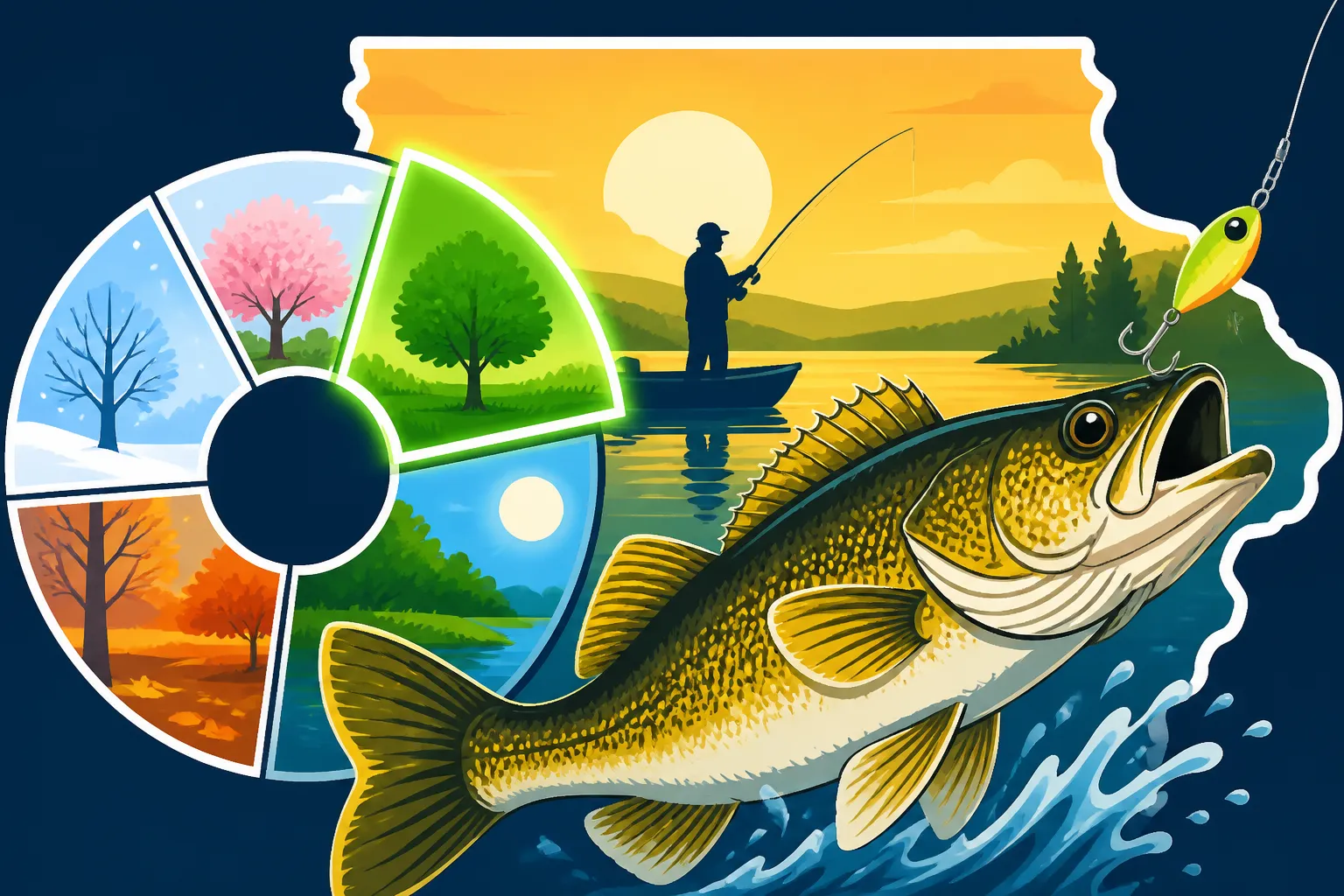
Walleye are fascinating fish, and their behavior changes dramatically with the seasons, heavily influenced by water temperature, spawning cycles, and their hunt for food. To truly know the best month to catch walleye in Iowa, you first need to understand their annual rhythm. It's not just about throwing a line in the water; it's about being in the right place at the right time, with the right approach.
Early Spring Awakening: The Pre-Spawn Buzz
As the last remnants of ice melt away from Iowa's lakes and rivers, a subtle shift begins underwater. This early spring period, typically March into early April, marks the pre-spawn phase for walleye. The water is still quite chilly, often in the low to mid-40s Fahrenheit, but the lengthening days trigger an instinct in walleye to start moving. They're shaking off the lethargy of winter and beginning to stage for their annual reproduction cycle.
During this time, walleye are often found in deeper main lake basins or river channels, but they'll make increasingly frequent forays into shallower areas adjacent to spawning grounds. Think about points, submerged humps, or the upstream side of current breaks in rivers. They're not actively feeding aggressively yet, but they are opportunistic. Slow presentations are key here. Vertical jigging with a minnow or slowly dragging a soft plastic grub can be incredibly effective. Anglers often find success focusing on depths where they locate baitfish schools, as walleye will follow their food source. It's a challenging but rewarding time to fish, requiring patience and a keen understanding of subsurface structure.
Spring Spawning Frenzy: Prime Time Action
Ah, the spring spawn – this is what many Iowa walleye anglers live for! The absolute peak of walleye activity occurs during and immediately after their spawning period. In Iowa, this typically kicks off in April, extending into early May, depending on the specific waterway and how quickly water temperatures rise. Walleye generally spawn when water temperatures reach the 45-50°F range. Rivers often warm up and see spawning activity earlier than large lakes.
During the spawn, walleye migrate to specific areas to lay their eggs, favoring rocky shorelines, rip-rap, gravel bottoms, and current-swept areas in rivers. Male walleye tend to move onto the spawning grounds first, waiting for the females. This concentration of fish means incredible opportunities for anglers. Immediately after spawning, both males and females are hungry and aggressive as they recover from the energy-intensive process. This post-spawn bite can be absolutely phenomenal. For those wondering when Iowa Walleye Season Opening Day is, it's often planned around these natural cycles to maximize fishing opportunities while protecting the species. Tactics like pitching jigs and minnows or casting shallow-running crankbaits parallel to rocky shorelines can produce fast action. The key is to target those areas where walleye are concentrated, either staging before, actively spawning, or recuperating after.
Post-Spawn Recovery and Summer Patterns
Once the spring spawn concludes and water temperatures steadily climb into the 60s and 70s Fahrenheit, walleye transition into their summer patterns. This can be a more challenging time for some anglers, as the fish tend to disperse across larger bodies of water and often move to deeper, cooler areas during the heat of the day. They're still feeding, of course, but their movements become less predictable, and their bites can be more subtle.
In large lakes, walleye will often relate to deep structure: sunken islands, main lake points, thermoclines, and offshore humps. Trolling with crankbaits or spinner rigs becomes a very popular and effective technique for covering water and locating scattered schools. On rivers, they might seek out current breaks, deep holes, or the cooler water found at the confluence of tributaries. Early mornings and late evenings, or even night fishing, can be prime times in the summer, as walleye move shallower to feed under the cover of low light. Understanding the nuances of summer walleye behavior is crucial, as they're constantly seeking out comfortable temperatures and readily available food.
Pinpointing the Peak: Why April and May Reign Supreme
While walleye can certainly be caught year-round in Iowa (even through the ice!), there's a reason why many seasoned anglers circle specific months on their calendars. For consistent action and the best chance at a trophy, April and May consistently stand out as the top contenders for walleye fishing in the Hawkeye State.
Water Temperature and Walleye Activity
The primary driver behind April and May being the "best months" is the water temperature. As mentioned, the 45-55°F range is optimal for walleye spawning and their subsequent aggressive feeding. In April, especially towards the latter half, Iowa's rivers and shallower lake sections hit this sweet spot. This is when the fish are most vulnerable, concentrated in predictable areas, and actively feeding to replenish spent energy.
As May progresses, waters continue to warm, pushing walleye into full post-spawn mode and then into their early summer feeding patterns. The extended periods of moderate water temperature mean walleye are often active throughout the day, not just at dawn and dusk. This consistency in activity makes fishing more predictable and productive. If you're targeting walleye, knowing How Deep to Fish for Walleye in Spring based on these temperatures can dramatically increase your hook-up rates. It's not uncommon to hear reports of multiple limits being caught during these windows, sometimes even during less-than-ideal weather, simply because the fish's biological clock is screaming "feed!"
Specific Iowa Hotspots for Spring Walleye
Iowa is blessed with a variety of excellent walleye fisheries, and each tends to shine during the spring peak. For river anglers, the Mississippi River is legendary. From Pool 9 Fishing to Pool 12 Fishing, the backwaters, wing dams, and main channel current breaks come alive with walleye. Tributaries feeding into the Mississippi, like the Maquoketa and Wapsipinicon rivers, can also see strong walleye runs. Look for rocky stretches and areas with moderate current.
On the lake front, the Iowa Great Lakes — Spirit Lake, West Okoboji Lake, and East Okoboji Lake — become walleye magnets. The shallow bays and rocky points are key spawning areas. Lakes like Clear Lake are also renowned for their excellent spring walleye fishing, particularly along the rock reefs and main lake points. Even smaller impoundments and reservoirs like Rathbun Lake or Saylorville Reservoir can offer fantastic early season action near their dam outflows or rip-rapped causeways. Local knowledge is invaluable here, so don't hesitate to check in with bait shops like Cable's Bait & Tackle on Spirit Lake for the latest reports.
The Fall Feeding Frenzy: A Strong Second Act
While spring holds the crown, let's not discount the autumn months, particularly October and November, as a very strong second act for Iowa walleye. As air temperatures drop and water temperatures cool into the 50s and 40s again, walleye sense the approaching winter. This triggers a frantic feeding period as they bulk up for the lean months ahead. They become incredibly aggressive, chasing down baitfish with vigor.
This fall bite can be just as intense, if not more so, than the spring bite, often yielding some of the largest walleye of the year. Fish are generally in excellent condition, fat and healthy. They tend to relate to similar structures as they do in spring – points, humps, and current breaks – but often in slightly deeper water. Trolling large crankbaits, jigging with hefty minnows, or casting blade baits can be highly effective. For anglers who prefer cooler weather and fewer crowds, the fall offers an exceptional opportunity to land some trophy walleye in Iowa. It's truly a hidden gem for those willing to brave a little chill.
Beyond the Best Month: Factors Influencing Your Success
While April and May might be the "best" months in a general sense, successful walleye fishing is rarely that simple. A multitude of other factors play a critical role, and understanding them can turn a slow day into a banner day, even outside the prime windows.
Weather, Water Levels, and Clarity
Walleye are incredibly sensitive to changes in their environment. Weather patterns, especially cold fronts, can shut down a bite quicker than almost anything else. A sudden drop in temperature or an abrupt change in barometric pressure can send walleye deep and make them notoriously finicky. Conversely, stable weather patterns, even if it's overcast or drizzly, often lead to fantastic fishing. When looking for gear to brave such conditions, searching for "waterproof fishing jackets" on Amazon can yield great results.
Water levels and clarity are also huge variables, particularly in river systems. High, muddy water after heavy rains can make fishing nearly impossible, as walleye rely heavily on their eyesight to hunt. As the water begins to drop and clear, however, the bite can pick up dramatically as fish congregate in clearer pockets or along current seams. In lakes, extreme low or high water levels can alter fish holding patterns, requiring anglers to adjust their typical spots. Always check local conditions before heading out, especially if you're traveling a distance.
Bait and Presentation Match the Hatch
Even during the best month, if you're using the wrong bait or presentation, you might as well be fishing in a bathtub. Walleye diets vary throughout the year, but they are primarily piscivores, meaning they eat other fish. Common forage in Iowa includes shad, shiners, minnows, and juvenile panfish. Matching your bait to the dominant forage is crucial.
Live bait, especially shiner minnows, fatheads, and nightcrawlers, are perennial walleye favorites. When fish are finicky or in cold water, live bait often out-produces artificials. However, artificial lures like jigs, crankbaits, and spinnerbaits can be incredibly effective, especially when walleye are aggressive. The key is presentation. Slow, methodical presentations are best in cold water, while faster retrieves and aggressive jigging can trigger bites in warmer water or during a strong feeding frenzy. Knowing the Best Live Bait for Iowa Walleye is just as important as knowing when to use it, and how to present it naturally.
Best Lures and Gear for Iowa Walleye
Having the right gear makes a difference, and it doesn't always mean the most expensive. For jigging, a sensitive medium-light to medium power spinning rod with a fast action tip is ideal. This allows you to feel subtle bites and effectively work your jig. For trolling, a medium power baitcasting rod with a more moderate action is often preferred to handle the pull of crankbaits and absorb headshakes from larger fish. Line choice is also critical; braided line offers sensitivity for jigging, while monofilament or fluorocarbon can be better for trolling due to their stretch and invisibility. You can find a fantastic selection of reputable brands and specific models by searching "walleye fishing rods and reels" on Amazon.
When it comes to lures, a variety is your best friend. Start with classic jigs, from 1/16 oz to 3/8 oz, paired with soft plastics or live minnows. Shallow-running crankbaits (like Rapalas, Berkley Flicker Shads, or Salmo Hornets) are excellent for covering water in spring and fall. Spinner rigs, often tipped with a nightcrawler or minnow, are deadly when trolled slowly, especially in summer. Don't forget blade baits or lipless crankbaits for vertical jigging on deep structure. Having a diverse tackle box ready for different conditions and techniques ensures you're prepared for whatever Iowa's walleye fishing throws your way.
Here’s a quick overview of peak times and general conditions for walleye in Iowa:
| Month | Primary Walleye Activity | Key Water Temperature Range | General Location / Depth | Recommended Techniques |
|---|---|---|---|---|
| March | Early Pre-Spawn Staging | 35-45°F | Deep channels, adjacent to spawning grounds | Slow vertical jigging, dragging small baits |
| April | Peak Pre-Spawn & Spawning Run | 45-55°F | Rivers (rocky areas), shallow lake points/reefs | Pitching jigs, shallow crankbaits |
| May | Peak Post-Spawn & Early Summer | 55-65°F | Lake points, humps, river current breaks | Casting/trolling crankbaits, spinner rigs |
| June | Summer Dispersal, Deep Structure | 65-75°F | Deeper lake basins, thermocline, river holes | Trolling, deep jigging, night fishing |
| July | Mid-Summer Heat, Night Bite | 70-80°F | Deepest cool water, low light periods | Night trolling, deep jigging |
| August | Late Summer, Schools Aggregating | 70-75°F | Similar to July, follow baitfish | Trolling, live bait rigs |
| Sept | Early Fall Turnaround | 60-70°F | Start moving shallower, follow baitfish | Casting crankbaits, jigging |
| Oct | Fall Feeding Frenzy | 48-60°F | Lake points, humps, river channels | Trolling large crankbaits, jigging |
| Nov | Late Fall Aggression | 38-48°F | Deeper main lake points, river holes | Slow jigging, larger minnows |
| Dec-Feb | Ice Fishing Season | Ice Covered | Shallow breaks, deep edges, weed lines | Jigging spoons, minnows |
While April and May offer the most consistent action and often the most aggressive bites due to spawning instincts and post-spawn hunger, diligent anglers can find walleye throughout the year. The key is to adapt your techniques and locations to the fish's behavior, water temperature, and prevailing conditions. For deeper dives into specific tactics, exploring resources like the How to Catch Walleye in Iowa guide can provide invaluable insights. Don't forget that many anglers also enjoy the challenge of Ice Fishing in Iowa, catching walleye through the hard water months. If you're looking for specialized gear, remember that searching for "ice fishing augers" or "portable ice shelters" on Amazon will give you plenty of options to consider.
Disclaimer
The information provided in this guide is for general informational purposes only and is subject to change. Fishing regulations, season dates, and limits can vary by year and specific location within Iowa. Always consult the latest official Iowa Department of Natural Resources (DNR) fishing regulations booklet or their website before heading out on the water. Following all Iowa Fishing Regulations Explained is crucial for a legal and enjoyable fishing experience.