Best Time to Catch Smallmouth Bass on the Mississippi River
Fishing for smallmouth bass on the mighty Mississippi River in Iowa can be both incredibly rewarding and, let's be honest, a little intimidating. This isn't your average farm pond bass fishing; the sheer size, currents, and diverse habitats of the Mississippi present a unique challenge. Many anglers find themselves wondering, "When is the best time to hit these waters to consistently hook into those feisty bronzebacks?" This guide is here to cut through the guesswork, helping you understand the seasonal patterns, optimal conditions, and smart techniques to make your Mississippi River smallmouth adventures successful.
Understanding Smallmouth Bass Behavior on the Mississippi River
Before we dive into specific dates and times, it's crucial to understand the smallmouth bass itself. These fish are creatures of habit, their movements and feeding dictated by water temperature, current, and the availability of food. On a river system as dynamic as the Mississippi, these factors are constantly in flux, making local knowledge and adaptability key.
Seasonal Migrations and Habitat Preferences
Smallmouth bass on the Mississippi River are constantly on the move, following the rhythm of the seasons. In the colder months, they tend to retreat to deeper, more stable waters, often congregating in wintering holes where current is minimal. But as spring approaches and water temperatures begin to climb, these fish become restless. You'll find them migrating from their deep winter haunts to shallower areas, especially those with rocky bottoms, riprap banks, and submerged timber. These are their staging grounds, places where they can warm up and begin their pre-spawn feeding frenzy.
Throughout the warmer months, their preferred habitat remains closely tied to structure and current breaks. Think about the countless wing dams, rock piles, bridge pilings, and eddy lines that define the Mississippi. Smallmouth bass absolutely thrive in these environments, using the current to their advantage to ambush prey while expending minimal energy. They love to sit just out of the main current, in the calmer water of an eddy, or behind a large rock, waiting for an unsuspecting minnow or crayfish to drift by. For a deeper dive into where these fish like to hang out, check out our guide on Smallmouth Bass Habitat on the Mississippi River. Knowing these prime locations in conjunction with the right season can drastically improve your odds.
Forage and Feeding Habits
What's on the menu for a Mississippi River smallmouth? Mostly, they're opportunists, preying on whatever is readily available. Their diet primarily consists of crayfish, various species of minnows like shad and shiners, and a healthy dose of aquatic insects. This diverse diet is fantastic news for anglers because it means a wide array of lures and baits can be effective.
Understanding their feeding habits is just as important as knowing what they eat. Smallmouth are ambush predators. They don't typically chase prey over long distances in strong currents; instead, they position themselves strategically in current breaks or near structure, darting out with explosive speed to grab a meal. This aggressive feeding behavior makes them an incredibly fun fish to catch. When the water temperatures are optimal and their metabolism is high, they can be incredibly aggressive, striking at anything that looks like a meal. Conversely, in colder water, their feeding becomes more subtle, requiring a different approach.
Prime Seasons for Mississippi River Smallmouth
Identifying the "best" time often comes down to matching your efforts with the smallmouth's most active feeding periods. On the Mississippi, this usually boils down to two distinct windows, though summer and winter can offer unique opportunities for dedicated anglers. Always remember to check Iowa Fishing Regulations Explained and ensure you have your Iowa Fishing License Guide in order before heading out!
Spring Frenzy and Pre-Spawn Activity
Ah, spring! For many smallmouth anglers on the Mississippi, this is the first great "best time" of the year. As the ice melts and water temperatures begin to climb from the mid-40s into the mid-50s Fahrenheit (roughly late March through May, depending on the year), smallmouth bass shake off their winter lethargy and begin their migration towards shallower, warmer waters. This is the pre-spawn period, and the fish are driven by two powerful urges: feeding to regain energy lost over winter and preparing for reproduction.
During this time, you'll find smallmouth congregating in sun-exposed rocky points, the mouths of tributary creeks, and shallow backwater entrances where the water warms up faster. They are hungry, aggressive, and often stacked up in numbers. It’s not uncommon to have days where you catch several fish from a single stretch of riprap. Their aggression makes them susceptible to a variety of presentations, from moving baits like crankbaits and spinnerbaits to slow-fished jigs and soft plastics. It’s an exhilarating time to be on the water, often offering some of the biggest fish of the year before they become focused purely on spawning. Keep an eye on local conditions, as the Spring Fishing in Iowa bite can turn on rapidly! It's also worth noting that knowing the Bass Season and Size Limits for Iowa is crucial, as some areas may have specific regulations during this sensitive time.
Summer Strategies for Active Smallmouth
Summer fishing for smallmouth on the Mississippi can be a bit more challenging, but by no means impossible. As water temperatures push into the upper 60s, 70s, and even low 80s, these fish adapt. They’ll often seek out cooler, more oxygenated water, which means deeper current breaks, the main channel structure, bridge pilings, and areas with submerged timber that provide shade. The direct midday sun can push them into deeper cover, making low-light periods even more crucial.
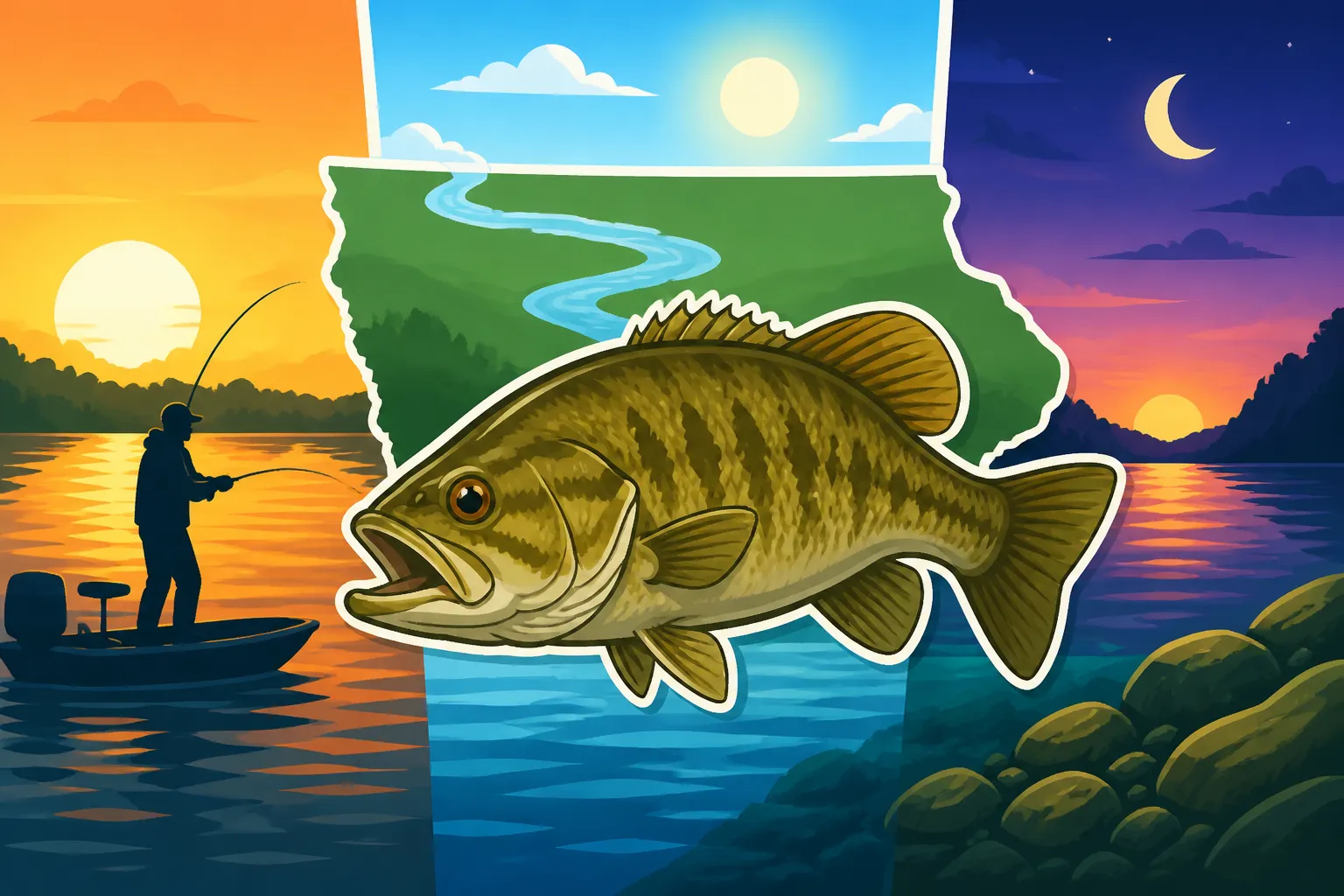
Early mornings, late evenings, and even night fishing can be incredibly productive during the summer. During these cooler times, smallmouth will often move shallower to feed. During the heat of the day, focus on fishing vertically over deep structure or hitting the shadowy sides of bridge pilings and rock walls. The fish can become a bit more wary due to increased boat traffic and fishing pressure, so sometimes a more finesse approach with smaller baits or slower presentations is required. Understanding Best Time of Day to Catch Bass in Summer can really make a difference. Many anglers find success with topwater lures during the low-light hours or by dropshotting and shaky heading around deeper cover.
Fall Feast and Cooler Water Bites
If spring is good, then fall on the Mississippi River is often considered the absolute best time to catch smallmouth bass, especially for those looking for trophy-sized fish. As the days shorten and water temperatures begin to drop from the mid-60s down into the low 50s (typically September through November), smallmouth go into a full-on feeding frenzy. They know winter is coming, and they need to bulk up.
During the fall, these fish become incredibly aggressive, chasing down baitfish and gorging on crayfish. You'll find them returning to many of the same rocky, shallow areas they frequented in spring, but with an even greater sense of urgency. Wing dams, riprap banks, rocky points, and current seams all become prime targets. The beauty of fall fishing is that these fish can often be caught throughout the entire day, especially on sunny banks that absorb and radiate warmth. They're less spooky and more willing to hit a variety of lures, from lipless crankbaits to swimbaits and larger jigs. This is when you can often experience those unforgettable days with multiple hard-fighting smallmouth.
Optimal Conditions Beyond the Season
While seasons provide a broad framework, several other factors influence when and where smallmouth bass bite on the Mississippi. Paying attention to these nuances can turn a slow day into a stellar one, regardless of the calendar.
Impact of Water Levels and Current
Water levels and current are arguably the most critical non-seasonal factors when fishing the Mississippi River for smallmouth.
High water can be a double-edged sword. While it might open up new feeding areas and provide more cover, it also scatters fish and can make the current overwhelmingly strong. In high water, smallmouth often retreat to slack water areas, protected backwaters, or flood-control structures where they can escape the main force of the river. The fish can be harder to locate, and finding those subtle current breaks becomes paramount.
Low water, conversely, tends to concentrate fish around remaining structure, making them easier to pinpoint. However, it can also make them more spooky, as their cover is reduced. Stable water levels for several days or even a week are generally ideal, as fish are more predictable and less stressed.
And then there's the current itself. Smallmouth bass love current, but they rarely sit directly in the strongest flow. Instead, they position themselves in current seams, eddies, and behind obstacles that break the current. These are high-percentage ambush points. Learning to read the water – identifying where the current pushes bait and where fish can comfortably wait – is a skill that will serve you well on the Mississippi. You'll often find these smallmouth near rocky structure where the current breaks just enough for them to hold. For tactics on finding these prime spots, check out How to Catch Smallmouth Bass Near Rocky Structure.
Daily Patterns and Weather Influences
Just like us, smallmouth bass have their daily routines, and these are heavily influenced by light and weather.
Time of day: Generally, the low-light periods of early morning and late evening are the most productive. The diminished light provides cover for smallmouth to hunt and makes them feel more secure in shallower water. On cloudy days, this productive window can extend throughout the day. During bright midday sun, fish often retreat to deeper, shadier areas, making them harder to reach.
Weather: Stable weather patterns are usually best. A few days of consistent conditions allow fish to settle into a predictable routine. Pre-frontal conditions, just before a storm rolls in, can often trigger an aggressive bite as fish sense the change and feed heavily. Post-frontal conditions, however, especially after a cold front, can shut down the bite almost completely. The sudden drop in temperature and rise in barometric pressure can make smallmouth lethargic and unwilling to feed. Overcast skies are often preferred over bright, sunny days, as they allow the fish to roam and feed more freely.
Gear and Techniques for Mississippi Smallmouth
Having the right gear and knowing how to use it are just as important as knowing when to fish. The Mississippi River's strong currents and snaggy bottom demand robust tackle and versatile techniques. Whether you're a seasoned angler or just starting out, a solid setup makes all the difference. Always ensure you're aware of the Reciprocal Fishing Rules on the Mississippi River Border if you plan to cross into other states' waters.
Lure Choices for Different Conditions
Matching your lure to the conditions and the fish's mood is a cornerstone of successful smallmouth fishing. There's a huge array of options available, easily found on platforms like Amazon if you need to stock up!
- Spring: During the pre-spawn frenzy, aggressive baits shine.
- Jerkbaits: Brands like Rapala or Megabass mimic dying baitfish perfectly. Work them with a jerk-pause retrieve in rocky areas.
- Crankbaits: Medium-diving crankbaits that deflect off rocks are deadly. Think Strike King or Bandit. For specific strategies, our guide on Crankbait Fishing for Iowa Smallmouth Bass can offer valuable insights.
- Tube Jigs & Ned Rigs: For a more subtle approach, these soft plastics are excellent, especially when pitched into current breaks or around submerged timber.
- Spinnerbaits: Chartreuse and white or white and silver combinations can be very effective in stained spring waters.
- Summer: When the water warms up, diversity is key.
- Topwater Lures: Early morning and late evening are prime for poppers (Zara Popper, Heddon Spook) over shallow flats or near lily pads.
- Deep Diving Crankbaits: To reach those fish in deeper current breaks.
- Dropshot Rigs & Shaky Heads: When fish are finicky or holding tight to structure, these finesse plastics are incredibly effective.
- Finesse Jigs: Small jigs with a crayfish-imitating trailer can entice reluctant bites from fish hiding in shade.
- Fall: The "feast" season means fish are often less particular.
- Lipless Crankbaits: Fast-moving and able to cover water quickly, great for finding aggressive schools.
- Swimbaits: Larger profile swimbaits can mimic the baitfish smallmouth are gorging on.
- Jigs & Spinnerbaits: Continue to be strong producers, especially around rock piles and current seams.
Essential Tackle for River Fishing
The Mississippi demands gear that can handle strong fish, unforgiving current, and potential snags.
- Rods & Reels: A medium-heavy to heavy power rod with a fast action is a great all-around choice. This provides the backbone to fight fish in current and pull them away from cover. A 7-foot to 7-foot, 6-inch rod offers excellent casting distance and leverage. Both spinning and baitcasting setups are viable; spinning gear is often preferred for lighter finesse presentations, while baitcasting excels with heavier lures and pitching into tight spots. For more detailed rod insights, check out Best Rod Length for Iowa River Walleye Fishing, which offers principles applicable to smallmouth.
- Line: Braided line (20-30 lb test) is a popular choice for its strength, sensitivity, and resistance to abrasion. Many anglers will tie on a fluorocarbon leader (10-15 lb test) for stealth, as fluoro is nearly invisible underwater. The abrasion resistance is key for fishing around rocky structure and timber.
- Accessories: Don't forget the essentials!
- Pliers/Forceps: Crucial for safely removing hooks from feisty smallmouth.
- Landing Net: A good, rubberized landing net helps protect the fish and makes landing them in current much easier.
- Polarized Sunglasses: These are a game-changer on the river, allowing you to cut through glare and spot submerged structure or even cruising fish. You can find excellent options for polarized sunglasses on Amazon.
- Boat vs. Shore: While a boat (or kayak) gives you unparalleled access to the Mississippi's vast structure, productive shore fishing spots exist, especially along riprap banks, public access areas, and below dams. If you're planning to fish from shore, our guide on Best Tackle for Bank Fishing on Iowa Rivers can offer valuable advice. For those wondering about boat requirements, similar principles apply to smallmouth as discussed in Do You Need a Boat to Catch Walleye? – it grants access to more prime locations.
No matter the season, patience, observation, and adapting your approach will be your greatest assets when targeting these incredible fish on the Mississippi River.
Disclaimer
Fishing regulations can change. Always consult the latest Iowa Department of Natural Resources (DNR) fishing regulations booklet or their official website before heading out on the water to ensure compliance with all current laws and limits. Stay safe and enjoy your time fishing!