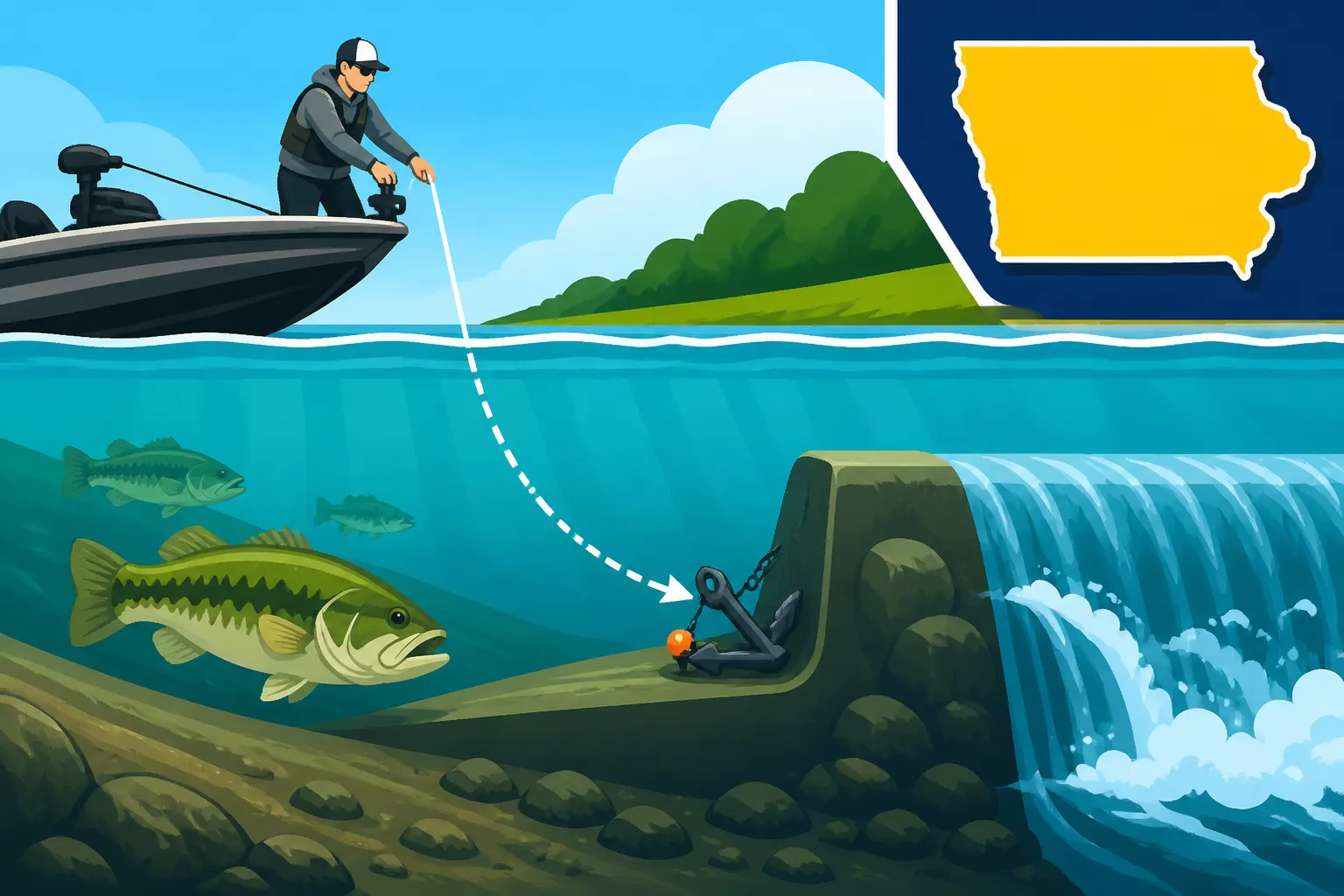
How to Anchor Above a Wing Dam
There's nothing quite like the rush of river fishing, especially when you're targeting those elusive walleye or hard-fighting catfish on Iowa's mighty rivers. But let's be honest, trying to hold your boat in the perfect spot above a productive wing dam against a strong current can feel like wrestling an alligator while trying to thread a needle. It's frustrating when you finally find that sweet spot, only for your boat to drift out of position or your anchor to drag. This guide is all about helping you master the art of anchoring above a wing dam, ensuring you stay put and maximize your chances of a successful day on the water.
Understanding Wing Dams and Why They're Fishing Hotspots
Before we even think about dropping an anchor, it's crucial to understand what a wing dam is and why these structures are absolute magnets for fish, particularly in rivers like the Mississippi.
What Exactly is a Wing Dam?
Imagine the river channel, deep and wide, but historically, the current might have meandered, creating sandbars or eroding banks where we didn't want it. That's where wing dams come in. They're man-made structures, typically long, low walls built from rocks, riprap, or sometimes timber, that extend perpendicularly or at a slight angle from the riverbank out into the main channel. Their primary purpose, from a navigation standpoint, is to constrict the river's flow, forcing the water into a narrower, deeper channel to maintain navigable depths for barge traffic.
But for us anglers, they're so much more than navigation aids. They're underwater cities for fish. These structures might be completely submerged, or you might see the tips of them poking out of the water during lower river stages. They're often found in series, one after another, creating a complex and incredibly productive fishing environment. Understanding their subtle nuances, like where the current hits them or flows around them, is key to unlocking their potential.
Why Fish Love Wing Dams
Fish are creatures of comfort, or at least creatures of efficiency. They want to expend the least amount of energy to find food and shelter. Wing dams provide exactly that. As the main current hits a wing dam, it's deflected, creating several key features that attract fish:
Firstly, you get current breaks. On the upstream side, near the dam itself, the water slows down, offering fish a perfect ambush point out of the direct flow. They can sit just off the current, waiting for baitfish to be swept past them. Secondly, the rushing water scours out deep holes and troughs along the upstream and downstream edges of the dam, especially near the river channel. These scour holes offer deeper, cooler water and more current protection, making them ideal holding areas. Thirdly, the rocks and riprap themselves provide structure, cover for baitfish, and a home for aquatic insects, which in turn attract larger predatory fish. Walleye, sauger, smallmouth bass, and even big channel catfish often stack up on or near these dams.
Think of it like a buffet line with built-in lounge chairs. The current delivers the food, and the wing dam provides a comfortable place to wait for it. This combination of current, structure, depth changes, and food availability makes them some of the most consistent fishing spots on Iowa's major rivers. When you learn to read these structures, you'll find that fish often hold in very specific, predictable locations around them, making careful boat positioning all the more critical.
The Challenges of Fishing Wing Dams
While wing dams are fish magnets, they're not always easy to fish. The very features that attract fish also present challenges for anglers. The strong current is your biggest adversary, constantly trying to push your boat out of position. If your anchor isn't set right, you'll be dragging downstream, missing the best bite, and potentially spooking fish.
Another major headache is snags. Wing dams are, by nature, rocky structures. Your anchor can easily get wedged between rocks, and your lures will find every nook and cranny to get hung up. Losing an anchor or repeatedly losing tackle can quickly turn a fun day into a frustrating one. The constant flow of the river also means you need to be highly attentive to your boat's position, even when anchored. Swirling eddies can push your boat sideways, making it hard to cast effectively or even keep your line straight. This is why a strategic approach to anchoring, using the right gear, and understanding the river's dynamics are absolutely non-negotiable for successful wing dam fishing.
Essential Gear for Anchoring Wing Dams
Having the right equipment is half the battle when trying to hold your position above a wing dam. Skimping on your anchoring setup is a recipe for frustration.
The Right Anchor for the Job
When you're dealing with strong river currents and rocky bottoms, your standard lake anchor just won't cut it. You need something designed to dig in and hold fast. A good "river anchor" or "navy anchor" style with flukes that can grab onto rocks or dig into a sandy-rocky bottom is a great start. Many anglers swear by a modified mushroom or pyramid anchor, especially one with sharp edges or a more pointed design to really bite into the substrate. Some even carry a couple of different types to adapt to varying bottom compositions.
Weight is crucial. Don't go too light. While specific weights vary based on your boat size and river conditions, a heavier anchor is generally better for river currents. Consider something in the 20-30 pound range for most typical fishing boats on larger rivers. For smaller craft or kayaks, you'll still want a heavier anchor than you might expect, often in the 8-15 pound range, perhaps even an inexpensive dumbbell from Amazon that you don't mind losing, just to get that weight. The goal is an anchor that can hold your boat steady without dragging, even when the current picks up or a towboat passes by.
Anchor Rope and Chain Considerations
Just having a heavy anchor isn't enough; the rope and chain are equally vital parts of the system. First, let's talk about chain. You absolutely need a length of heavy chain (at least 6-10 feet, sometimes more) attached between your anchor and your rope. This chain serves several critical functions: it helps the anchor lie horizontally on the bottom, allowing the flukes to dig in properly, and its weight provides a lower angle of pull, making the anchor much more effective. Without chain, your anchor is far more likely to skip or drag.
Next, the rope itself. You need strong, durable rope, ideally marine-grade nylon that has some stretch to absorb shock from waves and current. But here's the kicker: length, or "scope." Scope refers to the ratio of the length of your anchor line to the depth of the water (plus the height of your bow from the water). For river currents, you want a significant scope, often 7:1 or even 10:1. That means if you're in 10 feet of water, you might need 70-100 feet of rope out. This low angle of pull is what allows your anchor to dig in and hold. If you try to anchor with too little rope out, your anchor will pull straight up and inevitably drag. Always carry more rope than you think you'll need; a 150-foot spool is a good minimum for most river scenarios. For more detailed guidance on your setup, check out articles like How Much Anchor Rope You Need.
Safety and Retrieval Tools
Even with the perfect anchor setup, snags happen. Your anchor can get wedged in rocks, and if you can't free it, you're looking at a costly loss. This is where an anchor retrieval ring or "anchor buoy" comes in handy. This simple device, often available on Amazon, slides down your anchor rope, uses the buoy's floatation to pull the rope up from the anchor's crown (the top), reversing the pull and often freeing a snagged anchor. It's a lifesaver, both for your wallet and your sanity.
Beyond retrieval tools, general boat safety on a river is paramount. Always have enough Best Life Jacket Type for Kayak Fishing for everyone on board, and ensure they're worn when conditions are rough or currents are strong. A sharp knife, easily accessible, is also crucial. In a worst-case scenario where your anchor is hopelessly stuck and you need to move quickly (e.g., avoiding an oncoming barge or another hazard), you might have to cut your anchor line to prevent a dangerous situation. Having that knife ready can make all the difference. Never underestimate the power of the river, and always prioritize safety over your gear.
| Anchor Type | Pros | Cons | Best for |
|---|---|---|---|
| River Anchor | Designed to dig into varying river bottoms, good holding power. | Can snag on heavy rock. | General river fishing, moderate currents. |
| Mushroom Anchor | Good for soft, muddy bottoms. Less likely to snag if modified. | Poor holding power in strong current unless very heavy or modified. | Calmer sections, lighter currents, or as a secondary anchor. |
| Pyramid Anchor | Excellent for penetrating hard bottoms, good holding in current. | Very prone to snagging on rocks, difficult to retrieve when stuck. | Strong currents, hard-packed gravel/rock, if retrieval system is robust. |
| Box Anchor | Folds flat for storage, good holding for its weight. | Can be expensive, requires space to deploy. | Larger boats, deeper water, moderate currents. |
Step-by-Step Guide to Anchoring Above a Wing Dam
Now that you're geared up, let's get into the actual process of setting that anchor to fish a wing dam effectively. This isn't just about throwing it over; it's a calculated maneuver.
Scouting Your Spot and Approach
First things first, you need to know where you want to fish. This means understanding the wing dam's structure and how the current interacts with it. Use your boat's electronics – your fish finder is invaluable here. Look for baitfish schools, larger fish arches, and significant depth changes like scour holes or drop-offs immediately upstream or downstream of the dam. Often, the "sweet spot" will be just off the main current seam, where fish can comfortably hold. You can also glean a lot of information by simply observing the water: look for eddies, current lines, and subtle boils that indicate submerged structure or current breaks. Many anglers also find success by scouting spots using resources like How to Read a Fish Finder for Walleye or understanding How Wind Direction Affects Walleye Location for overall positioning.
Once you've identified your target, you'll want to approach it from downstream. Why downstream? Because the current will push you upstream, allowing for a more controlled approach and letting you see the structure as you motor towards it. This also makes it easier to overshoot your spot (which is what you want to do for anchoring) and then drift back into position. Trying to motor against the current and drop an anchor precisely is a frustrating and often futile exercise.
The Art of the Controlled Drift and Drop
This is the most critical part of successful wing dam anchoring. It's a delicate dance with the current.
-
Motor Upstream Past Your Target: Once you've scouted your spot, motor well upstream of it. How far? It depends on the current speed and water depth, but generally, you want to be far enough that you can deploy your anchor, let out enough scope, and still drift back to your desired fishing position without hitting the dam or running out of room. A good rule of thumb is to go at least 50-100 feet upstream of where you actually want your anchor to finally set.
-
Cut the Engine or Engage Trolling Motor: As you reach your upstream position, cut your main engine. If you have a powerful bow-mounted trolling motor, you can use it to maintain a very slow, controlled drift, but often, just letting the current take you is fine.
-
Drift Back and Observe: Let your boat drift downstream slowly. This is your chance to really feel the current and confirm your desired fishing spot. Watch your fish finder and landmarks on shore.
-
Drop Anchor Well Above Your Target: This is the key. When you are still well upstream of your desired fishing spot – probably 50-70 feet or more, depending on scope needed – that's when you start deploying your anchor. Don't just "throw" it. Gently lower it, letting out rope as your boat continues to drift downstream. The goal is to let the anchor hit the bottom and start dragging, digging in as your boat pulls against it. As your boat settles, keep letting out rope until you have plenty of scope for your anchor to grab and hold. Remember, for river fishing, you need a lot of rope out for your anchor to bite effectively. This controlled descent allows the anchor to find a good purchase.
-
Allow the Boat to Settle Back: Once the anchor line tightens, the boat will swing and settle into position. You should feel the anchor dig in and the boat stop its downstream movement. If it keeps dragging, you might need to let out more rope, or if the current is exceptionally strong, slowly motor back upstream a short distance, let out more rope, and try to reset the anchor. It sometimes takes a couple of tries to get it just right, especially if you're anchoring a How to Anchor a Kayak in Current, where precise boat control is even more finicky.
-
Adjust as Needed: Once the anchor is set, if you find yourself slightly off your ideal fishing zone, you can often make minor adjustments. If you need to move slightly closer to the dam, cleat off your anchor line and use your trolling motor (if you have one) to slowly pull the boat forward against the anchor line. If you need to move further back, you can carefully let out a little more rope. Just be careful not to create so much slack that your anchor comes unset. The goal is to be able to cast to the most productive seams and holes around the wing dam.
Positioning for Optimal Fishing
You've got your boat anchored, the current is doing its thing, but now it's about fine-tuning your position. Your goal isn't just to be "above the dam," but to be in a spot where you can effectively present your bait or lure to where the fish are holding.
Often, this means positioning your boat so you can cast into the eddy (the calmer water immediately downstream of the dam), the current seam (where the fast water meets the slow water), or directly over the scour holes that are often just upstream of the dam itself. Pay attention to the angle of your casts. You want your lure or bait to drift naturally into the strike zone, mimicking natural prey. Sometimes, being slightly to the side of the main current flow allows you to cast across the dam, working different depths and current transitions. Remember that fish will hold on different parts of the dam depending on water level, current speed, and even time of day, so being able to precisely adjust your boat's position, even by a few feet, can make a huge difference in your success.
Tips for Maximizing Your Wing Dam Fishing Experience
Anchoring is just the first step. To really capitalize on these structures, you need to understand how to fish them once you're locked into position.
Reading the Current and Structure
Being anchored allows you to truly focus on the subtleties of the water around you. Take the time to observe the current. See where it's deflected, where it slows down, and where it creates swirling eddies. These are not random occurrences; they are indicators of underwater structure and potential fish holding areas. The biggest fish often hold in the "sweet spot" that requires the least amount of energy expenditure. This might be just inside a current break, behind a large boulder, or in a deep scour hole where the current is calmer.
Your fish finder will confirm depths and show you fish, but learning to How to Read Water for Structure Fishing with your eyes will take your wing dam game to the next level. Look for boils, seams, and calmer patches that are out of the main flow. Cast your bait or lure into the faster current upstream of these areas and let it drift naturally into the calmer water. This is where hungry fish will be waiting. Understanding these micro-currents is the hallmark of a successful river angler.
Safety First on Flowing Water
Fishing on rivers, especially around structures like wing dams with strong currents, demands constant vigilance. Beyond having your life jackets and anchor knife ready, always be aware of your surroundings. Other boats, especially large barges, can create significant wakes and current disturbances that can quickly change your boat's stability. Always face upstream, if possible, to see approaching traffic.
If your anchor does get hopelessly snagged and you feel your boat is in a dangerous situation (e.g., being pulled too close to a hazard or into too strong of a current), don't hesitate. Cut your anchor rope. Gear is replaceable; safety is not. It's better to lose an anchor than to get into a perilous situation. Never anchor directly in the main navigation channel, and always leave ample room for other boaters to pass safely. The river can be beautiful and bountiful, but it demands respect.
Best Techniques Once Anchored
Once you're securely anchored above a wing dam, you can employ a variety of effective techniques. For walleye and sauger, jigging is often king. You can use lead head jigs tipped with live bait like minnows or worms, or soft plastics, letting them bounce along the bottom where the current delivers them into waiting mouths. Mastering Jigging Techniques for River Walleye can significantly improve your catch rate.
Bottom bouncing with a crawler harness is another deadly tactic for walleye, especially when they're scattered. For catfish, particularly channel catfish, a simple bottom rig with a heavy sinker and some cut bait or stink bait tossed into a scour hole or behind the dam can be incredibly effective. Consider reading up on Best Bait for Channel Catfish to fine-tune your approach. Smallmouth bass will often hit crankbaits, spinnerbaits, or even topwater lures cast into the current breaks and eddies around the dam. Experiment with different presentations until you find what the fish are keying in on that particular day. The beauty of being anchored is you can really focus on working your lure precisely in that fish-holding zone without constantly worrying about boat control.
Disclaimer
This article is for general informational purposes only and does not constitute professional advice. Laws, prices and regulations vary by location and change over time. Consult a qualified professional for guidance on your specific situation.