How to Register a Trolling-Motor-Only Boat in Iowa
It can be incredibly confusing trying to figure out the rules for boating in Iowa, especially when you're just dipping your toes in with a small craft like a kayak, canoe, or inflatable boat. You might think, "It's just a little trolling motor, surely I don't need to go through all the hassle of registration, right?" Well, the truth is a bit more nuanced than that, and often, that little electric kicker means your boat does need to be properly registered. This guide will cut through the jargon and walk you through exactly what you need to know to register your trolling-motor-only boat in Iowa, ensuring you stay on the right side of the law and can enjoy our beautiful waters worry-free.
Understanding Iowa's Boat Registration Basics
First things first, let's clear up some of the common misconceptions surrounding boat registration in Iowa. It's a question I get asked all the time: "Does my tiny kayak with a little electric motor really need to be registered?" The short answer is usually yes, but let's dive into the specifics so you understand why.
What Boats Need Registration in Iowa?
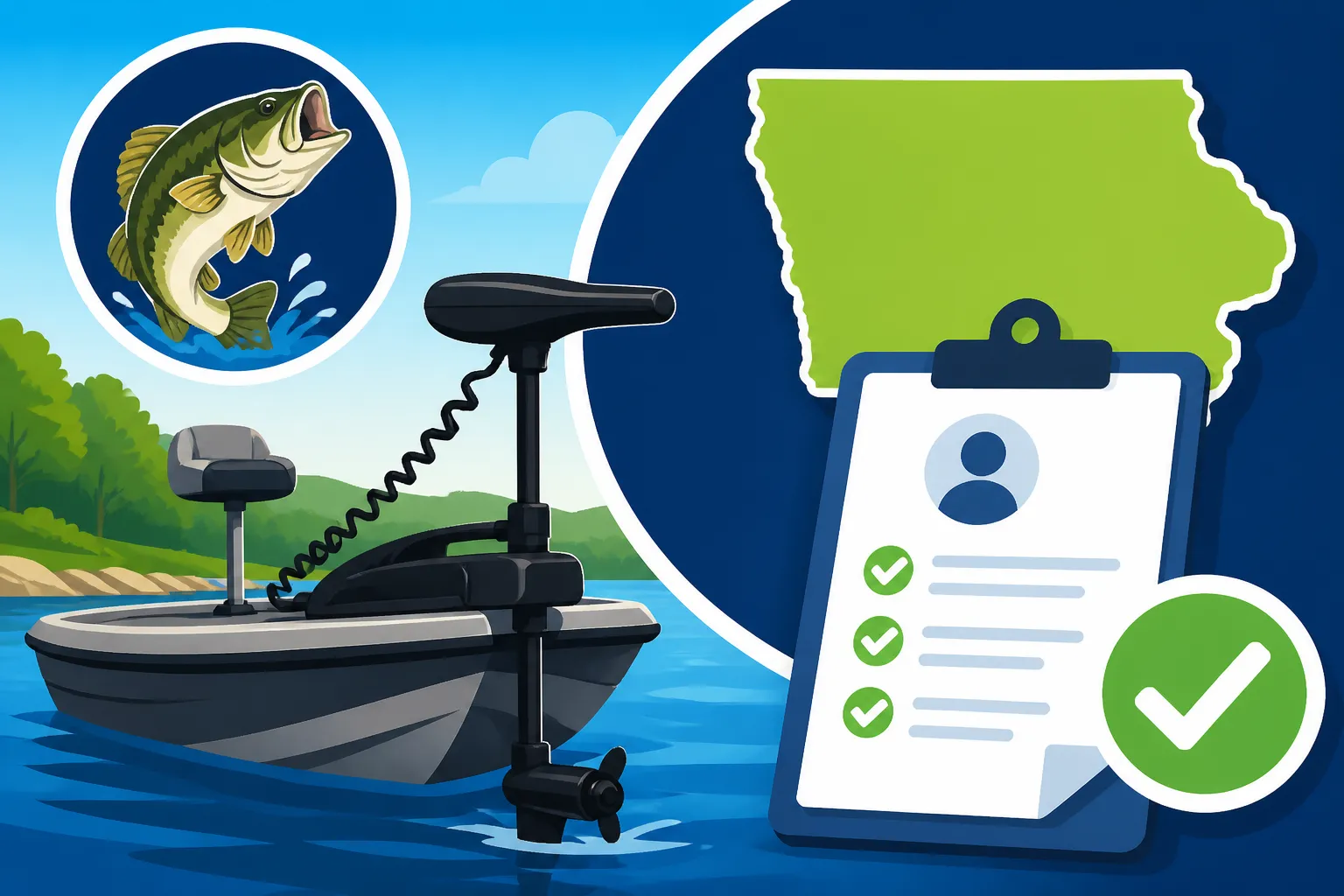
The general rule in Iowa is pretty straightforward: any vessel propelled by a motor, regardless of its size or the motor's horsepower, needs to be registered. This is where a lot of anglers get tripped up. When people hear "motorized vessel," they often picture large fishing boats with roaring outboards, not necessarily their quiet, battery-powered trolling motor on a small canoe. However, for the Iowa Department of Natural Resources (DNR), a motor is a motor, whether it's 200 horsepower or a 30-pound thrust electric trolling motor.
So, if you've got a canoe, a jon boat, a dinghy, a kayak, or even a stand-up paddleboard (yes, really!) and you attach any kind of motor to it, electric or gas, it now falls under the umbrella of "motorized vessel" and requires registration. This applies whether the motor is permanently mounted or just clipped on for the day. This rule is in place to ensure that all powered vessels on Iowa's public waters are accounted for, aiding in safety, enforcement, and funding for waterways. For a broader overview of the requirements, check out Iowa Boat Registration Requirements.
Common Exemptions to Registration
Now, while the "any motor" rule is broad, there are some specific exemptions. Understanding these can help clarify why your trolling-motor-equipped vessel does need registration when others might not. Generally speaking, the exemptions apply to vessels that are entirely human-powered and/or fall below certain size thresholds without a motor.
For example, canoes and kayaks under 13 feet in length are exempt as long as they don't have a motor. The moment you bolt on that Minn Kota or attach even the smallest electric trolling motor to the stern of your 12-foot kayak, it loses its exempt status. Similarly, inflatable boats under seven feet in length that are primarily used as life rafts or tenders are typically exempt, but again, adding a motor changes everything. It's really that simple: if there's a motor, there's usually a need to register. This is often a point of frustration for folks who just want to quietly fish a small lake or river, but it's an important regulation to be aware of. You can learn more about specific situations in Boat Registration Exemptions for Small Craft.
The Step-by-Step Process for Your Trolling-Motor Boat
Navigating the paperwork and requirements can feel like a chore, but I promise, it's not as daunting as it seems. Just like packing your tackle box, a little preparation goes a long way. Here’s a breakdown of what you need to do to get your trolling-motor boat officially registered in Iowa.
Gathering Your Essential Documents
Before you head to the county office, you'll want to have all your ducks in a row. The documents required will depend slightly on whether your boat is brand new or pre-owned.
- For a Brand-New Boat: If you've just bought a shiny new kayak or jon boat from a retailer like Bass Pro Shops and plan to add your trolling motor, you'll need the Manufacturer's Statement of Origin (MSO). This document is essentially the "birth certificate" for your boat and proves you are the first owner. It should have been provided by the dealer at the time of purchase. Without it, you won't be able to get a title or registration.
- For a Used Boat: If you're buying a used boat, even a small one, you'll need a Bill of Sale. This document should clearly state the buyer's and seller's names and addresses, the purchase price, the date of sale, and a detailed description of the boat, including its make, model, year (if known), and most importantly, the Hull Identification Number (HIN). The HIN is like the VIN on a car and is crucial for tracking boat ownership. If the boat was previously titled in Iowa, you'll also need the signed-over Iowa Certificate of Title. Always insist on a clear title when buying used!
- Proof of Residency: For Iowa residents, you'll need proof of residency, usually a valid Iowa driver's license or state ID.
- No Title for an Older Boat? This is a common headache for folks buying older, smaller boats that might predate titling requirements or simply fell through the cracks. If an older used boat doesn't have a title, you might be able to apply for a "bond title" or go through a specific process with the Iowa DNR to establish ownership. This can involve affidavits, inspections, and sometimes waiting periods. It’s always best to check with your County Recorder's Office directly for guidance on this unique situation to avoid any future hassles. Getting all your paperwork in order upfront makes the whole process smoother. For a detailed list of what you'll need, review Documents Needed to Register a Boat.
Where to Register Your Boat
Unlike vehicle registration which can often be done at the Department of Motor Vehicles, boat registration in Iowa primarily happens at your local County Recorder's Office. This is the physical place you'll need to go for your initial registration, title application, and to pay the associated fees.
You can find a list of County Recorder offices on the Iowa DNR website, or often a quick search for "County Recorder's Office [Your County Name] Iowa" will get you there. It's often a good idea to call ahead to confirm their hours, what specific forms they require, and if they have any unique local procedures. While some renewals can eventually be handled online, the first-time registration and titling of your boat generally requires an in-person visit to ensure all documents are properly verified and processed. This local touch ensures you're dealing with folks who understand the state-specific nuances. If you’re unsure about where to go, Where to Register a Boat in Iowa provides more location details.
Completing the Application and Fees
Once you have your documents in hand and are at the County Recorder's Office, you'll fill out the necessary application forms. These forms will ask for information about your boat (HIN, make, model, length, etc.), your personal details, and whether it's new or used.
The registration fees for boats in Iowa are typically based on the length of the vessel, not its horsepower. This means that a 16-foot jon boat with a small trolling motor will likely fall into the same fee category as a 16-foot bass boat with a large outboard, even though the power output is vastly different. While specific fee amounts change over time, expect a tiered structure: smaller boats (under 16 feet), medium boats (16-26 feet), and larger vessels (over 26 feet) generally have different rates. There may also be a titling fee on top of the registration fee.
After successfully registering, you'll be issued a Certificate of Registration, your validation stickers, and your official registration numbers. These numbers are assigned by the state and must be displayed on your boat according to specific guidelines, which we’ll discuss next. Your registration will also have an expiration date, which for Iowa boats, is typically April 30th of odd-numbered years. You can find more specific details about the ongoing costs in Iowa Boat Registration Cost.
Important Considerations for Trolling-Motor Anglers
So, you've got your registration sorted, fantastic! But for those of us who prefer the stealth and simplicity of a trolling motor, there are a few additional details that often come up, especially regarding how these motors are viewed under the law and what accessories you might need.
Electric Trolling Motors and Horsepower
The biggest takeaway here is: an electric trolling motor is still a motor for registration purposes. I know, I know, it sounds a bit counterintuitive when we talk about "horsepower," which typically refers to internal combustion engines. However, Iowa's regulations are primarily concerned with whether a vessel is mechanically propelled rather than how much power it produces. So, even if your trolling motor is only 30 pounds of thrust, it still counts.
This means you can't simply bypass registration by arguing that your electric motor has "zero horsepower" in the traditional sense. The intent of the law is to cover all motorized vessels, ensuring they meet safety standards and are identifiable on the water. While battery size and run time are huge considerations for your actual fishing trip – you can find great deep cycle batteries and chargers on Amazon or at Bass Pro Shops – they don't affect your boat's registration class. The registration is determined by the length of the hull, not the electric motor's specs.
Displaying Your Registration Numbers and Decals
Once you have your official registration numbers and validation decals, correctly displaying them on your boat is not just about looking official; it's a legal requirement. Improper display can lead to fines, which is the last thing you want to deal with when you're out enjoying a peaceful morning fishing.
- Placement: The registration numbers must be displayed on both sides of the forward half of the boat (the bow). They need to be clearly visible, unobstructed, and permanently attached. This means no temporary tape or easily removed signs.
- Size and Style: The numbers must be block letters, at least three inches high, and in a color that contrasts sharply with the background color of your boat. For example, if you have a white kayak, black numbers would be ideal. There should also be a space or hyphen between the two letters and the first two numbers, and between the first and last four numbers (e.g., IA-1234-AB).
- Validation Decal: Your validation decal, which shows the current registration period, must be placed within six inches of the registration numbers on both sides of the boat. Typically, it goes just forward of the numbers.
- No Other Numbers: Don't display any other numbers that might be confused with the registration numbers on the bow of your vessel.
Always double-check the exact specifications provided by the Iowa DNR when you receive your numbers and decals, as guidelines can be very specific.
Boat Safety Equipment Requirements
Just because your boat is small and only powered by a trolling motor doesn't mean you're exempt from carrying essential safety equipment. In fact, some of these items are even more critical for smaller craft that might be more susceptible to capsizing or encountering issues.
- Personal Flotation Devices (PFDs): This is non-negotiable. You must have a U.S. Coast Guard-approved PFD (life jacket) for every single person on board. And for children under 13, it must be worn at all times while the vessel is underway. Even if you're a strong swimmer, an unexpected spill in cold water can be deadly.
- Sound-Producing Device: A whistle or a horn is required to signal distress or warn other boaters. A simple, inexpensive whistle is usually sufficient for smaller boats.
- Navigation Lights: If you plan to operate your trolling-motor boat between sunset and sunrise, or during periods of restricted visibility, you will need appropriate navigation lights. For a smaller boat, this might be a single all-around white light visible from 360 degrees, and sidelights (red and green) may also be required depending on length.
- Fire Extinguisher: While not always required for very small, open boats without enclosed compartments (like most kayaks or canoes with trolling motors), it's always wise to confirm. However, if your boat has an enclosed fuel tank compartment or other enclosed spaces, a fire extinguisher is a must.
- Other Gear: Consider a bailing device (a bucket or sponge), a spare paddle (even with a motor, things can go wrong), and a first-aid kit. While not always legally mandated for every small boat, these are smart additions. You can find many of these safety items readily available online through Amazon or at a local Bass Pro Shops. For a full rundown of requirements, read Required Safety Equipment for Iowa Boats.
Keeping Your Registration Current and Avoiding Issues
You've done the work, you're registered, and you're out on the water. Now what? Just like any other official document, boat registration isn't a one-and-done deal. It needs to be maintained, and understanding the renewal process and implications of lapses is crucial for hassle-free boating.
Renewal Process and Timing
Iowa boat registrations are valid for a two-year period. They always expire on April 30th of odd-numbered years. So, if you registered your boat in 2024 (an even year), your registration would be valid until April 30th, 2025. If you registered it in 2025 (an odd year), it would be valid until April 30th, 2027. This consistent schedule makes it easier to remember when to renew.
When renewal time comes around, you usually have a few convenient options. You can often renew:
- Online: The Iowa DNR website typically offers an online renewal portal, which is a super convenient way to handle it from home.
- By Mail: You may receive a renewal notice in the mail with instructions on how to renew via postal service.
- In Person: You can always go back to your County Recorder's Office to renew in person.
It's a good idea to keep an eye on your calendar or sign up for email reminders from the Iowa DNR to ensure you don't miss the renewal deadline. Lapsed registrations can quickly lead to trouble. How Long an Iowa Boat Registration Lasts and When Iowa Boat Registration Expires Each Year offer more context.
Consequences of Unregistered Boating
Fishing without a valid boat registration in Iowa, when one is required, can lead to some unwelcome consequences. It might seem like a minor infraction, especially for a small boat with a trolling motor, but law enforcement takes these regulations seriously.
- Fines: The most immediate consequence is typically a fine. These can vary depending on the specific circumstances and the discretion of the officer, but they are certainly enough to put a damper on your fishing budget and your day.
- Impoundment: In some cases, a highly non-compliant vessel could even be impounded, though this is usually reserved for more serious or repeat offenses. Imagine having your boat towed away and having to deal with impound fees on top of the fine – definitely not the peaceful day you envisioned.
- Spoiled Trip: Beyond the legal penalties, fishing with an unregistered boat means you're constantly looking over your shoulder. That anxiety can completely ruin the enjoyment of being on the water. It’s far better to spend a little time and money upfront to get properly registered than to risk a citation.
What if You Sell or Buy a Registered Trolling-Motor Boat?
Properly transferring ownership is just as important for a trolling-motor boat as it is for any other vessel. Whether you're selling your trusty fishing kayak or buying a new-to-you jon boat, make sure the title and registration process is handled correctly.
- As the Seller: You'll need to sign over the Iowa Certificate of Title to the new owner (if your boat was titled). You should also provide a clear and detailed Bill of Sale. It's a good practice to keep a copy for your records. This formally transfers ownership and liability.
- As the Buyer: You'll take the signed-over title (or MSO if new) and the Bill of Sale to your County Recorder's Office. You'll then apply for a new title in your name and register the boat. This ensures the boat is legally yours and registered under your name, making you responsible for its use and upkeep. This step is critical to avoid any legal ambiguities down the road. Don't simply assume the previous owner's registration transfers – it doesn't.
Taking care of these steps protects both the buyer and the seller and ensures that boat records in Iowa are accurate and up-to-date.
| Boat Type | Motor | Registration Required? | Title Required? | Common Scenario |
|---|---|---|---|---|
| Canoe/Kayak (Under 13 ft) | No | No | No | Paddling for recreation. |
| Canoe/Kayak (Any Length) | Yes | Yes | Yes | Adding a small electric trolling motor. |
| Inflatable Boat (Under 7 ft) | No | No | No | Used as a small tender or life raft, human-powered. |
| Inflatable Boat (Any Length) | Yes | Yes | Yes | Even with a small electric motor, it needs to be registered. |
| Jon Boat (Any Length) | No | No | Yes | Rowed or poled only; often still needs a title. |
| Jon Boat (Any Length) | Yes | Yes | Yes | With an electric trolling motor or gas outboard. |
| Rowboat/Skiff (Any Length) | No | No | Yes | Primarily rowed or poled; often still needs a title. |
| Rowboat/Skiff (Any Length) | Yes | Yes | Yes | Any motor, including an electric trolling motor. |
Disclaimer
This article is for general informational purposes only and does not constitute professional advice. Laws, prices and regulations vary by location and change over time. Consult a qualified professional for guidance on your specific situation.