Smallmouth Bass Fishing in Iowa
There's a special thrill that comes with hooking into a smallmouth bass in Iowa. While many anglers focus on our abundant largemouth populations, ignoring the "brown fish" is a real missed opportunity. Smallmouth bass are feisty, hard-fighting, and often found in some of the most beautiful, undisturbed parts of our state. This guide is dedicated to helping you unlock the secrets of smallmouth bass fishing in Iowa, covering everything from identifying their preferred habitats to mastering the techniques that will put these bronze beauties in your net.
Understanding Iowa Smallmouth Bass: A Profile
Smallmouth bass, often affectionately called "bronzebacks" or "brown fish," are truly one of Iowa's most exciting sport fish. They might not grow to the immense sizes of some largemouth bass, but what they lack in sheer bulk, they more than make up for in fighting spirit and evasive maneuvers. Anglers who discover the joy of smallmouth fishing often find themselves addicted to the challenge and the powerful runs these fish deliver.
What Makes Smallmouth Bass Unique?
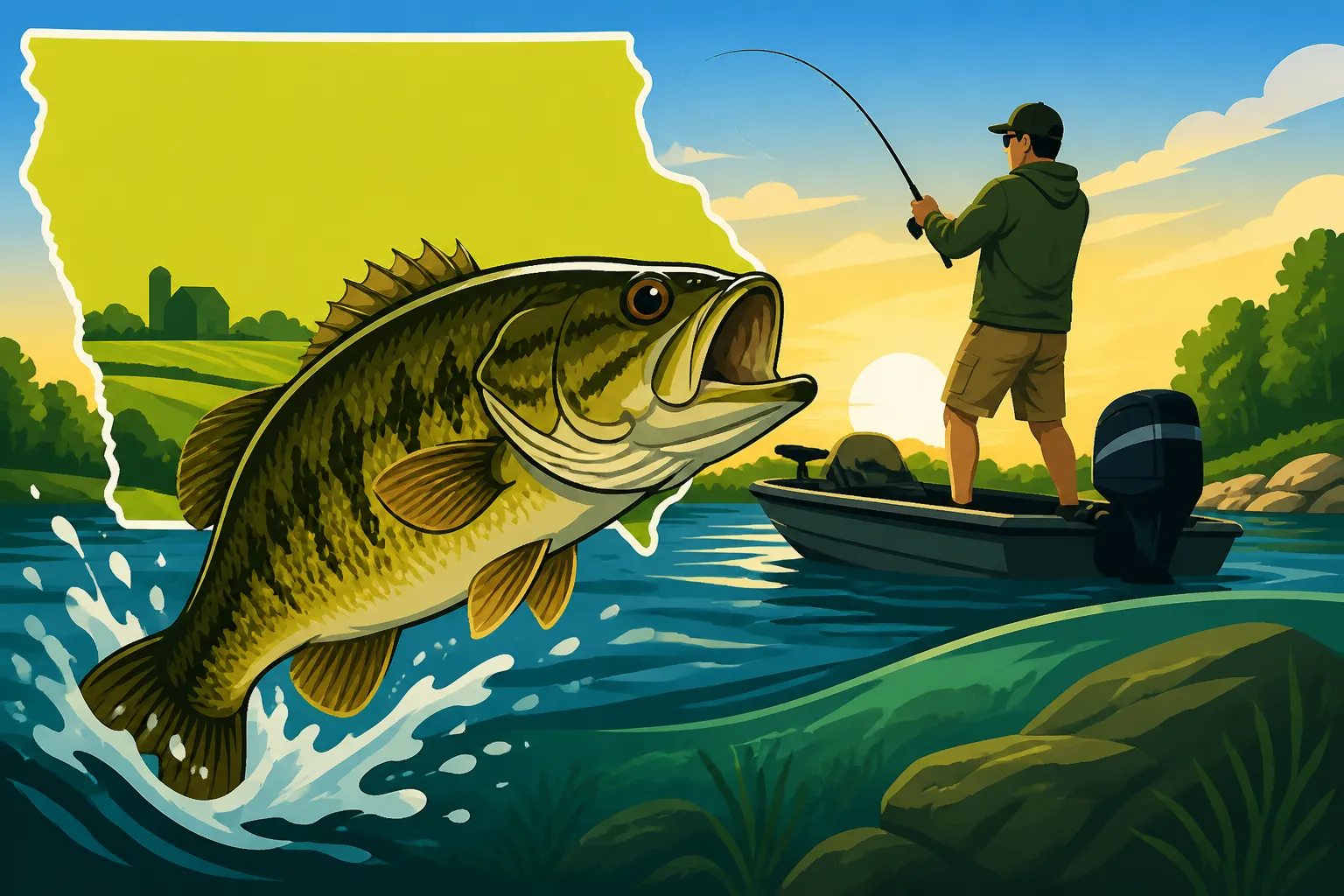
Smallmouth bass (Micropterus dolomieu) are easily distinguished from their largemouth cousins, though many new anglers sometimes confuse the two. The most apparent difference lies in their mouth. A smallmouth's jaw typically doesn't extend past the back of its eye, whereas a largemouth's jaw extends well beyond it. Their coloration is also distinct: smallmouths boast a beautiful bronze or brownish hue, often with vertical bars or stripes along their flanks, helping them camouflage perfectly against rocky riverbeds and gravelly lake bottoms. Largemouths, conversely, are usually greener with a distinct horizontal stripe. They also tend to have a more slender, muscular body built for navigating currents and ambushing prey.
Beyond their looks, smallmouth bass exhibit fascinating behaviors. They are highly attuned to their environment, especially water temperature and current. Unlike largemouths, which prefer weedy, still, or slow-moving water, smallmouths thrive in cooler, clearer, and often faster-moving water. They are opportunistic predators, constantly on the hunt, and will aggressively strike at a variety of baits. Their intelligence and propensity to hide in complex structures make them a challenging and rewarding target for any angler. When you hook one, be ready for acrobatic jumps and powerful dives—they fight hard all the way to the boat or bank!
Preferred Habitat and Forage in Iowa
In Iowa, smallmouth bass have very specific tastes when it comes to where they call home. They are predominantly river dwellers, favoring clear, rocky streams and rivers with good current. Think about areas with gravel bottoms, boulders, submerged logs, and undercut banks – these are prime real estate for smallmouth. These structures provide current breaks where they can rest, ambush prey, and escape predators. The Mississippi River is a fantastic example, with its myriad wing dams, rock piles, and feeder creeks offering ideal Smallmouth Bass Habitat on the Mississippi River. Smaller, clear-water tributaries also hold excellent populations.
While less common, smallmouth bass can occasionally be found in a handful of Iowa's deeper, clearer lakes and reservoirs that mimic their riverine preferences. These lakes usually feature extensive rock and gravel points, drop-offs, and sparse vegetation, rather than the thick lily pads and dense submerged weeds that largemouths love. Their diet is varied, consisting mainly of crayfish, minnows, insects, and even smaller fish. Understanding what they eat and where they ambush their meals is crucial for choosing the right bait and presentation. They are constantly looking for an easy meal, so anything that mimics their natural prey will often trigger a strike.
Where to Find Smallmouth Bass in Iowa
Finding smallmouth bass in Iowa isn't quite like finding largemouths; you can't just toss a frog into any farm pond and expect to connect. These fish have particular preferences, mainly gravitating towards moving water with specific structural elements. However, once you learn to identify their favored haunts, you'll discover fantastic fishing opportunities across the state.
Iowa's Top Smallmouth Rivers
Iowa is blessed with several rivers that provide exceptional smallmouth bass fishing. The Mississippi River truly stands out as a premier destination. Its vastness offers an incredible array of smallmouth hideouts, from rocky points and wing dams to rip-rap shorelines and current seams. Anglers often focus on specific pools, like Mississippi River Pool 9 Fishing, Mississippi River Pool 10 Fishing, and Mississippi River Pool 12 Fishing, which are renowned for their smallmouth populations. The key here is to find current breaks and rocky structures where these fish can ambush baitfish.
Beyond the mighty Mississippi, several other Iowa rivers offer fantastic smallmouth action. The Cedar River in eastern Iowa, especially its upper stretches, is known for its clear water and rocky bottom, making it prime smallmouth territory. Similarly, the Des Moines River, particularly further north where it's clearer and rockier, can be incredibly productive. Fishing the Des Moines River in Iowa can yield some impressive brown fish, especially around bridges and natural rock formations. Other notable rivers include the Maquoketa River and the Upper Iowa River, both of which feature scenic stretches of riffles, runs, and rocky pools that smallmouths adore. Exploring these rivers, often by wading or kayak, is an adventure in itself, leading to some truly memorable catches.
Lesser-Known Lake and Reservoir Opportunities
While rivers are king for smallmouth in Iowa, there are a few lake and reservoir exceptions worth noting. These are typically clear, deep lakes with significant rock or gravel structures, mimicking the river environments smallmouth prefer. However, these opportunities are less widespread than river fishing. Spirit Lake and West Okoboji Lake in the Iowa Great Lakes region are prime examples. Their deep, clear waters and rocky shorelines provide suitable habitat for smallmouth bass. You'll often find these fish congregated around rocky points, submerged humps, and steep drop-offs.
Fishing these lakes for smallmouth often requires a different approach than river fishing, usually focusing on deeper presentations and finding offshore structure. While not as common as largemouths in most Iowa lakes, the smallmouth found in these specific bodies of water can be quite large, offering a thrilling challenge. It's crucial to consult local fishing reports or talk to bait shop owners to get the latest on smallmouth activity in these lake environments, as their patterns can be more localized and condition-dependent than river fish.
Reading the Water: Key Structures to Target
Successfully targeting smallmouth bass hinges on your ability to "read the water" and identify key structures where they hold. In rivers, current is paramount. Smallmouths will position themselves in current breaks—areas where the flow is reduced, allowing them to conserve energy while waiting for prey to drift by. This could be behind a large boulder, on the downstream side of a wing dam, in eddies, or along the inside bend of a river. Look for changes in the bottom composition, from sand to gravel or rock.
On lakes, focus on hard structures. Rocky points that extend into deeper water, submerged rock piles, humps, and ledges are all prime smallmouth real estate. Breaklines, where shallow water quickly drops off into deeper areas, are also critical. Smallmouth will often patrol these depth changes, moving up and down to feed. Bridge pilings, docks with rocky bottoms, and rip-rap causeways can also hold fish. Pay attention to current in lake environments too; even subtle currents caused by wind or water flow through narrow channels can concentrate smallmouth. Learning to spot these subtle cues, either visually or with electronics, is a game-changer for consistent smallmouth success.
Essential Gear for Iowa Smallmouth Fishing
Having the right tackle can make all the difference when pursuing Iowa's feisty smallmouth bass. These fish are known for their powerful runs and sudden dives, so your gear needs to be capable of handling the fight. It's not about having the most expensive equipment, but rather choosing tools that are well-suited for the specific demands of smallmouth fishing in rivers and lakes.
Rods, Reels, and Line: Matching Your Setup
For smallmouth bass, versatility is key, but you'll generally lean towards lighter, more sensitive setups than you might use for heavy cover largemouth fishing. A medium-light to medium power spinning rod, typically 6'6" to 7' in length, with a fast action tip, is an excellent choice for a wide array of smallmouth techniques. This setup provides the sensitivity needed to detect subtle bites and the backbone to handle hard-fighting fish. Pair it with a 2000 or 2500 series spinning reel, which offers a smooth drag system and good line capacity. If you prefer baitcasting, a medium power, fast action rod of similar length, coupled with a high-quality baitcasting reel, is ideal for throwing heavier reaction baits. Many anglers find their preferred gear on sites like Amazon, which offers a wide selection from various brands.
When it comes to line, a good all-around choice is 6-10 lb test fluorocarbon or monofilament. Fluorocarbon is nearly invisible underwater, offers excellent sensitivity, and has good abrasion resistance, which is important when fishing around rocks. Monofilament provides good knot strength and a bit of stretch, which can be forgiving. Some anglers opt for braided line (10-15 lb test) for its incredible sensitivity and strength, often adding a 6-10 lb fluorocarbon leader for stealth. This combination is especially effective when fishing clear water or needing to feel light bites. The right line choice can significantly impact your success, so consider the water clarity and the specific lure you're using.
Lures and Baits That Get Bites
Smallmouth bass are opportunistic feeders, so a diverse tackle box is your best friend. Some staples include crankbaits, especially those that dive to moderate depths and mimic crayfish or baitfish. Suspending jerkbaits are also deadly, particularly in cooler water, as their erratic darting action can trigger aggressive strikes. For Crankbait Fishing for Iowa Smallmouth Bass, choosing colors that match local forage, like browns, greens, and oranges for crayfish, or silver and blue for minnows, is often highly effective.
Jigs are another smallmouth powerhouse. Hair jigs, tube jigs, and football jigs, often tipped with a small plastic trailer, can be fished slowly along the bottom, mimicking crayfish or dormant bait. Soft plastics like finesse worms, grubs, and creature baits rigged on a shaky head or drop shot rig are incredibly versatile for tempting finicky fish. Don't forget topwater lures like poppers and walk-the-dog baits for exhilarating strikes, especially during low light conditions or over shallow, rocky flats. Finally, live bait, particularly crayfish or shiners, can be irresistible to smallmouth, especially when the bite is tough. Having a selection of these confidence baits from your favorite tackle shop or an online retailer like Amazon will ensure you're ready for whatever the smallmouth are biting.
Kayaks and Waders: Accessing Prime Smallmouth Water
Access is often the biggest hurdle to fishing prime smallmouth habitat, especially on Iowa's rivers. Many of the best spots are not accessible by larger boats or even from the bank. This is where kayaks and waders become invaluable tools, opening up a world of possibilities. A fishing kayak, often purchased from a sporting goods store or even Amazon, allows you to quietly navigate shallow riffles and rocky runs, getting you right into the heart of smallmouth territory. Look for a stable, maneuverable Best Kayak for Iowa River Fishing that can handle currents and provide ample storage for your gear.
Waders, combined with sturdy wading boots, allow you to literally walk into the river and fish spots that would otherwise be unreachable. This is particularly effective on smaller, clearer streams where you can quietly approach holding lies. Make sure your waders are comfortable, durable, and appropriate for the water temperature. Safety should always be a priority when wading in current; a wading staff can provide extra stability, and always be aware of changing water levels. These tools not only enhance your fishing experience but also connect you more intimately with Iowa's beautiful river environments.
Mastering Smallmouth Bass Techniques in Iowa
Catching smallmouth bass consistently requires more than just knowing where they live; it demands an understanding of specific techniques tailored to their behavior and environment. Whether you're casting into a strong river current or working a deep lake structure, adapting your approach is key to success.
River Fishing Strategies: Current, Structure, and Presentation
River smallmouth fishing is a dynamic dance between current, structure, and your lure presentation. Smallmouths position themselves in "current breaks," areas where the main flow is disrupted, allowing them to rest and ambush prey with minimal effort. Look for them behind large boulders, on the downstream side of wing dams, along rip-rap banks, or in eddies and seams where faster water meets slower water. When fishing rivers, casting upstream and allowing your lure to drift naturally downstream, mimicking a disoriented baitfish or crayfish, is often highly effective. This allows your bait to reach the fish before your boat or presence spooks them.
Your presentation needs to match the conditions. In faster currents, heavier jigs or crankbaits that can get down quickly and stay in the strike zone are essential. When drifting, use just enough weight to keep your bait near the bottom without constantly snagging. Casting jigs and soft plastics to specific structures like fallen trees or undercut banks, then slowly working them back, can also draw strikes. Pay close attention to subtle changes in your line for a bite, as the current can mask light taps. Remember that smallmouth are often found in "runs" and "riffles"—stretches of shallower, faster water, as well as the deeper pools immediately downstream. Learning Catching Smallmouth Bass Near Rocky Structure is vital for river success.
Lake and Reservoir Tactics: Deep Water and Cover
While less common, smallmouth in Iowa's lakes and reservoirs require a different set of tactics. Here, the emphasis shifts from current to depth and hard cover. Smallmouth in these environments often relate to rocky points, submerged humps, deep drop-offs, and rock ledges. They use these features for ambush points and for protection from predators and bright sunlight. Early in the morning or late in the evening, they might move shallower, but during the day, especially in clear water, they tend to hold deeper.
Flipping and pitching jigs or soft plastics into specific pieces of cover, like a lone boulder on a flat or a cluster of rocks on a drop-off, can be very productive. Carolina rigs or drop shot rigs are excellent for presenting baits slowly to fish holding tight to the bottom in deeper water. Trolling deep-diving crankbaits along rocky contours is another effective method, especially for covering a lot of water. It's important to use your electronics to locate these offshore structures and to mark any baitfish schools, as smallmouth will often be nearby. The absence of strong current means a slower, more methodical approach is often required, allowing the fish time to investigate your offering.
Seasonal Approaches: Spring, Summer, and Fall
Smallmouth bass behavior changes significantly with the seasons, largely influenced by water temperature. Understanding these shifts is critical for consistent success.
- Spring: As water temperatures rise into the 50s and low 60s, smallmouth move from their deep wintering holes to shallower spawning areas, often rocky flats or gravel bars. This is the pre-spawn period, when they feed aggressively to build energy for spawning. Suspending jerkbaits, jigs, and slow-rolled spinnerbaits are excellent choices. During the spawn (when water hits the mid-60s), male smallmouth will guard nests, and while they can be caught, it's often best to practice catch and release quickly to protect the future of the fishery.
- Summer: Once the water warms into the 70s and beyond, smallmouth become highly active. In rivers, they'll be in current breaks, aggressively chasing bait. In lakes, they'll relate to deeper, cooler structures. Topwater lures shine in early mornings and evenings, while crankbaits, jigs, and soft plastics work well through the day. Look for them in areas with good oxygenation and cooler water, often deeper areas or sections with more current.
- Fall: As water temperatures cool down, smallmouth enter a feeding frenzy to fatten up for winter. This can be one of the best times to catch large numbers of active fish. They'll often school up in rivers and move to rockier main lake points in lakes. Crankbaits, jigs, and slower presentations of soft plastics can be incredibly effective. Pay attention to Iowa Fishing Season Dates and Limits as you plan your fall trips, as regulations can sometimes change seasonally.
Each season presents its own challenges and rewards, but by understanding the smallmouth's seasonal movements and adjusting your tactics, you can find success year-round.
Conservation and Regulations for Iowa Smallmouth
As passionate anglers, we have a responsibility to protect Iowa's smallmouth bass populations for future generations. This isn't just about following the rules; it's about adopting an ethical approach to fishing that minimizes our impact on the resource. Smallmouth bass, particularly in river systems, can be sensitive to environmental changes and fishing pressure, making our collective efforts in conservation especially important.
Understanding Iowa's Fishing Regulations
Before every fishing trip, it is absolutely essential to familiarize yourself with the current Iowa Fishing Regulations Explained. These regulations are put in place by the Iowa Department of Natural Resources (DNR) to ensure sustainable fish populations. For smallmouth bass, this typically includes size limits and daily bag limits. Size limits dictate the minimum or maximum length of a fish you can legally keep. For example, some waters might have a 12-inch minimum length, meaning any smallmouth shorter than that must be immediately released. Other special regulations, like slot limits, may be in effect in certain areas to protect a specific size class of fish.
Daily bag limits specify the maximum number of fish of a particular species you can keep in a single day. These limits vary by species and sometimes by specific water bodies, so always double-check for the area you're fishing. For smallmouth bass, many dedicated anglers choose to practice catch and release regardless of the regulations, especially for larger, trophy-sized fish. This ensures these valuable breeders remain in the population. It's also critical to have a valid Iowa Fishing License Guide before you cast a line; fishing without one can lead to significant fines.
Practicing Ethical Angling
Ethical angling goes beyond simply following the letter of the law. It involves a mindset of respect for the fish and their environment. When practicing catch and release, handle fish gently and quickly. Minimize their time out of the water, especially during warm weather. Use appropriate landing nets (rubberized ones are best to protect fish slime), and if possible, unhook fish in the water. Avoid excessive squeezing or rough handling, which can damage internal organs or remove their protective slime layer, making them susceptible to disease.
Consider using single, barbless hooks, which make hook removal easier and reduce stress on the fish. Dispose of all trash, including fishing line, properly. Nothing ruins a beautiful fishing spot faster than discarded monofilament or plastic bait containers. Be mindful of others on the water, whether they are other anglers, boaters, or wildlife observers. Share the resource responsibly and set a positive example for responsible outdoor recreation. A little common sense and courtesy go a long way in ensuring pleasant experiences for everyone and healthy fish populations.
Protecting Iowa's Smallmouth Fisheries
Beyond individual actions, contributing to the broader protection of Iowa's smallmouth fisheries is vital. This can involve advocating for habitat preservation, supporting local conservation efforts, and reporting any suspicious activity. Healthy smallmouth populations rely on clean, clear water, intact riparian zones (the areas along riverbanks), and diverse underwater structure. Pollution, erosion, and habitat degradation all threaten these essential elements.
If you observe any potential fishing violations, such as someone exceeding bag limits, keeping undersized fish, or engaging in illegal fishing methods, it's important to report it to the Iowa DNR. They rely on observant citizens to help enforce regulations and protect our resources. Participating in stream clean-ups, joining local conservation groups, or simply spreading awareness about responsible fishing practices can make a significant difference. Every smallmouth you release carefully, and every piece of trash you pick up, contributes to the health and longevity of these incredible fisheries.
Tips for a Successful Smallmouth Trip in Iowa
Even with the right gear and knowledge of techniques, smallmouth bass can be finicky. Success often comes down to meticulous planning, adapting to conditions, and a healthy dose of patience. These tips will help you maximize your chances of a memorable smallmouth fishing adventure in Iowa.
Scouting and Planning Your Adventure
A successful smallmouth trip starts long before you even leave the house. Research is your best friend. Utilize online resources like the Iowa DNR's fishing atlas, which can provide information on access points, depth maps for lakes, and fish stocking reports. Google Maps and satellite imagery are incredibly useful for identifying potential current breaks, rocky shorelines, and access points on rivers. Look for areas with a concentration of hard bottom, visible boulders, or significant changes in depth.
Don't underestimate the value of local intel. Visit local bait and tackle shops; the folks behind the counter often have invaluable, up-to-the-minute information on what's biting, what baits are working, and current water conditions. They can point you to specific stretches of river or particular lake structures that are producing. Consider also checking online fishing forums or local Facebook groups for recent reports and tips. The more information you gather beforehand, the more targeted and efficient your fishing efforts will be, saving you precious time on the water.
Weather and Water Conditions: What to Watch For
Smallmouth bass are highly sensitive to their environment, and understanding how weather and water conditions affect them is paramount.
Water temperature is perhaps the most critical factor. As discussed in the seasonal breakdown, smallmouth activity levels and locations are directly tied to temperature. A sudden cold front can shut down the bite, making fish lethargic and less willing to chase. Conversely, stable weather and gradually warming trends often result in more aggressive fish.
Water clarity and flow are especially important in river environments. Smallmouth prefer clear to moderately stained water. Heavy rains can blow out rivers, making the water muddy and raising the flow significantly, which often makes fishing very challenging. After such events, it's usually best to wait a few days for the water to drop and clear. Too little flow, on the other hand, can make fish sluggish and concentrated in deeper holes. Keep an eye on river gauges online for flow rates. On lakes, prolonged periods of high wind can stir up sediments and affect clarity, or create strong currents that concentrate bait and bass. Always check the forecast before you head out, and be prepared to adjust your plans based on current conditions.
Patience and Persistence: The Keys to Brown Fish Success
Ultimately, smallmouth bass fishing, like all angling, rewards those who are patient and persistent. There will be days when the bite is tough, when you cast countless times without a strike, or when you lose a big one at the boat. These are all part of the experience. Don't get discouraged! Smallmouth are known for their sudden feeding windows, so staying focused and continuing to work through your presentations can often turn a slow day into a memorable one.
Experiment with different lures, retrieve speeds, and depths until you find what the fish are keying in on. Sometimes a subtle change in color or size can make all the difference. Learn from every cast, every retrieve, and every follow. Did you see a fish flash at your bait? Was the bite incredibly light? These observations provide valuable clues. Embrace the challenge, enjoy the journey through Iowa's beautiful waterways, and trust that your persistence will eventually be rewarded with the thrilling fight of a chrome-sided Iowa smallmouth.
| Smallmouth Fishing Scenario | Best Time of Year | Preferred Habitat | Recommended Lure Types | Key Considerations |
|---|---|---|---|---|
| River Fishing (General) | Spring, Summer, Fall | Rocky riffles, current breaks, wing dams, undercut banks | Jigs, crankbaits, soft plastics (tubes, grubs), spinnerbaits | Water clarity & flow, current seams, stealthy approach |
| Lake Fishing (Rare) | Summer, Fall | Deep rock piles, ledges, rocky points, humps | Drop shots, Carolina rigs, deep crankbaits, football jigs | Electronics to find structure, precise boat positioning |
| Pre-Spawn (Rivers/Lakes) | Early Spring (50-60°F) | Transition zones near spawning areas (rocky flats) | Suspending jerkbaits, jigs, slow-rolled spinnerbaits, lipless crankbaits | Fish feeding aggressively to build energy; look shallow |
| Summer Aggressive Bite | Summer (68-75°F) | Faster current breaks (rivers), deep rock cover (lakes) | Topwater, crankbaits, tube jigs, finesse worms | Early morning/late evening topwater, mid-day deeper presentations |
| Fall Feeding Frenzy | Fall (50-65°F) | Main river channels, rocky points & drop-offs in lakes | Crankbaits, large jigs, minnow imitators, umbrella rigs | Fish schooling up, actively feeding; cover water |
| Wading Opportunities | Spring, Summer, Fall | Smaller, clear rivers and streams with rocky bottoms | Small jigs, inline spinners, topwater, soft plastics | Safety in current, proper waders & boots, stealth |
Disclaimer
This article is for general informational purposes only and does not constitute professional advice. Laws, prices and regulations vary by location and change over time. Consult a qualified professional for guidance on your specific situation.