How to Catch Smallmouth Bass Near Rocky Structure
If you've spent any time casting lines in Iowa, you know the frustration of finding those elusive smallmouth bass, especially when they're tucked away in what seems like impenetrable rocky cover. These feisty fighters love to hug those hard-to-reach ledges, boulder fields, and rip-rap banks, making them a challenge but also incredibly rewarding to catch. This guide is all about demystifying how to pinpoint and effectively fish for smallmouth bass around the kind of rocky structure they call home in our beautiful Iowa waters.
Understanding Smallmouth Bass and Their Rocky Lair
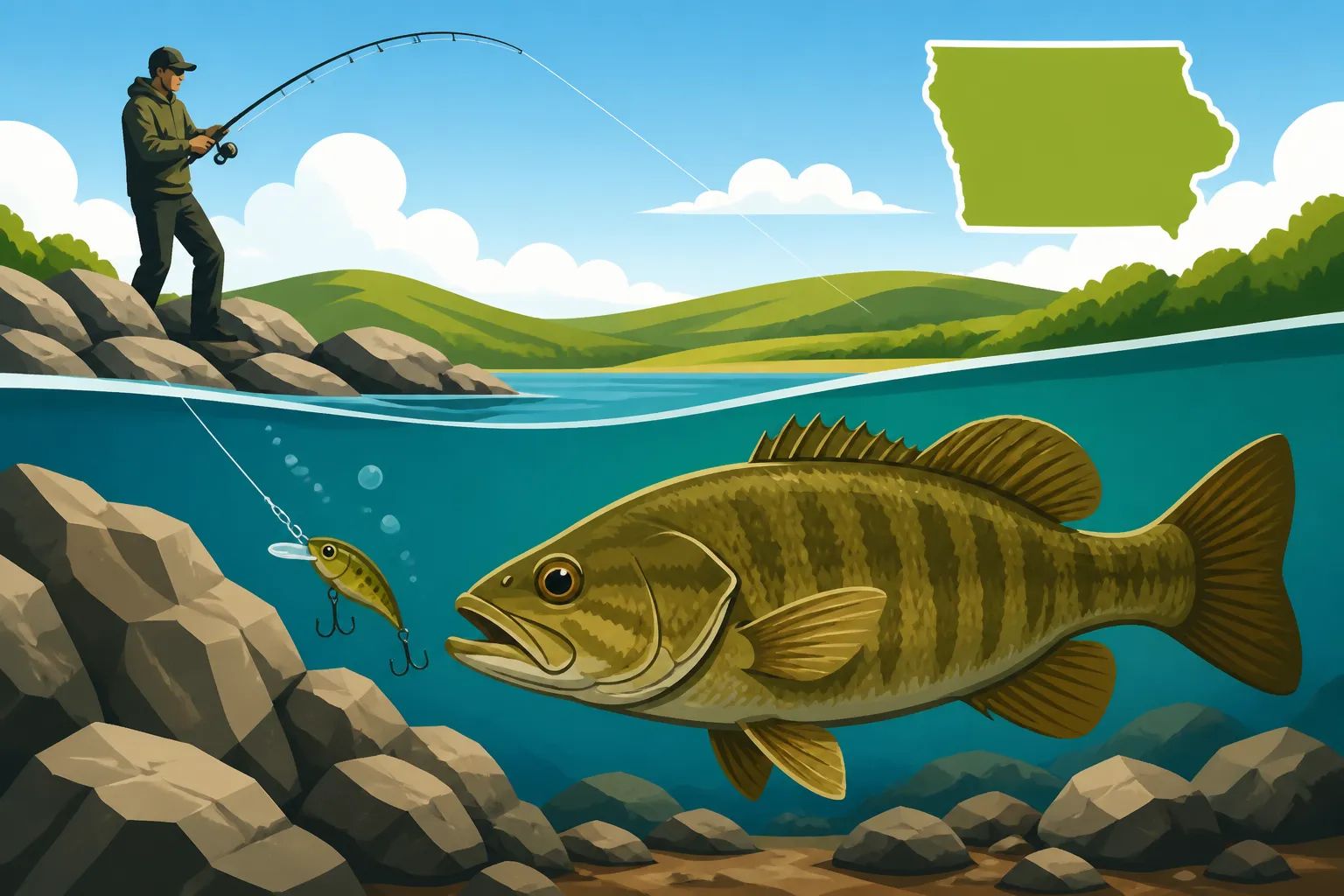
Smallmouth bass, often affectionately called "smallies," are absolute magnets for rocky environments. Unlike their largemouth cousins who prefer weedy cover and softer bottoms, smallmouth thrive in cooler, clearer waters with plenty of hard structure. Think about it: those rocks offer them everything they need – ambush points for prey, shelter from strong currents or bright sunlight, and even prime spawning areas. In Iowa, this means you'll often find them congregating around river bluffs, dam spillways, rip-rap along lake shores and bridges, and rocky points on our larger reservoirs.
It’s crucial to understand that not all "rocky structure" is created equal in the eyes of a smallmouth. They're looking for specific features within that rock garden. This could be a submerged boulder field in a clear lake, a current break behind a large rock in a river, or even the jagged edges of a rip-rap bank where the rocks meet a deeper drop-off. Knowing their preferences is the first step in unlocking consistent success.
Why Rocks are Prime Smallmouth Real Estate
Imagine you're a smallmouth bass. What do you need to survive and thrive? Food, shelter, and a place to reproduce. Rocky structures provide all of this in spades. Forage fish like minnows, crayfish, and various insects love to hide among the rocks, providing a constant buffet for hungry smallmouth. The nooks and crannies offer excellent protection from predators and swift currents, allowing them to conserve energy. And when it's time to spawn, those hard, clean surfaces are ideal for building their nests.
When you're out on the water, whether it's the Mississippi River or one of Iowa's larger lakes like the Iowa Great Lakes, start by scouting for these prime locations. Look for areas where current flows past a rocky outcrop, creating eddies or slack water on the downstream side. On lakes, focus on rocky points, submerged humps, or old roadbeds that have broken down into rubble. Even something as simple as a rocky shoreline near a deeper channel can hold a surprising number of fish. Understanding these habitats is key to effective Smallmouth Bass Fishing in Iowa.
Key Types of Rocky Structure in Iowa
Iowa offers a variety of rocky structures that appeal to smallmouth bass. Each type presents its own set of challenges and opportunities for anglers.
- River Bluffs and Ledges: Along rivers like the Des Moines River or sections of the Upper Iowa River, you'll find natural rock bluffs and ledges. These vertical structures often have current seams running alongside them, creating perfect ambush points. Smallmouth will sit just out of the main current, waiting for an easy meal to drift by. Fishing these areas often requires precise casting to get your lure into the sweet spot without getting hung up.
- Rip-Rap and Bridge Pilings: Man-made rip-rap, which is rock armor used to prevent erosion, is incredibly common around bridges, causeways, and reservoir shorelines in Iowa. This habitat is a smallmouth haven. The uneven surfaces and voids in the rip-rap offer endless hiding spots. Similarly, bridge pilings often have rocky bases and provide excellent current breaks. These spots can be highly productive, especially during periods of higher flow or after heavy rains.
- Submerged Rock Piles and Humps: In our larger lakes and reservoirs like Rathbun Lake or Saylorville Reservoir, submerged rock piles, humps, and old foundations are gold mines. These underwater structures don't always show on the surface, requiring good electronics or careful exploration. Smallmouth will hold to the edges or tops of these structures, particularly where they meet a sharp drop-off into deeper water. Learning to interpret your fish finder to identify these subtle changes in bottom composition is a game-changer. For a deeper dive into where these fish hang out, check out information on Smallmouth Bass Habitat on the Mississippi River.
Essential Gear for Targeting Rocky Smallmouth
Fishing rocky structure can be tough on your tackle. Snags are inevitable, and when you hook a strong smallmouth in heavy cover, you need reliable gear to pull them out. Having the right rod, reel, line, and a selection of appropriate lures can make all the difference between a frustrating day of lost tackle and a successful outing. Don't skimp on quality here; cheap gear often leads to heartbreak when you're battling a trophy fish around sharp rocks. You can find a wide array of reliable fishing gear on platforms like Amazon, offering competitive prices and convenient delivery right to your door.
Rod and Reel Setup
For smallmouth bass in rocky areas, you generally want a setup that offers both sensitivity for detecting subtle bites and enough backbone to control powerful fish.
- Rods: A medium-heavy power spinning rod, typically 6'6" to 7'2" in length, is a versatile choice. This provides enough leverage to cast heavier lures and muscle fish away from snags, while still being sensitive enough to feel light taps. Some anglers prefer a fast action tip for quick hook sets, which is particularly useful when fishing jigs or plastics. For deeper insights into selecting the right tools, you might find our guide on How to Catch Bass in Iowa helpful.
- Reels: A 2500 or 3000 series spinning reel balances well with these rods. Look for a smooth drag system, which is paramount when a smallie makes a powerful run towards cover. Brands like Shimano, Daiwa, or even Pflueger offer excellent options that won't break the bank. If you're looking for a more advanced setup, a baitcasting combo with a medium-heavy rod and a high-speed reel can be great for casting heavier jigs, crankbaits, or even larger swimbaits, especially in areas with less snags.
- Line: This is perhaps the most critical component when fishing around rocks. Braided line (10-20 lb test) is often the primary choice due to its incredible strength, sensitivity, and resistance to abrasion. However, smallmouth in clear water can be line-shy, so many anglers opt to tie a fluorocarbon leader (8-12 lb test, 18-36 inches long) to the end of their braid. Fluorocarbon is nearly invisible underwater and is more abrasion-resistant than monofilament, offering a good compromise.
Lure Selection for Rocky Cover
The best lures for rocky structure are those that can either mimic the smallmouth's natural prey (crayfish, minnows) or are designed to bounce off rocks without getting perpetually snagged.
| Lure Type | Best Use Case | Key Characteristics | Retrieve Speed |
|---|---|---|---|
| Jigs | Bouncing bottom, vertical presentations, mimicking crayfish | Football heads, finesse jigs, brush guards | Slow to Moderate |
| Crankbaits | Covering water, deflecting off rocks, triggering reaction bites | Square bills (shallow), lipless (deeper), round bills (deep) | Moderate to Fast |
| Soft Plastics | Finesse presentations, mimicking craws or minnows, tricky fish | Tubes, creature baits, shaky head worms, drop-shot worms | Slow |
| Spinnerbaits | Covering water in slightly stained areas, deflecting off cover | Colorado or Indiana blades (vibration), willow leaf blades (flash) | Moderate to Fast |
| Topwater | Low light conditions, active fish, calm water | Poppers, walk-the-dog baits, prop baits | Slow to Moderate |
- Jigs: From football jigs to finesse jigs, these are absolute staples. Football jigs are fantastic for rocky bottom because their shape helps them "walk" over snags, mimicking a crayfish scurrying along. Tipping them with a soft plastic trailer that resembles a crawdad can be incredibly effective. Make sure to have a few different weights to match current and depth.
- Crankbaits: Square bill crankbaits are phenomenal for shallow rocky areas. They're designed to deflect off rocks, creating an erratic action that often triggers a reaction strike. For deeper rock piles, diving crankbaits with round bills are better, as they can grind along the bottom without constantly hanging up. Consider diving into Crankbait Fishing for Iowa Smallmouth Bass for even more detailed tips.
- Soft Plastics: Tubes, creature baits, and shaky head worms rigged weedless are excellent for working rocky edges and crevices. The key is to present them slowly and methodically, allowing them to fall naturally. Drop-shot rigs with small straight-tail worms are also killer over deeper rock piles, letting you suspend your bait right in the strike zone. You'll find a wide selection of these versatile lures on Amazon.
- Spinnerbaits: While not always the first choice for clear, rocky water, spinnerbaits can be highly effective, especially in slightly stained conditions or when fish are aggressive. Their flashing blades and thumping vibration can draw smallmouth out of cover. Cast them parallel to rocky banks or ledges and let them bump into the structure.
Top Techniques for Fishing Rocky Structure
Successfully catching smallmouth bass near rocky structure is less about brute force and more about finesse, understanding their behavior, and precise lure presentation. It's an art form, really, learning how to "read" the rocks and make your lure dance just right. These techniques are tried and true methods that Iowa anglers use to fool those brown bass.
The "Bottom-Bouncing" Retrieve
Many smallmouth bass around rocky areas are looking for crayfish or minnows hiding on or near the bottom. This means you need a retrieve that keeps your lure in the strike zone and mimics that natural prey.
- Jig and Craw: Cast your football jig or finesse jig (with a craw trailer) past your target structure. Let it sink to the bottom. Once it's down, use short hops, drags, or shakes of your rod tip to make the jig "crawl" or "hop" over the rocks. Think of it as a crayfish moving along. The key is to maintain bottom contact and feel for those subtle "ticks" or pressure changes that indicate a bite. If you feel resistance that isn't a solid snag, set the hook!
- Shaky Head/Tube: These soft plastics are perfect for a slower, more deliberate presentation. Cast to a rocky seam or point, let it sink, and then use small twitches of your rod tip while slowly reeling in slack. The plastic will quiver and entice bites. When fishing current, cast slightly upstream and let the current carry your lure naturally over the structure, maintaining just enough tension to feel the bite. Many successful anglers swear by the subtle action of a shaky head worm, especially when the bite is tough.
Cranking and Deflection
Crankbaits are fantastic for covering water and triggering reaction strikes, especially when fish are actively feeding or guarding their territory.
- Shallow Square Bills: For rip-rap banks, rocky shorelines, or shallow rock flats, a square bill crankbait is your best friend. Cast it as close to the rocks as possible and retrieve it at a speed that makes it "deflect" off the rocks. The sudden change in direction mimics a fleeing baitfish or an injured crayfish, often provoking an aggressive strike. The beauty of the square bill is its bill design, which helps it bounce off cover rather than getting perpetually stuck.
- Deep Divers: When smallmouth are holding deeper on rock piles or ledges, you'll need a crankbait that dives to their depth. Cast these out, get them down to the bottom, and then slowly reel, letting the lure "grind" its way through the rocks. The occasional deflections off boulders will often draw a strike. Make sure your crankbait dives to the appropriate depth, or slightly deeper, than the structure you are targeting. This is a great way to locate active fish quickly.
Vertical and Finesse Presentations
Sometimes, smallmouth are holding tight to structure and won't chase a fast-moving lure. This is when vertical and finesse tactics shine.
- Drop-Shotting: Over deeper rock piles, drop-shotting is incredibly effective. This technique involves tying a hook directly to your main line (or fluorocarbon leader) a foot or two above a weight. This allows your bait (usually a small soft plastic worm or minnow imitation) to suspend enticingly above the bottom, right in the fish's face. You can shake your rod tip to impart action without moving the weight, making it irresistible to finicky smallmouth. This is also excellent for pinpointing specific fish you see on your Fish Finders and Electronics for Iowa Anglers.
- Vertical Jigging: If you're fishing directly over a submerged rock pile or bridge piling, vertical jigging with a spoon or a heavy jig can be deadly. Drop your lure straight down, let it hit bottom, and then lift and drop it, varying the retrieve. This works particularly well in colder water or when fish are schooled up tight. Ensure your boat position is directly overhead, and let your electronics guide you to the fish.
Seasonal Considerations for Rocky Smallmouth
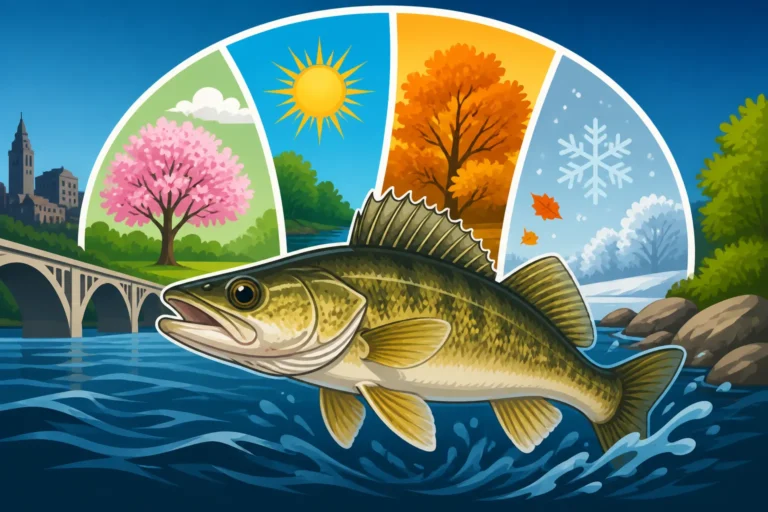
Smallmouth bass behavior around rocky structure changes significantly throughout the year, largely influenced by water temperature and their biological drive to spawn and feed. Understanding these seasonal patterns is crucial for consistent success. What works in spring won't necessarily cut it in summer or fall. You'll need to adapt your techniques, presentation, and even your fishing times to match their mood. This is particularly true in Iowa, where we experience distinct four seasons, each presenting unique opportunities for targeting smallmouth. For instance, knowing When Iowa Walleye Season Opens can give you an idea of when other species might be more active.
Spring: Pre-Spawn Aggression and Spawning
Spring is arguably the most exciting time to target smallmouth around rocky structure. As water temperatures rise into the 40s and 50s Fahrenheit, smallmouth move from their deep wintering holes to shallower, rocky areas to feed aggressively and prepare for spawning.
- Early Spring (Pre-Spawn): When the water is still chilly (40-50°F), smallmouth will stage on rocky points, channel swings, and deeper ledges adjacent to their eventual spawning grounds. They're looking for protein, so slow-moving presentations are key. Football jigs, suspending jerkbaits, and blade baits are excellent choices. Cast these to rocky edges and retrieve them slowly, letting them pause often. The smallmouth are looking for an easy meal as they build energy for the spawn. For more detailed strategies on this period, review Best Technique for Pre-Spawn Bass.
- Late Spring (Spawning): Once water temperatures reach the high 50s to low 60s, smallmouth will begin to build nests on clean, hard bottom. This often means sandy patches among rocks, gravel points, or flat rock ledges in shallower water. While they can be very aggressive defending their nests, directly targeting spawning fish is often discouraged to protect the population. However, fish moving to and from spawning areas will still readily bite. Tubes, small jigs, and creature baits are very effective. Focus on observing and understanding their behavior without disturbing the spawn directly.
Summer: Deep Water and Low Light Opportunities
As Iowa's waters warm up in the summer, smallmouth bass will often seek refuge from the heat and bright sun by retreating to deeper, cooler waters, but they rarely abandon rocky structure entirely.
- Deep Rock Piles and Ledges: During the heat of summer, look for smallmouth holding on deep submerged rock piles, humps, and ledges. These spots offer cooler water and access to baitfish. Drop-shot rigs, heavy football jigs, and deep-diving crankbaits are your best tools here. Focus your efforts during early mornings, late evenings, or even at night when they might move shallower to feed.
- Current Breaks: In rivers, smallmouth will use rocky current breaks, like those behind large boulders or wing dams, as oxygenated ambush points. Cast jigs, tube baits, or even topwater lures (during low light) into the seams and eddies created by these rocks. The Mississippi River, with its extensive wing dam system, is a prime example of this summer pattern. To maximize your chances, consider Best Time of Day to Catch Bass in Summer.
- Low Light Aggression: Smallmouth can be incredibly active on rocky points and shallow flats during low-light conditions (dawn, dusk, or overcast days). This is prime time for topwater lures like poppers, walking baits, and prop baits. The commotion on the surface over rocky edges can draw aggressive strikes from hungry smallmouth.
Fall: Feeding Frenzy and Migration
Fall is another fantastic time for smallmouth fishing around rocky structure, as bass begin their pre-winter feeding frenzy. They're trying to pack on calories before the cold sets in.
- Shallow to Deep Movement: As water temperatures drop in the fall (from the 60s down into the 40s), smallmouth will make migrations, often moving from shallow rocky feeding flats to deeper rock edges and main lake points. In early fall, square bill crankbaits and spinnerbaits are excellent for covering shallow rocky areas. As temperatures continue to drop, switch to slower presentations like jigs, blade baits, and suspending jerkbaits on deeper structure.
- Concentrated Schools: Fall often sees smallmouth schooling up in predictable rocky areas. If you find one, you've likely found several. Use your electronics to locate these schools on rocky humps or along deep breaklines. Vertical jigging or drop-shotting can be incredibly effective once you've located a school.
- Weather Effects: Pay close attention to weather patterns in the fall. Stable weather with gradual cooling often means consistent fishing, but sudden cold fronts can push fish deeper and make them less active. Always consider How Weather Affects Bass Fishing as a key factor in your fall strategy.
| Season | Typical Water Temp (F) | Key Locations (Rocky) | Primary Lures/Techniques |
|---|---|---|---|
| Spring | 40s – 60s | Rocky points, shallow flats, transition ledges, spawning beds | Jigs, suspending jerkbaits, tubes, creature baits |
| Summer | 70s – 80s | Deep rock piles, humps, current breaks, shaded bluffs | Drop-shots, deep crankbaits, jigs, topwater (low light) |
| Fall | 60s – 40s | Shallow feeding flats, main lake points, deep breaklines | Square bills, spinnerbaits, jigs, blade baits, suspending jerkbaits |
| Winter | Below 40s | Deep wintering holes, main river channels, vertical rock faces | Blade baits, vertical jigs, slow retrieves |
Remember, smallmouth bass are incredibly resilient and adaptive fish. By understanding their seasonal movements and preferences for rocky structure, you can consistently put more of these hard-fighting beauties in your boat or on the bank. If you find yourself needing to access those hard-to-reach rocky spots, a good Best Kayak for Iowa River Fishing can be a game-changer.
Disclaimer
Fishing regulations and conditions can change. Always consult the latest Iowa Department of Natural Resources (DNR) fishing regulations booklet or website before heading out to ensure you are compliant with all current laws and have the necessary licenses. This information is for general guidance only.