Spring Spawn Timing for Iowa Bluegill
It's incredibly frustrating, isn't it, to head out to your favorite Iowa lake or pond in early spring, brimming with anticipation for that legendary bluegill bite, only to find the water seemingly devoid of fish? You know they're there, but you just can't seem to hit them at the right time. This guide is dedicated to unraveling the precise science and art of pinpointing the spring bluegill spawn timing in Iowa, ensuring your next outing coincides with the most active and rewarding panfish action of the year.
The Rhythms of Spring: What Triggers the Bluegill Spawn in Iowa?
Iowa springs are a beautiful but often fickle mistress, bringing bursts of warmth followed by sudden chills. For bluegill, these environmental cues are everything, dictating when they decide to reproduce. Understanding these triggers is paramount to timing your fishing trips effectively and capitalizing on their natural instincts. It’s not just about a calendar date; it’s about reading the subtle (and sometimes not-so-subtle) signs nature provides.
Water Temperature: The Master Key to the Spawn
If there's one factor that stands above all others in triggering the bluegill spawn, it's water temperature. Bluegill are notoriously particular about their spawning conditions, needing the water to be just right for their eggs to develop successfully. They typically look for a sustained temperature range of about 67 to 72 degrees Fahrenheit. This isn't a switch that flips overnight; it’s a gradual warming trend that signals to the fish that it’s time to move up from deeper waters and begin their reproductive cycle.
Monitoring water temperature is perhaps the most crucial piece of advice any seasoned bluegill angler will give you. You can pick up an inexpensive water thermometer from many sporting goods stores or even online on platforms like Amazon. Simply take a reading in the shallow areas where you expect bluegill to spawn. If the temperature is steadily climbing into that optimal range over a few days, you know you’re getting close. A sudden cold snap, which is common in Iowa springs, can actually push fish back into deeper, more stable water, delaying the spawn until conditions improve again, which can be super disheartening when you’ve been looking forward to that bite!
Sunlight and Day Length: Nature's Calendar
While water temperature is the immediate catalyst, the increasing amount of sunlight and longer days (what we call photoperiod) play a significant, albeit subtler, role in preparing bluegill for their annual spawn. As winter fades and spring progresses, the longer days signal to all fish species that the warmer months are approaching. This increase in light exposure affects their metabolism and hormonal cycles, gradually bringing them into a reproductive state.
Think of it as nature's internal clock. Even if a sudden cold front temporarily drops water temperatures, the underlying biological drive of increasing daylight continues to nudge the bluegill towards spawning. It sets the general timeframe for when the spawn could happen, with water temperature acting as the ultimate green light. You'll notice that the general window for the bluegill spawn in Iowa usually falls between late May and early July, perfectly aligning with these longer, sunnier days.
Locating Prime Spawning Habitat
Once the water temperatures are nearing that sweet spot, bluegill don't just spawn anywhere. They're looking for very specific characteristics in their spawning beds to ensure the best chance of survival for their offspring. Understanding these ideal habitats will help you narrow down your search and focus your efforts on the most productive areas. This knowledge can save you hours of fruitless casting into barren water.
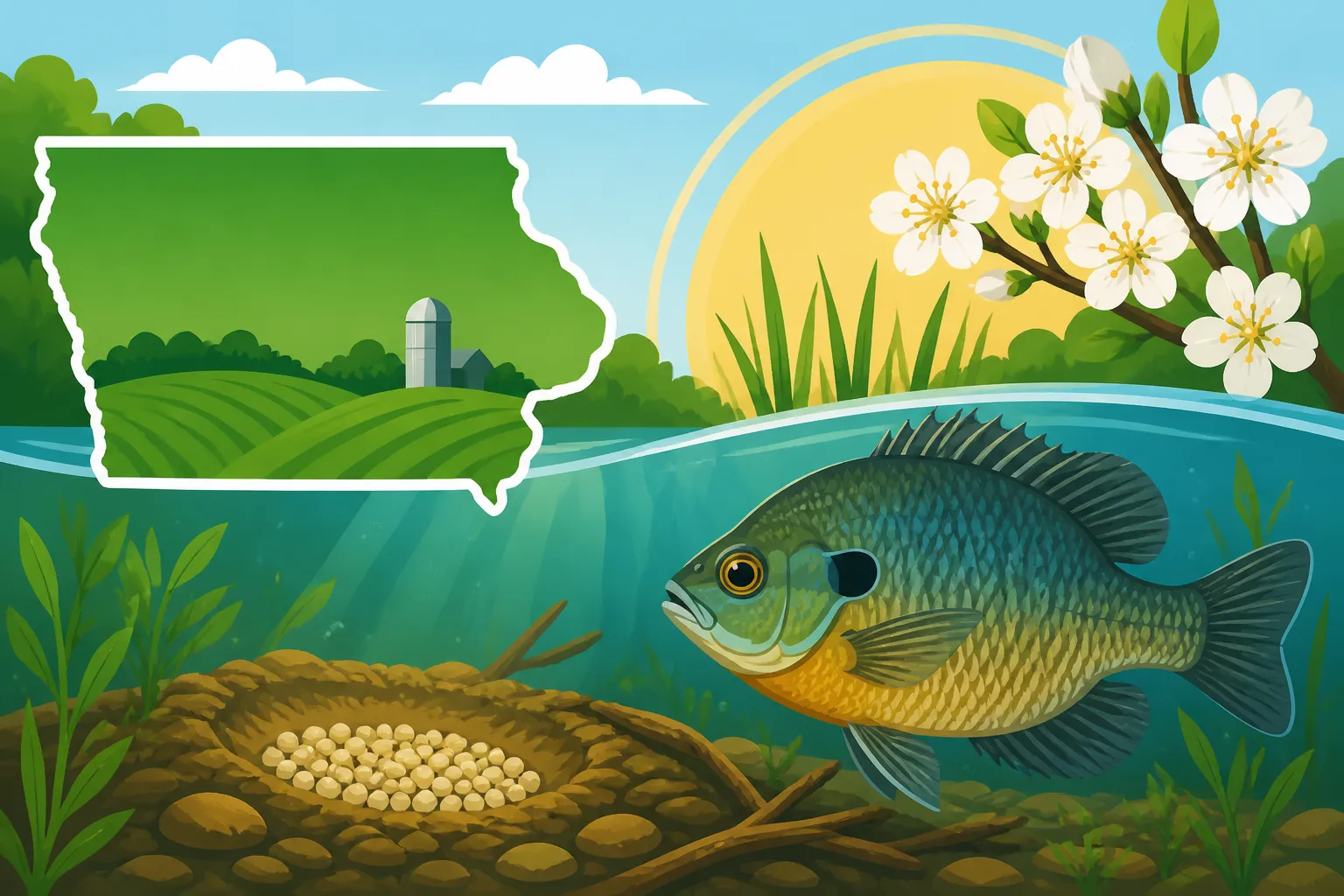
Bluegill prefer shallow, protected areas, typically in water that's only 1 to 4 feet deep. They're looking for hard bottoms, often sandy or gravelly, where they can fan out a circular nest. These spots are usually found near submerged vegetation like lily pads, cattail edges, or brush piles, which offer both cover from predators and a sense of security. Bays, coves, and areas protected from strong winds are also prime real estate. The males will aggressively guard these nests, making them easier to spot and, of course, easier to catch during the peak of the spawn. Looking for those tell-tale circular depressions in the substrate is a dead giveaway you’ve found a honey hole.
Decoding the Stages of the Iowa Bluegill Spring Spawn
The bluegill spawn isn't a singular event; it's a dynamic process that unfolds in stages. Each stage offers different fishing opportunities and requires slightly different approaches. Many anglers miss out by not understanding these nuances, showing up too early or too late. By breaking it down, we can increase our chances of success throughout the spring.
Pre-Spawn: The Build-Up to the Action
Before the full-blown spawning frenzy begins, bluegill enter what's known as the pre-spawn phase. This is an exciting time for anglers because the fish are actively feeding, trying to pack on energy for the exhausting process of reproduction. Typically, you'll find them in the pre-spawn when water temperatures are in the low to mid-60s Fahrenheit. They're still somewhat deeper than where they'll eventually spawn, but they're definitely starting to stage shallower.
During pre-spawn, bluegill are often found in transition areas – think of drop-offs adjacent to those future spawning grounds, or the deeper edges of weed lines. They'll cruise these areas, actively searching for food. This is a fantastic time to catch some of the biggest bluegill of the season, as they're exceptionally hungry. You might not see visible beds yet, which can be frustrating, making you wonder if you're in the right spot. But if you focus on these staging areas with small jigs or live bait, you can intercept them before they commit to the beds. Remember, they’re gathering strength, so they’re not as territorial as they will be, but they are eager to eat.
The Peak Spawn: Fast and Furious Fishing
This is the golden window everyone anticipates! The peak spawn occurs when water temperatures consistently hold in that 67-72°F range. This is when the bluegill are actively on their nests, either fanning them out (the males) or laying eggs (the females). The males become incredibly territorial and aggressive, protecting their nests from anything that gets too close – including your bait! This aggressive behavior makes them relatively easy to catch.
During the peak spawn, you'll often see the tell-tale circular beds clustered together in shallow, clear areas. This is where sight fishing really shines. You can literally cast to individual fish or to entire clusters of nests. The action can be fast and furious, with bluegill hitting almost anything you throw at them. It's a truly exhilarating experience, but this window can sometimes be narrow, especially if sudden weather changes occur. If you miss this brief, intense period, it can feel like you've completely lost out, which is why understanding the cues is so vital. Make sure you check out How to Catch Bluegill in Iowa for more specific techniques to capitalize on this peak action.
Post-Spawn: Recovering and Dispersing
After the peak of the spawn, the bluegill begin to transition into the post-spawn phase. This happens as water temperatures continue to rise above the ideal range, or if a significant cold front disrupts the spawning activity. The fish are generally exhausted from the spawning process and will start to disperse from their beds, seeking deeper, cooler waters to recover. The bite can definitely slow down during this period, leaving anglers scratching their heads and wondering, "Where did all the fish go?"
In the post-spawn, bluegill become less aggressive and more elusive. They're not actively protecting nests anymore, and their intense feeding frenzy to prepare for spawning has passed. You’ll typically find them holding on nearby structure – deeper weed edges, brush piles, or submerged timber, often just a stone's throw from where the beds were. They're still catchable, but you'll need to work a bit harder and present your baits more subtly. It requires patience and a willingness to explore slightly deeper zones than during the peak spawn. For general information on different species, a good read is the Iowa Fish Species Guide.
Practical Tips for Timing Your Iowa Bluegill Trip Right
Knowing the science behind the spawn is one thing, but putting it into practice out on the water is where the real challenge lies. There are several practical steps you can take to increase your chances of being on the water when the bluegill are most active. It’s all about preparation, observation, and adaptability.
Researching Local Waters and Reports
The best advice often comes from local sources. Before you head out, do a little digging. The Iowa Department of Natural Resources (DNR) website is an invaluable resource, often providing fishing reports for specific lakes and rivers. Local bait shops are also goldmines of real-time information. The folks working there talk to anglers all day, every day, and they know what’s biting and where. Don't be shy – walk in and ask! You might even find good information on how to prepare for your trip, like tips on Best Lures for Panfish.
Online forums and social media groups dedicated to Iowa fishing can also offer recent insights. While generic advice is helpful, specific reports about the lake you plan to visit can be a game-changer. It's truly frustrating when you read about a hot bite online, only to show up at a different lake and find conditions are completely off. Local reports help you avoid that disappointment and focus on the waters where the bluegill are actually active. Don't forget to check the overall Iowa Fishing Season Dates and Limits too, just to be sure.
Gear and Techniques for Spring Bluegill Success
Bluegill, even during the spawn, are generally not huge fish, so light tackle is key to maximizing your enjoyment and success. A light-action rod with a sensitive tip, paired with a small spinning reel, is ideal. Spool it with 4-pound test monofilament or fluorocarbon line for excellent casting and stealth. When it comes to bait, you can't go wrong with classic bluegill favorites. Small jigs (1/32 or 1/64 ounce) tipped with a small plastic grub, a piece of a worm, or a wax worm are deadly. Live bait like redworms, crickets, or even small pieces of nightcrawler are almost irresistible to spawning bluegill.
Presentation is crucial during the spawn. If you're sight fishing, cast your bait a few feet beyond the nest and slowly retrieve it, allowing it to gently fall into the bed. The territorial male bluegill will often attack it immediately. Stealth is important too; approach spawning areas quietly and avoid casting a shadow over the beds. For optimal results, consider carrying a small, reliable water thermometer, easily found on Amazon, to take precise temperature readings in various parts of the lake.
Respecting the Spawn: Ethical Angling Practices
While the spring bluegill spawn offers incredible fishing opportunities, it's also a critical time for the fish population. Ethical angling practices are essential to ensure healthy bluegill populations for years to come. One key practice is to limit your harvest of bedding fish. While it's legal to keep them (within Bluegill and Sunfish Combined Limit), these are the fish actively reproducing. Taking too many can impact future generations.
Consider practicing catch and release, especially for the larger "bull" bluegill that are so important for strong genetics. If you do keep fish for a meal, only take what you truly need and release the rest unharmed. Handle fish gently, minimize their time out of water, and avoid disturbing the spawning beds excessively. Using a single, barbless hook can also make releasing fish easier and less stressful for them. This mindful approach ensures we can all enjoy the thrill of spring bluegill fishing for many seasons to come.
Common Misconceptions and Troubleshooting Spring Bluegill Fishing
Even with all the knowledge, bluegill fishing can sometimes throw you a curveball. It's easy to fall prey to common misconceptions or get discouraged when the bite isn't on. Let's tackle some of these issues to keep your spirits high and your tackle box effective.
The "One Day" Myth and Changing Conditions
One of the biggest misconceptions about the bluegill spawn is that it happens on a single, predictable day, or that once it starts, it's a constant, never-ending feeding frenzy. The truth is, the spawn is a process that can last several weeks, with different waves of fish moving onto the beds. Moreover, it's highly susceptible to changing weather conditions. A warm, sunny week might kick off a fantastic spawn, only for a sudden cold front, heavy rain, or even just a few cloudy days to cool the water and send the fish scurrying back to deeper water.
This can be incredibly frustrating for anglers who plan a trip around a "perfect" forecast, only to have nature change its mind. Don't give up! If the conditions turn, the spawn might just be delayed, not over. Bluegill will often wait for stable, warmer conditions to return before getting back on the beds. Keep an eye on the weather, and be prepared to adjust your timing or your fishing spots. Flexibility is your best friend when dealing with Iowa's unpredictable spring.
Differences Between Lakes and Ponds
While the general principles of the bluegill spawn apply across Iowa's waters, there can be significant differences in timing between smaller ponds and larger lakes or reservoirs. These differences are primarily driven by how quickly and consistently the water bodies warm up in the spring. If you're interested in specific areas, checking out Best Fishing Spots in Iowa might give you some ideas.
Smaller, shallower farm ponds and local community fishing holes tend to warm up much faster than vast, deep lakes. This means the bluegill spawn in a small pond might kick off a week or two earlier than in a large reservoir like Saylorville or Rathbun Lake. Conversely, these smaller bodies of water can also cool down faster during a cold snap. Larger lakes, with their greater thermal mass, warm up more slowly but also maintain their temperature more consistently, making their spawn timing often more predictable once it starts. Knowing this can help you decide whether to hit up one of the Best Bluegill Ponds in Iowa or focus on a bigger lake for your spring trip.
When the Bluegill Just Aren't Biting: What to Do Next
We've all been there: you've done your research, found a promising spot, but the bluegill just aren't cooperating. It's easy to get disheartened, but a few troubleshooting steps can often turn a slow day around. First, recheck the water temperature and visible conditions. Has the water muddied up from recent rain? Has a cold front blown through? These environmental changes are often the culprits behind a slow bite.
If conditions seem fine, consider adjusting your depth. Maybe the fish have pulled off the beds slightly deeper due to pressure or a subtle temperature drop. Try fishing the edges of the beds or nearby drop-offs. Experiment with different baits and presentations. Sometimes a subtle change in jig color, or switching from a plastic grub to a live worm, can make all the difference. If bluegill are completely lock-jawed, don't be afraid to switch targets. Many other panfish like crappie or even bass might be more active. Knowing the Crappie Daily Limit in Iowa could open up new options for a successful day on the water.
| Spawn Stage | Water Temperature (Fahrenheit) | Bluegill Behavior | Key Tactics | Where to Find Them |
|---|---|---|---|---|
| Pre-Spawn | 60-66 | Moving shallower, feeding heavily, staging | Fish transition areas, drop-offs | Deeper edges of weed lines, drop-offs |
| Peak Spawn | 67-72 | On beds, aggressive, territorial | Sight fishing, small jigs/live bait | Shallow, protected areas with hard bottom |
| Post-Spawn | 73+ (or colder due to front) | Dispersing, recovering, less aggressive | Fish nearby structure, deeper cover | Deeper weed edges, brush piles, submerged timber |
Disclaimer
This article is for general informational purposes only and does not constitute professional advice. Laws, prices and regulations vary by location and change over time. Consult a qualified professional for guidance on your specific situation.