How Soon After Stocking You Can Catch Trout
There’s nothing quite like the thrill of a fresh trout bite, especially after you know the Iowa Department of Natural Resources (IDNR) has just stocked your favorite stream or pond. It's a common question among anglers: exactly how soon after stocking can you expect to start catching trout? Many imagine a long acclimation period, but the reality for these hatchery-raised beauties is often much quicker than you think, and this guide will walk you through everything you need to know to hit the water at just the right moment.
Understanding Iowa's Trout Stocking Program
Before we dive into the nitty-gritty of timing the bite, it helps to understand a bit about Iowa's impressive trout stocking program. Iowa might not be the first state that comes to mind for trout fishing, but thanks to dedicated efforts by the IDNR, anglers across the state, especially in the beautiful Driftless Area of Northeast Iowa, enjoy fantastic opportunities. The primary goal of stocking is to create a "put-and-take" fishery, meaning these fish are raised to a catchable size and released primarily for recreational harvest, rather than establishing self-sustaining wild populations in most locations.
The IDNR primarily stocks rainbow trout, but you’ll also find brown trout and even some brook trout in various streams. These fish are bred and raised in state hatcheries, most notably the Decorah Fish Hatchery and Big Spring Trout Hatchery. They’re fed a consistent diet of high-protein pellets, making them quite accustomed to regular feeding. Stocking occurs throughout the year, with heavy periods in spring and fall, and even special winter stockings in urban ponds closer to larger population centers. Knowing the specific streams and ponds included in the Trout Stocking Program in Iowa can give you a significant advantage. This consistent schedule and the nature of their upbringing directly impact how quickly they bite once released into the wild.
The "Immediate Bite" Phenomenon: Why Stocked Trout Are Eager
One of the most exciting aspects of fishing for newly stocked trout in Iowa is just how eager they are to bite. Unlike their wild counterparts, which are naturally wary and honed hunters, hatchery-raised trout are essentially farm-fed fish. This means they haven't developed the same instincts for avoiding predators or searching extensively for food. When they're released into a new environment, their primary drive is often to find something to eat, and they tend to do it without much hesitation.
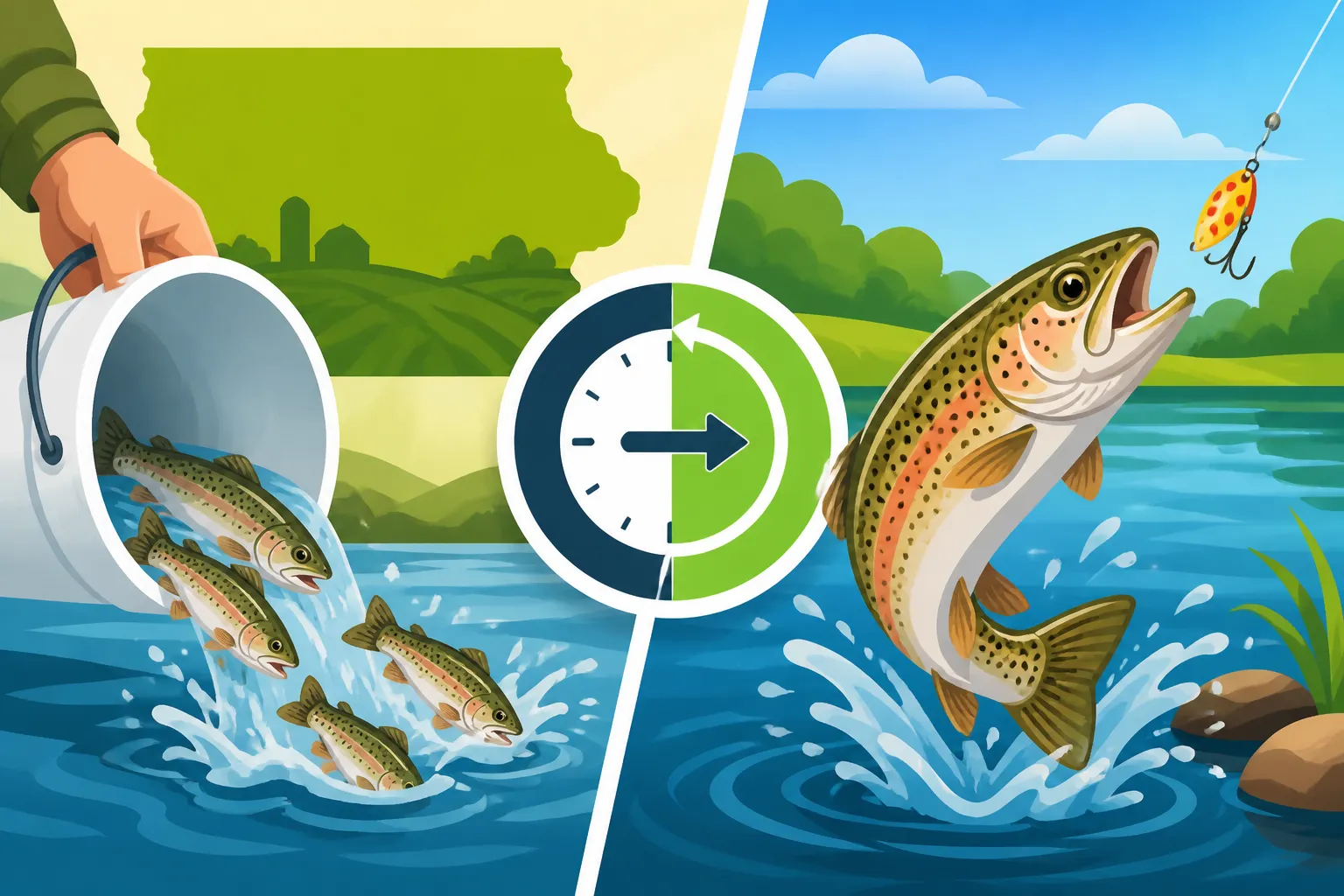
Think about it: these fish have spent their entire lives in a controlled environment, where food appears regularly and predictably. When they're suddenly in a stream or pond, it's a completely new world, but their ingrained feeding response kicks in almost immediately. They're often hungry from the stress of transport and the change of scenery, making them highly susceptible to baits and lures that mimic their usual feed or present an easy meal. This "immediate bite" phenomenon means that the window of opportunity for easy catching can literally begin within minutes or hours of their release. It's not uncommon for anglers to follow stocking trucks and start fishing as soon as the fish are in the water, often with great success. Many seasoned anglers who understand Iowa Spring Trout Stocking Strategy or Iowa Fall Trout Stocking Strategy leverage this knowledge for banner days.
Optimal Timing Post-Stocking: When to Hit the Water
Given their eagerness, the optimal time to fish for stocked trout is often as soon as possible after they've been released. Seriously, if you can be there when the stocking truck arrives or within a few hours of the stocking event, you'll likely experience some of the most consistent action. This isn't just an old angler's tale; it's a well-observed reality based on the trout's behavior and the nature of put-and-take fisheries.
Checking Stocking Schedules
The best way to time your trip is to keep a close eye on the IDNR's stocking schedule. They often post these schedules online, sometimes even providing real-time updates through social media channels or their Go Outdoors Iowa app. Checking these resources is crucial for pinpointing specific dates and locations. For example, if you know a particular section of the Yellow River or a community trout pond near Des Moines is getting a fresh batch, you can plan your day accordingly. It’s a game-changer for maximizing your chances. Don't forget, to legally fish for these beauties, you'll need a current Iowa Fishing License Guide and often an Iowa Trout Fishing Fee and Stamp Guide, even if you're just dipping a line for an hour or two.
The Impact of Fishing Pressure
While trout are initially eager, they're not entirely without learning capacity. The heavy fishing pressure that often follows a stocking event can quickly "educate" the fish. As more anglers descend on a stocked area, the trout that survive the initial flurry become warier. They learn to associate certain baits or lure presentations with danger, or they become more cautious about their surroundings. This means the window for truly easy catching might only last for a day or two, especially in easily accessible areas or popular spots like the Trout Streams Near Decorah.
If you can't make it right after the stocking truck leaves, don't despair! Fishing can still be excellent for several days, and sometimes even a week or more, especially in larger streams or areas with less immediate pressure. However, you might need to adjust your tactics, becoming more subtle with your presentations or trying different baits. For kids under 16, the Trout Fee Waived for Kids Under 16 makes it an even more accessible and fun activity, and they often have beginner's luck with these newly stocked fish!
Weather and Water Conditions
Even newly stocked trout can be influenced by weather and water conditions. A sudden cold front can make fish lethargic, reducing their willingness to chase lures, even if they're hungry. Similarly, heavy rains can muddy the water and increase flow, making it harder for fish to see your bait and harder for you to present it effectively. Ideal conditions typically involve stable weather, clear-to-slightly-stained water, and comfortable temperatures. While these fish are less sensitive than wild trout, optimal conditions still enhance your chances. Always check local forecasts and stream conditions before heading out, as Trout Fishing Techniques for Iowa Streams can vary greatly with water levels and clarity.
Techniques and Gear for Newly Stocked Trout
Now that you know when to go, let's talk about how to catch these eager fish. The beauty of fishing for newly stocked trout is that you often don't need highly specialized gear or advanced techniques. Simplicity and accessibility are key, making it a fantastic experience for beginners and seasoned anglers alike.
Essential Baits and Lures
Hatchery trout are used to pellets, and their taste preferences are often quite simple initially. Here's a rundown of tried-and-true options:
- PowerBait: This is the absolute king for newly stocked trout. The dough-like consistency, bright colors, and built-in scent attract fish effectively. Popular colors include chartreuse, rainbow, orange, and pink. Mold it around your hook to float off the bottom. You can find a vast array of PowerBait options on Amazon.
- Corn: Yes, plain old canned corn! Trout seem to love it, possibly because the kernels resemble the pellets they're fed in the hatchery. A few kernels on a small hook can be incredibly effective.
- Worms (Live or Artificial): Garden worms, nightcrawlers, or even small red wigglers are natural offerings that almost any fish will investigate. Artificial worm imitations, often scented, can also work wonders.
- Velveeta Cheese: A classic, if somewhat unusual, Iowa trout bait. A small piece molded onto a hook, similar to PowerBait, can be surprisingly productive.
- Small Inline Spinners: Lures like Panther Martin, Mepps, or Rooster Tail are fantastic for stocked trout. Their spinning blade creates flash and vibration, mimicking small baitfish. Sizes #0 to #2 are usually perfect for Rainbow Trout Fishing in Iowa.
- Small Spoons: Tiny Kastmaster or Little Cleo spoons, in silver or gold, can also be very effective. Their wobbling action is irresistible.
- Small Jigs: Marabou jigs or tiny soft plastic grubs on light jig heads (1/32 oz to 1/16 oz) can entice strikes, especially if twitched slowly.
Basic Rigging for Success
You don't need complicated rigs. Simple setups are often the most effective:
- Bottom Rig: This is fantastic for PowerBait or corn. Tie a small hook (size 10-14) to your main line. About 12-18 inches above the hook, pinch on a few small split shot weights, or use a sliding egg sinker above a swivel and leader. The weight holds your bait near the bottom, while PowerBait floats up, making it visible.
- Bobber Rig: For worms, small jigs, or corn, a slip bobber rig allows you to present your bait at a specific depth without it sinking too fast into snags. A small fixed bobber works well in shallower, slower-moving water.
Rod, Reel, and Line
Light tackle is the way to go for trout, enhancing the fight and making it easier to detect subtle bites.
- Rod: A light to ultra-light action spinning rod, 5 to 6.5 feet long, is ideal. The sensitive tip will help you feel those light taps. You can find great budget-friendly options for rods on Amazon that are perfect for this kind of fishing.
- Reel: A small spinning reel (size 500 to 1000) spooled with light line.
- Line: 4-6 pound test monofilament or fluorocarbon line is usually perfect. The lighter line is less visible to the fish and allows for better casting of light baits.
Here's a quick comparison of popular options for catching newly stocked trout:
| Bait/Lure Type | Best For | Presentation Tips | Pros | Cons |
|---|---|---|---|---|
| PowerBait | Bottom Fishing | Mold around hook, float off bottom with small weights. | Very high success rate, strong scent, vibrant colors. | Can be messy, fish swallow it deep sometimes. |
| Canned Corn | Bottom/Bobber | 2-3 kernels on small hook. | Inexpensive, fish recognize it from hatchery food, easily digestible. | Less durable than PowerBait, can fall off hook easily. |
| Live Worms | Bottom/Bobber | Thread onto hook, let it move naturally. | Natural appeal, effective on slightly warier fish. | Can be hard to keep alive, messy, may attract non-target species. |
| Inline Spinners | Active Casting | Cast upstream/across, retrieve steadily. | Mimics baitfish, good for covering water, triggers aggressive strikes. | Requires active retrieval, can get snagged in current. |
| Small Spoons | Active Casting | Cast and retrieve with slight jerks, or jig vertically. | Flashy, good casting distance, versatile. | Less natural than bait, can be ignored by lethargic fish. |
| Small Jigs (Marabou) | Active/Drift | Cast and retrieve slowly, or drift with current. | Subtle presentation, good for finicky fish, lifelike action in water. | Requires more finesse, lighter feel can be hard for beginners to detect. |
| Velveeta Cheese | Bottom/Bobber | Small piece molded on hook. | Surprisingly effective, melts slowly, strong scent. | Very soft, can come off hook easily with strong casts or currents. |
Remember, while the initial bite is often frantic, showing good fishing etiquette and respecting daily bag limits is important, as explained in Iowa Fishing Daily Bag Limits Guide and Iowa Fishing Regulations Explained. The goal is to enjoy the experience and bring home some tasty fish, not to decimate the stock.
The next time you hear about a stocking event, don't hesitate! Grab your gear, head to the water, and prepare for some fast and furious trout action. You'll likely be reeling them in much sooner than you ever imagined.
Disclaimer
Please note that fishing conditions, regulations, and stocking schedules can change. Always consult the official Iowa Department of Natural Resources (IDNR) website or their current fishing regulations booklet for the most up-to-date and accurate information before planning your fishing trip. This guide is for informational purposes only and should not be considered a substitute for official regulations.