How to Set Up a Trotline for Catfish
There's nothing quite like the thrill of hauling in a big Iowa catfish, especially when you've put in the effort to strategize your approach. But let's be honest, standing there, holding a single rod for hours, hoping for a bite can sometimes feel like a test of patience, not skill. If you're looking for a more hands-off, yet incredibly effective way to target those whiskered beauties, then learning how to set up a trotline for catfish might just be your next favorite technique. This guide is here to unravel all the mysteries, regulations, and practical steps so you can confidently deploy your first trotline and fill your cooler.
Understanding Iowa's Trotline Regulations
Before you even think about buying a spool of line or a pack of hooks, it's absolutely crucial to understand the rules. Iowa has specific regulations for trotlines, and ignoring them can lead to hefty fines and a ruined fishing day. Trust me, nobody wants to have their hard-earned catch confiscated because of a simple oversight. The Iowa Department of Natural Resources (DNR) takes these rules seriously to ensure fair fishing and to protect our waterways.
Legal Requirements for Trotlines
Navigating the specifics of trotline legality can feel a bit like deciphering an ancient scroll, but it's simpler than it seems once you break it down. First and foremost, you need a valid Iowa fishing license. You can't just throw out a line and hope for the best without one. Beyond that, here are the core requirements you absolutely must adhere to:
- Number of Lines: In most Iowa waters, a licensed angler is typically allowed to use no more than three trotlines at a time. This limit helps prevent overfishing and ensures that more anglers have access to the resource. It’s important to remember this limit applies to the individual, so if you're fishing with a buddy, each of you can deploy your own set of lines, but you can't pool your limits to set out six lines under one person's name.
- Tagging Requirements: Every single trotline you deploy must be clearly tagged with your name and address, as well as your Iowa DNR customer number. This isn't just a suggestion; it's a non-negotiable rule. The tag should be durable, weatherproof, and easy to read. This helps the DNR identify ownership and ensures accountability. If a line is found untagged, it can be confiscated, and you could face penalties.
- Waterbody Restrictions: This is a big one. Trotlines are generally permitted in the "waters of the state," but there are specific exclusions. For instance, trotlines are often prohibited in state-owned artificial lakes, within 200 yards of a dam or spillway, or in certain designated areas that might have high recreational use. Always check the current Iowa Fishing Regulations Explained booklet or the DNR website for a detailed list of restricted waters. Don't assume that just because it's a public waterway, a trotline is automatically allowed. This is especially true for popular fishing lakes.
- Hours of Operation: While trotlines can technically be left out overnight, they must be checked and all fish removed at least once every 24 hours. This rule is in place for ethical reasons, to minimize stress on caught fish, and to ensure that fish are harvested fresh. Leaving a trotline unchecked for longer than 24 hours is a violation.
- Length Limits: A single trotline in Iowa cannot exceed 200 yards (600 feet) in length. This is a generous length, allowing you to cover a good stretch of water, but it's important to measure your line before deployment to stay within the legal bounds.
- Proximity to Other Lines/Dams: Aside from the 200-yard rule near dams, it's also considered good practice, and often implied by regulations concerning safe navigation, to not set your lines in a way that obstructs navigation or interferes with other anglers. While specific distance rules from other lines might not always be stated, common courtesy and safety dictate leaving ample space.
Understanding these legal requirements is the first, and arguably most important, step in setting up a trotline. If you're ever unsure, consult the official DNR resources or ask a local conservation officer. They are there to help! You might also want to look up Is Trotline Fishing Legal in Iowa? for more specific details on the legalities.
Permitted Baits and Hook Types
Once you've got the legal framework down, it's time to think about what goes on your line. Catfish are not picky eaters, but Iowa regulations still dictate what you can and cannot use.
- What Baits Are Allowed: For catfish, the world is your oyster… or rather, your stinkbait, cut bait, and worms! Popular choices include shad, herring, or other oily fish cut into chunks (cut bait), chicken livers, nightcrawlers, and various commercially prepared stinkbaits or dough baits. These baits are all perfectly legal and incredibly effective. Many anglers swear by the natural oils and scents released by fresh cut bait. You can dive deeper into specific options in our Catfish Bait Guide for Iowa Anglers.
- Prohibited Baits: Here's where you need to be careful. You cannot use live game fish as bait on a trotline. This includes any species that has a legal size or bag limit, like crappie, bluegill, or bass. This rule is in place to prevent the spread of diseases and invasive species, and to ensure that game fish are not wasted. Also, don't even think about using protected species. Stick to the tried-and-true catfish favorites.
- Hook Restrictions: For trotlines in Iowa, you are limited to a maximum of 15 hooks per line. This means you can't just string hundreds of hooks along a single trotline. Each hook must be a single-point hook, meaning no treble hooks are allowed. While barbless hooks are encouraged for catch-and-release fishing, barbed hooks are generally permitted for trotlines when harvesting fish. The number of hooks per line balances efficiency with responsible fishing practices, ensuring you can catch plenty of fish without overdoing it.
Making sure your bait and hooks comply with these rules will not only keep you out of trouble but also ensure you're fishing ethically and sustainably.
Essential Gear for Your Catfish Trotline Setup
Alright, with the legal stuff sorted, let's talk gear! Setting up a trotline correctly requires specific equipment. Skimping on quality here can lead to lost fish, tangled lines, and endless frustration. Think of it as investing in success; good gear makes the experience smoother and more productive.
Choosing the Right Line and Anchors
The backbone of your trotline setup is, well, the line itself and what holds it in place.
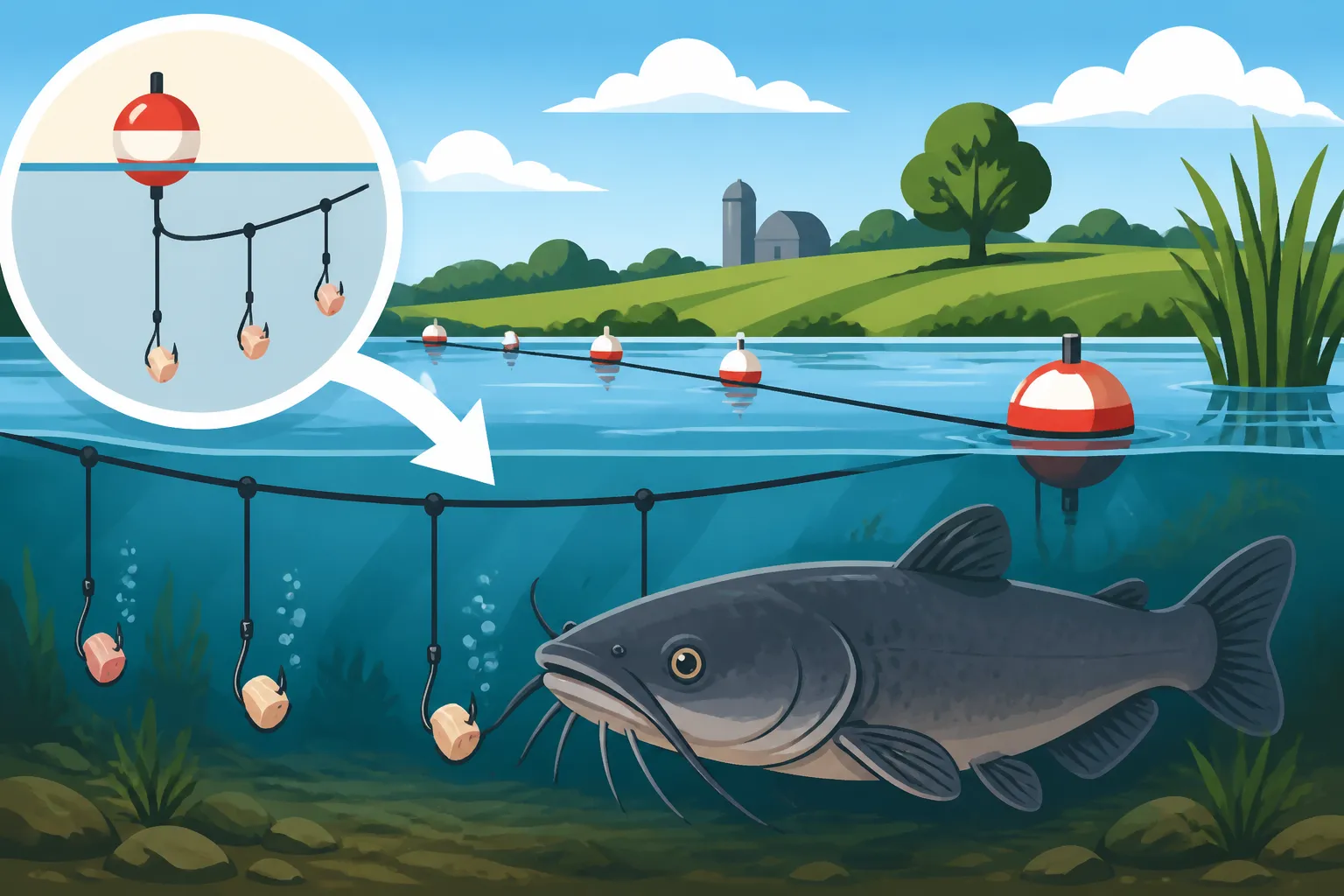
- Type of Line: You'll want a strong, durable line that can withstand the elements, the fight of a big catfish, and the abrasive nature of underwater structures. Options include heavy braided nylon or polypropylene rope, or even substantial monofilament line, though rope is generally preferred for its strength and ease of handling. A minimum of 200-pound test strength is highly recommended for the main trotline. This might seem like overkill, but it ensures your line won't snap under the weight of multiple heavy catfish or get frayed by submerged debris. Brands like Cortland or Promar offer excellent options you can often find on Amazon.
- Strength for Different Catfish Sizes: While 200-pound test is great for the main line, your snoods (the short lines connecting the hooks to the main line) can be slightly lighter, perhaps 80-100 pound test monofilament or braided line. This setup creates a weak link if a monster flathead decides to take off with your entire rig, potentially saving your main line. Remember, a 20-pound channel cat can put a serious strain on your gear, and Iowa certainly has bigger fish, so preparing for the unexpected is key.
- Anchor Types: To keep your trotline firmly in place, you'll need robust anchors. Old bricks, concrete blocks, heavy rebar, or even specialty trotline anchors designed for river currents work well. The goal is enough weight to prevent the current from dragging your line downstream, especially if you hook into a few trophy fish. Two anchors are needed per line – one for each end. For instance, in a strong current on the Mississippi River, you might need 15-20 pound anchors.
- Length of Anchor Rope/Chain: The length of your anchor line depends on the depth of the water and the strength of the current. A good rule of thumb is to use an anchor line that is at least 1.5 to 2 times the depth of the water, allowing for some slack and ensuring the anchor digs in properly. Using a short length of chain (e.g., 2-3 feet) directly off the anchor before your rope can help it settle better and prevent chafing against the bottom.
- Swivels and Snaps for Dropper Lines: Quality swivels are essential for connecting your snoods (hook lines) to the main trotline. These prevent line twist, which can weaken your line and make it harder to handle. Heavy-duty barrel swivels or three-way swivels are excellent choices. You can also use sturdy snaps (like stainless steel coastlock snaps) to attach your snoods to the swivels, making it easier to change or replace hooks. You can find robust swivels and snaps on Amazon, often in bulk packs.
Selecting Hooks and Leaders
The business end of your trotline needs to be effective and durable.
- Circle Hooks vs J-Hooks: For trotlining, circle hooks are almost always the preferred choice. Why? Because they are designed to hook fish in the corner of the mouth, leading to fewer gut-hooked fish. This is not only more humane but also increases the survival rate of fish you choose to release, which is particularly important if you're targeting specific size ranges and releasing others. J-hooks can lead to deeper hooking, making release more difficult and potentially fatal for the fish.
- Hook Sizes for Channel Cats vs. Flatheads: The size of your hook should match the size of the fish you're targeting and the bait you're using. For typical channel catfish, hooks ranging from 4/0 to 7/0 are generally effective. If you're specifically after big flathead catfish, especially when using larger live baits (where legal), you might go up to an 8/0 or even 10/0 circle hook.
- Leader Material: Your leader (snood) material should be abrasion-resistant and strong. Heavy monofilament (80-100 lb test) or fluorocarbon (which is less visible underwater) are good options. Some anglers even use stainless steel leader wire if they are in areas with sharp-toothed fish or particularly abrasive bottom structures, but for catfish, mono or fluoro usually suffice.
- Leader Length and Spacing: The length of your individual leaders can vary, but generally 12-24 inches is a good range. This allows the bait to move somewhat naturally in the current without getting tangled with the main line or adjacent hooks. Spacing your hooks 3-6 feet apart along the main line is common. This prevents hooks from tangling with each other and gives each bait a distinct presentation zone. For maximum efficiency, many anglers space their hooks to be just out of reach of the next bait to ensure clear strikes.
Buoys, Floats, and Additional Equipment
Don't forget the extras – they make a world of difference for safety and convenience.
- Marker Buoys: You need a way to find your trotline! Brightly colored, durable buoys (like plastic jugs or specialized fishing buoys) are essential for marking each end of your line. Make sure they are visible, even from a distance, and can withstand strong currents and wind without getting dragged under. You can grab some reliable buoys and line on Amazon.
- Attaching Buoys to Anchors: The buoys should be securely attached to your anchor lines, not the main trotline. This allows the main line to sit deeper and more discreetly, reducing visibility to other anglers and boaters, while still making it easy for you to retrieve.
- Gloves, Pliers, Bait Knife: A good pair of heavy-duty gloves will protect your hands from hooks, line abrasions, and catfish spines. Long-nosed pliers or a hook remover are invaluable for safely extracting hooks, especially from feisty fish. A sharp bait knife is, of course, essential for preparing your cut bait.
- Stringer or Cooler: Plan how you'll keep your catch fresh. A sturdy stringer can work if you're staying nearby, but a cooler filled with ice is often the best option to preserve the quality of your fish, especially on warmer days. You don't want all your hard work to go to waste with spoiled fish! Consider the Channel Catfish Daily Limit in Iowa and ensure you have enough space for your anticipated catch.
Having all this gear ready before you head out will ensure a smooth and enjoyable trotlining experience.
Step-by-Step Guide to Setting Up Your Trotline
Now that you're armed with knowledge and gear, it's time to get down to the practical steps of deploying your trotline. This isn't just about throwing a line in the water; it's a careful process that maximizes your chances of success while adhering to regulations.
Scouting the Perfect Catfish Spot
Location, location, location! Just like real estate, finding the right spot is paramount for trotlining. Catfish, especially big flatheads and channel cats, have predictable behaviors and prefer certain types of habitat.
- River Bends, Deep Holes, Submerged Structure: Catfish love structure and current breaks. Look for the outside bends of rivers where the current has carved out deeper holes. These areas often accumulate fallen trees, brush piles, and other submerged debris, which provide excellent ambush points and cover for catfish. A sudden change in depth, often indicated by slower current on the surface, can signify a deep hole where catfish might be holding. The Des Moines River Catfish Spots are excellent examples of where to find such features.
- Current vs. Slack Water: Channel catfish often prefer moderate current, which brings food to them. Flatheads, on the other hand, tend to hold in heavier cover near current, but often position themselves just out of the main flow in slack water pockets where they can ambush prey without fighting the current constantly. Understanding the difference in these preferences can help you decide whether to set your line directly in a channel or along the edge of a calmer eddy.
- Best Spots on the Mississippi River or Des Moines River: When trotlining on big rivers like the Mississippi or the lower Des Moines River, focus on areas with wing dams, revetments, or large log jams. These structures create current breaks and deep scour holes that catfish frequent. For the Mississippi River specifically, fishing near the numerous sandbars and deeper channels can be incredibly productive. You can find more targeted information on Summer Catfish Techniques on the Mississippi River. Always check maps and even local fishing reports to identify prime locations where catfish are known to congregate. You might also want to consult specific guides like How to Find Deep Holes for Catfish.
Deploying and Securing Your Trotline
This is where the rubber meets the road. Deployment needs to be methodical to prevent tangles and ensure your line is set effectively.
- Attaching Anchors at Each End: Start by securely attaching an anchor to one end of your main trotline. Make sure your knots are incredibly strong – a trotline under tension with fish on it will test even the best knots. If you're anchoring to the bank, you can tie off to a sturdy tree or a strong, driven stake. If anchoring in open water, deploy your first anchor.
- Stretching the Main Line Taught: From your first anchor point, slowly motor or row your boat, playing out the main trotline. As you go, attach your baited snoods at their predetermined intervals. Ensure the line is relatively taut. A slack line is more prone to tangles and less effective for hooking fish. Keep a steady pace, trying to maintain an even tension as you deploy each section of the line.
- Ensuring Correct Depth: Aim to set your trotline at a depth where catfish are actively feeding. This might be near the bottom in deeper holes, or slightly suspended if you're targeting active fish in the water column. Avoid setting it too shallow where it could be a hazard to navigation or too deep where it becomes difficult to retrieve. The goal is to have your baited hooks presented at the most productive depth.
- Tying Off to Trees, Stakes, or Additional Anchors: Once you reach the desired length, attach the second anchor to the other end of your trotline and deploy it. If you're able to tie off to a tree or stake on the bank, this can provide a very secure anchor point. For open water deployment, simply dropping the second anchor securely completes the setup. Remember those buoys! Attach one to each anchor line so you can easily locate your trotline later.
Baiting and Checking Your Trotline
Now for the rewarding part: baiting your hooks and checking for fish!
- How to Rig Bait Effectively: For cut bait, threading the hook through the skin side once or twice ensures the bait stays on. For softer baits like chicken livers, using a bait thread or mesh can help keep them secured on the hook, especially in current. Make sure the hook point is exposed for good hooksets.
- Frequency of Checking the Line: As per Iowa regulations, you must check your trotline and remove all fish at least once every 24 hours. Many successful trotliners check their lines more frequently, often early morning and late evening, to ensure the freshest catch and to re-bait. This also minimizes stress on any fish caught.
- Handling Fish Safely and Releasing Undersized Ones: When you approach your trotline, slowly pull it up, section by section. Have your gloves and pliers ready. Handle fish carefully, unhooking them with pliers. If a fish is undersized or a species you don't wish to keep, quickly and gently release it back into the water. Knowing the Catfish Possession Limits and specific rules like Catfish Limit on Rathbun Lake is crucial here. Re-bait any hooks that have lost their bait.
- Re-baiting: Catfish are ravenous, and baits get eaten or fall off. Always re-bait hooks as needed to keep your trotline producing. It's a good idea to bring extra bait with you every time you check your line. This active management makes a huge difference in your overall success.
Trotline Safety and Best Practices
Trotlining, while effective, also comes with responsibilities. Being a safe and ethical angler means thinking beyond just catching fish. It's about respecting the environment, other users of the waterway, and the fish themselves.
Navigational Hazards and Visibility
Your trotline shouldn't be a surprise for other boaters or anglers.
- Marking Lines Clearly: This is where those bright buoys come in! Make sure your buoys are highly visible and stand out against the water, especially in low light conditions. You might even consider having a flag on your buoy or using a taller marker in areas with significant boat traffic. The clearer your markings, the less chance of an accidental entanglement with another boat's propeller or fishing line.
- Using Reflective Tape for Night Visibility: If you plan to check your lines at dusk or before dawn, adding reflective tape to your buoys can be a lifesaver. When illuminated by a flashlight, reflective tape makes your markers glow, helping you find your lines easily and preventing others from running into them in the dark. This is a simple, inexpensive safety measure that makes a big difference.
- Avoiding High-Traffic Areas: Common sense dictates avoiding setting trotlines in narrow channels, busy boating lanes, or directly in front of public boat ramps. Not only is it potentially illegal, but it's also a serious navigational hazard and incredibly frustrating for other water users. Always try to find quieter stretches of water or areas specifically known for trotlining.
Ethical Considerations and Environmental Impact
Responsible fishing goes beyond regulations; it's about being a good steward of our natural resources.
- Not Leaving Lines Unattended for Too Long: As mentioned, Iowa regulations require checking your line every 24 hours. But from an ethical standpoint, checking more frequently is always better. Fish can suffer if left on the line for extended periods, especially in warm water. Frequent checks ensure the fish are handled humanely and that your catch remains in prime condition.
- Minimizing Harm to Non-Target Species: While trotlines are generally species-specific with the right bait and hook size, you might occasionally catch non-target fish. Be prepared to release these species quickly and carefully. Using circle hooks greatly aids in this, as they are less likely to gut-hook fish.
- Proper Disposal of Old Line and Hooks: Lost or discarded fishing line and hooks are a serious threat to wildlife and a blight on our waterways. Always retrieve all parts of your trotline when you're done fishing. If a line breaks or you have old, worn-out equipment, dispose of it properly in a trash receptacle. Never leave fishing gear behind.
- Understanding and Respecting the Ecosystem: Trotlining is a powerful fishing method. Use it responsibly. Don't overharvest beyond your needs or the legal bag limits. Know the Iowa Fishing Daily Bag Limits Guide and specifically the How to Catch Catfish in Iowa guide to stay informed. Treat the fish and the environment with respect, ensuring these opportunities exist for future generations. If you observe any violations of fishing regulations, you can find information on Where to Report a Fishing Violation in Iowa.
Handling Your Catch and Cleaning
The final step is getting your catfish ready for the dinner table.
- Humane Dispatch Methods: Once you've decided to keep a fish, dispatch it quickly and humanely. A swift blow to the head with a club or a sharp knife to sever the spine behind the head are common methods. This minimizes stress for the fish and ensures the best quality meat.
- Keeping Fish Fresh: Immediately after dispatch, get your catfish on ice in a cooler. This is crucial for maintaining the quality and flavor of the meat. Don't let fish sit in warm water or direct sunlight. A properly iced fish will taste significantly better than one that wasn't cared for.
- Cleaning Catfish Efficiently: Cleaning catfish can be a bit intimidating due to their tough skin and spines. There are several methods, but generally, it involves making cuts behind the head and along the dorsal fin, then using pliers to peel the skin off. A good fillet knife is essential. Many online tutorials can show you step-by-step how to clean them efficiently. If you're looking for more general information on table fare, check out our guide on the Best Eating Fish in Iowa.
By following these best practices, you'll not only enjoy a successful trotlining experience but also contribute to the health and sustainability of Iowa's fantastic fishing resources.
| Feature | Description | Best Use/Considerations |
|---|---|---|
| Main Line | Heavy braided nylon or polypropylene rope (200 lb test minimum) | Durable, easy to handle, resistant to abrasion. Ideal for main trotline in rivers and lakes. |
| Anchors | Concrete blocks, bricks, heavy rebar, specialized trotline anchors | Holds line securely in place. Weight depends on current strength and water depth. |
| Buoys | Brightly colored plastic jugs, specialty fishing buoys | Marks ends of trotline for easy location and safety. Must be highly visible and securely attached to anchor line. |
| Snoods (Leaders) | 80-100 lb test monofilament or fluorocarbon leader line (12-24 inches) | Connects hooks to main line. Provides a bit of give and reduces visibility. Allows bait natural movement. |
| Hooks | Circle hooks (4/0 – 10/0) | Strongly recommended. Hooks fish in the corner of the mouth, improving survival rates for released fish. Matches bait size. |
| Swivels | Heavy-duty barrel or three-way swivels | Prevents line twist and tangles on snoods. Essential for durability and ease of maintenance. |
| Bait | Cut bait (shad, herring), chicken livers, nightcrawlers, stinkbait | Attracts catfish effectively. Must be legal (no live game fish). Match bait size to hook size. |
Disclaimer
Please note that fishing regulations are subject to change. While we strive to provide the most accurate and up-to-date information, it is always your responsibility to consult the current Iowa Department of Natural Resources (DNR) fishing regulations before engaging in any fishing activities. Compliance with all state and local laws is essential for a safe and legal fishing experience.