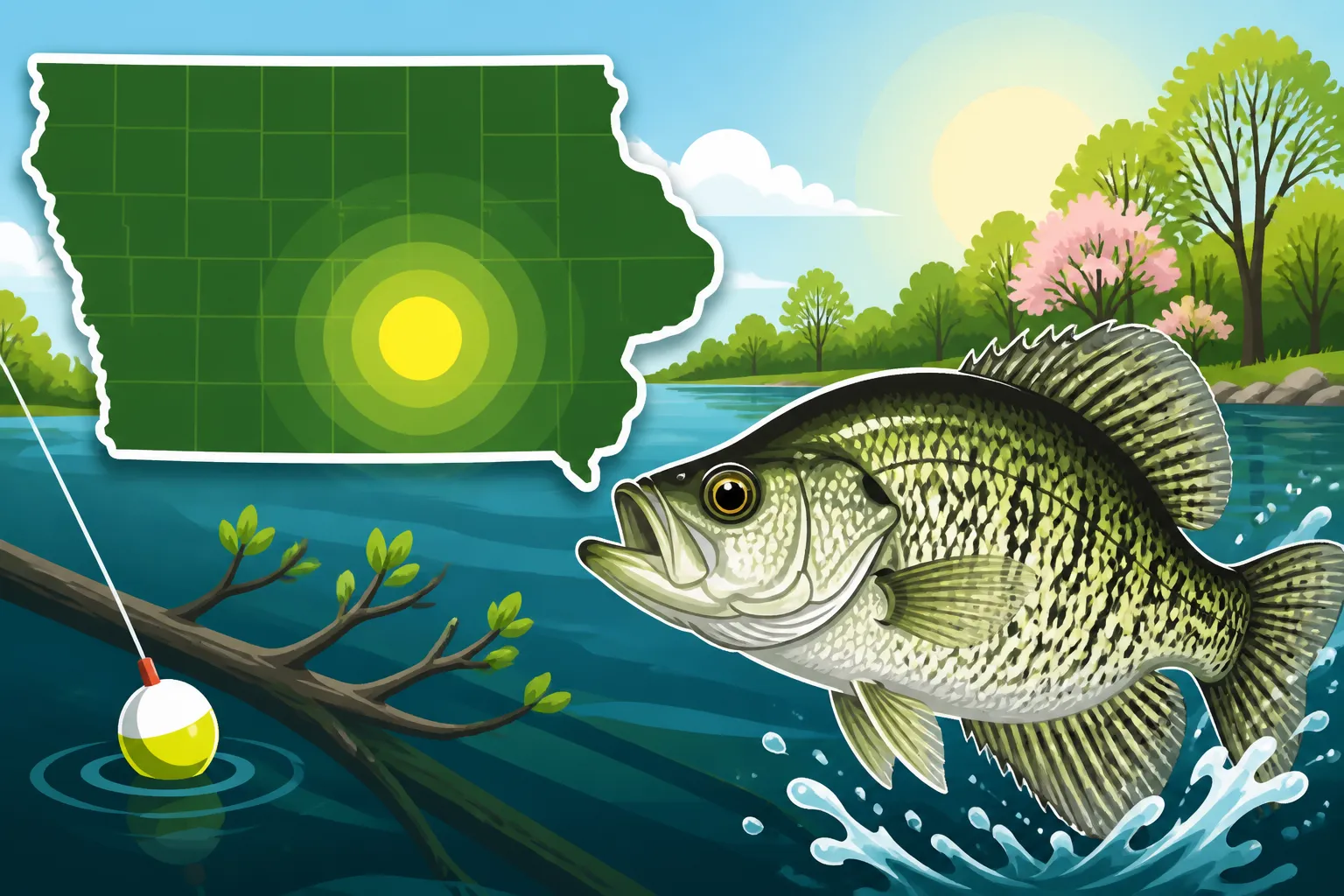
Where the Best Spring Crappie Bite Happens in Iowa
Trying to pinpoint the absolute best spots for spring crappie in Iowa can feel like an endless puzzle, especially with unpredictable weather and fish movements. Many anglers get frustrated wasting precious fishing time searching for that elusive bite. This guide is here to cut through the guesswork, revealing the prime locations across the Hawkeye State where you're most likely to fill your livewell with slabs of delicious crappie this spring.
Understanding Iowa's Spring Crappie Migration
Spring in Iowa is a magical time for crappie anglers, but it's also a period of significant transition for these fish. Their movements are highly dictated by water temperature and the impending urge to spawn. If you know why they move and where they're headed, you can intercept them with much greater success.
The Allure of Warming Waters
As the ice retreats and the days grow longer, Iowa's waters slowly begin to warm, especially in the shallower areas. Crappie, being cold-blooded creatures, are acutely sensitive to these temperature changes. Their metabolism speeds up, and they start to move out of their deeper wintering grounds, driven by a growing hunger and the biological imperative to reproduce. They're looking for areas that offer a few key things: slightly warmer water, protection from cold fronts, and an abundance of forage. This often means coves, shallow bays, and areas with submerged structure that absorb the sun's warmth.
Initially, you'll find crappie staging in areas adjacent to their spawning grounds, perhaps a little deeper but still close enough to make a quick move when conditions are right. Think about depths of 8-15 feet near weed lines, brush piles, or old creek channels that lead into shallower flats. As the water warms further, they'll push shallower and shallower. This is the time when the bite can be absolutely phenomenal, as aggressive crappie feed heavily to fuel their spawning activities. Understanding these subtle shifts is crucial to staying on top of the bite throughout the entire spring season.
Key Environmental Triggers for the Spawn
The crappie spawn is the ultimate spring event for anglers, and it's primarily triggered by water temperature. Generally, crappie begin moving towards spawning grounds when water temperatures consistently reach the low to mid-50s Fahrenheit, with the peak spawn usually occurring when temperatures are between 60 and 68 degrees. Anything below 50 degrees usually means they're still in pre-spawn, deeper holding patterns, while temperatures much above 70 degrees typically signal the post-spawn phase where they're dispersing.
Beyond temperature, other factors like sunlight penetration, water clarity, and the presence of suitable spawning habitat play a big role. Crappie prefer to spawn in shallow water, usually 1-5 feet deep, around submerged brush, stumps, deadfalls, or thick aquatic vegetation like lily pads. Male crappie will fan out nests in these areas, and the females will move in to deposit their eggs. A stable period of warm weather, without sudden cold fronts or heavy rains that can drop water temperatures or muddy the water, is ideal for a strong, prolonged spawn. During a cold snap, they might pull back to slightly deeper water, only to return to the shallows when conditions improve. This constant push and pull means anglers need to be adaptable and ready to adjust their tactics and locations based on the day's conditions.
Top Iowa Lakes and Rivers for Spring Crappie
Iowa boasts a fantastic array of waters that come alive with crappie activity in the spring. While many smaller ponds and lesser-known spots can be productive, some larger lakes and reservoirs consistently deliver excellent spring crappie fishing due to their size, habitat diversity, and strong fish populations.
Southern Iowa's Crappie Havens: Rathbun Lake and Saylorville Reservoir
When it comes to southern Iowa, two names often rise to the top for spring crappie: Rathbun Lake and Saylorville Reservoir. Rathbun, often touted as "Iowa's Crappie Capital," lives up to its name, especially during the spring. This massive 11,000-acre reservoir near Centerville offers an incredible diversity of habitat. In spring, anglers flock to its countless coves, brush piles, and shallow bays. Target areas with standing timber, old creek channels, and submerged brush, particularly those on the north and west sides that warm up faster. Places like Honey Creek State Park, Island View, and the areas near the dam outflow are perennial hotspots. For anglers looking for a guided trip, many local guides listed on platforms like FishingBooker specialize in Rathbun crappie and can put you right on the fish. Rathbun's crappie tend to be numerous, with good numbers of quality fish mixed in, making it a favorite destination for anglers. Don't forget to check the specific Iowa Fishing Season Dates and Limits before heading out.
Further north, near Des Moines, Saylorville Reservoir provides another excellent spring crappie opportunity. While known for its walleye and catfish, its crappie fishery shouldn't be overlooked. This large flood control reservoir has extensive submerged timber and brush, particularly in its upper reaches and various arms. Look for crappie staging in the deeper timber before moving into shallower, warmer coves and backwater areas. The North River access and the areas around the bridges along Highway 141 often hold significant numbers of pre-spawn and spawning crappie. As the water level can fluctuate on Saylorville, paying attention to current conditions is key. A lot of anglers find success focusing on the extensive Saylorville Reservoir Crappie Spots found within the lake. These southern impoundments offer vast areas to explore, but knowing where to start can significantly improve your odds.
Central and Eastern Iowa's Productive Waters: Coralville and Red Rock Reservoirs
Moving into central and eastern Iowa, Coralville Reservoir near Iowa City and Red Rock Reservoir closer to Knoxville are fantastic choices for spring crappie. Coralville, another large flood control reservoir, provides extensive crappie habitat. Like other large impoundments, the crappie here will transition from deeper wintering holes to shallower spawning grounds in spring. Focus on the many protected coves, especially those with standing timber or brush. The area around the marinas and the river arm above the main lake can be highly productive. These shallower areas are often the first to warm up under the spring sun, drawing in hungry crappie eager to feed and spawn. The sheer amount of structure and diverse shoreline mean there's always a new spot to explore.
Red Rock Reservoir, Iowa's largest lake, also offers excellent crappie fishing, although it can be more challenging due to its vastness and often turbid water. Don't let that deter you; the crappie populations are strong. In spring, target the numerous coves and bays, particularly those on the north side of the lake, which tend to warm faster. Areas with standing timber, submerged brush, and rocky points leading into spawning flats are prime targets. The Whitebreast arm and areas near the Mile Long Bridge are often productive. Because of its size, having a good map or even hiring a local guide through FishingBooker can really help in narrowing down the best Red Rock Reservoir Fishing Spots. These central and eastern lakes offer a different character of fishing, often with more fluctuating water levels, which means crappie locations can shift rapidly.
Northern Iowa's Hidden Gems: Clear Lake and the Iowa Great Lakes
While southern Iowa gets a lot of the crappie spotlight, northern Iowa has some stellar spring crappie fisheries, too. Clear Lake is perhaps one of the best-known, offering consistent action for panfish. During spring, crappie move into the shallower, protected bays and around the many docks and boat lifts that line its shores. The "Little Lake" area on the west end of Clear Lake, along with Ventura Marsh, are renowned hotspots. These areas are typically shallower and warm up quickly, attracting both black and white crappie. Look for schools of crappie suspending around structure or cruising the edges of emergent vegetation. You can find excellent Clear Lake Panfish and Crappie Spots if you know where to look.
Further west, the Iowa Great Lakes region, including Spirit Lake, East Okoboji, and West Okoboji, also offers quality crappie fishing, though they might require a bit more searching due to their clearer waters and diverse depths. East Okoboji, being shallower and with more vegetation, tends to warm faster and is often more productive for spring crappie. Target the numerous bays and weed lines, particularly in the northern sections. Spirit Lake also has good crappie populations, with anglers often finding them in the weed beds and around the many submerged structures. West Okoboji, with its deep, clear waters, will see crappie move into its shallower bays later in the spring. For any of these lakes, understanding the specific Fishing the Iowa Great Lakes patterns will greatly enhance your success. These northern lakes are beautiful destinations, and their spring crappie bite can be incredibly rewarding for those willing to explore.
Mastering Spring Crappie Techniques in These Hotspots
Finding the right spot is only half the battle; knowing how to fish for spring crappie is equally important. Crappie behavior changes throughout the spring, from their initial pre-spawn movements to the active spawn and then the post-spawn dispersal.
Shallow Water Tactics for Pre-Spawn and Spawning Crappie
When crappie are in their pre-spawn and spawning phases, they’re typically found in shallower water, often between 2-8 feet deep, depending on the lake and clarity. This is the prime time for a more active, targeted approach. One of the most effective methods is jigging with small jigs, often tipped with a minnow or a soft plastic grub. A 1/16 oz or 1/32 oz jig in chartreuse, white, or black is a versatile choice. Cast it towards submerged brush, timber, docks, or even emergent vegetation like lily pads. Let it sink, then retrieve it with a slow lift-and-drop motion, mimicking a dying baitfish. The key is to present it slowly and naturally in the fish's strike zone.
Another highly successful technique is using a slip bobber rig. This allows you to precisely control your bait depth, which is critical when crappie are holding at a specific level. Set your bobber stop to suspend a small jig or a minnow just above the structure where you expect crappie to be. The gentle bobber action can entice cautious crappie, especially on calmer days. This method is particularly deadly around standing timber or brush piles in coves, as it keeps your bait in the strike zone longer without getting snagged. Sometimes, simply drifting or slowly trolling these shallow areas with a minnow under a bobber can cover more water and help you locate active schools. For more detailed insights, check out our guide on Crappie Jig Fishing Techniques.
Adapting to Post-Spawn and Deeper Water Patterns
Once the spawn is over, crappie tend to disperse from the super shallow spawning grounds. They don't usually go super deep right away, but they will pull back to slightly deeper water, often suspending over structure or moving to the edges of creek channels and deeper weed lines. This post-spawn period can sometimes be a bit tougher, as fish are recovering from the rigors of spawning. However, they'll still feed aggressively. Your tactics need to adapt accordingly.
This is when you might shift from casting small jigs to slow trolling or spider rigging with multiple rods. Spider rigging involves using several long rods out the front of the boat, presenting multiple baits at different depths and distances. You're typically still using small jigs or minnows, but you might increase the jig weight slightly to get deeper faster, perhaps a 1/8 oz. Look for crappie suspended around brush piles in 10-15 feet of water, or cruising along break lines. Using a good fish finder to locate schools of crappie or submerged brush is invaluable during this phase. If you're fishing a clear lake, the crappie might go a bit deeper, whereas in more turbid waters, they might stay relatively shallower but still off the immediate bank. Knowing the Post-Spawn Crappie Patterns in Iowa can help you predict these movements more accurately.
Essential Gear and Bait for Success
Having the right gear makes all the difference when chasing spring crappie. A light to ultralight spinning rod (5' to 7' long) paired with a small spinning reel spooled with 4-6 pound test monofilament or fluorocarbon line is ideal. This setup allows for sensitive feel when crappie are biting subtly and provides enough backbone to land even large slab crappie.
For bait, live minnows are arguably the best choice for crappie, especially in spring. Small fathead minnows or crappie minnows hooked lightly through the back or lips are irresistible. They can be fished under a bobber, jigged, or slow trolled. Artificial baits are also highly effective. Small soft plastic jigs, typically 1 to 2 inches long, in colors like chartreuse, white, electric chicken, or black/chartreuse are staples. Brands like Bobby Garland, Crappie Magnet, and Johnson Crappie Buster all make excellent soft plastics that are perfect for Iowa crappie. Small marabou jigs or hair jigs also have their place, offering a subtle, breathing action that crappie love. Don't forget a selection of small jig heads, ranging from 1/32 oz to 1/8 oz, to match different depths and conditions. A good tackle box with these essentials will prepare you for almost any spring crappie scenario. Many anglers even consult specific guides on the Best Bait for Spring Crappie to fine-tune their selection.
Navigating Regulations and Maximizing Your Catch
While the thrill of finding and catching spring crappie is immense, it's equally important to be a responsible angler. This means understanding and adhering to Iowa's fishing regulations, as well as employing smart fishing practices.
Knowing Daily Limits and Size Restrictions
Iowa has specific fishing regulations in place to ensure the sustainability of its fisheries. For crappie, there's typically a daily bag limit, which dictates how many fish of a certain species you can keep in a single day. These limits can vary by water body, so it's always critical to check the most current Iowa Fishing Regulations Explained booklet or the Iowa DNR website before you head out. Generally, for crappie, the statewide daily bag limit is generous, but specific lakes might have special regulations or length limits to protect their populations. For instance, some lakes might have a 10-inch minimum length limit for crappie or a reduced daily bag limit to promote trophy management.
Failing to adhere to these rules can result in fines and penalties, which nobody wants when they're trying to enjoy a peaceful day on the water. It’s a good habit to keep a copy of the regulations handy, either digitally on your phone or a printed booklet. Always measure your fish carefully if there's a length limit, and be ready to release any fish that don't meet the requirements. Being mindful of the Crappie Daily Limit in Iowa helps ensure that future generations can enjoy the same excellent spring crappie fishing we do today.
Leveraging Local Knowledge and Resources
One of the best ways to maximize your spring crappie catch is to tap into local knowledge. Fishing reports from bait shops are gold mines of information, often detailing which baits are working, what depths fish are being caught at, and which specific areas are hot. Online fishing forums and local social media groups are also great places to connect with other anglers and share tips. Many experienced Iowa anglers are happy to share general advice and point you in the right direction.
Consider hiring a local fishing guide, especially if you're new to a particular lake or are visiting from out of state. Guides spend countless hours on the water and have an intimate understanding of fish movements and patterns. They can quickly put you on fish and teach you techniques specific to that body of water. Websites like FishingBooker are excellent resources for finding reputable local guides across Iowa's prime crappie lakes. They can provide invaluable real-time information that's often hard to find elsewhere. Additionally, the Iowa DNR Fishing Atlas is an incredible online tool that shows public access points, fish stocking information, and even identifies submerged structures, which can be immensely helpful for finding those crappie hotspots. Don't underestimate the power of a little research and a friendly chat with a local expert!
| Lake/Reservoir | Primary Crappie Species | Typical Spring Hotspots | Key Techniques | Notes |
|---|---|---|---|---|
| Rathbun Lake | Black & White Crappie | Honey Creek, Island View, timbered coves, brush piles | Jigging, minnows under bobbers, spider rigging | Often called "Iowa's Crappie Capital," known for consistent numbers and good size. Great resource for Fishing Rathbun Lake in Iowa. |
| Saylorville Res. | White Crappie | North River arm, brush piles near bridges, shallow coves | Jigging, vertical presentations near timber | Water levels can fluctuate; focus on stable areas. Check out specific Saylorville Reservoir Crappie Spots. |
| Coralville Res. | Black & White Crappie | Protected coves, standing timber, river arm | Small jigs, minnows, slow trolling | Diverse habitat, can be very productive as water warms. |
| Red Rock Res. | White Crappie | North-side coves, Whitebreast arm, submerged timber, rocky points leading to flats | Casting jigs, minnows, electronics for deep brush | Iowa's largest lake; can be challenging but holds strong populations. |
| Clear Lake | Black Crappie | "Little Lake" area, Ventura Marsh, docks, weed lines | Jigs, small crankbaits, slip bobbers with minnows | Excellent panfish lake, good for both numbers and quality. Refer to Clear Lake Panfish and Crappie Spots. |
| East Okoboji Lake | Black & White Crappie | Shallow bays, extensive weed lines, structure in northern sections | Slip bobbers, small jigs, light tackle | Warms faster than West Okoboji, often an early spring hotspot in the Iowa Great Lakes. See Fishing the Iowa Great Lakes for overall patterns. |
Disclaimer: Fishing regulations in Iowa can change. Always consult the latest official Iowa Department of Natural Resources (DNR) regulations before heading out on the water. This guide is for informational purposes only and does not replace official legal documents.