Where to Find Northern Pike on West Okoboji
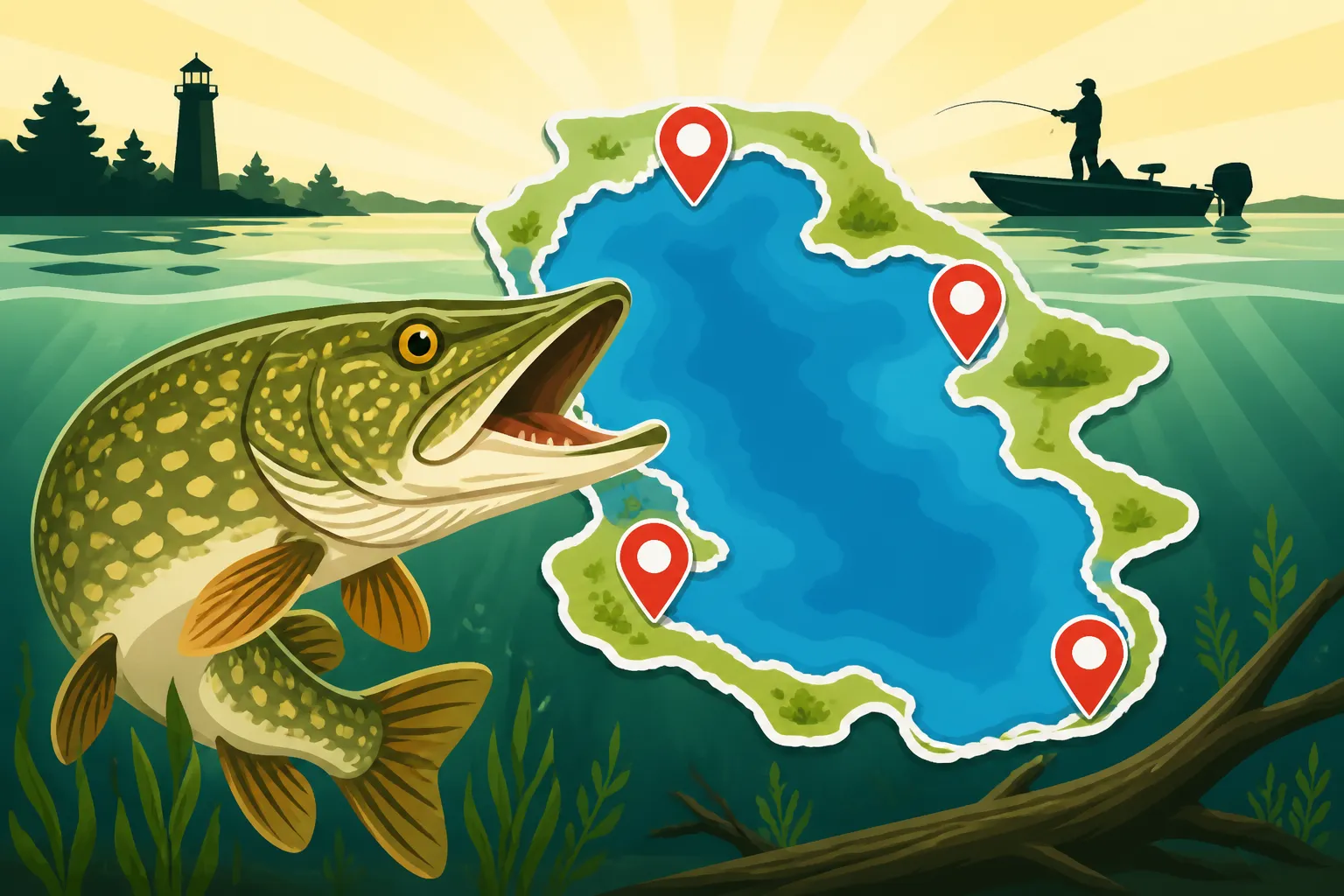
If you've ever tried to specifically target Northern Pike on West Okoboji Lake, you know it can feel like looking for a needle in a haystack – or rather, a toothy predator in 3,800 acres of prime Iowa water. These aggressive fish are present and can offer incredible sport, but figuring out their preferred haunts and habits on such a large, diverse body of water can be incredibly frustrating. This guide is here to cut through the guesswork, helping you pinpoint the best locations and employ the most effective strategies to successfully find and catch Northern Pike in West Okoboji.
Decoding Northern Pike Behavior in West Okoboji
Northern Pike are a thrilling challenge for any angler, known for their aggressive strikes and powerful fights. But to consistently find them on a lake as vast and varied as West Okoboji, you first need to understand their "thinking." They're ambush predators, meaning they love to hide and wait for unsuspecting prey, and their preferences shift throughout the year.
Habitat Preferences and Structural Lures
Pike are often associated with shallow, weedy areas, and West Okoboji certainly has its fair share of those. They adore thick vegetation like coontail, milfoil, and rushes, which provide perfect cover for them to lie in wait. Think of it like this: if you were a hungry fish with a mouthful of razor-sharp teeth, where would you hide to surprise your dinner? Exactly, in the thick stuff! These dense weed beds also offer cooler water temperatures during summer and act as nurseries for their preferred forage fish.
However, West Okoboji isn't just a shallow, weedy lake; it's Iowa's deepest natural lake, boasting significant structural elements. This means pike here also utilize deeper water features. You'll find them lurking around sharp drop-offs, submerged rock piles, and the edges of expansive flats where they can ambush baitfish moving between deep and shallow water. Points that jut out into the lake, especially those with access to deeper water and nearby weed beds, are absolute magnets for pike. These areas create natural current breaks or funnels for baitfish, making them prime hunting grounds. For a general overview of the lake's fishing potential, you might want to check out our comprehensive guide on Fishing the Iowa Great Lakes.
Seasonal Movements and Prey Adaptations
The behavior of Northern Pike in West Okoboji is heavily influenced by the changing seasons, primarily driven by water temperature and the availability of their prey. Understanding these patterns is key to locating them.
- Spring (Post-Spawn): After ice-out and their spawning period in late winter/early spring, pike often linger in shallow, warmer bays and protected coves. They're typically recovering from spawning and are incredibly hungry, making them very aggressive. These areas are also where many baitfish congregate, providing an easy meal. Look for them in water just a few feet deep, especially where the sun warms the water quickest.
- Summer: As water temperatures rise, many pike retreat to cooler, deeper water, often associating with the deepest weed lines. Instead of being completely submerged in dense weeds, they'll patrol the edges of these weed beds, particularly those that drop off into deeper channels or basins. They might also suspend over deeper water, chasing schools of ciscoes, yellow perch, or other pelagic baitfish. On a lake like West Okoboji, these deeper transitions can be crucial.
- Fall: This is often considered prime time for pike fishing. As water temperatures cool down, pike become incredibly active and aggressive, feeding heavily to bulk up for the winter. They'll often move back into shallower areas, especially those with remaining healthy green weeds or around rocky points and humps. They're looking for larger meals, so don't be afraid to throw bigger baits.
- Winter (Ice Fishing): While ice fishing for pike isn't as popular as for walleye or panfish on West Okoboji, they can still be caught through the ice. They often congregate around prominent points, rocky reefs, and the deeper edges of bays where baitfish are holding. Setting tip-ups with large live bait is a classic method.
Their diet is varied but heavily relies on the abundant forage base in West Okoboji. Younger pike will feast on insects and smaller fish, but as they grow, they become formidable predators, preying on yellow perch, crappie, walleye, white bass, ciscoes, and even smaller pike. Adapting your lure choice to mimic the local forage can significantly increase your success.
Top Fishing Spots for Northern Pike on West Okoboji
West Okoboji Lake offers a diverse range of environments, each with its potential to hold Northern Pike. Knowing the specific areas to target, and what makes them attractive to pike, is your ultimate advantage. If you're looking for more general information about this fantastic water body, our West Okoboji Lake Fishing Guide dives deep into all the species and experiences it offers.
Weedy Bays and Shallow Flats
When the water is cooler, particularly in spring and fall, but also during summer mornings and evenings, the expansive weedy bays and shallow flats on West Okoboji are pike magnets. These areas provide the perfect blend of cover, food, and often slightly warmer water.
- Miller's Bay: Located on the north side of the lake, Miller's Bay is a classic example of a productive pike area. It's relatively shallow with extensive weed growth, especially closer to shore and around the points that define the bay. The submerged vegetation creates excellent ambush points. Focus on casting parallel to the weed lines, or even working spinnerbaits and jerkbaits just over the top of submerged weeds where the water isn't too shallow. Early morning or late evening often brings the pike out of the densest cover to feed more actively.
- Emerson Bay: Situated on the lake's west side, Emerson Bay also features good weed beds and shallower areas that attract pike. Look for transition zones where the weeds meet slightly deeper water or areas with scattered rock alongside the vegetation. The mouth of the bay, where it meets the main lake basin, can be particularly productive as pike might stage there before moving into or out of the bay.
- Areas near Gull Point State Park: The shoreline around Gull Point, extending into the main lake, features various depths and some good weed growth, especially around the numerous points and smaller indentations. Pike will use these irregularities in the shoreline and bottom contours to their advantage. You'll often find them lurking just outside the visible weed edges. Don't be afraid to explore the smaller, less obvious coves and points here; sometimes the quieter spots hold the biggest surprises.
When fishing these areas, pay attention to the type of weeds. Healthy, green weeds that reach close to the surface, but still allow a lure to pass over or through, are usually the most productive. Dying or sparse weeds are less likely to hold active fish.
Deep Water Structure and Drop-offs
While pike love weeds, they're not exclusively shallow-water fish, especially in a lake with significant depth like West Okoboji. During the heat of summer, or when baitfish move deeper, pike will follow. This is where understanding the lake's underwater topography becomes critical.
- Points and Humps with Deep Water Access: Look for prominent points that extend far out into the lake, particularly those that have a sharp drop-off into deeper water (20-40+ feet). These points often concentrate baitfish and provide pike with excellent ambush opportunities from below or from the side. Good examples can be found around the middle of the lake, extending from various shorelines. Using your electronics to identify these structures and any associated baitfish schools is key.
- Submerged Rock Reefs and Transitions: West Okoboji has various rocky reefs and humps that rise from deeper water. These structures are biodiversity hotspots, attracting smaller fish, which in turn attract pike. The areas where these rocky structures transition into mud or sand bottom are particularly interesting. Pike will often patrol these "edge" zones. Many anglers overlook these deeper rock structures for pike, assuming they're strictly a shallow-water species. But a big pike won't hesitate to hang around deeper rocks if the food is there.
- Main Lake Basin Edges: The deepest parts of West Okoboji can reach over 130 feet, but you're not typically fishing for pike in the deepest parts. Instead, focus on the edges of the main lake basin, where the bottom begins to slope dramatically. Pike will patrol these depth changes, looking for ciscoes or other pelagic baitfish that inhabit the open water. Trolling large crankbaits or spoons along these contours can be very effective, especially during the summer and fall. If you're looking for guidance on techniques, our Iowa Fishing Techniques Guide covers a lot of ground that can be adapted for pike.
When exploring these deeper zones, a reliable fish finder is invaluable. It helps you identify structure, baitfish schools, and even suspended pike. A good map of West Okoboji with contour lines is also a must-have tool in your tackle box.
Targeting Channels and Inlets
Water movement can also play a significant role in concentrating Northern Pike, especially if it brings baitfish or offers a natural current break. While West Okoboji isn't a river system, it does have areas where water flows or channels exist.
- Connecting Channels: The channels connecting West Okoboji to other parts of the Iowa Great Lakes chain, like the one to Upper Gar Lake, can be productive. While these are often known for walleye, pike also use them as travel corridors and feeding lanes. The increased flow can bring baitfish through, creating a natural feeding funnel. Look for eddies or current breaks along the channel edges where pike can rest and ambush.
- Inlets and Outlets of Bays: Any point where a small creek or even a culvert enters or exits a bay can create a subtle current or concentrate food, making it attractive to pike. These are often small, overlooked spots that can hold surprising numbers of fish, especially after a rain.
- Bridge Pilings and Causeway Areas: Where roads cross parts of the lake via causeways and bridges, the pilings and abutments can create current breaks and structure. These areas often have rip-rap or rocky bottoms that attract baitfish, and thus, pike. Always be mindful of boat traffic and navigation rules when fishing near these structures.
When fishing these areas, understanding the direction and strength of any current is important. Pike will typically position themselves facing into the current, waiting for food to drift by. Presenting your lure upstream and allowing it to drift naturally into their strike zone can be highly effective.
Effective Techniques and Seasonal Strategies for West Okoboji Pike
Catching Northern Pike in West Okoboji isn't just about finding them; it's about presenting the right lure, at the right depth, with the right action. These fish can be incredibly aggressive, but they can also be finicky.
Spring and Early Summer Tactics
During the cooler months of spring and into early summer, pike are often found shallower and are typically very hungry.
- Shallow Water Presentations: This is the time for casting into those weedy bays and along shallower points. Think loud, flashy, and attention-grabbing.
- Spinnerbaits: Large spinnerbaits (3/4 oz to 1 oz) with tandem blades (Colorado/Willowleaf combination often works well) are fantastic. Chartreuse, white, or firetiger colors are classic pike producers. Cast them over submerged weeds or parallel to their edges, reeling them just fast enough to keep the blades turning and create flash. The vibration calls fish in.
- Jerkbaits: Suspending jerkbaits (5-7 inches) are deadly, especially when fished with a retrieve that mimics a wounded baitfish. Cast, twitch, twitch, pause for several seconds. Many strikes happen on the pause. Popular brands like Rapala X-Raps or Smithwick Rattlin' Rogues in natural baitfish patterns or bright colors can be very effective.
- Spoons: Classic casting spoons like a Daredevil or Johnson Silver Minnow (weedless) are still phenomenal. They cast a mile and have an irresistible wobble on the retrieve. Flashy colors like silver/blue or red/white are common choices.
- Pre-Spawn and Post-Spawn Aggression: In early spring, before they spawn and right after, pike are looking to feed heavily. This is when they'll often be in the shallowest, warmest water available. Focus your efforts in protected coves and shallow flats that warm up quickly. They'll be less selective and more willing to chase. Later, after they've recovered from spawning, they become even more aggressive as they need to replenish energy reserves. They might be a bit more spread out, but still focused on abundant baitfish in shallower areas.
Mid-Summer and Fall Approaches
As summer progresses and then transitions into fall, pike behavior shifts, requiring different tactics.
- Deeper Weed Line and Open Water: In mid-summer, the sun drives pike into deeper, cooler water. This means focusing on those deeper weed edges, drop-offs, and even trolling open water for suspended fish.
- Trolling Large Crankbaits: This is a highly effective way to cover water and find active pike in summer and fall. Use large diving crankbaits (6-10 inches) that can reach depths of 10-25 feet or more, depending on the structure you're targeting. Colors mimicking perch, walleye, or ciscoes are good bets. Vary your speed until you find what triggers strikes. When considering boat setup, the Best Trolling Motor for Small Iowa Lakes could be a good read to optimize your mobility.
- Jigging Spoons: For pike holding tight to deep structure or suspended over open water, vertical jigging spoons can be effective. Drop them down, rip them up, and let them flutter back down. This is an active technique that can trigger reaction strikes.
- Live Bait Rigs: While not always necessary, a large live baitfish (such as a sucker minnow, if legal and available) fished under a bobber or on a quick-strike rig can be absolutely deadly for larger, less active pike, especially around deeper structure. Ensure you understand Iowa Fishing Regulations Explained regarding live bait use.
- Aggressive Fall Bite: Fall is often when you'll catch the largest pike. They are feeding voraciously to prepare for winter.
- Larger Baits: Don't be shy about upsizing your lures. Bigger baits often attract bigger fish. Large crankbaits, swimbaits, and even muskie-sized bucktails (which are also excellent for pike, as noted in Muskie Fishing Techniques for Iowa Waters) can be productive.
- Target Green Weeds: Even in fall, find the remaining healthy green weed beds. These will hold baitfish longer and provide cover for pike. As leaves fall and water cools, other weeds die off, so finding those pockets of green is key.
- Structure: Revisit those points, humps, and drop-offs. Pike will be cruising these areas looking for schools of baitfish moving through.
Lure Selection and Presentation Tips
Having the right arsenal of lures is important, but how you present them is equally crucial.
- Colors: While natural colors (perch, walleye, silver) are always good, don't underestimate bright, flashy colors like firetiger, chartreuse, and hot orange. Pike are visual predators, and these colors can grab their attention, especially in stained water or on overcast days.
- Retrieval Speed: Experiment! Sometimes a fast, erratic retrieve triggers a chase; other times, a slow, methodical retrieve with pauses is what they want. Let the fish tell you.
- Wire Leaders: This is non-negotiable for Northern Pike. Their razor-sharp teeth will make short work of monofilament or fluorocarbon line. A steel or heavy fluorocarbon (80-100 lb test) leader of 9-12 inches is essential to prevent bite-offs. You wouldn't want to lose a trophy pike because of a preventable line break!
- Sharp Hooks: Pike have bony mouths. Ensure your hooks are needle-sharp to get good penetration. Check them often and sharpen or replace as needed.
Essential Gear for Chasing West Okoboji Northern Pike
You wouldn't go into a sword fight with a butter knife, right? The same goes for battling a powerful, toothy Northern Pike. Having the right gear isn't just about making the fight fun; it's about landing the fish safely and efficiently. For a broader perspective on what to bring, our Iowa Fishing Gear Guide offers excellent general advice.
Rod, Reel, and Line Setup
When targeting Northern Pike, especially the larger ones West Okoboji can produce, you need a robust setup that can handle powerful runs and aggressive head shakes.
- Rod: A medium-heavy to heavy action spinning or baitcasting rod, typically 6'6" to 7'6" in length, is ideal.
- Spinning rods are excellent for casting lighter lures or for anglers who prefer that style. A 7' medium-heavy rod provides good casting distance and backbone.
- Baitcasting rods offer more power and control, especially with heavier lures like large crankbaits and spinnerbaits. A 7' to 7'6" heavy action rod is perfect for battling big pike. The extra length helps with longer casts and absorbing powerful lunges.
- Reel: Match your reel to your rod.
- For spinning setups, a 3000-4000 series reel with a smooth drag system is generally sufficient.
- For baitcasting setups, a reel with a good gear ratio (around 6.1:1 to 7.1:1) and a strong drag is preferred. You want something that can handle heavy lures and the strain of fighting a powerful fish. Brands like Shimano, Daiwa, or Abu Garcia offer reliable options.
- Line: This is where strength really matters.
- Braided Line: A braided mainline of 30-50 lb test is highly recommended. It offers incredible strength for its diameter, excellent sensitivity, and no stretch, which is crucial for solid hooksets on bony-mouthed pike.
- Leader: As mentioned, a wire or heavy fluorocarbon leader (80-100 lb test, 9-12 inches long) is absolutely essential. Connect it to your braided mainline with a strong knot like a double uni knot or a FG knot, or use a high-quality barrel swivel and then tie on your leader. Don't skimp here; a cheap leader is the weakest link.
Must-Have Lures and Terminal Tackle
Your tackle box needs to be stocked with pike-specific offerings.
- Spoons: A variety of casting spoons in silver, gold, red/white, and five of diamonds patterns (e.g., Daredevil, Little Cleo, Johnson Silver Minnow) in sizes from 3/4 oz to 1.5 oz.
- Spinnerbaits: Large, heavy spinnerbaits (3/4 oz to 1 oz) in chartreuse, white, firetiger, and perch patterns are staples.
- Jerkbaits: Suspending jerkbaits (5-7 inches) in natural baitfish colors, bright colors, and clown patterns. Think Rapala, Lucky Craft, or Megabass.
- Crankbaits: Large diving crankbaits (6-10 inches) for trolling or casting, in colors mimicking perch, walleye, or ciscoes. Consider both shallow and deep divers.
- Bucktails/Inline Spinners: While often associated with muskie, larger inline spinners (like Mepps Musky Killers or similar) are fantastic pike lures.
- Terminal Tackle: Beyond leaders, ensure you have strong snap swivels (size 3-5) to easily change lures and prevent line twist, and extra stout split rings if you need to upgrade hooks on some of your lures.
Safety and Essential Accessories
Pike have serious teeth and can be quite feisty in the boat. Safety should always be a top priority.
- Long-Nose Pliers or Forceps: Absolutely critical for safely removing hooks from a pike's mouth. Their teeth are sharp, and their jaws are powerful. Never put your bare fingers near their mouth.
- Jaw Spreader: A small jaw spreader can be helpful, especially for larger pike, to keep their mouth open while you work on hook removal.
- Heavy-Duty Gloves: Fishing gloves, especially those with some cut resistance, can protect your hands from teeth or gill plates when handling a fish.
- Landing Net: A large, rubberized landing net (to protect the fish's slime coat) with a long handle makes landing and controlling a big pike much safer for both you and the fish.
- First-Aid Kit: Always have one on board for minor cuts or punctures.
- Life Jackets: This goes without saying for any boating on West Okoboji. Always wear a PFD, especially when solo or in rough water. Remember, Required Safety Equipment for Iowa Boats is not just a suggestion, it's the law.
- Sun Protection: Sunscreen, hats, and polarized sunglasses are essential for long days on the water. Polarized sunglasses also help you see through the glare on the water, potentially spotting submerged cover or even cruising pike.
- Navigation and Communication: A reliable GPS (either on your phone or dedicated unit) and a charged cell phone are important for safety and finding your way around West Okoboji, especially if you're exploring new areas. For guided trips or more detailed information on local conditions, sometimes connecting with a local outfitter through platforms like FishingBooker can provide invaluable insights and safety assurance.
- Fishing License: Make sure your Iowa Fishing License Guide is up-to-date.
Table: Seasonal Lure Recommendations for West Okoboji Northern Pike
| Season | Primary Location | Recommended Lures | Colors to Consider | Retrieve Style |
|---|---|---|---|---|
| Spring | Shallow bays, weed lines | Large Spinnerbaits, Suspending Jerkbaits, Spoons | Chartreuse, White, Firetiger, Perch | Erratic, twitch-pause, steady roll |
| Early Summer | Weed edges, shallow points | Jerkbaits, Spoons, Buzzbaits | Natural baitfish, Silver, Gold | Fast, topwater commotion, erratic |
| Mid-Summer | Deep weed lines, drop-offs, open water | Deep-Diving Crankbaits (trolled), Jigging Spoons, Large Swimbaits | Cisco, Walleye, Bluegill patterns | Steady troll, vertical jigging, slow roll |
| Fall | Remaining green weeds, rocky points, humps | Large Crankbaits (cast/trolled), Bucktails, Heavy Spoons, Swimbaits | Firetiger, Orange, Perch, White | Aggressive, fast retrieves, varied depths |
| Winter (Ice) | Points, rock reefs, deep bay edges | Large Live Bait (tip-ups), Jigging Raps, Spoons | Natural, glow, bright | Deadstick, aggressive jigging |
Knowing where to find northern pike on West Okoboji is half the battle; the other half is being prepared and persistent. With these tips and the right attitude, you'll be well on your way to experiencing the thrill of a West Okoboji pike on your line. And remember, platforms like FishingBooker can sometimes help you find local guides if you're looking to hit the water with an experienced hand for your first outing. Always be sure to review the Iowa Fishing Season Dates and Limits to ensure you're fishing legally and responsibly.
Disclaimer
The information provided in this guide is for general informational purposes only and is subject to change. Fishing regulations, conditions, and fish behavior can vary. Always consult the latest Iowa Department of Natural Resources (DNR) regulations before fishing and prioritize safety on the water. This guide is not a substitute for local knowledge or professional guidance.