Best Spots for Perch at Spirit Lake
Trying to pinpoint the best spots for perch on Spirit Lake can sometimes feel like searching for a needle in a haystack, especially with a lake this size and its ever-changing conditions. Many anglers spend countless hours crisscrossing the water, only to find sparse schools or small fish, which can be incredibly frustrating when you're dreaming of a cooler full of tasty yellow perch. This comprehensive guide will demystify Spirit Lake's perch fishery, breaking down the prime locations and effective strategies to help you consistently land these feisty fish.
Understanding Spirit Lake Perch Behavior and Habitat
To truly unlock the secrets of Spirit Lake's perch, you first need to understand how these fish live and move throughout the year. Perch aren't just randomly distributed; they follow predictable patterns based on water temperature, food availability, and spawning cycles. Knowing these behaviors is the foundation of finding them consistently.
Seasonal Perch Movements
Perch in Spirit Lake are constantly on the move, adapting to the changing seasons. In the spring, after the ice recedes, they're often found in shallower waters, congregating to spawn in protected bays and areas with emergent vegetation. As the water warms into summer, perch tend to spread out, utilizing a wider range of habitats from weed edges to deeper humps, often chasing schools of baitfish. During the fall, they start to group up more tightly, moving towards deeper structures as water temperatures drop, feeding aggressively to prepare for winter. When the lake finally freezes over, perch are typically found schooled up over distinct deep-water structures, frequently moving in search of food. Anglers targeting them should always consider the time of year, as a spot that was hot in July might be completely barren in November.
Key Habitat Preferences
Spirit Lake offers a diverse underwater landscape, and perch gravitate towards specific types of cover and structure. They absolutely love areas with vegetation, whether it's submerged weed beds, cattails along the shoreline, or even thick algae growth. These green havens provide both cover from predators like northern pike and walleye, and a rich feeding ground for insects, crustaceans, and small minnows. Beyond weeds, perch are also drawn to hard bottom structures. Think rock piles, gravel bars, gradual slopes, and even man-made structures like old docks, submerged timber, or bridge pilings. These areas attract baitfish and offer a place for perch to ambush their prey. Understanding these preferences helps narrow down your search immensely, guiding you to prime perch real estate.
Perch Forage and Feeding Habits
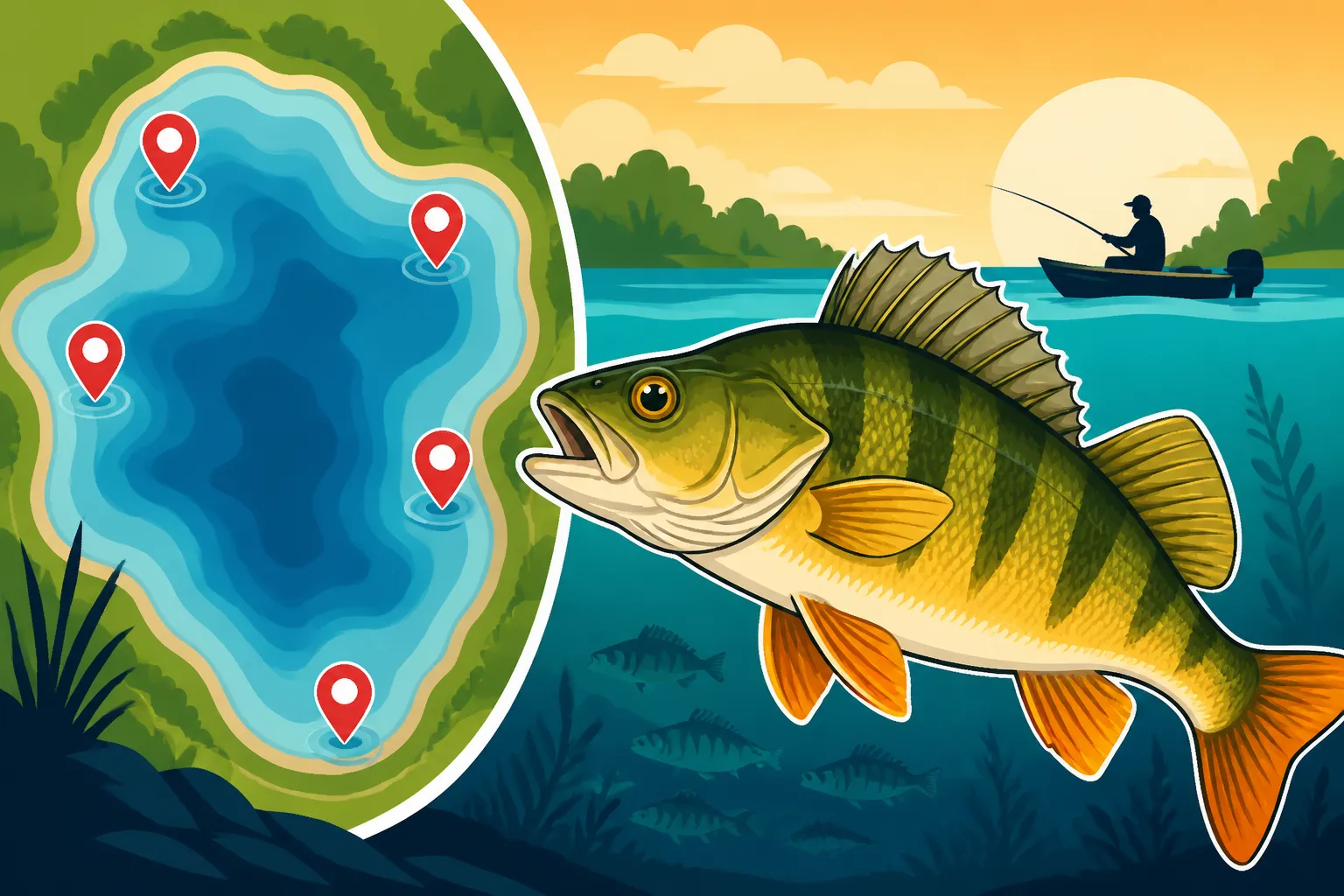
What perch eat directly influences where you'll find them. In Spirit Lake, yellow perch are opportunistic feeders, and their diet changes as they grow and seasons shift. Young perch feast on zooplankton and aquatic insects. As they get larger, their diet expands to include a wider array of invertebrates, small minnows, and the fry of other fish species, including their own. This means that if you can locate schools of fathead minnows, shiners, or even young-of-the-year walleye or bluegill, you're likely to find hungry perch nearby. They are visual predators, often hunting in schools, which is why when you find one perch, you often find many. This feeding behavior is crucial to remember when selecting your baits and lures, as mimicking their natural food sources is key.
Prime Shore and Access Points for Perch
Not everyone has a boat, and even those who do sometimes prefer the simplicity of shore fishing. Spirit Lake has several fantastic public access points where you can consistently catch perch, often without needing to venture far from the parking lot.
Popular Public Docks and Piers
Spirit Lake boasts a few excellent public docks and piers that can be perch magnets, especially during the spring and fall. The docks around Pillsbury Point on the lake's eastern shore are consistently good choices. These areas often have deeper water close to shore, attracting perch that are cruising for food or seeking shelter near the pilings. Similarly, the public access piers at Templar Park and Gull Point State Park can also be productive. These spots often have good underwater lighting, attracting baitfish at night, which in turn draws in hungry perch. Focus your efforts around the edges of the docks, casting parallel to them, and fishing any available structure or weed lines nearby. Early mornings and late evenings often provide the best bite from these accessible locations.
Accessible Bays and Channels
For those looking for a bit more seclusion or different types of structure, several bays and channels offer excellent shore fishing opportunities for perch. The shallow, weedy bays along the north end of Spirit Lake, such as those near the Okoboji Store area, are fantastic in spring and early summer when perch move into warmer, shallower water. These areas warm up quickly, attracting a lot of insect activity, which perch actively feed on. The small channels and cuts that connect to the main lake can also hold perch, particularly during migration periods. Look for any areas with emergent vegetation, reeds, or cattails, as these provide crucial cover. Accessing these spots might require a short walk, but the reward of finding unpressured perch can be well worth the effort.
Shoreline Structure near Marinas and Parks
Marinas and state parks are often overlooked by some anglers, but they can be incredibly productive for perch. The protected waters within marinas, like those at Spirit Lake Marina or around Crandall's Beach, often hold schools of perch seeking refuge and food. The docks, boat lifts, and even the sediment-rich bottoms stirred up by boat traffic can create excellent feeding opportunities. Additionally, many of these areas, especially within state parks, often have submerged brush or rock rip-rap along the shore, providing ideal perch habitat. When fishing these spots, be mindful of boat traffic and other anglers. A stealthy approach, using small jigs or live bait presentations, can be very effective in these sometimes-busy locations. Remember to check local park rules, as some areas might have restrictions on fishing hours or methods.
Unlocking Spirit Lake's Deep Water Perch Hotspots
While shore fishing can be productive, the real potential for large numbers of yellow perch often lies in Spirit Lake's deeper, open water structures. This is where a boat and some good electronics can truly make a difference. Many anglers find success by understanding the lake's unique underwater topography. If you're looking for larger schools or trophy perch, understanding these deep-water haunts is essential.
Identifying Reefs and Rock Piles
Spirit Lake is home to several prominent reefs and rock piles that are absolute magnets for perch, especially as the seasons progress and fish move deeper. Some of the most renowned spots include the Horseshoe Reef located in the central part of the lake, and the various rock formations near Big Stoney Point and Little Stoney Point. These underwater formations create current breaks and offer ideal ambush points for perch. When scanning these areas with your fish finder, look for "pancakes" of fish tightly schooled up near the bottom or hovering just above the structure. Small jigs tipped with minnows or plastics, jigged vertically, can be incredibly effective here. Don't be afraid to drift across these reefs multiple times, as perch schools can be concentrated in very specific areas. You might find a few guides on FishingBooker who specialize in these deep-water presentations.
Mid-Lake Humps and Drop-offs
Beyond the defined reefs, Spirit Lake also features numerous subtle humps and dramatic drop-offs that are critical perch holding areas. A prime example is the extensive drop-off system on the western side of the lake, extending from Triboji Beach south towards Wapiti Park. These ledges provide perch with quick access to both shallow feeding grounds and deeper, safer waters. Mid-lake humps, often rising from 20-30 feet of water to a peak of 10-15 feet, are also excellent. These often don't have names on maps but can be found using detailed lake charts or a good GPS unit. Perch will often school on the wind-blown sides of these humps, where baitfish are concentrated. Vertical jigging or slip-bobber fishing with live bait like minnows or worms can be deadly when you mark fish on these underwater features. Remember that perch can be suspended at various depths along these drop-offs, so adjust your presentation accordingly.
Winter Ice Fishing Drifts and Structure
When Spirit Lake freezes over, the fishing landscape transforms, but the perch remain, often congregating in similar deep-water areas. Many of the same reefs and humps that are productive during open water seasons become prime ice fishing spots. Anglers will often set up shacks or shelters over the Horseshoe Reef, Stoney Point areas, and deep-water flats off Okoboji Store Bay. The key during ice fishing is to drill multiple holes to locate the moving schools of perch. They often drift slowly across large areas, following subtle contours or bottom irregularities. Using small spoons or tungsten jigs tipped with wax worms, spikes, or a minnow head can entice bites. Don't overlook large, soft-bottomed flats adjacent to deep water; perch often cruise these areas, foraging on insects and invertebrates stirred up from the sediment. Always prioritize safety when venturing onto the ice, checking ice thickness for safe ice fishing conditions.
Effective Techniques and Gear for Spirit Lake Perch
Catching perch consistently on Spirit Lake isn't just about finding the right spot; it's also about presenting the right bait or lure with the correct technique. Perch can be finicky, and having a diverse approach in your tackle box will pay dividends.
Top Baits, Lures, and Rigging Strategies
For Spirit Lake perch, live bait is often king, especially when the bite is tough. Small fathead minnows are perhaps the most reliable offering, either hooked through the lip on a small jig or suspended under a slip bobber. Worms, particularly small pieces of nightcrawlers or red worms, are also highly effective, especially for smaller perch or when fishing in weedier areas.
When it comes to artificials, small jigs are indispensable. Tungsten jigs in sizes from 1/32 to 1/8 ounce, tipped with a small plastic tail (like a Berkley Gulp! Minnow or a simple twister tail), wax worms, or spikes, work incredibly well. Popular jig colors include chartreuse, orange, pink, and white. Small spoons, like Swedish Pimples or Kastmasters, especially those with an added "eye" or a glow finish, are also deadly, particularly during ice fishing season or when vertical jigging in open water. Rigging options vary: a simple plain hook and split shot rig is great for live bait in shallow water, while a dropper rig with a heavier sinker on the bottom and a small jig or hook above it can be excellent for targeting schools on deeper structure. Remember that sometimes the simplest presentations are the most effective for these aggressive, yet sometimes cautious, eaters.
Seasonal Fishing Methods
Your approach to perch fishing on Spirit Lake should evolve with the seasons.
- Spring: In early spring, as perch gather for spawning in shallow bays and weed lines, focus on a stealthy approach. Small jigs tipped with minnows under a bobber or slowly retrieved plastic jigs are very effective. Look for water that's just a few degrees warmer than the main lake.
- Summer: When water temperatures are high, perch often move deeper or hold tight to weed edges and shaded structures. Trolling small crankbaits or spinner rigs with worms can cover a lot of water. Vertical jigging over humps and reefs becomes key once you locate a school. Early morning and late evening bites are often best.
- Fall: As autumn progresses, perch begin to school up more tightly and feed aggressively. This is an excellent time for targeting them on deeper breaks, humps, and reefs using vertical jigging techniques with spoons or heavy jigs. They're often putting on the feedbag before winter, so don't be afraid to try slightly larger baits.
- Winter (Ice Fishing): Ice fishing for perch is hugely popular on Spirit Lake. The key is mobility. Drill a grid of holes over known structures and use a flasher or fish finder to identify schools. Small tungsten jigs, spoons, and dead sticks (a rod set up with a simple minnow rig) are go-to methods. Pay attention to how the fish are reacting to your bait – sometimes a subtle lift is all it takes, other times a more aggressive jigging motion is needed.
Essential Electronics and Tackle
Having the right gear can significantly boost your perch fishing success on Spirit Lake. A good fish finder is invaluable, especially for open water and ice fishing. Modern units with side imaging or down imaging can help you locate those subtle humps, rock piles, and, most importantly, the schools of perch themselves. Brands like Humminbird and Lowrance offer excellent options that are popular among local anglers. A reliable GPS unit (often integrated into a fish finder) is also crucial for marking hotspots and navigating the lake, especially for returning to those productive spots.
For rods and reels, a light to medium-light action spinning rod (5'6" to 6'6" long) paired with a small spinning reel (1000 or 2000 size) spooled with 4-6 pound test monofilament or braided line with a fluorocarbon leader is ideal. This setup provides the sensitivity needed to detect subtle perch bites and enough backbone to handle a good-sized yellow perch. Don't forget a good selection of small tackle boxes to keep your jigs, hooks, sinkers, and swivels organized. Finally, a decent landing net for larger fish and a cooler with ice to keep your catch fresh are must-haves. Many anglers also find a portable livewell handy if they plan to keep minnows alive for an extended period.
Navigating Spirit Lake Safely and Legally for Perch
Before you head out to chase perch on Spirit Lake, it's vital to be aware of the rules and regulations, as well as general boating and ice safety guidelines. Being prepared ensures a safe, enjoyable, and legal fishing trip.
Boating Access and Navigation Rules
Spirit Lake is a large body of water, and while it offers fantastic fishing, it also requires respectful and safe navigation. Public boat ramps are available at locations like Spirit Lake State Park, Templar Park, and Pillsbury Point, providing convenient access for anglers. When on the water, always observe no-wake zones, especially near shorelines, docks, and other anchored boats. The lake can get busy, particularly on weekends and holidays, so maintaining situational awareness is key. Always have your required safety equipment on board, including life jackets for everyone, a fire extinguisher, and visual distress signals. Remember that weather conditions can change rapidly on large lakes, so keep an eye on the forecast and be prepared to head for shore if storms roll in. Many anglers consult local bait shops or online forums for up-to-date information on boat ramps and any temporary access restrictions.
Iowa Fishing Regulations Explained Specific to Perch
Even the best fishing spots won't matter if you're not following the rules. It's imperative to always check the most current Iowa Fishing Regulations Explained provided by the Iowa Department of Natural Resources (DNR). While yellow perch typically have generous bag and possession limits in Iowa, these can change, and special regulations might apply to specific lakes or seasons. For instance, sometimes there are slot limits or length restrictions on certain species, though perch are usually less restrictive than, say, walleye or bass. Make sure you understand the daily bag limit and possession limit for yellow perch specifically. If you're considering other species while perch fishing, ensure you're compliant with their rules too. Having a valid Iowa fishing license is also non-negotiable for anyone over the age of 16. You can easily purchase or renew your Iowa Resident Annual Fishing License or Iowa Nonresident Annual Fishing License online or at authorized vendors.
Ice Safety and Equipment Checks
Ice fishing on Spirit Lake is a cherished tradition, but it comes with inherent risks. Safety is paramount. Never assume the ice is safe, even if others are out there. A general rule of thumb is at least 4 inches of clear, solid ice for walking, 5-7 inches for ATVs or snowmobiles, and 8-12 inches for cars or light trucks. However, ice thickness can vary dramatically across a lake, even within a short distance, due to currents, springs, and wind patterns. Always carry ice picks, a spud bar or auger to check thickness as you go, and wear a float suit or at least a life jacket. Inform someone of your plans, including where you'll be fishing and when you expect to return. Be aware of pressure ridges, cracks, and areas near inlets or outlets where ice can be thinner. Fishing with a buddy is always a good idea. Before you head out, make sure your ice auger is in good working order and that your portable shelter is properly secured in case of strong winds.
| Hotspot Type | Prime Locations (Spirit Lake) | Key Features | Best Season(s) | Top Techniques |
|---|---|---|---|---|
| Public Docks/Piers | Pillsbury Point, Templar Park, Gull Point State Park | Deep water access, artificial structure (pilings), night lights | Spring, Fall | Jigs with minnows, worms under bobbers, small spoons |
| Accessible Bays/Channels | North End Bays (near Okoboji Store), small cuts | Shallow, weedy, warm water, protected from wind | Spring, Early Summer | Slip bobber with minnows/worms, slow-rolled jigs |
| Shoreline Structure | Spirit Lake Marina, Crandall's Beach, State Park Rip-Rap | Docks, boat lifts, submerged brush, rocky rip-rap | Spring, Fall | Small jigs, live bait on light tackle |
| Reefs/Rock Piles | Horseshoe Reef, Big Stoney Point, Little Stoney Point | Hard bottom, current breaks, deep water access | Summer, Fall, Winter | Vertical jigging with spoons/plastics, minnows |
| Mid-Lake Humps/Drop-offs | Western side (Triboji to Wapiti), unnamed mid-lake humps | Depth transitions, baitfish concentrations, wind-blown sides | Summer, Fall, Winter | Vertical jigging, slip-bobbers, slow trolling |
| Ice Fishing Drifts | Horseshoe Reef area, Stoney Point, Okoboji Store Bay flats | Deep structures under ice, foraging grounds on soft bottoms | Winter | Small tungsten jigs, spoons, dead stick minnows |
Disclaimer
Please remember that fishing conditions, regulations, and ice safety can change rapidly. Always consult the latest Iowa DNR regulations before heading out and prioritize safety above all else when on the water or ice. This guide is for informational purposes only.