Where to Catch Crappie at Rathbun Lake
It can be incredibly frustrating to head out to a massive lake like Rathbun, knowing it holds incredible crappie, but then spending hours just searching instead of fishing. This guide is all about cutting through that uncertainty, giving you the insider scoop on where those elusive crappie are most likely hiding across Rathbun Lake, no matter the season.
Understanding Rathbun Lake's Crappie Hotspots
Rathbun Lake, often hailed as Iowa's "Crappie Capital," is a sprawling reservoir that can feel overwhelming when you're trying to pinpoint those schooling panfish. Unlike smaller ponds where crappie might be found almost anywhere with cover, Rathbun's sheer size and diverse underwater landscape demand a more strategic approach. Understanding the lake's unique features is the first step to consistently finding the bite.
The Vastness of Rathbun: Why Finding Crappie Can Be Tricky
Covering over 11,000 acres with nearly 150 miles of shoreline, Rathbun Lake is a significant body of water. This vastness means that crappie aren't just in one spot; they're constantly moving, following baitfish, water temperature, and changes in depth. What worked last week might not work today, leading to many blank casts and a lot of head-scratching. It’s not uncommon to hear anglers complain about driving all over the lake, searching for that one productive brush pile that seems to have vanished overnight.
The lake itself is a flood control reservoir, meaning its water levels can fluctuate. This dynamic environment alters where structure is accessible and where crappie might hold. Old creek beds, submerged timber, and brush piles that were perfect last year could be too shallow or too deep depending on current conditions. Patience and adaptability are crucial here; what you learn one trip will certainly help, but always be prepared to adjust your game plan.
Key Structural Elements That Attract Crappie
Crappie, being ambush predators, absolutely love structure. They use it for cover from larger predators, a place to hide before ambushing baitfish, and often, a spot to spawn. On Rathbun, understanding and locating these structural elements is paramount. Think beyond just visible shoreline cover. The real treasures often lie beneath the surface.
Submerged timber, particularly standing dead trees or large laydowns, are classic crappie magnets. These can be remnants of the original landscape before the lake was flooded. Brush piles, whether natural accumulations or angler-placed "crappie condos," provide incredible vertical cover. The Iowa Department of Natural Resources (DNR) also strategically places brush piles in various locations around the lake to enhance fishing, so checking local fishing reports or the DNR's fishing atlas can provide some great starting points.
Beyond woody debris, crappie also relate strongly to changes in bottom contour. Old creek channels winding through the lake basin, submerged roadbeds, rock piles, and sharp ledges all offer different depths and current breaks that crappie will utilize. A good fish finder is an invaluable tool for identifying these hidden gems. Learning to interpret the sonar returns to differentiate between a solid brush pile, a school of baitfish, or even the crappie themselves, is a skill that will pay dividends on Rathbun.
Prime Crappie Locations on Rathbun Lake
Rathbun Lake isn't just a big bowl of water; it has distinct areas that tend to be more productive for crappie at different times of the year. Knowing these key zones can help you narrow down your search and spend more time with a line in the water.
The Honey Holes: Specific Areas Known for Crappie
While crappie can be found throughout Rathbun, certain arms and coves consistently produce. The Honey Creek arm is a perennial favorite, particularly for its numerous brush piles and submerged timber. Anglers often find good success here, especially in the spring and fall when crappie are more active. The Island View area and nearby coves also offer excellent habitat, with a mix of shallow and deeper water options depending on the season. Look for docks and boat lifts in these areas, as they often have brush piles sunk nearby by property owners.
Another highly regarded crappie zone is the Bridgeview area, particularly around the old bridge pilings and adjacent submerged structure. These hard structures create current breaks and attract baitfish, making them prime ambush points for crappie. Don't overlook the main lake points that extend into the deeper basin, especially those with some kind of cover or depth transition. These spots act as highways for crappie moving between shallow and deep water. Exploring the areas around Buck Creek can also reveal hidden gems, particularly during the spawn when crappie push into shallower, protected waters. If you're looking to book a guided trip to hit these precise locations, services like FishingBooker can connect you with experienced local guides who know Rathbun like the back of their hand.
Seasonal Patterns for Crappie Movement
Crappie movements on Rathbun are heavily dictated by the seasons and water temperature, much like other species covered in our Iowa Fishing Seasons Explained guide. Understanding these patterns is key to being in the right place at the right time.
Spring (Pre-Spawn, Spawn, Post-Spawn): As water temperatures creep into the 50s Fahrenheit, crappie begin their journey from deeper wintering grounds toward shallower spawning areas. During the pre-spawn, they'll stage in creek channels and on main lake points near potential spawning coves. Once temperatures reach the mid-60s, the spawn kicks into full gear. Crappie move into incredibly shallow water, often less than 5 feet deep, seeking out brush, submerged logs, and even riprap to lay their eggs. Coves in the Honey Creek arm, areas around Bridgeview, and shallow, protected bays near Island View are prime targets. After the spawn, they’ll gradually retreat to slightly deeper water, often suspending over brush piles just outside their spawning grounds. This is a fantastic time for shore fishing access near Des Moines and for kayak fishing.
Summer: When the scorching Iowa summer arrives, crappie typically move deeper to find cooler, more oxygenated water, often suspending around the thermocline (if one develops) or holding tight to deep brush piles and submerged creek channels. Depths of 15-25 feet, or even deeper, are common. Look for schools of crappie suspended over main lake points or in the deeper sections of the Honey Creek and Bridgeview arms. Trolling small crankbaits or vertically jigging over known structure become highly effective techniques during this period. Finding these schools requires good electronics, and knowing how to read a fish finder for walleye also applies to locating crappie.
Fall: As water temperatures cool down in the autumn, crappie become much more active again, often mirroring their spring patterns but in reverse. They move from their deep summer haunts back into shallower creek channels, main lake points, and even some of the deeper brush piles in coves, feeding aggressively to bulk up for winter. This can be an excellent time to target them, as they are often concentrated and willing to bite. Many anglers find success by using techniques similar to spring, such as casting jigs to cover or slow trolling.
Winter (Ice Fishing): Rathbun Lake offers excellent ice fishing opportunities when conditions permit. During winter, crappie will congregate in deeper water, often in large schools, relating to prominent submerged structures like old creek channels, deep brush piles, and main lake basins. The Honey Creek arm and the main lake basin near the dam are popular spots for ice anglers. Finding these schools through the ice requires patience, a good flasher or fish finder, and drilling plenty of holes. Our guide on Ice Fishing in Iowa provides more specific safety and gear tips for the colder months.
| Season | Typical Location | Depth Range | Key Features |
|---|---|---|---|
| Spring (Pre-Spawn) | Creek channels, main lake points, outside coves | 10-20 feet | Staging areas near spawning grounds |
| Spring (Spawn) | Shallow coves, brushy bays, docks, riprap | 3-8 feet | Woody debris, flooded timber, hard bottom |
| Summer | Deep brush piles, main lake points, creek channels | 15-30+ feet | Thermocline, structure near deeper water |
| Fall | Transitioning creek channels, main lake points, brush piles | 8-20 feet | Similar to pre-spawn, feeding aggressively |
| Winter | Deep main lake basins, major creek channels, deep brush piles | 20-40+ feet | Concentrated schools, bottom transitions |
Essential Techniques and Gear for Rathbun Crappie
Knowing where the crappie are is only half the battle; knowing how to catch them is the other. Rathbun Lake crappie can be finicky, but with the right techniques and gear, you can turn a slow day into a memorable one.
Go-To Baits and Lures for Rathbun Crappie
Crappie are notoriously attracted to small, subtle presentations. The crappie jig fishing techniques you employ will be crucial. Small jigs, typically 1/16 to 1/8 ounce, are king. Soft plastic bodies in various shapes like tubes, grubs, and shad profiles are incredibly effective. Popular brands like Bobby Garland's Baby Shad or Stinger Shads, Jenko Fishing's Slabs, and Strike King's Mr. Crappie jigs are common choices among Rathbun regulars. Color can be critical: chartreuse, white, pink, and various natural shad imitations are good starting points. Always carry a variety and don't be afraid to experiment, especially in different water clarities.
While jigs are fantastic, live bait, particularly small minnows, often proves irresistible to crappie. A small minnow hooked through the lip or back and suspended under a slip bobber or tight-lined directly over structure is a classic and highly effective method. This is especially true when crappie are less active due to cold fronts or high-pressure systems. Remember to keep your minnows fresh, as active bait is key.
Sometimes, when crappie are chasing baitfish in open water, small crankbaits or tiny spinnerbaits (like Road Runners) can entice a strike. These are particularly useful when trolling for crappie, allowing you to cover more water and mimic fleeing baitfish.
Fishing Methods That Produce Results
Successfully fishing for crappie on Rathbun often involves a combination of methods, adapting to the fish's mood and location.
Vertical jigging is perhaps the most fundamental and effective technique, especially when you've located a brush pile or submerged timber with your electronics. Position your boat directly over the structure and gently lower your jig or minnow rig right into the cover. The key is precise depth control and subtle movements. Crappie often hit on the fall or with a very slight lift, so pay close attention to your line for any twitch or slack. This technique is fantastic for probing specific "holes" you've marked on your fish finder.
For covering larger areas, especially when crappie are suspended in open water or along creek channels, trolling (often called spider rigging) can be incredibly productive. This involves deploying multiple rods (sometimes up to four or more per angler, where legal) with jigs or minnow rigs at varying depths and distances behind the boat. A slow, steady speed, usually less than 1 mph, is crucial. This method allows you to present multiple baits simultaneously and quickly identify the depth and presentation crappie prefer on a given day. Our Trolling for Crappie in Iowa guide offers even more in-depth strategies for this method.
When crappie are shallower, particularly during the spawn, casting to visible cover (like docks, flooded timber, or shoreline brush) is very effective. Use a light spinning setup with a small jig or a minnow under a bobber. Make accurate casts, let your bait sink, and retrieve slowly, pausing frequently. The finesse approach is often rewarded. For those fishing from a boat, having a good pair of polarized sunglasses (often mentioned in our Iowa Fishing Gear Guide) can help you spot submerged cover that might otherwise be missed.
Navigating and Planning Your Rathbun Crappie Trip
A successful crappie trip to Rathbun starts long before you even launch your boat. Proper planning, knowing your access points, and leveraging modern tools can make all the difference.
Access Points and Boat Ramps
Rathbun Lake boasts numerous public access points and boat ramps, making it relatively easy to get on the water. Some of the most popular and well-maintained ramps include those at Buck Creek Recreation Area, Honey Creek State Park, and Island View Recreation Area. These ramps typically offer ample parking and good access to various parts of the lake. Honey Creek State Park, in particular, is a large recreational hub with facilities that cater well to anglers.
For those without a boat, or who prefer shore-based angling, Rathbun also provides some excellent options. Many of the recreation areas and state parks offer shoreline access, sometimes even fishing piers. The riprap areas along the dam and causeways can be productive, especially during cooler months when crappie move closer to these hard structures. Always check the specific regulations for fishing within state park boundaries, as there might be special rules in place.
Using Technology and Local Knowledge
In today's fishing world, technology can be your best friend, especially on a large lake like Rathbun. A high-quality fish finder (like those from Lowrance or Humminbird) is almost essential. These units allow you to identify submerged timber, brush piles, old creek channels, and even schools of baitfish and crappie themselves. Learning to effectively use your sonar, down imaging, and side imaging capabilities will dramatically increase your success rate. Our guide on Fish Finders and Electronics for Iowa Anglers can help you choose the right unit and understand how to read it.
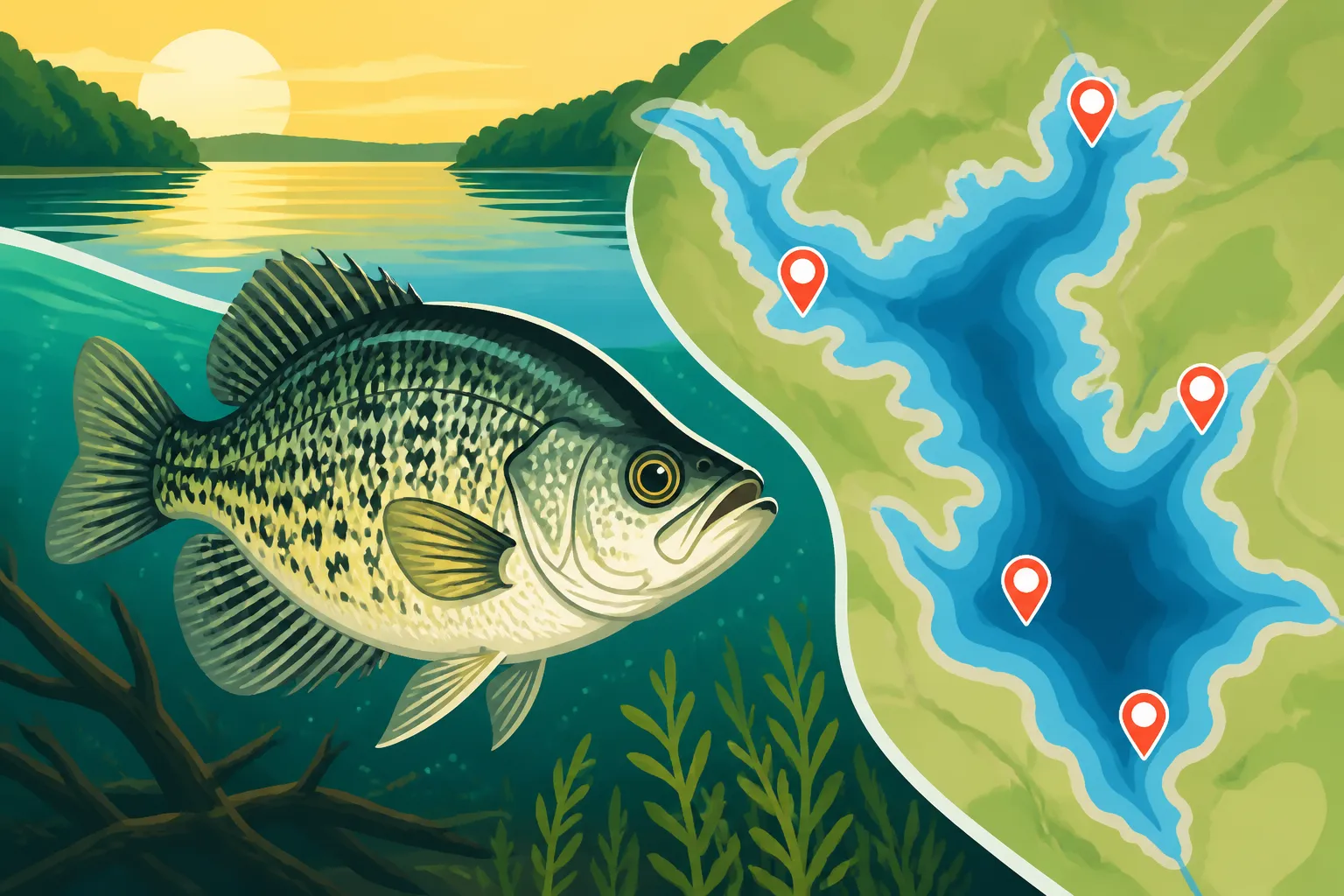
Beyond your boat electronics, digital lake maps (like Navionics or Lakemaster) on your smartphone or chartplotter provide incredible detail about underwater contours, depths, and marked structures. You can often pre-plan your attack by studying these maps at home, marking potential hotspots before you even leave.
Finally, never underestimate the power of local knowledge. Stopping by a bait shop in Moravia or Rathbun before hitting the water can provide invaluable, up-to-the-minute information on where the crappie are biting, what baits they prefer, and current lake conditions. These folks live and breathe Rathbun fishing, and their insights can save you hours of searching. You might even consider hiring a local guide through platforms like FishingBooker for your first few trips; they can show you the ropes and put you on fish quickly, accelerating your learning curve on this fantastic lake.
Disclaimer
Please remember that fishing conditions, regulations, and fish behavior can change rapidly. Always consult the latest Iowa Department of Natural Resources (DNR) fishing regulations booklet before heading out. This guide is for informational purposes only and should not replace official regulations or your own good judgment regarding safety on the water.